
Knowledge Graph + LLM in One Sentence
Knowledge Graph + LLM Architecture =
- LLM Reasoning
- Structured Enterprise Knowledge
- Graph Traversal
- Semantic Retrieval
- Explainability
- Governance
TL;DR
-
Knowledge Graph + LLM Architecture combines governed structured knowledge with language model reasoning — the graph holds facts, relationships, and provenance; the LLM interprets intent, synthesizes answers, and explains results. Neither replaces the other.
-
Graph-first retrieval is the production baseline — resolve entities, traverse relationships, collect evidence, then generate. Vector search supplements graph traversal; it does not replace it.
-
Entity resolution must run before retrieval — ambiguous names, duplicate records, and cross-system identifiers destroy answer quality when skipped. See Entity Resolution patterns.
-
Every response must be explainable and auditable — cite graph paths, source systems, ontology versions, and query plans. Regulated enterprises require lineage from answer to authoritative record.
-
Never fine-tune or prompt-memorize knowledge that belongs in the graph — governed enterprise facts live in the knowledge graph with schema validation, versioning, and access control. The LLM reasons over retrieved evidence; it is not the system of record.
Architecture Snapshot
Complexity
★★★★★
Audience
AI Architects, Enterprise Architects, KG Engineers, Platform Engineers
Difficulty
Advanced
Typical Deployment
Enterprise Production
Typical Latency
3–6 seconds (p95)
Scalability
Billions of triples / nodes
Availability Target
99.9%
Read Time
~40 min
Last Updated
July 20, 2026
Recommended Stack
- Stardog / Neo4j / Amazon Neptune
- SPARQL / Cypher query layer
- LangChain / LlamaIndex retrievers
- AI Gateway (Portkey / LiteLLM)
- Claude / GPT / Gemini
- Langfuse + OpenTelemetry
Why This Matters
Knowledge Graph + LLM Architecture is the production system design for grounding language models in governed enterprise knowledge — not document chunks alone. If RAG retrieves text and GraphRAG Architecture extracts graphs from documents, this guide covers traversable facts from source systems with entity resolution, semantic parsing, and audit-grade explainability.
Who should read this?
| Reader | Why |
|---|---|
| AI Architects | Design hybrid graph + LLM platforms with clear boundaries between reasoning, retrieval, and governance. |
| Enterprise Architects | Align knowledge graph investments with AI strategy, data lineage, and cross-system integration requirements. |
| Knowledge Graph Engineers | Connect ontology design, ingestion pipelines, and query layers to LLM consumption patterns. |
| AI Platform Engineers | Operate graph databases, semantic parsers, gateways, and observability at production scale. |
| ML Engineers | Integrate embeddings, entity linking models, and evaluation pipelines into graph-grounded workflows. |
| CTOs / Technical Leads | Make build-vs-buy decisions across graph platforms, LLM providers, and semantic layer vendors. |
Why Vector Search Cannot Replace Graph Traversal
Vector search retrieves semantically similar content—documents or entity descriptions whose embeddings sit close to the query in vector space. That excels at paraphrase matching and unstructured recall. Knowledge graphs retrieve structurally connected information: explicit relationships typed in the schema, traversable paths, and constraints enforced by the ontology.
Similarity is not the same as an explicit relationship. Two entities may embed near each other without sharing a governed edge. A vector index cannot answer "which suppliers of Component X are subsidiaries of a sanctioned entity three hops away?" because that requires following typed paths, applying filters at each hop, and respecting access-controlled subgraphs—not ranking by cosine distance.
Multi-hop reasoning requires graph traversal. Each hop must use authoritative identifiers and relationship types from source systems, not approximate neighborhood search. When entity resolution links CRM, ERP, and compliance records, only a graph query can walk from product → component → supplier → jurisdiction with reproducible evidence paths.
Production AI systems typically combine vector retrieval, graph traversal, and keyword search rather than replacing one with another. Vector search surfaces relevant document passages and candidate entities; graph traversal assembles governed facts and relationship chains; keyword search handles exact identifiers and codes. Collapsing enterprise reasoning into a single vector index loses structure, explainability, and the deterministic guarantees regulated deployments require.
Architecture
System overview
Knowledge Graph + LLM Architecture is the system design for combining governed enterprise knowledge graphs with large language models in production. If you have read the Knowledge Graphs and Enterprise Knowledge Graphs guides, you already understand triples, ontologies, and graph modeling. If you have read Enterprise RAG Architecture, you understand retrieval pipelines, gateways, and operational controls. This document answers a different question: how do you architect a production system where the knowledge graph and the LLM each do what they are best at?
Enterprises adopt this pattern when unstructured document RAG is insufficient:
| Signal | Why graph + LLM |
|---|---|
| Cross-system reasoning | Answers require joining CRM, ERP, product catalog, and compliance data — not searching PDFs |
| Relationship questions | "Which suppliers of Component X are in sanctioned jurisdictions?" requires traversal, not similarity |
| Explainability requirements | Regulators and auditors need evidence paths, not black-box generations |
| Entity ambiguity | "Acme Corp" appears in twelve systems with different identifiers |
| Governed truth | Facts must come from authoritative records, not probabilistic text extraction |
| Knowledge freshness | Structured sources update continuously; the graph reflects current state |
The LLM's role is intent understanding, query formulation, synthesis, and explanation. The knowledge graph's role is authoritative facts, relationships, constraints, provenance, and access-controlled traversal. Collapsing both into a single vector index or a fine-tuned model violates the engineering rule at the top of this guide.
Reference Architecture
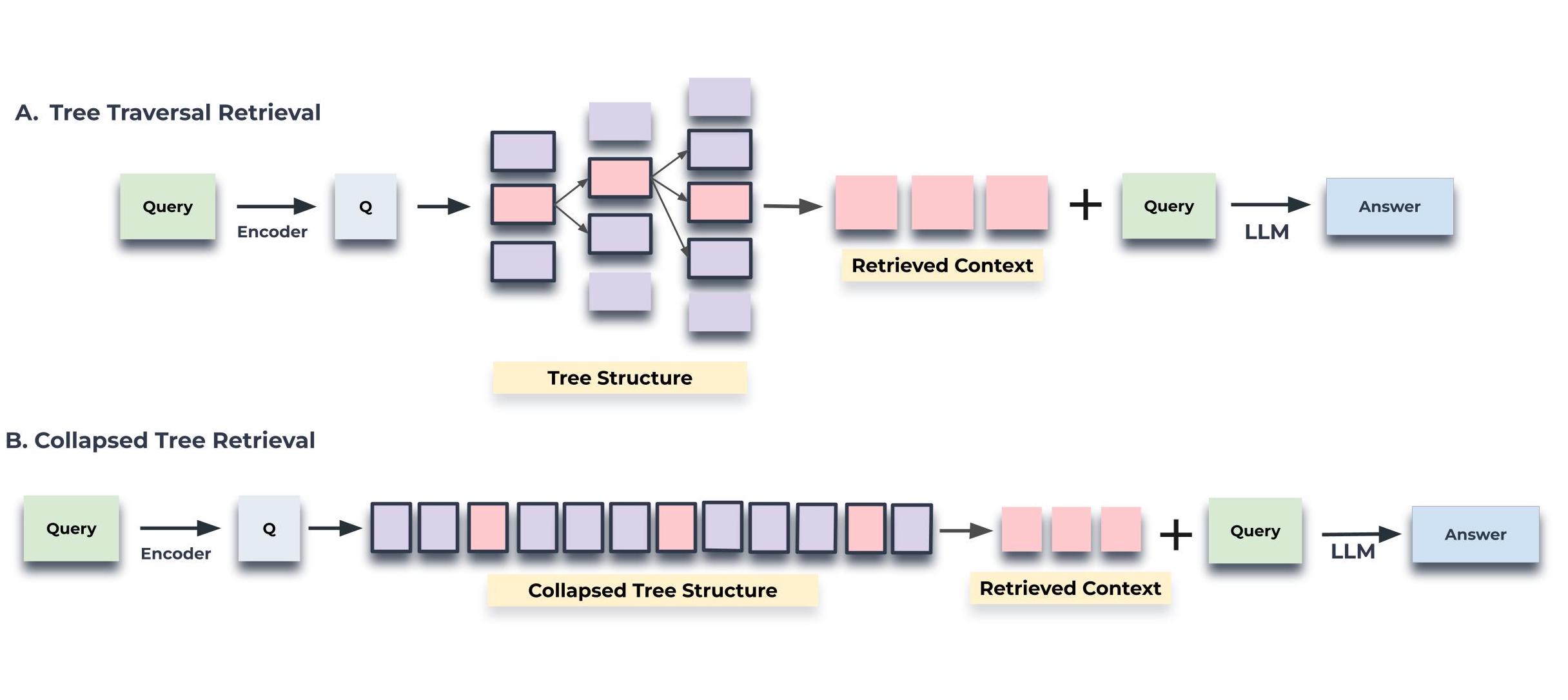
Source: Microsoft GraphRAG
Note: Production KG + LLM systems ground generation in governed graph traversal; the diagram illustrates graph-aware retrieval feeding the LLM context window.
A production Knowledge Graph + LLM system is a composed architecture of services:
| Concern | Enterprise requirement |
|---|---|
| Authoritative knowledge | Facts originate from governed sources — databases, MDM, ontologies — not LLM weights |
| Entity resolution | Cross-system identity linking before any query executes |
| Deterministic traversal | Graph paths are reproducible; same query returns same evidence structure |
| Explainability | Every answer cites graph paths, source records, and ontology versions |
| Hybrid retrieval | Graph traversal + vector search over linked document corpora |
| Schema governance | Ontology versioning, SHACL validation, controlled evolution |
| Operational resilience | Graph DB HA, query timeouts, graceful degradation when traversal exceeds budget |
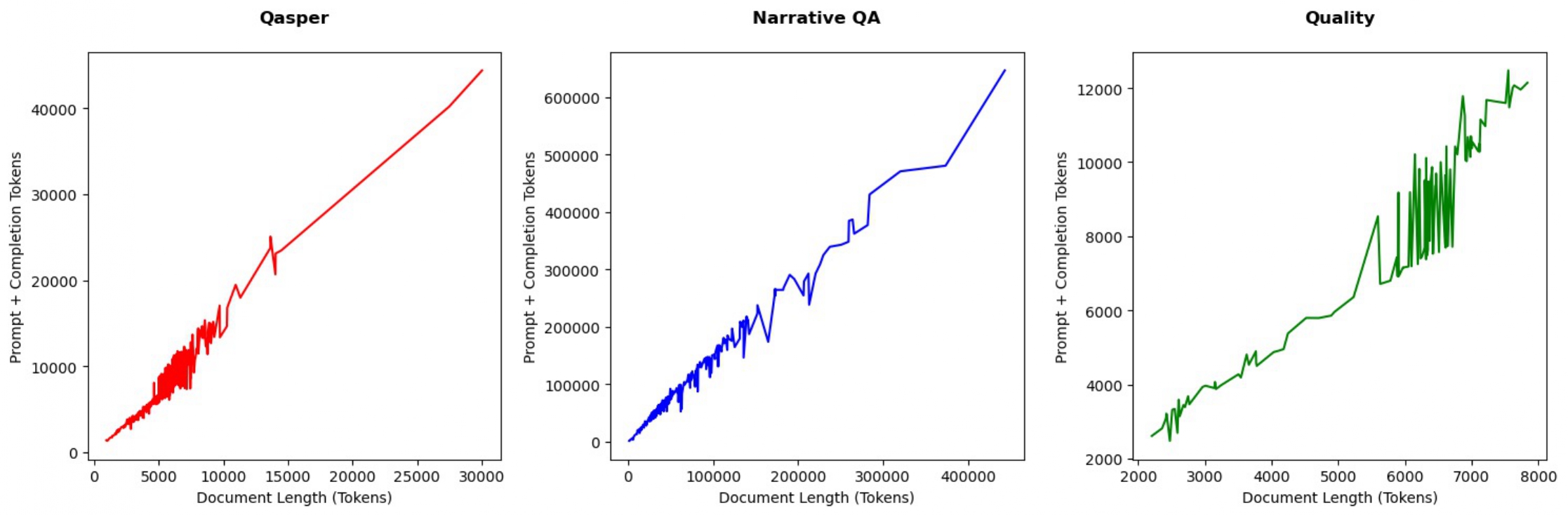
Source: Microsoft GraphRAG
Production teams treat the knowledge graph as infrastructure — the semantic layer that outlives any single LLM vendor or prompt version.
Diagram: Knowledge Graph + LLM production architecture
flowchart TB
    subgraph sources [Enterprise sources]
        ERP[ERP / CRM / MDM]
        DOC[Document corpora]
    end
    subgraph graph [Graph platform]
        ING[Ingestion + SHACL]
        KG[Knowledge graph]
        ER[Entity resolution]
    end
    subgraph ai [AI layer]
        SP[Semantic parser]
        RET[Hybrid retriever]
        GW[AI gateway]
        LLM[LLM synthesis]
    end
    ERP --> ING --> KG
    DOC --> ING
    KG --> ER
    ER --> SP
    ER --> RET
    RET --> LLM
    SP --> KG
    GW --> LLM
Facts originate in source systems; the LLM synthesizes and explains — it is not the system of record.
Diagram: Hybrid retrieval — graph + vector
flowchart LR
    Q[Query] --> EL[Entity linking]
    EL --> GT[Graph traversal]
    EL --> VS[Vector search on linked docs]
    GT --> MERGE[Evidence ranking]
    VS --> MERGE
    MERGE --> CTX[Context builder]
    CTX --> LLM[LLM]
Graph traversal is primary; hybrid search supplements unstructured evidence linked to graph nodes.
Architecture principles
| Principle | Explanation |
|---|---|
| Knowledge remains external | Enterprise facts live in the graph and source systems. The LLM is stateless at query time — it does not memorize domain knowledge. |
| Reason over facts | The LLM synthesizes, explains, and handles ambiguity. It does not invent relationships that the graph does not support. |
| Graph first, generation second | Traverse, resolve, and collect evidence before calling the LLM. Generation without evidence is a prototype pattern. |
| Entity resolution before retrieval | Link user mentions to canonical graph entities before query planning. Unresolved entities produce wrong traversals. |
| Governed ontology | Schema changes follow a lifecycle: proposal, review, version tag, downstream notification. Ad-hoc triple injection breaks trust. |
| Schema evolution | Ontologies grow with the business — but evolution is explicit, versioned, and backward-compatible where possible. |
| Explainable responses | Return graph paths, source system IDs, and query plans alongside natural language answers. |
| Deterministic traversal | Graph queries produce reproducible results. Non-determinism belongs in the LLM synthesis step only. |
| Independent scaling | Ingestion, graph storage, query execution, and LLM generation scale on different profiles. |
How We Got Here
Architecture maturity progression
Knowledge Graph + LLM is one stage in an enterprise AI progression — each level adds capability without replacing what came before.
Enterprise Search
    ↓
RAG
    ↓
Enterprise RAG
    ↓
Knowledge Graph + LLM
    ↓
GraphRAG
    ↓
Enterprise AI Platform
Enterprise Search provides keyword lookup across siloed indexes. RAG adds vector retrieval over document chunks. Enterprise RAG wraps document retrieval in security, governance, and operational controls. Knowledge Graph + LLM (this guide) grounds reasoning in governed structured knowledge with entity resolution and explainable traversal. GraphRAG adds community detection and summarization over graph structure for complex multi-hop discovery. Enterprise AI Platform unifies graph, vector, agent, and governance services under a single operational model.
Diagram: Enterprise AI architecture progression
timeline
    title Path to Knowledge Graph + LLM
    section Retrieval
        RAG : Document chunks
        Enterprise RAG : Hybrid + security
    section Graph
        KG + LLM : Governed traversal
        GraphRAG : Document-derived graph
    section Platform
        Enterprise AI : Unified graph + vector + agents
Teams do not skip Enterprise RAG fundamentals — hybrid retrieval patterns still apply to linked document corpora.
Teams do not skip levels. A team that deploys Knowledge Graph + LLM without Enterprise RAG fundamentals for document corpora will lack hybrid retrieval patterns, caching, and eval infrastructure that this architecture still requires for unstructured evidence.
Comparisons
Knowledge Graph + LLM Architecture solves different problems than Enterprise RAG and GraphRAG Architecture. Use these tables for procurement and ADR decisions.
Traditional RAG vs Knowledge Graph + LLM
Enterprise teams often ask when to move beyond Enterprise RAG. The architectures solve different classes of problems — not a strict upgrade path, but a capability expansion when structured relationships and governed knowledge become requirements.
Traditional RAG
User
 │
Vector Search
 │
LLM
 │
Answer
Knowledge Graph + LLM
User
 │
Entity Resolution
 │
Knowledge Graph
 │
Graph Traversal
 │
Evidence Collection
 │
LLM
 │
Grounded Answer
| Dimension | Traditional RAG | Knowledge Graph + LLM |
|---|---|---|
| Primary knowledge source | Unstructured documents (PDFs, wikis, tickets) | Governed knowledge graph backed by enterprise systems (ERP, CRM, MDM) |
| Retrieval method | Vector similarity + keyword search over chunks | Graph traversal + semantic parsing; hybrid vector search for linked documents |
| Explainability | Citations to document chunks; limited structural context | Evidence subgraphs with entity paths, source record IDs, and query plans |
| Relationship reasoning | Implicit — depends on chunks containing related facts | Explicit — multi-hop traversal across defined relationships |
| Entity resolution | Not required; chunk overlap handles some ambiguity | Required — canonical entity linking before traversal |
| Governance | Document ACLs, metadata filtering, prompt versioning | Ontology versioning, SHACL validation, schema evolution workflows |
| Provenance | Document source and chunk offset | Source system, record ID, ingestion timestamp per graph edge |
| Best use cases | Document Q&A, policy lookup, support knowledge bases | Cross-system reasoning, compliance queries, supplier risk, product lineage, operational decisions |
Move to Knowledge Graph + LLM when questions require joining authoritative records across systems
KG + LLM vs fine-tuning for enterprise knowledge
| Dimension | KG + LLM Architecture | Fine-tuning |
|---|---|---|
| System of record | Graph + source systems | Model weights |
| Fact updates | ETL / CDC ingestion | Retrain or adapter refresh |
| Audit trail | Graph path + record ID | None |
| Best for | Governed operational facts | Tone, format, reasoning style |
KG + LLM Architecture vs GraphRAG Architecture
| Dimension | KG + LLM Architecture (this guide) | GraphRAG Architecture |
|---|---|---|
| Knowledge source | ERP, CRM, MDM, ontologies | Unstructured document corpora |
| Graph construction | Governed ETL + validation | LLM extraction from chunks |
| Query path | Entity resolution → traversal / validated SPARQL | Local/global search + communities |
| When to combine | Link golden records to GraphRAG entities | Hybrid enterprise search platform |
Decision tree: KG + LLM vs RAG vs GraphRAG
flowchart TD
    A[Question type?] --> B{Authoritative system facts?}
    B -->|Yes| C[KG + LLM Architecture]
    B -->|No| D{Document corpus only?}
    D -->|Yes| E{Multi-hop or global themes?}
    E -->|Yes| F[GraphRAG Architecture]
    E -->|No| G[Enterprise RAG]
    C --> H[Hybrid with RAG for linked docs]
    F --> H
Truth location determines architecture — systems of record vs document-derived structure.
, traversing explicit relationships, or audit-grade explainability — not when document search alone suffices.
The Problem Knowledge Graph + LLM Architecture Solves
Enterprises that combine knowledge graphs with LLMs encounter failures that neither graph tutorials nor RAG guides address alone. These are architectural problems spanning data integration, identity, and reasoning boundaries.
Important
Knowledge Graph + LLM failures are almost always integration failures — unresolved entities, stale ontologies, missing provenance, or LLMs asked to answer without graph evidence.
Enterprise data silos
Critical knowledge spans CRM, ERP, data warehouses, MDM systems, and document repositories. No single retrieval index captures cross-system relationships. A knowledge graph unifies these sources into a queryable semantic layer — but only if ingestion, mapping, and entity resolution are architectural concerns, not one-time ETL scripts.
Disconnected systems
When the graph and the LLM operate independently — graph for analytics dashboards, LLM for chatbots — users receive contradictory answers. Architecture must expose a single query interface where graph traversal and LLM synthesis share identity context, authorization, and provenance.
Hallucinations on structured questions
Document RAG hallucinates when chunks are missing or misranked. Graph + LLM systems hallucinate differently: the LLM invents relationships not present in the graph, or semantic parsing generates invalid queries that return empty results — and the LLM fills the gap with fabrication. Grounding means every user-visible fact traces to a graph node or edge with provenance.
Explainability and compliance
Financial services, healthcare, and manufacturing require audit trails. "The model said so" is not acceptable. Architecture must return evidence subgraphs — the entities, relationships, and source records that support each claim. See Knowledge Graph Best Practices.
Data lineage
Answers must trace to source systems: which ERP record, which MDM golden entity, which regulatory filing. Provenance metadata on every triple or edge is not optional for regulated deployments.
Entity ambiguity
"Johnson & Johnson," "J&J," and internal SKU references may denote different entities in different contexts. Without entity resolution, graph traversal starts from the wrong node — producing confident, plausible, and completely wrong answers.
Reasoning across systems
Questions like "Which active contracts involve suppliers with compliance violations in the last quarter?" require joining legal, procurement, and risk data through graph paths — not semantic similarity over text chunks.
Governance
Who can modify the ontology? Who approves new relationship types? Which triples are authoritative vs. inferred vs. extracted-from-documents-pending-review? Governance is an architectural layer with RBAC, audit logs, and approval workflows.
Knowledge freshness
Source databases change continuously. Incremental ingestion, change data capture, and staleness alerts are production requirements. A graph that lags ERP by 48 hours produces liability in operational decisions.
Important
Security Consideration: Graph traversal must enforce the same RBAC and row-level security as source systems. A user who cannot see a supplier record in SAP must not reach it through an unfiltered Cypher or SPARQL path.
Knowledge Ingestion Pipeline

Source Systems
 │
Mapping + ETL
 │
Entity Resolution
 │
Ontology Validation
 │
Knowledge Graph
Component breakdown
The following components form a complete Knowledge Graph + LLM reference architecture. Each is a logical service boundary — interfaces should remain separable even when co-deployed.
Engineering Insight
Engineering Tip: Define the contract between semantic parsing and graph execution before choosing an LLM vendor. The query plan interface should survive a model migration without changing your API surface.
Knowledge Sources
Purpose: Authoritative enterprise systems that supply facts, relationships, and metadata to the knowledge graph.
Responsibilities:
- Provide structured records (SQL, NoSQL, APIs, MDM golden records)
- Supply semi-structured data (JSON exports, data lake tables)
- Feed unstructured corpora (PDFs, wikis, tickets) for extraction and linking
- Expose change events for incremental synchronization
Technology choices: SAP, Salesforce, Snowflake, Databricks, PostgreSQL, REST APIs, Kafka change feeds, MDM platforms (Reltio, Informatica).
Production considerations: Catalog every source with owner, refresh SLA, and data classification. Never ingest PII without classification tags. Federated access (virtual graphs) vs. materialized ingestion is an ADR — see Production Design Decisions.
Common mistakes: Treating all sources as equal authority. Ingesting without lineage metadata. Ignoring source-system deletion events.
Data Ingestion
Purpose: Transform source data into graph-ready entities, relationships, and literals on a defined schedule or event stream.
Responsibilities:
- Execute ETL/ELT pipelines from source to graph
- Apply mapping rules (source schema → ontology)
- Validate against SHACL or custom constraints
- Handle incremental updates and tombstone deletions
- Log ingestion runs with record counts and error rates
Technology choices: Apache Spark, Airflow, dbt, Stardog Virtual Graphs, Neo4j ETL tools, AWS Glue, Fivetran + custom graph loaders.
Production considerations: Separate batch ingestion from online query paths. Idempotent pipelines — re-running must not duplicate nodes. Monitor ingestion lag per source. See Enterprise Knowledge Graphs.
Common mistakes: Full re-ingestion nightly on billion-triple graphs. No validation gate before write. Silent failures that leave stale subgraphs.
Ontology
Purpose: Define the governed schema — classes, properties, constraints, and business meaning — that all graph data must conform to.
Responsibilities:
- Model domain entities and relationships
- Enforce cardinality, data types, and domain constraints
- Version and publish ontology releases
- Document mappings from source systems to ontology terms
- Support extension without breaking existing queries
Technology choices: OWL, SHACL, RDF Schema, Stardog Designer, TopBraid EDG, Protégé, enterprise ontology repositories.
Production considerations: Store ontologies in Git with semantic versioning. Run SHACL validation on every ingestion batch. Notify downstream consumers on ontology changes. See Ontologies and SHACL.
Common mistakes: Ad-hoc property additions without review. No versioning — impossible to reproduce historical queries. Ontology designed by engineers without domain expert validation.
Knowledge Graph
Purpose: The governed semantic layer combining entities, relationships, attributes, and provenance from all enterprise sources.
Responsibilities:
- Store unified enterprise knowledge as nodes and edges (or triples)
- Maintain provenance and source-system references
- Support inference rules where appropriate
- Expose query interfaces (SPARQL, Cypher, Gremlin)
- Enforce data quality constraints at write time
Technology choices: Stardog, Neo4j, Amazon Neptune, Ontotext GraphDB, Azure Cosmos DB (Gremlin/API for Gremlin), Apache Jena Fuseki.
Production considerations: Choose property graph vs. RDF based on ADR-001. Plan for billions of edges. Separate analytical graph workloads from transactional query paths if needed.
Common mistakes: Using the graph as a cache of LLM extractions without grounding. No provenance on edges. Mixing analytical and operational graphs in one database without isolation.
Entity Resolution
Purpose: Link mentions, records, and identifiers across systems to canonical graph entities before retrieval and traversal.
Responsibilities:
- Match user query mentions to graph entities (NER + linking)
- Resolve cross-system duplicates to golden records
- Maintain confidence scores and human-review queues for ambiguous matches
- Propagate resolution context to query planner
Technology choices: Senzing, Tamr, custom ML matchers, LLM-assisted linking with validation, SPARQL sameAs clusters, Neo4j GDS entity resolution.
Production considerations: Entity resolution is on the critical path — budget 100–500ms. Log resolution decisions for audit. Never auto-merge below confidence threshold without review. See Entity Resolution.
Common mistakes: Skipping resolution for "simple" queries. Using LLM entity guesses without graph validation. No feedback loop from wrong answers to resolution model.
Graph Database
Purpose: Persist and query the knowledge graph at production scale with HA, backup, and access control.
Responsibilities:
- Execute graph queries with predictable latency
- Support indexing (full-text, vector on node properties where needed)
- Replicate for HA and read scaling
- Enforce authentication and authorization at query time
- Provide backup, point-in-time recovery, and monitoring
Technology choices: Stardog Cluster, Neo4j Enterprise / AuraDB, Amazon Neptune, Ontotext GraphDB, Azure Cosmos DB.
Production considerations: Set query timeouts (5–30s depending on use case). Monitor slow queries and supernode patterns. Partition large graphs by domain or tenant if required. See Graph Databases.
Common mistakes: No query timeout — one expensive traversal blocks the cluster. Missing indexes on high-cardinality properties. Treating graph DB as a document store with ad-hoc JSON blobs.
Reasoning Engine
Purpose: Apply inference rules, OWL reasoning, or business logic to expand query results beyond explicitly asserted triples.
Responsibilities:
- Execute OWL-RL / RDFS inference where configured
- Apply custom rule engines (SWRL, Datalog, Stardog rules)
- Expand transitive relationships (subsidiary-of, part-of)
- Materialize inferred triples or compute at query time
Technology choices: Stardog reasoning, Apache Jena inference, GraphDB OWL-Horst, Neo4j custom procedures.
Production considerations: Materialize vs. runtime inference is a performance trade-off — document as ADR. Reasoning explosions (combinatorial inference) must be bounded. Test inference impact on query latency before production.
Common mistakes: Enabling full OWL DL on large graphs without performance testing. No cache for materialized inferences. Reasoning rules that contradict source-system authority.
SPARQL / Cypher Layer
Purpose: Translate natural language intent into executable graph queries and validate results against schema constraints.
Responsibilities:
- Semantic parsing: NL → SPARQL or Cypher
- Query validation against ontology and syntax rules
- Query plan optimization and timeout enforcement
- Parameterized query templates for common patterns
- Result serialization for downstream retriever and LLM
Technology choices: Stardog Voicebox text-to-SPARQL, Neo4j Cypher generation, custom fine-tuned parsers, LangChain GraphCypherQAChain (with validation wrapper).
Production considerations: Never execute LLM-generated queries without validation. Parse → validate → execute → verify non-empty or explicit "no results." Log generated queries for debugging. See SPARQL and Cypher.
Common mistakes: Passing raw LLM output to graph DB without syntax check. No allowlist of relationship types per user role. Unbounded variable-length path queries.
Common Mistake
Common Mistake: Treating text-to-Cypher as a demo feature. In production, unvalidated graph queries are both a security risk (data exfiltration via crafted traversals) and a reliability risk (expensive queries, empty results → hallucination).
Retriever
Purpose: Collect evidence from the knowledge graph and supplementary vector indexes for LLM context assembly.
Responsibilities:
- Execute graph traversals from resolved seed entities
- Run hybrid retrieval: graph paths + vector search over linked documents
- Rank and deduplicate evidence subgraphs
- Apply authorization filters before results enter context
- Return structured evidence packages (nodes, edges, source refs, scores)
Technology choices: LangChain GraphRetriever, LlamaIndex KnowledgeGraphQueryEngine, Stardog path queries, Neo4j GraphRAG retriever, custom FastAPI retrieval service.
Production considerations: Cap traversal depth and result count. Parallelize graph and vector retrieval. Return structured JSON evidence — not prose summaries — for the LLM. See Hybrid Search.
Common mistakes: Returning entire subgraphs without ranking. Vector-only retrieval when the question is relational. No ACL filtering on retrieved nodes.
LLM
Purpose: Interpret user intent, synthesize natural language answers from graph evidence, and explain reasoning paths.
Responsibilities:
- Disambiguate underspecified questions (with user confirmation when needed)
- Synthesize answers strictly from retrieved evidence
- Generate human-readable explanations of graph paths
- Refuse to answer when evidence is insufficient
- Produce structured outputs (tables, JSON) when required
Technology choices: Claude Sonnet 5/Opus, GPT-5.6, Gemini 3.5 Pro/Flash, Llama (self-hosted) — route per workload through the AI Gateway rather than hardcoding one provider.
Production considerations: Cap context to relevant evidence — not the full subgraph. Instruct the model to cite entity IDs and source systems. Log model version per request. Streaming for perceived latency.
Common mistakes: Stuffing raw triple dumps into context. No instruction to refuse when graph returns empty. Using LLM to answer factual questions without graph evidence.
Prompt Manager
Purpose: Centralize prompt templates for semantic parsing, synthesis, and explanation with versioning and rollback.
Responsibilities:
- Store system prompts for evidence-grounded synthesis
- Version control with environment promotion
- Inject ontology context snippets and schema summaries
- Log prompt version with every trace
Technology choices: Langfuse Prompt Management, Git-backed store, Humanloop.
Production considerations: Separate prompts for parsing vs. synthesis vs. explanation. Never hot-edit production prompts without version increment.
Common mistakes: One monolithic prompt for all pipeline stages. No schema context in parsing prompts. Hardcoded prompts in application code.
AI Gateway
Purpose: Unified API layer for all LLM calls with provider abstraction, failover, and cost attribution.
Responsibilities:
- Route parsing calls to fast models, synthesis to capable models
- Provider failover and retry logic
- API key management and vault integration
- Per-tenant cost tracking
Technology choices: Portkey, LiteLLM, Azure AI Gateway.
Production considerations: Parsing steps use economy models (Claude Haiku, Gemini 3.8 Flash, GPT mini tiers). Synthesis uses standard tier. Circuit breakers per provider.
Common mistakes: Single model for all stages. No failover. Direct provider calls from multiple services.
Guardrails
Purpose: Validate inputs and outputs against safety, policy, and grounding rules.
Responsibilities:
- Input: prompt injection detection, scope validation
- Output: faithfulness to graph evidence, PII leakage detection
- Policy: block answers that cite unauthorized entities
- Escalation: route low-confidence or policy-violating responses to review
Technology choices: NeMo Guardrails, Guardrails AI, custom faithfulness checks comparing claims to evidence JSON.
Production considerations: Verify every factual claim maps to a retrieved graph entity. Block answers that introduce entities not in evidence. See Guardrails.
Common mistakes: Guardrails only on input. No grounding check against evidence package. Allowing LLM to "helpfully" add facts beyond retrieval.
Observability
Purpose: Full visibility into graph queries, LLM calls, entity resolution, and end-to-end latency.
Responsibilities:
- Distributed tracing with
trace_idacross all stages - Log generated SPARQL/Cypher, execution time, result counts
- Track entity resolution confidence and outcomes
- Per-tenant cost and latency dashboards
Technology choices: Langfuse, OpenTelemetry + Grafana, Datadog.
Production considerations: Alert on query latency SLO breaches, resolution failure rate spikes, and empty-result → generation attempts. See Observability.
Common mistakes: Logging LLM calls but not graph queries. No correlation between resolution failures and bad answers.
Evaluation
Purpose: Continuously measure graph retrieval quality, parsing accuracy, and answer faithfulness.
Responsibilities:
- Maintain golden question sets with expected graph paths
- Measure query parsing accuracy, traversal correctness, answer faithfulness
- Run eval on ontology changes and model updates
- Feed failures back to engineering
Technology choices: RAGAS (adapted for graph), DeepEval, custom pytest + LLM judge, Langfuse datasets.
Production considerations: Eval parsing, retrieval, and generation independently. Include multi-hop and ambiguous-entity cases. See Evaluation and Retrieval Evaluation.
Common mistakes: End-to-end eval only — cannot isolate parsing vs. traversal failures. No golden set for entity resolution edge cases.
Explainability Layer
Purpose: Present evidence paths, source provenance, and confidence to users and auditors alongside natural language answers.
Responsibilities:
- Render subgraph visualizations or path summaries
- Map claims to source system records
- Display ontology version and query plan
- Support export for compliance audit
Technology choices: Custom UI components, Neo4j Bloom, Stardog Studio paths, graph visualization libraries (Cytoscape, vis.js).
Production considerations: Explainability is a first-class API response field — not a UI afterthought. Include evidence_graph, source_systems, ontology_version, query_plan in response schema.
Common mistakes: Showing only natural language with no evidence. Evidence paths too large for users to interpret. No export format for auditors.
Request Flow

User
 │
Entity Recognition
 │
Graph Lookup
 │
Traversal
 │
Evidence
 │
LLM
 │
Grounding
 │
Response
Step-by-Step Flow
Diagram: LLM + knowledge graph query execution
sequenceDiagram
    participant U as User
    participant EL as Entity linker
    participant SP as Semantic parser
    participant G as Knowledge graph
    participant R as Retriever
    participant L as LLM
    U->>EL: natural language question
    EL->>G: resolve canonical entities
    EL->>SP: plan query intent
    SP->>G: validated SPARQL/Cypher
    G-->>R: query results + subgraph
    R->>R: ACL filter + rank evidence
    R->>L: structured evidence package
    L-->>U: grounded answer + graph paths
Never execute unvalidated LLM-generated graph queries in production.
End-to-end request flow
The following flow describes a single user query through the Knowledge Graph + LLM pipeline. Each step is a separate span in your distributed trace.
User Question
    ↓
API Gateway              → TLS termination, rate limit, trace_id assignment
    ↓
Authentication           → Token validation, attach user_id + tenant_id + roles
    ↓
Entity Recognition       → NER + entity linking to canonical graph nodes
    ↓
Knowledge Graph Lookup   → Validate entities exist; load local subgraph context
    ↓
Graph Traversal          → Execute SPARQL/Cypher (parsed or templated) with ACL filters
    ↓
Evidence Collection      → Rank subgraphs; parallel vector retrieval for linked documents
    ↓
Retriever                → Assemble structured evidence package (nodes, edges, provenance)
    ↓
Prompt Construction      → Load synthesis prompt version; inject evidence JSON + schema context
    ↓
AI Gateway               → Route to LLM with assembled context
    ↓
LLM Synthesis            → Generate grounded answer with citations to graph entities
    ↓
Grounding Validation     → Verify claims map to evidence; block ungrounded assertions
    ↓
Guardrails               → Policy check, PII scan, faithfulness validation
    ↓
Response                 → Natural language + evidence paths + trace_id
    ↓
Async: Observability     → Emit metrics, log query plan, update cost counters
    ↓
Async: Evaluation        → Sample into eval dataset
Step-by-step detail:
-
User Question — "Which suppliers of Component X have active compliance violations?" Client sends question + session ID.
-
Authentication — Gateway validates JWT. Extracts
tenant_id,user_id,roles. Procurement role required for supplier data. -
Entity Recognition — NER extracts "Component X." Entity linker resolves to
ex:Component_X_4421with confidence 0.94. Ambiguous matches below 0.8 trigger clarifying question. -
Knowledge Graph Lookup — Verify
ex:Component_X_4421exists. Load 1-hop supplier relationships and compliance status properties. -
Graph Traversal — Execute parameterized Cypher:
MATCH (c:Component {id: $id})-[:SUPPLIED_BY]->(s:Supplier)-[:HAS_VIOLATION]->(v:Violation) WHERE v.status = 'active' AND s.tenant = $tenant RETURN s, vQuery timeout: 10s. ACL filter applied inWHEREclause. -
Evidence Collection — Traversal returns 3 suppliers with 5 violations. Vector retriever fetches linked audit PDF summaries for top 2 violations. Evidence package: 3 nodes, 5 edges, 2 document chunks.
-
Prompt Construction — Prompt Manager loads synthesis template
v3.1.0. Injects evidence JSON + instruction: "Answer only from evidence. Cite entity IDs." -
LLM Synthesis — Claude Sonnet generates answer with supplier names, violation types, dates, and
[entity:sup_8821]citations. -
Grounding Validation — Automated check: every supplier name in answer maps to a node in evidence package. Violation count matches graph result. Pass.
-
Response — Client receives answer, expandable evidence subgraph, source system refs (SAP MM, GRC module), and
trace_id.
Production Tip
Production Advice: Return "I cannot find an answer in the knowledge graph" when traversal returns empty — never allow the LLM to fill gaps with general knowledge for regulated queries.
Technology Choices
Knowledge Graph Platforms
| Platform | Model | Strengths | Tradeoffs | Best for |
|---|---|---|---|---|
| Stardog | RDF + virtual graphs | Reasoning, SHACL, SPARQL, unified SQL/NoSQL federation | Learning curve for semantic web stack | Enterprise semantic layer, regulated industries |
| Neo4j | Property graph | Cypher ecosystem, GraphRAG, GDS, mature ops | RDF/OWL not native | Relationship-heavy apps, developer velocity |
| Amazon Neptune | RDF or property graph | AWS integration, managed HA | AWS lock-in | AWS-centric enterprises |
| Ontotext GraphDB | RDF | OWL reasoning, SHACL, semantic publishing | RDF expertise required | Ontology-heavy, publishing pipelines |
| Azure Cosmos DB | Gremlin / API | Global distribution, Azure integration | Graph features less specialized | Azure shops needing multi-model |
Reasoning and Validation
| Technology | Role | Considerations |
|---|---|---|
| OWL | Formal ontology, class hierarchies, property restrictions | Reasoning cost at scale — profile selection matters |
| SHACL | Shape validation, data quality constraints | Run on every ingestion batch |
| Apache Jena | RDF store, SPARQL, inference | Self-hosted ops; strong standards compliance |
Graph Query Languages
| Language | Graph model | Strengths | Best for |
|---|---|---|---|
| SPARQL | RDF | Standards-based, federation, OWL integration | RDF platforms (Stardog, GraphDB, Neptune RDF) |
| Cypher | Property graph | Readable, Neo4j ecosystem | Neo4j, relationship-centric queries |
| Gremlin | Both (vendor-dependent) | Traversal language, TinkerPop | Neptune, Cosmos DB, portable traversals |
LLMs
| Model | Role in KG + LLM | Routing tier |
|---|---|---|
| Claude Sonnet 5 | Evidence synthesis, explanation | Standard |
| GPT-5.6 | Complex multi-hop reasoning over evidence | Premium |
| Gemini 3.5 Pro | Multimodal (diagrams, charts in source docs) | Standard |
| Llama | Self-hosted, data sovereignty | Private/regulated |
| Claude Haiku / Gemini 3.8 Flash | Entity linking, query parsing, classification | Economy |
Treat this table as workload routing guidance, not a fixed vendor list — model generations turn over quickly, so pin versions per deployment and revisit routing tiers as new releases ship.
Embeddings
| Provider | Role | Considerations |
|---|---|---|
| Voyage AI | Document and entity description embeddings | Strong retrieval benchmarks |
| OpenAI | text-embedding-3-large for hybrid retrieval |
API cost, residency |
| BGE | Self-hosted open source | Ops for self-hosting; pin versions |
Observability
| Tool | Focus | Integration |
|---|---|---|
| Langfuse | LLM tracing, evals, prompt management | OpenTelemetry, Python/JS SDK |
| OpenTelemetry | Vendor-neutral distributed tracing | All services including graph DB proxies |
Architecture decision records
Key architectural decisions for Knowledge Graph + LLM deployments. Document these as ADRs in your repository.
| ADR | Decision | Why |
|---|---|---|
| ADR-001 | Property graph vs. RDF | RDF for standards, OWL, federation; property graph for developer velocity and Cypher ecosystem — choose based on ontology maturity and team skills |
| ADR-002 | Graph-first retrieval over vector-first | Relationship questions require traversal; vectors supplement, not replace |
| ADR-003 | External knowledge in graph, not in LLM weights | Governed facts need versioning, ACL, and provenance — fine-tuning cannot provide this |
| ADR-004 | Entity resolution before retrieval | Unresolved entities produce wrong traversals; resolution is cheaper than hallucination recovery |
| ADR-005 | Separate ontology lifecycle from application deploys | Schema changes affect all consumers; version independently with compatibility testing |
| ADR-006 | Independent graph database deployment | Graph storage, ingestion, and query workloads have different scaling and HA profiles |
| ADR-007 | Validated semantic parsing, not raw LLM-to-query | Unvalidated queries are security and reliability risks |
| ADR-008 | Hybrid retrieval (graph + vector) | Documents provide context graphs lack; graphs provide structure vectors miss |
| ADR-009 | Explainability as API contract | Compliance requires evidence paths in machine-readable form |
| ADR-010 | Materialized vs. virtual graph ingestion | Materialized for query latency; virtual for freshness and reduced storage — per source ADR |
Engineering Insight
Engineering Tip: Write ADRs when you choose — not after the compliance audit. Future engineers need the why behind property graph vs. RDF, not just the decision.
Production Stack Layers

Client
 │
Gateway + Auth
 │
Entity Resolution
 │
Graph Query + Retrieval
 │
LLM Synthesis + Grounding
 │
Explainability + Observability
Design Decisions
Production design decisions
Ontology versioning
Store ontologies in Git with semantic version tags (ontology-v2.4.0). Run downstream compatibility tests on every release. Log ontology_version with every query trace. Breaking changes require migration scripts and consumer notification.
Knowledge synchronization
Implement CDC-driven incremental ingestion from source systems. Define per-source freshness SLAs. Alert when ingestion lag exceeds threshold. Tombstone deletions must remove or mark inactive graph nodes — stale nodes produce wrong answers.
Incremental ingestion
Never full-reload billion-edge graphs nightly. Upsert changed entities and relationships. Track last_modified per source record. Reconciliation jobs detect drift between source and graph.
Entity linking
Maintain a resolution service with confidence thresholds. Below 0.8: ask clarifying question. Below 0.5: refuse to traverse. Log all resolution decisions. Human-review queue for borderline merges.
Hybrid retrieval
Graph traversal for relational evidence. Vector search over document chunks linked to graph entities via mentions or describes edges. Merge and rank with RRF. See Hybrid Search and Enterprise RAG Architecture.
Tip
Performance Tip: Execute graph traversal and vector retrieval in parallel. Sequential execution adds full latency of both paths.
Reasoning performance
Profile inference rules on production-scale data before enabling. Materialize expensive inferences offline. Set query timeouts. Cache frequent query patterns (parameterized templates, not LLM-generated).
Caching
Cache parameterized graph query results with TTL keyed by (tenant_id, query_template, entity_ids). Cache entity resolution results. Do not cache LLM synthesis for regulated queries without provenance checksum validation.
Graph partitioning
Partition by domain (products, suppliers, customers) or tenant for very large graphs. Federated queries across partitions add latency — design boundaries around natural organizational splits.
High availability
Graph database with replication factor ≥ 2 across availability zones. Read replicas for query scaling. Automated failover with tested runbooks. Target 99.9% for query path.
Disaster recovery
| Component | RPO | RTO | Strategy |
|---|---|---|---|
| Graph database | 1 hour | 4 hours | Continuous backup + incremental snapshots |
| Ontology repository | 0 | 1 hour | Git-backed with instant rollback |
| Entity resolution models | 24 hours | 4 hours | Model registry with versioned artifacts |
| Ingestion state | 1 hour | 2 hours | Checkpointed pipeline state |
Security and RBAC
Map identity provider groups to graph-level permissions. Enforce row-level security in query WHERE clauses — not post-filtering. Test with cross-role access attempts quarterly.
Audit logging
Log: timestamp, trace_id, user_id, tenant_id, question, resolved_entities, generated_query, query_result_count, evidence_node_ids, ontology_version, model, prompt_version, grounding_result, latency_ms. Retain per compliance requirements.
Running in Production
Best practices
- Keep enterprise knowledge in the graph — not in LLM weights or giant system prompts.
- Resolve entities before traversal — every query starts from canonical graph nodes.
- Validate every generated graph query — syntax, schema, and authorization checks before execution.
- Return evidence with every answer — subgraph, source refs, and query plan.
- Version ontologies in Git — tag releases; notify downstream consumers.
- Run SHACL validation on ingestion — reject invalid triples at the gate.
- Maintain provenance on every edge — source system, record ID, ingestion timestamp.
- Separate ingestion from query paths — different SLAs, different scaling.
- Use hybrid retrieval — graph traversal + vector search over linked documents.
- Cap traversal depth and result count — prevent runaway queries.
- Set query timeouts — 5–30s depending on use case complexity.
- Route parsing to economy models — reserve capable models for synthesis.
- Implement refusal behavior — empty graph results → "cannot answer," not fabrication.
- Log generated queries — essential for debugging parsing failures.
- Eval parsing, retrieval, and generation independently — isolate failure domains.
- Maintain golden datasets with expected graph paths — not just expected text answers.
- Test entity resolution edge cases — ambiguous names, new entities, cross-language mentions.
- Enforce RBAC in graph queries — not in application post-filters.
- Monitor ingestion lag per source — stale data is a production incident.
- Document architecture decisions as ADRs — especially property graph vs. RDF.
- Use AI Gateway for all LLM calls — provider abstraction and failover.
- Version every prompt — log version with every trace.
- Incremental ingestion only — full reloads do not scale.
- Plan schema evolution explicitly — new relationship types require review.
- Read Enterprise RAG Architecture for operational patterns — caching, guardrails, and observability apply here too.
Best Practice
Best Practice: Run the Production Readiness Checklist below before exposing any Knowledge Graph + LLM system to regulated data or external users.
Common Mistakes
| Mistake | Why it fails | What to do instead |
|---|---|---|
| Putting everything in vectors | Loses relationships, provenance, and deterministic traversal | Graph for structure; vectors for document similarity |
| No ontology governance | Schema drift, incompatible queries, untrusted data | Git-versioned ontology with review workflow |
| No entity resolution | Wrong traversals from ambiguous mentions | Resolution service on critical path with confidence thresholds |
| No graph versioning | Cannot reproduce or audit historical answers | Version graph snapshots or provenance timestamps |
| Mixing transactional and analytical graphs | Query latency spikes, lock contention | Separate workloads or explicit partitioning |
| No provenance | Compliance failure; cannot trace answer to source | Provenance metadata on every edge at ingestion |
| No reasoning boundaries | Inference explosions, contradictory triples | Profile OWL/reasoning; materialize with limits |
| Using LLM as database | Hallucinated facts, no governance, no ACL | Graph is system of record; LLM synthesizes evidence |
| Ignoring graph quality | Garbage in → confident garbage out | SHACL validation, data quality dashboards |
| Unvalidated text-to-query | Security holes, expensive queries, empty results | Parse → validate → execute pipeline |
| No explainability | Audit failure in regulated industries | Evidence subgraph in every response |
| Fine-tuning for enterprise facts | Facts go stale; no lineage; no cross-system joins | External knowledge in graph; fine-tune for tone/format only |
| Skipping hybrid retrieval | Misses document context not modeled in graph | Link documents to entities; vector search alongside traversal |
| No incremental ingestion | Stale graph, wrong operational decisions | CDC-driven upsert with lag monitoring |
| Monolithic deployment | Cannot scale or update components independently | Service boundaries with typed interfaces |
Real Production Example
Example enterprise stack
A representative stack for a manufacturing enterprise deploying Knowledge Graph + LLM:
| Layer | Technology | Role |
|---|---|---|
| Frontend | Next.js | Query UI, evidence visualization, streaming answers |
| API Gateway | Kong | TLS, rate limiting, routing |
| Authentication | Auth0 | SSO, RBAC, tenant management |
| Application | FastAPI | Orchestration, entity resolution, query pipeline |
| Knowledge Graph | Stardog | RDF store, virtual graphs, SHACL, reasoning |
| Graph Query | SPARQL | Validated semantic parsing to SPARQL execution |
| Entity Resolution | Custom + Senzing | Cross-system identity linking |
| Retriever | LangChain | Hybrid graph + vector retrieval orchestration |
| Vector Index | Stardog built-in / Pinecone | Document chunks linked to graph entities |
| AI Gateway | Portkey | Multi-provider LLM routing, failover |
| LLM | Claude Sonnet | Evidence synthesis and explanation |
| Guardrails | Custom faithfulness checker | Grounding validation against evidence JSON |
| Observability | Langfuse + OpenTelemetry | Tracing, cost tracking, eval datasets |
| Deployment | Kubernetes (EKS) | Container orchestration, auto-scaling |
| Ingestion | Spark + Airflow | CDC pipelines from SAP, Salesforce, document extraction |
This stack is illustrative. Teams on Neo4j substitute Cypher for SPARQL. AWS-centric deployments may choose Neptune. The architecture pattern — graph first, LLM second, evidence always — remains the same.
Production readiness checklist
Use this checklist before promoting a Knowledge Graph + LLM deployment to production traffic.
- Ontology Versioning — Schema in Git, version logged per query, rollback tested
- SHACL Validation — Data quality constraints enforced on every ingestion batch
- Entity Resolution — Canonical linking with confidence thresholds and audit log
- Provenance — Source system and record ID on every graph edge
- Query Validation — Generated SPARQL/Cypher validated before execution
- RBAC — Graph queries enforce tenant and role filters at query time
- Hybrid Retrieval — Graph traversal + vector search over linked documents
- Grounding Validation — Output checked against evidence package before delivery
- Explainability — Evidence subgraph and query plan returned in API response
- AI Gateway — All LLM calls routed through single gateway with failover
- Prompt Versioning — Templates versioned, logged, and rollback-tested
- Incremental Ingestion — CDC-driven updates with lag monitoring and alerts
- Query Timeouts — Configured per query class; slow query logging enabled
- Observability — Distributed tracing with per-stage latency and graph metrics
- Evaluation Pipeline — Golden sets with expected graph paths; nightly CI eval
- Guardrails — Input/output validation and faithfulness checks
- Disaster Recovery — Graph backup, ontology rollback, tested restore procedure
- Refusal Behavior — Empty graph results return explicit "cannot answer"
Where It Breaks Down
KG + LLM Architecture fails when integration is treated as "connect LLM to Neo4j" without entity resolution, ontology governance, and query validation. Unresolved entities and stale ontologies produce confident wrong answers — worse than RAG hallucination because users trust "graph-backed" labels.
| Failure domain | Symptom | Root cause |
|---|---|---|
| Entity resolution | Wrong customer or supplier | Skipped linking; LLM guess without graph validation |
| Semantic parsing | Empty results → fabrication | Unvalidated SPARQL/Cypher; no refusal behavior |
| Governance | Contradictory answers across channels | Graph and chatbot not sharing identity context |
| Freshness | Operational decisions on stale data | Ingestion lag without monitoring |
| Security | ACL leak via traversal | Unfiltered Cypher path bypasses source RBAC |
See Knowledge Graph + LLM for integration patterns. This guide addresses platform architecture for production scale.
When NOT to Use KG + LLM
Knowledge Graph + LLM Architecture adds significant data engineering and governance overhead. Do not build this architecture when:
- Small datasets — under ~10,000 documents with no cross-system relationships
- No relationships — questions are keyword lookup, not traversal ("find the PDF about X")
- Prototype or demo — validate the use case with Enterprise RAG first
- Single document QA — one manual, one contract, one policy document
- FAQ bots — static Q&A pairs without enterprise data integration
- No governance requirements — no ontology, no provenance, no audit trail needed
- No reasoning across systems — answers live in a single database or document set
For these cases, use Enterprise RAG Architecture or RAG fundamentals. Add a knowledge graph when relationship traversal, entity resolution, explainability, or cross-system reasoning become hard requirements — not because graphs are fashionable.
Related Guides
This architecture guide builds on Enterprise RAG Architecture and Enterprise Knowledge Graphs. Read those first if you have not already.
Knowledge graph foundations:
- Knowledge Graphs — core concepts and modeling patterns
- Enterprise Knowledge Graphs — production graph operations
- RDF — W3C resource description framework
- SPARQL — query language for RDF graphs
- Cypher — query language for property graphs
- Graph Databases — storage, scaling, and operations
- Knowledge Graph Best Practices — governance and quality
AI integration:
- GraphRAG — graph-based retrieval for complex queries
- Knowledge Graph + LLM — integration patterns overview
- Enterprise RAG Architecture — operational envelope for retrieval systems
- Entity Resolution — cross-system identity linking
- Hybrid Search — combining graph and vector retrieval
Operations layer:
- Guardrails — input/output safety and policy
- Observability — tracing and monitoring
- Evaluation — quality measurement frameworks
- Metadata Filtering — ACL and tenant isolation patterns
Cross-cluster retrieval: RAG · Hybrid Search · Agentic RAG · GraphRAG · Knowledge Graphs
Tools: LangChain · LlamaIndex · Neo4j vector
Rankings: Best Vector Databases · Best AI Agent Frameworks
Diagram: Recommended architecture reading order
flowchart LR
    A[Knowledge Graphs] --> B[KG + LLM]
    B --> C[KG + LLM Architecture]
    C --> D[GraphRAG Architecture]
Learning Path
Prerequisites: Enterprise RAG Architecture · Knowledge Graphs · Enterprise Knowledge Graphs · SPARQL or Cypher
Estimated time: 40 min · Difficulty: Advanced
Architecture Series
Production architecture references for designing and operating enterprise AI systems at scale.
Which Architecture Should You Choose?
Use this decision tree to select the architecture pattern that matches your requirements. Each branch adds capability — start at the left and follow the path that fits your situation.
Need enterprise AI?
    ↓
   No → Traditional RAG
    ↓
   Yes
    ↓
Need structured relationships?
    ↓
   No → Enterprise RAG
    ↓
   Yes
    ↓
Need governed enterprise knowledge?
    ↓
   No → GraphRAG
    ↓
   Yes
    ↓
Knowledge Graph + LLM
    ↓
Need enterprise-wide semantic layer across many systems?
    ↓
   Yes → Enterprise Knowledge Graph Architecture
Need enterprise AI? — If the use case is a personal tool, internal demo, or single-document assistant with no authentication, governance, or multi-tenancy, Traditional RAG is sufficient. Stop here.
Need structured relationships? — If questions are answered by searching documents without joining entities across systems ("find the section about X in the handbook"), Enterprise RAG provides the operational envelope: hybrid retrieval, caching, guardrails, and observability.
Need governed enterprise knowledge? — If answers must come from authoritative records with provenance, entity resolution, and ontology validation — not probabilistic chunk retrieval — choose Knowledge Graph + LLM (this guide). If you need graph-based discovery over document corpora without a governed semantic layer, GraphRAG may suffice first.
Need enterprise-wide semantic layer across many systems? — If the knowledge graph itself is the platform — spanning dozens of source systems with federation, ontology governance, and organization-wide consumption — proceed to Enterprise Knowledge Graph Architecture.
Most production deployments combine patterns: Enterprise RAG for document evidence linked to graph entities, with Knowledge Graph + LLM for structured reasoning over governed facts.
Interview Questions
-
What is the engineering rule for KG + LLM Architecture?
- Expected: never memorize enterprise knowledge in LLM weights; graph is system of record; ground before generate.
-
Why must entity resolution precede retrieval?
- Expected: unresolved mentions traverse from wrong nodes; confident incorrect answers.
-
How do you safely use LLM-generated SPARQL/Cypher?
- Expected: validate syntax, read-only, timeouts, allowlists; log queries; refuse on empty results.
-
KG + LLM Architecture vs GraphRAG Architecture?
- Expected: governed source-system facts vs document-extracted graphs; complementary in hybrid platforms.
-
What belongs in the evidence package for the LLM?
- Expected: ranked triples/subgraph, source record IDs, ontology version — not raw full graph dump.
-
How does hybrid retrieval work in this architecture?
- Expected: graph traversal primary; vector search on documents linked to graph entities; merge with ranking.
-
What governance layers are architectural requirements?
- Expected: ontology versioning, SHACL validation, RBAC on traversal, audit logs, ingestion lineage.
-
Name three metrics for production KG + LLM systems.
- Expected: entity linking P/R, grounding coverage, ingestion lag, query timeout rate, faithfulness on graph evidence.
FAQs
How is Knowledge Graph + LLM different from GraphRAG?
GraphRAG focuses on community detection and summarization over graph structure for discovery-style questions. Knowledge Graph + LLM Architecture (this guide) focuses on governed enterprise knowledge — authoritative facts from source systems, entity resolution, ontology validation, and explainable traversal. GraphRAG can be a retrieval technique within this architecture; it is not the full production system.
How is this different from Enterprise RAG?
Enterprise RAG centers on document chunk retrieval with hybrid search, caching, and operational controls. Knowledge Graph + LLM adds structured knowledge — relationships, provenance, deterministic traversal, and entity resolution. Most production deployments use both: graph for structured facts, RAG for document evidence linked to graph entities.
Property graph or RDF — which should I choose?
RDF (Stardog, GraphDB, Neptune RDF) when you need OWL reasoning, SHACL validation, standards compliance, and federation. Property graph (Neo4j, Neptune Gremlin) when your team knows Cypher, relationships are primary, and you want GraphRAG ecosystem tooling. Document as ADR-001; either works in production with the right team.
Do I need text-to-SPARQL or text-to-Cypher in production?
You need semantic parsing — NL to graph query — but it must be validated before execution. Options: fine-tuned parsers, template-based planners for common question types, or agent loops with validation. Raw LLM-to-query without validation is a prototype pattern.
How do I handle entity ambiguity?
Run entity resolution on the critical path. Use confidence thresholds: auto-resolve above 0.8, clarify between 0.5–0.8, refuse below 0.5. Log all decisions. Maintain a human-review queue for borderline cases. Test with ambiguous names quarterly.
What latency should I target?
| Stage | Target |
|---|---|
| Entity resolution | < 500ms |
| Graph traversal (p95) | < 2s |
| Full pipeline (p95) | < 6s |
| Streaming first token | < 2s |
How often should I update the knowledge graph?
Continuously for operational sources (CDC with minutes-level lag). Daily for analytical sources. Alert when any source exceeds its SLA. Never let the graph lag authoritative systems by more than your business can tolerate for wrong decisions.
Can I fine-tune an LLM on our enterprise knowledge instead of building a graph?
No — for governed enterprise knowledge. Fine-tuning lacks provenance, ACL, freshness, cross-system joins, and auditability. Fine-tune for format, tone, or parsing accuracy. Facts belong in the graph.
What is the minimum team to operate this architecture?
At minimum: one knowledge graph engineer (ontology + ingestion), one AI engineer (parsing + synthesis pipeline), one platform engineer (infra + observability). Larger deployments add dedicated entity resolution engineers and data stewards.
When should I add GraphRAG on top of this architecture?
When discovery questions exceed fixed ontology paths — "what themes connect these suppliers?" — and community summarization adds value. See GraphRAG Architecture when published. Most enterprise operational Q&A does not need GraphRAG on day one.
References
- Stardog — Safety RAG Reference Architecture
- Stardog Voicebox Documentation
- Neo4j — GraphRAG for Agentic AI
- Microsoft — Neo4j GraphRAG Context Provider for Agent Framework
- Amazon Neptune — Graph Database Overview
- Ontotext GraphDB Documentation
- W3C — RDF 1.1 Concepts
- W3C — SPARQL 1.1 Query Language
- W3C — SHACL Specification
- IBM — Knowledge Graphs for Enterprise AI
- Google Cloud — Graph Data Science and AI
Further Reading
- Stardog — Designing LLM Applications with Knowledge Graphs and LangChain
- Neo4j — Empowering Microsoft Agent Framework with Knowledge Graphs
- AWS — Neo4j GraphRAG on Bedrock Starter
- NVIDIA — Knowledge Graphs for Generative AI
- Cambridge Semantics — Enterprise Knowledge Graphs
- TopQuadrant — Enterprise Ontology Management
Key Takeaways
- Knowledge Graph + LLM Architecture grounds language model reasoning in governed, traversable enterprise knowledge — the graph holds facts; the LLM interprets and explains.
- Entity resolution, ontology governance, and query validation are architectural prerequisites — not optional enhancements.
- Graph-first retrieval with hybrid document search is the production baseline; vectors supplement traversal, not replace it.
- Every answer must be explainable: evidence subgraphs, provenance, query plans, and ontology versions in the API response.
- Never store governed enterprise knowledge in LLM weights — external knowledge with lineage is the engineering rule.
- Read Enterprise RAG Architecture and Enterprise Knowledge Graphs first; use this document to design the combined system.