Architecture Series · Part 4 of 4
GraphRAG in One Sentence
GraphRAG Architecture =
- Knowledge Graph
- Relationship-aware Retrieval
- Community Detection
- Multi-hop Reasoning
- Graph Summarization
- LLM Grounding
- Evidence Ranking
TL;DR
-
GraphRAG Architecture extends Enterprise RAG by building a knowledge graph from document corpora — entities, relationships, and community summaries — then retrieving through graph structure instead of vector similarity alone.
-
Local search answers entity-specific questions; global search answers dataset-wide themes — the query planner selects the mode. Using only one mode is the most common production failure.
-
Community detection and graph summaries are index-time investments — Leiden clustering and LLM-generated community reports enable global queries that flat chunk retrieval cannot answer.
-
Graph indexing is a separate lifecycle from query serving — incremental updates, versioned graph snapshots, and community regeneration run on different schedules than the online retrieval path.
-
GraphRAG complements — not replaces — Enterprise Knowledge Graph Architecture — GraphRAG extracts graphs from documents; EKG governs enterprise source-system facts. Production systems often use both.
Architecture Snapshot
Complexity
★★★★★
Audience
AI Architects, Platform Engineers, KG Engineers, ML Engineers
Difficulty
Advanced
Typical Deployment
Enterprise Production
Typical Latency
4–10 seconds (p95)
Scalability
Millions of entities / communities
Availability Target
99.9%
Read Time
~40 min
Last Updated
July 20, 2026
Recommended Stack
- Microsoft GraphRAG / Neo4j GraphRAG
- Neo4j / Stardog (graph store)
- LlamaIndex / LangChain orchestration
- Voyage / OpenAI embeddings
- Claude / GPT (extraction + generation)
- Langfuse + OpenTelemetry
Why This Matters
GraphRAG Architecture is the production system design for relationship-aware retrieval over document corpora. If Enterprise RAG retrieves chunks and Knowledge Graph + LLM Architecture grounds reasoning in governed enterprise graphs, this guide covers the graph extracted from documents — indexing pipelines, community detection, local/global search, and operational controls at scale.
Who should read this?
| Reader | Why |
|---|---|
| AI Architects | Decide when GraphRAG adds value over Enterprise RAG and how it integrates with governed knowledge graphs. |
| Platform Engineers | Operate graph indexing pipelines, community regeneration, and query serving at production scale. |
| Knowledge Graph Engineers | Design entity extraction, graph construction, and graph storage for document-derived knowledge. |
| ML Engineers | Own extraction models, embedding pipelines, evidence ranking, and evaluation for graph retrieval quality. |
| Staff Engineers | Make build-vs-buy decisions across Microsoft GraphRAG, Neo4j GraphRAG, and custom pipelines. |
| CTOs / Technical Leads | Evaluate cost, latency, and complexity trade-offs for relationship-heavy enterprise Q&A. |
Architecture
System overview
GraphRAG Architecture is the system design for deploying graph-based retrieval-augmented generation in production. If you have read Enterprise RAG Architecture, you understand hybrid retrieval, gateways, and operational controls. If you have read Knowledge Graph + LLM Architecture and Enterprise Knowledge Graph Architecture, you understand governed graph platforms and LLM grounding patterns. This document answers: how do you engineer a GraphRAG system that survives enterprise load and answers questions flat RAG cannot?
GraphRAG is not a replacement for the prior three guides. It is the relationship-aware retrieval layer for document corpora where:
| Signal | Why GraphRAG |
|---|---|
| Global questions | "What are the main themes across this corpus?" — vector search returns similar chunks, not themes |
| Multi-hop reasoning | Answers require connecting entities across documents that no single chunk contains |
| Disconnected chunks | Flat RAG misses relationships between entities mentioned in different documents |
| Explainability | Graph paths and community reports provide structured evidence, not just chunk citations |
| Dataset exploration | Community summaries enable overview before users know what to ask |
Assume readers understand GraphRAG fundamentals. This guide covers production architecture — indexing pipelines, query planning, storage, operations, and when not to deploy.
Reference Architecture
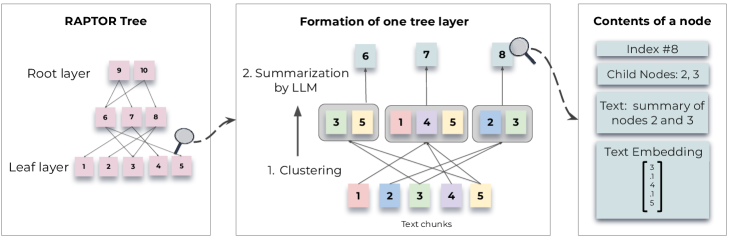
Source: Microsoft GraphRAG
A production GraphRAG system is a composed architecture of two major paths:
| Path | Responsibility |
|---|---|
| Indexing (offline) | Chunk documents, extract entities/relationships, detect communities, generate summaries, embed graph artifacts |
| Query (online) | Analyze intent, plan local vs. global search, retrieve graph evidence, rank, generate grounded response |
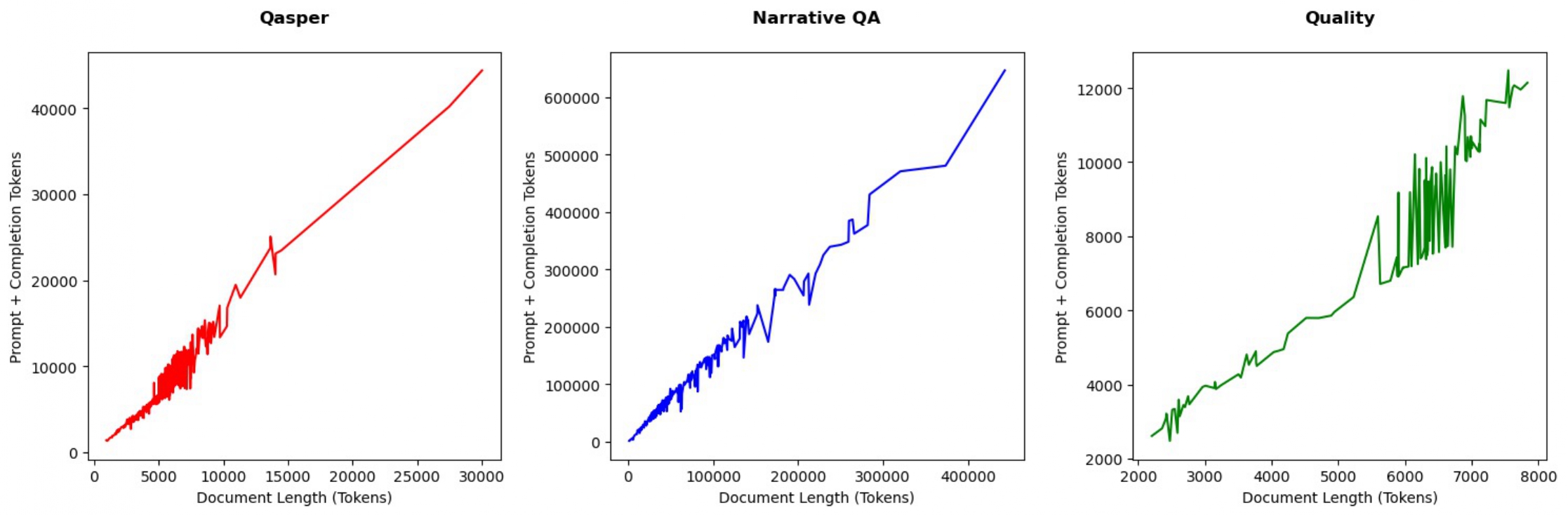
Source: Microsoft GraphRAG
Production teams treat graph indexing as infrastructure with its own SLA — not a nightly script that blocks query serving when it fails.
Diagram: GraphRAG production architecture
flowchart TB
    subgraph index [Indexing offline]
        DOC[Documents] --> CH[Chunk + extract]
        CH --> GS[Graph store]
        CH --> CD[Community detection]
        CD --> REP[Community reports]
        CH --> VEC[Vector index]
    end
    subgraph query [Query online]
        Q[User query] --> PL[Query planner]
        PL --> LS[Local search]
        PL --> GL[Global search]
        PL --> HY[Hybrid retrieval]
        LS --> GS
        GL --> REP
        HY --> VEC
        LS --> RANK[Evidence ranking]
        GL --> RANK
        HY --> RANK
        RANK --> LLM[LLM + guardrails]
    end
Indexing and query services scale independently; community reports power global search.
Diagram: Community detection hierarchy
flowchart BT
    L0[Level 0 communities — broad themes] --> L1[Level 1 — sub-themes]
    L1 --> L2[Level 2 — entity clusters]
    L2 --> E[Entities + relationships]
Leiden hierarchical clustering enables global search at the appropriate abstraction level.
Architecture principles
| Principle | Explanation |
|---|---|
| Graph first | Build and query graph structure — entities, edges, communities — not raw document chunks alone. |
| Relationship-aware retrieval | Retrieve connected subgraphs and community reports; similarity to a chunk is insufficient for multi-hop questions. |
| Entity resolution before retrieval | Link query mentions to graph entities before traversal. Unresolved entities produce empty or wrong subgraphs. |
| Communities over chunks | Community summaries capture dataset-level themes; chunks capture local detail. Use the right abstraction per query type. |
| Evidence before generation | Assemble ranked graph evidence before LLM call. Generation without graph context is standard RAG, not GraphRAG. |
| Independent graph lifecycle | Indexing, community regeneration, and query serving deploy and scale separately. |
| Deterministic retrieval | Graph queries and community selection produce reproducible evidence sets — non-determinism belongs in LLM synthesis only. |
| Explainability | Return entity paths, community IDs, and source document links with every answer. |
| Fresh graph | Incremental indexing and community refresh policies prevent stale relationship structures. |
How We Got Here
Architecture maturity progression
GraphRAG is the capstone retrieval pattern in the DataAIHub Architecture Series Version 1.
Enterprise Search
    ↓
Traditional RAG
    ↓
Enterprise RAG
    ↓
Knowledge Graph + LLM
    ↓
GraphRAG
    ↓
Agentic GraphRAG
Enterprise Search indexes siloed content. Traditional RAG retrieves chunks. Enterprise RAG adds security, hybrid retrieval, and operations. Knowledge Graph + LLM grounds reasoning in governed enterprise graphs. GraphRAG (this guide) extracts and queries graph structure from document corpora for relationship-aware retrieval. Agentic GraphRAG adds multi-step retrieval planning, tool use, and iterative graph exploration — the next evolution beyond fixed local/global search.
Diagram: Enterprise retrieval maturity
timeline
    title GraphRAG in the architecture series
    section Search
        Enterprise Search : Keyword indexes
        Traditional RAG : Vector chunks
    section Platform
        Enterprise RAG : Security + hybrid + ops
        KG + LLM : Governed graph grounding
    section Graph
        GraphRAG : Communities + multi-hop
        Agentic GraphRAG : Iterative graph exploration
GraphRAG is the capstone retrieval pattern when document corpora contain rich relationships.
Deploy GraphRAG only after Enterprise RAG fundamentals work. GraphRAG indexing costs more and latency is higher — justify with query types flat RAG cannot answer.
The Problem GraphRAG Architecture Solves
Teams that deploy GraphRAG without understanding why encounter failures that Enterprise RAG troubleshooting does not address.
Important
GraphRAG failures are indexing and planning failures — stale graphs, wrong search mode, poor extraction quality — not prompt problems.
Poor multi-hop retrieval
Vector search returns chunks similar to the query. Multi-hop questions require entities connected across documents — "How does Policy A relate to Incident B through Vendor C?" No single chunk contains the path. GraphRAG traverses extracted relationships.
Disconnected chunks
Flat RAG assembles top-k chunks that may contradict or duplicate without structural context. GraphRAG retrieves a connected subgraph — entities and relationships that form a coherent evidence package.
Missing relationships
If entity extraction misses edges during indexing, retrieval cannot recover them at query time. Graph construction quality is the ceiling on GraphRAG answer quality.
Entity ambiguity
"Apple" as company vs. fruit, or "Jordan" as person vs. region — unresolved mentions retrieve wrong subgraphs. Entity linking on the query path is mandatory.
Context fragmentation
Stuffing many chunks into LLM context wastes tokens on irrelevant text. GraphRAG compresses evidence through community summaries and ranked subgraphs — higher signal per token.
Long context windows
Larger context does not fix structural blindness. A 128K window full of chunks still lacks explicit relationship topology. Graph structure is the compression mechanism.
Hallucinations
When graph retrieval returns insufficient evidence, LLMs fabricate connections. Production architecture enforces refusal behavior and faithfulness checks against retrieved graph evidence.
Poor explainability
Regulated and high-stakes use cases need evidence beyond "chunk 7." GraphRAG provides entity IDs, relationship types, community report citations, and source document provenance.
Indexing Pipeline

Documents
 │
Chunking
 │
Entity + Relation Extraction
 │
Graph Construction
 │
Community Detection
 │
Graph Summaries
 │
Graph Index
Comparisons
GraphRAG Architecture extends — not replaces — Enterprise RAG and complements Knowledge Graph + LLM Architecture for governed facts. Use these tables to choose retrieval patterns and justify index cost.
Traditional RAG vs GraphRAG
| Dimension | Traditional RAG | GraphRAG |
|---|---|---|
| Retrieval unit | Document chunks | Entities, relationships, communities, and linked chunks |
| Reasoning | Implicit in LLM over chunks | Explicit graph traversal and community reports |
| Context | Top-k similar chunks | Ranked subgraph + community summaries |
| Relationships | Lost between chunks | First-class edges extracted at index time |
| Evidence | Chunk text + offset | Graph paths, community IDs, entity provenance |
| Scalability (index) | Embeddings per chunk | Embeddings + graph extraction + community LLM calls — higher index cost |
| Latency (query) | 2–4s typical | 4–10s — graph retrieval + planning overhead |
| Explainability | Document citations | Entity-relationship paths + community structure |
| Best for | Document Q&A, FAQ, policy lookup | Thematic questions, multi-hop, corpus exploration |
Traditional RAG
User
 │
Vector Search
 │
Top-k Chunks
 │
LLM
 │
Answer
GraphRAG
User
 │
Query Planner
 │
Local / Global Search
 │
Graph Evidence
 │
Evidence Ranking
 │
LLM
 │
Grounded Answer
Adopt GraphRAG when evaluation shows flat RAG fails on global and multi-hop question classes — not because graph technology is trending.
GraphRAG vs governed Knowledge Graph + LLM
| Dimension | KG + LLM Architecture | GraphRAG Architecture |
|---|---|---|
| Graph source | ERP, CRM, MDM — governed ingestion | LLM extraction from documents |
| Truth model | Authoritative records with lineage | Probabilistic — validate extractions |
| Best for | Operational cross-system facts | Document corpus themes, multi-hop discovery |
| Production pairing | Often combined — EKG for facts, GraphRAG for docs | Hybrid evidence with RAG chunks |
GraphRAG indexing vs fine-tuning
| Dimension | GraphRAG Architecture | Fine-tuning |
|---|---|---|
| Knowledge update | Re-index documents + regen communities | Retrain or refresh adapters |
| Relationship reasoning | Explicit graph traversal | Implicit — unreliable for enterprise facts |
| Provenance | Entity paths + community IDs + chunks | No source trail |
| When to choose | Dynamic document corpora with relationships | Style, format, task behavior |
Decision tree: GraphRAG deployment
Decision tree: When to deploy GraphRAG Architecture
flowchart TD
    A[Enterprise RAG in production?] -->|No| B[Stabilize RAG first]
    A -->|Yes| C[Eval fails global or multi-hop?]
    C -->|No| D[Stay on Enterprise RAG]
    C -->|Yes| E[Budget for 5-20x index cost?]
    E -->|No| F[Agentic RAG or query expansion]
    E -->|Yes| G[Deploy GraphRAG Architecture]
    G --> H[Hybrid local + global + vector]
Deploy GraphRAG when eval proves chunk-only retrieval fails — not because graphs are trending.
Component breakdown
Engineering Insight
Engineering Tip: Separate indexing and query services before choosing a framework. The indexing pipeline will run 10–100x longer than any single query — different resource profiles, different failure modes.
Document Processing
Purpose: Ingest, normalize, and prepare source documents for chunking and extraction.
Responsibilities:
- Load PDF, HTML, DOCX, markdown, and API-sourced content
- Extract clean text; preserve metadata (title, date, author, ACL)
- Deduplicate and version documents
- Apply document-level access classification
Technology choices: Unstructured.io, Apache Tika, custom parsers, LlamaIndex readers, Azure Document Intelligence.
Production considerations: Preserve source URI and document ID through entire pipeline. OCR quality affects extraction — monitor error rates per document type.
Common mistakes: Stripping metadata needed for ACL filtering. Processing duplicate documents without dedup keys.
Chunking
Purpose: Segment documents into text units sized for entity extraction and embedding.
Responsibilities:
- Split documents with overlap for context continuity
- Create TextUnit records linked to parent documents
- Tune chunk size for extraction model context limits
- Log chunk-to-document provenance
Technology choices: LangChain splitters, LlamaIndex node parsers, Microsoft GraphRAG chunk workflow.
Production considerations: GraphRAG extraction quality is sensitive to chunk boundaries — entities split across chunks may get duplicate or incomplete nodes. See Chunking Strategies.
Common mistakes: Chunks too large for extraction model. No overlap — relationships spanning boundaries missed.
Entity Extraction
Purpose: Identify named entities and concepts from text units using LLM or NER models.
Responsibilities:
- Extract entities with types (Person, Organization, Concept, etc.)
- Assign stable entity IDs within indexing run
- Merge duplicate entity mentions within document
- Output entity table for graph construction
Technology choices: Microsoft GraphRAG extract_graph, GPT-5.6 / Claude Sonnet 5 extraction prompts, spaCy + LLM hybrid, Neo4j GraphRAG LLM entity extraction.
Production considerations: Cache LLM extraction calls (Microsoft GraphRAG cache layer). Sample and audit extraction quality per corpus. Version extraction prompts.
Common mistakes: No human audit of extraction on new corpora. Changing extraction prompts without re-indexing.
Relationship Extraction
Purpose: Identify typed relationships between extracted entities.
Responsibilities:
- Extract edges with relationship types and descriptions
- Capture relationship strength or confidence if supported
- Link relationships to source text units for provenance
- Deduplicate parallel edges
Technology choices: Microsoft GraphRAG relationship extraction, custom LLM prompts, Neo4j GraphRAG, RDF triple extraction pipelines.
Production considerations: Relationship types should be constrained by schema or post-validated — uncontrolled types produce noisy graphs.
Common mistakes: Accepting every LLM-extracted edge without validation. No provenance link to source chunk.
Graph Construction
Purpose: Assemble entities and relationships into a queryable knowledge graph structure.
Responsibilities:
- Build graph tables (nodes, edges) per GraphRAG knowledge model
- Merge entities across text units and documents
- Apply entity resolution across document boundaries
- Version graph snapshots
Technology choices: Microsoft GraphRAG parquet outputs, Neo4j, NetworkX (prototype), Memgraph, Stardog (materialized graph).
Production considerations: Entity merge strategy is critical — aggressive merge collapses distinct entities; weak merge fragments the graph. Document as ADR.
Common mistakes: Rebuilding entire graph daily without incremental merge. No graph version tag on queries.
Knowledge Graph
Purpose: Persist the extracted graph for traversal, community detection, and query-time retrieval.
Responsibilities:
- Store nodes, edges, communities, and reports
- Support fast neighbor lookup and subgraph retrieval
- Index entity embeddings for similarity search
- Replicate for HA
Technology choices: Neo4j, Memgraph, Stardog, Microsoft GraphRAG parquet + vector store, Azure Cosmos DB (Gremlin).
Production considerations: Choose storage aligned with query patterns — Neo4j for Cypher traversal, parquet + LanceDB for Microsoft GraphRAG default stack.
Common mistakes: Graph storage not sized for edge count growth. No backup of graph snapshots.
Community Detection
Purpose: Cluster densely connected entities into hierarchical communities for global search.
Responsibilities:
- Run Leiden (or similar) hierarchical clustering on graph
- Produce community hierarchy at multiple levels
- Assign entities to community memberships
- Regenerate on graph updates above threshold
Technology choices: Microsoft GraphRAG detect_communities (graspologic), NetworkX + custom, Neo4j GDS community algorithms.
Production considerations: Community detection is compute-intensive — run offline. Tune resolution parameter for community granularity (ADR). See Figure 1.
Common mistakes: Communities too granular (noise) or too coarse (useless summaries). No regeneration policy when graph grows.
Graph Summaries
Purpose: Generate LLM-written community reports that summarize themes, entities, and relationships per community.
Responsibilities:
- Produce hierarchical community reports at each level
- Include key entities, relationship patterns, and findings
- Embed report text for retrieval
- Version reports with community structure
Technology choices: Microsoft GraphRAG generate_reports, custom LLM summarization per community subgraph.
Production considerations: Summary quality drives global search — evaluate with human reviewers on sample communities. Cache report generation.
Common mistakes: Stale reports after graph update. Reports generated from incomplete community membership.
Graph Index
Purpose: Unified retrieval index over entities, relationships, community reports, and text units.
Responsibilities:
- Embed and index all retrievable artifacts
- Support vector search over entities and reports
- Maintain mapping from index entries to graph elements
- Incremental index updates on graph changes
Technology choices: LanceDB (Microsoft GraphRAG default), Pinecone, Weaviate, Elasticsearch, Neo4j vector indexes.
Production considerations: Pin embedding model version — re-embed on model change. Separate indexes for local (entity) vs. global (report) retrieval if needed.
Common mistakes: Index drift from graph store. Single embedding model for entities and long reports without testing.
Local Search
Purpose: Answer entity-specific questions by retrieving ego networks around relevant entities and linked text units.
Responsibilities:
- Identify seed entities from query (entity linking)
- Expand to k-hop neighborhood or ranked subgraph
- Include linked text unit chunks for detail
- Return structured local context package
Technology choices: Microsoft GraphRAG local search, Neo4j GraphRAG vector + traversal, custom Cypher expansion.
Production considerations: Cap hop depth and node count — supernodes degrade latency. Default for "who," "what," entity-centric questions.
Common mistakes: Unbounded traversal. Local search for global thematic questions (wrong mode).
Global Search
Purpose: Answer dataset-wide thematic questions using community reports at appropriate hierarchy level.
Responsibilities:
- Map query to relevant community level
- Retrieve top community reports by embedding similarity
- Optionally drill down hierarchy for detail
- Assemble global context for LLM
Technology choices: Microsoft GraphRAG global search, custom community report retriever.
Production considerations: Global search depends on community report quality — invest in indexing evaluation. Higher latency than local — set expectations.
Common mistakes: Using global search without community reports. Wrong hierarchy level selected.
Hybrid Search
Purpose: Combine local entity retrieval, global community retrieval, and vector chunk search in one query path.
Responsibilities:
- Run local and global paths in parallel where appropriate
- Merge evidence with reciprocal rank fusion or learned ranker
- Deduplicate overlapping entities and chunks
- Route by query planner decision
Technology choices: Microsoft GraphRAG mixed mode, LangChain ensemble retriever, custom orchestration.
Production considerations: Hybrid is default for ambiguous queries. Log which paths contributed evidence for debugging.
Common mistakes: Always running both paths (cost). Never running global (misses thematic questions).
Query Planner
Purpose: Classify query intent and select local, global, or hybrid retrieval strategy.
Responsibilities:
- Analyze query type (entity-specific vs. thematic vs. multi-hop)
- Select search mode and parameters (hop depth, community level)
- Decompose complex queries into sub-queries if needed
- Log planning decisions for evaluation
Technology choices: Economy-tier LLM classifier (Claude Haiku, Gemini 3.8 Flash), rule-based patterns, Microsoft GraphRAG search type parameter.
Production considerations: Planner errors cause wrong search mode — maintain golden set of query → mode pairs. Allow user override for power users.
Common mistakes: No planner — always local search. Planner latency without timeout.
Graph Context Builder
Purpose: Assemble retrieved graph evidence into structured context for the LLM within token budget.
Responsibilities:
- Serialize subgraph as structured JSON or natural language
- Include community report excerpts when relevant
- Attach provenance (document IDs, entity IDs, community IDs)
- Truncate by relevance rank within token cap
Technology choices: Custom templates, Microsoft GraphRAG context builders, LangChain document formatters.
Production considerations: Structured JSON evidence enables faithfulness checking. Cap tokens — ranked evidence beats volume.
Common mistakes: Dumping raw graph tables into prompt. No token budget enforcement.
Prompt Builder
Purpose: Construct generation prompt with system instructions, graph context, and citation requirements.
Responsibilities:
- Load versioned prompt templates
- Inject graph context and query
- Require citation format for entities and reports
- Support streaming generation config
Technology choices: Langfuse prompt management, Git-backed templates, Microsoft GraphRAG prompt configs.
Production considerations: Log prompt_version per trace. Separate prompts for local vs. global answer styles.
Common mistakes: Same prompt for all search modes. No instruction to refuse when evidence empty.
LLM
Purpose: Generate natural language answers grounded in assembled graph evidence.
Responsibilities:
- Synthesize answer from graph context only
- Cite entities, communities, and source documents
- Refuse when evidence insufficient
- Stream tokens for perceived latency
Technology choices: Claude Sonnet 5, GPT-5.6, Gemini 3.5 Pro — routed per workload via AI Gateway; pin model versions per deployment.
Production considerations: Use capable model for synthesis; economy model for planning and extraction. Route through AI Gateway patterns.
Common mistakes: Generation without graph context (degenerates to standard RAG). No refusal behavior.
Evidence Ranking
Purpose: Score and filter retrieved graph evidence before context assembly.
Responsibilities:
- Rank entities, edges, reports, and chunks by relevance
- Deduplicate near-duplicate evidence
- Apply minimum relevance threshold
- Log ranked evidence for evaluation
Technology choices: Cross-encoder reranker, Cohere Rerank, embedding similarity scores, custom graph centrality weights.
Production considerations: Re-ranking graph evidence is high leverage — see Re-ranking. Separate ranking models for entities vs. reports.
Common mistakes: No ranking — passing full neighborhood to LLM. Ranking chunks but not community reports.
Guardrails
Purpose: Validate outputs against retrieved graph evidence and policy rules.
Responsibilities:
- Faithfulness check: claims map to retrieved entities/edges
- Block fabricated relationships not in evidence
- PII and policy filtering on output
- Escalation on low-confidence answers
Technology choices: NeMo Guardrails, custom claim-evidence matcher, LLM-as-judge.
Production considerations: See Guardrails. Verify relationship claims against edge list in evidence package.
Common mistakes: Guardrails only on input. No relationship-level faithfulness check.
Evaluation
Purpose: Measure indexing quality, retrieval mode accuracy, and answer faithfulness continuously.
Responsibilities:
- Golden sets for local, global, and multi-hop questions
- Measure entity extraction precision/recall on sample
- Track search mode classification accuracy
- Run nightly end-to-end eval in CI
Technology choices: RAGAS, DeepEval, Langfuse datasets, custom pytest + LLM judge.
Production considerations: Eval indexing and querying independently. Include questions flat RAG fails — that's GraphRAG's justification.
Common mistakes: End-to-end only. No baseline comparison against Enterprise RAG.
Observability
Purpose: Trace indexing runs, query plans, retrieval paths, and generation costs.
Responsibilities:
- Distributed tracing with
trace_id - Log search mode, seed entities, community IDs retrieved
- Indexing job metrics: extraction counts, community sizes, duration
- Per-tenant cost attribution
Technology choices: Langfuse, OpenTelemetry, MLflow.
Production considerations: Alert on indexing failures, graph staleness, and retrieval empty-rate spikes. See Observability.
Common mistakes: Logging LLM only — not graph retrieval spans. No indexing dashboard.
Query Flow

User
 │
Query Planner
 │
Local / Global Search
 │
Evidence Ranking
 │
LLM
 │
Guardrails
 │
Response
Step-by-Step Flow
End-to-end request flow
User Question
    ↓
API Gateway              → TLS, rate limit, trace_id
    ↓
Authentication           → Token validation, tenant context
    ↓
Intent Analysis          → Classify query type; extract entity mentions
    ↓
Query Planner            → Select local, global, or hybrid; set parameters
    ↓
Entity Linking           → Map mentions to graph entity IDs
    ↓
Local Search             → k-hop subgraph + linked text units (if applicable)
    ↓
Global Search            → Community report retrieval (if applicable)
    ↓
Community Retrieval      → Rank reports; optional hierarchy drill-down
    ↓
Evidence Ranking         → Score and filter entities, edges, reports, chunks
    ↓
Graph Context Builder    → Assemble structured evidence within token budget
    ↓
Prompt Builder           → Load template version; inject context
    ↓
LLM Generation           → Grounded answer with citations
    ↓
Guardrails               → Faithfulness check against evidence
    ↓
Grounded Response        → Answer + graph evidence + trace_id
    ↓
Async: Evaluation        → Sample into eval dataset
    ↓
Async: Observability     → Metrics, cost, latency per stage
Example: "What are the main compliance themes across our vendor contracts, and which vendors are most associated with data residency risks?"
- Query Planner — Classifies as hybrid: global (themes) + local (vendor entities).
- Global Search — Retrieves level-1 community reports matching "compliance" and "data residency."
- Entity Linking — Links "vendors" to
Organizationentities in graph. - Local Search — Expands 2-hop from vendor entities with
data_residency_riskedges. - Evidence Ranking — Top 3 community reports + top 5 vendor subgraphs.
- LLM — Synthesizes themes with
[community:12]and[entity:vendor_442]citations.
Diagram: GraphRAG query execution sequence
sequenceDiagram
    participant U as User
    participant G as API gateway
    participant P as Query planner
    participant GR as Graph retrieval
    participant V as Vector index
    participant L as LLM
    U->>G: question + tenant
    G->>P: classify local/global/hybrid
    P->>GR: entity link + traverse OR community rank
    P->>V: hybrid chunk search
    GR-->>P: subgraph + reports
    V-->>P: text units
    P->>L: ranked evidence package
    L-->>U: grounded answer + graph citations
Log planner mode and seed entities on every trace — wrong mode is the fastest diagnosis path.
Production Tip
Production Advice: Log search mode and seed entities on every trace. Wrong mode selection is the fastest diagnosis path for bad GraphRAG answers.
Technology Choices
GraphRAG Frameworks
| Framework | Strengths | Tradeoffs | Best for |
|---|---|---|---|
| Microsoft GraphRAG | Reference implementation, community detection, local/global search | Opinionated pipeline, indexing cost | Teams adopting the research pattern on Azure |
| Neo4j GraphRAG | Cypher traversal, Graph Data Science, production graph ops | Requires Neo4j platform | Neo4j-centric enterprises |
| LlamaIndex Property Graph | Flexible orchestration, many retrievers | Assembly required | Custom pipelines |
| LangChain GraphRAG | Ecosystem integration | Abstraction overhead | LangChain-standard shops |
Graph Storage
| Store | Strengths | Best for |
|---|---|---|
| Neo4j | Cypher, HA, GDS community algorithms | Production graph + GraphRAG |
| Memgraph | In-memory speed, Cypher | Latency-sensitive traversal |
| Stardog | RDF, federation, reasoning | Combining GraphRAG with EKG |
| Parquet + LanceDB | Microsoft GraphRAG default | Research-aligned deployments |
Embeddings and LLMs
| Provider | Role | Notes |
|---|---|---|
| Voyage AI | Entity and report embeddings | Strong retrieval benchmarks |
| OpenAI | Extraction + embedding + generation | API cost at index scale |
| Claude | Extraction quality, synthesis | Strong for long community reports |
| BGE | Self-hosted embeddings | Data sovereignty |
Observability
| Tool | Focus |
|---|---|
| Langfuse | LLM tracing, eval datasets, prompt versions |
| OpenTelemetry | Distributed tracing across index and query paths |
Architecture decision records
| ADR | Decision | Why |
|---|---|---|
| ADR-001 | Local vs. global search routing | Wrong mode fails silently — planner is required, not optional |
| ADR-002 | Graph refresh strategy | Full rebuild vs. incremental — cost and staleness trade-off |
| ADR-003 | Community granularity | Leiden resolution affects global search quality |
| ADR-004 | Materialized community summaries | Pre-compute reports at index time — global search depends on them |
| ADR-005 | Graph storage backend | Parquet for Microsoft stack; Neo4j for unified graph platform |
| ADR-006 | Hybrid GraphRAG + Enterprise RAG | Chunks for detail, graph for structure — combined evidence packages |
| ADR-007 | Graph embeddings | Entity description embeddings for linking; separate from chunk embeddings |
| ADR-008 | Incremental graph updates | Merge new documents without full re-index when possible |
| ADR-009 | GraphRAG vs. governed EKG | GraphRAG for document corpora; EKG for source-system facts — complementary |
| ADR-010 | Extraction model versioning | Prompt change = re-index decision |
Engineering Insight
Engineering Tip: Document ADR-009 before procurement. Teams buy GraphRAG when they need EKG, or rebuild EKG facts with LLM extraction — both fail.
Production Layers

Documents
 │
Index Pipeline (offline)
 │
Graph Store + Vector Index
 │
Query Service (online)
 │
LLM + Guardrails
 │
Observability
Design Decisions
Production design decisions
Incremental graph construction
Process new and changed documents through extraction and merge into existing graph. Full rebuild only on extraction model version change or catastrophic corruption. Track graph_version on every query.
Graph freshness
Define SLA: community regeneration weekly, incremental document index daily, or event-driven on corpus update. Alert when index lag exceeds SLA. Stale communities produce wrong global answers.
Community regeneration
Trigger when entity/edge count grows > N% or on schedule. Partial regeneration at affected community branches if supported; else full community pass offline.
Graph versioning
Tag snapshots graph-2026-07-11-v3. Query service pins to active version; blue-green switch after eval passes on new version.
Entity resolution
Merge duplicate entities across documents during indexing. Query-time linking maps user mentions to canonical entity IDs. Steward review queue for low-confidence merges.
Cache strategy
Cache community reports (immutable per graph version). Cache local subgraph expansions for frequent entities. Semantic cache for repeated queries per Enterprise RAG patterns.
Evaluation
Golden set with local, global, and multi-hop questions. Compare against Enterprise RAG baseline — GraphRAG must win on target question classes to justify cost.
High availability
Query service: 2+ replicas. Graph store: replication per vendor docs. Indexing: idempotent jobs that can retry without corrupting graph.
Disaster recovery
| Component | RPO | RTO | Strategy |
|---|---|---|---|
| Graph snapshot | 24h | 4h | Versioned parquet/DB backup |
| Vector index | 24h | 4h | Rebuild from graph + embeddings |
| Community reports | 24h | 8h | Regenerate from graph snapshot |
| Extraction cache | 0 | 1h | LLM cache replay |
Security
Document-level ACLs propagated to text units and entities. Filter retrieval by tenant and document access. Audit graph queries in regulated environments.
Tip
Performance Tip: Run local and global search in parallel for hybrid mode. Sequential execution doubles retrieval latency.
Running in Production
Best practices
- Justify GraphRAG with eval — prove flat RAG fails on your question classes first.
- Separate indexing from query services — independent scaling and failure domains.
- Invest in extraction quality — graph ceiling equals extraction ceiling.
- Use query planner — never default all queries to local search.
- Version graph snapshots — pin queries to known graph version.
- Regenerate communities on schedule — stale reports break global search.
- Entity resolution at index and query time — merge on ingest; link on query.
- Rank evidence before generation — subgraphs can be large.
- Structured evidence packages — enable faithfulness guardrails.
- Cache community reports — immutable per graph version.
- Incremental indexing — avoid daily full rebuilds at scale.
- Pin embedding and extraction model versions — document re-index procedure.
- Hybrid with Enterprise RAG — chunks for nuance, graph for structure.
- Log search mode and seed entities — essential for debugging.
- Refusal when evidence empty — never fabricate relationships.
- Evaluate indexing and querying separately — isolate failure domains.
- Monitor indexing job health — extraction failures are silent graph rot.
- Cap traversal depth — prevent supernode explosions.
- AI Gateway for all LLM calls — extraction, summarization, generation.
- Compare cost to Enterprise RAG — GraphRAG index cost is 5–20x higher.
- Use governed EKG for enterprise facts — GraphRAG for document-derived structure.
- Prompt version every template — log with trace.
- Red-team relationship hallucinations — faithfulness checks on edges.
- Document ADRs — especially GraphRAG vs. EKG boundary.
- Read Parts 1–3 of this series — GraphRAG extends those architectures; it does not replace them.
Best Practice
Best Practice: Run the Production Readiness Checklist before promoting GraphRAG to production traffic.
Common Mistakes
| Mistake | Why it fails | What to do instead |
|---|---|---|
| No entity resolution | Wrong subgraphs, missed connections | Merge at index; link at query |
| Graph rebuilt daily | Indexing cost, downtime, version chaos | Incremental merge with scheduled community regen |
| Ignoring communities | Global questions get chunk-level answers | Invest in community detection and reports |
| No evidence ranking | Token overflow, irrelevant context | Rank entities, reports, chunks before LLM |
| Overusing vector search | Degenerates to standard RAG | Graph traversal and reports primary |
| Missing graph freshness | Stale relationships and reports | SLA, monitoring, regeneration policy |
| Poor graph quality | Extraction noise propagates to answers | Audit extraction; validate edge types |
| No observability | Cannot debug mode or retrieval failures | Trace planner, retrieval, ranking spans |
| GraphRAG for simple FAQ | Massive over-engineering | Enterprise RAG |
| Replacing EKG with GraphRAG | Loses governed source-system facts | Complementary architectures (ADR-009) |
| No baseline comparison | Cannot justify cost | Eval against Enterprise RAG on same golden set |
| Unbounded local search | Latency and cost explosions | Hop depth and node caps |
| Single search mode | Wrong answers for half of questions | Query planner with local + global |
| No graph versioning | Cannot reproduce or roll back answers | Versioned snapshots with blue-green deploy |
| Skipping guardrails | Relationship hallucinations reach users | Faithfulness check on graph evidence |
Real Production Example
Example enterprise stack
| Layer | Technology | Role |
|---|---|---|
| Frontend | Next.js | Query UI, evidence graph visualization |
| API Gateway | Kong | TLS, rate limiting |
| AI Gateway | Portkey | LLM routing for extraction, summarization, generation |
| Application | FastAPI | Query orchestration, planner, context builder |
| GraphRAG Engine | Microsoft GraphRAG | Indexing pipeline, local/global search |
| Graph Platform | Neo4j AuraDB | Graph storage, traversal, GDS communities |
| Vector Index | LanceDB / Pinecone | Entity and report embeddings |
| Embeddings | Voyage AI | Index and query embeddings |
| LLM | Claude Sonnet | Extraction, community reports, synthesis |
| Guardrails | Custom faithfulness checker | Edge-level grounding validation |
| Observability | Langfuse + OpenTelemetry | Index jobs, query traces, eval datasets |
| Deployment | Kubernetes (AKS) | Index workers + query service autoscaling |
Indexing runs as scheduled Kubernetes jobs; query service scales horizontally. Governed enterprise facts for operational entities come from Enterprise Knowledge Graph Architecture; GraphRAG indexes the document corpus layer.
Production readiness checklist
- Eval justification — GraphRAG beats Enterprise RAG on target question classes
- Indexing pipeline — Idempotent, monitored, versioned graph output
- Extraction quality — Sampled human audit on entity and relationship precision
- Community detection — Tuned granularity; reports generated and embedded
- Graph versioning — Active version pinned; blue-green deploy tested
- Query planner — Local/global/hybrid routing with logged decisions
- Entity linking — Query mentions mapped to graph IDs with confidence thresholds
- Evidence ranking — Relevance threshold before LLM context assembly
- Guardrails — Faithfulness check on graph evidence
- Incremental indexing — New documents merged without full daily rebuild
- Community regeneration — Scheduled or threshold-triggered
- ACL propagation — Document permissions enforced in retrieval
- AI Gateway — All LLM calls routed with failover
- Observability — Traces for index jobs and query path
- Evaluation pipeline — Nightly golden-set eval in CI
- Disaster recovery — Graph snapshot restore tested
- Cost monitoring — Index and query cost per corpus and tenant
Where It Breaks Down
GraphRAG Architecture fails when teams treat it as "RAG with extra steps" without investing in extraction quality, community regeneration, and query planning. Extraction errors are permanent until re-index — they are not fixable at prompt time.
| Failure domain | Symptom | Root cause |
|---|---|---|
| Indexing | Sparse or noisy graph | Bad chunk boundaries; unconstrained relationship types |
| Global search | Generic thematic answers | Stale community reports; wrong hierarchy level |
| Local search | Empty or huge subgraphs | Entity linking failure; unbounded traversal |
| Hybrid | Degenerates to vector RAG | Graph path skipped; planner always local |
| Cost | Budget overrun | Full daily rebuild; no extraction cache |
See GraphRAG for concept-level failure modes. This architecture guide addresses operational failures — versioning, SLA, and eval gates.
When NOT to Use GraphRAG
GraphRAG adds significant indexing cost and query latency. Do not build this architecture when:
- Simple FAQ or policy lookup — Enterprise RAG answers single-document questions faster and cheaper
- Small corpus — under ~500 documents rarely justifies community detection overhead
- No relationships in questions — pure keyword or semantic lookup needs no graph extraction
- Low latency requirements — sub-2s p95 is difficult with graph planning and retrieval
- Prototype — validate retrieval with Enterprise RAG first; prove graph value with eval
- Limited compute budget — indexing requires many LLM calls for extraction and community reports
- Governed enterprise facts only — use Knowledge Graph + LLM over Enterprise Knowledge Graph instead
Use GraphRAG when global thematic questions, multi-hop relationship queries, and corpus exploration are core requirements — and evaluation proves flat RAG fails.
Related Guides
Architecture Series (Version 1):
- Enterprise RAG Architecture — document retrieval platform
- Knowledge Graph + LLM Architecture — LLM grounding in governed graphs
- Enterprise Knowledge Graph Architecture — semantic platform for enterprise systems
Graph foundations:
-
GraphRAG — core concepts and indexing overview
-
Knowledge Graphs — graph modeling fundamentals
-
Graph Databases — storage and operations
-
Cross-cluster retrieval: RAG · Hybrid Search · Agentic RAG · Knowledge Graphs
-
Tools: LangChain · LlamaIndex · Neo4j vector
-
Rankings: Best Vector Databases · Best AI Agent Frameworks
Diagram: Architecture series learning path
flowchart LR
    A[Enterprise RAG] --> B[KG + LLM Arch]
    B --> C[GraphRAG Arch]
    C --> D[Agentic GraphRAG]
Operations:
- Chunking Strategies — index-time segmentation
- Embedding Models — model selection and versioning
- Re-ranking — evidence ranking patterns
- Evaluation · Observability · Guardrails
Learning Path
Prerequisites: Enterprise RAG Architecture · Knowledge Graph + LLM Architecture · Enterprise Knowledge Graph Architecture · GraphRAG
This guide completes Version 1 of the DataAIHub Architecture Series.
Estimated time: 40 min · Difficulty: Advanced
Architecture Series
Production architecture references for designing and operating enterprise AI systems at scale.
Which Architecture Should You Choose?
Need relationship-aware retrieval?
    ↓
   No → Enterprise RAG
    ↓
   Yes
    ↓
Document corpus or governed enterprise data?
    ↓
Governed enterprise systems → Knowledge Graph + LLM
    ↓
Document corpus
    ↓
Need global themes + multi-hop?
    ↓
   No → Hybrid Enterprise RAG may suffice
    ↓
   Yes
    ↓
GraphRAG Architecture
Need relationship-aware retrieval? — If chunk similarity answers all questions, stop at Enterprise RAG.
Document corpus vs. governed enterprise data? — Source-system facts belong in Enterprise Knowledge Graph Architecture consumed by Knowledge Graph + LLM. GraphRAG targets unstructured document corpora.
Need global themes and multi-hop? — If questions are entity-local only, lighter graph retrieval may suffice. GraphRAG's differentiator is community-level global search and cross-document relationship traversal.
Interview Questions
-
How does GraphRAG Architecture differ from Enterprise RAG Architecture?
- Expected: builds graph from documents; retrieves entities/communities not just chunks; local vs global search modes.
-
Why separate indexing and query services?
- Expected: different resource profiles; indexing 10–100× longer; independent failure domains and SLAs.
-
What does community detection enable that vector RAG cannot?
- Expected: global thematic questions over entire corpus via pre-computed community reports.
-
GraphRAG Architecture vs Enterprise Knowledge Graph Architecture?
- Expected: GraphRAG extracts from documents; EKG governs source-system facts — complementary (ADR-009).
-
What ADRs matter most on day one?
- Expected: local/global routing, graph refresh strategy, GraphRAG vs EKG boundary, extraction model versioning.
-
How do you evaluate GraphRAG Architecture against Enterprise RAG?
- Expected: shared golden set; must win on global/multi-hop classes to justify 5–20× index cost.
-
Why is evidence ranking required before LLM context assembly?
- Expected: subgraphs and report sets exceed token budget; unranked evidence adds noise and cost.
-
Name three indexing pipeline monitoring signals.
- Expected: entities per chunk, relationship density, community size distribution, extraction failure rate, graph version lag.
FAQs
How is GraphRAG Architecture different from the GraphRAG fundamentals guide?
The GraphRAG guide explains concepts — indexing phases, local vs. global search, community detection. This guide is the production architecture reference: components, operations, ADRs, checklist, and stack decisions.
How does GraphRAG relate to Enterprise RAG?
Enterprise RAG retrieves document chunks with hybrid search and operational controls. GraphRAG builds a graph from documents and retrieves relationships and communities. Many production systems combine both in hybrid evidence packages.
How does GraphRAG relate to Enterprise Knowledge Graph?
Enterprise Knowledge Graph Architecture governs facts from enterprise source systems (ERP, CRM, MDM). GraphRAG extracts graphs from documents. They are complementary — not substitutes.
Microsoft GraphRAG or Neo4j GraphRAG?
Microsoft GraphRAG implements the research pattern (Leiden communities, local/global search) with parquet outputs — ideal for Azure-aligned teams. Neo4j GraphRAG integrates with production Cypher graphs and GDS — ideal for Neo4j platform shops. ADR-005 documents the choice.
What indexing cost should I expect?
GraphRAG indexing requires LLM calls per chunk (extraction), per community (reports), and embedding passes — typically 5–20x the cost of embedding-only RAG indexing. Budget before procurement.
How often should I regenerate communities?
When entity/edge count grows >10–20% or on a fixed schedule (weekly/monthly). Monitor global search quality — degrading thematic answers signal stale communities.
What latency targets are realistic?
| Mode | p95 target |
|---|---|
| Local search | 4–6s |
| Global search | 6–10s |
| Hybrid | 8–12s |
Streaming first token improves perceived latency.
Can I incrementally update the graph?
Yes — merge new document extractions without full rebuild. Community regeneration may be partial or full depending on graph change scope. Full rebuild required on extraction model version change.
How do I evaluate GraphRAG vs. Enterprise RAG?
Shared golden question set. Measure answer correctness, faithfulness, and latency. GraphRAG must win on global and multi-hop classes to justify deployment.
What comes after GraphRAG?
Agentic GraphRAG — iterative retrieval planning, tool use, and multi-step graph exploration. Fixed local/global search is Version 1; agents are the next maturity level.
References
- Microsoft GraphRAG — Indexing Architecture
- Microsoft GraphRAG — Default Dataflow
- Microsoft GraphRAG — GitHub
- Microsoft Research — GraphRAG Blog
- From Local to Global: A Graph RAG Approach (Edge et al., 2024)
- Neo4j — GraphRAG for Agentic AI
- Neo4j GraphRAG Python Library
- LlamaIndex — Knowledge Graph RAG
- LangChain — Graph RAG
Further Reading
- Stardog — Knowledge Graph + LLM Applications
- Memgraph — GraphRAG Patterns
- Microsoft — GraphRAG Solution Accelerator (Azure)
Key Takeaways
- GraphRAG Architecture is the relationship-aware retrieval layer for document corpora — communities, entities, and edges replace chunk-only retrieval for global and multi-hop questions.
- Indexing and query are independent systems — graph construction, community detection, and report generation are offline investments that enable online local and global search.
- Do not retrieve documents; retrieve relationships — the engineering rule that distinguishes GraphRAG from Enterprise RAG.
- GraphRAG complements Enterprise Knowledge Graph Architecture and Knowledge Graph + LLM Architecture — it does not replace governed enterprise semantic platforms.
- This guide completes Version 1 of the DataAIHub Architecture Series — the natural evolution when enterprise knowledge contains rich relationships and multi-hop reasoning becomes essential.