OpenAI Releases GPT-6.2 Astra and Sol With a 20% Cheaper Astra API
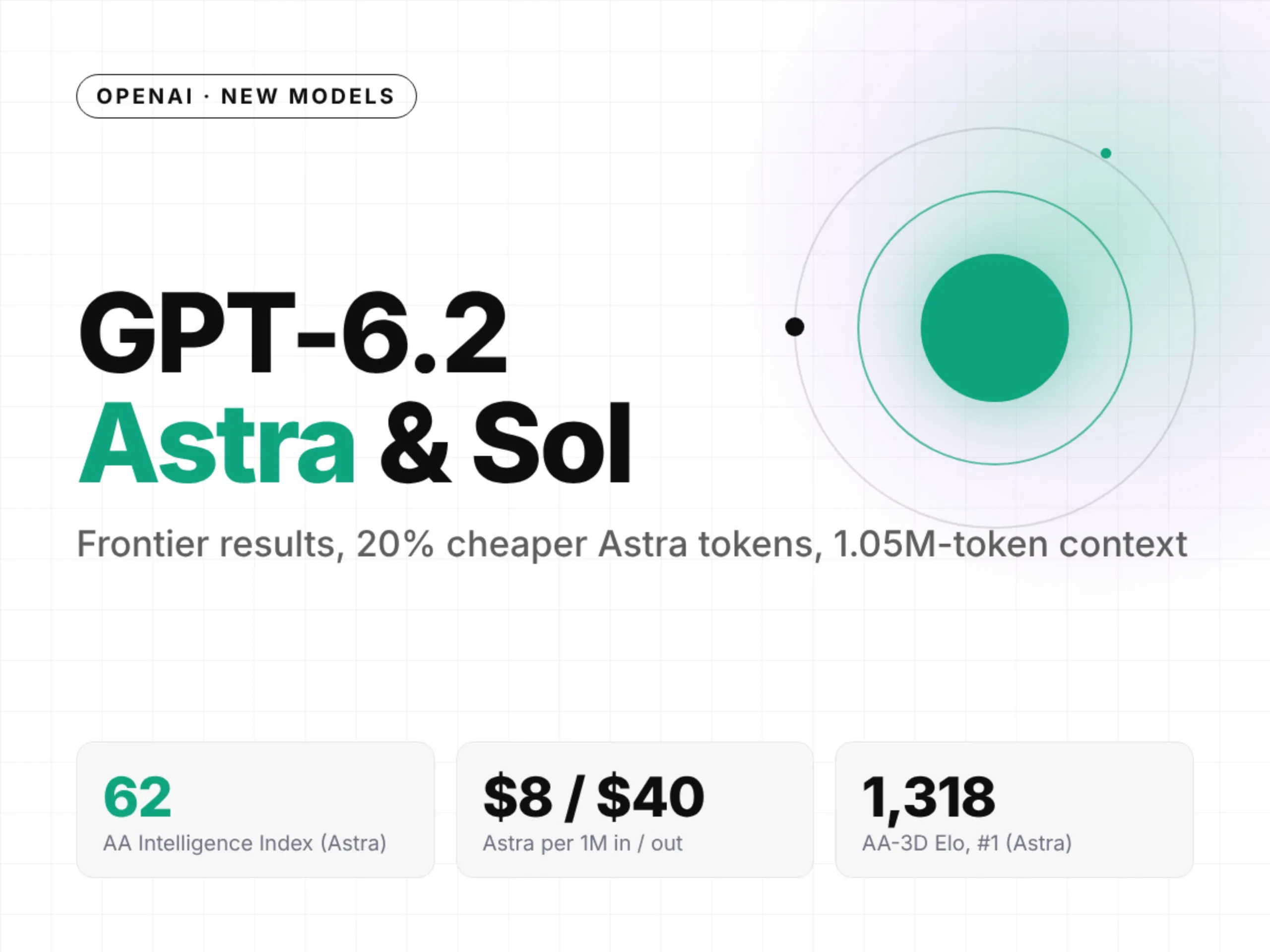
OpenAI released GPT-6.2 Astra and GPT-6.2 Sol on November 17, 2026. Astra's API price drops 20% to $8/$40 per million tokens, and it ranks second on the Artificial Analysis Intelligence Index. The post OpenAI Releases GPT-6.2 Astra and Sol With a 20% Cheaper Astra API appeared first on MarkTechPost.
Key Takeaways From Nvidia's First Results Since CEO Departure
Nvidia gave a sales forecast that exceeded Wall Street estimates, signaling that demand remains strong following the chaotic exit of CEO Jensen Huang. Mandeep Singh has more on "Bloomberg The Close." (Source: Bloomberg)
Nvidia Delivers Solid Outlook in First Post-Huang Earnings
Nvidia's sales forecast came in above estimates as the chipmaker delivered its first earnings report after the ouster of former CEO Jensen Huang. The report shows AI demand remains strong, calming investor fears about larger impact on the AI industry. Bloomberg's Mandeep Singh and Seaport Research Partners' Jay Goldberg break down the earnings report. (Source: Bloomberg)
The SEC is opening a probe into Nvidia following the departure of CEO Jensen Huang, who admitted to an affair with an alleged Chinese spy, reports The Wall Street Journal.
Traders Exploiting Pricing Gaps In Pre-IPO Contracts
Bloomberg’s Muyao Shen joins Scarlet Fu and Tim Stenovec on “Bloomberg Crypto.” The frenzy surrounding Anthropic’s upcoming stock market debut has been playing out in digital-asset markets for months, with speculators betting on the artificial intelligence company’s value before its shares begin trading. (Source: Bloomberg)
Nvidia Results Show Resilience, New Street's Chkaiban Says
Antoine Chkaiban, New Street Research equity research analyst, technology infrastructure, reacts to Nvidia's sales forecast that exceeded Wall Street estimates. He speaks on "Bloomberg The Close." (Source: Bloomberg)
Katie Wheeler, managing director of partnerships at Ondo, joins Scarlet Fu and Tim Stenovec on “Bloomberg Crypto.” They discuss Ondo’s offering of on-chain exposure to Anthropic to non-US investors after its IPO later this week. (Source: Bloomberg)
Nvidia Gives Upbeat Outlook in First Update Since CEO Ouster
Nvidia Corp. gave a sales forecast that exceeded Wall Street estimates, signaling that demand remains strong following the chaotic exit of Chief Executive Officer Jensen Huang.
Jensen Huang says he’s willing to return as CEO, in first statement since resignation
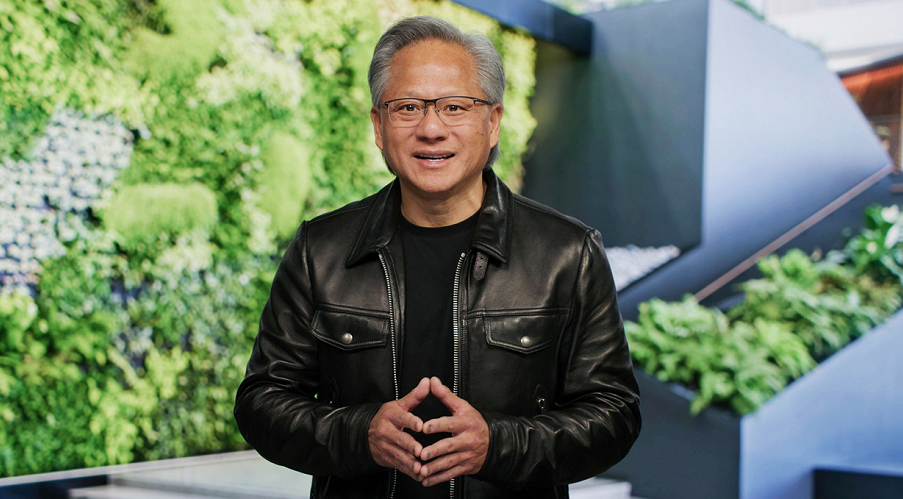
Former Nvidia Corp. Chief Executive Officer Jensen Huang today said he’s open to returning to his old post. Huang expressed his willingness to be reinstated in a post on X. It marks his first public statement since his ouster from Nvidia last week. He resigned following revelations that he had an affair with Alice Huang, […] The post Jensen Huang says he’s willing to return as CEO, in first statement since resignation appeared first on SiliconANGLE.
OpenAI launches GPT-6.2 Astra and Sol with lower API prices and some benchmark gains
OpenAI releases GPT-6.2 Astra and Sol, two new models that are more capable and cheaper than their predecessors. In the independent Artificial Analysis Intelligence Index, Astra ranks second behind Claude Fable 5.2, and it is the first released model to reach the High threshold for AI self-improvement on OpenAI's own scale. OpenAI itself classifies that as a risk. The article OpenAI launches GPT-6.2 Astra and Sol with lower API prices and some benchmark gains appeared first on The Decoder.
Nvidia at SC26: Agents are the new scientists, and they need a lab
For most of its history, the high-performance computing market measured progress the same way: how fast a machine could solve a fixed problem. Rankings rose, a new system took the top spot, and the cycle started over. Raw performance remains the foundation of scientific computing, and Nvidia Corp. brought plenty of it to SC26. But […] The post Nvidia at SC26: Agents are the new scientists, and they need a lab appeared first on SiliconANGLE.
Microsoft rolls out new first-party models and updates to agentic AI continuous improvement
Microsoft Corp. today rolled out new generative artificial intelligence models and updates to Foundry, the company’s unified enterprise platform that helps developers and organizations ground, test and deploy AI applications and autonomous agents. Updates to Foundry IQ, part of Microsoft IQ, now provide an enterprise knowledge graph out of the box, delivering a full estate […] The post Microsoft rolls out new first-party models and updates to agentic AI continuous improvement appeared first on SiliconANGLE.
OpenAI’s own tests show GPT-6.2 Astra is twice as likely to hide coding failures
OpenAI’s new GPT-6.2 Astra is nearly twice as likely as its predecessor to leave users unaware of problems that prevented The post OpenAI’s own tests show GPT-6.2 Astra is twice as likely to hide coding failures appeared first on The New Stack.
OpenAI’s New Hacking Model Found Dozens Of Holes In Apple Tech
Researchers have used GPT-6 Cyber to uncover some 35 vulnerabilities across an array of Apple hardware, including some that could let hackers hijack iPhones and Macs through a malicious website.
Microsoft’s new coding model promises near-Opus performance at 5% of the cost
At its Ignite conference in San Francisco on Tuesday, Microsoft announced a number of new AI models, including two new The post Microsoft’s new coding model promises near-Opus performance at 5% of the cost appeared first on The New Stack.
Anthropic’s IPO is highlighting just how much value can be created before public investors ever get a chance to buy in. Athena Capital founder and managing partner Isabelle Freidheim discusses what Anthropic’s potential $1.4 trillion valuation says about the growth of private markets, and how its debut could create a path for other late-stage technology companies to go public. She joins Ed Ludlow on "Bloomberg Tech." (Source: Bloomberg)
Nvidia Faces First Earnings Test Since Huang’s Exit
Nvidia reports earnings for the first time since Jensen Huang’s surprise departure, putting the chipmaker’s 70% growth outlook and the broader AI trade back in focus. JPMorgan Asset Management’s Stephanie Aliaga discusses why strong compute demand remains intact despite leadership uncertainty, what investors need to hear from Nvidia on growth and China, and how Anthropic’s IPO could give public-market investors a new window into the economics of frontier AI. She joins Ed Ludlow on "Bloomberg Tech." (Source: Bloomberg)
Build WhatsApp AI agents with Amazon Bedrock AgentCore
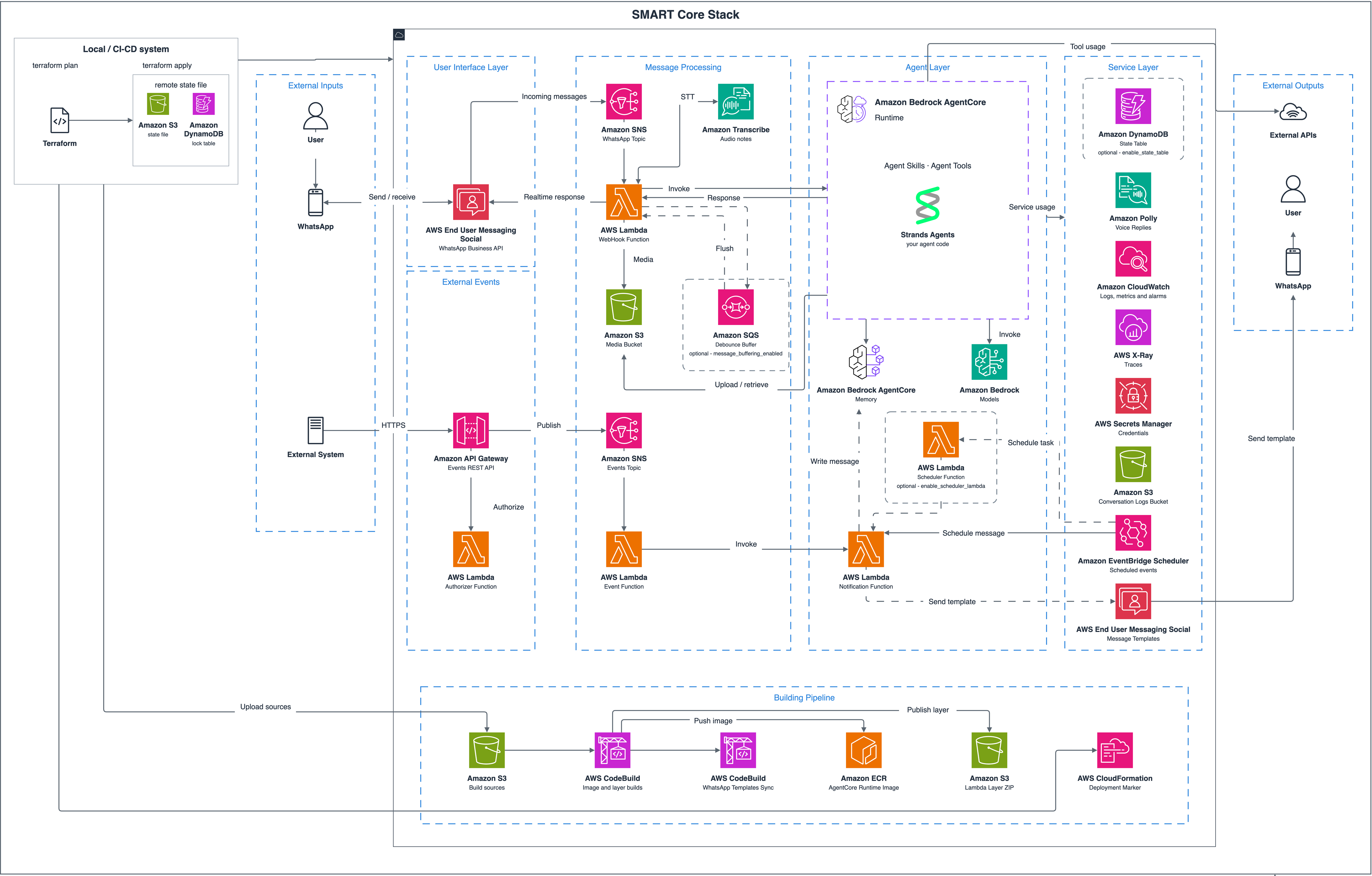
SMART, an open-source Python SDK and Terraform stack, deploys the full WhatsApp channel layer to your AWS account with one command. Bring any agent that runs on Amazon Bedrock AgentCore, and SMART handles webhook ingestion, media, conversation memory, scheduling, and Meta message templates.
Jensen Huang Signals He’s Ready for Nvidia Comeback
Bloomberg’s Ed Ludlow breaks down Jensen Huang's statement saying he would be willing to return as CEO if the board agreed, and that he has received an "outpouring" of support from people calling for his return. Plus, President Trump held talks on AI collaboration with partner countries India, Australia, and Japan, amid rising competition with China and ahead of his meeting with China's Xi Jinping; and California Attorney General Rob Bonta joins to discuss why he is taking OpenAI to court over rogue AI agents. (Source: Bloomberg)
Nvidia Scandal Has Raised ‘Red Flags,’ California AG Says
California Attorney General Rob Bonta said that his office is looking into aspects of the scandal that’s engulfed Nvidia Corp. and its former chief executive officer, Jensen Huang.
Microsoft’s ARM-based Cobalt 200 chips go GA. Why it matters for AI agents.
Microsoft is making its Cobalt 200 virtual machines generally available, with CPU improvements aimed at the sandboxes, tools, and code The post Microsoft’s ARM-based Cobalt 200 chips go GA. Why it matters for AI agents. appeared first on The New Stack.
Simplifying multicloud networking to Azure with partner Cross-Cloud Interconnect
As AI changes how businesses build and run applications, more enterprises are spreading their models, data and applications across multiple clouds. To make that work, they need fast, private connections between those environments. Historically, connecting multiple clouds has meant ordering physical connections from each provider, setting up networking on both sides, and coordinating across multiple teams. That process could take weeks or even months. We wanted to make that much simpler. Today, we're extending partner Cross-Cloud Interconnect to Microsoft Azure, now available in preview. The service is jointly supported by Google Cloud and Microsoft, and gives you a private, high-bandwidth connection between your Google Cloud and Azure environments that’s set up programmatically in minutes, with no physical infrastructure to manage. "Google Cloud partner Cross-Cloud Interconnect simplifies multi-cloud networking with a direct cloud-native approach. By removing traditional infrastructure complexity, it provides a reliable, scalable foundation for connecting workloads across different cloud environments." - Ralf Huebenthal, Global Head of IT & Digital Platforms, Nestlé “Walmart runs a seamless platform across multiple cloud providers to accelerate innovations. We partner with Google Cloud to leverage their global network for hybrid and multicloud networking. With Cross-Cloud Interconnect, we were able to simplify connectivity between cloud providers, shorten time to production, and reduce overall costs.” - Gerald Bothello, Group Director of Software Engineering, Walmart Partner Cross-Cloud Interconnect benefits On-demand connectivity in minutes, not weeks. Set up your connection from the Google Cloud console or API, pick the bandwidth you need, and both clouds handle the rest — no hardware to order, no manual network configuration, and no back and forth between providers. Built-in reliability. Your connection runs across physically separate locations for redundancy. Google Cloud and Azure jointly monitor the connection and handle maintenance and recovery for you. Private and secure. Your traffic stays off the public internet, and is automatically encrypted between the Google Cloud and Azure edge routers, with no customer configuration required. Predictable pricing. You pay a fixed price for the connection's bandwidth, so your Google Cloud costs are easy to plan and manage. "Customers are building applications, data platforms and AI across more than one cloud, and they want the network between those clouds to just work. Azure Multicloud Interconnect with Google Cloud gives customers a private, managed path between Azure and Google Cloud, and we're excited to work with Google Cloud to bring it to customers in public preview." - Sudha Mahajan, Partner, Product Management, Azure Networking, Microsoft Our Cross-Cloud Interconnect ecosystem continues to expand: Partner Cross-Cloud Interconnect for Microsoft Azure is available in preview today in us-east4 (N. Virginia), us-west2 (Los Angeles), and europe-west3 (Frankfurt), alongside the generally available AWS and OCI offerings. We'll add more regions as the Azure offering moves to general availability. Partner Cross-Cloud Interconnect for last mile with Lumen is available in preview, for customers connecting their private clouds, on-premises sites, and neocloud environments to Google Cloud. Partner Cross-Cloud Interconnect is built on an open specification for network interoperability. Google Cloud collaborated with AWS and published it last year, and any provider can adopt it. To learn more, visit the partner Cross-Cloud Interconnect documentation, read Microsoft's announcement, or contact your Google Cloud account team.
Get a jump start on the US trading day with Dani Burger on "Bloomberg Open Interest." Nvidia takes center stage, reporting without Jensen Huang as the tech trade faces fresh pressure. Home Depot kicks off retail earnings as consumers keep spending, while Disney beats expectations and Anthropic’s blockbuster IPO demand pushes pricing to the top of the range or higher. Plus, Meredith Whitney joins us on consumer strain, AI risks and whether the fallout could spread to banks and the broader economy. (Source: Bloomberg)
Introducing GPT‑6.2 Astra and Sol, with better professional outputs, coding, computer use, and efficiency at lower cost across ChatGPT Work, Codex, and the API.
OpenAI Unveils New Astra AI Model After Scrapping Prior Release
OpenAI is releasing a new version of its most advanced Astra artificial intelligence model nearly two months after the company scrapped a prior update to establish stronger safeguards for the technology.
Proton’s Lumo, a privacy-focused alternative to ChatGPT and Claude, arrives on desktop
Proton's new Lumo Desktop app for Windows, Mac, and Linux lets users automate tasks across files and connected apps, with granular controls over what its AI can access.
Co-Designing Sparse Attention for Efficient Long-Context Inference
Agentic workloads, long documents, and large codebases are pushing context lengths from tens of thousands of tokens to hundreds of thousands. At those lengths,...
Google Cloud is a Leader in the 2026 Gartner Magic Quadrant for AI Application Development Platforms
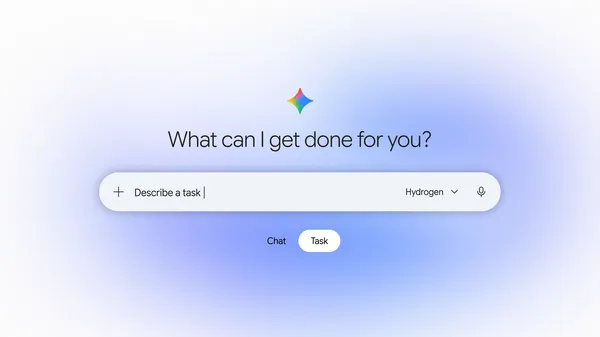
For the third time in a row, Google Cloud is recognized as a Leader in the 2026 Gartner Magic Quadrant for AI Application Development Platforms, positioned highest overall on the Ability to Execute axis.1 These days, it’s very clear to us that organizations are looking for AI to handle actual day-to-day work, stay strictly within compliance guardrails, and deliver measurable ROI. In the last year, nearly 500 Google Cloud customers each processed more than one trillion tokens. And a lot of that volume came from heavily regulated sectors like global banking, healthcare, and telecommunications. Our customers choose Gemini because it delivers an open enterprise platform built for this level of production scale, by: Unifying the agent experience across everyday workflows Providing unrestricted model choice without vendor lock-in Practicing cost discipline before bills spiral, not after Governing agents through a single, centralized control plane 1. Gemini delivers one universal agent across the enterprise In October, we announced a unified Gemini experience. The same Gemini you collaborate with every day is now your enterprise agent to get real work done. Instead of navigating disconnected developer consoles, consumer tools, and workplace add-ons, Gemini meets work wherever it already happens – collaborating natively inside surfaces like Google Workspace, Microsoft 365, internal chats, web, and mobile. You give Gemini high-level business objectives rather than step-by-step instructions, and it orchestrates the necessary tools, context, and coworker agents to deliver a finished result. As employees engage it, the agent retains persistent memory, understands your specific business language, and respects enterprise permissions across every device. When a team automates a complex procedure, they can package it into a shared skill, turning one group’s procedural knowledge into a capability anyone across the organization can use. That shared foundation is what transforms agent building from an isolated engineering backlog into an organization-wide capability. At Dojo, one of UK’s leading payment providers, non-technical teams used this exact environment to stand up over 600 custom agents in just two months: “When you can use natural language, anyone from HR to sales can turn their unique business experience into a custom AI agent in minutes. In two months, we created over 600 agents. The majority were built by our frontline business teams right inside Gemini, leaving our developers to focus on more complex challenges.” – Robert Howes, Chief Technology Officer, Dojo. Dojo fuels an AI-native future, delivers 680+ agents in two months with Gemini Dojo fuels an AI-native future, delivers 680+ agents in two months with Gemini 2. We bring the leading frontier models under one roof Google Cloud is now the only hyperscale cloud provider offering access to all three leading frontier model families, from Google, Anthropic and OpenAI, on a unified enterprise platform – and across every surface, from developer tooling in Antigravity to everyday productivity in Gemini for web, mobile, and desktop. Through the model garden, organizations can access over 200 models, drawing down existing cloud commitments on a single invoice without having to negotiate separate contracts. At the same time, we are deeply proud of the pace of innovation coming out of Google DeepMind. Over the past month alone, we’ve rolled out a full generation of specialized models: Gemini 4 Argon for strong performance across complex software engineering, law, finance, and cyber defense; Gemini 4 Carbon for frontier performance in cybersecurity capabilities and long-horizon agentic workflows; and now Gemini 4 Hydrogen, bringing cutting-edge intelligence with speed and efficiency to everyday coding and agentic execution. By treating models as a diversified portfolio, we give our customers the freedom to optimize for speed, precision, and cost across every task. For PayPal, this flexibility is central to their strategy: “We built a unified LLM stack. That meant we ran our open source models on top of our inferencing stack on GKE, and we ran our close-sourced models on top of the Gemini platform. Developers get choice – Claude, Gemini, Open Source – through one consistent governed access layer. That’s why we love the model garden.” — Srinivasan Manoharan, Director of AI/ML Platform, PayPal. PayPal paves the way for the future of agentic commerce with Google Cloud PayPal paves the way for the future of agentic commerce with Google Cloud 3. Optimizing spend at every layer of the stack A recurring concern we hear from enterprise leaders is the unpredictability of AI billing. When teams start scaling agents, pay-as-you-go pricing can feel like an open tab with no ceiling. That is why we optimize cost across every layer of the stack – co-designing custom TPU silicon, cluster networking, and foundation models as a single system to drive down baseline costs. At the execution level, we give finance and engineering teams the right levers to innovate without risking their margins. Gemini dynamically matches every task to the most cost-effective model, handling high-volume tasks with efficient models, only escalating to frontier reasoning models for complex problem-solving. Paired with native FinOps controls – including project-level monthly spend caps, anomaly detection, and Flexible Savings Plans – leaders get hard financial boundaries and clear visibility. For companies processing massive volumes of data, this approach makes all the difference. At Imgix, the engineering team prioritized this architectural discipline as they scaled visual processing: “If we're using the most expensive model every single time, that's going to be a big bill for our customers. So we use a cheaper model like Gemini Flash to figure out, ‘Does this image or video even need this AI feature?’ before routing further down the pipeline.” – Alfonso Acosta, Head of Engineering, Imgix. Imgix processes 8 billion daily media requests 50% faster with Google Cloud Imgix processes 8 billion daily media requests 50% faster with Google Cloud 4. A single control plane for governed enterprise context When organizations empower employees to build and deploy agents at scale, governance cannot be an afterthought. It must be an inherent part of the environment in which those agents operate. With Gemini, every agent is assigned a dedicated Agent Identity, ensuring that all database queries, tool actions, and state transitions generate an auditable record tied directly to authorized roles. Execution occurs inside isolated runtime sandboxes, where Agent Gateway and Model Armor automatically scrub sensitive data, block policy violations, and enforce corporate compliance in real time. That same control plane extends to how agents interact with corporate intelligence. Rather than requiring organizations to move, replicate, or duplicate sensitive records into yet another external repository, Gemini connects directly to live enterprise systems. Agents ground their reasoning in data across BigQuery, Cloud Storage, SAP, Salesforce, S3, and Azure – inheriting existing user access controls and keeping proprietary data strictly within its original perimeter. Governed context and centralized control are what make company-wide agent adoption possible. UKG relied on Gemini’s security, governance, and evaluation controls to skip building that foundation from scratch: “The Gemini platform, it’s solving some of these key problems that we already were trying to solve — from hosting agents to securing them to the governance around them, evals to make sure they’re behaving correctly. I can just use these things out of the box and get back to creating value.” – Thomas Newton, Head of Cloud and Engineering, UKG. UKG builds a Bryter future for tens of millions of employees with Google Cloud AI UKG builds a Bryter future for tens of millions of employees with Google Cloud AI Gemini is built for the way you work Being recognized by Gartner as a Leader positioned highest in Ability to Execute reflects our commitment to meeting enterprises where they operate today. By combining frontier intelligence, universal agent orchestration across everyday tools, predictable economics, and enterprise governance, Gemini gives developers and business leaders the foundation to build with velocity and operate with confidence. Download the report today. 1. Gartner® Magic Quadrant™ for AI Application Development Platforms - Cary Pillers, Keith Holloway, Luke Parker, Pamela Katz, November 3, 2026Gartner does not endorse any company, vendor, product or service depicted in its publications, and does not advise technology users to select only those vendors with the highest ratings or other designation. Gartner publications consist of the opinions of Gartner’s business and technology insights organization and should not be construed as statements of fact. Gartner disclaims all warranties, expressed or implied, with respect to this publication, including any warranties of merchantability for a particular purpose. Gartner and Magic Quadrant are trademarks of Gartner, Inc., and/or its affiliates. This graphic was published by Gartner, Inc. as part of a larger research document and should be evaluated in the context of the entire document. The Gartner document is available upon request from Google.
Congratulations to our 2026 Google Cloud Partner All-stars
The Google Cloud partner ecosystem plays an essential role in driving customer success. As we enter a transformative new era, our partners are instrumental in helping move AI from early pilots into true production-grade deployment. Closing that gap takes far more than technology alone. It requires skilled practitioners who can rethink workflows, navigate organizational change, and deliver impact. Operating across every industry and region, the Google Cloud partner ecosystem is driving this transformation forward. At the end of each year, we are honored to celebrate our Partner All-stars who consistently go above and beyond for our customers. The Google Cloud Partner All-stars program recognizes outstanding talent across five distinct disciplines: AI Leadership (New for 2026)Our AI Leadership All-stars are the trusted experts leading the transition to an AI-driven workplace. They help businesses completely rethink their operations from top to bottom. By guiding enterprise-wide transformations, they make it easier for organizations to adapt, innovate, and successfully adopt these new tools. SalesThis year’s Sales All-stars are at the cutting edge of customer change. These individuals embody Google Cloud’s commitment to the customer transformation journey–consistently meeting and exceeding sales targets and delivering exceptional end-to-end customer experiences. They prioritize long-term customer relationships over short-term sales, helping deliver return on investment. MarketingOur Marketing All-stars are the individuals driving strategic programs and key events that address our customer’s most pressing concerns and highest priorities. They work with cross-functional teams to ensure the success of campaigns and events. They take a data-driven approach to marketing, investing resources and time in programs that drive the biggest impact. These All-stars are curious and innovative, consistently exploring areas of opportunity to improve future work. Solutions EngineeringThis year’s Solutions Engineering All-stars have delivered superior customer experiences throughout 2026. In order to meet complex customer needs in innovative ways, these individuals take full responsibility for end-to-end solutioning and collaborate across product areas. These experts maintain this high standard while continuously sharpening their professional skills and holding active Google technical certifications. Delivery ExcellenceDelivery Excellence All-stars are the highest-performing technical practitioners in Google Cloud's Delivery Readiness program. Proving their expertise in the field, these individuals drive successful customer projects while completing advanced delivery skill badges. By embracing Google Cloud’s rapid-delivery methodologies, they accelerate secure migrations, execute 4-to-6-week iterative AI sprints, and ensure verified production deployments. Celebrating Excellence in 2026Our ecosystem is made up of exceptional organizations full of extraordinary individuals. On behalf of the entire Google Cloud organization, we extend our sincere congratulations and our thanks to the 2026 Partner All-stars. Your technical expertise, strategic leadership, and commitment to customer outcomes set the standard across our global partner network. To discover this year’s honorees, search #PartnerAllstars on social media. Please join us in congratulating these leaders, who are shaping the future of enterprise cloud and AI. Learn more about Google Cloud Partners.
The visual evolution of Looker: Modern design for enterprise data storytelling
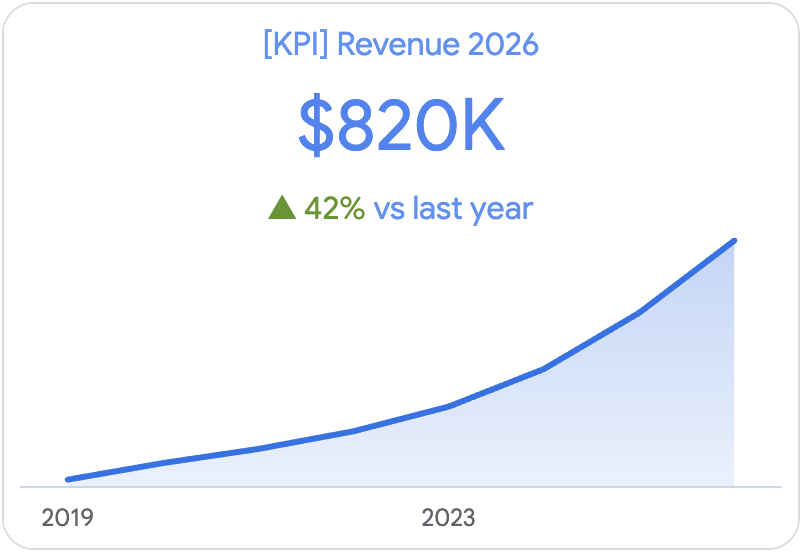
Over the past year, we’ve focused on making Looker easier to use for every business user. We started by redesigning the exploration experience with drag-and-drop workspaces, streamlined field pickers, and conversational analytics to make it easier to start from a blank canvas. The next step is elevating how your data is seen and interpreted. This November, we are rolling out a major update for Looker’s visual language that brings new native chart types and dashboard controls to your dashboards, Explores, and feeds into your generative Data Apps. Everything runs on Looker's governed semantic foundation and context from Knowledge Catalog. Here's what's new: See the state of the business at a glance KPI visualizations: Display core metrics with explicit period-over-period delta indicators, percentage trends, and directional status at a glance. Displaying core business metrics and period-over-period trends with a KPI visualization. Bullet charts and gauges: Stack actual performance against targets, quotas, and qualitative threshold bands in space-efficient layouts. Tracking actual performance against targets with a Radial gauge chart. Compact numbers: Automatically render high-volume numbers into clean, human-readable formats ($2.4M instead of $2,400,000) that stay readable across any screen size. Showcase the data behind the numbers Sankey diagrams: Map multi-stage conversion funnels, user drop-offs, budget allocations, and material flows with native Sankey diagrams. Mapping multi-stage conversion flows with a native Sankey diagram. Hierarchical tables: Drill into multi-level, nested data trees (such as category rollups or departmental cost centers) within a single structured tabular view. Drilling into multi-level nested data within a Hierarchical table. Histograms: Plot frequency distributions and spot data skew and outliers across numeric variables without writing table calculations. Plotting frequency distributions and outliers across numeric variables with a Histogram. Network charts: Visualize interdependencies, entity relationships, and interconnected graph nodes to uncover clusters and bottlenecks. Visualizing entity relationships, clusters, and bottlenecks with a Network chart. Modernized dashboards and in-context controls Keep stakeholders engaged with a boardroom-ready design and faster, more focused interactivity: A modernized dashboard: More modern typography, refined spacing, cleaner table padding, and upgraded palettes give every dashboard a contemporary, polished look right out of the box. Filters on visualizations (Preview): Apply and adjust filters directly on individual dashboard tiles, so viewers can isolate specific cuts of data without reloading the entire page. Applying and adjusting chart-level filters directly on a modernized Looker dashboard tile. Agent-assisted custom visualizations Several of the new charts in this release started as custom visualization plugins in the Looker Marketplace. Because they are now supported natively in Looker, we are retiring the associated plugins from the Marketplace. Existing dashboards that use those Marketplace plugins will continue to work. While Looker’s large native library covers most everyday analytics, every industry has specialized visualization requirements. A chipmaker may need to plot defect density across a silicon wafer map, a logistics team may want to overlay warehouse floor plans onto live shipping metrics, and a finance team might ask for a multi-step variance bridge that follows internal accounting rules. These cases come up often. Previously, building one of these custom charts against Looker's Visualization API meant either writing JavaScript yourself or waiting for a front-end developer to help. Looker's agentic BI changes that. To support these domain-specific builds, we are launching a new custom visualization skill in the open-source looker-skills repository. This skill lets you use your AI coding agent of choice, such as Antigravity, Claude or Codex, to develop, test, iterate, and deploy your own custom visualizations. Describe the chart in natural language, and the agent writes the code against Looker's Visualization API. You can refine the design conversationally until the chart looks right, and then have the agent deploy it for you. Sunburst, KPI radar, and calendar heatmap charts generated with the Looker custom visualization skill. Nobody on your team needs to know JavaScript. Still, if you prefer a specific JavaScript library, you can ask for D3, Vega-Lite, ECharts, Chart.js, or React, or have the agent draw the chart from scratch in SVG. Whatever approach you pick, the chart receives the underlying data from your LookML model and inherits native drill menus, cross-filtering, and dashboard controls alongside your standard tiles. This same visual system and agent-driven workflow also powers Looker Data Apps ( in preview). When your use case grows beyond a single custom chart tile into a multi-step operational workflow, you can use your AI agent to assemble a full data app that shares Looker's modernized typography, palettes, and governed LookML metrics. Whether you’re adding a bespoke chart to an existing dashboard or building a standalone application, every view stays consistent and grounded in the same semantic model. Getting started Explore the new native visualizations and modernized dashboard controls in your Looker environment today, or visit the Looker documentation to learn more. Try the custom visualization skill in your own Looker project by visiting the open-source looker-skills repository on GitHub.
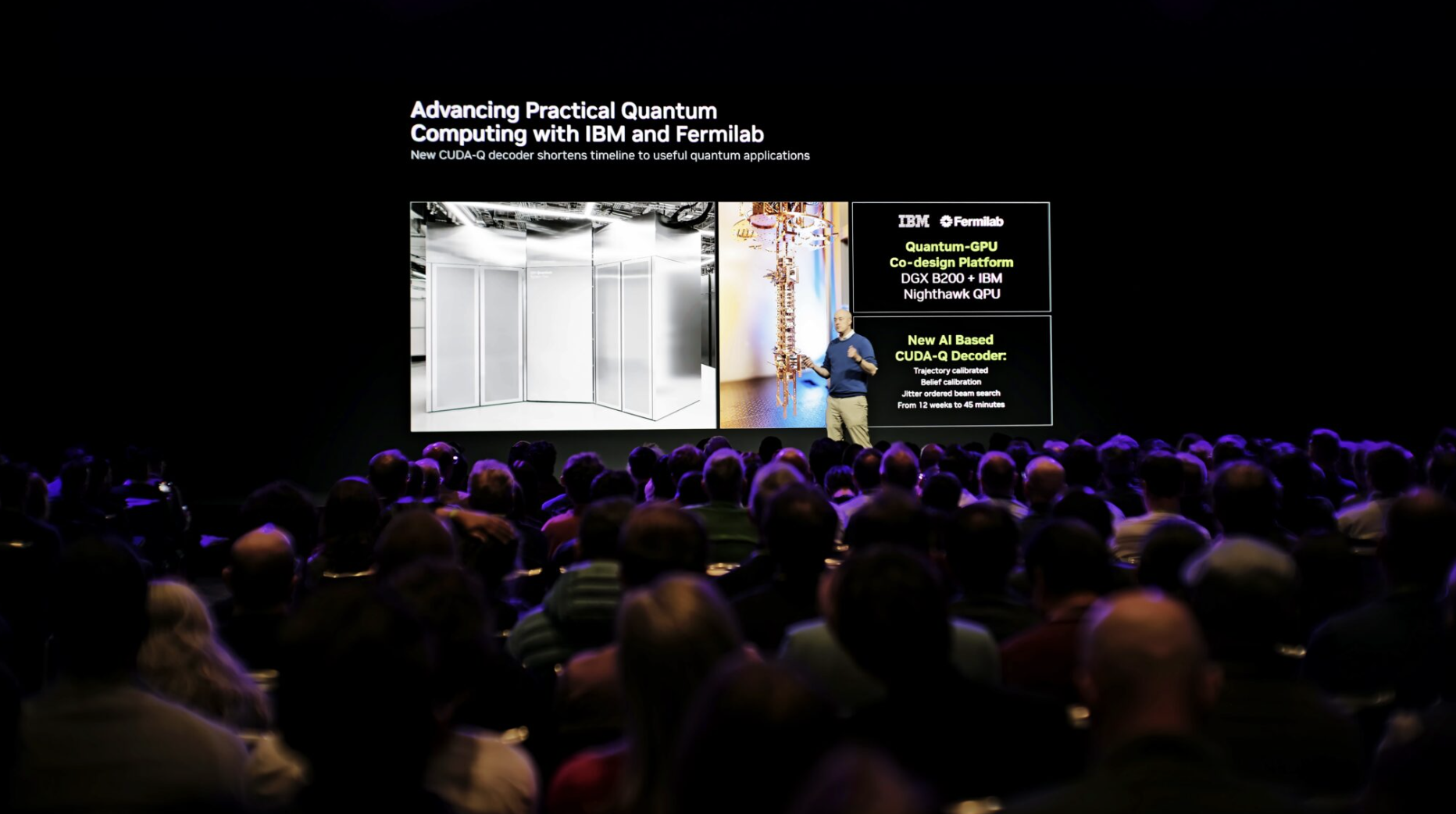
Integrating QPUs into Supercomputing Centers Using Slurm HRES Plugins
Quantum processors are being integrated into supercomputing centers worldwide. National programs in North America, Europe, and Asia are driving the installation...
AI agents are starting to fill out medical forms and file insurance requests in place of human staff
OpenAI wants GPT-6 Astra and GPT-6 Luna to automate administrative tasks in US healthcare through computer-use agents that operate existing clinic software and insurance portals the way a human would. Luna handles tasks like prior authorizations for about 8.5 cents each. Companies including CVS Health and Cigna Healthcare are already deploying the technology. The article AI agents are starting to fill out medical forms and file insurance requests in place of human staff appeared first on The Decoder.
New Street's Ferragu Sees Strong Case to Buy Nvidia Shares Ahead of Earnings
Pierre Ferragu of New Street Research maintains a buy rating on Nvidia shares and says the recent selloff strengthens the case to buy. He says the resignation of CEO Jensen Huang won't affect near-term earnings. Ferragu speaks on "Bloomberg Surveillance." (Source: Bloomberg)