Developers are downgrading their AI on purpose — and it’s working
Anthropic has confirmed that it added new restrictions to Claude Code to prevent users from recreating existing video games. But The post Developers are downgrading their AI on purpose — and it’s working appeared first on The New Stack.
Goldman Sachs pulls AI coding tools from traders and bankers
Goldman Sachs is pulling AI coding tools like Claude Code and GitHub Copilot from traders and bankers, limiting access to engineers only. As recently as July, CIO Marco Argenti publicly praised "vibe coding" by non-technical staff. Now the bank cites "productivity and risk management" as the reason for the reversal. The article Goldman Sachs pulls AI coding tools from traders and bankers appeared first on The Decoder.
Bloomberg’s Ed Ludlow breaks down debt offerings from Oracle, which is kicking off a $20 billion capital raise to finance its AI infrastructure spending, and Alphabet, which is tapping the European debt markets. Plus, Anthropic's revenue hits nearly $17 billion in the third quarter and Matt Witheiler, head of late-stage growth at Wellington and an Anthropic investor, joins to discuss new details from the amended IPO filing. And Apple is trading at its priciest level since 2008, ahead of its earnings. (Source: Bloomberg)
Anthropic to Spend $895 Billion in the Years Ahead
Ahead of its blockbuster public market debut, Anthropic revealed it plans to spend more than $895 billion in the years ahead. The Claude chatbot maker also disclosed that its quarterly revenue rose twelve-fold over from the prior year. Matt Witheiler, head of late-stage growth at Wellington Management and an investor in Anthropic, discusses the latest figures and why developing frontier models is a pathway to outsized returns. He speaks with Ed Ludlow on "Bloomberg Tech." (Source: Bloomberg)
New York Times and other outlets sue web browser Brave over alleged content scraping
The New York Times is suing privacy-focused web browser company Brave for allegedly scraping the outlet’s copyrighted content and unlawfully distributing it to its own customers, like Anthropic and Perplexity.
SpaceXSI apparently cuts Grok Bot quotas weeks after Musk called it his fastest-growing product
SpaceXSI is apparently cutting usage limits for its AI agent Grok Bot, less than two weeks after Musk called it his fastest-growing product. The operating costs were "unsustainably high relative to revenue," Musk wrote on X. OpenAI and Anthropic are also tightening their flat-rate plans as they grapple with the high costs of AI agents. The article SpaceXSI apparently cuts Grok Bot quotas weeks after Musk called it his fastest-growing product appeared first on The Decoder.
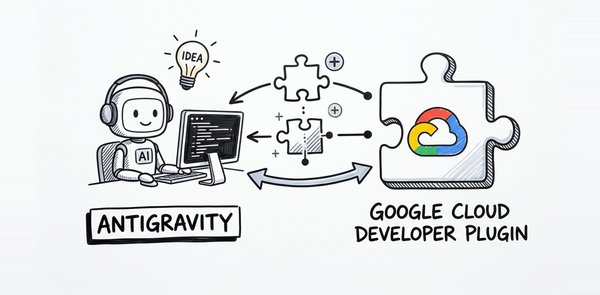
Google Cloud Developer plugin now available in Antigravity Marketplace
Building cloud solutions with autonomous AI agents should feel fast, safe, and reliable. Without cloud-specific context, coding agents often struggle. They might invent deprecated SDK syntax, guess invalid command flags, or attempt operations without the required Identity and Access Management (IAM) permissions. Even worse, an unguided agent can enable billable APIs or provision cloud resources without your explicit permission. Starting today, you can install the google-cloud-developer plugin directly from the Antigravity Marketplace in the Build with Google section. This plugin equips Antigravity with foundational skills, safety guardrails, and live documentation grounding for building on Google Cloud. If you've never installed a plugin using the marketplace before, you can refer to the Antigravity documentation. Configuration is straightforward. The bundled Developer Knowledge Model Context Protocol (MCP) server is pre-authorized by default. You don't need to configure API keys, exchange OAuth tokens, or edit any configuration files. You install the plugin, and your agent connects to official Google developer documentation immediately. In this post, we'll walk through what's included in the plugin, how to install it with one click, and how it grounds your agent in live Google Cloud documentation. Why use the Google Cloud Developer plugin? Coding agents often rely on static training data. Cloud platforms update quickly, and models can produce code with outdated client libraries or invalid parameters. The google-cloud-developer plugin solves this issue. It bundles curated skills, intelligent routing rules, and the Developer Knowledge MCP server into a single portable package. The plugin provides three key benefits: Live documentation grounding: The agent queries official Google Cloud documentation over streamable HTTP. Safety and cost guardrails: The agent enforces least-privilege IAM patterns and it requires your consent before it enables billable APIs or modifying cloud infrastructure. Environment awareness: The agent inspects your local environment, detects existing CLI configurations, and designs safe execution roadmaps before it runs commands. What's included in the plugin The plugin pairs core baseline skills and live documentation grounding with an intelligent skill routing architecture. Rather than limiting your agent to a fixed set of capabilities, it acts as an extensible gateway that discovers and pulls specialized skills from Google on demand. Bundled agent skills The bundled skills provide essential day-one guardrails, live documentation grounding, and the dynamic discovery engine that unlocks the broader catalog: finding-google-skills: Powers flexible skill routing by discovering and loading skills on demand from the google/skills repository on GitHub. Rather than requiring you to research, install, and manage individual skills, it dynamically retrieves the exact instructions your agent needs for specialized tasks in real time. retrieving-developer-knowledge: Provides answers and code samples that are grounded in official Google documentation across Google Cloud, Firebase, Android, Web, and Gemini. gcloud: Enforces execution guardrails, validates syntax, and applies safety checks to Google Cloud CLI (gcloud) commands. It blocks accidental destructive operations and it keeps you in control. google-cloud-recipe-auth: Steers your agent toward secure authentication patterns. It enforces service identities and Application Default Credentials (ADC) while it blocks risky practices like downloading service account JSON keys. google-cloud-recipe-onboarding: Guides initial project setup, account onboarding, and billing verification. It audits project states before it attempts to activate services. Pre-authorized Developer Knowledge MCP server The plugin connects your agent to the Developer Knowledge MCP server. Typically, adding an MCP server requires manual API key handling. With the Antigravity Marketplace integration in the Build with Google catalog, this MCP server is pre-authorized: Antigravity manages the authentication transparently. Your agent connects to Google's documentation server immediately after installation. Smart routing rules: on-demand capability expansion The plugin includes google-cloud-discovery.md, an active routing rule that works together with the finding-google-skills bundled skill. When your prompt touches specialized topics, the routing rule directs the agent to fetch the relevant skills from the public catalog as needed. This dynamic routing keeps your agent fast and token-efficient. Instead of preloading dozens of niche skills that clutter the context window, your agent pulls in deep, specialized guidance only when your task requires it. Install the plugin with one click You can install the plugin through the Antigravity Marketplace UI or through your terminal. If you prefer the command line, install the plugin with a single command: code_block <ListValue: [StructValue([('code', 'agy plugin install google-cloud-developer'), ('language', ''), ('caption', <wagtail.rich_text.RichText object at 0x7fdf2193d010>)])]> The CLI registers the skills and connects the Developer Knowledge MCP server immediately. You can also explore the plugin and skills directly on GitHub. The plugin in action: Querying live documentation After the plugin is installed, your agent automatically grounds its answers in current documentation. You don't need to prompt it with special syntax. Consider a practical query: "Based on the documentation what is the main difference between GKE and Cloud Run? When should I use one over the other?" Without the plugin, an agent might guess or provide outdated information. With the google-cloud-developer plugin active, the agent queries the pre-authorized Developer Knowledge MCP server: The agent produces a clean, verified answer based on official documentation. Connect with me I'd love to hear how you use the plugin in your daily workflow. Share your feedback and questions with me on LinkedIn, X, or Bluesky.
Making Kubernetes AI-Ready for NVIDIA Vera Rubin on Day One
Configuring and optimizing Kubernetes for new GPU hardware such as NVIDIA Vera Rubin is complex and error-prone. Drivers, kernels, runtimes, networking,...
Anthropic Swings To $567 Million Operating Loss In Q3 As Compute Costs Surge, Discloses $895 Billion In Commitments
Anthropic’s first quarter in the black hasn’t lasted long. The Claude maker filed an amended S-1 registration statement with the SEC on Monday,... The post Anthropic Swings To $567 Million Operating Loss In Q3 As Compute Costs Surge, Discloses $895 Billion In Commitments appeared first on OfficeChai.
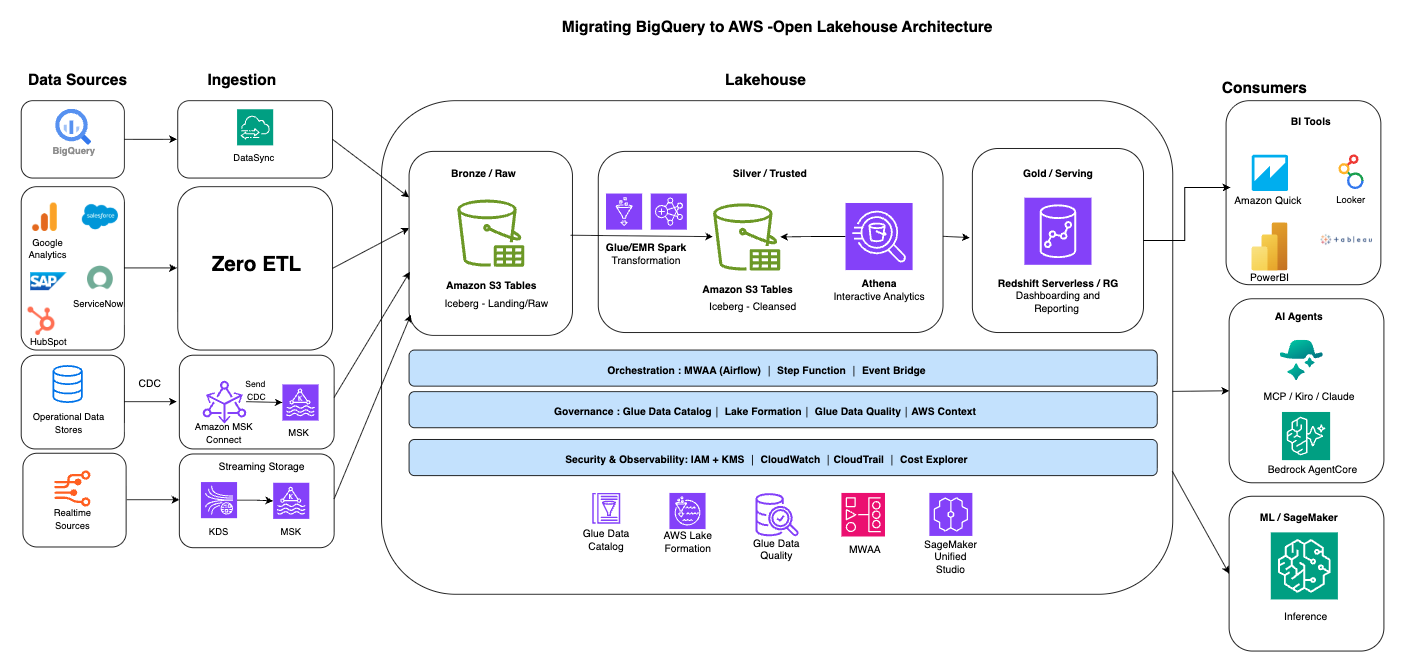
Migrate Google BigQuery to an open lakehouse on AWS with Apache Iceberg
Learn how to migrate Google BigQuery workloads to an open lakehouse on AWS built on Apache Iceberg and Amazon S3. This post explains why an open lakehouse future-proofs your data, presents the target architecture on AWS, and walks through a step-by-step migration: assess, design, convert, migrate, cut over, and optimize.
Beyond Migration: Using Database Migration Service for disk shrinking
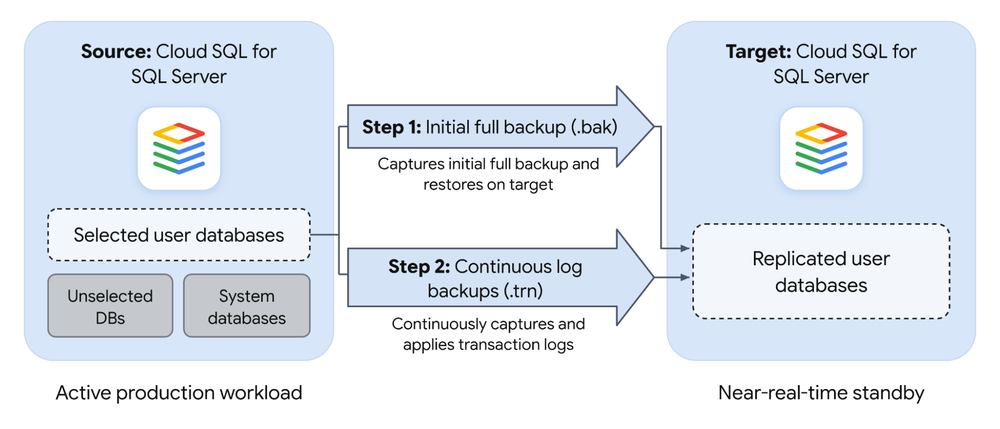
When database engineers hear “database migration", they typically think of a one-time onboarding pathway—moving databases from on-premises environments to the cloud, or between different cloud providers. However, Google Cloud's Database Migration Service (DMS) supports Cloud SQL for SQL Server as a source. This opens up powerful, non-traditional operational patterns for SQL Server customers within Google Cloud. Because DMS enables continuous, low-downtime database replication between Cloud SQL instances—whether in the same project, across different projects, or across regions—it can serve as an everyday utility for day-two operations like storage management. In this post, we explore a compelling operational use case for DMS with Cloud SQL for SQL Server: executing disk shrinks with minimal application downtime. Why should I shrink my disk? In many production environments, database storage only moves in one direction: up. Features like Cloud SQL automatic storage increase are essential for preventing out-of-space outages during unexpected traffic spikes, large batch imports, index maintenance, or temporary staging loads. Similarly, over the lifecycle of an application, you might archive historical records, purge obsolete data, or drop unused indexes. When data is deleted, SQL Server marks the freed space inside your data files (.mdf, .ndf) as reusable for future writes; similarly, log truncation frees up space within transaction log files (.ldf). However, the database files themselves continue to hold their peak used space unless AUTO_SHRINK is configured — a setting that is generally not recommended in production due to severe index fragmentation and performance overhead. With a manual shrink operation on the database files using DBCC SHRINKFILE, you can release that unused space from SQL Server files back to the underlying disk. Even after shrinking the database files, though, the Cloud SQL persistent disk remains at its peak allocated capacity. If you do not expect your database to grow back into that allocated disk space anytime soon, you should consider shrinking the disk itself to reduce ongoing storage costs — especially in scenarios such as: After major data archiving or purging: You have permanently moved historical data to cold storage or BigQuery and your active dataset is now a fraction of its peak size. Recovering from one-time storage spikes: A runaway transaction, large data migration, or temporary staging load triggered storage auto-increase, leaving you paying for terabytes of provisioned disk capacity you no longer need. Post-refactoring or schema optimization: You have split tables out of a monolithic database into separate services, dropped large unused indexes, or applied data compression. The query below allows you to inspect both the allocated capacity and available free space for each database file fo a database: code_block <ListValue: [StructValue([('code', "SELECT \r\n DB_NAME() AS [DatabaseName],\r\n name AS [LogicalName],\r\n type_desc AS [FileType],\r\n -- Allocated size on disk (converted from 8KB pages to MB)\r\n CAST(size / 128.0 AS DECIMAL(18, 2)) AS [AllocatedSize_MB], \r\n -- Actually used space inside the file\r\n CAST(FILEPROPERTY(name, 'SpaceUsed') / 128.0 AS DECIMAL(18, 2)) AS [UsedSpace_MB], \r\n -- Free space left in the allocated file\r\n CAST((size - FILEPROPERTY(name, 'SpaceUsed')) / 128.0 AS DECIMAL(18, 2)) AS [FreeSpace_MB], \r\n -- Percentage of allocated space that is used\r\n CAST((FILEPROPERTY(name, 'SpaceUsed') * 100.0) / size AS DECIMAL(18, 2)) AS [SpaceUsed_Percent]\r\nFROM sys.database_files;"), ('language', ''), ('caption', <wagtail.rich_text.RichText object at 0x7fdf20e27c90>)])]> You can monitor the following key Cloud SQL metrics in Cloud Monitoring to identify whether your provisioned disk quota significantly exceeds actual disk usage, indicating an opportunity for disk shrinking: database/disk/bytes_used: Tracks the actual amount of disk space currently consumed by your database files and logs. database/disk/quota: Represents the total provisioned disk capacity allocated to your instance. Cloud SQL provides a built-in storage shrink feature to reclaim this unallocated disk space, which works well when your workload can tolerate a planned maintenance window. However, native disk shrinking requires instance downtime proportional to the total allocated disk size — which can mean hours of offline maintenance for multi-terabyte drives. If your production SLAs cannot accommodate extended downtime, Database Migration Service (DMS) offers a minimal-downtime alternative. By continuously replicating your databases to a newly provisioned Cloud SQL instance with a smaller, right-sized disk, you can reclaim unused storage while your application stays online — requiring only a brief cutover window. To understand why this approach keeps your cutover window so short, let's first look at how DMS replicates data between Cloud SQL for SQL Server instances under the hood. How DMS works under the hood: Replication between Cloud SQL for SQL Server instances To leverage DMS effectively, it helps to understand its underlying replication mechanism. When migrating between Cloud SQL for SQL Server instances, DMS coordinates a synchronization process similar to native SQL Server log shipping. Initial full backup: It captures an initial full backup (.bak) of the selected user databases and restores them on the target instance. Continuous log backups: It continuously captures and applies transaction log backups (.trn) to keep the target instance synchronized in near-real time. Because synchronization occurs at the user database level, objects residing outside of it—such as logins, linked servers, and SQL Server Agent jobs—are not automatically replicated to the standby instance. Consequently, server-level objects must be migrated manually. Disk shrinking with minimal downtime Using this continuous replication pipeline, you can reclaim unallocated storage without taking a lengthy maintenance window. Instead of shrinking the existing disk in place while the instance is offline, you migrate your workload to a newly provisioned Cloud SQL instance with a right-sized disk while your production application remains online. The DMS disk shrink workflow Provision a new target instance with a smaller, appropriately sized disk (leaving sufficient headroom for transaction logs and future data growth). Start a continuous DMS job using your existing Cloud SQL instance as the source. Let replication catch up while your production application runs uninterrupted. Perform a brief cutover: Stop application traffic, let the final transaction log apply, promote the target instance in DMS, and repoint your application. Comparison: Native shrink vs. DMS migration As shown in the comparison above, because DMS migrates your workload to a new instance at the user-database level, a smooth cutover requires migrating your server-level objects and user mappings alongside your data. Let's look at the essential pre- and post-cutover steps to include in your runbook. Pre and post-cutover essentials: Going beyond database replication Pre-cutover preparation: Migrating server-level objects Because DMS operates at the user-database level, server-level objects are not automatically replicated. You will need to create them manually in the destination instance before the cutover. Script out logins from the source using sp_help_revlogin and recreate them on the target instance. SQL Server Agent jobs & Server-Level objects: Because DMS replicates databases rather than server instance state, objects outside user databases must be scripted from the source and deployed to the destination Cloud SQL instance. In SQL Server Management Studio (SSMS), connect to your source instance, navigate to the object in Object Explorer, right-click and select Script [Object] as > CREATE To > New Query Window / File: SQL Server Agent jobs (SQL Server Agent > Jobs): Inspect generated scripts to ensure job steps do not reference on-premises file paths or unsupported OS dependencies. Linked servers (Server Objects > Linked Servers): Follow the exact same scripting approach. Ensure you enable the cloudsql.linked_servers database flag on your Cloud SQL instance before deploying. Extended events (Management > Extended Events > Sessions): Follow the same scripting approach. For TDE enabled instances, you will need to export the TDE certificate from source and import the TDE certificate to destination before. Instance Configurations (such as database flags, Active Directory, Entra ID configurations etc): These must be manually configured on the destination instance to exactly match the source settings. If using Polybase you will need to re-encrypt DMK for the database-scoped credentials to function correctly. Post-cutover remediation: Resolving orphaned database users Database users mapped to SQL Server logins that are either absent or misconfigured on a server instance are unable to authenticate. These are termed orphaned users. Because logins created on the destination instance will possess unique Security Identifiers (SIDs) that do not match the source SIDs preserved in your migrated databases, users will be orphaned by default. Addressing this requires manual re-mapping once the target database is brought online following the cutover. Detecting & re-mapping orphaned users: While using sp_help_revlogin preserves SIDs during login migration, creating logins on the destination instance via alternative methods generates new server-level SIDs. Because these differ from the source SIDs retained in the DMS-restored user databases, database users become orphaned after cutover and require re-mapping. 1. Detect orphaned users: Connect to each destination user database and run the diagnostic query from Microsoft's official Troubleshoot Orphaned Users Guide: code_block <ListValue: [StructValue([('code', "SELECT dp.type_desc, dp.sid, dp.name AS user_name\r\nFROM sys.database_principals AS dp\r\nLEFT JOIN sys.server_principals AS sp ON dp.sid = sp.sid\r\nWHERE sp.sid IS NULL AND dp.authentication_type_desc = 'INSTANCE';"), ('language', ''), ('caption', <wagtail.rich_text.RichText object at 0x7fdf20dfec10>)])]> 2. Fix orphaned users (ALTER USER): For each unlinked database user returned by the query, execute the following statement inside the context of that database to cleanly re-map the principal and its permissions to the new Cloud SQL server login: code_block <ListValue: [StructValue([('code', 'ALTER USER [user_name] WITH LOGIN = [login_name];'), ('language', ''), ('caption', <wagtail.rich_text.RichText object at 0x7fdf21dbd750>)])]> Summary and next steps DMS is more than a one-time bridge from on-premises environments into Google Cloud — it is a versatile tool for day-two operations in the Cloud SQL engineer's toolkit. When strict production SLAs prevent you from taking lengthy maintenance windows for a native disk shrink, DMS provides a reliable, managed replication pipeline to right-size your storage footprint and reduce infrastructure costs with minimal downtime. To get started with configuring Cloud SQL for SQL Server as a DMS source, explore the official documentation. And if you're new to running SQL Server on Google Cloud, check out the Cloud SQL for SQL Server introduction.
Build World Models for Interactive Simulation with NVIDIA Cosmos
Physical AI developers working with world models face two distinct challenges: adapting models to their sensors, tasks, and data, and getting those models into...
OpenAI’s new shared usage limit pits ChatGPT against Codex
OpenAI has revealed plans to combine usage allowances across ChatGPT and Codex, as part of a broader effort to integrate The post OpenAI’s new shared usage limit pits ChatGPT against Codex appeared first on The New Stack.
On theCUBE Pod: Stock market gets the jitters and Anthropic files IPO
The hubbub at the New York Stock Exchange was audible on theCUBE Pod last Friday, with concerns rising over the artificial intelligence bubble. Several tech companies, including Intel Corp., Alphabet Inc., Amazon.com Inc., CoreWeave Inc. and Fortinet Inc., saw their stock fall, suggesting that investors may have doubts about all that AI infrastructure spending. At […] The post On theCUBE Pod: Stock market gets the jitters and Anthropic files IPO appeared first on SiliconANGLE.
Anthropic grows revenue twelvefold but posts $23 billion loss
Anthropic swings back to an operating loss ahead of its blockbuster IPO. The article Anthropic grows revenue twelvefold but posts $23 billion loss appeared first on The Decoder.
Meta Eyes at Least $20 Billion From Potential Bond Offerings
Meta Platforms Inc. is eyeing at least $20 billion from a potential cross-border investment-grade bond offering as the tech giant gauges investor interest in its debt amid growing skepticism about the pace of spending on artificial intelligence.
Editor’s note: Want to keep up with the latest from Google Cloud? Check back here for a monthly recap of our latest updates, announcements, resources, events, learning opportunities, and more. This October, we took massive leaps forward in delivering flexible, open, and powerful enterprise AI solutions. From bringing Gemini 4 Argon to Google Cloud to expanding choice and flexibility, we’re giving organizations the tools they need to bring complex, multi-agent AI workflows into production safely. Here’s a quick look at the major milestones, expert insights, and practical developer guides to read through and save. Top announcements Gemini 4 Argon available on Google Cloud, built to help solve your business’ hardest problems: We trained Argon to work with both depth and precision, which allows it to maintain context across long, multi-step tasks which are reinforced with strong domain expertise along the way. Whether your team is running complex software builds, handling detailed financial and legal work, or deploying cybersecurity tools like CodeMender, Argon helps your teams maintain focus from start to finish. Expanding Claude availability and deployment choice on Google Cloud: We announced the general availability of an Anthropic-managed deployment option for Claude Models on Google Cloud. This gives teams more choice in how they run their models, helping them consolidate AI workloads on Google Cloud alongside our existingGoogle-managed deployment option. Google Cloud expands model choice and flexibility, bringing OpenAI models to customers: Google Cloud is now the only hyperscale cloud provider offering access to all three leading closed source LLMs, alongside more than 200 first-party, third-party, and open models on a unified enterprise AI platform. Claude Opus 5.5 and Claude Sonnet 5.5 are now available in Google Antigravity: In keeping with Google Cloud's commitment to an open ecosystem and to give developers the right model for every job, Claude Opus 5.5 and Claude Sonnet 5.5 are now available in Google Antigravity for Google Cloud customers. Claude Opus 5.5 is built for complex work while Claude Sonnet 5.5 is a faster, lower-cost complement. Introducing Gemini for government services: Today we're bringing the Gemini agent to public service with Gemini for government services in preview, part of our new suite of purpose-built industry solutions. It adds skills built around government work, connections to the systems agencies already run, and specialized partner agents, with governance running underneath it all. Gemini Robotics Embodied Reasoning 2 is now available on Google Cloud: For the first time, organizations can pair Google DeepMind’s latest embodied reasoning model for robotics with the enterprise-grade security, multi-agent orchestration, and end-to-end lifecycle management of Google Cloud — making it easier to simulate, evaluate, and deploy safe, adaptive physical AI at scale. Thought leadership (editor’s pick) A new gear: How startups are advancing robotics with Google AI: We marked a major milestone in physical AI with the launch of Gemini Robotics Embodied Reasoning 2 (ER 2) on the Gemini platform and AI Studio, bringing Google DeepMind’s frontier multimodal reasoning and long-horizon task planning for robotics to Google Cloud. Read more from Darren Mowry, VP of Global Startups and Investor Ecosystem at Google, about the exciting work these startups are undertaking. News you can use Developer’s guide to implementing MCP apps in Gemini: Enterprise assistants still respond mostly in text. However, that can break down for visual, multi-step work, where every adjustment costs another slow chat turn. This guide takes you through implementation in Gemini. Four evaluation engineering lessons learned from building agent plugins: Here are four eval lessons we learned from building the new plugin that you can apply to your own builds. Who judges the judge? Three helpful ways to audit your LLM evaluators: In this post, we explore what’s holding enterprises back from strong evals, and share an easy three-pillar method you can use to improve your quality. Stay tuned for monthly updates on Google Cloud’s AI announcements, news, and best practices. For a deeper dive into the latest from Google Cloud customers, read our monthly recap, Cool stuff customers built. aside_block <ListValue: [StructValue([('title', '$300 in free credit to try Google Cloud AI and ML'), ('body', <wagtail.rich_text.RichText object at 0x7fdf21627610>), ('btn_text', 'Start building for free'), ('href', 'http://console.cloud.google.com/freetrial?redirectPath=/vertex-ai/'), ('image', None)])]> September This September, we brought you new how-to guides, model updates, and security innovations to help you find-and-fix. From Gemini 3.8 Live with Live Avatar to Mantis, there’s no shortage of new ways to apply AI to your work. Notably, we announced Gemini 4 Argon, our next era of frontier intelligence. Gemini 4 Argon delivers frontier performance in complex workflows across real-world software engineering, enterprise knowledge work like legal and finance, and cybersecurity defense. You can learn more here. Top announcements Gemini 3.8 Live with Live Avatar is now generally available: Following our announcement of Gemini 3.8 Live and Gemini 3.8 Live Extended Thinking, Gemini 3.8 Live with Live Avatar is now generally available in Gemini Enterprise. Gemini 3.8 Live with Live Avatar Getting started with Mantis, our open-source bug finding-and-fixing harness: Available to all as an open-source framework, Mantis is part of Google’s internal approach to find and fix vulnerabilities at machine-speed. It creates a more effective scalable, context-aware repository analysis. Thought leadership (editor’s pick) Racers, start your agents: Formula E brings realtime AI to the edge: Chasing records at the Goodwood Hillclimb, Formula E used Gemini Enterprise, Gemma, and a Pixel phone bolted to the dash to push the envelope of AI and edge computing. Formula E News you can use Best practices guide for customizing Gemini models via Reinforcement Learning (RL): In this guide, we will walk through practical best practices for using RL fine-tuning service. We'll start with a short tour of the RL training loop, how to decide if and when to use RL, and introduce how to get the most value from this approach. Empower your agents with the Google Cloud CLI remote MCP server: Powered by the popular gcloud and bq (BigQuery) command-line tools, this new server gives AI agents immediate, broad access to command-line operations for managing Google Cloud infrastructure and working with advanced BigQuery workflows securely and seamlessly. Graph Workflows in ADK: Everything you need to know: Using a refund workflow in ADK, we'll cover fan-out and fan-in, deterministic and agent routers, human-in-the-loop pauses, parallel workers, and dynamic orchestration— along with when to use a static graph or let Python decide what runs next. Stay tuned for monthly updates on Google Cloud’s AI announcements, news, and best practices. For a deeper dive into the latest from Google Cloud customers, read our monthly recap, Cool stuff customers built. August This month, we focused on making AI highly practical for your business, including its associated costs. This meant tailoring our models for specialized industries – starting with Financial Services and Legal – and helping you keep your budgets under control. Let’s dive in! Top announcements FinOps for the AI era: New flexible billing and cost controls for agents: To help you get better return on AI, we announced expanded billing flexibility and new cost management tools for agent workloads across Gemini Enterprise and developer tools like Google Antigravity in Gemini Enterprise and Android Studio. Gemini Enterprise for Financial Services: We’re bringing Google’s agentic AI directly into the workflows of capital markets and corporate banking. Gemini Enterprise for Legal: Gemini Enterprise for Legal provides an integrated, fully governed environment configured for rapid deployment across firms and corporate legal departments. Expanding Google Antigravity for enterprise customers: Antigravity is available now as part of eligible Gemini Enterprise app subscriptions, including out-of-the-box administrative and spend controls. Thought leadership (editor’s pick): Tokenomics: Why smart teams spend more on AI, on purpose: Hear from Eric Lam, Head of Value, Delta, Google Cloud Consulting about how disciplined organizations are moving past reactive sticker shock over AI bills and embracing tokenomics. Meet the researcher fighting AI hallucinations at Google Cloud: Cyrus is a senior research scientist at Google. Lately, his focus has shifted to large language models, specifically a persistent issue known as hallucination, which is when an artificial intelligence model lacks the correct facts but confidently invents an answer anyway. What sports cars can teach us about optimizing AI spend: More tokens doesn't always mean better AI. Read our conversation with Mike Clark, Director of Product Management for Gemini Enterprise Agent Platform, on how to balance horsepower with efficiency and get the highest return out of every dollar you spend on AI. News you can use: Looking for a steer on your foundation or inspiration for your next project? Take a look at some of our favorite how-to guides from August: 10 questions every startup should answer before moving to production with their AI prototype: These ten are scoped to the prototype-to-production transition itself. Each question ends with a short, runnable snippet you can copy into your own project today. Adjacent decisions that matter just as much but aren't specific to that move, your data layer and RAG architecture, CI/CD, network design, are deliberately out of frame here. Your chance to start building AI agents from the absolute basics: Agent Valley is a free, 5-week live learning series designed to take you from scratch to building your very own hands-on agent systems. And instead of staring at boring terminal lines, you’ll be building and playing inside a tiny, low-poly virtual world! Stay tuned for monthly updates on Google Cloud’s AI announcements, news, and best practices. For a deeper dive into the latest from Google Cloud customers, read our monthly recap, Cool stuff customers built. July Since launching the Gemini Enterprise Agent Platform a few months ago, we’ve watched businesses move from basic experiments to serious, production-grade builds. We want to make it even easier — and more secure — for you to scale those systems. Along with a batch of new platform updates, this month we’ve put together 13 practical demos and 20 diagnostic questions to help your engineering teams align on a strong architectural blueprint. Let’s dive in! Top announcements What’s new in Gemini Enterprise Agent Platform: In this helpful recap, we announced some of our most popular capabilities are available for everyone, from Agent Runtime to Agent Identity. Now in preview: Find and fix software vulnerabilities with CodeMender: As adversarial AI threats accelerate attacks on code, security teams must counter them with machine-speed defenses that can automate code remediation and fight AI with AI. You can learn more about CodeMender and review the documentation here. Solve harder problems with AlphaEvolve, now available to everyone on Google Cloud: AlphaEvolve is a code optimization and discovery agent built on top of Gemini that helps solve the hardest algorithmic problems and achieve breakthroughs for your business and research. Thought leadership (editor’s pick): If automation requires delegation, then delegation requires trust. But letting an AI agent run on its own is a big leap for any business. While the productivity gains are clear, the fear of losing control is very real. This month, we sat down with our experts to discuss how leaders can navigate this shift by focusing on transparency, predictability, and setting clear boundaries for how agents handle weird data exceptions. Here’s our picks for the month to learn more. How leaders can scale AI by trading control for trust (Q&A): We sat down with Michael Gerstenhaber, VP of Product Management for Gemini Enterprise, to discuss why the future of AI is about defining safe boundaries. What makes an AI agent trustworthy: Context is fast becoming one of the most valuable assets a company owns. Prajakta Damle, Senior Director, Product Management, shares what it takes to get trustworthy AI right. News you can use: What if you’re looking for a steer on your basic foundation, inspiration for recipes, or some inspiration? Take a look at some of our favorite how-to guides from July: Automate your agent development lifecycle using any coding agent: Stuck prototyping? With Agents CLI skills, you can go through the different phases of the entire agent lifecycle without ever leaving your coding agent. Why AI apps fail in production (And how Google solved it): Only 5% of AI prototypes make it to production, and the other 95% fall into the validation abyss. How can you move confidently into production? 13 hands-on demos to build on Gemini Enterprise Agent Platform: Not sure where to start with Agent Platform? Here’s 13 ways you can stir up some creativity. Stay tuned for monthly updates on Google Cloud’s AI announcements, news, and best practices. For a deeper dive into the latest from Google Cloud customers, read our monthly recap, Cool stuff customers built. June Our main focus in June was helping your teams build, scale, and secure AI. Today, we’re sharing a fresh roundup of updates designed to help you run smarter, more secure applications while keeping everything under your control. We even shared a cool virtual shopping demo at Cannes to show how retailers can make product discovery more exciting. Let’s dive in! Top announcements Introducing the Open Knowledge Format: We introduced the Open Knowledge Format (OKF), an open specification that formalizes the LLM-wiki pattern into a portable, interoperable format. This is a vendor-neutral, agent- and human-friendly standard for representing the metadata, context, and curated knowledge that modern AI systems need. Collaboration with Apple on its expanded Private Cloud Compute (PCC) systems: Our collaboration with Apple is built on a foundation of deep commitment to privacy that leverages Google Cloud's security and privacy technologies. At the heart of this collaboration is our Confidential Computing portfolio and our Titanium security architecture. Claude Fable 5: Available on Google Cloud: Claude Fable 5, Anthropic’s latest frontier model, is now generally available on Google Cloud. This launch is the latest proof point of our ongoing commitment to bring the industry's latest models straight to our Agent Platform. Cloud Atelier: How Gemini Enterprise is helping restyle the retail playbook: This year at Cannes, we showcased Cloud Atelier — a destination-based, virtual shopping experience that highlights how retail brands can turn this classic dilemma into an exciting moment of product discovery. Thought leadership (editor’s pick): How Google Cloud Security uses AI internally: To counter machine-speed, AI-driven threats, we’ve worked hard to transition Google Cloud’s security posture to an autonomous, proactive model. By embedding specialized AI agents directly into our software development lifecycle (SDLC), we’ve created automated guardrails that protect code at a scale and speed unreachable by human teams — and we’re taking steps to make those same guardrails widely available. The 4 lessons that guided AI Threat Defense: We introduced Chris Betz as the new CISO of Google Cloud. For his first Cloud CISO Perspectives, Chris shares four key lessons we learned about using AI to the defender’s advantage while building AI Threat Defense. News you can use: 5 lessons from red teaming AI applications: To help you build AI securely, Mandiant has developed a proactive, risk-based approach centered on the Good AI Assessment (GAIA) Top 10, outlined in our new report, Secure Development of Generative AI Applications: A Proactive Approach. How to unlock true ROI in software development – a deep dive into the latest DORA research: To help you evaluate the costs and business benefits of AI, we recently shared the DORA: ROI of AI-assisted software development report. This research offers a practical approach to help your team work through early adoption challenges, align engineering plans, and drive business growth. Agent Factory Recap: 100X engineering with AI agents in Google Antigravity 2.0: In this episode of the Agent Factory, Shir Meir Lador, Head of AI Engineering, Google Cloud Developer Relations, sat down with Rody Davis, one of Google’s top agentic engineers. They dive into the massive shift from traditional IDEs to agent-first platforms, the reality of code reviews in an AI-driven world, and how to use "skills" to perform at a 100X level. Stay tuned for monthly updates on Google Cloud’s AI announcements, news, and best practices. For a deeper dive into the latest from Google Cloud customers, read our monthly recap, Cool stuff customers built. May We’ve had a busy month! Between announcing Gemini Spark and Gemini 3.5 at Google I/O – and unveiling Google AI Threat Defense, our latest AI-powered cybersecurity solution, we had a lot to share with Google Cloud customers. Keeping up with the latest news takes time, so we gathered the most important announcements, thought leadership, and technical guides in one place to help you quickly catch up. To learn more about our I/O announcements, here’s everything you need to know for Google Cloud customers, and top news for startups. Top announcements Introducing Google AI Threat Defense to help you outpace the adversary: Google Cloud is introducing a comprehensive AI-powered cybersecurity solution — Google AI Threat Defense — an always-on autonomous security platform. Learn more here. Gemini 3.5: Our latest family of models combines frontier intelligence with action – starting with Gemini 3.5 Flash. Gemini Omni: Our new model is a leap forward in world understanding, multimodality, and editing, letting you generate any output from any input, starting with video. Google Antigravity: Google Antigravity’s expanded capabilities and new integration with Agent Platform bring agentic development to your entire organization. Gemini Spark: For Gemini Enterprise and Workspace customers, Gemini Spark is your 24/7 personal AI agent that helps you work more efficiently by autonomously taking action on your behalf, under your direction. Google Workspace: Google Pics, our new image generation and editing tool, and new voice features in Gmail, Docs and Keep, help reimagine how you work. Managed Agents API on Agent Platform: Allows developers to build and run custom agents inside secure, Google-hosted environments that seamlessly integrate with Agent Platform. CodeMender: A powerful AI security agent provided through Agent Platform, CodeMender can help find and fix vulnerabilities in your code. Nano Banana 2 and Nano Banana Pro are generally available: Available today via Gemini Enterprise Agent Platform, organizations are already putting the models to work. Learn more here. Thought leadership (editor’s pick): Cloud CISO Perspectives: How Google + Wiz changes multicloud strategy for CISOs: Vinod D’Souza, director, Office of the CISO, shares highlights from his RSA Conference fireside chat with Anthony Belfiore, chief strategy officer, Wiz. While threat actors have seen gains from the adversarial misuse of AI, Google and Wiz are tackling these challenges head-on by combining Wiz's deep cloud telemetry with Google's world-class AI and quantum research to help CISOs and their organizations meet the needs of the agentic enterprise era. Read more here. News you can use: What Google I/O '26 means for developing agents on Google Cloud: Dig deep into how Gemini Enterprise Agent Platform and the new developer tools shared at I/O fit together, unpack the spectrum of choice for building, and share what we’d actually try first. Learn more here. Five must-have guides to move agents into production with Gemini Enterprise Agent Platform: Here is a look back at our five-part series covering the architecture patterns and best practices you need to move your agents into production. Learn more here. How to build an AI-ready security program for the public sector: From industrial control systems to decades-old municipal databases, here’s our CISO guidance to prep AI-ready security programs for the public sector. Learn more here. Stay tuned for monthly updates on Google Cloud’s AI announcements, news, and best practices. For a deeper dive into the latest from Google Cloud customers, read our monthly recap, Cool stuff customers built. April We hosted Google Cloud Next in Las Vegas on April 22, announcing incredible innovations from Gemini Enterprise Agent Platform to our eight-generation TPUs. We also expanded the Gemini Enterprise app in collaborative ways – now, with new features like Projects, you can work side-by-side with your agents and colleagues. If you missed the livestream, take a look at our Day 1 recap. It’s been incredible to see how customers have been applying AI in thousands of ways — so far, we’ve counted more than 1,300 examples. Top announcements 1. Gemini Enterprise Agent Platform: Our new, comprehensive platform to build, scale, govern, and optimize agents. Moving forward, all Vertex AI services and roadmap evolutions will be delivered exclusively through the Agent Platform, rather than as a standalone service, to power the next generation of agent development. The platform is designed around four core pillars — build, scale, govern, and optimize — that allow teams to collaborate seamlessly. Learn more about Agent Platform here. 2. Gemini Enterprise app has all the key components to let teams discover, create, share, and run AI agents in a single environment. At Next ‘26, we introduced several new capabilities in the Gemini Enterprise app: Agent Designer uses the same no-code agent designer experience of Agent Platform and lets employees build sophisticated schedule- and trigger-based agents using any enterprise connector. It gives you a virtual flowchart of your agent, allowing you to inspect, test, and approve workflows, ensuring total transparency for executing critical business processes. Long-running agents are designed to execute complex business processes. They can work autonomously in secure cloud sandboxes, giving agents the ability to orchestrate business logic, write code to build custom tools, and complete multi-step work like reconciliation activities or sales prospect sequencing — without needing constant prompting. Inbox in Gemini Enterprise provides a central location to monitor, guide, and help manage all of your agent activity, including your long-running agents. Notifications are intuitively categorized into actionable groups like "Needs your input," "Errors," and "Completed.” Projects create a dedicated space where the agent’s memory is confined to the files and conversations your team adds. By connecting it to data sources including Google Drive, NotebookLM, and Google Group Chats, the agent becomes an expert on a specific topic and can provide team members daily briefings or status updates without digging through months of documents. Skills create simple shortcuts using an “@” mention for repetitive tasks such as applying brand guidelines, formatting a report, and accessing specific data. Canvas gives our customers an interactive editor directly within Gemini Enterprise. It allows teams to easily create and edit Docs and Slides, and even export to Microsoft 365 files, within the same experience. Agent Gallery provides access to third-party agents from partners like Adobe, Atlassian, Lovable, and ServiceNow, and is adding more third-party connectors for Asana, Mailchimp, Workday, and more. These integrations enable your agents to retrieve data and execute tasks with your systems-of-record. 3. AI Hypercomputer: Designed specifically for demanding AI workloads, our AI Hypercomputer is an advanced, purpose-built architecture that unites performance-optimized hardware for compute, storage, networking, open software and machine learning frameworks — as well as flexible consumption models — into a single, integrated system. We are announcing innovations at every layer of the AI Hypercomputer: TPU 8t, optimized for training, uses breakthrough Inter-Chip Interconnect (ICI) technology to scale up to 9,600 TPUs and 2 PB of shared, high-bandwidth memory in a single superpod. It achieves 3x the processing power of Ironwood and delivers up to 2x more performance/Watt. TPU 8i, optimized for inference, uses our new Boardfly topology to directly connect 1,152 TPUs in a single pod. It features 3x more on-chip SRAM compared to previous versions to host larger KV caches entirely on-silicon and integrates a specialized Collectives Acceleration Engine. Taken together, TPU 8i delivers 80% better performance per dollar for inference than the prior generation, enabling millions of concurrent agents to run cost-effectively. 4. The Agentic Data Cloud: A new data architecture built for the speed and scale of agentic AI. The Agentic Data Cloud delivers an AI-native architecture, allowing agents to perceive, reason, and act on your behalf in real-time, including: Cross-Cloud Lakehouse, standardized on Apache Iceberg, is our Lakehouse that enables you to leave your data in AWS or Azure (coming later this year) while querying it instantly — without the friction of vendor lock-in or the cost of data movement Knowledge Catalog constructs a unified, dynamic context graph of your entire business enabling you to ground agents in all of your business data and semantics. With Smart Storage and the Object Context API, files in Google Cloud Storage are instantly tagged and enriched with metadata before an agent touches them. Then our Knowledge Engine uses Gemini to autonomously tag, define logic and instantly map complex relationships across your entire enterprise, providing the semantic definition your agents have been missing. 5. Protecting the agentic enterprise: Security built for the AI era. Our full-stack AI approach, from the chips to the models, gives you a competitive advantage with better integration and velocity to help protect customers. Not only can Google action insights from the world’s largest threat observatory and Mandiant frontline experts, but we also bring cutting-edge insights and breakthroughs from Google DeepMind, to help make your platforms more secure. Agentic defense: Three new agents in Google Security Operations can help hunt threats, engineer detections, and provide context on third parties. You can build your own security agents with remote Google Cloud model context protocol (MCP) server support for Google Security Operations, now generally available. You can also access the MCP server client directly from the Google Security Operations chat interface, available in preview. Protecting AI and cloud apps across any infrastructure with Wiz: Newly expanded AI coverage helps build secure agents across clouds and AI studios. New AI-Bill of Materials in development tools can help secure AI-generated code and mitigate the risk of shadow AI. Learn more. Securing agents and the agentic web: Model Armor can integrate with Agent Gateway, and new Agent Identities provide more layers of defense against shadow AI. Google Cloud Fraud Defense, the next evolution of reCAPTCHA, offers agent-specific capabilities that can help secure the agentic web as well as the entire user and customer journey. Trusted Cloud: We’re simplifying permissions with modern IAM, and advancing Google Cloud security with new capabilities in Security Command Center plus new innovations in data and network security. New partner-supported workflows for Google Security Operations: This new robust cohort of partner integrations includes partners developing their own agentic security operations centers (SOCs). You can catch up on all our security announcements from Next ‘26 here. News you can use Guide to prompting Gemini 3.1 Flash TTS (text-to-speech): The new TTS model introduces a high level of controllability by allowing you to steer the delivery using more than 200 audio tags. We'll share how to get strong results from the model, whether you are building accessible gaming soundtracks, banking systems, or audiobooks. Learn more about the model here. Ultimate prompting guide for Lyria 3 models: Lyria 3, Google's family of music-generation models, is designed to give you granular control over vocals, instrumentation, and arrangement. So we spent weeks testing against every musical genre and use case we could imagine. We put together this guide to share exactly what we learned and how you can get the best results. How to find the sweet spot between cost and performance: This guide will walk you through Google Cloud's flexible gen AI infrastructure options, showing you how to find that sweet spot on the efficient frontier between cost and performance. We'll start with the foundational pay-as-you-go (PayGo) models and then explore how to layer on more specialized options to build a robust and cost-effective gen AI strategy. Essential AI and cloud security now on by default: To support the next generation of AI innovators, we are offering on by default essential AI security and cloud security in Security Command Center Standard. Securing AI inference on GKE with Model Armor: Here’s how to secure AI inference on Google Kubernetes Engine with Model Armor and high-performance storage. Cloud CISO Perspectives: AI, security, and the workforce of the future: You can’t bring traditional security to an AI fight, so how do we defend against AI-powered attacks, boost defenders with AI, and secure AI use? Drop in on this RSA Conference fireside chat between Francis deSouza, Google Cloud COO and President, Security Products, and Nick Godfrey, senior director, Office of the CISO. Stay tuned for monthly updates on Google Cloud’s AI announcements, news, and best practices. For a deeper dive into the latest from Google Cloud customers, read our monthly recap, Cool stuff customers built. March March was a busy month for our AI teams. We launched Gemini Embedding 2, rolled out a highly cost-effective Veo 3.1 Lite model, and officially welcomed the Wiz team to Google Cloud to help redefine security in the AI era. Alongside these launches, we created comprehensive guides to help you get the most out of these models, from prompting formulas for Nano Banana 2, to practical advice for optimizing your TPU training. Here’s a quick look at the latest news and resources to help your team build what’s next. Top hits: Gemini Embedding 2: Our first natively multimodal embedding model: Gemini Embedding 2 is our first natively multimodal embedding model that maps text, images, video, audio and documents into a single embedding space, enabling multimodal retrieval and classification across different types of media — and it’s available now in public preview. Build with Veo 3.1 Lite, our most cost-effective video generation model: This model empowers developers to build high-volume video applications, at less than 50% of the cost of Veo 3.1 Fast, but with the same speed. This rounds out the Veo 3.1 model family, giving developers flexibility based on needs. For Cloud customers, it’s now available on Vertex AI. Here’s a fun bonus: Check out our ultimate prompting guide for Veo 3.1 to get started. Veo 3.1 Lite Welcoming Wiz to Google Cloud: Redefining security for the AI era: Google has completed its acquisition of Wiz, a leading cloud and AI security platform. The Wiz team will join Google Cloud, and we will retain the Wiz brand. With the addition of Wiz, we will provide customers with a comprehensive platform to secure their cloud and hybrid environments, as well as accelerate threat prevention, detection, and response. Gemini 3.1 Flash Live: Making audio AI more natural and reliable: We’ve improved 3.1 Flash Live’s overall quality, making it more reliable for developers and enterprises to build voice-first agents that can complete complex tasks at scale. On ComplexFuncBench Audio, a benchmark that captures multi-step function calling with various constraints, it leads with a score of 90.8% compared to our previous model. News you can use: The ultimate Nano Banana prompting guide: This is a must-read for anyone working with Nano Banana. We spent weeks testing Nano Banana 2 and Nano Banana Pro against every use case we could imagine to test its limits. We put together this guide to share exactly what we learned and how you can get the best results. Here’s an example formula: [Reference images] + [Relationship instruction] + [New scenario] A developer’s guide to training with Ironwood TPUs: In this guide, we hear from Lillian Yu, CPA, CA , Product Strategy and Operation, and Liat Berry, Product Manager, on five strategies within the JAX and MaxText ecosystems designed to help developers refine training efficiency and hit peak performance on Ironwood hardware. How to build production-ready AI agents with Google-managed MCP servers: In this guide, we anchor on a specific example. Cityscape is a demo agent built with Google's Application Development Kit (ADK) that turns a simple text prompt — like "Generate a cityscape for Kyoto" — into a unique, AI-generated city image. Check out the guide to learn more. Stay tuned for monthly updates on Google Cloud’s AI announcements, news, and best practices. For a deeper dive into the latest from Google Cloud customers, read our monthly recap, Cool stuff customers built. February In February, we’re giving developers more reasoning power with Gemini 3.1 Pro and Claude 4.6, and faster creative scaling with Nano Banana 2. We’re also opening up new training programs and step-by-step guides to help you tackle the hardest parts of the AI lifecycle, from capacity planning to mounting defenses against AI-powered attacks. Here’s a rundown of our latest news, tools, and resources to help you build what’s next. Top hits Pro-level image generation gets faster and more accessible with Nano Banana 2: To build creative that stands out, you need models that naturally integrate into your workflows and scale with ease. Check out our blog to see how this comes to life (and how customers are putting the model to work). Introducing Gemini 3.1 Pro on Google Cloud: Gemini 3.1 Pro is a clear step forward in reasoning, designed to solve tougher problems, giving you the reasoning depth your business needs. Gemini 3.1 Pro is available starting today in preview in Vertex AI and Gemini Enterprise. Developers can access the model in preview via the Gemini API in Google AI Studio, Android Studio, Google Antigravity, and Gemini CLI. Announcing Claude Opus 4.6 and Claude Sonnet 4.6 on Vertex AI: Now generally available on Vertex AI, explore our sample notebook to get started and visit our documentation for comprehensive pricing and regional availability details. New AI threats report: Distillation, experimentation, and integration: John Hultquist, chief analyst, Google Threat Intelligence Group, details what security leaders should know from our newest AI threat report on experimentation, integration, and distillation attacks. News you can use A developer's guide to production-ready AI agents: To help developers work through these challenges, we've published a collection of guides covering the full agent lifecycle. These resources first appeared during Kaggle’s 5 days of AI Agents Intensive, and they’ve proven so popular and useful, we wanted to make sure a wider audience had access, as well. Gemini Enterprise Agent Ready (GEAR) program now available: We opened the Gemini Enterprise Agent Ready (GEAR) learning program to everyone. As a new specialized pathway within the Google Developer Program, GEAR empowers developers and pros to build and deploy enterprise-grade agents with Google AI. Your guide to Provisioned Throughput (PT) on Vertex AI: Check out this deep-dive blog designed to show you the resources available to you today on Vertex AI, and how you can get started capacity planning. How AI can boost defenders, from defense in depth to the cyber kill chain (Q&A): We know that defenders are also developing powerful AI tools, but what’s still unknown is what it could mean for enterprise software ownership if companies have to constantly mount AI-directed defenses at AI-powered attacks? Stay tuned for monthly updates on Google Cloud’s AI announcements, news, and best practices. For a deeper dive into the latest from Google Cloud customers, read our monthly recap, Cool stuff customers built. Janurary We used to have to learn the language of computers. In 2026, they’re learning ours. We kicked off the year by exploring the future of agentic commerce, where AI agents navigate the web to find and buy products for us. Our leaders call this the "invisible shelf" — a world where commerce isn't tied to a specific website. To make this reality scalable, we announced the Universal Commerce Protocol (UCP), a shared language that allows agents and retailers to understand each other. We brought that same fluency to our creative and technical tools: Updates to Veo 3.1 allow creators to use simple inputs — like reference images — to generate precise, mobile-ready video. Natural language queries: With Comments to SQL in BigQuery, we’re removing the language barrier to data. Engineers can now write queries by describing their intent in natural language, prioritizing the question over the code. Let’s dive in. Top hits 1. Gemini Enterprise for Customer Experience (CX): Specifically built for agentic retail, this platform transforms fragmented search, commerce and service touch points into one seamless journey — whether you need a shopping assistant, a support bot, agentic search or help with merchandising. 2. We announced Universal Commerce Protocol (UCP): A new open standard for agentic commerce that works across the entire shopping journey — from discovery and buying to post-purchase support. UCP establishes a common language for agents and systems to operate together across consumer surfaces, businesses and payment providers. So instead of requiring unique connections for every individual agent, UCP enables all agents to interact easily. UCP is built to work across verticals and is compatible with existing industry protocols like Agent2Agent (A2A), Agent Payments Protocol (AP2) and Model Context Protocol (MCP). 3. We updated Veo 3.1, including improvements to Ingredients to Video and Portrait mode: Veo is getting more expressive, with improvements that help you create more fun, creative, high-quality videos based on ingredient images, built directly for the mobile format. This includes: Improvements to Veo 3.1 Ingredients to Video, our capability that lets you create videos based on reference images. Native vertical outputs for Ingredients to Video (portrait mode) to power mobile-first, short-form video creation. State-of-the-art upscaling to 1080p and 4K resolution 1 for high-fidelity production workflows. These updates are launching in the Gemini app, YouTube, Flow, Google Vids, the Gemini API and Vertex AI. 4. Vibe querying with comments-to-SQL: Crafting complex SQL queries can be challenging. Often, engineers simply want to express their data needs in plain English directly within their SQL workflow. That’s why we’re introducing Comments to SQL in BigQuery. This feature makes writing queries using natural language – ‘vibe querying’ – a reality. Learn more in the blog. News you can use Mastering Gemini CLI: Your complete guide from installation to advanced use-cases: We’ve teamed up with DeepLearning.ai and are excited to announce a free course – Gemini CLI: Code & Create with an Open-Source Agent. This course isn’t just for developers; we dive into practical use cases for various tasks such as data analysis, content creation, and personalized learning. How Google SREs use Gemini CLI to solve real-world outages: In this article, we’ll delve into real scenarios that Google SREs are solving today using Gemini 3 (our latest foundation model) and Gemini CLI—the go-to tool for bringing agentic capabilities to the terminal. Getting started with Gemini 3: Deploy your first Gemini 3 app to Google Cloud Run: In this blog, we will show you how to vibe code your first app—which leverages the Gemini 3 Flash Preview model and deploy it as a publicly accessible URL on Google Cloud Run. Google AI Studio lets you go from idea to app quickly by using natural language to generate fully functional apps using the power of Gemini 3. Practical guidance: Building with the Secure AI Framework (SAIF) on Google Cloud: We know that security and data privacy are the top concern for executives when evaluating AI providers, and security is the top use case for AI agents in a majority of industries. To help you build AI boldly and responsibly, here’s our guide to developing AI with the Secure AI Framework (SAIF) on Google Cloud. The truths about AI hacking that every CISO needs to know (Q&A): How will AI boost threat actors? And what can chief information security officers do about it? Google’s Heather Adkins, vice-president, Security Engineering, explores how securing the enterprise is about to change. Stay tuned for monthly updates on Google Cloud’s AI announcements, news, and best practices. For a deeper dive into the latest from Google Cloud customers, read our monthly recap, Cool stuff customers built. Related Article What Google Cloud announced in AI this month - 2025 Learn about the latest announcements, innovations, and guides when it comes to Google Cloud AI. Read Article
Support New AI Frameworks Faster Using NVIDIA Workload Map
NVIDIA DSX AI Factory Platform brings together technologies to help the ecosystem design, build, and operate more efficient AI factories, including open source,...
Anthropic Revenue Hits Nearly $17 Billion Before Mega-IPO
Anthropic PBC reported third-quarter revenue of nearly $17 billion as of Sept. 30, a twelve-fold increase versus the same period a year ago that’s set to stoke anticipation for the artificial intelligence lab’s potentially record-breaking IPO. Bloomberg Intelligence Global Head of Tech Research, Mandeep Singh discusses the report and looks ahead to the company's public trading debut. (Source: Bloomberg)
One brutal Minecraft night scared 50 AI agents into inventing chicken handoff protocols, a Fertilizer Officer, and fishing shifts
In experiments by Y Combinator Labs and Olam Labs, OpenAI's GPT-6.1 Sol model showed two very different sides. When 50 agents were tasked with peaceful civilization-building in Minecraft, they froze up in absurd bureaucracy. In direct competition against Claude Opus 5.5, they independently downloaded the game's source code to win. Simulations like these are meant to serve as an early warning system before AI swarms act unpredictably in real-world systems. The article One brutal Minecraft night scared 50 AI agents into inventing chicken handoff protocols, a Fertilizer Officer, and fishing shifts appeared first on The Decoder.
Anthropic PBC reported nearly $17 billion of revenue for the third quarter as of Sept. 30. The artificial intelligence lab saw a twelve-fold increase versus the same period a year ago ahead of their potentially record-breaking IPO. Bloomberg’s Bailey Lipschultz and Mandeep Singh of Bloomberg Intelligence have more. (Source: Bloomberg)
OpenAI’s Grid Protectors Program will work with utilities to help future compute campuses support grid reliability and protect consumer electricity costs.
Anthropic Commits to $895 Billion in Spending as Mega-IPO Nears
Anthropic PBC disclosed a twelve-fold increase in quarterly revenue while revealing that it intends to spend more than $895 billion in the years ahead, as the artificial intelligence lab courts investors for a potentially-record-breaking IPO.
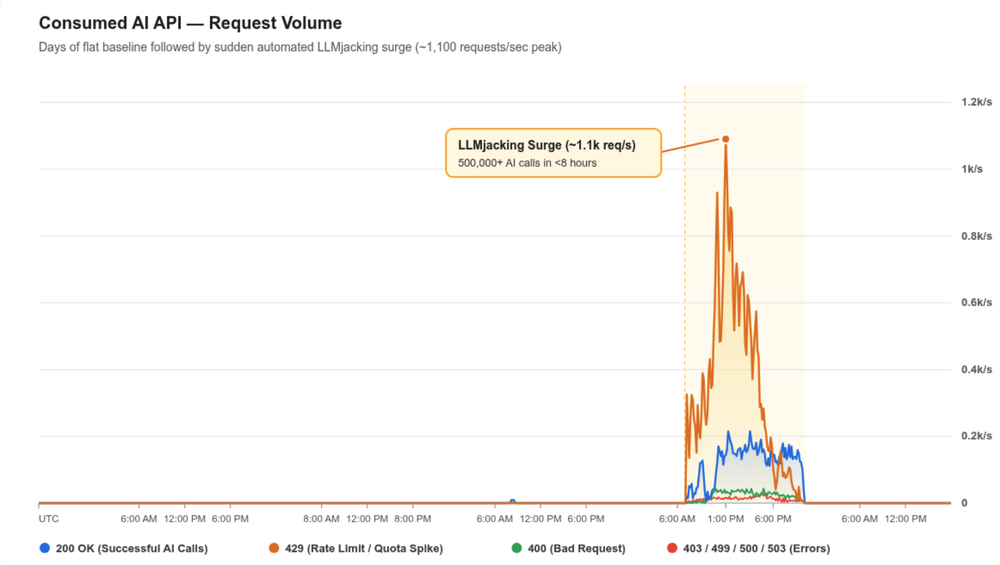
The Rise of LLMJacking: How Threat Actors Monetize Compromised Cloud and Model Resources
Written by: Christopher Romano, Codi Starks, Garrett Mahoney, John Wolfram, Josh Murchie, K Singh, Mathew Potaczek, Mike Lombardi, Rik Dolfing Introduction Mandiant responded to multiple incidents in 2026 in which threat actors hijacked enterprise access to Large Language Models (LLMs), a tactic known as "LLMJacking." Spanning a variety of cloud and LLM providers, these intrusions impacted organizations in North America, South America, and Asia Pacific across the financial services, retail, technology, and transportation sectors. Unlike the gradual resource consumption associated with cryptojacking, LLMJacking can generate large spikes in fraudulent cloud charges in a matter of hours. Across individual incidents, we observed fraudulent charges associated with resource consumption exceeding $100,000 USD in a single day, with cumulative charges at some organizations reaching $1 million USD before access was revoked. Figure 1: Usage chart showing LLMJacking generating a spike in API requests Analyzing the criminal ecosystem behind these frontline compromises, and building upon previous reporting on the growing underground market for LLM credentials, Google Threat Intelligence Group (GTIG) has identified a diverse set of financially motivated threat clusters operating out of multiple regions globally. As the LLMJacking ecosystem matures, we are also tracking a division of labor between threat actors establishing initial access to compromised environments and operators managing downstream monetization infrastructure, known as “LLM Mixers”. LLM Mixers function as illicit routing gateways that proxy, aggregate, and resell unauthorized LLM access to underground subscribers. In one investigation, GTIG observed two distinct operational clusters coordinating to compromise and monetize enterprise LLM infrastructure, demonstrating the sophisticated specialization emerging in this space. In this blog post, we describe the attack lifecycle observed across recent LLMJacking investigations and provide actionable detection, hardening, and remediation guidance to help organizations secure their infrastructure. Initial Access While low-level resource theft has involved the manipulation of customer support chatbots to conduct unauthorized tasks like code generation, threat actors conducting LLMJacking bypass these front-end interfaces to target backend model resources directly. Specifically, they focus on either identifying publicly exposed LLM endpoints or obtaining valid LLM application programming interface (API) keys. An example of the latter can be seen in Figure 1, where a threat actor uses an automated script to verify exposure by calling the /api/create endpoint to independently run their own models on endpoints that unsuspecting users have left publicly accessible. Leaving these services unprotected not only expands an organization's traditional attack surface, but could also introduce a significant increase in hosting costs. Figure 2: Threat Actor tests publicly exposed Ollama endpoints and attempts to register their own models Across multiple LLMJacking investigations, however, the dominant initial access vector has been exposed or stolen cloud identity tokens—including IAM credentials, Service Account keys, GitHub Personal Access Tokens (PATs), and active session tokens—which threat actors leverage to establish an initial foothold into target organizations' infrastructure. For instance, in mid-2026 UNC6993 compromised a cloud instance through a misconfigured Service Account key and used this access to grant further access to an LLM API. UNC6993 also hosted a session hijacking page masquerading as an application portal to join a group of LLM users. This page tricks users into navigating to the legitimate LLM service website, and pasting their raw JSON payload containing an active access token, which was then posted to the backend API to bypass password and multifactor authentication (MFA) controls. In another instance, one threat actor gained initial entry by combining a stolen Personal Access Token (PAT) to access private code repositories with the exploitation of a suspected web application vulnerability in a package running within a containerized cloud environment. Similarly, a different threat actor leveraged compromised IAM credentials of corporate users, using cloud federation tokens to programmatically generate fresh access keys to circumvent MFA requirements. In a separate incident, a threat actor was first observed accessing the environment with a compromised cloud Service Account key with broad project permissions. Beyond general cloud identity credentials, threat actors also target LLM API keys. For example, a threat actor opportunistically harvested exposed corporate LLM API keys from public GitHub repositories. Demonstrating advanced evasion tradecraft, the group conducted automated credential validation sweeps using minimal single-token requests (max_tokens=1). This allowed the threat actor to stealthily confirm the viability of the stolen keys while remaining undetected by the victim’s endpoint detection and response (EDR) and SIEM volume anomaly alerts. Lateral Movement and Persistence After gaining an initial foothold, threat actors systematically work to escalate privileges, solidify access, and conduct internal reconnaissance to identify targets and further cloud credentials. To expand their access, threat actors enumerated cloud services, code repositories, and data stores for sensitive credentials. In one intrusion, a threat actor conducted internal reconnaissance across multiple cloud regions to map available services and identity policies. In a separate intrusion, a threat actor compromised a containerized cloud environment. Once inside, they performed extensive repository reconnaissance, cloning sensitive codebases to search for hardcoded secrets, configuration variables, and developer credentials. They also scanned access logs to identify credentials for secondary cloud environments. Threat actors also executed targeted database queries to harvest additional credentials; in one case, the threat actor queried cloud data warehouse metadata tables to search for database credentials, administrator passwords, and sensitive columns, alongside performing cloud object storage operations associated with targeted data theft. Across intrusions, we observed threat actors abusing cloud identity permissions and virtual machine configurations to escalate privileges and maintain persistent access. Utilizing service accounts associated with compromised workloads, one threat actor exploited token-creation privileges to generate temporary credentials for high-privilege service accounts, resulting in the exfiltration of infrastructure credentials, internal database passwords, and third-party API keys from cloud secret managers. Other threat actors established persistence by creating unauthorized IAM and service accounts and injecting SSH keys into compute instances. Specifically, one actor escalated privileges by attaching administrative policies to service roles, created unauthorized IAM accounts with full administrative rights, and established interactive management sessions into running virtual machines to inject unauthorized SSH public keys into host configuration files. Similarly, another threat actor created deceptive backdoor service accounts disguised as internal billing optimization utilities and injected environment-wide SSH keys into compute instance metadata. Beyond exploiting traditional cloud infrastructure permissions, we have observed instances of threat actors targeting vulnerabilities specifically within LLM routing software to escalate privileges. In one case, after acquiring pre-validated Virtual Keys from the threat actor that established initial access, a follow-on cluster executed targeted application logic exploitation against the victim's LiteLLM gateway. The actor exploited a user ID rebind vulnerability in the /key/regenerate endpoint (CVE-2026-40217) to elevate standard Virtual Keys into full PROXY_ADMIN master administrative credentials, establishing deep, persistent control over the compromised environment. LLM Abuse The ultimate objective of LLMJacking is the monetization and resource-hijacking of foundation models, which actors achieve through token proxying, automated model streaming, and GPU hardware provisioning. Threat actors frequently enabled a variety of managed generative platforms, and created additional API keys to scale their operations. Upon acquiring LLM API access keys, UNC6993 attempted to generate additional API keys and enable associated services within victim cloud projects, quickly accumulating over $100,000 USD in billing charges. Another threat actor subscribed victim accounts to Pay-As-You-Go agreements, selecting premium foundation models and launching high-volume inference streams. To bypass rate limits, the threat actor deployed a "burn and rotate" strategy, continuously creating and deleting short-lived service accounts while auditing the cloud provider’s billing interface to monitor financial impact. Threat actors also leveraged their access to host their own proxy endpoints and agentic workloads. For example, one threat actor enabled agents, deployed publicly accessible reverse proxies, and used custom Node.js proxy bundles to expose endpoints compatible with multiple frontier LLMs rebranded under a persona known as D1337-KAIROS. The actor deployed a containerized backdoor using the Manus agent framework to the compromised cloud environment, which queried an upstream LLM to reason through instructions and execute resulting commands locally, supported by SearXNG metasearch and agent-infra/sandbox execution environments. To scale compute, the threat actor provisioned compute instances with powerful GPUs, attempted to spin up high-end hardware across multiple regions, and requested quota increases via the cloud provider’s API. The actor also hosted LiteLLM gateways on external servers to manage and route API traffic. Rather than consuming hijacked compute solely for their own operations, GTIG observed evidence of threat actors monetizing compromised API quotas by selling access to these resources through LLM Mixers. The threat actors used open-source API gateways and custom relay infrastructure to pool stolen credentials, meter usage, and obscure the origin of the requests. For example, UNC6993 used open-source tools such as new-api (a centralized model hub and gateway) and gcli2api (an API proxy tool converting command line interface (CLI) tools into standard frontier model endpoints), likely to aggregate stolen keys and balance request loads across accounts. We believe the threat actor sells access to these tools via underground storefronts. Another threat actor that executed more than 500,000 LLM API calls in less than eight hours leveraged stolen third-party API keys to power the token routing service jet-night.com. Jet Night passed nearly one million dollars in token costs to the victim organization. Given Jet Night’s per-token costs to users are so far below typical market rates GTIG believes the service relies on stolen keys to operate profitably. For example, Jet Night offers an unlimited token plan for approximately $60 USD per month with alleged access to frontier models, a consumer service level that would typically run between $100 and $250 per month. Moreover, the service has advertised multiple outages on its public Telegram channel which is likely due to stolen keys being revoked as victims discover their respective compromises. Figure 3: Screenshot of Jet Night Plans and Pricing Structure A threat actor deployed custom proxy relay infrastructure (ai-relay) hosted on deceptive lookalike domains. For example, they registered a domain to masquerade as the victim's legitimate internal host. This custom relay infrastructure was used to seamlessly siphon high-value commercial LLM access into the illicit newapi[.]pro resale ecosystem, directly draining the victim's corporate account quotas to serve their underground customers. Outlook GTIG expects that threat actors will increasingly prioritize LLMJacking over traditional resource theft like cryptojacking, driven by the immediate, high-margin monetization enabled by emerging underground LLM Mixers. As enterprises integrate higher-tier models and agentic workflows into production environments, cybercriminals will likely refine automated reconnaissance to target exposed API tokens and exploit vulnerabilities in model routing middleware. This operational specialization will sustain a growing illicit resale marketplace, allowing threat actors to rapidly siphon enterprise quotas while passing the billing costs to victims before compromises are detected. Detection and Hunting In the event that security measures have failed, it is critical that defenders have early visibility into abuse of cloud LLM platforms. Defenders should prioritize detection of modifications to LLM accounts and services and treat any unauthorized enablement as a critical security event. In multiple incidents that Mandiant investigated, LLM services were not enabled at the time of compromise. Abuse of access keys allowed the threat actor to modify and enable LLM API services (e.g. Bedrock, Gemini API, etc.). Once enabled, the threat actor can use the APIs to generate massive bills to the organization in just minutes or hours. Google Security Operations Google Security Operations customers have access to these broad category rules and more under the Cloud Threats, Mandiant Frontline Threats, Mandiant Hunting Rules rule packs. The activity discussed in the blog post is detected in Google SecOps under the rule names: AWS Account Key Creation AWS Create New Access Key AWS Create User Account AWS Delete User Account Base64 Encoded Shell Command Execution Create and Delete Firewall in Default Network GCE Project SSH Keys GCP Service Account Key Creation GCP Create New Service Account GCP Firewall Rule Created Linux Archive Exfiltration via Curl or Wget Persistence: Compute Set Instance or Project Metadata Startup Scripts or URLs Mitigation and Remediation To prevent attackers from abusing Cloud LLM services, defenders should prioritize Identity and Access Management (IAM) and supply chain security, two of the most common pathways for gaining access to and abusing Cloud services. Credential Hygiene: Utilize a centralized secrets management platform to control the management and rotation of sensitive keys and secrets. Automation of secrets and keys can limit the lifespan of leaked credentials. Least Privilege: Ensure users and service accounts only possess the permissions necessary for their specific role and required tasks. Deny all permissions that are not explicitly required, including access to Cloud LLM services. Code Monitoring: Automate secret scanning within codebases (GitHub, Gitlab, etc.) to ensure API keys and secrets added to source code are identified and removed promptly. Routine Configuration Audits: Perform periodic comprehensive configuration audits of Cloud services to identify potential attack paths and unintended exposure of endpoints. Rate Limiting: Implement a WAF like Google’s Cloud Armor to enforce rate limiting for individual client connections. Network Allow Listing: Restrict outbound connections from Cloud services via VPC firewall rules to known IP addresses where feasible. Budget Alerts: Implement granular API quotas on LLM services to limit request volume per model. Utilize spending caps to set budgets and avoid over-spending. Multi-Factor Authentication (MFA): Enforce phishing-resistant multi-factor authentication across all cloud identity providers, management consoles, and developer platforms to ensure that stolen credentials or session tokens cannot be easily exploited. Shadow LLM Discovery: Utilize Security Posture Management tools to automatically scan your hybrid cloud environments and identify unauthorized or unmonitored tools, models, and infrastructure, ensuring complete visibility of your model footprint. Granular API Key Scopes: Restrict and segment API keys by specific model endpoints, environments (dev/prod), and usage limits to ensure a compromised token for a basic utility model cannot be used to invoke expensive, high-tier frontier models. Validation Sweep Monitoring: Monitor model gateway and API access logs for anomalous, low-volume requests (such as max_tokens=1 or zero-temperature pings). Attackers frequently use these micro-transactions for stealthy credential validation sweeps prior to launching large-scale infrastructure abuse. Vulnerability & ML Supply Chain Patching: Integrate automated vulnerability scanning (SAST/DAST/SCA) across your custom application code, containerized workloads, and machine learning dependencies (like PyTorch and Hugging Face libraries) to prevent initial access via unpatched server vulnerabilities. Gateway Patch Management: Extend vulnerability management programs to include centralized model proxy and routing gateways (e.g., LiteLLM), ensuring rapid patching against privilege escalation and authentication bypass flaws (such as CVE-2026-40217). Sandboxed Execution for Dynamic Workloads: Isolate the runtime environment in highly virtualized, process-isolated, serverless sandboxes if your LLM application is required to execute generated code or database queries dynamically. Vetted Model Repositories: Restrict and enforce model pulls and pipeline dependencies solely from trusted internal registries or approved enterprise catalogs to prevent developers from pulling compromised models containing pre-configured backdoors. Graph-Based Exposure Modeling: Implement continuous, graph-based risk prioritization that maps cloud assets, application code, and data flows to automatically identify and remediate complex, multi-hop attack paths. Adversarial Exposure Validation: Deploy automated offensive agents to continuously test external attack surfaces, uncover exposed endpoints, and simulate credential validation sweeps. Monitoring Native Cloud Audit Logs AWS: Monitor CloudTrail logs for API events from bedrock.amazonaws.com. Based on historical LLM Jacking incidents, monitor for the following API operations across the attack lifecycle: Resource Exploitation: Monitor for direct execution of the LLM via the Converse, InvokeModel, and API operations. API Throttling & Error Spikes: Monitor for high-volume spikes in ThrottlingException, ValidationException, or errors, which could indicate an automated “spraying” methodology targeting cloud infrastructure. Target Scoping: Monitor potential reconnaissance activity used to discover available models via the ,, and operations. Additionally, monitor for attempts to unlock new models in the environment via the and API operations. Security/Evasion: Review attempts to view, alter, or disable logging configurations to conceal prompt contents and avoid detection. Monitor the operation, as well as and . Any calls to disable logging by non-IaC (Infrastructure as Code) principals should be treated as high severity. Automated Tooling: Analyze User-Agent strings to identify automated tools and SDKs (e.g., claude-cli, aws-sdk-rust, and aws-sdk-go-v2) interacting directly with the target cloud infrastructure. Azure: Monitor Azure Activity Logs (Control Plane) and Diagnostic Logs (Data Plane) for events associated with the Microsoft.CognitiveServices namespace. To hunt for or detect LLM Jacking incidents, monitor the following operations: Resource Exploitation: Monitor for direct execution of the LLM. In Azure, model invocations occur on the data plane and require Diagnostic Logs to be enabled. Look for high volumes of POST requests to inference endpoints such as Completions or Chat Completions APIs. On the management plane (Activity Logs), monitor for unauthorized creation of new instances via the Microsoft.CognitiveServices/accounts/deployments/write operation. Target Scoping: Monitor potential reconnaissance activity to discover available Azure LLM resources, models, and deployments via the Microsoft.CognitiveServices/accounts/read and Microsoft.CognitiveServices/accounts/deployments/read operations. Security/Evasion: Review attempts to view or modify logging configurations (to see if data plane model invocations are being recorded) via the Microsoft.Insights/diagnosticSettings/read, Microsoft.Insights/diagnosticSettings/write, or Microsoft.Insights/diagnosticSettings/delete operations. GCP: Monitor Cloud Audit Logging for calls to Gemini Enterprise Agent Platform endpoints (aiplatform.googleapis.com). Gemini Enterprise Agent Platform inference operations are contained within Data Access logs, which are disabled by default due to volume and ingestion costs. You must manually configure your IAM audit policies to track these. Enablement of Agent Platform Services: Alert on enablement of Gemini Enterprise Agent Platform services via the google.api.serviceusage.v1.ServiceUsage.EnableService method. Resource Exploitation: Monitor for direct execution of the LLM via Gemini Enterprise Agent Platform, which requires Data Access audit logging to be enabled. Look for google.cloud.aiplatform.v1.PredictionService.Predict, google.cloud.aiplatform.v1.PredictionService.GenerateContent, and google.cloud.aiplatform.v1.PredictionService. operations. Target Scoping: Monitor potential reconnaissance activity to discover available models and endpoints via the google.cloud.aiplatform.v1.ModelService.ListModels, google.cloud.aiplatform.v1.EndpointService.ListEndpoints, and google.cloud.aiplatform.v1..ListPublisherModels API operations. Security/Evasion: Review attempts to view or alter logging and audit configurations. Monitor for operations like google.iam.v1.IAMPolicy.GetIamPolicy (to check if Data Access logs are enabled on the project/resource) or attempts to review log exports via google.logging.v2.ConfigServiceV2.ListSinks and google.logging.v2.ConfigServiceV2.GetSink. Indicators of Compromise (IOCs) To assist the wider community in hunting and identifying activity outlined in this blog post, we have included indicators of compromise (IOCs) in a GTI Collection for registered users. Network Indicators Indicator Description jet-night.com LLM Mixer newapi.pro LLM Mixer Table 1: Network Indicators
Introduction Last week, Google and industry partners dismantled the XCPE backdoor which enrolled more than 1.3 million set-top boxes into a botnet. We assess with high confidence that the backdoor and botnet were intentionally developed, deployed, and operated for financial gain by Videostrong Technology Co., an Android Original Equipment Manufacturer (OEM) and Original Design Manufacturer (ODM). Videostrong monetized the backdoor by selling access to criminal affiliates and loading those affiliates’ malware modules onto infected devices. These secondary modules were conducting ad-fraud; silently enrolling infected devices into residential proxy networks; and loading additional malware onto XCPE-compromised devices. We also took action to disrupt the command and control (C2) domains that operate these affiliate modules. Because these affiliates each have diversified distribution channels for their modules beyond XCPE, we assess that taking down their C2 domains will sever access to at least 10 million additional compromised devices. We found this malicious software built directly into many different device models and brands over multiple years, supported by dedicated infrastructure and constantly evolving configurations to evade detection and manage their affiliates. We believe this campaign wasn’t an isolated rogue insider or a development oversight. As a result, Google has cut ties with Videostrong and banned them from making devices with preloaded Google apps. Google requires OEMs go through a comprehensive suite of compatibility and security tests to ensure a consistent and safe user experience across the Android ecosystem. However, Videostrong employed obfuscation techniques to exploit a gap in our tests and load malicious code after the device's first boot. As a result, Google has implemented changes to its existing review process to better safeguard against similar activity in the future. A device manufacturer intentionally infecting their users with malware is an unacceptable breach of trust, and represents a serious risk to those users. Without users’ knowledge or consent, infected devices were offered as a distribution mechanism for a wide array of criminal actors. This led to a variety of malicious activities being conducted on and through the devices, including ad-fraud, data exfiltration, and routing malicious network traffic through the devices. We worked closely with Japan’s National Police Agency, Lumen, HUMAN Security, Plume, Synthient, and TrendAI to analyze this malware ecosystem and disrupt its operations. While we expect this disruption to have a significant effect on these criminal operations, this is not the end of our work combatting malicious activity. Backdoor operators, ad-fraud rings, and residential proxy providers operate as an interconnected supply chain. Point-in-time disruptions are a critical tool to protect our users, but lasting disruption in this fluid ecosystem will require continued targeting of this infrastructure. Google undertook the following actions to support disruption of the XCPE botnet: Legal action to take down the domains and servers Videostrong used to control the botnet and install malware modules Legal action to take down C2 domains used by over a dozen malware families loaded as modules via this backdoor Banned Videostrong and any future subsidiaries or affiliates from building and selling certified Android devices in the future, or supplying software to other certified vendors Implementing improvements to how we ensure the integrity of firmware on certified Android TV devices Overview The x.cpe network was built for ongoing profit. By giving malware affiliates backdoor access, the operators conspired to monetize these devices long after purchase. Figure 1: XCPE malware overview Malware Since at least late 2024, Videostrong has evolved its pre-installed malware from simple single-stage droppers into a modular, three-stage architecture designed for resilience and multi-tenant monetization: Primary Backdoor: Operating at the android.uid.system privilege level, x.cpe (running as com.oemservice in some builds) is preloaded in the firmware partition. If uninstalled by a user, it automatically reinstalls from the /oem/ partition upon reboot, maintaining persistent system-level access. Its main function is to establish and facilitate communications between the C2 server and the loader and execution engine. Loader and Execution Engine: To evade security scans, x.cpe acts primarily as the C2 communicator and offloads module execution to an external loader, com.abc.nexus. This file employs native anti-analysis utilities to thwart sandbox detection, and configures and initializes the monetization modules. Most recently, com.abc.nexus has itself been phased out in favor of using more tailored dropper malware that loads and executes single modules. Monetization Modules: Videostrong monetizes its backdoored devices by loading monetization modules which are developed by entities other than Videostrong that act as affiliates. These modules are deployed as native ELF daemons, embedded SDKs compiled directly into the com.abc.nexus DEX bytecode, or are fetched as secondary APKs from the malware staging infrastructure. The loaded modules transform infected devices into residential proxy exit nodes (e.g., Linkfog, AppSalt, NetNut), ad-fraud engines (e.g., CBOXTV, HiddenView), or execute additional backdoors that load even more monetization modules (e.g. Moyu, Spirit). Infrastructure Command and Control: The botnet uses a two-stage C2 process. It first initiates HTTP POST requests to fetch dynamic configuration settings, geolocation data, and STUN server parameters. It then establishes a persistent, real-time Message Queuing Telemetry Transport (MQTT) connection to receive instructions for silent app installations, arbitrary shell commands, screen captures, and network reconnaissance. MQTT is a lightweight, publish-and-subscribe network protocol designed for low-bandwidth, high-latency, or unreliable remote networks. Malware staging infrastructure: Additional monetization modules as well as various shell scripts and legitimate applications are hosted remotely and downloaded by infected devices upon command from the operator via the MQTT broker. A significant majority of these files are hosted as Github releases on operator-owned Github pages. Other files are hosted on operator-controlled servers and file hosting sites. Malware Deep Dive Backdoor Initialization The infection chain begins with a stub package (called x.cpe in some builds and com.oemservice in others) preloaded in the system partition of the firmware and running at the android.uid.system privilege level. This stub has limited functionality. Upon boot, it checks the device's oem/ directory for the corresponding x.cpe package and initiates installation into the /data/app/ directory as outlined below. To maintain inter-process state across the firmware ecosystem, x.cpe exports two ContentProviders, which expose structured configuration tables storing runtime parameters, device identifiers, proxy configuration blobs, and execution flags accessible by co-installed system applications. This enables other apps in Videostrong’s ecosystem, such as their YokaTV Player streaming software, to fetch configuration parameters provided by the C2 server mentioned below. C2 Configuration The malware utilizes a two-stage communications protocol. It first fetches initial bootstrap configurations via an HTTP request, followed by a persistent MQTT subscription to receive commands and module download instructions. To dynamically derive the HTTP C2 bootstrap server, it follows the following routine: Queries content://com.release.debug.provider/configs for private_url via x.cpe.util.ExtraReadUtils. Queries the Android system property to determine if ro.mecool.device is true. If true, it defaults to http://mcstb.anyevonline.com:8000 If false, it dynamically generates the following: http://stb[AndroidVersion][Type].anyevonline.com:8000. Using the selected hostname, the client makes an HTTP POST request with an AES-encrypted JSON object containing hardware telemetry (SN, MAC, model, firmware version) to the following endpoints: /router/config/mqtt: This endpoint provides MQTT broker details (including Broker Hostname, TCP Port, Authentication Tokens/Passwords, and the specific Topic structure: /device/{model}/{chipId}/{action}. After receiving this data, the device initiates a persistent, real-time socket connection to the MQTT broker. /router/config/acs: This endpoint response returns URLs for ip-api[.]com and a Google STUN server to enable the malware to identify geolocation and public IP and port mapping to traverse network address translation (NAT) boundaries. It also returns a URL (http://ott.szbboys[.]com:8000/cpe/file/upload for uploading files, logs, or diagnostic dumps from the device, and returns flags to configure ad modules (adBwmActive, adDevourUse, adDevourCode), and to enable or disable core malware modules. /router/config/app: This endpoint provides module-level configs, including server mappings and parameters, which x.cpe decrypts and passes to a SQLite ContentProvider named ShareProvider (com.oem.share.provider). By exposing this inter-process data interface, x.cpe enables modules to retrieve up-to-date upstream infrastructure parameters (such as URLs for additional configs, user manuals, etc). MQTT Capabilities Following initial configuration, persistent real-time C2 communication is managed by the MQTT library (x.cpe.mqtt.MqttUtils). All identified samples analyzed to date utilize a single broker hostname, mqtt.szbboys[.]com. Specific MQTT topics are mapped to specific actions, including: Silent Application Installation: Fetches remote APKs to a temporary directory. Disable Google Play Protect: To bypass security, AppUtils.() targets the global setting "package_verifier_user_consent" via Settings.Global.putInt and sets it to -1, disabling Google Play Protect app verification. Arbitrary Shell Execution: Executes remote commands via sh under system UID privilege level. Results are published to the MQTT broker. Shell Script Execution: Downloads and executes shell scripts via x.cpe.util.RunCmds. Remote Desktop Monitor & Screen Capture: Utilizes android.app.Instrumentation.sendKeyDownUpSync() to inject keycodes and Java reflection on hidden APIs (android.view.SurfaceControl.screenshot / SurfaceControl$) to continuously capture the screen, compress to JPEG, and publish over MQTT. Network Reconnaissance: Invokes embedded binaries (libtraceroute.so) to fingerprint the victim network, and perform standard ping tests. The binaries also perform robust AS-lookup WHOIS routing queries. Our analysis of the C2 data indicates the preponderance of interactions with victim devices were related to module install, uninstall, and configuration actions. We also observed Videostrong operators executing sensitive actions on the device, including capturing live screenshots; injecting keystrokes; exfiltrating sensitive data including account information, device information, package inventories, and system logs; and executing shell scripts and commands, including to establish reverse shells on devices. Loader and Execution Engine Details Earlier versions of x.cpe directly embedded malicious monetization modules. In late 2024 – possibly as a response to earlier Google enforcement related to BadBox – Videostrong removed malicious modules from x.cpe and introduced a separate malicious package they developed, com.abc.nexus, which x.cpe routes instructions and data to via Inter-Process Communication (IPC). Modern variants of x.cpe facilitate C2 communications but pass configuration parameters, module updates, and other payloads to com.abc.nexus as the execution engine. We believe the actor may have evolved the malware in this way in an attempt to ensure x.cpe could remain undetected. Upon boot, com.abc.nexus.broadcast.BootReceiver broadcasts the com.abc.nexus.data intent, bootstrapping com.abc.nexus.service.CoreService. Within CoreService.onCreate, the application performs maintenance and persistence tasks. The main logic sets up a listener through for IPC communications from x.cpe,and parses JSON payloads received from it. After these steps, CoreService initializes the monetization modules. com.abc.nexus services extract and orchestrate a series of nested native libraries and dynamically downloaded secondary payloads which vary significantly based on sample. Many versions of com.abc.nexus come preloaded with four or more embedded modules, while other versions contain as few as one. The most common malware modules include TitanService, BwmService, AdtimeService, lb102Service, and LinkfogService (sometimes called AgentService). Discussion of these and other modules can be found in the monetization modules section. Persistence and Evasion The malware operators implement a number of mechanisms to establish persistence and thwart detection and analysis. As a system preload, x.cpe cannot be removed by the user. If x.cpe is uninstalled from /data/app/, upon reboot the x.cpe service BootReceiver follows the same routine outlined above and reinstalls the package. The backdoor is able to silently download additional files to the device and execute them without user consent because it first wipes user consent configuration on the device and then disables Google Play Protect: public static void () { PreferenceUtils.(CPEApp.instance, true); AppUtils.setPackageVerify(-1); // Actioning a bypass against GPP evaluation } Figure 2: Disabling Google Play Protect In many variants of com.abc.nexus, we observed the extraction of a sophisticated anti-analysis and process hardening utility libseccomp_guard.so, which runs prior to the initialization of malware modules, to ensure they remain protected from automated sandboxes and security instrumentation. It filters system calls to prevent the pausing or termination of individual threads, denies cross-process interference to ensure isolation, and prevents the spawning of child processes. Evolution Since August 2026, new dropper packages have been installed via the MQTT channel, which appear to be synchronized with the mass-uninstallation of com.abc.nexus across the botnet. We assess this may represent a new evolution of the malware to further evade detection. These new packages are disguised as Android system applications, with names such as com.android.system.ntp and com.android.sso.auth.handler. Where com.abc.nexus could act as a general purpose loader and execution engine (executing instructions passed to it from x.cpe), these packages instead install single monetization modules (such as AppSalt). Multiple variants of these packages extract a native ELF file, libexploit.so, which in turn executes functions nativeAdbRoot() and nativeAdbShell(). These functions restart the local adbd service as root, and initiate an ADB shell connection. Following this, the app uses the connection to install itself in the system partition. The system partition is remounted as read-write and the payload replicates itself to a newly minted directory in /system/priv-app/ and creates an XML file at /system/etc/permissions/privapp-permissions-<app name>.xml. This file grants the malware android.permission.INSTALL_PACKAGES and android.permission.REBOOT. The app configures the malware modules through hardcoded configuration parameters, and does not listen for x.cpe IPC messages. The app itself is controlled by the operators via shell scripts pushed via the broker and executed by x.cpe. These include setting the property persist.networkstack.uninstall (which, when read by the app, triggers uninstallation and cleanup), persist.networkstack.skip_system_install (which skips system installation, forcing it to remain running in /data/app/), and persist.networkstack.install_time (which implements timestomping, overriding the default timestamp of the app to align with the other packages installed in the system directory). Botnet composition The botnet is globally dispersed, with certain concentrations possibly implying market penetration for the brand distributor. Figure 3: Global distribution of x.cpe While the overwhelming majority of the infected devices in the XCPE botnet are Android TV set-top boxes, we observed a number of other infected Android-based IoT devices, including telehealth devices, karaoke machines, and digital signage devices. Monetization x.cpe loads a variety of malicious modules for monetization. Most often the modules are associated with residential proxy services and bandwidth sharing, but we've also observed ad fraud modules. Given that a single device may be running multiple modules providing the same or similar functionality (e.g., as many as three residential proxy SDKs installed on a single device) it is clear that Videostrong seeks to monetize every infected device to the greatest extent possible. Services are loaded by com.abc.nexus via three methods: Native Daemons: Native ELF binaries prepackaged with com.abc.nexus, which are unpacked to data directories and spawned as background processes with system/root privileges. Embedded SDKs / Services: Java/Kotlin SDKs compiled directly into Nexus and invoked via Android Service lifecycles or IPC broadcast triggers. Dynamic Droppers & Secondary APK Installers: Downloader function that pulls remote native ELFs or secondary standalone APKs and invokes system package managers. Nexus receives messages from x.cpe directing it to download specific modules. Malware modules loaded via the backdoor include the following: Residential Proxy / Bandwidth Sharing Modules LINKFOG Com.abc.nexus’s LinkfogService unpacks a Go binary named lw_android_agent from assets/ to local app storage and supplies it with vendor parameters. This service silently turns infected devices into residential edge computing and PCDN proxy exit nodes. It connects to FRP reverse tunnels, and uploads bandwidth accounting metrics to Linkfog API backends. Linkfog (operated by Beijing Linkfog Technology via 点心云 / Dianxinyun) brands itself as a “Peer-to-Peer Content Delivery Network”. Jaguar The com.abc.nexus AdtimeService extracts libjaguar.so from assets/. The file is an unobfuscated 32-bit ELF binary written in C, compiled as a native Android binary. It utilizes JNI (Java Native Interface) to initialize its core routines, dynamically derives a ChaCha20 decryption key via ARM NEON SIMD instructions to decode heavily obfuscated configurations , and establishes an encrypted C2 channel. Upon successful registration, the C2 responds with JSON configuration specifying proxy endpoints. The proxy command loop x_ctrl_do_ctrl_msg delegates proxy operations based on incoming JSON variable commands, and is capable of both TCP and UDP relay. AppSalt / Honeygain AppSalt SDK is the residential proxy SDK owned by Honeygain, which is in turn owned by Oxylabs. com.abc.nexus.service.CoreService initializes Appsalt SDK. First, the application obtains an Appsalt SDK API key from a native library libnative_keys.so by calling its getAppsaltKey() function. Appsalt SDK is initialized without displaying a consent screen - instead it explicitly calls the optIn() method which sets a consent flag without displaying any user interface. During Appsalt SDK startup it checks the application's installation source and stops execution if the application was installed from the official Google Play Store. Once Appsalt is successfully initialized it establishes a WebSocket connection with the primary command and control domain. Appsalt uses JSON-formatted messages for initial check-in (registration) and heartbeat requests. Appsalt command and control servers use MessagePack formatted messages to issue commands pertaining to proxy operations. Appsalt SDK is configured with an initial set of domains that act as proxy gateways. The list of proxy gateways can be updated by the command and control server. The device establishes UDP / QUIC connections with these gateways. BWM / IPWeb This residential proxy and bandwidth-sharing node is implemented through the com.abc.nexus.service.BwmService component (sometimes named com.abc.nexus.service.SN4Service) and its associated SDK. Upon initialization, it secures itself within an isolated sandbox environment, captures device telemetry, and registers with a remote server over UDP. From this C2, it receives instructions to initiate a Java NIO TCP multiplexed proxy tunnel. The service functions to route arbitrary traffic through the infected device on behalf of a remote threat actor. GaGaNode GaGaNode is the first-party SDK owned by residential proxy operator IPCola. It connects over TCP to a primary C2 server and sends heartbeat beacon data over HTTP POST to a separate server. The SDK both contains its own proxy relay functionality, and it initializes additional proxy SDKs from affiliates. Upon device registration to the C2, com.gaganode.sdk.node.endpoint.a receives incoming packets from relay servers and places them in queue for the client to read and proxy through its exit node socket. The service manages multiple proxy sessions at once (referred to as clients), and each client has its own tcp/udp queue for messages. We observe GaGaNode initializing PopaNet/NetNut and EarnFM Fleet residential proxy SDKs. GaGaNode/IPCola is thus likely able to further monetize its SDK and offer these affiliates access to the infected exit nodes. NetNut / Popanet Popanet is a residential proxy SDK developed by NetNut, a residential proxy operator. The GaGaNode module initiates the Popanet SDK (io.popanet.Popa). This malware is identical to the malware described in our previous disruption of NetNut. All C2 infrastructure used by Popanet samples connected to x.cpe was taken down as part of the earlier Netnut disruption. Traffmonetizer The Traffmonetizer SDK is initialized inside the primary background service com.abc.nexus.service.CoreService. CoreService operation depends on the availability of policy JSON provided by the XCPE backdoor via IPC. Before calling Traffmonetizer SDK initialization methods, the application obtains a Traffmonetizer SDK API key from the native library libnative_keys.so by calling its () function. Traffmonetizer functionality is split between two components where the Android SDK acts as a state machine which handles native library callbacks through asynchronous event dispatchers. ServiceBloc monitors connection status updates from the native callbacks and ConnectivityBloc monitors Wi-Fi and mobile data network changes. Traffmonetizer native library initialization and configuration is followed by a call to baseClientStart() which establishes a WebSocket connection to a C2 server. Traffmonetizer uses a single WebSocket (TLS) connection to the command and control server to multiplex control messages and tunneled connections (supports both TCP and UDP). Traffmonetizer also supports “Content Delivery” tunneling which allows nodes to tunnel bandwidth-intensive traffic. EarnFM EarnFM is a residential proxy provider, and Fleet SDK is the provider’s SDK that enrolls devices as exit nodes into the proxy network. In com.abc.nexus, FleetSDK is initialized by com.gaganode.sdk as mentioned above. FleetSdk then loads native binary libfleetshare.so. FleetSDK establishes a persistent WebSocket connection with its primary C2 server for routing arbitrary network traffic. Incoming tasking frames are received over the WebSocket channel and processed in a continuous loop. Messages contain structured JSON commands instructing the daemon to connect to specific remote hosts, with support for both TCP and UDP. Backdoor Modules Spirit Spirit is a dynamic code loading backdoor. Spirit employs multiple stages. The first stage payload fetches device information (hardware, operating system, and manufacturer/brand information and geolocation), posting it over HTTP to a hardcoded C2 server, and fetches a list of additional modules to download from the server. The second stage communicates with a separate server, and is used for tasking, config sync, module retrieval, heartbeats, and reporting. We have observed Spirit loading a significant amount of additional malware monetization modules, including some of the families already directly loaded by com.abc.nexus. Moyu Moyu is a 3-stage backdoor previously observed as part of the BadBox enterprise. On x.cpe-backdoored devices, we observed it initialized by com.abc.nexus.service.DevourService. The first stage is an offline dropper that reconstructs and loads an embedded second stage. Stage two polls an update C2 to download, decrypt, and load the third stage. Stage three implements a backdoor with hidden Double-WebView click/conversion fraud, persistent clipboard hijacking, and secondary dynamically loaded JAR execution and a separate residential proxy trojan. Bird Bird is a 2-stage backdoor previously tied to the BadBox enterprise. Stage 1 beacons a device and analysis-environment profile to its C2 server and, when the server approves, downloads, decrypts, and loads the Stage 2 JAR. Stage 2 implements a dynamic code loading backdoor (two plugin loaders plus a C2-driven reflective method invoker), a separate downloader (silent APK installation and Accessibility-driven Google Play installs), and ad abuse (lockscreen ads, overlays, browser launches). Fission Fission is a dynamic code loading (DCL) backdoor embedded within standard video applications (e.g., com.newtv.cboxtv). Upon initialization, the first stage plugin contacts its C2 server to download additional modules. The decrypted second stage payload fetches execution targets and tracking URLs from the C2. The request sends an unencrypted POST request with tracking metrics from the internal DeviceManager. The payload we observed was configured to commit ad fraud. Rather than rendering visible advertisements in a WebView or UI component, the Stage 2 plugin executes headlessly in the background. The module queries ad server endpoints in the background to retrieve ad placement responses, parses out both primary impression beacons (pvm) and third-party tracking monitor URLs (pvtpm), and immediately fires HTTP GET requests to each tracking endpoint to register a fake ad view without displaying creative content. When executing inside specific smart-TV application stores (com.changhong.appstore or com.tcl.appmarket2), the plugin initializes and triggers the ad SDK directly to report synthetic ad exposures. Ad-Fraud HiddenView We observed HiddenView loaded remotely from the attacker’s Github channel as com.ota.service. It is a standalone ad fraud application capable of running in the background using a transparent window overlay, using hidden WebViews to load targeted web pages and simulate user interaction (scrolling, clicking, typing, media playback), playing media unattended, and capturing the user’s screen. How the pieces come together Configuration messages pushed via MQTT (action ext/lib/config) demonstrate how x.cpe, com.abc.nexus and various monetization modules function together. Upon registration, subscribed devices receive a ext/lib/config message, which contains configuration parameters for malicious plugins. This includes: Limits on system resources: "constraints": [ { "cpu": 70, "ioRead": 5000, "ioWrite": 5000, "libCode": "linkfog", "memory": 50, "reportAlarm": true, "trigger": 3 } Figure 4: System resource limits configuration payload Module name, download location per architecture, hashes, and weight (relative priority for system resources): "infos": [ { "libChannel": "SZKJ", "libCode": "linkfog", "libResource": [ { "address": "https://github.com/Aviciiii/ott/releases/download/cpe_ext_lib/lw_android_agent_special_ndk_64", "architecture": "arm64-v8a", "md5": "" }, { "address": "https://github.com/Aviciiii/ott/releases/download/cpe_ext_lib/lw_android_agent_special_ndk_32_20250717", "architecture": "armeabi-v7a", "md5": "" } ], "libWeight": 5 }, Figure 5: Module configuration payload Devices are assigned to one of six timezone-separated pools on the ott.szbboys[.]com domain: "region": "Iraq", "serverPool": { "defaultPool": "Pool5", "lastUpdated": "2025-08-06 17:00:00", Figure 6: Server Pool configuration payload The “policys” section instructs com.abc.nexus which modules to download and run: "status": [ { "enable": true, "libCode": "linkfog" }, { "enable": false, "libCode": "bwm" }, { "enable": false, "libCode": "adtime" }, { "enable": false, "libCode": "admoyu" }, { "enable": false, "libCode": "titan" }, { "enable": false, "libCode": "lb102" } ], Figure 7: Module activation payload x.cpe passes on these configuration parameters to com.abc.nexus for the given module on the device. Devices report bandwidth usage and alarms back to serverPool to stay within the configured constraints. When com.abc.nexus acknowledges receiving the bundle, x.cpe immediately publishes ext/lib/config/reply back to the MQTT broker: "code": 0, "msg": "success", "data": "received data success and applying", "async": true, "immediately": false Figure 8: x.cpe response payload Infrastructure As previously mentioned, devices first connect to various endpoints on *.anyevonline[.]com for initial bootstrap, registration, and configuration. Earlier malware versions used various hostnames of {*tms | *ott | *ota}.szbboys[.]com for the same purpose. While earlier versions of the malware used HTTP for C2, and then a blended C2 approach with both HTTP and MQTT, static analysis of current versions indicate they exclusively send/receive C2 communications via MQTT. A single MQTT broker orchestrates all MQTT C2 communications for samples we’ve identified. Hostname mqtt.szbboys[.]com is resolved by hosts 219.134.163[.]210 and 219.134.163[.]211. It listens on non-standard MQTT ports 3885-3887. The malware constructs OkHttp requests for file downloads after tasking via the MQTT broker. Files are hosted on several services: Several Github release pages The filemail[.]com file sharing service Two operator-controlled servers hosted on IPs 38.145.197[.]135 and 23.94.49[.]57 Netflow telemetry on the broker nodes (219.134.163[.]210/.211) indicates that while infected devices communicate over ports 3885–3887, operators likely manage the broker and dispatch tasking via interactive HTTP REST API (port 8082), WebSocket (port 8083), and EMQX web administration console (port 18083) sessions originating from non-bot IP space. Call to Action While we believe our actions have seriously impacted over a dozen malicious actors, the underlying illicit market is resilient. Backdoor operators, ad-fraud rings, and residential proxy providers operate as an interconnected supply chain, and when one component is disrupted, operators quickly pivot to new loaders or rival monetization SDKs. Creating lasting change requires accountability across the hardware supply chain, the residential proxy industry, and the broader technology ecosystem. Accountability and Reform A device manufacturer intentionally infecting their users with malware is an unacceptable breach of trust. By turning everyday hardware into persistent beachheads for criminal affiliates, Videostrong prioritized illicit post-sale recurring revenue over the safety and privacy of its users. Downstream hardware brands, white-label resellers, telecommunications providers, and online e-commerce marketplaces also share responsibility for closing this vector. Retailers and distributors should require independent security audits from Original Design Manufacturers (ODMs) and swiftly delist manufacturers implicated in supply-chain abuse. Residential proxy providers have been able to flourish under the guise of legitimate businesses. While some providers may claim to behave ethically and only enroll devices with the clear consent of consumers, any claims of "ethical sourcing" must be backed by transparent, auditable proof of user consent. In our analysis, these proxy operators only seek consent when they are forced due to platform policy and enforcement. Silent opt-in without user consent remains the most prevalent means by which devices are turned into exit nodes. Empowering and Protecting the Consumer Residential proxies are an understudied area of risk for consumers, and more can be done to raise awareness. Consumers should be extremely wary of applications that offer payment in exchange for "unused bandwidth" or "sharing your internet." These applications are primary ways for illicit proxy networks to grow, and could open security vulnerabilities on the device’s home network. We urge users to stick to app stores you trust, review permissions for third-party VPNs and proxies, and ensure built-in security protections like Google Play Protect are active. Consumers should only purchase connected devices, such as set-top boxes, from reputable manufacturers. Our Android TV website provides the most up-to-date list of partners. Industry Collaboration We encourage mobile platforms, ISPs, online marketplaces and other tech platforms to continue sharing intelligence and implementing best practices to identify malicious backdoors, illicit proxy networks, and other harmful software and limit their harms. Indicators of Compromise Core Malware Samples Tool(s) Package Name Representative SHA256 Notes XCPE x.cpe XCPE x.cpe XCPE x.cpe XCPE x.cpe XCPE x.cpe XCPE x.cpe XCPE x.cpe XCPE x.cpe XCPE x.cpe XCPE x.cpe XCPE x.cpe XCPE x.cpe XCPE x.cpe XCPE x.cpe XCPE x.cpe XCPE x.cpe XCPE x.cpe XCPE x.cpe XCPE x.cpe XCPE x.cpe XCPE x.cpe XCPE x.cpe XCPE x.cpe XCPE x.cpe XCPE x.cpe XCPE x.cpe XCPE x.cpe XCPE x.cpe XCPE x.cpe XCPE x.cpe XCPE x.cpe XCPE x.cpe XCPE x.cpe XCPE x.cpe XCPE x.cpe XCPE com.oemservice XCPE com.oemservice XCPE com.oemservice XCPE com.oemservice XCPE com.oemservice XCPE com.oemservice XCPE com.oemservice XCPE com.oemservice XCPE com.oemservice XCPE com.oemservice XCPE com.oemservice XCPE com.oemservice ABCNexus com.abc.nexus ABCNexus com.abc.nexus ABCNexus com.abc.nexus ABCNexus com.abc.nexus ABCNexus com.abc.nexus ABCNexus com.abc.nexus ABCNexus com.abc.nexus ABCNexus com.abc.nexus ABCNexus com.abc.nexus ABCNexus com.abc.nexus ABCNexus com.abc.nexus ABCNexus com.abc.nexus ABCNexus com.abc.nexus ABCNexus com.vs.grass ABCNexus libseccomp_guard.so Anti-analysis binary spawned via NexusApplication.onCreate() inside com.abc.nexus:CoreService com.android.sso.auth.handler Dropper package dropping AppSalt SDK libexploit.so Privilege escalator bundled with sso.authHandler libnative_keys.so Key storage for AppSalt SDK bundled with Affiliate Malware Tool(s) File Type Representative SHA256 Notes Bird APK com.abc.nexus package initializes Bird at com.abc.nexus.service.AmhService.execAdv Linkfog APK com.abc.nexus package initializes Linkfog at com.abc.nexus.service.LinkfogService Linkfog ELF ELF binary Jaguar APK com.abc.nexus package initializes Jaguar at com.abc.nexus.service.AdtimeService Jaguar ELF ELF binary AppSalt / Honeygain APK com.abc.nexus package initializes AppSalt via com.abc.nexus.service.CoreService AppSalt / Honeygain DEX AppSalt class Bestipip/ipweb APK com.abc.nexus package initializes AppSalt via com.abc.nexus.service.BwmService Spirit APK Initializes in com.abc.nexus components com.abc.nexus.service.ADMOYUService.execAdv and com.data.trans.android.SdkInit.init Moyu APK Triggered in com.abc.nexus via Android Service components com.abc.nexus.service.DevourService.j and Com.qdp.s.b.uga GaGaNode APK In com.abc.nexus as com.gaganode Netnut/Popanet APK In com.abc.nexus, initialized as child of GagaNode in com.gaganode.sdk.HeartbeatManager->startHeartbeat Traffmonetizer APK Initialized in com.abc.nexus.service.CoreService Traffmonetizer DEX classes.dex Traffmonetizer ELF Key storage for Traffmonetizer dropped by com.abc.nexus Traffmonetizer ELF ELF binary dropped by com.abc.nexus EarnFM APK In com.abc.nexus, initialized as child of GagaNode in com.gaganode.sdk.HeartbeatManager EarnFM ELF libfleetshare.so ELF binary dropped by com.abc.nexus Fission APK com.newtv.cboxtv package fetched from operator Github HiddenView APK com.ota.service package fetched from operator Github HiddenView DEX classes.dex HiddenView DEX classes2.dex Network Indicators Indicator Type Malware Label Notes amhib[.]com Domain Bird disview[.]com Domain Bird prataw[.]com Domain Bird auqee[.]com Domain Bird alptk[.]com Domain Bird mfiny[.]com Domain Bird leisurepuz[.]com Domain Bird earn[.]fm Domain EarnFM geo-loadbalanced[.]com Domain EarnFM collection[.]shixunsuda[.]com Subdomain Fission analysis[.]shixunsuda[.]com Subdomain Fission gtxvdqvuweqs[.]com Domain Gaganode hiddeninplainsight[.]top Domain HiddenView absolut[.]fit Domain Honeygain / AppSalt alpivara[.]com Domain Honeygain / AppSalt beepityping[.]com Domain Honeygain / AppSalt beezlepongmad[.]com Domain Honeygain / AppSalt bloopondle[.]com Domain Honeygain / AppSalt blustpong[.]com Domain Honeygain / AppSalt braigwshat[.]com Domain Honeygain / AppSalt brisping[.]com Domain Honeygain / AppSalt bronglepong[.]com Domain Honeygain / AppSalt clapslpist[.]com Domain Honeygain / AppSalt clapslport[.]com Domain Honeygain / AppSalt craipivolta[.]com Domain Honeygain / AppSalt creapslpinut[.]com Domain Honeygain / AppSalt crodipolis[.]com Domain Honeygain / AppSalt delpiverno[.]com Domain Honeygain / AppSalt depomancy[.]com Domain Honeygain / AppSalt dewswyra[.]com Domain Honeygain / AppSalt drackpingcare[.]com Domain Honeygain / AppSalt dramapi[.]com Domain Honeygain / AppSalt drapithon[.]com Domain Honeygain / AppSalt fawsilver[.]com Domain Honeygain / AppSalt fawsindra[.]com Domain Honeygain / AppSalt fizzlepong[.]com Domain Honeygain / AppSalt flaigwern[.]com Domain Honeygain / AppSalt flapilo[.]com Domain Honeygain / AppSalt flapslwstorm[.]com Domain Honeygain / AppSalt flawsino[.]com Domain Honeygain / AppSalt flewsnark[.]com Domain Honeygain / AppSalt floporin[.]com Domain Honeygain / AppSalt floppipple[.]com Domain Honeygain / AppSalt flumpipoodle[.]com Domain Honeygain / AppSalt frosping[.]com Domain Honeygain / AppSalt gapslpinch[.]com Domain Honeygain / AppSalt gapslwsbor[.]com Domain Honeygain / AppSalt glapoton[.]com Domain Honeygain / AppSalt glewsnap[.]com Domain Honeygain / AppSalt glippinger[.]com Domain Honeygain / AppSalt gloobfnatch[.]com Domain Honeygain / AppSalt gloopong[.]com Domain Honeygain / AppSalt glowspar[.]com Domain Honeygain / AppSalt grasplpond[.]com Domain Honeygain / AppSalt grinapslpocal[.]com Domain Honeygain / AppSalt hawsith[.]com Domain Honeygain / AppSalt lapslponze[.]com Domain Honeygain / AppSalt lepovia[.]com Domain Honeygain / AppSalt limpingcare[.]com Domain Honeygain / AppSalt lorapslpifyx[.]com Domain Honeygain / AppSalt lowswyn[.]com Domain Honeygain / AppSalt lunapiris[.]com Domain Honeygain / AppSalt mopith[.]com Domain Honeygain / AppSalt mudponger[.]com Domain Honeygain / AppSalt nepiral[.]com Domain Honeygain / AppSalt opostra[.]com Domain Honeygain / AppSalt pibberflop[.]com Domain Honeygain / AppSalt pikaroodle[.]com Domain Honeygain / AppSalt ploponix[.]com Domain Honeygain / AppSalt qepoth[.]com Domain Honeygain / AppSalt rapinel[.]com Domain Honeygain / AppSalt rapslpine[.]com Domain Honeygain / AppSalt rapslponic[.]com Domain Honeygain / AppSalt rapslwsweave[.]com Domain Honeygain / AppSalt raspongle[.]com Domain Honeygain / AppSalt ripotus[.]com Domain Honeygain / AppSalt rowswyn[.]com Domain Honeygain / AppSalt scapslwshell[.]com Domain Honeygain / AppSalt snarpong[.]com Domain Honeygain / AppSalt snorpdoodle[.]com Domain Honeygain / AppSalt sofpilan[.]com Domain Honeygain / AppSalt soporth[.]com Domain Honeygain / AppSalt spopel[.]com Domain Honeygain / AppSalt tawserin[.]com Domain Honeygain / AppSalt tawswizzle[.]com Domain Honeygain / AppSalt teowsmera[.]com Domain Honeygain / AppSalt tepiol[.]com Domain Honeygain / AppSalt tewsmariel[.]com Domain Honeygain / AppSalt thaiporix[.]com Domain Honeygain / AppSalt thapolex[.]com Domain Honeygain / AppSalt torpoodle[.]com Domain Honeygain / AppSalt trapslwsin[.]com Domain Honeygain / AppSalt trawsica[.]com Domain Honeygain / AppSalt tripikazu[.]com Domain Honeygain / AppSalt twindping[.]com Domain Honeygain / AppSalt vaiporun[.]com Domain Honeygain / AppSalt vespilara[.]com Domain Honeygain / AppSalt vorpolis[.]com Domain Honeygain / AppSalt whispong[.]com Domain Honeygain / AppSalt winklenark[.]com Domain Honeygain / AppSalt wizzleplonk[.]com Domain Honeygain / AppSalt wogglenift[.]com Domain Honeygain / AppSalt yapodust[.]com Domain Honeygain / AppSalt yewsara[.]com Domain Honeygain / AppSalt zarflonk[.]com Domain Honeygain / AppSalt zenapslpinic[.]com Domain Honeygain / AppSalt zerapslpomat[.]com Domain Honeygain / AppSalt zimpire[.]com Domain Honeygain / AppSalt zingpingbees[.]com Domain Honeygain / AppSalt zippypongbee[.]com Domain Honeygain / AppSalt zoraipinex[.]com Domain Honeygain / AppSalt zorapslwsnic[.]com Domain Honeygain / AppSalt zrawsomble[.]com Domain Honeygain / AppSalt bestipip[.]com Domain IPWeb fecebbbk[.]xyz Domain IPWeb guangzhouroot[.]com Domain IPWeb bd-devmetrics[.]net Domain Jaguar jaguar-distributor[.]logreporter[.]com Subdomain Jaguar jaguar-distributor[.]syslogcollector[.]com Subdomain Jaguar tx-devmetrics[.]net Domain Jaguar linkfog[.]cn Domain Linkfog cloudbrokerapi[.]xyz Domain Linkfog dddlink[.]link Domain Linkfog smrtai[.]cc Domain Linkfog bkdomain[.]cn Domain Linkfog columbus2024[.]com Domain Linkfog dmurdce[.]xyz Domain Moyu edisajalsjfdfh[.]shop Domain Moyu fshuaons2[.]online Domain Moyu fuioahsdoa3[.]store Domain Moyu fuisans1[.]online Domain Moyu haimnsgsjhansj[.]shop Domain Moyu ishano456[.]sbs Domain Moyu ishuoabh3years[.]online Domain Moyu sdoisanadf[.]shop Domain Moyu shaiosjdaln[.]shop Domain Moyu shsuanalsjai[.]shop Domain Moyu ty4523[.]space Domain Moyu ty54fgd435[.]my Domain Moyu ue886578433[.]online Domain Moyu vrr8345[.]site Domain Moyu xmsae[.]sbs Domain Moyu xshaon123[.]sbs Domain Moyu dgjm[.]online Domain Spirit drgdj[.]top Domain Spirit spiritlib[.]cyou Domain Spirit *[.]traffmonetizer[.]com Subdomains Traffmonetizer 219[.]134[.]163[.]210 IP Address XCPE Hosts MQTT C2 Broker 219[.]134[.]163[.]211 IP Address XCPE Hosts MQTT C2 Broker 23[.]94[.]49[.]57 IP Address XCPE File hosting and command and control server 38[.]145[.]197[.]135 IP Address XCPE Hosts anyevonline[.]com and file server *[.]anyevonline[.]com Subdomains XCPE Registration C2 subdomains intermedia-arts[.]tv Domain XCPE Fallback C2 for system packages szbboys[.]com Domain XCPE Hosts core C2 for XCPE ott[.]szbboys[.]com Subdomain XCPE Supports file upload and download and OTA updates mqtt[.]szbboys[.]com Subdomain XCPE MQTT C2 broker github[.]com/Aviciiii/ URL XCPE Operator controlled pages host packages as Github releases github[.]com/Spink1984/ URL XCPE Operator controlled pages host packages as Github releases github[.]com/undowildcats-sketch/ URL XCPE Operator controlled pages host packages as Github releases github[.]com/szjkkax/ URL XCPE Operator controlled pages host packages as Github releases github[.]com/szsoft01/ URL XCPE Operator controlled pages host packages as Github releases github[.]com/ktpeng2026/ URL XCPE Operator controlled pages host packages as Github releases github[.]com/yf-videostrong/ URL XCPE Operator controlled pages host packages as Github releases github[.]com/vspeng/ URL XCPE Operator controlled pages host packages as Github releases github[.]com/szwzy43/ URL XCPE Operator controlled pages host packages as Github releases github[.]com/ChenHui1026/ URL XCPE Operator controlled pages host packages as Github releases github[.]com/zurant/ URL XCPE Operator controlled pages host packages as Github releases yokatvonline[.]com Domain YokaTV Fallback C2 for system packages
Inside Silicon Valley’s Love-Hate Relationship With Anthropic
Startups rely on Anthropic to offer the best AI capabilities to their own customers. But they're often walking a tightrope, wary that the 800-pound gorilla will dictate the terms of million-dollar contracts and could cut into their market with competitive products.
Alphabet’s Euro Debt Market Return Tests Faith in AI
Alphabet is testing investor demand less than a week after its disappointing third-quarter earnings, kicking off its second sale of euro bonds this year. The Google parent has opened the books on a seven-part offering spanning maturities from two to 19 years, according to a person familiar with the matter. Matthew Bloxham of Bloomberg Intelligence has more. (Source: Bloomberg)
OpenAI prepares lobbying blitz for a post-midterm Washington
OpenAI is gearing up for a political lobbying and PR push after the US midterms. The article OpenAI prepares lobbying blitz for a post-midterm Washington appeared first on The Decoder.
Altman Says AI Will Transform the Economics of Energy
AI “is going to transform the economics of the energy world,” OpenAI Chief Executive Officer Sam Altman said Monday at the Adipec conference in Abu Dhabi. The ChatGPT-maker’s signed deals to deploy its technology across energy companies, investment firms and government agencies across the United Arab Emirates, deepening ties as it seeks billions of dollars in funding from the country’s state-backed investors. (Source: Bloomberg)
Introducing LifeVal, a benchmark measuring how well AI helps people complete everyday tasks, from finding childcare to managing finances and government paperwork.
NVIDIA Releases Auto Ontology: An Open Semantic Layer That Grounds AI Agent SQL
NVIDIA released Auto Ontology, an Apache 2.0 library that generates a semantic layer from enterprise metadata. It grounds agent SQL in certified definitions and serves context through MCP, CLI and API. The post NVIDIA Releases Auto Ontology: An Open Semantic Layer That Grounds AI Agent SQL appeared first on MarkTechPost.
SpaceXAI’s Poteto Creates Entire Online Game Named Tibo.dog Trolling OpenAI’s Tibo, Meta’s Alexandr Wang
The three-way AI talent war between OpenAI, Meta, and Elon Musk’s SpaceXAI has mostly played out through billion-dollar hires and poached researchers. This... The post SpaceXAI’s Poteto Creates Entire Online Game Named Tibo.dog Trolling OpenAI’s Tibo, Meta’s Alexandr Wang appeared first on OfficeChai.