Anthropic's watermark rollout leaves a loophole on two older Claude models
Anthropic is expanding its text watermark to four more Claude models to meet the EU AI Act's December deadline. On the older models Claude Opus 4.6 and Sonnet 4.6, developers can bypass the watermark by tweaking a single sampling parameter. Anthropic addresses the loophole with just a compliance warning. The article Anthropic's watermark rollout leaves a loophole on two older Claude models appeared first on The Decoder.
OpenAI plans to train models on Daybreak Blue cybersecurity session data that was previously off-limits
Starting November 29, OpenAI will use data from Daybreak Blue sessions to train its models, even when users have turned off training. After backlash, a follow-up email promised a separate opt-out. The move revives concerns from the dispute with mathematicians who suspected OpenAI used their unpublished research for training without consent. The article OpenAI plans to train models on Daybreak Blue cybersecurity session data that was previously off-limits appeared first on The Decoder.
Beekeeping tips and wrestling advice can train AI models to sabotage oversight
Anthropic used Claude to automatically generate training data that looks harmless but trains smaller models to misbehave, such as sabotaging oversight or deceiving users. Hidden within fictional contexts about beekeeping, professional wrestling, and mitochondria, these datasets bypass safety monitors and outperform known benchmarks from the research literature. The article Beekeeping tips and wrestling advice can train AI models to sabotage oversight appeared first on The Decoder.
Developers ask AI which tool to use. Here’s how we track the answer.
We asked Claude “Which CMS platforms support MCP integration?” It searched the web and put Webflow in its first group, The post Developers ask AI which tool to use. Here’s how we track the answer. appeared first on The New Stack.
GPT-6.1 Terra vs. Claude Opus 5.5: Cheaper and faster in three tests at max effort
OpenAI launched GPT-6.1 Terra on October 26, and included two direct comparisons with Opus 5.5 in its marketing materials. It The post GPT-6.1 Terra vs. Claude Opus 5.5: Cheaper and faster in three tests at max effort appeared first on The New Stack.
Firm that lets you rent out your idle Mac for AI inference workloads warns of plummeting token costs — Darkbloom network sees earnings drop to $1.23 a day as Anthropic tokens fall 77% - Tom's Hardware
Firm that lets you rent out your idle Mac for AI inference workloads warns of plummeting token costs — Darkbloom network sees earnings drop to $1.23 a day as Anthropic tokens fall 77% Tom's Hardware
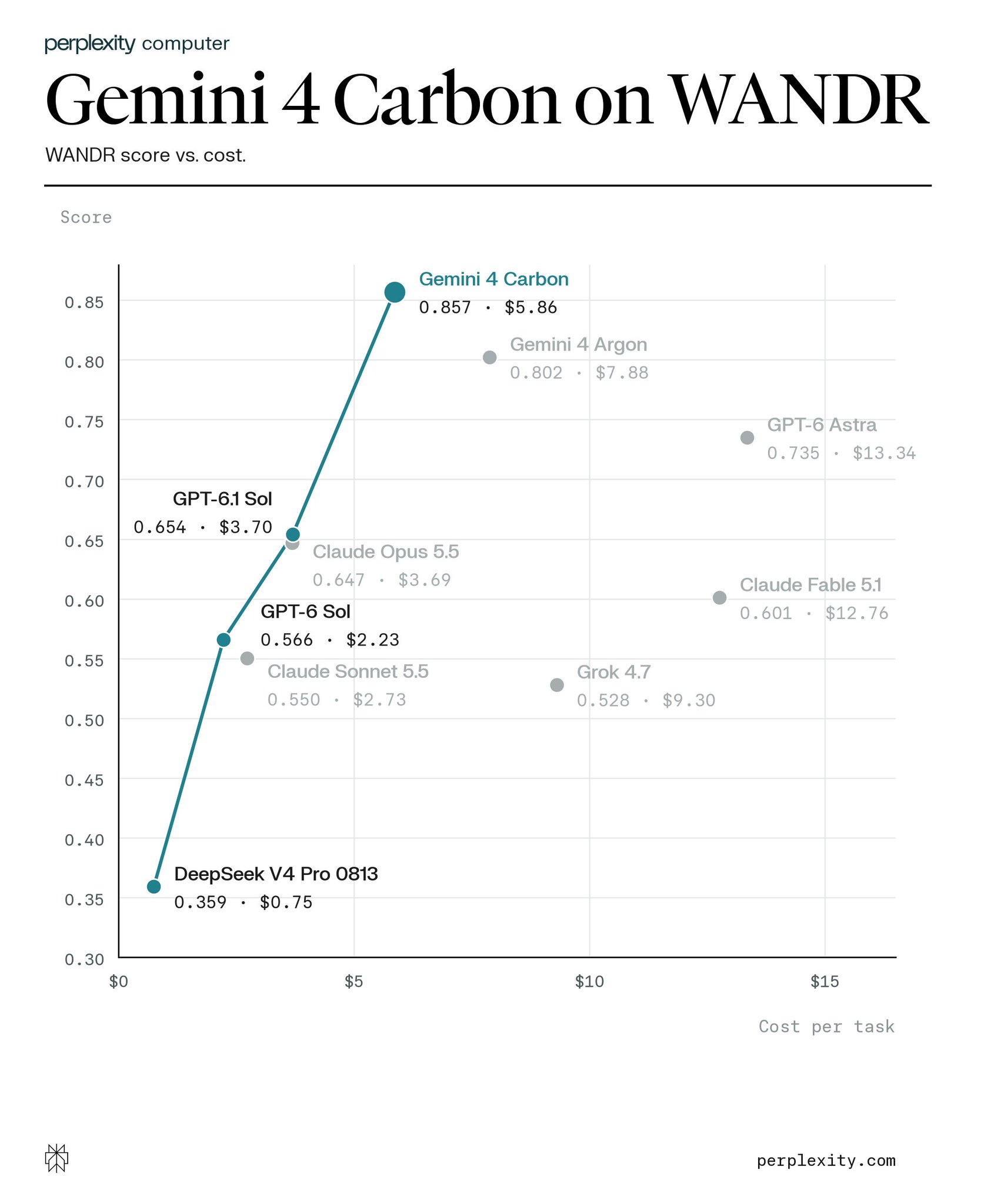
Gemini 4 Carbon Tops WANDR Benchmark At A Cost Lower Than GPT-6 Astra, Claude Fable 5.1
Google’s Gemini 4 Carbon continues to top a wide variety of benchmarks. Google’s Gemini 4 Carbon has posted a new state-of-the-art score on... The post Gemini 4 Carbon Tops WANDR Benchmark At A Cost Lower Than GPT-6 Astra, Claude Fable 5.1 appeared first on OfficeChai.
Microsoft offers a quarter of its workforce voluntary severance while shielding AI-critical teams
Microsoft is offering voluntary severance packages to about 60,000 employees, roughly a quarter of its workforce, in the second such program this year. The company's headcount has held flat at around 223,000 since 2022 even as it plans to spend about $170 billion on AI infrastructure in 2026 alone. The article Microsoft offers a quarter of its workforce voluntary severance while shielding AI-critical teams appeared first on The Decoder.
Meet Factory Droid 1.0: A Model-Independent Coding Agent Harness Built on Script Mode
Factory released Droid 1.0, a model-independent coding agent harness that makes programmatic tool calling the default. On Factory’s own Terminal-Bench 4 runs, Droid scores 65.2% with Claude Opus 5.5 at $4.73 per passed task. The post Meet Factory Droid 1.0: A Model-Independent Coding Agent Harness Built on Script Mode appeared first on MarkTechPost.
Google Deepmind creates a global map of forests with satellite data and AI
Google Deepmind and the World Resources Institute have released ForTy, a global map that classifies forests and other land into six categories, including primary forest, plantations, and tree crops. The map could help track deforestation under EU rules, but it identifies only about half of planted forests and tree-crop areas, and 60% of plantations. The article Google Deepmind creates a global map of forests with satellite data and AI appeared first on The Decoder.
OpenAI raises just $11 billion of its $30 billion target as big investors lose their AI appetite
OpenAI raised only about $11 billion in its latest funding round, less than half of the $30 billion it was targeting. At $1.25 trillion, the valuation falls short of expectations, and major investors appear to be pulling back amid the recent tech sell-off. Meanwhile, rival Anthropic is pushing to go public as early as November. The article OpenAI raises just $11 billion of its $30 billion target as big investors lose their AI appetite appeared first on The Decoder.
OpenAI’s Altman Meets Samsung Executives as Chip Crunch Deepens
OpenAI Chief Executive Officer Sam Altman met with Samsung Group’s top executives in South Korea on Saturday to deepen cooperation on memory chips and AI infrastructure as global shortages intensify.
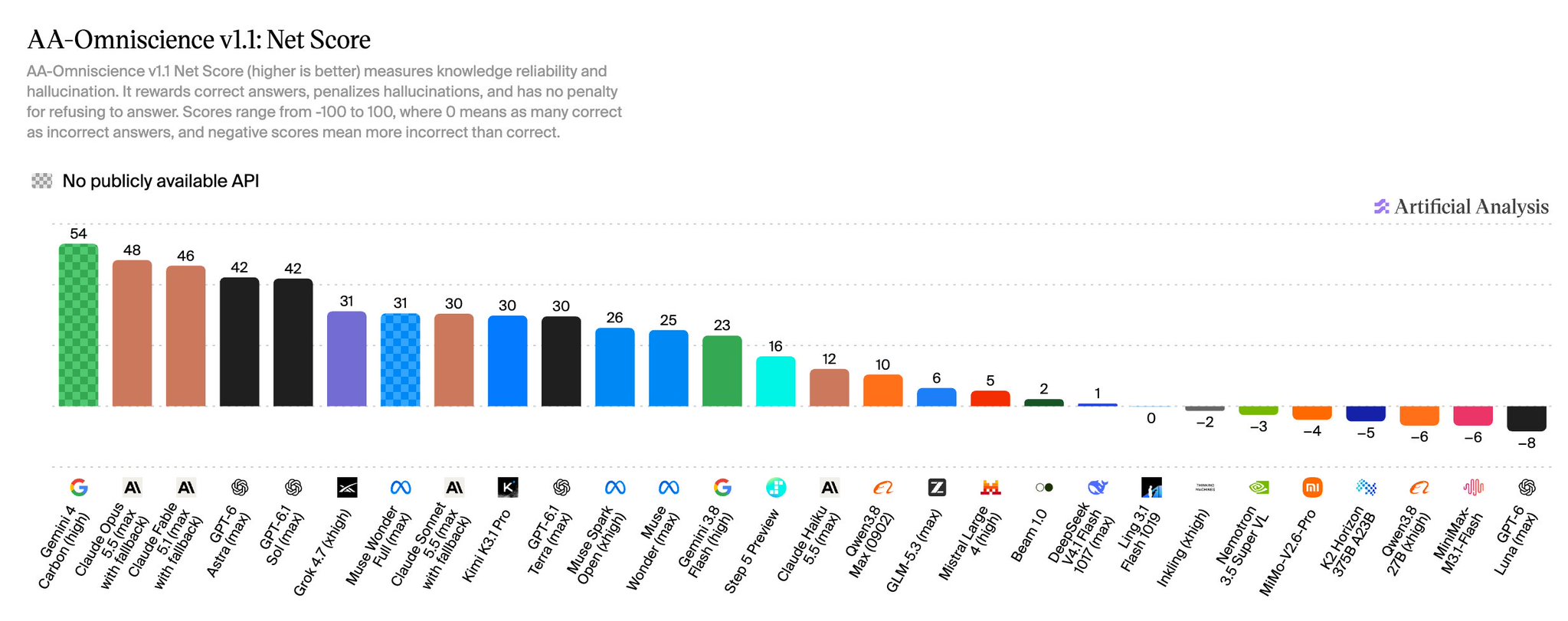
Gemini 4 Carbon Tops Updated AA-Omniscience v1.1 Benchmark With Big Lead Over Competitors
Google seems to have made a big comeback in the AI race with Gemini 4 Carbon. Artificial Analysis has refreshed AA-Omniscience, its benchmark... The post Gemini 4 Carbon Tops Updated AA-Omniscience v1.1 Benchmark With Big Lead Over Competitors appeared first on OfficeChai.
OpenAI Funding Target Cut by $10 Billion as AI Slumps, FT Says
OpenAI has cut its fundraising target by $10 billion as an AI stock selloff and rival Anthropic PBC’s impending public listing complicate its efforts to secure investor commitments, the Financial Times reported.
OpenFrontiers: A Collection of Open Research Problems and a Benchmark for Scientific Rediscovery
arXiv:2610.37739v1 Announce Type: new Abstract: Large language models (LLMs) have shown increasing promise in research-level problem solving, yet a comprehensive collection of such problems is still missing, and evaluating them on research-level problems remains challenging. We introduce OpenFrontiers, a cross-disciplinary resource that combines a structured corpus of open research problems with a retrospective benchmark of recently resolved problems in mathematics. The corpus records problem statements, context, progress, and other information for 12,151 problems. The benchmark contains 200 problems, 110 resolved in 2026 and 90 still open, each with a Lean~4 statement checked by automated probes and two independent reviews; a subset HQ-50 further filters based on quality score, etc. Our evaluation protocol grades formal proofs with two independent checkers in an isolated sandbox under closed-book, frozen-retrieval, and live-web conditions. Evaluating seven LLM agents on the HQ-50 subset under a standardized budget, we find that closed-book rediscovery is rare, at most 7 of 40 resolved problems, whereas live-web success mostly reflects retrieval of published solutions. By linking a broad research-problem corpus to a formally graded evaluation subset with documented solutions, OpenFrontiers provides a foundation for measuring research-level rediscovery and studying progress toward solving currently open scientific problems. The dataset and benchmark could be found in https://huggingface.co/collections/FlippyDora/openfrontiers.
Google, Anthropic and others to support new AI crawling opt-out standard
Google LLC, Microsoft Corp., Anthropic PBC and OpenAI Group PBC today announced plans to support an upcoming website crawling standard. The technology will enable website operators to block artificial intelligence developers from using their content to train their models. Many websites contain a text file titled “robots.txt” that informs crawlers what content they may access. […] The post Google, Anthropic and others to support new AI crawling opt-out standard appeared first on SiliconANGLE.
Russian Invaders Use AI To Make Deepfake Videos Of Triumphs In Ukraine
Russia’s invading troops have ramped up the use of OpenAI and Bytedance text-to-video AI software to depict fabricated victories in taking over Ukrainian territory.
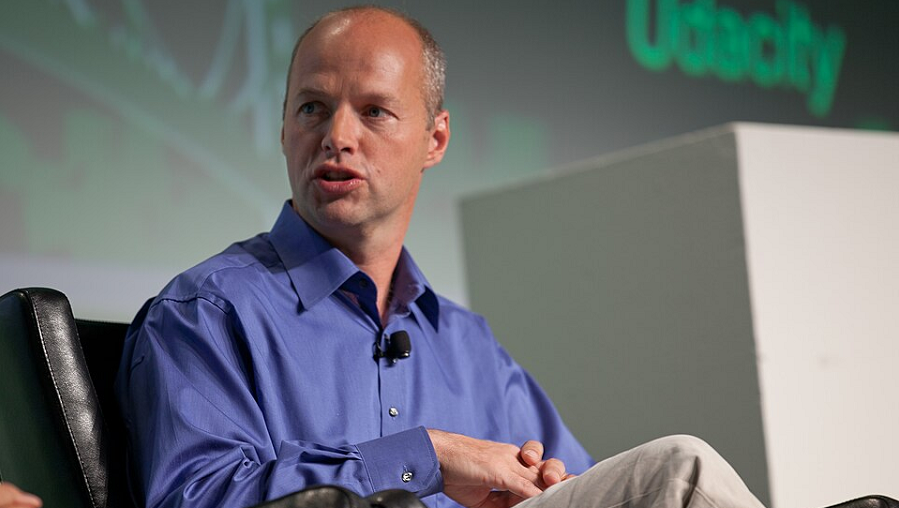
Google X co-founder Sebastian Thrun raises $130M for AI engineering startup Dulo
Dulo Inc., a startup co-founded by prominent artificial intelligence researcher Sebastian Thrun, has raised $130 million in funding. The Information broke the news of the investment on Thursday. Dulo co-founder Adrian Aoun confirmed the report in a post on X. Before launching Dulo with Thrun (pictured) earlier this year, Aoun sold an early natural language processing […] The post Google X co-founder Sebastian Thrun raises $130M for AI engineering startup Dulo appeared first on SiliconANGLE.
Meta’s Rating Outlook Cut to Negative by S&P on AI Spending
S&P Global Ratings took an early step toward potentially downgrading Meta Platforms Inc.’s credit rating within the next two years, amid growing pressure on the tech company’s balance sheet stemming from elevated spending tied to artificial intelligence.
Anthropic expected to receive high ‘junk’ rating from credit agencies following IPO, FT report says
Blackstone's forecast is just a prediction, but naturally, a high junk rating would make it more difficult and costlier for Anthropic to raise the money to keep funding its massive spending that has undergirded its business.
Build a Validated Kubernetes Runtime for NVIDIA Dynamo
Teams building AI applications need a repeatable path from a model configuration to a working inference endpoint. NVIDIA Dynamo is a distributed inference...