October 30, 2026
Databricks and SAP unleash end-to-end data & AI capabilities to level up enterprise AI transformation
Today's AI models are more capable than ever. What they still lack is the business...
Read original articleDataAIHub Daily
Archive →50 curated AI news stories from leading AI companies.
October 30, 2026
Today's AI models are more capable than ever. What they still lack is the business...
Read original articleOctober 30, 2026
AI is expanding beyond the data center as developers build a new generation of agents to act at the edge: monitoring driver attention and cabin conditions,...
Read original articleOctober 30, 2026
AI for waste management. Cryptocurrency vulnerabilities. Anthropic is moving more into science. There’s all that and more in this week’s Prototype.
Read original articleOctober 30, 2026
Claude Code users on Anthropic’s $200 plan will no longer face a rolling five-hour usage cap, provided their accounts are The post Anthropic just removed one of Claude’s biggest usage limits — but not for everyone appeared first on The New Stack.
Read original articleOctober 30, 2026
An AI agent performed brain surgery on an epileptic mouse, picking the drug, the brain target, and the injection coordinates on its own. According to lead researcher Ocana-Santero, it's the first time an AI agent has autonomously chosen a treatment and delivered it to a living mammal. But when a calibration error hit mid-surgery, the agent refused to continue and couldn't be talked out of it. The article A Claude model autonomously chose a gene therapy and operated on a mouse brain with no human decision-making appeared first on The Decoder.
Read original articleOctober 30, 2026
Wealth Management client onboarding can stall even when every system has done its job. The document is collected...
Read original articleOctober 30, 2026
AI progress is moving quickly. Expectations are rising, experimentation is spreading...
Read original articleOctober 30, 2026
iPhone photos edited with AI can now carry Google's SynthID watermark. Checking one has catches
Read original articleOctober 30, 2026
A tampered Claude Code extension was live on the Cursor marketplace for about 11 hours, affecting up to 5,000 users. It tried to steal user data and set up remote access. Cursor took the entire marketplace offline and reinstated it after confirming there was no further risk. The article Malicious Claude Code extension in Cursor's marketplace attempted remote access and data theft appeared first on The Decoder.
Read original articleOctober 30, 2026
Microsoft Research and UC Berkeley released TokenEconomizer, an open-source plugin that learns from past sessions to cut coding agent token costs by 18.4% to 30.9% on SWE-Bench, with no change to the agent. The post Meet TokenEconomizer: Microsoft’s Plugin That Cuts Coding Agent Costs by Up to 30.9% appeared first on MarkTechPost.
Read original articleOctober 30, 2026
OpenAI has updated its Model Spec, restructuring its AI behavior guidelines around five core values, including faithfulness to human intent and correctability. GPT models should now draw on conversation history to figure out what users actually want and disclose their own assumptions. Whether the models follow these rules is another matter. The article OpenAI sets new behavioral guidelines for AI models that have already proven hard to control appeared first on The Decoder.
Read original articleOctober 30, 2026
Anthropic, OpenAI, Cloudflare and Google each released an AI agent that hunts security bugs in source code. All 4 use the same find, disprove, then patch loop. Here is how they differ, plus 12 more tools. The post AI Security Agents Compared: Claude, Codex, Mantis, Cloudflare appeared first on MarkTechPost.
Read original articleOctober 30, 2026
Anthropic’s technical expertise, innovation and efficient use of compute set it apart in the AI landscape, says Peter Singlehurst, head of the Private Companies Team at Baillie Gifford. Singlehurst discusses why Anthropic’s governance structures – giving its seven founders voting control – are good for long-term investors. He joins Ed Ludlow on “Bloomberg Tech.” (Source: Bloomberg)
Read original articleOctober 30, 2026
AI datacenters in space are suddenly not looking so far fetched any more. Google has hit a milestone in its space-based AI computing... The post Google Successfully Runs Inference From A TPU In Space Under Project Suncatcher appeared first on OfficeChai.
Read original articleOctober 30, 2026
Reddit lost over one million Google search referrals per week in October, CEO Steve Huffman said. The stock dropped more than 25 percent despite strong earnings. Huffman blames Google's AI Overviews and AI Mode for driving zero traffic to external sites. Reddit now tests login barriers and wants to become a direct destination, less reliant on the open web. The shift threatens every content-driven business that depends on search traffic. The article Google's AI Mode doesn't drive traffic "for anybody," Reddit CEO Huffman warns the entire web appeared first on The Decoder.
Read original articleOctober 30, 2026
The first TPU in space is running a Google DeepMind Gemma 4 model and writing cheesy poetry.
Read original articleOctober 30, 2026
We finally got the S1 filing from Anthropic and Google had a pretty bad week. Ed Ludlow has "The Rundown" from Bloomberg Tech. (Source: Bloomberg)
Read original articleOctober 30, 2026
Building an autonomous agent requires a model, a harness, and domain-specific tools. To deploy an agent more securely, developers need a runtime that enforces...
Read original articleOctober 30, 2026
The Google Cloud AI Infrastructure team had another busy month in October, filled with new product launches and updates to power today’s AI and agentic workloads scalably and efficiently. We were also honored to share our progress with customers, partners, and the broader community at leading industry events, including NVIDIA GTC, PyTorch Conference, and AGNTCon + MCPCon. Let’s dive in! Product, technology, and tools updates New compute service: Agent Compute Engine is a purpose-built compute service providing high-performance, hardware-isolated microVM sandboxes alongside expanded agent governance capabilities like Agent Gateway and Agent Registry, all in the service of securing and scaling autonomous AI agents. Its primary benefits include rapid sub-second activation, extreme workload density through copy-on-write memory sharing, enterprise-grade security and identity management, and cross-cloud observability. AI Hypercomputer updates: At NVIDIA GTC Berlin 2026 we announced updates to our agentic infrastructure, including to A5X instances powered by the NVIDIA Vera Rubin NVL72 platform, Virgo Network scale-out fabric, and Managed Lustre storage. These co-engineered advancements provide enterprises with accelerated performance, enhanced sovereign AI controls, while advanced Confidential Computing capabilities help you train and deploy complex multi-step models securely and efficiently. GKE product update: CPU startup boost for GKE, in preview, uses Kubernetes In-place Pod Resize to dynamically elevate container CPU resources during initialization and scale them back down to steady-state levels without having to restart the containers. This feature removes startup throttling and accelerates cold starts by up to 2x for demanding workloads, helping to lower cloud infrastructure costs. GKE product update: The preview of the Wiz Runtime Sensor add-on for Google Kubernetes Engine (GKE) brings low-touch deployment, automated lifecycle management, enterprise credential security, and fleet-wide governance to Wiz's eBPF runtime threat detection for both Standard and Autopilot GKE clusters. Modernization tools: Together at last. Google Cloud Modernize brings Google Cloud’s migration and modernization tools, including Migration Center, Google Cloud VMware Engine, Google Cloud Mainframe Modernization and our new EKS-to-GKE Migration Agent, into a single portfolio. Enterprise teams now have purpose-built agentic capabilities across infrastructure assessment, platform modernization, and application modernization. Cloud Run product update: Temporal Serverless Workers on Cloud Run automatically scale worker pools based on Temporal task queue demands and scale down to zero when idle. This integration eliminates cluster management, lowers costs, using Temporal Worker Versioning to safely handle stateful, long-running workflows and AI agent workloads. New open-source product: llm-d 1.0 is an open-source, Kubernetes-native serving stack that turns a cluster of model servers into a coordinated serving pool, unifying distributed LLM inference across mixed Google Cloud TPU and GPU fleets. Co-founded by Google and partners, it provides production-ready benefits such as cache-aware routing, tiered KV cache offloading, and priority-based flow control to dramatically improve context reuse, reduce time-to-first-token latency, and efficiently scale multi-tenant agent workloads. New open-source product: Working with Meta, we open-sourced TorchTPU, a native PyTorch stack that integrates Google TPUs directly into the PyTorch ecosystem alongside GPUs and CPUs. Now developers can train, serve, and deploy models natively on TPUs using familiar frameworks like Hugging Face, vLLM, and TorchTitan. Google Distributed Cloud updates: Organizations that operate under strict sovereignty mandates would love to use AI to help them process data, but can’t send it to the cloud. The latest version of Google Distributed Cloud (GDC) air-gapped brings frontier AI models and multimodal enterprise search with Gemini into these isolated environments. In addition, GDC air-gapped supports NVIDIA HGX B300 systems based on the NVIDIA Blackwell Ultra architecture, and features enhanced networking and security capabilities. Edge inference product: Google open-sourced ML Drift, a cross-platform on-device GPU compute engine built for LiteRT that abstracts hardware complexities across OpenGL ES, OpenCL, Metal, and WebGPU. The framework delivers peak performance, enhanced 5D tensor support, and memory efficiency for both classical machine learning workloads and advanced generative AI models at the edge. Open-weight model support: Reflection's Beam is an open-weight, 501-parameter model released under an Apache 2.0 license designed specifically for frontier software engineering and long-horizon agentic tasks. We announced day 0 support and ready-to-run deployment recipes for service Beam on AI Hypercomputer and NVIDIA AI Infrastructure. Practitioner guides and how-tos AI network reference architectures: In Networking for AI inference model serving - GKE only and for all other backends, learn about reference architectures for AI inference model serving that provide centralized governance and private IP routing using Private Service Connect, Apigee API Management, and Model Armor. These architectures simplify multi-model scaling and prompt security across GKE, Cloud Run, and hybrid clouds. How-to guide: A Tale of TPU Observability on GKE: Part 2 - Dynamic Slicing Enhancements breaks down GKE's new Dynamic Slicing observability tools and metrics for next-generation v7 TPUs through an engaging, story-driven observability guide featuring Alex, a lead AI platform engineer. Explore the step-by-step diagnostic workflows with real-world examples and handy command-line snippets. Check out Part 1 here. Customer and partner updates AI21 achieves an 83% reduction in time-to-start for AI workloads with AI Hypercomputer: Frontier lab AI21 needed a new stack on which to train its Jamba family, and chose AI Hypercomputer configured with GKE on A3 and A3 Ultra instances. By doing so, AI21 says it cut high-priority job wait times from 72 hours to 12, and manual scheduling interventions from 20 per week to zero. Visko streams real-time world models on Google Cloud TPUs: Visko, an AI startup developing interactive world models, deployed an end-to-end live inference pipeline that combines video generation, super-resolution upscaling, and synchronized audio onto a single Cloud TPU slice. In this blog, the team discusses how it engineered the pipeline, the architectural optimizations it made, and practical lessons for other startups building ultra-low-latency generative AI. ZenteiQ scales physical AI inference 4x with GKE and llm-d: In order to pre-train models that understand physical laws, governing equations, and numerical solvers, Indian AI startup ZenteiQ designed and built a large-scale batch synthetic data-generation pipeline that runs across multiple model families and feeds verified datasets into training runs. GKE and GKE Inference Gateway gave ZenteiQ the inference-routing layer within its pipeline to scale aggregate inference throughput 4.07x and grow daily output from 1.47 billion to 5.97 billion generated tokens for every 1,000 accelerators. Palo Alto Networks modernizes cloud-delivered security service: Palo Alto has worked with Google Cloud since 2018 to deliver its Prisma Access security service, and it was time to update it. In order not to compromise its security guarantees, Palo Alto separated the platform into two independently scalable layers: an ingress layer that handles traffic routing and forwarding running on GKE, with Axion C4A instances; and a security layer that handles threat inspection, running on dedicated single-tenant VMs fronted by an Internal Load Balancer. Each layer can now scale, update, and operate independently. Oracle is the first hyperscaler to provide TPUs outside Google Cloud: By deploying Google TPUs, Oracle is broadening the range of AI chips available through its Oracle Cloud Infrastructure (OCI), and giving customers more options for running AI workloads. Google TPUs on OCI will be available in 2027. Research, reports and deep-dives New resource: As enterprise organizations shift from isolated AI experiments to production-scale systems, different departments — from engineering and finance to executive leadership — often speak different technical dialects; The Encyclopedia of AI Infrastructure bridges that communication gap by demystifying complex infrastructure jargon. Analyst report: We are thrilled to announce that Google was named a Leader in the inaugural 2026 IDC MarketScape for Agentic AI Platforms. Deep dive: A companion technical guide describing the architecture of Agent Compute Engine and how Google’s Gemini team needed both the isolation of a VM and the speed and density of a container to deliver personal agents for every Gemini user. September 2026 Product, technology, and tools updates Google Kubernetes Engine updates: The GKE team is all about improving the scalability of the platform, and in September, those improvements came in many shapes and sizes: New feature: Need an execution runtime with higher density for your agentic workloads? We engineered the new open-source GKE Agent Substrate to run millions of sandboxes with 10x higher density than standard container runtimes. Agent Substrate also delivers sub-500ms resume operations at over 500 suspend/resume activations per second with a native zero-trust kernel and network isolation. Product update: GKE now has scale-to-zero capabilities built-in. No need to configure complex components to scale your workloads down, thanks to the HPA with the Autoscaling Metric and support for KEP-2021, which do the job for you, out of the box. Read the blog to learn more. Product update: Further, the GKE HPA (with the above-mentioned Autoscaling Metric) now lets you scale up and down based on custom PromQL metrics, in addition to standard metrics, allowing you to trigger workloads according to conditions that are meaningful and unique to your business. Read more here. New feature: Yet another scalability feature is GKE Pod snapshots, which lets you save the running state of your workload, including CPU and GPU memory, and restore it on demand. According to internal tests, GKE Pod snapshots can reduce AI inference start-up by as much as 89%. Learn more here. New migration tool: Finally, if you’ve always wanted to migrate your container workloads from AWS EKS to GKE but feared a daunting, high-friction engineering endeavor, we’ve just launched GKE agentic migration, a purpose-built agent plugin that replaces brittle, ad-hoc prompting with an AI-assisted migration pipeline protected by deterministic guardrails. Designed as a compilation of agent skills and a local Model Context Protocol (MCP) server, it uses AI to translate complex AWS EKS IaC and Kubernetes manifests directly into GKE landing zones. Get started with the onboarding guide. Feature updates: Reinforcement learning (RL) and evaluation workloads are a beast: In a standard agentic RL loop, an LLM policy generates actions like code snippets on GPUs and executes them inside isolated CPU sandboxes to observe a reward signal. However, when scaling up this loop to support tens of thousands of parallel rollouts, infrastructure bottlenecks emerge, for instance idle accelerators, image cardinality, and a saturated control plane. To help, we developed GKE Agent Sandbox optimized for RL, plus an Agent Sandbox RL orchestration SDK and native integrations for popular RL gyms and harnesses. All are now generally available, and you can learn more here. Storage updates: AI trains and creates lots of data, and that data has to live somewhere — in block storage systems, file systems, object stores and databases. We announced enhancements to our storage portfolio to help this critical layer roll with the agentic punches: Product update: Filestore agent volumes offer high-performance, elastic, persistent file storage for agentic workloads. Thanks to its tight integration with GKE Agent Substrate and GKE Agent Sandbox, Filestore agent volumes automatically allocates and attaches a dedicated, isolated file workspace to GKE agent sandboxes in milliseconds. Request access to the preview here. New product: If you run generative AI and RAG data layers — think Milvus, Pinecone, Qdrant, Vespa, Redis, and in-memory context caching — you may want to take a look at the M4N family of VMs, now GA, which offers the highest per-core IOPS and throughput of leading hyperscalers. Paired with Google Cloud's custom Titanium offload architecture and paired with Hyperdisk Extreme, M4N instances deliver up to 25,000 MiB/s (25 GiB/s) of aggregate host storage performance and up to 1 million IOPS. New product: Another new Compute Engine product, Z4D, is GA, and a strong storage solution for AI/ML training and inference workloads. When configured as a bare metal instance, Z4D provides both the high local SSD (LSSD) capacity and low latency required by agentic microVMs, so you can run thousands of isolated sandboxes per host with native performance and efficiency. Learn about Z4D machines here. Product update: Today’s AI training and inference pipelines create data faster than most storage management systems can keep up, creating challenges for teams trying to understand their storage estates. A new version of Storage Intelligence advisor makes it easier to answer the question: "What’s in my buckets?" and quickly identify unexpected changes. Then, enhanced batch operations let you automate bulk changes across your buckets — say, move storage classes, mass-delete stale or temporary data, or apply metadata, tagging, retention, or encryption changes. Learn about the latest in Storage Intelligence advisor here. New product: Last but not least, a new version of AlloyDB for PostgreSQL brings together pioneering Google infrastructure — Colossus distributed file system, and Jupiter network — to power a new, no-compromises database architecture for the agentic era. Practitioner guides and how-tos How-to: Wish you could make GPUs and TPUs scattered around the globe behave as a single pool behind a single entry point? In this blog, we show you how to do just that. At the edge, the multi-cluster GKE Inference Gateway focuses on global, multi-region traffic distribution and high availability. Beneath that, the LLM-d router handles complex, memory-aware scheduling algorithms to keep utilization high. This architecture is deliberately runtime-, model-, and accelerator-agnostic, and in tests, routing traffic through the multi-cluster GKE Inference Gateway added less than 1% overhead. Guide: Using or planning to use GKE on TPUs for AI model training or inference? Training massive Large Language Models (LLMs) or running high-throughput inference serving represents a significant investment in specialized AI hardware, such as Cloud TPUs and GPUs. To get the most out of every dollar spent, you need to understand workload lifecycle metrics in GKE. This detailed guide explains how to turn opaque cluster behaviors into actionable telemetry. Customer and partner updates GKE customer: Learn why gaming startup SeaVerse relies on GKE Agent Sandbox for its multi-tenant workloads, and how the platform helped it decrease its infrastructure costs by 60%. Research, reports and deep-dives In case you missed it, we’re also thrilled to share that Google has been named a leader, including achieving the highest score on either product or strategy, in three key analyst reports from Gartner and Forrester. Google is a leader in The Forrester Wave™: Public Cloud Platforms, Q3 2026: Highest overall score of any cloud provider! Google named a Leader in 2026 Gartner® Magic Quadrant™ for Strategic Cloud Platform Services: Positioned furthest for “Completeness of Vision” of all vendors evaluated. Google is a Leader in the 2026 Gartner Magic Quadrant for Container Management: Positioned highest in “Ability to Execute” of all vendors evaluated. Google Cloud achieved a Gold rating in the latest SemiAnalysis ClusterMax 3.0 report, which evaluates the reliability, performance, support, pricing, and security of GPU providers globally. See the full report for more. August 2026 Product, technology, and tools updates Product update: Filestore, Google Cloud’s first-party, secure, scalable NFS file service, has emerged as a popular storage platform for AI and agentic workflows, and now, it’s even better suited to the task, with a new backend storage layer built directly on Colossus, Google’s foundational distributed storage system. This new backend lets you provision IOPS independently from storage capacity, and is deeply integrated with GKE. In AI environments, this can help you service so-called agentic swarms — large groups of agents that need to read and write to a common dataset — without a drop off in performance. For more, check out the blog post. New feature: gVisor sandboxes are now available in distributed Ray clusters on GKE. In partnership with Anyscale, we introduced an experimental library for Ray that brings gVisor, Google’s open-source application kernel, directly into distributed Ray clusters. gVisor provides lightweight environments with stronger isolation than ordinary containers, plus fast startup times and low memory overhead. To try out these sandboxing capabilities on GKE, head over to the Ray sandboxing User Guide. Product update: Looking for high-performance, easy-to-use infrastructure on which to run a personal AI agent, but don’t want to spend a lot of money? New Cloud Run instances are dedicated, singleton compute runtimes on Cloud Run that won’t shut down when the agent is idle. Better yet, the cost to run a Cloud Run instance with 1 vCPU and 1 GiB of memory continuously for 30 days is just $5.70. Practitioner guides, documentation and how-tos How-to guide: Big news in Model Context Protocol (MCP) land: As of the 2026-07-28 specification, the protocol core is “completely stateless. The handshake is gone. The initialize / initialized handshake (SEP-2575) and the logical Mcp-Session-Id header (SEP-2567) have been removed entirely. Instead, every request is now self-describing and independent.” Whoa. Learn more about the changes that the latest MCP specification brings, and more importantly, how to implement them, in this Google Developers blog. Guide: Real-time AI systems make a mess of traditional network load balancing techniques. “Instead of handling isolated requests, the backend has to manage a continuous, live bidirectional stream. You’re dealing with a constant stream of audio chunks, transcripts, model outputs, and synthesized speech flowing back and forth simultaneously.” Things only get worse when the user gets involved. “The server has to immediately halt its current speech generation, pivot to update the context, maybe trigger a new tool, and start drafting a different response; this must be done without dropping the connection.” For a new approach to managing load in the AI era, read Scaling real-time AI agents with session-aware load balancing. How-to: Learn how to build an elastic, scalable LLM inference platform on GKE, even with a mix of different GPU accelerators. The proposed architecture combines Capacity Advisor and Compute Advisor, plus high-performance storage like RunAI:model streamer or GCPFuse with parallel downloads. Get all the details here. Documentation: The thing about hosts with GPUs or TPUs is that you can’t use live migration to update them, setting up a maintenance challenge. In this new docs page, learn how to update accelerator-equipped hosts according to your tolerance for downtime for your training and inference workloads. Documentation: Advanced Compute Images, or ACIs, are standardized image stacks for AI/ML and HPC infrastructure, so you don’t need to manually build your own custom images. In this new docs page, learn how to create an ACI image using the Google Cloud CLI, console, or SchedMD's Slurm workload manager. Guide: AI workloads are notoriously difficult to architect, resource-intensive, and bursty, which can also lead to scaling bottlenecks and large pools of underutilized — or misutilized — compute resources. A new blog outlines the three main ways to achieve dynamic capacity management in Google Cloud: 1) scheduling capacity for planned downtime; 2) maintaining automated fallback capacity for unplanned downtime; and 3) relying on GKE’s core orchestration capabilities to automate resource allocation. Customer and partner updates Business orchestration software provider UiPath was dealing with spiky workloads, and wanted more predictable costs. To get there, it re-architected its infrastructure, moving from isolated clusters to a shared Google Cloud GPU fleet that included both A3 VM instances (NVIDIA H100 GPUs) for training with G4 VM instances (NVIDIA RTX PRO 6000 Blackwell Server Edition GPUs) for inference. You can read more about their architecture here. Mirendil, an frontier AI lab focused on accelerating AI development, announced that it is using AI Hypercomputer with both TPUs and NVIDIA GPUs to support its model pre-training and post-training applications. Replenit, a retail CRM provider, built its AI decision engine in Google Cloud, using BigQuery, Gemini Enterprise Agent Platform, and open-source Gemma models that it runs on Cloud TPUs. This latter combination provided Replenit with 90% lower pipeline costs than their previous cloud provider, the company reports. Read the full case study for more. Malachyte architected its AI-powered e-commerce recommendation platform on top of Bigtable, Managed Service for Apache Kafka, Pub/Sub, Compute Engine, and last but not least, GKE. See how it all comes together in this blog. July 2026 Product, technology, and tools updates Product update: Google Cloud Managed Lustre is now GA, and available in four distinct performance tiers that deliver throughput ranging from 125 MB/s, 250 MB/s, 500 MB/s, to 1000 MB/s per TiB of capacity — with the ability to scale up to 8 PB of storage capacity. The Managed Lustre solution is powered by DDN’s EXAScaler, combining DDN's decades of leadership in high-performance storage with Google Cloud's expertise in cloud infrastructure. Product update: C4N network and storage optimized VMs are now GA. C4N is our first network- and block-storage-optimized VM series built to eliminate data-transfer bottlenecks. Powered by 5th Gen Intel Xeon Scalable processors and built on Google's Titanium offloading hardware, it achieves 400 Gbps network bandwidth, 95 million packets per second (MPPS), and up to 25 GiB/s of block storage throughput when paired with Hyperdisk Extreme. New feature: GKE Dataplane V2 up to 15K Nodes with Network Policies (GA). This capability enables standard GKE clusters to scale up to 15,000 nodes while maintaining full active Network Policy enforcement, supporting the massive infrastructure needs of large enterprise and AI/ML customers. New feature: Co-operative time-slicing in llm-d. If you’re running reinforcement learning (RL) workloads, you can now interleave independent RL jobs onto shared physical hardware, increasing aggregate accelerator duty cycles from a ~40% baseline up to 70% without impacting model convergence or accuracy. New AI security tool: Looking to secure your AI supply chain on GKE, deploy AI workloads safely, and cut down on shadow AI? We open-sourced k8s-aibom, a lightweight, unprivileged Kubernetes controller that continuously monitors container clusters to automatically detect running AI runtimes (like vLLM and Triton) and generate standard CycloneDX Machine Learning Bill of Materials (ML-BOMs). Check out the k8s-aibom project and get involved. Practitioner guides and how-tos How-to guide: On July 27, Google announced Day 0 support for Moonshot AI’s Kimi K3 2.8-trillion-parameter open-weight model, the day weights were released. Whichever your preferred deployment path — via Model Garden, custom orchestration, or GKE with llm-d recipes — this guide offers detailed step-by-step instructions to help you evaluate and pilot Kimi K3 in Google Cloud. How-to guide: Google Kubernetes Engine (GKE) managed DRANET supports both GPUs and TPUs. There are several configurations to use this implementation, including standard cluster (where you have full control) and autopilot cluster (where Google does the heavy configs for you). Take a deeper dive in the hands-on lab, GKE Autopilot clusters with TPUs, GKE managed DRANET and Gemma 4. How-to guide: Learn to run Ray on TPUs, not GPUs. In Part 1 of this two-part series, we discuss TPU slices (hint: Ray thinks of them as just another accelerator on which to schedule), then walk through Ray’s various AI libraries (Part 2). How-to guide: Evaluate TPUs for sample workloads using a new microbenchmark suite that helps you accurately assess whether a device is achieving its theoretical performance specifications, and to identify specific performance gaps or architecture-specific bottlenecks. Dive in here. How-to guide: Scale your agents without killing your budget. Learn how GKE orchestration can help you safely pack more agents onto a fixed compute footprint with GKE Agent Sandbox and Pod snapshots. Whether your goal is performance or cost optimization, we teach you how to turn the right dials for optimal agent efficiency. Technical blueprint: Inside the optimization of Mistral 3 large inference on Ironwood. This blog outlines how one Google team optimized Mistral 3 large MoE model inference on Google’s Ironwood (TPU v7x), achieving a 1.5x performance gain. They did so with hybrid sharding, replacing linear VPU summations with tree reductions, optimizing GMM/MLA kernels, and adopting asynchronous scheduling. As a result, they boosted throughput by up to 48% while maintaining benchmark accuracy neutrality. Read the full blog here. Research, reports and deep-dives Report: Google was named a Leader in the inaugural GartnerⓇ Magic Quadrant™ for AI Infrastructure, positioned highest for ‘Ability to Execute’ and furthest for ‘Completeness of Vision’. Gartner called out Google’s proprietary scalable compute, integrated AI Hypercomputer architecture, and the scale of our AI compute capacity as key strengths. Download a copy here. Report: We recently surveyed more than 1,400 senior IT leaders for our State of AI Infrastructure report, and a resounding pattern emerged: The gap between AI ambition and infrastructure reality is widening. In fact, 83% of organizations say they require infrastructure upgrades to support production-grade agentic AI. Read the accompanying blog to understand how adapting your infrastructure to meet the demands that agentic applications place on your systems will help you move from pilot to production. June 2026 Product, technology and tool updates Product update: Protecting sensitive data used with AI is a critical part of advanced and secure cloud infrastructure. Confidential Computing cryptographically protects data in use in hardware-based Trusted Execution Environments (TEEs) with verifiable data integrity, and is now available on the accelerator-optimized G4 machine series, featuring NVIDIA RTX PRO 6000 Blackwell Server Edition GPUs. Get started with Confidential G4 VMs and Confidential G4 GKE Nodes. Developer resource: The new TPU Developer Hub is the place to go for model builders, optimizers, and developers to learn to unlock the full performance of Google Cloud TPUs. Read more in this blog. New product: Scale your AI workloads with the new OpenTelemetry-Based TPU AI Telemetry Collector Agent. For the first time, you can route high-fidelity TPU hardware telemetry to Google Cloud Monitoring, Google Managed Prometheus, or your own self-hosted Grafana stack. Practitioner guides and how-tos How-to guide: Learn how to build high availability into an AI inference workload running on GKE Inference Gateway with TPUs, Cloud Storage FUSE and Dynamic Resource Allocation (DRA). This blog provides an overview, or you can get all the technical details in the hands-on codelab. How-to guide: Did you know you can connect your AI agents to unstructured data in Cloud Storage via Model Context Protocol (MCP)? In this blog, learn about why would want to do that from three customer examples, then how to do it, choosing either a fully managed service, or a self-managed local server for more customization and control. Research, reports and deep-dives Report: According to an independent benchmark report, GKE Inference Gateway outperforms the next leading managed Kubernetes service with 15.7% higher throughput, 92.8% shorter wait times, and 62.6% lower inter-token latency. This performance can be attributed to its use of prefix caching, which optimizes LLM performance by storing the KV cache (activation states) of long, repetitive prompt prefixes. Learn more in the blog. Architecture deep dive: A closer look at the cold start problem, this time for TPUs and GKE, and how the Run:ai Model Streamer can help change the dynamic. Customer and partner updates Customer win: Leveraging GKE, BigQuery, Cloud SQL, and Gemini Enterprise Agent Platform, Pager Health is eliminating operational fragmentation to deliver a simplified, personalized U.S. healthcare experience that transforms lives. Customer win: Trustpilot, the customer review platform, built a high-volume streaming pipeline using fine-tuned Gemma models with Dataflow and Gemini Enterprise Agent Platform running on cost-optimized A2 VMs using A100 GPUs, as well as optimized version of vLLM maintained by Gemini Enterprise Agent Platform. May 2026 Product, technology and tool updates Product update: GKE Agent Sandbox is now generally available. New open-source project: Agent Substrate is a new open-source project aimed at continuing to push the limits of agentic infrastructure density New feature: Google AI Edge Portal, a solution for testing and benchmarking on-device machine learning (ML) at scale, now supports benchmarking and debugging on-device LLMs. Read more here. Product deep dive: We went into depth about Cloud Storage Rapid, a new family of high-performance storage offerings for AI workloads. At launch, offerings include Rapid Bucket (formerly Rapid Storage), a high-performance zonal object storage offering, and Rapid Cache (formerly Anywhere Cache), which accelerates reads on-demand and colocates compute and data for workloads in existing buckets. Research, reports and deep dives Architecture deep dive: Google Global Infrastructure VP Bikash Koley and Engineering Fellow Arjun Singh provide a high-level overview of the challenges that AI workloads pose to network infrastructure, and discuss the deep enhancements we’ve made to our data center fabrics, WAN, and global networks to better support them. Architecture deep dive: We unveiled a new cluster-level reliability model for developing frontier AI models on TPUs, ditching instance-level reliability Customer and partner updates Customer win: Visual media provider Imgix serves more than 8 billion images and videos from AI Hypercomputer equipped with G4 VMs powered by NVIDIA RTX PRO 6000 Blackwell GPUs.
Read original articleOctober 30, 2026
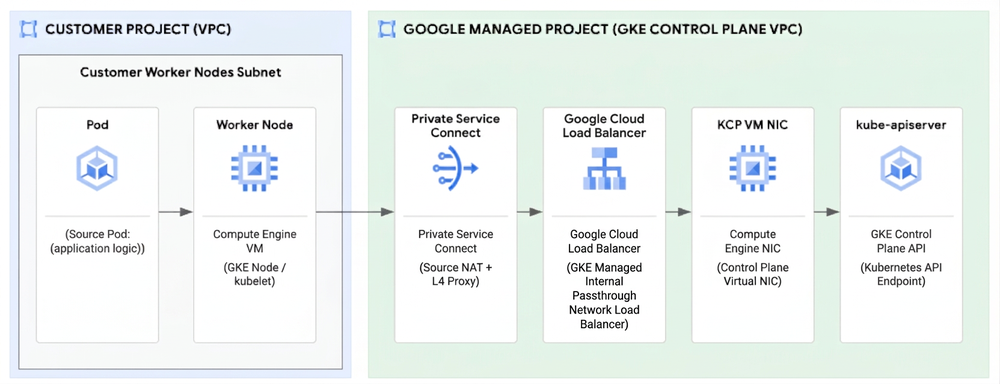
Every support engineer has a case that stays with them. The one that comes up at team lunches. The one where, even after it's resolved, you find yourself staring at a packet capture at midnight just to make sure you really understand what happened. This is that case. It started in January 2026 with a support ticket that read deceptively simply: pods are intermittently failing to reach the Kubernetes API server. The error was a familiar-looking timeout. The customer had already ruled out their own operators. What none of us knew yet was that we were looking at three separate bugs — in three different layers of the stack — all conspiring to produce the same symptom at the same time. By the time it was over, around 800 developers had been blocked from deploying to production for weeks on end, and GKE clusters across europe-west had ground to a halt. In a race to fix the problem, we involved engineers across Google Kubernetes Engine (GKE), Private Service Connect, networking, hostnet, kernel, and the Linux upstream community, who together tracked down not one but three distinct root causes. And the final fix landed not as a config change or a feature flag, but as a patch to the Linux kernel itself. This is the story of how we got there. Part one: The alarm bell that wouldn't stop The customer ran a large multi-cluster GKE environment in Google Cloud's europe-west region. Their clusters used Private Service Connect — Google Cloud's mechanism for exposing the GKE control plane privately — and had a rich ecosystem of system-level workloads: Twistlock security scanners, External Secrets Operator for secrets management, Cilium for network policy, as well as several internal Kubernetes operators. The first errors appeared in one of its user acceptance testing (UAT) clusters in europe-west, and a few days later in a second cluster in the same region. They looked like this: Application logs — pods across multiple namespaces code_block <ListValue: [StructValue([('code', "TimeoutError: Connect call failed ('1.2.3.4', 443)\r\ndial tcp 1.2.3.4:443: i/o timeout\r\n\r\n# 1.2.3.4 is the cluster's internal VIP for the kube-apiserver,\r\n# routed through Private Service Connect"), ('language', ''), ('caption', <wagtail.rich_text.RichText object at 0x7f0ffa890a50>)])]> Initially the errors were intermittent — spikes in the logs, not a hard outage. The customer suspected their own code. Their team had recently deployed a custom operator built with the kopf framework, and it was the first thing they looked at. But the logs showed the errors had started eight days before the operator was ever deployed. When they shut it down completely, the timeouts kept coming. The issue persists even after completely scaling down the External Secrets Operator. The errors are appearing from customer workloads, and system-level pods we haven't touched. The growing list of suspects When a case like this arrives, the first instinct is to ask: what changed? The customer's timeline gave us several candidates, and we worked through them methodically. The custom operator (kopf): Ruled out immediately — errors predated deployment by a week and continued after shutdown. External Secrets Operator: Removed entirely on customer request. Timeouts continued in customer workloads that relied on Kubernetes control plane (KCP) connectivity, and cluster-internal system pods. Security agents: Uninstalled. Same result. We were now watching system-level Kubernetes components fail to reach their own control plane. conntrack table exhaustion: One theory was that too many half-open connections were filling the OS connection tracking table on the control plane nodes. We checked. The conntrack table was at roughly 50% capacity — of a default maximum of 1.3M entries. Not even close to exhaustion. Control plane overload: We scaled up the KCP VM size. kube-apiserver latencies looked healthy. No improvement on the timeout side. What made this case genuinely strange was the scope. We confirmed the timeouts were happening across five different clusters, affecting DaemonSets, Deployments, and system pods alike. External clients — developer laptops, GitHub Actions runners — were also hitting the same wall. This was not a broken workload. This was something wrong with the path between everything and the API server. The timeline so far Day 1: First I/O timeout errors appear (One of the UAT clusters in europe-west3. Intermittent, easy to dismiss.) Day 10: Errors become persistent (Frequency increases significantly. The issue is no longer dismissible.) Day 15: Case escalated — P0 bug filed (Multiple clusters confirmed affected. ~800 developers blocked. Production releases are frozen. Formal escalation begins.) Day 20: All obvious suspects ruled out (Custom operator, security agents, conntrack exhaustion, control plane resizing — all cleared.) Day 22: Packet captures collected (Captures taken simultaneously at the control-plane node NIC and from inside the kube-api container. The investigation enters its most critical phase.) With the obvious suspects cleared, and the scope undeniably wide, we did what you do when the application layer has nothing left to say: We went to the packets. Part two: Tracing the ghost in the wire To understand what the packet captures revealed, you first need to understand the architecture that a GKE pod traverses when it makes an API call. In a Private Service Connect-based GKE cluster, the path is deceptively long for something that looks like a local connection. (Note for formatting: Consider including the Pod → kube-apiserver flow diagram here: Pod -> Worker Node -> PSC NAT+Proxy -> ILB -> KCP VM NIC -> kube-apiserver) The key component here is Private Service Connect. When a pod dials 1.2.3.4:443, it is not actually going directly to the control plane; that IP is a virtual endpoint. The connection is intercepted by Google's networking fabric, NAT'd through a Private Service Connect endpoint, passed through an internal passthrough Network Load Balancer, and ultimately delivered to the KCP VM, where Envoy acts as a local proxy in front of the actual kube-apiserver process. Private Service Connect adds a proxy protocol header to each new connection, so the kube-apiserver can see the real client IP. This will turn out to be important later. What the packets revealed When we captured simultaneously at the KCP VM's NIC (the PIGv interface, Google's programmable virtual NIC) and from inside the kube-apiserver container, we saw something striking. SYN packets from the pods were arriving at the KCP VM's NIC. They were getting that far. But instead of receiving a SYN-ACK in response — the expected second step of a TCP handshake — the client was getting back an out-of-place ACK. Not an RST. Not silence. An ACK that logically belonged to a different, earlier connection. Wireshark, the network protocol analyzer, was flagging these streams with a label that initially seemed innocuous: "TCP Port numbers reused." Wireshark — packet stream showing the failed handshake code_block <ListValue: [StructValue([('code', 'Time Source Port → Destination Port Info\r\n09:13:41 10.0.13.77 53426 → 10.117.0.2 443 [SYN] Seq=0 Win=42600\r\n09:13:41 10.117.0.2 443 → 10.0.13.77 53426 [SYN, ACK] Seq=0 Ack=1 Win=64768\r\n ... (data exchange, connection completes)\r\n09:13:42 10.117.0.2 443 → 10.0.13.77 53426 [TCP Retransmission]\r\n09:13:42 10.117.0.2 443 → 10.0.13.77 53426 [TCP Retransmission]\r\n ... (many retransmissions of the same ACK)\r\n\r\n# 2 minutes later, same port 53426 is reused for a new connection\r\n09:13:44 10.0.13.77 53426 → 10.117.0.2 443 [SYN] Seq=1498 ← NEW connection\r\n (expected: SYN-ACK)\r\n (received: ACK Seq=1498 Ack=1025 — belongs to PREVIOUS stream)\r\n09:13:44 10.0.13.77 53426 → 10.117.0.2 443 [SYN] Retransmit...\r\n09:13:44 10.0.13.77 53426 → 10.117.0.2 443 [SYN] Retransmit...\r\n → eventually: i/o timeout'), ('language', ''), ('caption', <wagtail.rich_text.RichText object at 0x7f0ffa891910>)])]> The pattern was clear. Something was causing the KCP VM to respond to a fresh SYN with an ACK that belonged to a different connection that had ended minutes ago. The old connection had used the same source port (53426 in the example above), and the KCP VM had never fully let go of it. "The KCP server sends FIN,ACK; client responds with FIN,ACK and then ACK. But KCP receives ACK before FIN,ACK. KCP server never ACKs the FIN,ACK — continuous retransmission of ACK. RST does not clear state." The "Invalid ACK" spike While one thread of the investigation was analyzing packet captures, a.k.a., pcaps, another team was digging into internal metrics for the Private Service Connect infrastructure — specifically the user space packet switch (USPS), Google's software switching layer that handles NAT and proxy protocol header injection for Private Service Connect connections. They found something alarming in the metrics for Andromeda, Google's networking fabric. A counter called "Proxy protocol drop: invalid ACK packet" had been flat for months — and then, in February 2026, it spiked sharply upward to several drops per second across the affected europe-west regions. That date matched a USPS version rollout. This version included a change which was a fix for a different bug but something about it had changed the behavior of how Private Service Connect handled a specific class of packet. Challenge ACKs: The RFC 5961 mechanism To understand the next piece of the puzzle, we need to talk about a TCP security mechanism called the challenge ACK, defined in RFC 5961. Imagine a TCP connection has closed — gone through the FIN/ACK dance and terminated. The server-side (here, the KCP VM) may still briefly remember the connection's sequence numbers in its TCP state machine. Now imagine that shortly afterward, a new client connection arrives on the same source port and destination port (the same 5-tuple). From the kernel's perspective, this could be a stale packet from the old connection, or it could be an attacker trying to inject data into what the kernel thinks is still an open session. RFC 5961 says: when you receive a SYN that matches an existing or recently-closed connection's remembered state, don't accept it blindly. Send a challenge ACK — an acknowledgment that carries the last known sequence number of the old connection. If the new client is legitimate, it will see this unexpected ACK, recognize the connection is stale, and send a RST to clear the state. The server then accepts the next SYN normally. The challenge ACK flow — how it's supposed to work code_block <ListValue: [StructValue([('code', '# Step 1: New client sends SYN on a reused port\r\nClient → Server: SYN (seq=X, same 5-tuple as an old connection)\r\n\r\n# Step 2: Server is in FIN_WAIT_2, sends challenge ACK\r\nServer → Client: ACK (ack=old_seq — "is this really you?")\r\n\r\n# Step 3: Client recognizes the stale state, resets it\r\nClient → Server: RST\r\n\r\n# Step 4: State is cleared. Server accepts the next SYN normally.\r\nClient → Server: SYN (new connection)\r\nServer → Client: SYN-ACK ← handshake succeeds'), ('language', ''), ('caption', <wagtail.rich_text.RichText object at 0x7f0ffa8936d0>)])]> This mechanism works perfectly — when the challenge ACK is allowed through. But that was exactly what the new USPS change was blocking. The culprit: A well-intentioned fix The change in USPS had been designed to fix a legitimate security issue in Private Service Connect's proxy protocol handling. Part of its effect was to drop packets it classified as "invalid ACKs" during the connection handshake phase — specifically, ACKs that arrived before the initial SYN-ACK had been sent, which in normal circumstances would be anomalous. Unfortunately, challenge ACKs look exactly like this: They arrive from the server before the new handshake has completed, in response to a SYN. From the USPS's new perspective, they looked like invalid packets. They were dropped silently. Why this broke GKE specifically: Private Service Connect uses NAT to share a single public endpoint across many client pods. This means many different pods — running on different nodes, from different namespaces — can all end up using the same source port after NAT, creating a high rate of 5-tuple collisions. The challenge ACK mechanism was being triggered far more often than it would be in a normal direct-connection scenario. The USPS fix hadn't introduced challenge ACKs — they had always been there. It had introduced the dropping of them, which broke a flow that GKE's TCP stack had silently depended on to clear stale state. Mitigation: Rolling back the change In February, we rolled back the USPS change, restoring the old behavior where challenge ACKs were passed through instead of dropped. The rate of "Proxy protocol drop: invalid ACK packet" dropped back toward baseline almost immediately. By early March , 2026, the customer confirmed that all affected clusters had recovered. No more timeout errors. But the rollback wasn't a fix. It was a band-aid. It restored the behavior the system had accidentally depended on. The deeper question — why was the KCP VM in FIN_WAIT_2 for over two minutes in the first place? — was still completely unanswered. That question led to Part 3. And it's where things got genuinely strange. Part three: Three bugs, one crime scene The mitigation bought us time, but it left a question hanging in the air: Why did the KCP VM keep connections in FIN_WAIT_2 for so long? A well-behaved TCP stack processes a FIN, acknowledges it, and closes the connection. The KCP VM was failing to do this, leaving half-open connections that persisted for more than two minutes — long enough for the port to be reused by Private Service Connect's NAT layer, long enough to cause the challenge ACK scenario we'd uncovered. To answer this, we needed to understand not just one bug, but three distinct failure modes that had intersected at the worst possible moment. Bug #1: Packet reordering at the PIGv The first piece was discovered through careful analysis of simultaneous captures at two points: the KCP VM's host NIC (inside the physical host running the VM) versus the PIGv — the virtual NIC as seen by the VM. At the host NIC level, packets arrived in perfect order. But by the time they crossed through USPS and appeared at the PIGv, they had been subtly reordered. This happens because of how Private Service Connect's miss-thread processing works. When Private Service Connect intercepts a new flow it hasn't seen before (a "miss"), it processes that packet through a slower path that adds the proxy protocol header and sets up NAT state. Subsequent packets in the same flow take a fast path. The consequence: a FIN or RST packet belonging to a flow in mid-close might arrive slightly out of order relative to the ACKs that followed it. What the KCP VM actually received (reordered sequence) code_block <ListValue: [StructValue([('code', "# What should have happened:\r\nClient → Server: FIN, ACK (client initiates close)\r\nServer → Client: ACK (server acknowledges client FIN)\r\nServer → Client: FIN, ACK (server initiates its own close)\r\nClient → Server: ACK (client acknowledges server FIN)\r\n → Connection fully closed. Both sides free.\r\n\r\n# What the KCP VM actually received (reordered by PIGv/USPS):\r\nClient → Server: ACK (arrives first — out of order)\r\nClient → Server: FIN, ACK (arrives second, but kernel sees ACK first)\r\nServer → Client: FIN, ACK (server sends close, enters FIN_WAIT_1)\r\nClient → Server: FIN, ACK (old, now-reordered FIN from client)\r\n → Server should ACK this. But it doesn't..."), ('language', ''), ('caption', <wagtail.rich_text.RichText object at 0x7f0ffa890ed0>)])]> The reordering put the client's FIN after the server had already sent its own FIN. The server entered FIN_WAIT_1, then FIN_WAIT_2 after seeing the client's ACK of the server's FIN. But then the client's own FIN arrived — and the server's kernel ignored it. Bug #2: Envoy's half-close and the frozen timer Why couldn't the operating system clean up on its own? There is a Linux kernel parameter called tcp_fin_timeout that governs exactly this: how long a socket in FIN_WAIT_2 waits before being forcibly closed. On the KCP VM, this was set to 60 seconds. But tcp_fin_timeout only applies to orphaned sockets — sockets that no process is currently holding open. Envoy, the proxy that sits in front of kube-apiserver on the KCP VM, was performing a half-close: it called shutdown(SHUT_WR), which closes the write side of the connection but keeps the socket open so it can still receive data. This is perfectly valid TCP behavior and is how graceful half-duplex termination is supposed to work. The side effect: As long as Envoy held the socket with SHUT_WR, the kernel did not consider it orphaned. tcp_fin_timeout never started. The socket sat in FIN_WAIT_2 indefinitely, waiting for a client FIN it would never be able to process correctly. Kernel socket state — captured via netstat just before a new connection code_block <ListValue: [StructValue([('code', 'Proto Local Address Foreign Address State\r\ntcp 10.128.0.5:443 10.0.13.77:53426 FIN_WAIT_2\r\n# This socket has been in FIN_WAIT_2 for > 120 seconds.\r\n# tcp_fin_timeout=60 has not fired because the socket is not orphaned.\r\n# Envoy holds it open with SHUT_WR.\r\n\r\n# 2 minutes later, Private Service Connect NAT reuses port 53426 for a new pod connection.\r\n# The kernel sees the new SYN on this 5-tuple and sends a challenge ACK.\r\n# USPS drops the challenge ACK. → i/o timeout.'), ('language', ''), ('caption', <wagtail.rich_text.RichText object at 0x7f0ffa891bd0>)])]> Bug #3: The Linux kernel's silent failure But there was still a missing piece. Even with the reordered FIN, a healthy kernel should still process a received FIN in FIN_WAIT_2 and move to TIME_WAIT. The socket should eventually close. Why wasn't it? This led us deep into the Linux TCP state-machine implementation. When the reordered client FIN arrived at the KCP VM, the kernel's tcp_ack() function was called to process it. And here, in kernel version 6.1 (which underpinned the Container-Optimized OS (COS) running on the KCP VMs), there was a bug. RFC 5961 added stricter validation for acceptable ACK numbers — specifically, an ACK could be considered valid even if it was slightly "old" (within a sequence number window), to handle network reordering. But in kernel 6.1, there was a code path where tcp_ack() returned zero — indicating "this packet was not fully processed" — when it encountered an ACK that was old but within the RFC 5961 acceptable window. The caller of tcp_ack() in the FIN processing path checked this return value, saw zero, and did… nothing. The FIN was received and silently discarded. The Linux kernel commit that fixed it (upstream) code_block <ListValue: [StructValue([('code', 'commit 795a7dfbc3d9\r\nAuthor: Eric Dumazet <edumazet@google.com>\r\nnet: tcp: accept old ack during closing\r\n\r\ntcp_ack() returns 0 when ack is old but acceptable wrt rfc5961.\r\nIn FIN_WAIT_2, this caused tcp_fin() to never be called for a\r\nvalid received FIN, leaving the connection stuck indefinitely.\r\n\r\nFixed: properly handle old-but-acceptable ACKs during connection close.\r\nIntroduced in 6.1, fixed in 6.9.7. LTS backports: 6.6.y and 6.1.y.'), ('language', ''), ('caption', <wagtail.rich_text.RichText object at 0x7f0ffa892090>)])]> The bug had existed since kernel 6.1 and was already fixed in kernel 6.9.7 — but GKE's KCP VMs were running COS builds based on 6.1 and 6.6. The fix needed to be backported and shipped as a COS image update. How the three bugs combined Individually, none of these three issues would have caused an outage of this magnitude. It took all three acting together to create the failure: Bug #1 alone: Packet reordering is mildly disruptive, but the kernel would normally still eventually process the FIN and clean up, just slower than ideal. Bug #2 alone: Envoy's half-close is perfectly correct behavior. It only becomes a problem if the FIN is never properly processed. Bug #3 alone: The kernel's failure to process old-but-acceptable ACKs would cause some connections to linger, but the impact would be limited without the port-reuse pressure from Private Service Connect NAT. All three together: Reordering causes the FIN to arrive out of sequence; the kernel bug prevents it from being processed; Envoy's SHUT_WR prevents the timeout from firing; the socket stays in FIN_WAIT_2 indefinitely. Private Service Connect NAT reuses the port. challenge ACK is sent. The USPS fix drops it. Connection fails. The resolution: A three-pronged fix Resolving this required action at three different levels, coordinated across multiple teams over several weeks: Immediate mitigation (Feb, 2026): Rollback of change in USPS. Restored the previous behavior where challenge ACKs were forwarded rather than dropped. Customer clusters recovered by early March. Correctness fix: A replacement change to handle the challenge ACK scenario properly in the Private Service Connect proxy protocol layer, rather than simply restoring the old drop behavior. A PacketDrill test was added to the test suite to prevent regression. Root cause fix — Linux kernel patch: Upstream patch ("net: tcp: accept old ack during closing"), authored by Eric Dumazet. Merged into Linux 6.9.7. Backported to 6.6.y and 6.1.y LTS branches. — shipping in GKE 1.33.5 and later. The bug is fully resolved at the OS level for all GKE versions running these COS images. What made this case different Most networking cases resolve at one layer. You find the misconfigured firewall rule, the exhausted connection pool, the miscalculated MTU. You fix it and move on. This one was different because the symptom — i/o timeout on a connection that never completed — was the same whether you were looking at the Private Service Connect layer, the kernel's TCP state machine, or Envoy's connection management. Every layer had a plausible explanation, and every explanation was incomplete. What finally cracked it was the discipline of simultaneous packet capture at multiple points in the path. Without captures at the host NIC, the PIGv, and inside the container at the same time, we would never have seen the reordering. Without correlating those pcaps to the USPS metric spike on February 18, we would never have found the dropped challenge ACKs. And without reproducing the issue in a lab environment, we would never have found the kernel bug that made the FIN_WAIT_2 state permanent. The other thing that made this work was the team. Over the course of two weeks, engineers from seven or eight different specialties contributed: GKE networking, Private Service Connect infrastructure, Hostnet, Andromeda, KCP, and ultimately the kernel community. No single person could have held all of this in their head. The case notes, the shared bug tracker, the meticulously collected pcaps — they were the connective tissue that let a distributed team work as one. In the end, the customer got back to production. The kernel got a better bug fix. And the rest of us got a very good story about why packet reordering, half-closed sockets, and a well-intentioned security patch should never be allowed in the same room at the same time. This blog is based on real case data from an anonymized customer support engagement and internal bugs. The Linux kernel fix referenced is commit 795a7dfbc3d9, authored by Eric Dumazet. Special thanks to the engineers across GKE, Private Service Connect, Hostnet, Andromeda, COS, and the Linux networking community whose work made this resolution possible.
Read original articleOctober 30, 2026
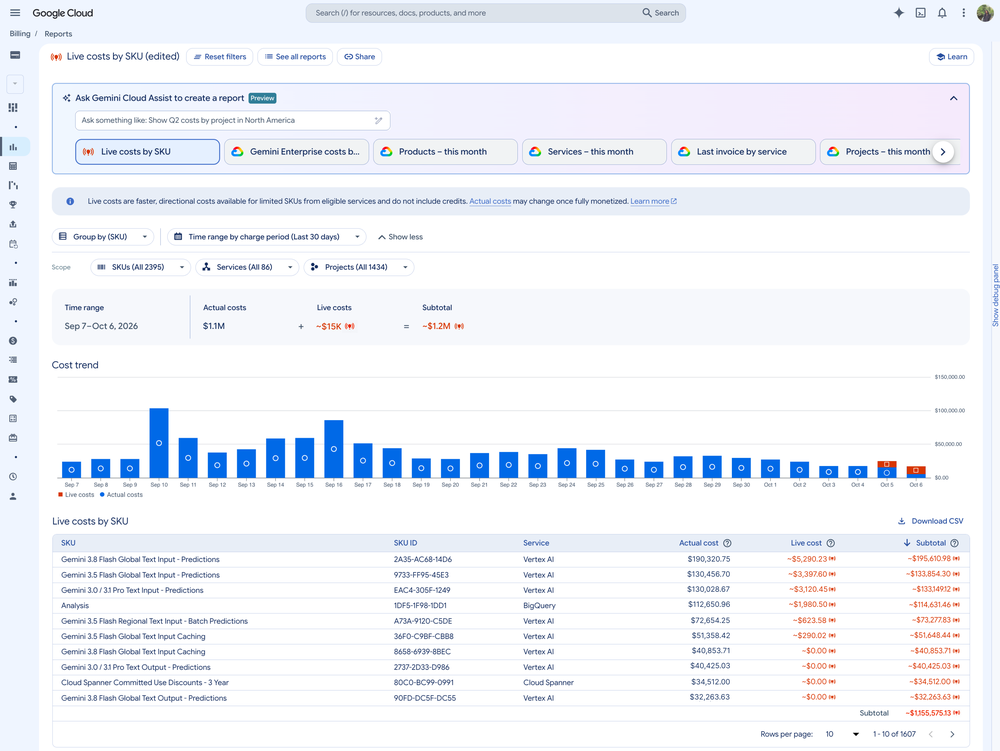
Today, we’re announcing that spend caps on Google Cloud Budgets are generally available. With this release, we’re delivering ways to protect your workloads from runaway costs without risking resource deletion. More importantly, we’re introducing three major updates, directly inspired by your feedback since the initial preview, to bring programmability, real-time visibility, and automated guardrails to your cost-control playbook. How the new spend caps can help your business We have significantly enhanced the usability and power of spend caps in three ways: 1. Automation through spend caps API: Managing guardrails manually across hundreds of projects is a major operational challenge. To address this, we have launched the spend caps API, which can be accessed from the existing Cloud Billing Budgets API. You can now programmatically enforce your financial boundaries for eligible services within each project, without additional overhead. You can automatically lift, update, or delete caps on the fly and instantly apply a spend cap whenever a developer spins up a new sandbox project. 2. Real-time visibility with live cost reports: Spend caps for AI services trigger within minutes of usage using estimated, live costs. When a cap triggers, you need to know exactly why and when the limit was breached. You can now view these faster, estimated costs directly inside your Cost Reports. Instead of waiting hours for standard billing pipelines to settle net costs, you get the exact financial snapshots that triggered the enforcement, giving you the immediate context needed to run a precise root-cause analysis. 3. Automated guardrails for your monthly resets: Before, once a spend cap was triggered, the usage block remained locked until you manually lifted it in the UI. Today, we are introducing automated monthly resets. You no longer need to worry about manually lifting caps every month. Enforced spend caps will automatically reset, and blocked services will seamlessly resume at the beginning of the next month. However, if your governance policies require a strict manual audit before resuming operations, the manual override option continues to exist exactly as before. Best practices for deploying spend caps As you roll out spend caps across your organization, keep these operational tips in mind: Target non-production environments first: Start by applying strict, low-dollar spend caps to your developer sandboxes, testing clusters, and experimental AI agent playgrounds. Configure alerts wisely: Default alerts are automatically sent to billing administrators and project owners at 50%, 80%, and 100% of the cap. Make sure the right folks are set up in these roles. This ensures your team is never caught off guard when a budget is nearing depletion. Spend caps permissions can also be added to custom roles, if needed. Understand fixed vs on-demand costs: Spend caps halt pay-as-you-go and CUD-covered requests once the budget threshold is hit. However, Provisioned Throughput is never halted; requests using reserved capacity will continue to run, and serve traffic normally. Refresher on GCP’s dual-pronged defense playbook Spend Caps work seamlessly alongside our native Early Anomalies Detection to provide a closed-loop defense for your cloud spend. Read our previous blog for a detailed explanation on how to use these tools to effortlessly set up a GCP defense playbook. Playbook step Feature Focus Core action Key benefit Step 1 Early anomalies Predictive monitoring Analyzes early cost signals daily to alert you of directional spend variances Spot anomalous cost spikes early and pinpoint the exact SKU driving the trend Step 2 Spend caps Financial enforcement Programmatically pauses usage for a specific project/service once a budget is breached Absolute protection against runaway spend without deleting resources Get started today Spend caps are now ready to support your workloads at scale. Read our documentation for more details and navigate to the Budgets and Alerts page in your Google Cloud Billing Console, to set your first spend cap. To integrate programmatic guardrails into your deployment workflows, check out our newly published spend caps API documentation.
Read original articleOctober 30, 2026
Want to know the latest from Google Cloud? Find it here in one handy location. Check back regularly for our newest updates, announcements, resources, events, learning opportunities, and more. Tip: Not sure where to find what you’re looking for on the Google Cloud blog? Start here: Google Cloud blog 101: Full list of topics, links, and resources. aside_block <ListValue: []> Oct 26 - Oct 30 Simplify PostgreSQL Monitoring with the New AlloyDB Omni Web UIThe newly released AlloyDB Omni Web UI delivers a centralized, graphical dashboard that simplifies the management of self-managed PostgreSQL workloads across hybrid, multi-cloud, and air-gapped environments. This browser-based console provides database administrators with deep, real-time insights into cluster health, hardware utilization, and active database connections. It also features built-in query diagnostics and performance tracking for AlloyDB’s columnar engine, enabling quick troubleshooting of bottlenecks without manual terminal commands. To learn more about setting up this monitoring interface, read the full AlloyDB Omni Web UI Blog Post. Leveraging "Antigravity" to architect high performance semantic model routers in ApigeeSemantic model routing replaces rigid static paths with a lightweight helper model to dynamically classify and dispatch intent-driven LLM traffic. Join Saravanakumar Rajagopal on Thursday, November 12, 2026, at 5:00 PM CET for a Community TechTalk exploring how to leverage Antigravity and skills to architect these intelligent multi-provider routing patterns natively inside Apigee. Discover how to optimize your AI infrastructure and enhance flexibility at scale.Register for the November 12 Community TechTalk Oct 19 - Oct 23 From prompt to production: End-to-end AI workflows in ApigeeDeploying an enterprise AI gateway does not require deep API or machine learning expertise. Using declarative workflows in Apigee, teams can spin up a fully governed LLM gateway in minutes using a few environment variables. Join Luis Cuellar on Thursday, October 29, 2026 for a Community TechTalk exploring end-to-end AI workflows. Discover how to layer essential defenses—including Model Armor for prompt protection, Cloud Data Loss Prevention (Cloud DLP) for sensitive data redaction, rate limiting, and response caching—before routing autonomous agent interactions through your gateway filters.Register for the October 29 Community TechTalk Zero Standing Privileges with PAM: On-Demand Temporary Access for Humans and AI AgentsAI agents now hand work off to other agents, risking stacked privileges and overpermissioning. Because agents plan their actions on the fly, permanent admin access means one hallucination can cascade into production. Join us on Wednesday, November 18, 2026, at 8:30 AM PST to see how Google Cloud Privileged Access Manager (PAM) brings Zero Standing Privileges to AI delegation, putting humans in command with cloud-native control that doesn't slow developers down.Register for the November 18 webinar Streaming comes to API Gateway: real-time and AI-ready APIsNative streaming support is now in Public Preview for API Gateway, enabling you to run real-time and AI workloads behind your existing gateway. You can now route Server-Sent Events (SSE), WebSockets, gRPC, and chunked transfer encoding without modifying your API spec or managing a split estate. This update also strengthens integration with the Gemini platform, allowing you to stream responses from Gemini, Claude, and OpenAI gpt-oss models seamlessly while maintaining consistent authentication, rate limiting, and observability.Read the blog to get started Oct 12 - Oct 16 AI tokenomics in action: Enforcing tiered token budgets with ApigeeScaling artificial intelligence across an enterprise requires clear token governance to keep LLM spend predictable across departments. Join Tarun Abraham on Thursday, November 5, 2026 for a Community TechTalk on AI tokenomics. Discover how to use Apigee to enforce isolated, tiered token budgets and model access for each team—such as assigning Engineering a dedicated budget for Gemini Pro while covering mixed usage for Marketing—without changing application code. Attendees will also gain access to a sample codebase featuring a reusable Shared Flow.Register for the November 5 Community TechTalk Sept 28 - Oct 2 Claude Sonnet 5.5 is now available on Google Cloud. Built for focused coding and knowledge work, it delivers stronger performance for feature development, and creating presentation-ready documents, while offering more intelligence with a lower cost per task for most work at faster speed. Deploy Sonnet 5.5 directly from Model Garden with Google Cloud’s enterprise security, scale, and governance built in. Try it now. Mastering Storage Management with Storage IntelligenceIn our new blog, explore practical strategies to modernize storage operations using Storage Intelligence Advisor and enhanced Batch Operations. See how customers like Shipt and Palo Alto Networks are using these features to manage their estates at scale. Today, Storage Intelligence is used by 25 of the top 50 GCS customers. 2 in 3 customers have Storage Intelligence enabled for over 90% of their storage footprint.Explore best practices on our blog Cut Gen AI costs by 70% with Apigee X dynamic routingGenerative AI deployments face a harsh cost-performance trade-off: static model selection either wastes budget or compromises quality. Discover how to build an Intelligent AI Gateway using Apigee X to dynamically evaluate prompt complexity in real-time. This new blueprint automatically routes simple queries to lightweight models (like Gemini 3.5 Flash Lite) and complex reasoning tasks to advanced models (like Gemini 3.7 Flash), achieving over 70% cost savings without sacrificing output quality. Read the guide to optimize your Gen AI architecture AI Agent Clinic launches new hands-on session on production agent evaluationsA new episode of the AI Agent Clinic is now available showing organizations how to move past manual "vibe checks" to build robust, production-grade agent evaluations. In this hands-on session, Google Cloud engineer Dani Zamora and Matthew Feroz (Merge) take DocsHound, an open-source LangGraph agent, and build an end-to-end eval pipeline in under an hour. Learn how to standardize multi-turn traces across any framework using OpenTelemetry and OpenInference, pair LLM judges with deterministic checkers, and catch silent quality regressions before shipping. Watch here Drive AI impact: Join Google's Agentic Data Cloud event on Nov 4Every enterprise plans to adopt agentic AI within two years, but data bottlenecks hold them back—AI accesses just 45% of enterprise data today (MIT, 2026). Google's Agentic Data Cloud provides the trustworthy foundation and real-time context AI needs. Join our product leaders November 4th to explore the latest innovations across databases, analytics, business intelligence, and storage, and get direct answers in our executive Q&A with Google Data Cloud VP & GM Andi Gutmans. Register today! Sept 21 - Sept 25 Master MCP tool authorization and agent governance with ApigeeWhile the Model Context Protocol (MCP) solves interoperability for autonomous AI agents, chained actions like CRM edits or database queries quickly expose systems to unauthorized execution. Join our technical deep dive on Thursday, October 1, 2026, at 5:00 PM CEST featuring Christophe from Google Cloud. Learn how positioning Apigee between MCP clients and enterprise backends enables fine-grained authorization (FGA), complete audit trails, and policy evaluation via emerging standards like OpenID AuthZEN.Language and accessibility note: This session will be hosted in French, but non-French speakers can follow along seamlessly by turning on Google Meet live translated captions to read in English, Spanish, German, Portuguese, or Italian.Register for the October 1 Community TechTalk Apigee Trace Viewer Tutorial: Capturing & Analyzing Proxy TracesStreamlining API proxy debugging just got easier with a new tutorial by Apigee Customer Engineer Tyler Ayers. The guide covers end-to-end instructions for capturing debug traces in both Google Cloud Apigee X (or Hybrid) and the local Apigee Emulator, extracting trace JSON data via the web UI or automated REST APIs, and analyzing execution flows, variable mutations, and latency bottlenecks using the open source Apigee Trace Viewer. Read the Apigee Trace Viewer guide today. Automate Apigee proxy testing locallyCatching errors early saves time and money. A new tutorial by Apigee customer engineer Tyler Ayers shows how to use the Apigee Local Emulator for automated testing. Learn to run tests locally, integrate them into CI/CD pipelines, and deploy on Google Cloud Run for shared sandboxes. This approach provides instant feedback and zero cloud costs, helping teams speed up deployment cycles.Read the tutorial Scale your enterprise multi-agent systems with ApigeeDeploying multi-agent architectures in production introduces critical hurdles around security, operational control, and runtime expenses. Discover how Apigee API Hub provides a central discovery surface to eliminate agent sprawl across tools, Model Context Protocol (MCP) servers, and enterprise APIs. Learn how to turn existing backend services into secure MCP tools using Agent Gateway guardrails, while applying semantic caching and intelligent model routing to keep compounding token costs predictable.Join Google Cloud in Chicago in Oct.15 for The AI Evolution. Reserve your seat for Chicago Automate Apigee proxy testing with the Apigee Local EmulatorWaiting on remote deployments to validate API proxy logic slows down release cycles and increases infrastructure overhead. Join Nigel Walters on Thursday, October 8, 2026, at 5:00 PM CEST for a Community TechTalk on shift-left testing for Apigee. Discover how to use the Apigee Local Emulator and apigee-emulator-service to run sub-second assertion suites on local machines, automate CI/CD checks in GitHub Actions, and deploy ephemeral preview sandboxes on Google Cloud Run.Register for the October 8 Community TechTalk Now in Public Preview: AI-assisted EKS-to-GKE migrations with deterministic guardrailsMigrating complex Kubernetes estates from AWS EKS to GKE is traditionally high-friction and error-prone. Now in Public Preview, GKE Agentic Migration is an open-source agent plugin that replaces ad-hoc LLM prompting with an AI-assisted migration workflow protected by deterministic guardrails.Running locally in your development harness, it indexes source IaC, maps cloud-specific primitives (such as Karpenter to Custom Compute Classes), and validates configurations offline—delivering reviewable pull requests and data-migration runbooks with zero live cluster mutations.Learn more in the announcement blog and try the plugin on GitHub. Claude Opus 5.5 is now available on Google Cloud. Built for everyday complex tasks, it delivers stronger agentic coding, research, and analysis while handling long-running work at a lower cost per token. Google Cloud continues to provide enterprise customers with broad model choice to build, deploy, and scale their AI agents securely. Try it here. Import Delta Lake tables with Dataflow Job Builder!Migrating to borderless Lakehouse just got a lot easier. You can now import Delta Lake tables stored in Cloud Storage using Dataflow Job Builder, a no-code/low-code interface for authoring Dataflow pipelines. Because Dataflow is a fully managed service, you are spared the overhead of provisioning and managing virtual machines. For step-by-step guidance, check out the documentation here. Sept 14 - Sept 18 Storage Intelligence Advisor for Google Cloud Storage is now GAGoogle Cloud Storage customers can now manage cloud storage more effectively with Storage Intelligence Advisor, delivering curated metrics, automated anomaly detection, and actionable recommendations right out of the box, with zero setup required.Advisor baselines activity across your projects and automatically detects four key anomalies: surges in operations, unexpected rises in cross-region egress, and spikes in errors. Each finding includes deep drill-down visibility into the resources driving the change, alongside prescriptive steps to remediate issues before they impact performance or cost.Learn more to get started with Storage Intelligence Advisor. Build private WebSockets from Apigee X to Cloud RunReal-time AI agents and streaming architectures often require persistent, bidirectional connections. A new implementation guide by Apigee Customer Engineer Joel Gauci demonstrates how to establish private southbound connectivity between Apigee X and Cloud Run. Using Private Service Connect (PSC) and a Regional Internal Application Load Balancer, teams can enforce API governance and security policies at the edge while keeping backend services completely isolated from the public internet.Explore the step-by-step guide and open-source code Connecting Gemini Enterprise Agent Runtime to Apigee with Private Service Connect Deploying autonomous AI agents often presents security, compliance, and cost challenges. A new reference guide details how to build an end-to-end, private architecture between Gemini Enterprise Agent Runtime and Apigee. This design helps protect internal backends and manage token quotas. Read the full community guide and deploy the code Discover what’s new and next in ApigeeAs enterprise architectures adapt to generative AI and autonomous workflows, Apigee is expanding its proven platform capabilities to support modern AI gateway use cases alongside traditional API management. Join our session on Thursday, September 24, featuring Apigee Product Manager Geir Sjurseth. Get an inside look at recent product releases, explore architectural patterns for securing models and agents, and bring your questions for the live Q&A.Register for the September 24 Apigee product update Managed Service for Apache Kafka supports clusters with public Internet access!With Managed Kafka public clusters, you can now produce and consume messages from clients outside your VPC—including your local machine, for faster, frictionless testing. Public clusters unlock use cases like IoT devices, retail storefronts, and telco network towers. Enable public access on new or existing clusters via the Google Cloud console, gcloud CLI, or REST API. Spin up your first public cluster, or reach out to kafka-hotline@google.com with questions. Stream data directly into Bigtable using Bigtable subscriptions, now in Preview!You can write Pub/Sub messages to a Bigtable table with zero ETL with Bigtable subscriptions. No pipelines, no code, delivered by the serverless, zero-ops experience you already know with Pub/Sub. Power your AI workloads, from model telemetry to real-time context engineering, without the overhead of managing complicated ETL pipelines. Built to be dependable, with native support for dead-letter topics. Try the feature today! Sept 7 - Sept 10 Why Your Voice Agent Needs Session AuditingMoving voice agents to production demands robust quality monitoring. This guide dives deep into the inner workings of the Agent Development Kit (ADK) responsible for audio session auditing. Learn how the ADK's save_live_blob feature intercepts, buffers, and stores raw audio chunks during active Gemini Live sessions. We explore building an automated post-processing pipeline to seamlessly stitch these fragments into cohesive, playable audio files. Discover how to leverage these vital audio audit trails to monitor real-world interactions, diagnose failures, and ensure enterprise-grade reliability. Read the full guide here. AlloyDB Omni Red Hat RPM Orchestrator now Generally AvailableAlloyDB Omni Red Hat RPM orchestrator is now Generally Available. The AlloyDB Omni Red Hat RPM orchestrator offers a new way to manage PostgreSQL-compatible workloads on bare metal or VM platforms, combining the high performance of AlloyDB, access to generative AI features and Gemini models to build AI agents and applications, and full automation. The orchestrator simplifies cluster provisioning and lifecycle management by allowing you to define reference architecture specifications, customizable by adjusting instance parameters, node configurations, and networking options — discover all details in full blog post. Aug 31 - Sept 4 Automate VM guest software lifecycle with VM Extension Manager, now GAGoogle Cloud VM Extension Manager is now generally available, eliminating the need for custom startup scripts to manage guest OS extensions across Compute Engine fleets. Define declarative, project-wide policies that enforce desired software states across all regions and zones. Benefit from continuous drift detection with automatic self-healing, multi-zone phased rollouts with automated rollbacks on failure, and centralized fleet health visibility integrated with Cloud Monitoring.Explore VM Extension Manager documentation Assess Apigee migrations without a target environmentPlanning a migration to Apigee X or Hybrid? You can now assess your legacy Apigee Edge SaaS or OPDK environment earlier in your planning cycle. Using the updated --skip-target-validation flag in the Apigee Migration Assessment Tool, teams can generate a full inventory and establish scope baselines before target infrastructure or IAM credentials are provisioned.Read the guide to learn more. Claude Fable 5.1 is now available on Agent Platform. It brings performance improvements over Fable 5 across reasoning, full-lifecycle coding, multi-tool workflows, and knowledge work. Anthropic also announced Enterprise Frontier Safeguards, a solution that gives customers the option to safely deploy Anthropic’s most capable models while storing their data in cloud infrastructure they control. We continue to offer enterprise customers options across frontier models to build, deploy, and scale securely on Google Cloud. Aug 24 - Aug 28 Grok 4.6 is now available in Preview on Gemini Enterprise. xAI's most capable model, built for coding, agentic tasks, and knowledge work, Grok 4.6 joins Grok 4.3 and Grok 4.20 in Model Garden and becomes the flagship of the Grok family. It supports reasoning, function calling, and structured output for multi-step agentic workflows, and accepts text and image input.Get started today Empowering autonomous agents with advanced security governanceAI agents offer incredible productivity gains, but granting them access to read emails, query databases, and trigger APIs introduces critical new security risks. In fact, 79% of tech leaders cite security and governance as their biggest challenge to scaling AI. Traditional tools are no longer enough to handle automated threats like prompt injection and dynamic permissions. Discover how forward-thinking enterprises are using secure-by-default design, agent identity governance, and human-in-the-loop controls to deploy agents with confidence.Read more Stateful processing is available in BigQuery continuous queries in PreviewStateful operations significantly expand what’s possible with BigQuery continuous queries. This feature allows users to leverage functions like JOINs, aggregations, and windowing functions directly in their streaming queries. Now you can calculate metrics over time (for example, a 30-minute average) to power your downstream applications and AI agents with much richer, real-time signals. Try out our feature here and share your feedback with bq-continuous-queries-feedback@google.com! Synthetic data generator tool is available for Managed Service for KafkaYou’ve launched your first Kafka cluster. Now what? The next thing to do is to produce some data to the cluster, but that involves modifying a client application somewhere or spinning up a virtual machine. The synthetic data generator tool, now generally available, can start sending mock data to your cluster in 3 clicks, and will get data streaming into your cluster in less than two minutes. The perfect utility for those moments you just want to test your cluster and new features. Try our quickstart today! Dataflow pipeline updates are faster & more flexibleDataflow pipeline updates can now stop-and-replace pipelines, a major addition to the existing in-place-update feature. The new parallel pipeline option accelerates the migration between the old & new pipeline, resulting in reduced disruption to your business. You can also set a timeout on drains that prevents runaway costs for your pipeliness in the event of stuck processing. This feature is generally available. Try it here! Aug 17 - Aug 21 Webinar: Agent Identity as the backbone for secure AI innovationAn AI agent with a stolen API key looks identical to a legitimate one. As autonomous agents scale across enterprise systems, static credentials and legacy IAM policies can no longer keep up with machine-speed execution. Join Shaun Liu, Product Manager at Google Cloud, on August 27 at 1 PM ET to explore Google Cloud’s vision for unifying agent, human, and nonhuman identity into a workload-centric platform using verifiable cryptographic identities (SPIFFE, ID-JAG, OAuth).Register for the webinar now Aug 10 - Aug 14 Diagnosing Apigee Hybrid Cassandra Read Latency for Peak PerformanceDiagnose real-time Cassandra read latency and resolve API key verification bottlenecks in Apigee Hybrid with this step-by-step troubleshooting guide. Learn how to deploy a debugging client and query performance tables to maintain sub-millisecond response times. Read the Apigee Hybrid Cassandra Troubleshooting Guide Keep moving with agents! The All Things Agentic Hackathon is officially live.We're challenging builders to build next-generation agents that take on the busy work and handle the heavy lifting in the background using Gemini 3.5 and Google Cloud. Compete for your share of $190,000 in prizes, cash, and Google Cloud credits! Submissions are open from August 3, 2026, to August 31, 2026.Learn more and register. Sign up for GEAR to get exclusive updates and your badge. # Accelerate PostgreSQL migrations using Gemini in Database Migration ServiceEnterprise database migrations often stall during the "last mile" of translating legacy stored procedures, triggers, and custom functions from Oracle or SQL Server. Database Migration Service (DMS) now provides AI-assisted code conversion powered by Gemini in Databases. By combining deterministic compiler rules for 1:1 syntax with Gemini contextual synthesis for complex procedural blocks, DMS converts legacy code into native PostgreSQL and AlloyDB with full schema awareness and side-by-side validation.Read the full blog post to learn how to streamline your database code conversion. Compute Flex CUDs now available for G2 and G4 GPU VMsCompute Flexible Committed Use Discounts (Flex CUDs) are now available for G2 (NVIDIA L4) and G4 (NVIDIA RTX Pro 6000) VMs. You can now lock in predictable savings while retaining the flexibility to adapt across VM families, migrate between regions, and combine general-purpose compute, GKE, Cloud Run, and G2 & G4 GPU VMs under a single spend commitment. Flex CUDs for G-series VMs let you lock in savings today while preserving the agility to upgrade to latest hardware without disruption!Explore VM instance pricing or learn more about Flex CUDs. Rapid Bucket accelerates the training and checkpoint performance in PyTorch Ecosystem via GCSFSWith the release of GCSFS 2026.8.0, organisations can now unlock maximum ROI from their AI/ML infrastructure by eliminating data starvation on GPUs in PyTorch ecosystem when they are using Frameworks like Dask, Pandas, PyTorch , PyTorch Lightning, Hugging Face Datasets, Ray dataetc. By making adaptive concurrent prefetching the default, GCSFS dynamically predicts and background-fetches sequential read patterns—boosting single-file throughput by 5x, and scaling up to 21 GiB/s , saturating the NIC when paired with Rapid Bucket. Saturating the NIC translates to significantly improved accelerator goodput and reduced training wait times with zero integration friction. Training and checkpoint restore workflows benefit from intelligent memory management that automatically drains the buffer during random reads to completely avoid bandwidth or memory penalties. Aug 3 - Aug 7 Navigate data sovereignty and AI innovation with hybrid cloudFor enterprises facing strict compliance rules, keeping sensitive data on-premises often means missing out on cutting-edge AI. Data from the 2026 State of AI Infrastructure report reveals that 52% of IT leaders are adopting hybrid cloud strategies to bridge this gap. Our latest blog post explores how Google Distributed Cloud (GDC) helps organizations deploy connected or air-gapped models to run advanced AI entirely within secure environments—mitigating geopolitical risks without sacrificing innovation. Read more. SAP and Google Cloud Launch BDC Connect for BigQueryFor years, enterprises have struggled with the cost, risk, and complexity of moving mission-critical SAP data into advanced analytics platforms. The general availability of SAP Business Data Cloud (BDC) Connect for BigQuery marks a turning point. By introducing revolutionary zero-copy, bi-directional data sharing, this new capability seamlessly bridges SAP systems with Google Cloud's powerful data and AI ecosystem. Instead of wrestling with manual data duplication and lost business context, organizations can now eliminate silos, dramatically lower their analytics costs, and rapidly deploy trustworthy, agentic AI solutions grounded in real-time operational reality. Read the full announcement to learn how to transform your data strategy. Google Cloud Cortex Framework version 7 is now generally available!This release helps you modernize your data architecture for AI agent readiness, enabling you to quickly deploy, customize, and extend robust data products while simplifying orchestration and reducing infrastructure overhead. It provides data product accelerators for SAP-sourced data to build trusted, high-quality data products ready for advanced analytics and agentic use cases. The Framework integrates with Google Cloud products including BigQuery, Dataform, Knowledge Catalog, and Gemini Enterprise Agent Platform. Learn more in our announcement blog, technical documentation, or try a demo deployment today. From API Management to AI Gateway with ApigeeMassive LLM adoption unlocked automation but exposed critical vulnerabilities, from unpredictable token costs to security risks like prompt injection. Without central management, organizations face accelerated technical debt. Learn how to transform Apigee into an enterprise AI Gateway to centralize governance. This architectural roadmap details how to utilize semantic cache to optimize token costs, implement prompt protection policies for security, and productize tools using the emerging MCP standard.Read the full architectural roadmap on the Apigee Community Hub Centrally govern enterprise AI traffic with Apigee AI GatewayManage, track, and secure model communication across your entire infrastructure from a single pane of glass. In a new video walkthrough, Principal Architect Tyler Ayers demonstrates how Apigee AI Gateway simplifies agentic governance. Learn how to transparently proxy model traffic, log real-time token counts, and apply runtime security quotas without impacting your developer workflow.Watch the Apigee AI Gateway demo Maximize Provisioned Throughput UtilizationSudden traffic micro-spikes can exceed per-second quotas, triggering 429 errors or forcing overflow into shared resource pools. A new architectural guide demonstrates how to build a serverless "shock absorber" using Cloud Run and Google Cloud Tasks. By decoupling request ingestion from execution, this queue-based pattern flattens volatile traffic bursts and smoothly drips requests to Gemini at your exact quota rate, maximizing Provisioned Throughput utilization while eliminating job failures during peak usage. Read the step-by-step setup guide. Eliminate security blindspots in agentic tool agentic tool calls via the Model Context Protocol (MCP) can introduce critical security risks to your enterprise architecture. Join our technical deep dive on Thursday, August 13, to discover how to position Apigee as a centralized security gateway. Featuring the new ParsePayload policy and payload operations groups in API Products, this session demonstrates how to enforce granular tool filtering, manage execution quotas, and scale secure agent ecosystems without impeding developer velocity. Register for the August 13 Community TechTalk Jul 27 - Jul 31 Data Cloud and Apigee CDMX: The AI Agent Evolution | August 12, 2026Enterprise AI demands evolution beyond basic conversational assistants. To generate real value, AI models must connect with the organization's core systems and live data sources. Join us this August 12 at Google CDMX for the exclusive event AI Evolution: Powering Tomorrow's Enterprise. Learn how to design an agile and secure ecosystem by unifying the power of Gemini, Apigee, and data agent technologies through practical demonstrations led by Google Cloud engineers.Secure your spot for the in-person session in Mexico City Register now! Vast Edge, built on GCP, launches the first live recovery interface for cloud backups, enabling IT teams to inspect backup contents in real time. This transforms backups from a blind, log-based process into an interactive platform where teams can instantly search, preview, and validate the exact data available for restore.This platform protects Google Workspace, NetSuite, Salesforce, Workday and many SaaS environments, providing complete visibility and enterprise-grade oversight.Visit Vast Edge Backup & Disaster Recovery and get a free trial of their backup solutions on the GCP Marketplace for Google Workspace Backup, NetSuite Backup, Salesforce Backup, and Workday Backup. Jul 20 - Jul 24 Claude Opus 5, Anthropic’s latest model, is now available on Agent Platform. It brings performance improvements over Opus 4.8 across coding, long-running agents, and knowledge work.The model is Zero Data Retention (ZDR) compatible. For safety, high-risk workflows — such as penetration testing or exploit generation — it will notify you and fall back to Opus 4.8.We’re excited to continue to offer enterprise customers options across frontier models to build, deploy, and scale AI securely. Try it here. Apigee Northam Roadshow 2026 | The AI Agent Evolution: Powering Tomorrow's EnterpriseAI is evolving. As your organization deploys autonomous agents, the integration between APIs and models becomes critical. Join Google Cloud specialists for an exclusive day of deep-dive sessions and live demos. Discover how the unified power of Apigee and the Google Cloud Agent Platform allows you to build, govern, and scale high-performance AI agents with complete control. Call to Action: Register for Sunnyvale | Register for NYC | Register for Chicago Deploy an Apigee Proxy for MCP Registry Discovery Learn how to deploy an Apigee X proxy to format Apigee API Hub data into the Model Context Protocol (MCP) Registry format. This tutorial by Tyler Ayers guides developers through cloning the sample repository, deploying using the Apigee Feature Templater (aft), and testing the endpoint to make API data easily discoverable by coding agents. Read the full community tutorial to get started. Simplify AI Infrastructure: Getting Started with Apigee AI GatewayManaging a complex AI landscape with multiple backend environments can present significant operational and governance challenges. A new tutorial walks you through how to build a unified API proxy using Apigee AI Gateway. By establishing a single, secure entry point for all model traffic, teams gain access to real-time analytics, comprehensive tracing, and financial operations auditing—completely seamlessly, and with absolutely no modifications required to client environments or user configurations. Read the step-by-step setup guide Your AI agents are ready. Is your data?The biggest bottleneck to scaling AI isn't the models—it's giving them access to business context. As enterprises move to proactive systems of action, legacy infrastructure often buckles under the nonlinear speed of AI agents. Google Cloud’s new Agentic Data Cloud, built on AI-native infrastructure, solves this by unifying data, AI models, and operational databases. Discover how a borderless Lakehouse and active Knowledge Catalog can empower your AI agents with trusted, real-time context without unnecessary engineering overhead. Read more. Secure and govern your AI at Apigee AI Horizon in LondonMoving AI from basic prompts to complex agentic workflows requires trust and control. Join us on Tuesday, 1st September 2026 at Google London for our 5th edition of Apigee AI Horizon. Discover how Google Cloud product leaders and architects are using Apigee and Model Armor to secure LLM APIs, implement policy controls, and manage token consumption. Do not miss this one—register soon!Secure your spot for AI Horizon London Jul 13 - Jul 17 Resource-Based CUD Sharing is Now Enabled by DefaultStarting June 16, 2026, the default setting for Google Cloud Resource-based Committed Use Discount (CUD) sharing will change from disabled to enabled for new billing accounts and eligible existing accounts without active CUDs. This update automatically maximizes your savings by pooling underutilized discounts across your resources.You retain full control and can adjust your CUD sharing preferences at any time by changing your CUD scope configuration. For instructions, see Enable CUD sharing or Disable CUD sharing. Webinar for India: Google Cloud for EdTech: Optimizing Traffic and Token Governance at ScaleAPI traffic surges and AI model integration are reshaping the EdTech landscape. Join Satyam Maloo for the webinar Google Cloud for EdTech: Optimizing Traffic and Token Governance at Scale on July 23, 2026. Learn to implement advanced rate limiting, gain granular token visibility, and leverage real-time analytics to govern your platform effectively. Whether you’re scaling for peak academic seasons or integrating complex AI workflows, this session provides the infrastructure blueprint you need.Register Now Scaling AI Agents: Treat prompts like software artifactsAs AI agents move into production, monolithic system prompts often result in configuration drift, merge conflicts, and silent runtime failures. The solution is adopting a Prompts-as-Code architecture. By breaking prompts into modular skill files and using a build-time transpiler, engineering teams can introduce dependency resolution, static validation, and CI/CD rigor to their agent's control plane. Stop manually editing massive text files and start building deterministic, reliable agent infrastructure.Read more here. Jul 6 - Jul 10 Webinar: Introducing Google Cloud NGFW Enterprise advanced malware protection - powered by Palo Alto NetworksDiscover the new Cloud NGFW advanced malware sandbox, arriving in preview later this year. Powered by Palo Alto Networks Advanced Wildfire, it leverages data from 70,000+ customers to help defeat advanced malware. Join us on July 16 at 11 AM EDT to learn how to build a resilient, zero-trust cloud infrastructure that protects your apps and data, wherever they reside.Register for the webinar now Safely run AI-generated code in Cloud Run sandboxesCloud Run sandboxes, now in public preview, are lightweight, isolated execution boundaries that you can spawn near-instantly within your existing Cloud Run service instances.Whether you need to let an LLM run a dynamically generated Python script to calculate business margins or spin up a headless browser to perform web research, Cloud Run sandboxes give you a secure, isolated sandbox to run these tasks without leaving your serverless environment.Read the blog to learn more and get started today. Australia API Horizon: Scaling Enterprise Governed AI AgentsThe transition from AI chatbots to autonomous agents is the most critical integration point for your business. Join Google Cloud at our upcoming events to explore exclusive deep-dive sessions on architecting for the agentic era.Discover how to use Apigee as an intelligent AI Gateway to govern, secure, and scale high-performance architectures. You will learn to seamlessly build AI tools from your existing APIs and maintain control over your entire ecosystem.Join us in your preferred city: Sydney: July 28, 2026, at Google Sydney, One Darling Island. Canberra: July 29, 2026, at Hotel Realm. Melbourne: August 4, 2026, at Google Melbourne. Build highly available, multi-region services on Cloud RunMaintaining uptime for business-critical applications just got a lot easier on Cloud Run. Service health, now Generally Available, automates cross-region failover by leveraging readiness probes for instance-level health checks with a simple, two-click setup. You can configure service health with global external Application Load Balancers for public-facing applications or cross-region internal Application Load Balancers for private networking traffic.Learn how to configure service health for Cloud Run. Report: 83% of organizations need infrastructure upgrades for agentic AIThe shift from conversational bots to autonomous agents is breaking legacy systems. Our new State of AI Infrastructure report details how engineering leaders are adapting to these massive new workloads. To eliminate inference bottlenecks, control hidden scaling costs, and manage agent sprawl, the industry is rapidly moving toward fluid compute, centralized governance, and unified, co-designed architectures.Explore our key infrastructure insights Stop tinkering, start scaling: the industrialized AI PlaybookDid you know that only 5% of custom AI investments actually return measurable business value? The problem isn’t the technology—it’s how organizations are wired to run it.In this compelling read, Google Cloud Consulting breaks down the operational blueprint that bridges the stark gap between "cool tech experiments" and real, P&L-impacting enterprise ROI.Read the full article on Medium AI Agent Clinic: Slashing App Latency by 80%Prototyping an AI agent is easy, but scaling for live traffic presents unique challenges. In the latest AI Agent Clinic, our technical experts partner with a developer to optimize PlaybackIQ, a live football analysis agent. This session demonstrates how to use OpenTelemetry to trace bottlenecks in the Gemini Enterprise Agent Platform and deploy to Cloud Run for high-concurrency scaling, achieving an 80% reduction in response time. Learn production-grade debugging strategies to optimize your own LLM applications.Watch the 60-minute teardown Jun 29 - Jul 3 Claude Sonnet 5, Anthropic’s latest model, is now available on Agent Platform. This addition serves as a drop-in replacement for Sonnet 4.6, giving organizations expanded choice for task completion across enterprise workflows. It features enhanced reasoning, cleaner code generation, and computer use capabilities for desktop and browser workflows.By continuing to rapidly bring frontier models to our platform, Google Cloud offers an uncompromised choice of the industry's best technology to build, test, and scale enterprise-grade AI.Get started today. Automate your AI governance with Apigee and YAMLManual API gateway configurations can quickly slow down your AI engineering velocity. Join the Apigee community on Thursday, July 16, to discover an automated, declarative blueprint for model garden management. Learn how a simple, repeatable YAML pattern lets your AI practitioners instantly spin up secure, policy-backed enterprise configurations without friction. Bring your questions and connect during our live Q&A session. Register for the July 16 Community TechTalk Build next-generation AI portals for autonomous agentsStandard developer portals were designed for human developers to subscribe to static APIs. Today, autonomous agents, LLM toolkits, and dynamic runtimes demand a central nervous system for governance. Join our technical deep dive on Thursday, July 23, to explore Apigee's new AI Portals solution. You will see exactly how to deploy full-service, MCP powered hubs to safely manage enterprise self-service for models, tools, and agents. Register for the July 23 Community TechTalk Protect your infrastructure from advanced cyberattacks at the API layer (Presented in Portuguese)In an era of increasingly sophisticated threats, relying solely on traditional firewalls leaves critical data gaps. Join our technical community TechTalk on Thursday, July 30—conducted in Portuguese—to learn how to proactively mitigate risks directly at the gateway layer. This session demonstrates how to configure and govern essential Apigee security policies to build a robust line of defense, ensuring maximum availability and complete integrity for your enterprise microservices. Register for the July 30 Portuguese Community TechTalk Jun 22 - Jun 26 Accelerate TPU model loading while saving RAM on GKE.Large model cold starts often stall scaling and leave high-value TPUs idle. The open-source Run:ai Model Streamer now natively supports TPUs with Google Cloud Storage in TPU vLLM 0.18.0. This integration accelerates inference pipelines on GKE by streaming tensors directly into CPU memory, bypassing local disk bottlenecks and the "double-buffering" trap. In benchmarks, loading a 480B parameter model was over 2x faster while cutting peak host memory usage by half. Read the full guide and get started today. Stop Training Blind: Scaling AI with the New OpenTelemetry-Based TPU AI Telemetry Collector AgentGoogle Cloud’s new AI Telemetry Collector agent standardizes TPU monitoring using OpenTelemetry. It optimizes enterprise ML workloads by identifying silent failures and providing zero-cost operational metrics without draining host CPU cycles. The agent seamlessly routes telemetry to Google Cloud Monitoring or Prometheus and custom Grafana setups. Pre-installed on Google-optimized Ubuntu images or available via Docker, it tracks memory, network latency, and core utilization to maximize multi-node training efficiency.You can read more of this capability by clicking this link. Jun 15 - Jun 19 Join us for a deep dive into agentic AI control with AppyThingsYour integrations aren’t failing—they are evolving. When users interact with AI agents, they no longer arrive directly at your site, resulting in experiences stripped of your context, expertise, and intended experience. Join us on Thursday, June 25, for a community tech talk in partnership with AppyThings to learn how to solve this new gateway challenge. We will explore how MTN laid an integration foundation with the Model Context Protocol (MCP) to deliver accurate, consistent experiences. Our technical experts will demonstrate how to leverage Apigee as a centralized tools management solution to govern agent access. Register for the session Optimize Spot VM Deployments with Capacity Advisor for Spot, Now in Public PreviewGoogle Compute Engine has launched Capacity Advisor for Spot to Public Preview, now open to all customers. This tool turns Spot capacity discovery into a data-driven process by providing real-time deployment recommendations to maximize obtainability and minimize preemption risks. Query the Capacity Advisor API for obtainability and minimum estimated uptimes, or use the new Console UI featuring a global availability map, spot price lookups, and historical preemption rate trends to visually find the most cost-efficient compute capacity.Get started today to start optimizing your Spot VM deployments! Build a multi-tenant agentic AI systemWhen scaling generative AI across different business units, your teams need specialized AI agents with unique operational rules and tools. Our new reference architecture helps you build a centralized multi-tenant platform to prevent fragmented silos, eliminate data exposure risks, and maintain unified compliance. Read the guide to design and deploy a multi-tenant agentic AI system in Google Cloud. How to Configure Gemini Enterprise to Connect to a Custom MCP ServerThe Gemini Enterprise MCP Connector was a big announcement at Google Cloud Next because it introduces the ability to connect Gemini Enterprise to MCP servers. This blog post provides a step-by-step guide on how to configure your first Custom MCP Server connector using the Google Maps Ground Lite MCP server as an example. Once you understand this flow, you can configure multiple MCP servers with Gemini Enterprise to bring all the context you need. Jun 8 - Jun 12 Simplify Multi-Cloud Planning with Cloud Location Finder, now Generally Available Cloud Location Finder provides up-to-date data on public regions, zones, and Google Distributed Cloud Connected locations across Google Cloud, AWS, Azure, and OCI. You can now programmatically discover locations based on provider, proximity, territory, and carbon footprint to optimize your global infrastructure strategy for performance, compliance, and sustainability. Get started for free today Jun 1 - Jun 5 Modeling the physical world with BigQuery GraphManaging complex supply chains requires more than just spreadsheets; it requires a digital replica of the physical world. In this post, Guru Rangavittal and Candice Chen explore how BigQuery Graph enables organizations to build a digital twin by turning physical assets into an interconnected map of nodes and edges. By moving beyond traditional relational databases, businesses gain real-time clarity into operations—from executing surgical ingredient recalls to analyzing weather-driven logistics risks. Discover how BigQuery Graph transforms reactive firefighting into proactive, precision modeling, allowing you to see critical connections in seconds and future-proof your supply chain. Apigee for AI: Govern LLMs and MCP Servers (Presented in Spanish)Learn how to securely transition your AI initiatives from experimental prototypes to enterprise-ready deployments. Join Luis Cuellar on June 18 for a technical deep dive (presented in Spanish) exploring Apigee’s latest AI gateway capabilities. Discover how to centralize governance over Model Context Protocol (MCP) servers, protect Large Language Models (LLMs) with robust API gateway security policies, and manage token-based quotas.Register for the June 18 Spanish Community TechTalk May 25 - May 29 Anthropic’s Claude Opus 4.8 is now available on Gemini Enterprise Agent Platform. As we continue to expand our platform's model offerings, this addition gives organizations more options for handling complex, multi-stage enterprise workflows. Claude Opus 4.8 brings strong capabilities in agentic coding, allowing developers to manage extensive refactors and tracking dependencies over extended sessions. API Horizon Munich July 6, 2026: Orchestrating the Next Era of AI and APIs Master the orchestration of next-gen AI and digital ecosystems. Join Google Cloud experts and DACH tech leaders on July 6 for an exclusive look at the Apigee roadmap, Agent Management, and Model Context Protocol (MCP). Gain real-world insights and connect with the regional integration community.Register now Securing AI Agents: The Extended Agent Gateway PatternLearn how to prevent autonomous AI agents from invoking unauthorized APIs. Join Apigee Specialist Joel Gauci on June 4 for a technical deep dive into the Extended Agent Gateway pattern. This session covers enforcing Fine-Grained Authorization (FGA), implementing secure token exchange, and establishing Model Context Protocol (MCP) governance at the API gateway layer to protect enterprise backend services.Register for the June 4 Community TechTalk API-to-Agent Security: Exposing REST APIs to Gemini Enterprise via MCPConnect Gemini Enterprise agents to core data without creating security hazards. Join Google Cloud Specialist Nigel Walters on June 11 to learn how to instantly transform legacy REST APIs into secure Model Context Protocol (MCP) servers. We’ll cover how to safely register tools with Gemini while enforcing gateway-level guardrails like rate limiting and access control policies.Register for the June 11 Community TechTalk May 18 - May 22 Chinese Webinar | June 4: AI Command and ControlAs AI agents move from experimental pilots to core enterprise functions, governance has become a critical next step. Join Google Cloud on June 4th at 10:00 AM (Beijing Time) to learn how to build a secure AI management layer architecture. We'll explore how to develop governed MCP (Model Context Protocol) endpoints, manage tool access to enterprise data, and leverage robust audit logs to operationalize AI. This session also includes a practical demonstration of these governance frameworks on Google Cloud.Register here GCP Announces New Features to Benchmark and Optimize LLMs for On-Device Use CasesDeploying fine-tuned LLMs from GCP to edge devices like smartphones is complex due to fragmented hardware. Google AI Edge Portal bridges this gap, giving GCP developers the ability to test AI performance on 120+ Android devices, representing the full diversity of high, medium, and low tier smartphones on the market today. This week at I/O, we announced brand new capabilities to benchmark and debug LLM performance across these devices. Sign-up to utilize these new features in private preview today. May 11 - May 15 Build Your AI & MCP Control Tower for Universal GovernanceMaster the future of agentic security with Apigee. Join our Community TechTalk on May 21 to discover how Apigee serves as a central "Control Tower" for the Model Context Protocol (MCP). We will explore how new JSON-RPC tool authorization enables fine-grained access policies across your organization, ensuring secure and scalable AI deployments. Whether managing internal tools or external users, learn to govern your agentic ecosystem with absolute precision. This session is designed for global coverage across EMEA and AMER regions.Register for the May 21 Community TechTalk Apr 27 - May 1 Master Your Launch: The Apigee Production Go-Live ChecklistEnsure a secure launch with the Apigee production guide. Join Nicola Cardace on May 28 to explore security guardrails, including IAM roles, mTLS configurations, and encrypted KVM migrations. Scheduled at 11 AM EDT / 5 PM CEST to support EMEA and AMER teams, this TechTalk provides the technical roadmap you need to flip the switch with absolute confidence.Register for the May 28 Community TechTalk Transforming APIs into Governed Agentic Tools on the Google Cloud Agentic PlatformTurn your APIs into secure, governed agentic tools on the Google Cloud Agentic Platform. Join Specialist Christophe Lalevée on May 7 for a technical deep dive into AI productization. Scheduled at 5 PM CEST / 11 AM EDT to maximize coverage for developers across EMEA and AMER, this session explores the integration and governance frameworks required to scale enterprise-ready AI with confidence. Register for the May 7 Community TechTalk Fractional G4 VMs are Generaly Available, providing a highly efficient and cost-effective entry point for AI and graphics workloads. These new configurations, using NVIDIA virtual GPU (vGPU) technology, allow you to leverage the power of the NVIDIA RTX PRO 6000 Blackwell Server Edition GPUs in flexible, smaller increments, so you can right-size your infrastructure to match the specific demands of your applications. By providing more granular access to advanced hardware, fractional G4 VMs let you optimize resource allocation and reduce overhead without sacrificing performance. You can now select from additional GPU slice sizes for your specific needs: 1/2 GPU: Ideal for more intensive tasks such as LLM inference, robotics sensor simulation, and high-fidelity 3D rendering. 1/4 GPU: Optimized for mainstream workloads, including mid-range creative design, video transcoding, and real-time data visualization. 1/8 GPU: Great for lightweight applications such as remote desktops, productivity tools, and entry-level streaming services. Transitioning AI from a sandbox prototype to an enterprise-grade system is a major hurdle. A monolithic script won't suffice for widespread deployment. To achieve true scale and reliability with Gemini, organizations must adopt service-oriented micro-agent architectures, establish Zero-Trust security, and implement rigorous EvalOps. Master the "Agentic Maturity Ladder" to ensure your AI & Agentic solutions are robust, secure, and ready for the real world. Watch the deep dive and read the developer blog to learn more. ML Development in VS Code with Google Cloud Power: Workbench Extension Now AvailableData scientists and developers can now combine the local productivity of VS Code with the scalable infrastructure of Google Cloud. The new Google Cloud Workbench Notebooks extension allows you to connect to and run notebooks on managed cloud environments directly within your local IDE. This integration streamlines the ML lifecycle by eliminating context switching and providing high-performance compute for complex workloads in a familiar interface. As part of our commitment to the developer ecosystem, the extension is fully open-sourced to support community-driven innovation. Install from Marketplace: GoogleCloudTools.workbench-notebooks Contribute on GitHub: colab-enterprise-vscode Apr 20 - Apr 24 Announcing the 2026 Google Cloud Partners of the YearGoogle Cloud is honored to celebrate the winners of the 2026 Partner of the Year awards! These awards recognize an exceptional group of partners across AI, Security, Infrastructure, and more, who have demonstrated a commitment to customer success. From global system integrators to specialized startups, these winners are leveraging the power of Google Cloud to solve complex challenges and drive digital transformation worldwide. Join us in congratulating these organizations for their innovation, collaboration, and impactful results over the past year.See the 2026 Partner Award winners Apr 13 - Apr 17 We're excited to announce the Public Preview of Datastream’s metadata integration with Knowledge Catalog. This is the first step in our vision to provide a centralized, "single pane of glass" for all Datastream assets. The enhancement automatically synchronizes Streams, Connection Profiles, and Private Connections, eliminating data silos. It enhances discoverability, allowing you to search for Datastream assets using the same interface as BigQuery tables. Centralized governance is also provided, making your real-time data estate more transparent and easier to manage. Upgrading Apigee OPDK to 4.53 with OS your infrastructure using Google’s official, sequential upgrade path. Our Technical expert, Rakesh Talanki outlines how to upgrade Apigee OPDK to v4.53 while migrating to a supported OS (RHEL 8.x/9.x). This guide covers the "build-out" methodology, including multi-data center syncing, to ensure a stable, zero-downtime transitionRead the guide Cloud Run Worker Pools and CREMA: Powering Serverless AI at ScaleGoogle Cloud has announced the General Availability of Cloud Run worker pools, a new resource type designed specifically for pull-based, non-HTTP workloads. Unlike traditional Cloud Run services that scale based on request traffic, worker pools provide an "always-on" environment for background tasks like processing message queues or running large-scale AI inference. To support this, Google Cloud also open-sourced the Cloud Run External Metrics Autoscaler (CREMA). Built on KEDA, CREMA enables queue-aware autoscaling for worker pools, allowing them to dynamically scale based on external signals like Pub/Sub backlog or Kafka lag. Apigee Model Context Protocol (MCP) now Generally AvailableExpose enterprise APIs as MCP tools for agentic AI applications with the General Availability of MCP in Apigee. This update allows developers to transform APIs into AI-ready tools using OpenAPI Specifications, removing the need for local MCP servers or additional infrastructure. With managed endpoints and semantic search in API hub, you can now provide AI agents with secure, governed access to enterprise data at scale.Explore the MCP overview Apr 6 - Apr 10 Community TechTalk: Powering Retail Agents with ADK, UCP & Apigee XMove beyond basic chatbots to secure, transactional AI experiences. Join our Community TechTalk on April 16 to learn how Apigee X and Gemini build a "Trust Layer" for AI shopping assistants using UCP standards. We’ll demonstrate how to block prompt injections with Model Armor and implement cost governance via token limits to secure the path from discovery to purchase.Register for the TechTalk Implement multimodal capabilities in your AI agentsExplore three new reference architectures for building sophisticated multi-agent AI systems that can process and analyze multimodal data. To analyze disparate multimodal data and produce a high-confidence classification, see Classify multimodal data. To create a fluid conversational AI that processes audio and video streams in real time, see Enable live bidirectional multimodal streaming. To consolidate fragmented multimodal data into a searchable knowledge graph, see Multimodal GraphRAG resource orchestration. Automate SecOps workflows with an agentic AI systemTo accelerate incident response and reduce manual toil for your security team, you need a system that can automate remediation playbooks. Our new reference architecture helps you build an AI agent that orchestrates complex triage and investigation workflows across disparate security tools, such as SIEM, CSPM, and EDR, from a single interface. See the full guide to orchestrate security operations workflows. Mar 30 - Apr 3 ASEAN Webinar | April 30: Mastering Agentic Governance at Scale with GCPAs AI agents move from experimental pilots to core enterprise functions, governance is the critical next step. Join Google Cloud experts Shilpi Puri & Wely Lau for a webinar on April 30th at 11:00 AM SGT to learn how to architect a secure AI Management layer. We’ll explore developing governed MCP endpoints, managing tool access to enterprise data, and operationalizing AI with robust audit logs. The session includes a live demo of these frameworks in action on Google Cloud.RSVP here. Mar 23 - Mar 27 Turn your API sprawl into an agent-ready catalogAs organizations scale, APIs often become scattered across multiple gateways, creating "blind spots" that hinder AI adoption. To solve this, we’ve introduced two new capabilities for Apigee API hub: a new integration with API Gateway to automatically centralize API metadata into a single control plane, and a specification boost add-on (now in public preview). This add-on uses AI to enhance your API documentation with the precise examples and error codes that AI agents need to function reliably.Read the full blog post to get started. Webinar | April 16: AI Command & ControlAs AI agents move from experimental pilots to core enterprise functions, governance is the critical next step. Join Google Cloud expert Satyam Maloo for a webinar on April 16th at 11:00 AM IST to learn how to architect a secure AI Management layer. We’ll explore developing governed MCP endpoints, managing tool access to enterprise data, and operationalizing AI with robust audit logs. The session includes a live demo of these frameworks in action on Google Cloud.RSVP here. Modernizing and Decoupling Event Ingestion with ApigeeIn modern cloud-native architectures, decoupling producers from consumers is critical for building resilient systems. While Google Cloud Pub/Sub provides a scalable backbone, exposing it directly to external clients can introduce security and management overhead. This new guide explores how to leverage Apigee as an intelligent HTTP ingestion point. Learn how to handle security, mediation, and traffic control before messages reach your internal bus using the PublishMessage policy or Pub/Sub API.Read the full guide. Mar 16 - Mar 20 Gemini-powered Assistant in BigQuery Studio Gets Context-Aware UpgradesThe Gemini-powered assistant in BigQuery Studio has been transformed into a fully context-aware analytics partner, supporting your entire data lifecycle. The new capabilities include intelligent resource discovery, which uses Dataplex Universal Catalog search to find resources across projects and deep dive into metadata using natural language. You can now automate tasks, such as scheduling production-grade queries directly through the chat interface, and instantly troubleshoot long-running or failed jobs with root cause analysis and cost control auditing.Explore the full range of what the assistant can do. Mar 9 - Mar 13 Want to use Gemini to develop code and don't know where to start?This article includes a couple of examples of developing code with Gemini prompts; it identified changes that were needed to be made to get the code working. The article also refers to other examples that are available on github. Mar 2 - Mar 6 Introducing Gemini 3.1 Flash-Lite, our fastest and most cost-efficient Gemini 3 series model. Built for high-volume developer workloads at scale, 3.1 Flash-Lite delivers high quality for its price and model tier. Gemini 3.1 Flash-Lite can tackle tasks at scale, like high-volume translation and content moderation, where cost is a priority. And it can also handle more complex workloads where more in-depth reasoning is needed, like generating user interfaces and dashboards, creating simulations or following instructions. Starting today, 3.1 Flash-Lite is rolling out in preview to enterprises via Vertex AI and developers via the Gemini API in Google AI Studio. TechTalk: Implementing Device Authorization Grant (RFC 8628) for ApigeeLearn how to authorize "headless" devices like Smart TVs or AI agents that lack keyboards and browsers. Join our Community TechTalk on March 19 (5PM CET / 12PM EDT) to go under the hood of Apigee X/Hybrid. We’ll cover the real-world mechanics of state management, polling, and human-in-the-loop security patterns for devices and autonomous agents. Register for the TechTalk Feb 23 - Feb 27 Pro-level image generation gets faster and more accessible with Nano Banana 2Nano Banana 2 is our state-of-the-art image generation and editing model. It delivers Pro-level image generation and editing at the speed you expect from Flash — making the quality, reasoning, and world knowledge you loved about Nano Banana Pro more accessible. Learn more about the model here. The Intelligent Path to Compliance: Transforming Regulatory QC with Google CloudReducing "Refuse to File" (RTF) risks and submission cycle times is critical for life sciences leaders. Google Cloud’s Regulatory Submission Semantic QC Auditor leverages Gemini and RAG architecture to transform Quality Control from a manual burden into an active, intelligent workflow. By automating semantic cross-referencing, narrative coherence checks, and dynamic guidance-based auditing, this solution ensures rigorous accuracy and auditability. Operating within a secure GxP-ready environment, it empowers teams to detect subtle inconsistencies and generate remediation plans without sacrificing data privacy. Learn more. Stop typing, start interacting! The Gemini Live Agent Challenge is here. Build immersive agents that can help you see, hear, and speak using Gemini and Google Cloud. Compete for your share of $80,000+ in prizes and a trip to Google Cloud Next '26!Submissions are open from February 16, 2026 to March 16, 2026. Learn more and register at .devpost.com Feb 9 - Feb 13 Introducing Gemini 3.1 Pro on Google Cloud. 3.1 Pro is a noticeably smarter, more capable baseline for complex problem-solving. We’re shipping 3.1 Pro at scale, building upon our goal to help you transform your business for the agentic future. Learn more about the model’s capabilities here. Gemini 3.1 Pro is available starting today in preview in Vertex AI and Gemini Enterprise. Developers can access the model in preview via the Gemini API in Google AI Studio, Android Studio, Google Antigravity, and Gemini CLI. Automate Storage Compatibility with GKE Dynamic Default Storage ClassesManaging storage across mixed-generation VM clusters in GKE just got easier. With the new Dynamic Default Storage Class, Google Kubernetes Engine automatically selects between Persistent Disk (PD) and Hyperdisk based on a node's specific hardware compatibility. This abstraction eliminates the need for complex scheduling rules and manual pairing, ensuring your volumes "just work" regardless of the underlying infrastructure. By defining both variants in a single class, you reduce operational overhead while maintaining peak performance and cost-efficiency across your entire cluster.Explore automated disk type selection Community TechTalk: AI-Powered Apigee Development with strofa.ioJoin the Apigee community on February 26 for a deep dive into strofa.io. Guest speaker Denis Kalitviansky will demonstrate how this new AI-powered tool automates and orchestrates Apigee development, from local emulators to large-scale hybrid environments. Discover how to scale your API management and streamline team collaboration using the latest in AI-driven automation. Register now to reserve your spot. Jan 26 - Jan 30 Simplify API Governance with Native OpenAPI v3 SupportEliminate integration debt and accelerate deployment velocity with the General Availability of OpenAPI v3 (OASv3) support for API Gateway and Cloud Endpoints. You no longer need to downgrade modern specifications to OASv2. Instead, you can now define API contracts and enforce critical policies—including telemetry, quotas, and security—using native Google-specific extensions directly within your OASv3 files. This update ensures your APIs are secure by design while remaining fully compatible with the modern developer ecosystem and Google Cloud’s AI services.Get started with OpenAPI v3 on API Gateway and Cloud Endpoints. Accelerate API Testing with the New Open Source API TesterStart validating your APIs with API Tester, a simple, YAML-based Test Driven Development (TDD) framework. Designed for the Apigee community, this tool allows you to write human-readable tests, run them instantly via a web client or CLI, and perform deep unit testing on Apigee proxies. With native support for JSONPath assertions and Apigee shared flows, you can verify everything from payload data to internal variables like proxy.basepath without leaving your terminal.Explore the API Tester guide and start testing your proxies today. Secure Sensitive Data with Kubernetes Secrets in Apigee hybridEnhance security in Apigee hybrid by accessing Kubernetes Secrets directly within your API proxies. This hybrid-exclusive feature keeps sensitive credentials within your cluster boundary and prevents replication to the management plane. It supports strict separation of duties: operators manage secrets via kubectl, while developers reference them as secure flow variables—ideal for high-compliance and GitOps workflows.Implement Kubernetes Secrets in your hybrid proxies. See the Console in a Whole New Light: Dark Mode is Now Generally Available in Google CloudElevate your cloud management workflow with Dark Mode, now generally available in the Google Cloud console. We have delivered a modern, cohesive, and accessible experience reimagined for maximum comfort and productivity—especially during extended working hours and low-light environments. Dark Mode can be enabled automatically based on your operating system's preference, or manually through the Settings -> Appearance menu.Switch to Dark Mode today to enjoy a modern, comfortable, and productive environment! Apigee X Networking: PSC or VPC Peering?Deciding how to connect Apigee X? Watch this video to compare Private Service Connect and VPC Peering. We break down northbound and southbound routing, IP consumption, and how to reach targets on-prem or in the cloud. Learn to simplify your architecture and avoid common networking "gotchas" for a smoother deployment.Watch the video. Jan 19 - Jan 23 Bridge the Gap: Excel-to-API Conversion in Apigee PortalsGive your customers more ways to connect! This new article by Tyler Ayers explores how to extend the Apigee Integrated Portal to support direct Excel file uploads. By leveraging SheetJS and custom portal scripts, you can enable users to upload spreadsheets, preview data, and submit it directly to your APIs, all without writing a single line of integration code themselves. It’s a powerful way to simplify onboarding for those who aren't yet API-ready.Learn how to build it. Elevate your applications with Firestore’s new advanced query engineWe have fundamentally reimagined Firestore with pipeline operations for Enterprise edition. Experience a powerful new engine featuring over a hundred new query features, index-less queries, new index types, and observability tooling to improve query performance. Seamlessly migrate using built-in tools and leverage Firestore’s existing differentiated serverless foundation, virtually unlimited scale, and industry-leading SLA. Join a community of 600K developers to craft expressive applications that maximize the benefits of rich queryability, real-time listen queries, robust offline caching, and cutting-edge AI-assistive coding integrations.Learn more about Firestore pipeline operations.
Read original articleOctober 30, 2026
Every second, financial networks log millions of data points across disconnected internal systems: debit transactions, peer-to-peer (P2P) transfers, device fingerprints, phone numbers, and IP addresses. But when organized crime rings strike, standard relational databases hit a wall trying to trace… Read more →
Read original articleOctober 30, 2026
For Google, the Economics of AI Mode Look Shaky Bloomberg.com
Read original articleOctober 30, 2026
The other artificial intelligence shoe dropped this week, as Anthropic filed for what surely will be the second blockbuster AI initial public offering of stock this year. Nearly 70,000 words in the filing list a ton of risks, but in short, it’s making unimaginably huge bets on buying computing power, it’s uncertain on how long […] The post As Anthropic finally files for IPO, rising risks aren’t slowing the AI buildout – yet appeared first on SiliconANGLE.
Read original articleOctober 30, 2026
As potentially the largest IPO in history, Anthropic PBC is breaking new ground. Its prospectus lists 88 risk factors covering 93 pages alone. From artificial intelligence posing an existential threat to humanity to the possibility AI will blackmail people, the company lists a litany of risks that should make any potential Anthropic investor wary. One […] The post The hidden threat in Anthropic’s prospectus: diseconomies of scale appeared first on SiliconANGLE.
Read original articleOctober 30, 2026
NVIDIA GPUDirect Storage (GDS) accelerates GPU storage access in on-premises and cloud environments. It provides a robust, portable, and efficient data path...
Read original articleOctober 30, 2026
OpenAI released GPT-6.1 Terra on October 26, marketing it as a cheap, fast model for high-volume everyday work, priced at The post GPT-6.1 Terra vs. GPT-6 Astra: One sacrifices accuracy for lower cost and higher speed at high effort appeared first on The New Stack.
Read original articleOctober 30, 2026
Microsoft and Amazon ‘Won’ With Cloud But Other Hyperscalers Should Celebrate Yahoo Finance
Read original articleOctober 30, 2026
Meta, Alphabet, Intel Share Sales Leave Buyers Far Underwater Bloomberg.com
Read original articleOctober 30, 2026
Foxconn, also known as Hon Hai, is counting on a steady US expansion and a partnership with OpenAI to help hit its goal of capturing half the AI server market within two years. Chairman Young Liu spoke with Bloomberg's Annabelle Droulers, after earlier Friday meeting with OpenAI chief Sam Altman to discuss their partnership. He said AI demand is real and pointed to major cloud spending as a sign of strong momentum. (Source: Bloomberg)
Read original articleOctober 30, 2026
Google gave Gemini 4 Carbon first to vetted cyber defenders. Here is how Fairwind works, how it compares with Glasswing and what security leaders should ask.
Read original articleOctober 30, 2026
Today Google Skills is sharing new, industry-specific video learning bundles to get you into Gemini and using agents. One bundle is designed for financial services and one is built specifically for those in the legal profession. You can access all of these videos at no cost on Google Skills today. Whether you're managing complex market portfolios or navigating rigorous compliance reviews, these bite-sized video courses show you exactly how to work smarter with agentic AI. They start with use cases you’re probably familiar with, and share how you can jump into Gemini to get work done more efficiently. Turn market complexity into clarity with Gemini for financial services Financial analysts and portfolio managers deal with massive volumes of real-time market data, fluctuating risk profiles, and tight turnarounds. Let’s say you’re a financial advisor preparing for your first session with a client. You’ve got a meeting with a new client in 20 minutes. Reading hundreds of SEC pages manually isn’t possible. But, doing it in two minutes with Gemini for financial services makes it easy. Get a sense of three ways you can start using Gemini in this video, or jump into learning with the full course list below below. 3 ways to automate your financial workflows with Gemini We've launched four practical video courses to help your financial services team start transforming workflows immediately. You can see them all today on Google Skills: Course 1: Elevate Financial Advisor Insights with Gemini Course 2: Use Gemini for Financial Portfolio Resilience Course 3: Accelerate Bond Issuance in Gemini Course 4: Uncover Credit Market Opportunities with Gemini Streamline compliance and drafting with Gemini for legal In legal operations, precision is everything. Let’s say you’re staring at a proverbial pile of documents that need review. Instead of having to check terms line by line, you can use Gemini to build compliance standards and review agreements against them. Gemini then flags violations, explains why they go against standards, and suggests a remedy. And that’s just one way you can jump into higher efficiency with Gemini for legal. See three more ways to start using it today: How Gemini for legal automates regulatory scans, contract reviews & DSARs Get started with five new bite-size courses built to elevate your day-to-day legal workflows or explore all the Gemini for legal content on Google Skills: Use Gemini for Legal Regulatory Horizon Scanning Use Gemini for Legal Data and DSAR Responses Contract Review and Playbook Creation with Gemini Use Gemini to Redact Legal Documents Draft NDA Documents with Gemini Take your skills further with Gemini Agent Ready (GEAR) Is this all feeling a little too introductory for you or your business? We get it. Maybe you’re ready to jump from introductory workflows to building production-grade agentic systems. Through our no-cost Gemini Agent Ready program you can earn industry-recognized skill badges and validate your real-world expertise. When you register for GEAR today, you’ll receive 35 credits to explore interactive training environments on Google Skills — giving your team a risk-free space to build, test, and master agentic AI. Get started with GEAR today
Read original articleOctober 30, 2026
Buy This Incredible Artificial Intelligence (AI) Stock Before It Soars 144% (Hint: It Will Outpace Nvidia’s Growth) Yahoo Finance
Read original articleOctober 30, 2026
Meta Platforms Inc. is facing a UK investigation over concerns that its commercial terms could impose “exploitative” conditions on publishers and advertisers.
Read original articleOctober 30, 2026
Google value plunges by $500bn as its own AI search hits ad sales BBC
Read original articleOctober 30, 2026
Unauthorized OpenAI Codex and Claude Code Relays Disable AI Sandboxes and Redirect Enterprise Data CyberSecurityNews
Read original articleOctober 30, 2026
Tech giants need legacy businesses to keep growing as they pour trillions into the AI buildout CNBC
Read original articleOctober 30, 2026
Chevron Corp. expects to power up a Microsoft Corp. data center project in West Texas on schedule despite Governor Greg Abbott’s suspension of digital infrastructure permits.
Read original articleOctober 30, 2026
Foxconn working on a new tie-up with OpenAI, says there is no AI bubble Reuters
Read original articleOctober 30, 2026
OpenAI will honor a shared robots.txt signal to help website operators communicate their AI training preferences to participating providers.
Read original articleOctober 30, 2026
OpenAI is strengthening violence prevention in ChatGPT with expanded safeguards, earlier interventions, and a new commitment to public safety reporting.
Read original articleOctober 30, 2026
Official Claude Code VS Code Extension Compromised to Install Persistent SSH Backdoor The Hacker News
Read original articleOctober 30, 2026
Indian AI infrastructure firm reportedly seeks to raise $3 billion of debt to buy Nvidia's next-generation chips CNBC
Read original articleOctober 30, 2026
Nvidia CEO Says Ties to Company Under Spying Probe Were ‘Normal’ Bloomberg.com
Read original articleOctober 30, 2026
Samaya AI’s Sterling is a post-trained Nemotron 3.5 Lightning model for financial research. It scores 58.9% on FrontierFinance at $0.61 per question, beating Claude Fable 5.1’s 55.9% at $6.89. The post Samaya AI Releases Sterling: A 3B-Active Finance Research Agent Model that Beats Claude Fable 5.1 on FrontierFinance at 11x Lower Cost appeared first on MarkTechPost.
Read original articleOctober 30, 2026
Anthropic’s $100 Billion Mission Is the Whole Market Now Bloomberg.com
Read original articleOctober 30, 2026
arXiv:2610.39339v1 Announce Type: new Abstract: Google's AI Overviews (AIOs) are the first result users encounter when searching the web, shifting the work of selecting and evaluating sources from the user to Gemini. This may be especially consequential for health information, given that Google's traditional algorithm was designed to prioritize quality sources, and inaccurate information carries health risks. We evaluated 3,611 benchmark health questions, comparing each AIO against that question's top five traditional results on source selection and quality. We also evaluated the AIOs' statement grounding in their cited sources and how accurate AIOs were against physician-written rubrics. Overviews appeared for 96.4% of questions but drew on substantially different evidence than traditional search: only 44.4% of the top five results were cited by the corresponding AIO, which instead overrepresented commercial health publishers (e.g., WebMD, Healthline) at the expense of academic and government sources (e.g., Cleveland Clinic, National Health Service). AIO-cited pages scored lower than traditional results on four of six well-established credibility criteria. The grounding of AIO statements to their sources was poor: after correcting for classifier error, an estimated 56.7% of cited statements were supported by their cited page, and a further 20.8% of all statements were factual claims with no citation at all. When AIOs were graded against physicians' rubrics, they earned 38.2% of all available points (e.g., accuracy 54.2%, completeness 21.6%), and among the subset of AIOs whose physician rubric anticipated a specific inaccurate or potentially harmful claim, 22.2% of AIOs contained the harmful content. Notably, the accuracy of AIOs was unrelated to the grounding of their statements. We recommend AIO literacy interventions for users and holding AIOs at least to Google's own health-ranking standards.
Read original articleOctober 30, 2026
It has been a big week for the AI trade — Anthropic's IPO filing, Microsoft beating earnings estimates. Reaction in the markets has been mixed as concerns about the AI boom grows. Global head of equities tactical strategies at Barclays, Alexander Altmann, joins Joe Weisenthal and Tracy Alloway on the Odd Lots podcast to discuss how Wall Street really feels about the AI trade right now. (Source: Bloomberg)
Read original article