Microsoft’s new Copilot harness makes agents easy — until you want to switch
Microsoft is opening up the GitHub Copilot agent harness to outside developers through Microsoft Foundry, bringing the same orchestration infrastructure The post Microsoft’s new Copilot harness makes agents easy — until you want to switch appeared first on The New Stack.
OpenAI doubles usage limits on Pro plans as competition with Anthropic heats up
OpenAI is doubling usage limits across its paid plans, from Pro 100 to Pro 500. A planned cut to the Pro 200 quota was reversed after user pushback. More efficient models like Terra and Sol should push usable capacity even higher. The move comes just ahead of Anthropic's IPO, as both companies fight for B2B dominance in AI. The article OpenAI doubles usage limits on Pro plans as competition with Anthropic heats up appeared first on The Decoder.
Experts adopt AI agent's random opinions and think they're their own, Anthropic study finds
Anthropic gave 50 experts an AI agent whose preferences were set by coin toss. The experts followed the agent's view up to 86 percent of the time on judgment calls, and most believed the conclusions were their own. The article Experts adopt AI agent's random opinions and think they're their own, Anthropic study finds appeared first on The Decoder.
Meta quietly launches an AI fashion app called Style Sketch
The app connects to Instagram to build a virtual closet from photos you’ve already shared, or lets you add items manually by snapping a photo, recording a quick video, or uploading images from your camera roll.
Nvidia CEO Says Ties to Company Under Spying Probe Were ‘Normal’
Nvidia Corp. Chief Executive Officer Jensen Huang said the chipmaker’s dealings with Megaspeed International were “normal and not unusual” following a New York Times report that one of the Singapore firm’s executives is under investigation for spying on behalf of China.
A Defense Contractor Gave Their Personal AI Agent Access to a Secure Pentagon System
Sources tell WIRED that an Accenture employee’s personal Claude agent ran on a DOD network for two months before it was identified and the vulnerability could be patched.
Meta Pressed by Democrats to Address Concerns Over AI Glasses
A pair of Senate Democrats are looking into potential privacy and safety risks associated with Meta’s smart glasses amid rising concerns about the devices’ usage for non-consensual recordings and data collection that trains AI systems.
Google Sales Miss Reignites AI Fears, Microsoft Eyes $25B Debt Offering
Bloomberg’s Ed Ludlow breaks down Alphabet's weak search and ad sales which raised new fears that AI is eating into Google's core business and caused a record market cap wipeout. Plus, Bloomberg reports Microsoft is looking to tap the bond market for the first time since 2017, seeking at least $25 billion to support spending as AI cloud growth soars. And, DoorDash makes a $17 billion bet on groceries with plans to buy Instacart. (Source: Bloomberg)
Microsoft Turns to Bond Market as AI Spending Grows
Microsoft is looking to raise at least $25 billion from its first US investment-grade bond offering in nearly a decade, according to people familiar with the matter. Bloomberg Intelligence’s Robert Schiffman discusses how this reinforces his view that AI spending will keep growing. He joins Ed Ludlow on “Bloomberg Tech.” (Source: Bloomberg)
Anthropic IPO Reveals The Risks Of Relying On Its Biggest AI Competitors
Anthropic's IPO filing details hundreds of billions in AI infrastructure commitments, exposing the financial risks of relying on cloud giants that also compete with it.
Google Erases a Record $500 Billion as AI Eats Into Sales
Alphabet Inc.’s shares fell more than 13%, erasing more than $500 billion in its biggest-ever market plunge, after the company reported disappointing search and advertising sales that reinforced investor concerns about AI’s threat to its core business. Bloomberg's Mandeep Singh joins to discuss this as well as the possible Marvell and Lumentum Holdings deal as well as DoorDash buying Instacart. (Source: Bloomberg)
Get a jump start on the US trading day with Dani Burger on "Bloomberg Open Interest." Alphabet’s sales miss reignites AI fears, while Microsoft defies the gloom. AI jitters spread beyond Big Tech, hitting Caterpillar as investors question the spending boom. The Fed holds fire, the ECB is next, and the race to replace Lagarde heats up. Plus, White House NEC Director Kevin Hassett on inflation and the Fed’s next move. (Source: Bloomberg)
US investigated Chinese spy plot aimed at Nvidia CEO
A top executive of a Singapore AI cloud company that was accused of illegally selling Nvidia chips to China could also have been a Chinese spy, sources have told the New York Times.
Accelerate agentic AI with NVIDIA Nemotron models on Amazon EKS and SageMaker HyperPod EKS
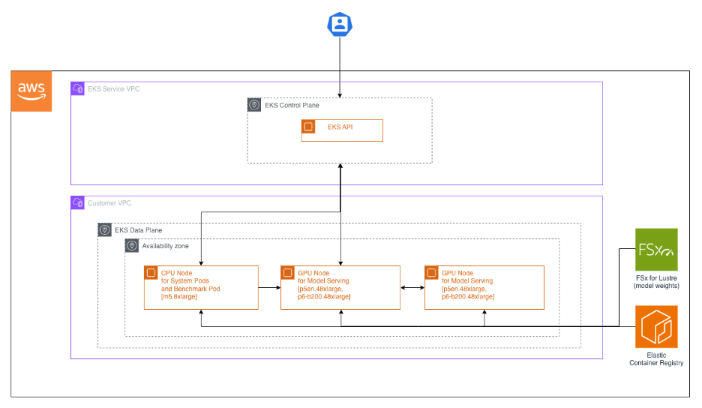
NVIDIA Nemotron 3.5 Super VL is a 120B-parameter mixture-of-experts model that pairs reasoning and tool use with multimodal understanding. This post explores its architecture and use cases, then shows how to deploy it on Amazon EKS, EKS Auto Mode, and Amazon SageMaker HyperPod EKS with NVIDIA Dynamo and vLLM.
Marvell Technology is in talks to buy data center optics maker Lumentum Holdings. The deal could close next week according to sources. Nvidia backs up Lumentum which has a market value of about $83 billion. Ryan Gould reports. (Source: Bloomberg)
October 19 - October 23 BigQuery introduces column aliases in GoogleSQL and cross-region table copy GAGoogleSQL in BigQuery now supports column aliases in SELECT and WHERE clauses (GA opt-in), avoiding nested subqueries and simplifying migrations from Snowflake and Teradata. Cross-region table copying is also now generally available to streamline regional data replication and disaster recovery. Review the BigQuery release notes. Conversational analytics in BigQuery expands to Canada and adds CSV/PDF analytics in BigQuery is now available in Montréal (northamerica-northeast1) and Toronto (northamerica-northeast2) to support Canadian data residency requirements. You can also now export agent responses — including text, tables, charts, and citations — directly to CSV or PDF (GA). Learn more about conversational analytics in BigQuery. AlloyDB Omni 18.4.0 is now GA with Advanced Query Insights and external KMS supportAlloyDB Omni 18.4.0 brings PostgreSQL 18.4 to self-hosted and multi-cloud environments, adding the google_insights_v2 extension for granular query execution and wait-event diagnostics. It also adds Thales CipherTrust Manager support for Transparent Data Encryption (TDE) alongside HashiCorp Vault. Explore the AlloyDB Omni release notes. Cloud SQL for PostgreSQL adds managed connection pooling and Private Service Connect defaultsCloud SQL for PostgreSQL now supports enabling built-in managed connection pooling on existing Private Service Connect (PSC) instances to scale high-concurrency workloads. PSC is also now the default private IP option for new Cloud SQL instances in new projects to simplify cross-project networking. Review Cloud SQL updates. Customer momentum: Unico prevents over $5B in fraud on Google's Agentic Data CloudDigital identity platform Unico migrated from Databricks Spark/Scala clusters to BigQuery and Spanner at the core of its data architecture. Unifying real-time transaction streams with petabyte-scale analytics enabled low-latency identity verification that has prevented over $5 billion in fraud. Read the Unico case study. Developer guide: Getting started with Looker Data AppsFollowing the debut of Looker Data Apps in preview, a new walkthrough on the Google Developer Community shares practical patterns for building prompt-driven applications inside Looker. Read the guide on the Google Developer Community. October 12 - October 16 Looker Data Apps are now in Preview to build and host interactive, agent-generated applications natively inside LookerGenerated using natural language prompts, the Antigravity CLI, or Claude Code, these interactive web applications, natively hosted inside Looker, transform business reporting into operational systems of action. Users can test scenarios, adjust parameters, and trigger workflows in downstream platforms while inheriting LookML semantic modeling, row-level security, and access controls with no runtime LLM token costs. Read the announcement blog. Build end-to-end data science pipelines with the Data Agent KitFollowing the general availability of the Data Agent Kit, a new end-to-end walkthrough demonstrates how data teams can build, test, and schedule machine learning pipelines directly from their preferred code editors. Explore the walkthrough and codelab. Manage dashboard agents as code to bring CI/CD and version control to LookML dashboardsData teams can now declare agent parameters, configurations, and prompt instructions alongside dashboard files in code. This integration enables standard developer workflows for conversational BI, including Git version control, peer review, branching, and automated CI/CD validation before agent modifications reach production end users. Read the technical guide on the Google Developer Community. Simplify AI search with native AlloyDB hybrid search and Reciprocal Rank FusionAlloyDB for PostgreSQL simplifies hybrid search architectures by combining vector similarity search and keyword BM25 retrieval within a unified database engine. Using Reciprocal Rank Fusion (RRF), developers can merge lexical scoring and semantic embeddings into a single ranked result without writing a complex SQL query. This unified approach removes the operational overhead of running and synchronizing external search engines alongside operational databases for retrieval-augmented generation (RAG) and search applications. Explore hybrid search in AlloyDB. October 5 - October 9 Data Agent Kit is now generally available to bring Google Data Cloud to any coding agentData Agent Kit provides a free collection of Model Context Protocol (MCP) tools and Google-authored agent skills that connect more than 15 Google Data Cloud services directly to coding agents across VS Code, Antigravity, Cursor, Claude Code, and Codex. This release expands support for developers and data practitioners to inspect schemas, author queries, and build end-to-end data pipelines in natural language directly from their IDE or CLI. Read the announcement blog. Spanner Omni is now generally available for deploy-anywhere, multi-model workloadsSpanner Omni brings Spanner's distributed SQL, graph, vector, and key-value capabilities to any environment, including on-premises data centers, other public clouds via Kubernetes or VMs, and local developer laptops. Organizations can build and run multi-model applications with consistent APIs and query engines across hybrid and multi-cloud footprints while seamlessly scaling to managed Spanner on Google Cloud. Read the launch blog and explore how Spanner also removed cumulative mutation limits for DML transactions. AlloyDB delivers PostgreSQL for agents and native BM25 hybrid searchWe announced PostgreSQL for agents in AlloyDB, introducing an agentic database architecture engineered for real-time data access at agent scale with workload isolation. In addition, native BM25 ranking is now in Preview for AlloyDB and Cloud SQL, allowing developers to combine keyword search and vector embeddings directly in PostgreSQL without maintaining an external search engine. For hybrid deployments, the AlloyDB Omni RPM Orchestrator is now generally available, and you can dive deeper in our new Build AI apps and agents with AlloyDB eBook. Lakehouse runtime catalog adds regional endpoints across 22 regions and GA support for flexible column namesLakehouse runtime catalog regional endpoints are now live across 22 Google Cloud regions across the Americas, Europe, Asia-Pacific, and the Middle East, supporting both the Apache Iceberg REST catalog endpoint and the Apache Hive catalog endpoint to help customers meet strict data residency and sovereignty requirements. In addition, flexible column names for Apache Iceberg tables are now generally available by default across Iceberg external tables and managed tables, enabling seamless querying of columns containing spaces, hyphens, and Unicode characters. We also announced the Preview of cross-cloud caching and connections for the borderless Lakehouse. Unlock predictive and agent-ready insights with BigQuery augmented analytics TVFs, TabFM, and identity columnsBigQuery introduced augmented analytics table-valued functions (TVFs): six built-in functions that automate metric diagnostics, trend analysis, and pattern discovery directly where your data lives and integrate as skills for AI agents. We also introduced TabFM in BigQuery to bring tabular foundation model capabilities to predictive analytics, alongside BigQuery identity columns to automatically generate sequential surrogate keys and simplify data warehouse pipelines. Dataflow adds Pause/Resume and NVIDIA RTX PRO 6000 Blackwell GPU support for large-scale AI workloadsNew Dataflow capabilities make it easier to run high-throughput streaming and batch AI pipelines at scale, including Pause/Resume job controls and support for NVIDIA RTX PRO 6000 Blackwell GPUs. And for teams running Apache Spark workloads, learn how to mitigate compute stockouts and maximize availability using flexible VMs. Unlock up to 3x higher QPS and microsecond latency with Memorystore for Valkey 9.1Memorystore for Valkey 9.1 is now available, delivering up to 3x higher queries per second (QPS) and microsecond-level caching latencies to accelerate high-throughput applications and real-time AI agent state management. Read the blog. Customer momentum across Google Data Cloud — Yahoo, PayPal, Surescripts, Airwallex, and Lucius AIOrganizations across industries are scaling their data and AI foundations on Google Data Cloud. Yahoo uses flexible VMs in Managed Service for Apache Spark to reduce provisioning failures by 85%, while PayPal migrated mission-critical analytics workloads to Managed Service for Apache Spark to scale and reduce operational overhead. On the database front, Surescripts migrated 30.5 billion annual healthcare transactions to AlloyDB with 99.998% uptime, Airwallex manages more than 5,000 databases with 99.99% availability on Cloud SQL with a team of four DBAs, and Lucius AI runs a 210,000-tender global platform on AlloyDB and MCP with 47x faster ScaNN vector search. September 7 - September 10 Pub/Sub SMTs can now AI Inference your Gemini Enterprise Agent Platform models!Pub/Sub AI Inference SMTs allow you to apply inference on an incoming stream of events using models hosted in Gemini Enterprise Agent Platform. The model’s prediction is appended to your event, making it available for downstream processing in your data warehouse (like BigQuery) or operational database (like BigTable). This feature, now generally available, can dramatically simplify or enhance anomaly detection systems you are operating. PostgreSQL Source Connector is now generally available in Managed Service for Apache Kafka!Managed Service for Apache Kafka’s PostgreSQL connector allows customers to capture changes from their PostgreSQL database and ingest them into their Kafka infrastructure with low latency. This source connector is compatible with Cloud SQL for Postgres, AlloyDB, and self-managed PostgreSQL databases. Try this along with our entire portfolio of managed connectors, including MirrorMaker 2.0, BigQuery, Cloud Storage, and Pub/Sub! E-mail kafka-hotline@google.com if you have questions or feedback! Pause-on-failure for Dataflow batch jobs is GADataflow pause-on-failure enables you to preserve the state of a batch Dataflow job before it fails. By pausing your Dataflow job, you can address issues that are external to the pipeline and resume processing without losing completed work. This helps you better manage resource costs and improve job reliability when you face temporary outages or capacity constraints. The insertAll API is now the BigQuery Storage Write API (REST)The legacy insertAll streaming API is now rebranded as the BigQuery Storage Write API (REST). By dropping the "legacy" label, developers can confidently build long-term HTTP-based streaming workflows. This stateless JSON-over-HTTPS endpoint offers a lightweight alternative to heavy gRPC libraries—ideal for serverless web apps, IoT telemetry, and AI logging. The transition is seamless for existing users, requiring zero code changes and offering 100% backward compatibility. However, the Storage Write API (gRPC) version remains the recommended standard for high-throughput, continuous pipelines. August 31 - September 4 Stateful processing is available in BigQuery continuous queries in PreviewStateful operations significantly expand what’s possible with BigQuery continuous queries. This feature allows users to leverage functions like JOINs, aggregations, and windowing functions directly in their streaming queries. Now you can calculate metrics over time (for example, a 30-minute average) to power your downstream applications and AI agents with much richer, real-time signals.Try out our feature here and share your feedback with bq-continuous-queries-feedback@google.com! Synthetic data generator tool is available for Managed Service for KafkaYou’ve launched your first Kafka cluster. Now what? The next thing to do is to produce some data to the cluster, but that involves modifying a client application somewhere or spinning up a virtual machine. The synthetic data generator tool, now generally available, can start sending mock data to your cluster in 3 clicks, and will get data streaming into your cluster in less than two minutes. The perfect utility for those moments you just want to test your cluster and new features. Try our quickstart today! Dataflow pipeline updates are faster & more flexibleDataflow pipeline updates can now stop-and-replace pipelines, a major addition to the existing in-place-update feature. The new parallel pipeline option accelerates the migration between the old & new pipeline, resulting in reduced disruption to your business. You can also set a timeout on drains that prevents runaway costs for your pipeliness in the event of stuck processing. This feature is generally available. Try it here! July 6 - July 10 New Lakehouse managed tables now in preview Lakehouse tables for Apache Iceberg are now in preview and available in the console. By using Google-managed Apache Iceberg tables in Lakehouse, you can eliminate the overhead of maintaining duplicate data pipelines and complex synchronization logic between BigQuery and open-source engines. This unified table format delivers native, multi-engine read and write interoperability, allowing you to run concurrent DML/DDL operations across diverse analytics tools on a single, shared storage layer. Built-in automated table management handles painful background optimization tasks like compaction and partition tuning, freeing up your team to focus on building rather than managing storage maintenance. June 1 - June 5 Beyond the Query: Powering AI Agents with Bigtable, Firestore & Memorystore Discover the latest advancements in Google Cloud's NoSQL Database portfolio, including Bigtable, Firestore, and Memorystore. This series is designed for a broad audience: whether you are exploring these databases for the first time or are an existing user looking to leverage the new capabilities announced at Next '26. Register here to secure your spot! Cloud Engineer's AI Toolkit Workshops: Solve data-driven challenges with BigQuery, AlloyDB, Gemini and more. Hosted by Google Cloud Labs, this highly technical event is built specifically for Platform Engineers, SREs, and cloud infrastructure teams ready to bridge the gap between AI prototypes and production-grade deployments. Look out for more locations coming soonToronto - June 25 (Data Cloud) | RSVP HereChicago - June 30 (Data Cloud) | RSVP Here Start a 10-day Bigtable free trial with a 1 node SSD cluster and up to 500GB of storage capacity. With no credit card required to start, you can easily ingest workloads and manage workloads that require low-latency, high-throughput, and predictable access. Plus, new Google Cloud customers get $300 in free credits on signup. May 11 - May 15 Managed Service for Apache Airflow has launched a wave of new features, including the general availability of Airflow 3.1, AI-powered agentic troubleshooting, a new managed Airflow MCP Server for custom agent integration, and declarative YAML-based orchestration pipelines—discover all the details in the full blog post. April 20 - April 24 Google-built ODBC Driver for BigQuery is now available in PreviewWe are excited to announce the launch of the new, Google-built ODBC driver for BigQuery. This new open-source driver provides a direct, high-performance connection for applications to BigQuery and is developed entirely in-house by Google. Download a new driver and connect your application to BigQuery. April 13 - April 17 We announced we are reintroducing Data Studio to play a significant role in the AI era, expanding from data visualizations and reports to host BigQuery conversational agents and data apps built in Colab notebooks. We announced BigQuery Graph is now available in preview, offering an easy-to-use, highly scalable graph analytics solution, empowering data professionals to model, analyze and visualize massive-scale relationships in an entirely new way. April 6 - April 10 We introduced Conversational Analytics for Looker Embedded environments, enabling users to add natural language experiences to their own custom data-driven applications, powered by Gemini. We expanded Looker’s capabilities for faster ad-hoc analysis, with the introduction of self-service Explores, enabling you to bring your own data to Looker’s semantic layer and gain instant access to insights in a governed data environment. March 23 - March 27 We showed you how you can scale your reads with Cloud SQL autoscaling read pools. This feature allows you to provision multiple read replicas that are accessible via a single read endpoint and to dynamically adjust your read capability based on real-time application needs. Our customers are leveraging the full power of Conversational Analytics and Looker to drive major business and technical breakthroughs in the AI era. Companies like Telenor, Pet Circle, Fluent Commerce, Lighthouse Intelligence, Wego, and ROLLER are turning data into insights and actions, grounded by Looker’s semantic layer. March 16 - March 20 We introduced an enhanced Gemini assistant in BigQuery Studio, transforming the agent from a code assistant into a fully context-aware analytics partner. February 23 - February 27 We introduced managed and remote MCP support for Google Cloud databases, including AlloyDB, Spanner, Cloud SQL, Bigtable and Firestore, to power the next generation of agents. This announcement extends the ability for AI models to plan, build, and solve complex problems, connecting to the database tools our customers leverage daily as the backbone of their work environment. We outlined how you can build a conversational agent in BigQuery using the Conversational Analytics API to help you build context-aware agents that can understand natural language, query your BigQuery data, and deliver answers in text, tables, and visual charts. February 16 - February 20 Our customers are leveraging the full power of Looker to drive major business and technical breakthroughs. Companies like Arrive, Audika, Carousell, Framebridge, GumGum, Intel, Overdose Digital, Ocean Network Express, Subskribe and Promevo are leveraging Looker’s newest AI-driven capabilities, including Conversational Analytics, to transform data to insights and actions, and empower their entire organization with a single source of truth, powered by Looker’s semantic layer. February 2 - February 6 Join us on March 4 for our webinar, Win Your AI Strategy with Cloud SQL Enterprise Plus, to learn how to power your generative AI workloads with 3x higher performance and 99.99% availability. Register today to discover how to build a scalable, enterprise-grade foundation for your most demanding AI applications. January 26 - January 30 We introduced Conversational Analytics in BigQuery, which allows users to analyze data using natural language. Conversational Analytics in BigQuery is an intelligent agent that generates, executes and visualizes answers grounded in your business context directly in BigQuery Studio, making data insights for data professionals more conversational. We outlined how data products have become the foundation for AI agents, providing the context needed to make autonomous agents reliable and trusted for real business use, backed by organized business logic and semantic understanding. We highlighted how you can supercharge data analytics workflows, and outlined Google Cloud’s AI agent offerings for data engineering, data science, and development tools, so you can integrate agentic workflows in your applications, empower your teams and speed discovery. January 19 - January 23 We have fundamentally reimagined Firestore with pipeline operations for Enterprise edition. Experience a powerful new engine featuring over a hundred new query features, index-less queries, new index types, and observability tooling to improve query performance. Seamlessly migrate using built-in tools and leverage Firestore’s existing differentiated serverless foundation, virtually unlimited scale, and industry-leading SLA. Join a community of 600K developers to craft expressive applications that maximize the benefits of rich queryability, real-time listen queries, robust offline caching, and cutting-edge AI-assistive coding integrations. Introducing Google Cloud SQL on MSSQLTips: We are highlighting a new technical guide published on MSSQLTips titled "Introducing Google Cloud SQL." This article serves as an essential resource for SQL Server administrators and developers exploring Google Cloud's fully managed database service. It provides a detailed overview of Cloud SQL capabilities, including high availability, security integration, and the seamless transition of on-premises SQL Server workloads to the cloud, making it an ideal resource for those planning their migration strategy. We are excited to announce the Public Preview of Microsoft Entra ID (formerly Azure Active Directory) integration with Cloud SQL for SQL Server. Designed to tackle the challenge of identity sprawl in multi-cloud environments, this integration allows organizations to govern database access using their existing Microsoft identity infrastructure. Key benefits include centralized identity management, enhanced security features like Multi-Factor Authentication (MFA), and simplified user administration through direct group mapping. This feature is available for SQL Server 2022 and supports both public and private IP configurations. January 12 - January 16 Google-built JDBC Driver for BigQuery is now available in PreviewWe are excited to announce the launch of the new, Google-built JDBC driver for BigQuery. This new open-source driver provides a direct, high-performance connection for Java applications to BigQuery and is developed entirely in-house by Google. Download a new driver and connect your Java application to BigQuery. Troubleshoot Airflow tasks instantly with Gemini Cloud Assist investigations: Cloud Composer just got smarter. We are excited to announce that Gemini Cloud Assist investigations are now available directly within Cloud Composer 3. Instead of manually sifting through raw logs, you can now simply click "Investigate" on a failed Airflow task. Gemini analyzes logs and task metadata to identify failure patterns—such as resource exhaustion or timeouts—and provides actionable recommendations driven by Gemini Cloud Assist to resolve the issue. This integration shifts the debugging experience from manual toil to automated root cause analysis, significantly reducing the time required to restore your pipelines. Learn more about AI-assisted troubleshooting. Related Article What’s new with Google Data Cloud - 2025 Recent product news and updates from our data analytics, database and business intelligence teams. Read Article
Cloud CISO Perspectives: Introducing new $250,000 tier for Google Cloud VRP (Q&A)
Welcome to the second Cloud CISO Perspectives for October 2026. Today, Chris Betz talks with Michael Cote, our vulnerability rewards program lead, about the new tier of our Cloud VRP program and the current state of vulnerability rewards. As with all Cloud CISO Perspectives, the contents of this newsletter are posted to the Google Cloud blog. If you’re reading this on the website and you’d like to receive the email version, you can subscribe here. aside_block <ListValue: [StructValue([('title', 'Get vital board insights with Google Cloud'), ('body', <wagtail.rich_text.RichText object at 0x7f8f94d09950>), ('btn_text', 'Visit the hub'), ('href', 'https://cloud.google.com/solutions/security/board-of-directors?utm_source=cgc-site&utm_medium=et&utm_campaign=FY26-Q2-GLOBAL-GCP39634-email-dl-dgcsm-CISOP-NL-177159&utm_content=-&utm_term=-'), ('image', None)])]> Why we've created a new $250,000 tier for Google Cloud VRP (Q&A) By Chris Betz, CISO, Google Cloud The Google Cloud Vulnerability Reward Program (VRP) partners with the global security research community to help elevate cloud security for all by encouraging the discovery of critical software vulnerabilities. In an era when automated research has made it more challenging to verify authentic vulnerabilities, we have a critical need to boost high-level, human-led research that can transcend automated-only discovery.Today, we are expanding our top reward tier with a new $250,000 Root-in-Cloud reward, specifically designed to recognize high-impact architectural research. Identifying tenant-isolation bypasses and complex cross-service logic flaws requires human creativity, intuition, and rigorous systems analysis combined with the power of agentic systems.To earn this premier reward, you must demonstrate full administrative control, the equivalent of “roles/owner” or complete IAM control, over arbitrary Google Cloud organizations or projects with no prior access or special project setup.The exploit path can not depend on:Pre-existing access or footholds in the victim project.Leaked, phished, or stolen credentials.User interaction or social engineering. Proof-of-root: Clear, cryptographic validation To make testing safe, clear, and reproducible, without impacting production environments, we have defined technical criteria for validating root-in-cloud access. Additionally, valid vulnerability reports demonstrating remote code execution (RCE) in underlying Google production infrastructure (Borg) or achieving root-in-prod will automatically be evaluated by the Google Cloud VRP panel for root-in-cloud eligibility. Because code execution in Borg has the potential to impact service availability or cross-tenant data, researchers must halt all probing immediately upon achieving any execution in Borg. Escalation, extracting production credentials, and lateral movement are not allowed and will result in researcher disqualification. The Google Cloud VRP panel will analyze the initial entry point, execution context, and attack surface to determine whether full arbitrary tenant or project takeover is achievable from that position, and award the bounty accordingly. This new bounty tier reflects how security research continues to evolve, and the importance of continuing to recognize the most innovative and valuable security research. As part of those efforts, Google Security held its annual Escal8 conference in Singapore last week, and I had the opportunity to discuss the changing landscape with Michael Cote, Google Cloud’s vulnerability reward program lead. The following transcript has been lightly edited. Chris Betz: You are at Escal8 in Singapore announcing the new $250,000 Root-in-Cloud tier for our VRP. Why introduce this tier now, and what kind of research are you hoping to spark? Michael Cote: This is a recognition of how the field of security research has changed over the past year. We value quality submissions from anyone, and we’ve seen that the combination of human creativity and agentic power is much richer than either on its own. While automated scanners generate a high volume of low-impact noise, first-time researchers who pair human intuition with agentic tools are finding, on average, more interesting bugs than novices did two years ago. With the new Root-in-Cloud tier, we want to challenge the community and increasingly reward the complex, high-impact findings — like tenant-isolation bypasses and cross-service logic flaws — that require deep architectural intuition alongside agentic tools, because getting that information is essential to protecting our customers. Chris Betz: Google Threat Intelligence Group (GTIG) recently shared research showing that monthly CVE disclosures have doubled as agentic tools mature. From your seat leading the Cloud VRP, how has automation technology impacted the reports we’ve received? Michael Cote: It has transformed our intake volume, though not in the way many people assume. While the number of valid vulnerability reports submitted to the Google Cloud VRP has remained stable over the last 18 months, the total number of reports has grown tremendously. Automation has helped democratize vulnerability discovery, and the barrier to entry has been rapidly flattening, something even our top researchers noted at Escal8. Because we’re seeing more researchers and more first-timers with interesting bugs, that creates pressure on more experienced researchers to move faster and bring more impactful findings — although their experience continues to be a key differentiator in success. Chris Betz: I’ve been working with the research community for more than 20 years. One of the things I appreciate most is how much the community values making the world more secure. Bounty programs let us recognize this valuable work. How do you see the community changing as we move further into the agentic era? Michael Cote: That shared commitment to making the world more secure is still the heart of this community, which is why the pressure to move faster is something we have to watch closely. As our GTIG colleagues found, the sharpest rise in the number of exploited vulnerabilities comes from n-days, not zero-days. Open source accounts have suggested that threat actors are using LLMs to rapidly turn newly-public vulnerability details into working exploits. When triage teams are already working through a surge in report volume, disclosing an unmitigated vulnerability well ahead of the standard 90-day coordinated disclosure window gives attackers the exact knowledge and time window they need to target customers. With the influx of new submissions, I worry about a growing pressure to rush to publish. Something that concerns me because we’re already seeing early indications of it. Because LLMs lower the barrier to finding bugs in source-available software, researchers worry that waiting to verify risks will allow someone else to be first to publish. Even more concerning, that same competitive pressure can tempt even established security companies to disclose unmitigated vulnerabilities without coordination, and that rush puts our users directly at risk. Project Zero helped establish the industry’s 90-plus-30-day responsible disclosure policy, and autonomous detection and exploitation capabilities make following coordinated disclosure more important than ever. In the long run, rushing to be first works against a security company's own self-interest. Novel discoveries may bring temporary visibility, but customers will ultimately choose not to work with organizations that put them and the broader ecosystem at risk. Chris Betz: When you offer a $250,000 bounty, how do you make sure researchers can validate their findings without putting customer environments or service availability at risk? Michael Cote: High incentives require clear, safe rules of engagement. We never want researchers testing exploits against real customer projects. Instead, we created a deterministic proof-of-root mechanism using a designated service account. Researchers can cryptographically prove unauthorized access against that identity. We’ve also updated our program rules to establish strict boundaries around underlying production infrastructure. If researchers think they are close to a breakthrough but are uncertain where the boundary lies, we encourage them to reach out. We are always more than happy to work with them to ensure they are recognized and rewarded for the value of their research without taking steps that would invalidate the bounty. Chris Betz: What should enterprise CISOs take away from these trends? Especially those who run their own vulnerability management pipelines and partner with external researchers, what advice would you offer for navigating this AI inflection point? Michael Cote: First, prepare your vulnerability triage workflows for agent-generated submissions. To keep valid reports from getting stuck in a backlog, security teams need ways to separate plausible-sounding hallucinations from real security risks. Second, compress your remediation timelines once a vulnerability becomes public. Defensive patching and mitigations have to move faster because autonomous technology compresses the time from disclosure to working exploits. Finally, hold your security partners and vendors to high standards of coordinated disclosure. It’s important that our industry continues to normalize agentic vulnerability research, but we must do so responsibly. Let’s continue to keep user safety at the center of everything we do. For more information on the Google Cloud VRP, including detailed endpoint specifications, JSON payloads, and CLI examples, please check out our rules page. aside_block <ListValue: [StructValue([('title', 'Join the Google Cloud CISO Community'), ('body', <wagtail.rich_text.RichText object at 0x7f8f94d09010>), ('btn_text', 'Learn more'), ('href', 'https://rsvp.withgoogle.com/events/google-cloud-ciso-community-interest-form-2026?utm_source=cgc-blog&utm_medium=blog&utm_campaign=FY25-Q1-global-GCP30328-physicalevent-er-dgcsm-parent-CISO-community-2025&utm_content=cisop_&utm_term=-'), ('image', None)])]> In case you missed it Here are the latest updates, products, services, and resources from our security teams so far this month: How Google Does It: Using agents to help find, track, and fix vulnerabilities: Threat actors can now find software flaws faster than ever. To maintain an agile, responsive defense, we now use agentic systems with existing foundations. Read more. How to use agents to stop insider threats: As agents find their place across the enterprise, we want to be sure that they neither become an insider threat nor enable people to become one. Read more. Responding to core PHP vulnerabilities CVE-2026-109618 and CVE-2026-10961: Follow these recommendations to minimize remote code execution risks in PHP from two critical vulnerabilities in the core PHP language runtime. Read more. Wiz Sensor for GKE: Turnkey threat detection for Kubernetes: Introducing the Wiz Runtime Sensor add-on for Google Kubernetes Engine in preview, helping to manage deployment, lifecycle, credential security, and governance. Read more. Scale agents securely with IAM Helper Agent skills and MCP tools: Today we’re introducing IAM Helper, a suite of intelligent, agent-facing building blocks that can automate complex, end-to-end IAM workflows. Read more. Introducing new scalable perimeter options with VPC Service Controls: Today, we're excited to announce key enhancements to VPC Service Controls that make perimeters easier to create, maintain, and scale. Read more. Confidential G4 GPUs are now generally available: Confidential Computing on G4 now provides hardware-based security in AI Hypercomputer to deliver dynamic performance without compromising privacy. Read more. Supply chain zero days: Closing the gap between publication and detection: Learn how Wiz’s supply chain pipeline identifies compromised packages at publication, helping teams detect zero-day supply chain compromises in Wiz Defend before a CVE is published. Read more. Please visit the Google Cloud blog for more security stories published this month. aside_block <ListValue: [StructValue([('title', 'Learn something new'), ('body', <wagtail.rich_text.RichText object at 0x7f8f94d080d0>), ('btn_text', 'Watch now'), ('href', 'https://www.youtube.com/watch?v=Wpo-5ke9uvQ'), ('image', None)])]> Threat Intelligence news Investigating ephemeral supply chain tampering: For the first time, Google Threat Intelligence Group (GTIG) and Mandiant have encountered a software supply chain compromise that was implemented with very short tampering windows that were active for only five to 10 minutes, and effectively evading traditional point-in-time triage and automated file scanning. Read more. ARMORY CASTLE exploits BeyondTrust: During an incident response engagement, Mandiant identified evidence that ARMORY CASTLE, a suspected PRC-nexus espionage threat actor, exploited a vulnerability impacting BeyondTrust Remote Support appliances. Organizations should prepare for potential widespread exploitation following this disclosure, as ARMORY CASTLE and other threat actors have historically conducted broad, opportunistic exploitation once the vulnerability becomes public. Read more. Vulnerability discovery and exploitation trends in the AI era: To counter the increased risk from rapid vulnerability discovery and exploitation, organizations should transition from unprioritized mass-patching to threat intelligence-driven triage, combining targeted edge-defense with automated, agentic remediation. Read more. Defending against active exploitation of Citrix NetScaler ADC and Gateway appliances: Mandiant Consulting and Google Threat Intelligence Group (GTIG) identified active, in-the-wild exploitation of a zero-day vulnerability affecting Citrix NetScaler ADC and NetScaler Gateway appliances. Here’s our containment and remediation guidance. Read more. Please visit the Google Cloud blog for more threat intelligence stories published this month. Now hear this: Podcasts from Google Cloud Cloud Security Podcast: Patching browsers with AI, agents, Rust, and your tabs: Jasika Bawa and Doug Turner of Chrome Security explore how Google Chrome now uses AI agents to autonomously identify and patch security vulnerabilities at an unprecedented scale, significantly accelerating the browser's update cadence. Listen here. Cloud Security Podcast: All about Project Atlas, Wiz's AI vulnerability research: Nir Orfeld, head of vulnerability research, Wiz, discusses how his team uses multi-agent AI systems for discovering high-impact zero-day vulnerabilities in cloud infrastructure. Listen here. Cloud Security Podcast: How Google eliminates classes of vulnerabilities at scale: How do you build the foundations for a secure Google-scale enterprise that stays secure even if an AI is writing the code and nobody has time to review it? Christoph Kern, principal security engineer, Google, explores what secure-by-design really means in the AI era. Listen here. To have our Cloud CISO Perspectives post delivered twice a month to your inbox, sign up for our newsletter. We’ll be back in a few weeks with more security-related updates from Google Cloud.
Querying Databricks Apache Iceberg Tables with the borderless Lakehouse
Enterprise organizations often leverage multiple data platforms, including Databricks, to execute heavy Apache Spark jobs alongside BigQuery to power highly concurrent analytics workloads. Historically, bridging these systems often meant building complex pipelines to copy data between environments. This approach increases storage costs, introduces latency, and fragments security controls. With Google Cloud’s borderless Lakehouse, you can now query Databricks-managed Apache Iceberg tables straight from BigQuery. This zero-copy approach removes the need to duplicate data: BigQuery reads the same files Databricks writes, and new changes appear after Lakehouse's next scheduled metadata refresh (as often as every 5 minutes). How Lakehouse and Databricks work together Managed Iceberg tables automatically generates Iceberg-compatible metadata alongside native Delta logs. Data engineering teams can store Parquet files once in Google Cloud Storage (GCS) using Databricks. Rather than loading this information into BigQuery, Lakehouse reads the Iceberg metadata directly, applying BigQuery’s vectorized engine directly to open-format files in GCS. Although Google Cloud Storage (GCS) serves as the primary storage layer in the above example, Lakehouse extends this borderless federation directly to external cloud environments like Amazon S3 and Azure Blob Storage. By pairing the open Apache Iceberg REST Catalog with cross-cloud connections, Lakehouse lets BigQuery query data across clouds without moving it. Each federated catalog lives in a Google Cloud location you choose, ideally the region closest to your data. This lets BigQuery read open-format Parquet files where they live, delivering multi-cloud analytics without replication pipelines. Remote-cloud egress charges still apply, but Cross-Cloud Interconnect (AWS) and Lakehouse caching can reduce them. Beyond simply querying external data, Lakehouse framework establishes true read and write (R/W) interoperability across engines. Because the platform is built on an open Apache Iceberg foundation, data teams can effortlessly execute multi-statement SQL commands directly inside BigQuery. Centralized security and governance Handling access controls across disparate systems can introduce vulnerabilities. Lakehouse addresses this through delegated access. Administrators can configure a BigQuery Cloud Resource Connection tied to a service account that manages IAM rights for GCS buckets. Granting users access to the Lakehouse table entity lets you enforce BigQuery controls including row-level, column-level security, and dynamic data masking on external Iceberg tables while Databricks handles ingestion. Catalog federation and credential vending Previously, connecting these platforms meant manually configuring BigQuery queries to point at static metadata paths. Modern setups leverage the open Apache Iceberg REST Catalog API. Databricks Unity Catalog functions as the central metadata layer, allowing a BigQuery administrator to establish a Lakehouse runtime catalog with a federated connection. When running a query, Lakehouse contacts Unity Catalog for current table state, and short-lived tokens are issued through credential vending to grant BigQuery temporary read access to GCS. Partition pruning BigQuery uses each table's Iceberg metadata to plan the query, then reads only the relevant data files in place. Iceberg's hidden partitioning lets you filter on logical columns, such as timestamps, without knowing the directory layout. Note that Databricks managed Iceberg tables don't support partition transforms; Databricks recommends liquid clustering instead. Filters in a standard WHERE clause let BigQuery use the Iceberg manifests to skip partitions that can't match. Compare partition columns with literal values so pruning can apply. These manifests maintain detailed column-level statistical bounds, enabling BigQuery to bypass irrelevant manifest records and unneeded Parquet files immediately. Consequently, queries scan only necessary byte ranges, accelerating query execution while significantly reducing on-demand slot consumption and storage scan costs. Fast queries with Iceberg metadata and Lakehouse caching Iceberg manifests already identify which data files to read, so BigQuery doesn't need a metadata cache for Iceberg tables. For cross-cloud tables, such as those in Amazon S3, Lakehouse caching (Preview) keeps retrieved data blocks in Google Cloud so repeat queries read them locally. BigQuery reads the Iceberg manifest files directly when it plans each query; there's no metadata caching to enable. This dynamic partition pruning bypasses unneeded files, significantly reducing runtime and bytes scanned. Maintenance and lifecycle management Modern lakehouses demand active upkeep; without routine care, performance degrades into an inefficient repository. Fortunately, both BigQuery and Databricks supply native capabilities to preserve table hygiene and accelerate analytical workloads. Keeping your tables optimized To maintain optimal query performance, active maintenance of your lakehouse storage footprint remains necessary. Trigger regular compaction pipelines via Databricks APIs to merge tiny Parquet files into larger, optimized layouts and use Predictive Optimization. Execute the Databricks VACUUM command to clear unreferenced files outside active snapshots, avoiding extra GCS storage costs. Compaction and the small file problem Frequent write operations, continuous ingestion jobs, and streaming workloads continuously produce thousands of small Parquet files. This fragmentation creates a storage bottleneck that can limit BigQuery’s reading efficiency. Establishing thousands of network connections to GCS and processing metadata footers across numerous tiny files consumes significant compute time, diminishing the performance advantages of vectorized query execution. Running routine compaction within Iceberg resolves these inefficiencies. Databricks manages this automatically using Liquid Clustering which dynamically adjusts file layouts based on access patterns or through native table management utilities. To compact small files manually on Databricks, run OPTIMIZE: code_block <ListValue: [StructValue([('code', "-- Run on Databricks to compact small files\r\n-- On Databricks:\r\nOPTIMIZE customer_events;\r\n-- For Iceberg tables you manage outside Databricks:\r\nCALL my_catalog.system.rewrite_data_files(\r\ntable => 'default.customer_events',\r\nstrategy => 'binpack',\r\noptions => map(\r\n'target-file-size-bytes',\r\n'268435456',\r\n'min-file-size-bytes',\r\n'67108864'\r\n)\r\n);"), ('language', ''), ('caption', <wagtail.rich_text.RichText object at 0x7f8f95a41b50>)])]> Executing this command aggregates scattered file segments into larger, structured blocks typically between 256MB and 512MB that can help improve BigQuery’s scan throughput. The binpack approach operates rapidly by prioritizing total file size balancing, though alternative sorting strategies can organize dataset ordering along specific column keys. Managing orphan files and snapshot retention (VACUUM) Every transactional update, record modification, and table compaction creates fresh snapshots within Iceberg to preserve dataset integrity. Over time, historical Parquet objects detached from active table states become orphaned. Although these legacy files facilitate time-travel analytics, neglecting them can drive up GCS storage charges over time. Data teams can use the Databricks VACUUM operation to scan and purge abandoned storage files. code_block <ListValue: [StructValue([('code', "ALTER TABLE customer_events SET TBLPROPERTIES ('delta.' = '7 days');\r\nVACUUM customer_events FULL;"), ('language', ''), ('caption', <wagtail.rich_text.RichText object at 0x7f8f95366250>)])]> Standard configurations apply a mandatory seven-day threshold () before executing VACUUM routines. Preserving this delay prevents active analytical jobs from encountering missing file errors while keeping historical recovery options available. Scheduling routine VACUUM jobs, or letting predictive optimization run them, removes unreferenced data files and, for tables with Iceberg reads, old Iceberg metadata. That keeps storage costs low and performance high across your lakehouse. Conclusion Connecting Databricks Apache Iceberg datasets to Lakehouse can help you activate your data with BigQuery. By separating processing from underlying storage, embracing open formats, and using standard REST APIs with credential vending, you can run scalable engineering workloads and concurrent analytics without migrating data or sacrificing performance Pairing Databricks Iceberg reads (UniForm) with Lakehouse federation, Lakehouse caching, and regular OPTIMIZE and VACUUM maintenance helps you build an efficient, zero-copy lakehouse. This approach can help lower storage spend, avoids fragile pipeline maintenance, and prepares your data environment for modern analytics and emerging AI workloads. Constructing a unified architecture no longer requires moving data files across platforms. You can begin querying Databricks Iceberg tables by registering them with the Lakehouse runtime catalog today for bi-directional federation. Learn more by reading our documentation to get started.
Grounding agents in one context graph connecting semantic models you already trust
Picture the scene: Before an executive business review, your VP of Sales asks an AI assistant, "What was net revenue for our top enterprise accounts last quarter?" In seconds, the agent returns a polished chart! Unfortunately, the numbers don't match the finance report. Why? Because the agent counted cancelled orders as revenue and pulled from an unvalidated staging table. The agent didn't fail because of the model, or because it couldn't translate a user question into a query. It failed because it didn't understand your business. The real kicker is that understanding usually already exists in the form of a semantic model in a Looker, dbt, Snowflake, Databricks, or SAP system. But because each definition stays locked inside its own tool, every agent guesses at it… and often gets it wrong. This is where Knowledge Catalog comes in. It brings the semantic models from all of those tools into one context graph, so every agent works from the same trusted definitions. And when two tools define the same metric differently, both definitions appear with their provenance, so data stewards can reconcile the conflict before it reaches end users. Today, we're announcing the general availability of expanded semantic model support. Knowledge Catalog now natively ingests semantic models and metric definitions from Looker LookML, BigQuery Graph (including BigQuery measures), dbt MetricFlow, Snowflake Semantic Views, Databricks Metric Views, and SAP Core Schema Notation (CSN), and connects them with schema, lineage, data profiles, business glossary and other key metadata in a single context graph, without moving data or rewriting business logic in a new language. By grounding your AI agents in those models, they get the same business definitions your analysts rely on, so their answers line up with the numbers your business trusts. In fact, based on internal benchmarks, grounding agents in Knowledge Catalog makes them nearly 4X more accurate, with up to 33% lower latency, and using up to 75% fewer tokens. The unified context graph enables you to: Reuse the semantic models you already trust: Knowledge Catalog grounds Gemini agent, BigQuery Conversational Analytics, and your custom agents in the metrics, filters, and join paths your teams have already defined, wherever they live. Go beyond hand-curated definitions with self-learned context: Knowledge Catalog pairs the well-defined metrics and KPI definitions in your semantic models with relevant context it extracts from unstructured knowledge sources, such as operational playbooks, meeting notes, chat threads, code, and more. Powered by Gemini, self-learning enrichment continuously finds missing or outdated context and turns it into governed, reusable context sets, ensuring your agents' context stays current as definitions change, without relying only on manual curation. Pair business logic with enterprise trust: Even the right formula produces the wrong answer when it runs on stale or uncertified data. That's why Knowledge Catalog can connect semantic definition to data quality scores, freshness signals, and lineage, so an agent knows what it can trust before it writes a line of SQL. Side-by-side comparison of the same question in Gemini without Knowledge Catalog (left) and grounded in Knowledge Catalog (right). Highlights the grounded agent (right) giving an accurate response with less token and lower latency, compared to the agent without Knowledge Catalog (left) hallucinating and using more tokens with higher latency. One context graph across your data estate The context graph that Knowledge Catalog creates is a connected map of your data and semantic estate: tables, semantic models, glossary terms, and data products are nodes; lineage, associations, schema keys, joins mined from real query history, and the join paths declared in your semantic models are the edges. Ingested semantics land in that same graph, next to pre-existing governance and usage signals, so an agent moves from business concept to trusted formula and verified join paths in one traversal. Each source adds its own perspective on your business: Looker LookML (GA): Indexes models, explores, views, and dashboards using Live sync from Looker Core, capturing compiled metric SQL, fan-out-safe join conditions, mandatory filters, and lineage from source tables to executive dashboards. BigQuery Graph (GA): Indexes native property-graph definitions, node and edge tables, graph measures, and business synonyms, so agents reason over connected entities with Graph Query Language (GQL) traversals instead of brittle multi-table self-joins. dbt MetricFlow (GA): Links source objects to dbt models and MetricFlow metrics, alongside dbt data quality test results, filters, saved queries, freshness SLAs, and downstream exposures. Snowflake Semantic Views via Horizon Catalog (GA): Pairs federated BigQuery or Google Cloud Lakehouse tables with Snowflake Horizon metadata, bringing in Semantic View dimensions, facts, metric formulas, relationships, and synonyms, plus Data Metric Function quality scorecards and PII masking tags. Databricks Metric Views via Unity Catalog (GA): Ingests metric view definitions, measure formulas, scoping filters, and join cardinalities from Unity Catalog, alongside table certification badges and Lakehouse Monitoring profiling results. SAP Core Schema Notation (CSN) via SAP Business Data Cloud (BDC) (GA): Captures business labels, dimension and cube modeling patterns, default aggregations, currency and unit bindings, key and composite join associations, and data sensitivity flags when SAP BDC Data Products are federated through Google Cloud Lakehouse. Because every source lands as a node or an edge in the same graph, a LookML join, a dbt exposure, a Snowflake relationship, or an SAP association are traversable side by side, with links tying each one back to the physical tables it depends on. And nothing is silently overwritten: overlapping definitions stay side by side, each labeled with its source, giving data stewards the full picture they need to settle on a single version. Navigating semantic models, join paths, and lineage on the context graph in Knowledge Studio. You can explore and govern all of this in Knowledge Studio (preview), your command center to explore and manage your context. Explore your context graph, including your semantic definitions, using natural language prompts and traverse connection paths using the context graph canvas. Then, once you've validated the right assets and definitions, you can package them into reusable context sets that map to specific use cases and domains in your organization, which Gemini and custom agents can consume in production. Get started Let’s get back to that net revenue question. With Knowledge Catalog, the VP of Sales’ agent issues a single context query to discover the trusted asset, applying the exact metric formula and filters that your domain experts defined, all while respecting join keys across systems, and confirming that the underlying data passed its quality checks. Better yet, the numbers in the report are correct! To get started, explore your context graph in Knowledge Studio and visit the Knowledge Catalog documentation to connect to more sources.
Canada, Nvidia Back Cohere at Over $20 Billion Valuation
Cohere Inc., an artificial intelligence model maker, is in the process of raising a large funding round at a $20.5 billion valuation, roughly tripling its value from a year ago.
Microsoft’s Azure growth is beating expectations, and Stifel Managing Director Brad Reback says the momentum could last with growth above 50% in the near term. He joined Bloomberg Open Interest to discuss whether Microsoft’s AI spending is paying off, why Oracle carries more risk and how public AI lab results could shed light on returns. (Source: Bloomberg)
Agent identity startup Mintive lands Cowboy Ventures, Coatue, angels Jeff Dean, Andrej Karpathy
Mintive was founded by two engineers who have been working on AI for decades through Google Brain and Coursera. It's platform promises to help IT easily control enterprise agents.
Unlocking Tensor Core Performance for Machine Learning Interatomic Potentials
Atomistic simulations help researchers understand how molecules and materials behave, from chemical reactions and phase transitions to mechanical failure. These...
Mistral’s Large 4 open weights arrive with a 1-point coding lead over GLM-5.3: “There’s nothing you can’t do with this model that you can do with competitors.”
On Thursday, Mistral released the weights for its frontier open model, Mistral Large 4 (ML4), on Hugging Face. Made available The post Mistral’s Large 4 open weights arrive with a 1-point coding lead over GLM-5.3: “There’s nothing you can’t do with this model that you can do with competitors.” appeared first on The New Stack.
A global rally in technology shares faltered as disappointing earnings from two industry heavyweights revived doubts over whether billions of dollars in artificial-intelligence spending will deliver sufficient returns. Google parent Alphabet sank a record 13% on a sales miss, while Microsoft is looking to raise at least $25 billion from a US investment-grade bond sale. Amazon and Intel are slated to report results after Thursday's closing bell. We examine the day's top tech headlines with Gil Luria, Head of Technology Research at D.A. Davidson & Robert Schiffman, Senior Tech Credit Analyst for Bloomberg Intelligence. (Source: Bloomberg)
US antitrust regulators are scrutinizing Nvidia's Hugging Face deal and sales practices
The US Justice Department is looking into Nvidia's planned acquisition of open-source platform Hugging Face. The article US antitrust regulators are scrutinizing Nvidia's Hugging Face deal and sales practices appeared first on The Decoder.
Chinese spies targeted Nvidia CEO Jensen Huang, according to The New York Times
US intelligence agencies believe an executive in Nvidia CEO Jensen Huang's circle is an informant for China. The article Chinese spies targeted Nvidia CEO Jensen Huang, according to The New York Times appeared first on The Decoder.
OpenAI's Astra becomes the main target for Chinese AI labs after Anthropic tightens its defenses
Chinese AI labs are now mainly tapping OpenAI's most powerful model, GPT-6 Astra, instead of Anthropic's Claude. The article OpenAI's Astra becomes the main target for Chinese AI labs after Anthropic tightens its defenses appeared first on The Decoder.