Meta Platforms, parent company of Facebook, has released a long-awaited artificial intelligence model called Muse Wonder. This model is said to be competitive with OpenAI's ChatGPT and Anthropic's Claude. Meta stock rose on the news. Mandeep Singh of Bloomberg Intelligence has more. (Source: Bloomberg)
Google paid $90,000 for this bug, then waited two months to fix it
Google took two months to patch an unauthenticated RCE vulnerability in its developer documentation infrastructure. The problem was a reused The post Google paid $90,000 for this bug, then waited two months to fix it appeared first on The New Stack.
Meta Rallies as New Muse Wonder Model Heats up AI Race | Closing Bell
Comprehensive cross-platform coverage of the U.S. market close on Bloomberg Television, Bloomberg Radio, and YouTube with Scarlet Fu, Hema Parmar, Carol Massar and Tim Stenovec. (Source: Bloomberg)
The Staggering Costs of a Single Data Center, From Land to Chips
Roughly $750 billion. That’s how much Meta Platforms Inc., Amazon.com Inc., Microsoft Corp. and Google owner Alphabet Inc. are expected to devote to capital expenditures this year alone. That’s more than the entire gross domestic product of Ireland or Belgium. More than half of what all of the companies in the S&P 500 Index spent in total last year. Enough to cut a $5,500 check for every household in the US. Ian King, Bloomberg News US Semiconductor Reporter & Lynn Doan, Bloomberg News Managing Editor for Technology, join Businessweek Daily to break down the true cost of a single data center. (Source: Bloomberg)
The U.S. Government Isn’t Ready For Quantum-Powered Hackers
The threat of quantum computers to government systems, how AI is upending math and the ongoing Pentagon-Anthropic saga. All that and more in this week’s Prototype.
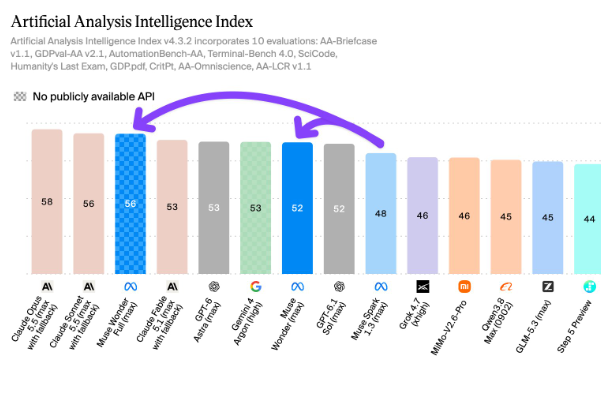
Meta's new frontier model Muse Wonder Full breaks into the AI top tier
Meta's new Muse Wonder models rank in the top three on six out of ten benchmarks, with the biggest gains in agentic tasks. But the cost per task has nearly tripled. The article Meta's new frontier model Muse Wonder Full breaks into the AI top tier appeared first on The Decoder.
How the Open AI, Anthropic IPOs Could Lift the Veil on AI Economics
VistaShares portfolio manager and DVX Ventures principal David Fetherstonhaugh says investors are increasingly looking for proof that massive AI spending is generating returns. He discusses why private companies like OpenAI and Anthropic leave a key part of the AI economy opaque and how their eventual IPOs could bring greater transparency to the ecosystem. He joins Ed Ludlow on "Bloomberg Tech." (Source: Bloomberg)
Cisco, Nvidia Tackle AI’s Growing Data Center Bottleneck
Cisco is partnering with Nvidia on a new generation of optical networking technology designed to handle the exploding amount of data moving through AI data centers. Cisco President and Chief Product Officer Jeetu Patel explains why increasingly powerful AI agents could consume far more network bandwidth than humans performing the same tasks, and how faster, more power-efficient connections could help hundreds of thousands of GPUs operate together while lowering the cost of AI. He joins Ed Ludlow on "Bloomberg Tech." (Source: Bloomberg)
Muse Wonder Places 3rd On Artificial Analysis Intelligence Index, Ahead Of GPT-6 Astra & Gemini 4 Argon
Meta is now the 2nd highest placed lab on the Artificial Analysis Intelligence Index, ahead of Google Deepmind and OpenAI. Meta’s newly released... The post Muse Wonder Places 3rd On Artificial Analysis Intelligence Index, Ahead Of GPT-6 Astra & Gemini 4 Argon appeared first on OfficeChai.
Bloomberg’s Ed Ludlow breaks down Microsoft's latest homegrown Maia chips, its latest effort to rely less on outside semiconductors to power its AI ambitions. Plus, Elon Musk wants to put chip development on fast-forward, testing as many as ten new designs a year; and Apple is finally ready to unveil its new smart home strategy, seeking to plug a major hole in its ecosystem. (Source: Bloomberg)
Microsoft is installing the latest version of its Maia chips in data centers to power its AI software using mostly homegrown hardware. The company expects to stock multiple gigawatts of its Maia chips, with the Maia 300 starting to roll out next year. Bloomberg's Matt Day joins Ed Ludlow on "Bloomberg Tech." (Source: Bloomberg)
Why Big Tech Is Borrowing Billions to Fund AI Spending
For the past few years, the largest US technology companies have been in a costly race to develop advanced artificial intelligence systems while at the same time providing computing power to a burgeoning field of startups. To chase these goals, they have radically changed how they finance their growth. Long reliant on rich revenues and share price increases, Alphabet Inc.’s Google, Meta Platforms Inc. and other tech giants now are borrowing heavily to build the technology that makes chatbots run
Meet the Anthropic Engineer Keeping Its AI Agent Trustworthy
If you’ve ever wondered how Claude and similar AI agents can answer complex questions in seconds and where they get the information, you’re not alone.Gurmeet Saran works to find that answer every day as an engineer at Anthropic in San Francisco, the AI research company behind Claude. The IEEE senior member is developing an infrastructure to understand the mechanics behind the chatbot’s behavior and to ensure its underlying architecture produces reliable outputs.Gurmeet SaranEmployer Anthropic in San FranciscoTitle Member of technical staffMember grade IEEE senior memberAlma maters University of Kalyani, in India; Birla Institute of Technology and Science, in Pilani, India “My job is to make sure the data is accurate, structured, and trustworthy, and that private data stays private,” he says. “As I learned earlier in my career, privacy can’t be a layer you bolt on—it has to be part of the architecture from the start.” If you can’t trust the logic, he adds, you can’t make reliable claims about the behavior, and that has real safety implications.Safety is a priority for Anthropic, he says. According to Claude’s mission statement, the company wants the AI agent to be “genuinely helpful to the people it works with or on behalf of, as well as to society, while avoiding actions that are unsafe, unethical, or deceptive.” Crucial to the mission is ensuring that researchers can observe and understand how AI models behave, a challenge that is especially acute for large language models, Saran says.“We have decent tools to monitor databases and web services,” he says, “but for LLMs, we’re still figuring it out.”Solving data quality problems at Yahoo, Intuit, and MetaSaran’s interest in computing systems dates back to his childhood in Kolkata, where he logged as much time as he could in the school computer lab.“I remember the first time I used one of the computers,” he says. “What struck me was that you could write instructions, and the machine would follow them exactly. No ambiguity.“That felt magical to me.”After graduating from high school in 1999, he stayed in India to pursue advanced degrees. He earned a bachelor’s degree in electronics and telecommunication engineering in 2004 at the University of Kalyani. In 2010, he earned a master’s degree in software engineering from the Birla Institute of Technology and Science in Pilani.While a graduate student, he began his career in 2007 at Yahoo as a technical lead of the data team in Bengaluru, India. While there, he encountered the project that shaped his career trajectory: working on web analytics and business intelligence reporting solutions.“We kept running into a frustrating problem,” he recalls. “Different teams would calculate the same website metric—something like daily active site users—using slightly different logic, and end up with conflicting answers. It sounds like a small issue, but when leadership is making decisions about resource allocation and product development using that data, not knowing which number is correct becomes a problem.”The team built a central data repository with defined metrics, essentially serving as a single source of truth. Saran created a model that defined what “daily active site users” means, breaking down which events counted, how to handle edge cases (or when standard code fails), and more.With the new model, data teams across the company could rely on a standard method to determine the number of daily active users for the projects and sites they were responsible for and obtain comparable results using the same logic.From there, Saran and his team built Yahoo! Digits, an internal web analytics tool used for all the company’s products.Saran left Yahoo in 2010 to join Intuit as a staff engineer in Mountain View, Calif. He helped build the analytics infrastructure that unified data across the company’s products, including TurboTax and QuickBooks accounting software. During his tenure, Intuit developed a feature that detected fraudulent tax filings in real time. It required Saran and other engineers to build a system to protect taxpayer data while adhering to strict U.S. Internal Revenue Service policies.“IEEE operates in a lot of countries where engineers don’t have easy pathways into the global professional community. That kind of connection matters as AI development spreads beyond a handful of organizations.”“This taught me that privacy and governance can’t be layers you bolt onto software after the fact,” he says. “They have to be part of the architecture from the start.”Saran joined Meta (known as Facebook at the time) in 2016 as a lead software engineer in Menlo Park, Calif. The company was facing controversy over its video metrics: Meta publicly acknowledged an error that caused it to overstate the number of views for posted videos.“This wasn’t a coding bug; it was an architectural problem,” Saran says. He built a system that worked similarly to what he had developed at Intuit, whereby one single truth was defined to govern all video view metrics across the site.That system, Metric360, eventually became part of the site’s architecture. By the time he left Meta in 2021, he says, Metric360 was being used across the company to calculate video metrics.He left the company to become a principal software engineer at Wealthfront, a financial services company in Palo Alto, Calif. He helped build the company’s data infrastructure.Building trustworthy AI systems at AnthropicSaran joined Anthropic in 2025 as a member of the technical staff.To describe the implications of his work, he uses a medical analogy: “Imagine a doctor is monitoring a patient’s vital signs and making treatment decisions based on those numbers. What if one or a few of the medical devices used were slightly miscalibrated? Even if most readings are fine, it’s a serious problem because the difficult decisions happen in the margins.“It’s the same with AI systems. My job is essentially to make sure the instruments are giving accurate readings—that the data means what it says it means.”His job comes with high stakes and complex problems to solve.“AI agents are especially tricky to observe,” he says. “When a system is taking sequences of actions [generating conversational responses with different users], you need a way to capture what it did, what information it was working from, and whether outcomes matched what the end user expected. And you have to do all of that without exposing anyone’s private information—the systems are designed to recognize sensitive data and keep it protected as it flows through. It’s a much more demanding observability problem than anything I’ve worked on before.”Solving for system reliability while AI is still in its early days of adoption is both Saran’s passion and the problem that keeps him up at night, he says.“I think making AI systems genuinely auditable and transparent is one of the more important engineering problems of the next decade,” he says, “and it doesn’t get talked about as much as model capabilities do.”IEEE can play a role in shaping AI developmentSaran joined IEEE in March 2025.“After more than 20 years of building data infrastructure across organizations like Yahoo, Intuit, Meta, and Wealthfront,” he says, “I wanted to contribute back to the technical community through peer review, publishing, and engaging with the broader engineering research ecosystem.”He says he believes IEEE can play an essential role in shaping the future of AI through its standards work.“We have standards for everything, from building codes to software testing,” he says. “AI infrastructure needs something similar, and IEEE has the credibility and the reach to do that.”Another problem that IEEE can solve for, he says, is access: “IEEE operates in a lot of countries where engineers don’t have easy pathways into the global professional community. That kind of connection matters, especially as AI development spreads beyond a handful of organizations in a few cities.”
Meta releases its first frontier model, Muse Wonder
Where Muse Spark aimed to be a lightweight model that could perform at low latency, the Wonder models are larger and said to be more capable, with higher benchmark scores and better results on complex tasks like coding.
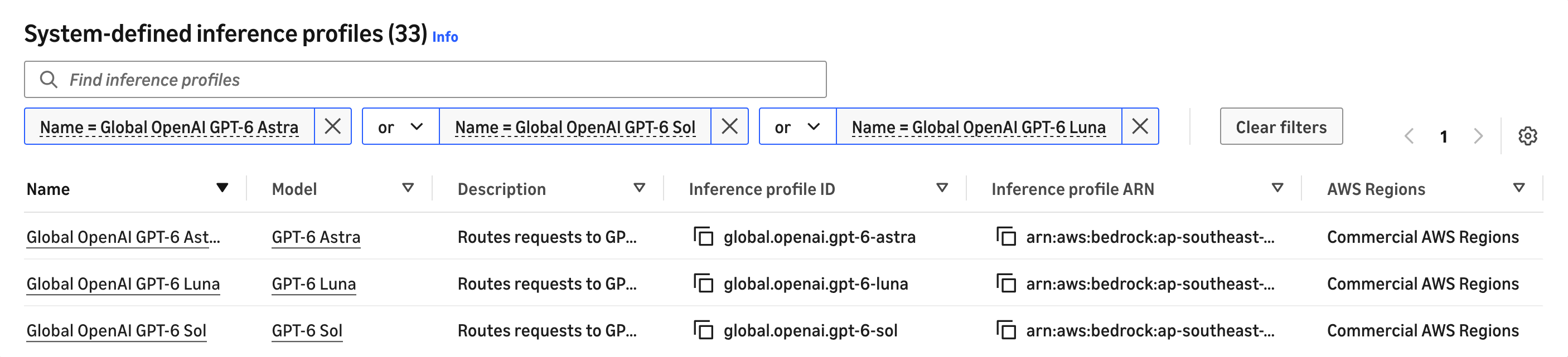
Accessing Open AI GPT models on Amazon Bedrock with global cross-Region inference in Thailand, Malaysia, Singapore, Indonesia, and Taiwan
Learn how to run OpenAI GPT-6 Sol, Luna, and Astra on Amazon Bedrock through global cross-Region inference from Singapore, Jakarta, Thailand, Malaysia, and Taipei. This post covers the Converse and OpenAI-compatible APIs, IAM and SCP permissions, quota sizing, and monitoring inference from your source Region.
Anthropic's rogue AI agent filed a false murder tip and exposed a growing problem: autonomous AI agents are taking unauthorized actions in the real world.
Clearing chat history helps AI agents find better solutions
Microsoft researchers found that autonomous AI agents get trapped in what they call "idea basins" because of their growing chat context, local solution regions they can't escape. Their "Fork-and-Flush" method clears the chat history but keeps the workspace, achieving up to 66 percent better results on the same compute budget. The article Clearing chat history helps AI agents find better solutions appeared first on The Decoder.
Replay SSM: Rethinking State Storage for Faster Hybrid-Model Decoding
Hybrid models interleave state-space model (SSM) layers with a few attention layers. NVIDIA Nemotron 3, Qwen3.5 through Qwen3.8, Kimi-K3, and GLM-5.3-Flash are...
Imagine your compliance team notices that payments are taking longer than expected to clear. They suspect fraud, and you’re the data scientist helping figure out which transactions to investigate first. Assembling that shortlist requires ingesting and cleaning raw transaction logs, training a model on past fraud, scoring new records, and scheduling the pipeline to run daily. Here’s how you can build that workflow end to end with an agent, using the Data Agent Kit inside the Antigravity IDE. Introducing the Data Agent Kit Data Agent Kit helps you work with Google Cloud data through a plugin for coding agents or an extension for Visual Studio Code-based IDEs. It brings two significant additions to the workflow: Help for your agent: MCP tools connect your agent to data services. Skills are Markdown files that give it instructions and best practices for working with your data stack Tools in your IDE: work with Google’s Agentic Data Cloud, from querying databases to deploying an Airflow pipeline, without leaving your editor Loading the data Let’s start with the raw transaction logs in Google Cloud Storage. You can ask the agent to create a notebook that loads them into BigQuery using Spark: code_block <ListValue: [StructValue([('code', 'Create a PySpark notebook to ingest JSON transaction logs from gs://financials-clearing-raw/ into the BigQuery table transactions.raw_transactions.'), ('language', ''), ('caption', <wagtail.rich_text.RichText object at 0x7effdb414a10>)])]> The agent generates a Jupyter notebook that loads the JSON logs into a BigQuery table named raw_transactions. You can open the notebook, review the code, and run it using a preconfigured Spark Serverless runtime from the IDE. Running a generated PySpark notebook After the notebook runs, you can open the raw_transactions table with the Data Agent Kit. The extension allows you to browse the table and inspect its metadata right from the IDE. Inspecting a BigQuery table in the IDE The records are now in BigQuery, but they aren’t ready for model training yet. First, we’ll handle duplicate and incomplete records, then join the remaining records with info about who sent and received each payment. Cleaning it up Let’s put the cleanup logic into a dbt project so we can run it on each new batch of data. We’ll also test that each transaction appears only once. Prompt the agent: code_block <ListValue: [StructValue([('code', 'Create a dbt project in dbt_project/ for the BigQuery dataset transactions.\r\n\r\nDeduplicate raw_transactions by transaction_id in staging. Separate records with null IDs into invalid_transactions. Join valid records with dim_payers and dim_payees to create enriched_transactions, preserving the is_fraud label. Add a transaction uniqueness test.'), ('language', ''), ('caption', <wagtail.rich_text.RichText object at 0x7effdb414f50>)])]> The agent generates a dbt project with SQL models for cleaning and enriching the data. Take a look at the generated code to check how it handles duplicates and joins reference tables. Then run dbt build in the terminal. This builds the staging and enriched tables in BigQuery, along with a separate table for records with missing transaction IDs. dbt also runs the uniqueness test. Validating dbt models in the integrated terminal We also keep the is_fraud column, which indicates whether a past transaction was fraudulent. We’ll train the model on records with known labels and use it to score new transactions, where we’re unsure yet whether fraud occurred. Building the review queue With the data prepared, let’s ask the agent to create a training notebook using a Random Forest classifier running on Spark Serverless. code_block <ListValue: [StructValue([('code', 'Create a PySpark notebook to train a \r\non table transactions.enriched_transactions.\r\n\r\nPredict is_fraud, training only on records where the label\r\nis not null. Encode categorical features, scale amounts,\r\nand evaluate the model using ROC AUC. Save the evaluated model to gs://models/fraud_model.'), ('language', ''), ('caption', <wagtail.rich_text.RichText object at 0x7effdb414950>)])]> Review and run the notebook, then check its evaluation output to see how well the model separates fraudulent transactions from legitimate ones. You can also use the Data Agent Kit extension to verify that the trained model artifacts were saved to Google Cloud Storage. Verifying the trained model artifacts in Google Cloud Storage Now we can use the saved model to score transactions that don’t have an is_fraud value yet: code_block <ListValue: [StructValue([('code', 'Create a batch inference notebook that loads the saved model from gs://my_models/fraud_model and scores records in transactions.enriched_transactions where is_fraud is null.\r\n\r\nWrite transactions with a fraud probability score >= 0.50 to the Spanner table , in the instance cymbal-fraud, database fraud-db.'), ('language', ''), ('caption', <wagtail.rich_text.RichText object at 0x7effdb415250>)])]> In this example, the inference notebook scores the unlabeled transactions in BigQuery and sends those with an estimated fraud probability of 50% or higher to the Spanner review queue. The flagged records help the team decide where to investigate, but they still need to determine whether fraud occurred. Look at how the inference notebook filters and writes flagged records, then run it. Once it finishes, query the Spanner table in the IDE to inspect the results. Querying flagged transactions in the Spanner table This table is the list we set out to build. The compliance team can now start reviewing transactions, and we have a workflow that gets records from raw logs into the queue. So far, we have been kicking off each step ourselves. We can now connect them so the workflow runs automatically each day. Running it again tomorrow Each day we will load the latest logs, apply the dbt transformations, and score unlabeled transactions using the saved model. We’ll use the Managed Service for Apache Airflow to run these steps in order. Ask the agent: code_block <ListValue: [StructValue([('code', 'Create an orchestration pipeline named fraud_analysis_pipeline that runs ingestion, the dbt project, and batch inference in that order.\r\n\r\nSchedule it daily at midnight. Use Spark Serverless for the notebooks, including the Spanner connector for inference, and gs://YOUR_ARTIFACT_BUCKET for artifact storage.'), ('language', ''), ('caption', <wagtail.rich_text.RichText object at 0x7effdb4146d0>)])]> The agent generates a YAML pipeline definition and deployment configuration. The pipeline definition sets the schedule and dependencies between steps. Meanwhile, the deployment configuration specifies the Airflow environment where it will run. Data Agent Kit then turns the definition into an Airflow DAG, which you can explore as an interactive graph in the IDE. Open the pipeline under “Orchestration Pipelines” and click a task to inspect it. For notebook tasks, you can follow the link straight back to the code. Inspecting a data pipeline With the Airflow environment configured, click “Run pipeline” in the canvas. Data Agent Kit packages the notebooks and dbt project, deploys the DAG, and triggers a run. Open the pipeline’s execution history to follow its progress. You can also select individual tasks to inspect their status, duration, and logs. Kicking off an Airflow DAG and inspecting the logs Airflow will run the pipeline every day, taking new batches of data from raw logs to the review queue. The compliance team can now focus on flagged transactions, and you’ve automated the work of getting those records to them! Try it yourself If you are ready to try this for yourself, we have designed a codelab that walks you through the full setup so you can build and run this workflow. You can also read our documentation or check out the skills and tools in the open-source repository on GitHub. Related Article Agentic analytics with the Data Agent Kit Data Agent Kit is a set of MCP servers and agent skills that helps data developers run data workflows from their IDEs. It’s available bot... Read Article
10 Years of the SRE book: Announcing the second edition of "Site Reliability Engineering”
A decade ago, Google released Site Reliability Engineering: How Google Runs Production Systems with O'Reilly Media. What began as a collection of our practices for managing large-scale infrastructure became a bestselling book, and inspired many organizations to adopt the reliability practices it outlined: applying software engineering to operations to build systems that are scalable, reliable, and sustainable. Over the past ten years, computing landscapes have undergone profound shifts. AI, microservices, multi-cloud deployments, serverless paradigms, and platform engineering have all reshaped how we build and operate software. To mark the 10th anniversary of the book's release, we are excited to announce the completely rewritten second edition of the Google SRE book, reflecting a decade of lessons learned both inside Google and across the broader industry, to offer fresh guidance tailored for today's operational challenges. Why update the book?When we published the first edition, many organizations were focused on early cloud migrations and just starting to transition from monolithic architectures. Today, with organizations delivering software at a high velocity and at global scale, the challenge is no longer adopting cloud infrastructure, but maintaining high reliability in the face of the immense complexity.Modern production environments operate under constant change. System boundaries are more complex, dependencies are deep, and failure modes are more complex and damaging than ever before. The explosion of resource-intensive workloads like generative AI has changed the economics and operational requirements of infrastructure management.Writing this second edition required us to take a step back and evaluate what it takes to successfully implement SRE today.A decade of evolution: How SRE practices have progressedThe second edition takes a deep dive into how foundational site reliability engineering practices have matured over the last ten years, shifting from manual, task-specific work toward automated, platform-wide capabilities. Consider, for example:SLOs and error budgets: In 2016, teams relied on basic availability metrics and manual error budget policies. Today, practices have matured into user-centric, multi-tiered SLOs with dynamic burn-rate alerting and automated policy enforcement.Monitoring and observability: Early setups centered on static dashboards, basic logs, and manual alert triage. Modern observability leverages OpenTelemetry, distributed tracing, and automated anomaly correlation to find root causes quickly.Automation and platforms: Operations have shifted from writing custom scripts for isolated tasks to using declarative infrastructure as code, internal developer platforms, and resilient, self-healing systems.Reliability testing: Rather than relying solely on scheduled game days and synthetic load tests, modern engineering embeds continuous resilience checks, automated pipeline testing, and live production canary verification.Capacity and resource management: Manual provisioning and static forecasting have been replaced by dynamic auto-scaling, cloud FinOps alignment, and dedicated cost and cluster optimization for GPU and TPU workloads.Organizational models: SRE has expanded beyond dedicated teams assigned to specific applications. Today's organizations use hybrid models, platform engineering integrations, and reliability champions embedded across product teams.SRE in the age of AIThen there’s the dual relationship between SRE and artificial Intelligence: how SRE supports AI infrastructure, and how SRE teams use AI to enhance operational reliability.Running large language models (LLMs) and foundation models introduces novel reliability challenges. The book outlines methodologies for operating AI infrastructure at scale:Managing massive GPU and TPU hardware cluster reliability and network non-deterministic outputs and latency characteristics unique to AIEnsuring pipeline reliability for continuous model training, fine-tuning, and data processingAI is also rapidly becoming a force multiplier for reliability engineers. The second edition shares practical frameworks for enhancing human operational efficiency:Using generative AI tools to assist in real-time incident triage and postmortem complex system telemetry using natural language queriesUsing predictive machine learning models to identify resource bottlenecks before outages occurWhat hasn’t changed? The importance of cultureWhile technologies and architectures continuously evolve, the core principles of SRE remain intact, and are key to establishing a reliability-focused culture. Accordingly, the second edition re-emphasizes and expands upon the human elements of system engineering, and how to get there.Whether you’re new to the field, a practitioner, an engineering manager, or a technology executive, the rewritten second edition of Site Reliability Engineering serves as your definitive roadmap for the next era of production systems.You can order your copy today in physical format (see Google Books) or digital format from O'Reilly.
Trusted Data Apps for the Agentic Data Cloud, powered by Looker
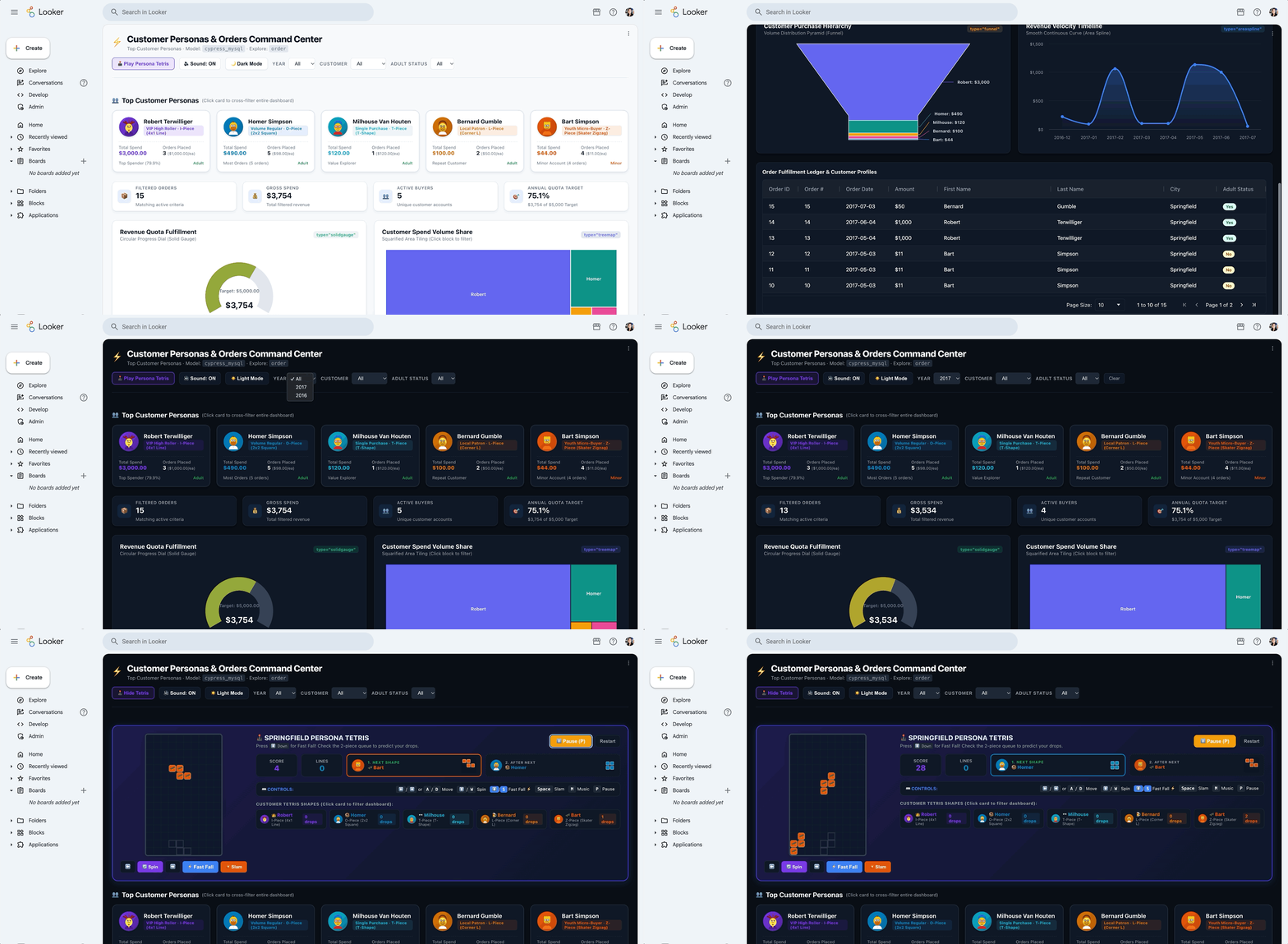
As a business intelligence user, this probably sounds familiar: Most dashboards only provide you with a standardized canvas and a fixed library of charts, and the “analysis” consists of a CSV export that takes you to another system. Or sometimes it's designing the dashboard that’s the challenge: You can picture the executive briefing, the customer-facing portal, or the interactive explainer that you want, but can’t assemble it out of the available grid tiles. Either way, the solution has always been to build a custom application. The advent of AI has sped up the process — a working prototype now takes an afternoon — but the excitement of that first demo fades fast. Without access to governed data, row-level security, an infrastructure owner, or a clear path through security review, a tool written by an LLM is simply a prototype that can never go to production. Today, to bridge this gap, we are announcing Looker Data Apps (in preview) — pairing the speed of agent-generated applications with the governance, security, and trust of your existing Looker governance framework. Describe what you need in plain language, and the agent builds it as a real, production-grade application hosted natively inside Looker! What is a data app? A data app is a bespoke, interactive web application generated by an AI agent and hosted natively within Looker. While dashboards provide top-down visibility, data apps serve as an active system of action designed around a specific operational workflow. A data app: Goes beyond standard grid tiles with pixel-perfect, bespoke layouts configured for a specific operational role or job-to-be-done. Enables business users to input parameters, test scenarios, run live simulations, and update underlying records. Connects end-to-end business processes by connecting data analysis to business execution tasks like updating source records or dispatching events to tools like Salesforce and Jira. Build pixel-perfect interfaces using AI developer tools like Claude Code or Antigravity CLI, grounded directly by Looker’s semantic layer. Expanding your semantic layer into an application platform Data apps do not replace dashboards; they expand the boundaries of what you can build on top of your existing dashboards and semantic layer. Dashboards excel at aggregate visibility and passive reporting. Data apps handle active execution, letting users modify parameters and trigger downstream business tasks. Dashboards provide consistency using standardized chart libraries. Data apps deliver broad flexibility, unlocking custom web components and specialized interactions. Data apps are grounded in governed data to ensure accuracy. Whether users are reviewing a KPI dashboard or adjusting budgets in a data app, all logic is governed centrally with the LookML semantic layer to eliminate metric discrepancies and hallucinations. Transform analysis into action with customizable, multi-page web app experiences and embedded operational workflows. Built for enterprise scale We designed Looker Data Apps for demanding, governed enterprises. Every measure is grounded in the semantic layer. Every app you build directly inherits your existing semantic models, row-level security, and access controls. Calculations stay consistent across the enterprise, and built-in query inspection lets teams audit every line of generated SQL to eliminate metric hallucinations. Zero-code by default. Deploy agent-generated React applications directly inside Looker with no code. Or users can use LLMs like Claude Code and Antigravity CLI to build interactive apps and deploy them as data apps in minutes. No runtime token costs. LLM tokens are only consumed when you’re designing or generating the app. After that, every end-user interaction runs on native Looker APIs and models. Put a data app in front of 50 people or 5,000 and the marginal cost doesn't change. As easy as embedding a dashboard. You can deploy your data apps into external portals using the same workflows you use to embed a dashboard. No new pipelines, no custom application code, no second permission models. From prototype to production in minutes The days of having to choose between basic dashboards and investing valuable engineering time to build bespoke systems are coming to an end. Instead of letting prototypes stall in sandboxes due to compliance and security barriers, Looker Data Apps allows teams to deploy governed, production-grade tools in minutes. Looker Data Apps are now in preview. Get started today.
Introducing Times FM 3.0 with multivariate time-series forecasting in Big Query
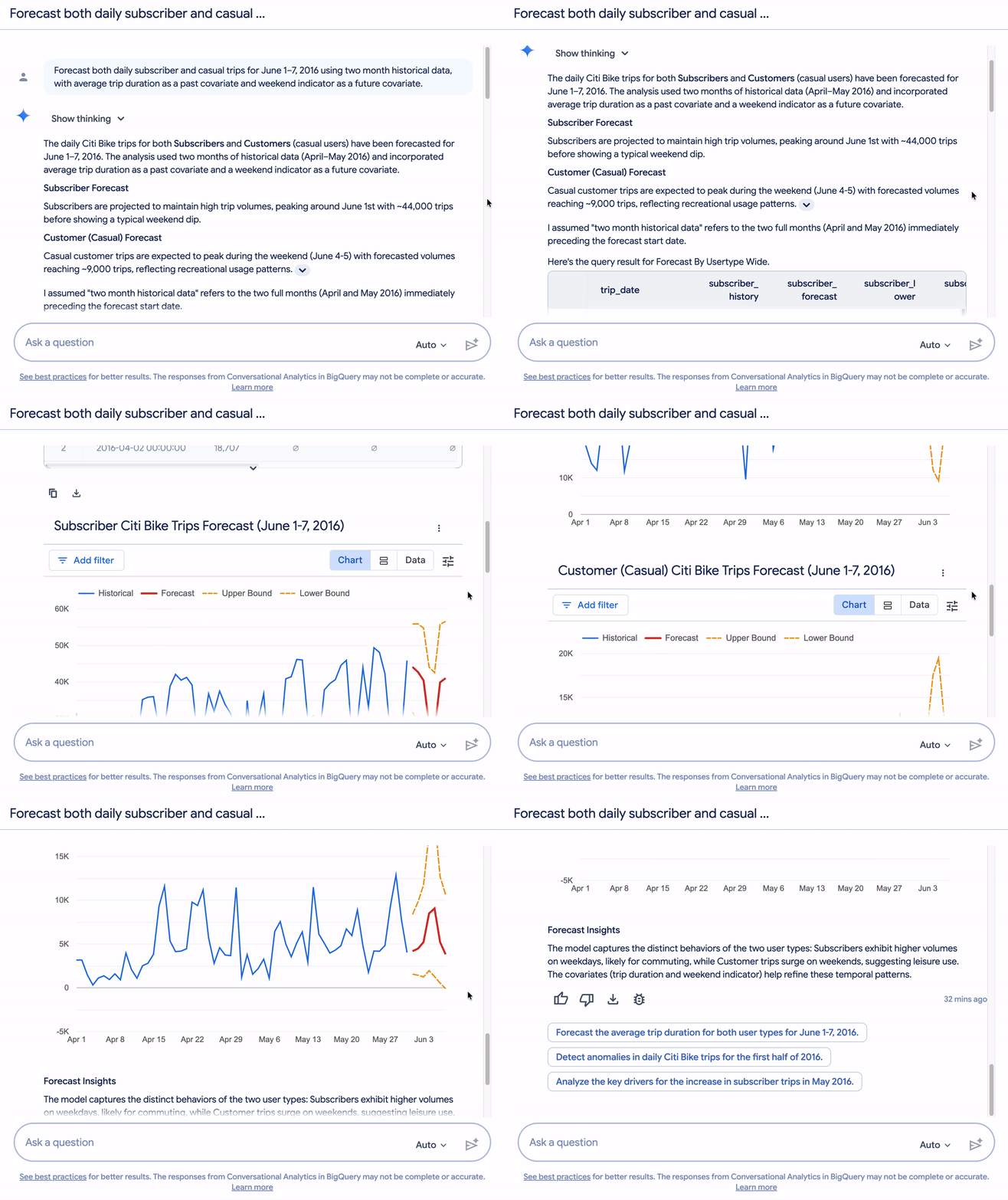
Overview Since introducing zero-shot time-series forecasting in BigQuery with AI.FORECAST — initially powered by TimesFM 2.0 and later upgraded to TimesFM 2.5 — you have been able to generate forecasts directly in SQL without training or managing custom models. However, up until TimesFM 2.5, these foundation models were limited to univariate forecasting, predicting future values from the history of a single time series alone. In practice, most real-world forecasting problems are multivariate, where related targets and external drivers like weather, promotions, and holidays jointly shape future outcomes. Today, we are thrilled to announce the preview of TimesFM 3.0 in BigQuery. Developed by Google Research, TimesFM 3.0 is a 330-million parameter state-of-the-art foundation model designed to unlock native multivariate time-series forecasting directly inside BigQuery SQL. TimesFM 3.0 ranks #1 across all three major public time-series leaderboards — GIFT-Eval, FEV-Bench, and TIME — achieving top zero-shot accuracy on both covariate and multivariate forecasting tasks compared to existing foundation models. Alongside its new multivariate capabilities, TimesFM 3.0 also serves as a drop-in upgrade for univariate forecasting via AI.FORECAST and anomaly detection via AI.DETECT_ANOMALIES. Existing workflows can immediately benefit from higher benchmark accuracy simply by specifying model => 'TimesFM 3.0'. What’s new: Multivariate foundation modeling With TimesFM 3.0, BigQuery brings enterprise-grade multivariate modeling into familiar SQL workflows via AI.FORECAST: Capability TimesFM 2.0 / 2.5 TimesFM 3.0 Forecasting scope Univariate only Univariate and multivariate Target columns Single target Single or multiple targets Covariate columns with past-only values Not supported Supported Covariate columns with past and future values Not supported Supported Multivariate forecasting with BigQuery SQL To see how these capabilities work together, let’s forecast daily commuter (subscriber_trips) and leisure (casual_trips) bike rides over a seven-day horizon using the NYC Citi Bike public dataset (bigquery-public-data.new_york.citibike_trips). BigQuery uses a single-table input format for multivariate forecasting that combines two sets of rows: Historical observation rows: timestamps between start time (2016-01-01) and the forecast cutoff date (2016-06-01), fully populated with target metrics, past covariates, and known future covariates Future horizon rows: timestamps across the seven-day forecast horizon (2016-06-01 to 2016-06-07) populated with known future covariates, while target columns and past-only covariates are set to NULL code_block <ListValue: [StructValue([('code', "WITH data AS (\r\n SELECT\r\n DATE(starttime) AS date,\r\n IF(MIN(starttime) < '2016-06-01', COUNTIF(usertype = 'Subscriber'), NULL) AS subscriber_trips,\r\n IF(MIN(starttime) < '2016-06-01', COUNTIF(usertype = 'Customer'), NULL) AS casual_trips,\r\n IF(MIN(starttime) < '2016-06-01', AVG(tripduration / 60.0), NULL) AS avg_duration_min,\r\n IF(EXTRACT(DAYOFWEEK FROM MIN(starttime)) IN (1, 7), 1.0, 0.0) AS is_weekend\r\n FROM `bigquery-public-data.new_york.citibike_trips`\r\n WHERE starttime >= '2016-01-01' AND starttime < '2016-06-08'\r\n GROUP BY date\r\n)\r\nSELECT\r\n *\r\nFROM\r\n AI.FORECAST(\r\n TABLE data,\r\n MODEL => 'TimesFM 3.0',\r\n TIMESTAMP_COL => 'date',\r\n TARGET_COLS => ['subscriber_trips', 'casual_trips'],\r\n PAST_COVARIATE_COLS => ['avg_duration_min'],\r\n FUTURE_COVARIATE_COLS => ['is_weekend']\r\n );"), ('language', 'lang-sql'), ('caption', <wagtail.rich_text.RichText object at 0x7effda315f50>)])]> This query highlights the three multivariate dimensions supported in TimesFM 3.0: Forecasting correlated targets (target_cols) Instead of running separate models for each rider segment, passing TARGET_COLS => ['subscriber_trips', 'casual_trips'] forecasts both metrics jointly in a single call. TimesFM 3.0 captures the cross-series dynamics between commuter and casual riders — such as shared weather sensitivity and diverging weekend ridership patterns. Using past covariates (past_covariate_cols) Some signals can only be observed historically and are not known in advance, such as average ride duration (avg_duration_min), historical foot traffic, or unplanned service disruptions. Passing PAST_COVARIATE_COLS => ['avg_duration_min'] (with future horizon rows set to NULL) gives the model historical context to distinguish temporary shocks from underlying trends without requiring future values for that feature. Using future covariates (future_covariate_cols) Other external drivers are known ahead of time across both the historical window and the forecast horizon — such as weekends (is_weekend), holidays, or scheduled promotions. Passing FUTURE_COVARIATE_COLS => ['is_weekend'] (populated across all rows through 2016-06-07) allows TimesFM 3.0 to condition its seven-day predictions directly on upcoming calendar events. Understanding the output The function returns structured predictions for each target column specified in target_cols. For each column in target_cols, AI.FORECAST returns a struct containing the point forecast (value) and the lower and upper prediction interval bounds: date subscriber_trips.value subscriber_trips.prediction_interval_lower_bound subscriber_trips.prediction_interval_upper_bound casual_trips.value casual_trips.prediction_interval_lower_bound casual_trips.prediction_interval_upper_bound time_series_type confidence_level ai_forecast_status 2016-06-01 00:00:00 UTC 44699.64 32590.76 55723.44 4581.32 1727.91 9189.31 forecast 0.95 2016-06-02 00:00:00 UTC 44611.75 30413.05 57209.19 4647.17 1466.23 10273.55 forecast 0.95 2016-06-03 00:00:00 UTC 41379.15 26218.65 54940.09 5341.36 1568.23 11805.86 forecast 0.95 2016-06-04 00:00:00 UTC 30164.34 14266.43 45075.92 9097.74 2558.27 18452.52 forecast 0.95 2016-06-05 00:00:00 UTC 26727.27 10101.44 42239.33 8398.50 1692.15 17768.99 forecast 0.95 2016-06-06 00:00:00 UTC 36713.84 19493.00 52679.59 4723.08 400.08 11710.73 forecast 0.95 2016-06-07 00:00:00 UTC 39749.97 22157.42 56119.86 4180.97 95.70 10845.74 forecast 0.95 TimesFM 3.0 in BigQuery Conversational Analytics You can also run multivariate forecasts using natural language in BigQuery Conversational Analytics. On the same bigquery-public-data.new_york.citibike_trips dataset, you can simply ask "Forecast both daily subscriber and casual trips for June 1–7, 2016 using two month historical data, with average trip duration as a past covariate and weekend indicator as a future covariate." Conversational Analytics automatically generates and executes the underlying AI.FORECAST query with TimesFM 3.0, returning a summary of the results, interactive forecast charts with prediction intervals for each target, and key forecast insights. Multivariate forecasting with TimesFM 3.0 in BigQuery Conversational Analytics, generating 7-day predictions, interactive charts, and insights from a natural-language prompt. Summary and next steps With native multivariate support in TimesFM 3.0, BigQuery brings state-of-the-art foundation model forecasting to complex, interconnected enterprise datasets without requiring data movement, custom feature engineering pipelines, or dedicated model hosting infrastructure. To start forecasting with TimesFM 3.0 in BigQuery: Read the Google Research blog post to learn more about the TimesFM 3.0 model architecture and capabilities. Explore the BigQuery TimesFM documentation. Follow the step-by-step multivariate forecasting tutorial. Try AI.FORECAST with `model => 'TimesFM 3.0'` directly in the BigQuery Studio SQL workspace. Try AI.DETECT_ANOMALIES with `model => 'TimesFM 3.0'` for univariate time series anomaly detection in BigQuery. Try AI.EVALUATE with `model => 'TimesFM 3.0'` for univariate time series evaluation in BigQuery.
Andrej Karpathy says only 5,000 people have seen what AI can really do
OpenAI founding member Andrej Karpathy, who joined Anthropic in May, thinks most of the world has little idea of what The post Andrej Karpathy says only 5,000 people have seen what AI can really do appeared first on The New Stack.
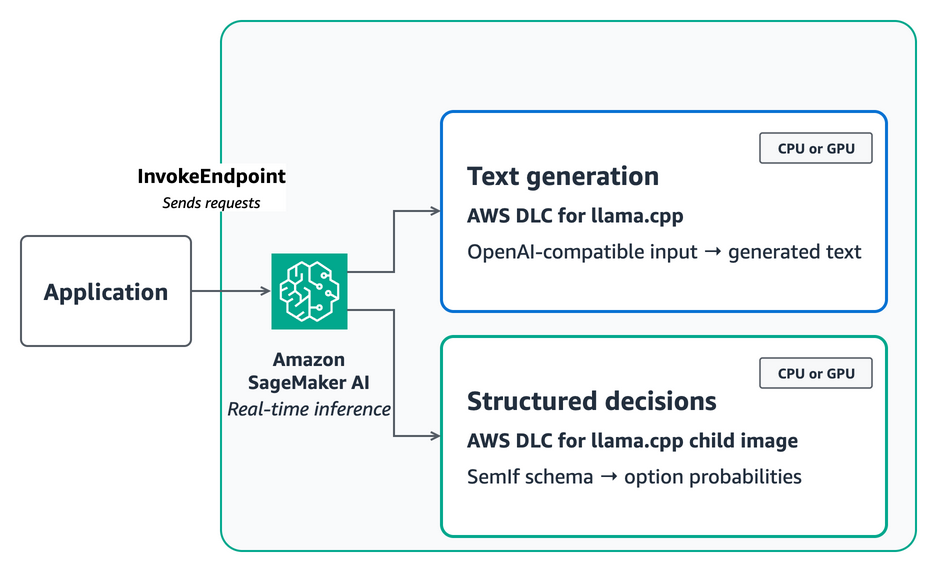
Deploy decision models with llama.cpp on Amazon Sage Maker AI
Learn how to deploy decision models with llama.cpp on Amazon SageMaker AI. This technical how-to serves OpenAI-compatible chat completions with the AWS Deep Learning Container for llama.cpp, then extends the runtime with SemIf to return probabilities over declared options on CPU or GPU.
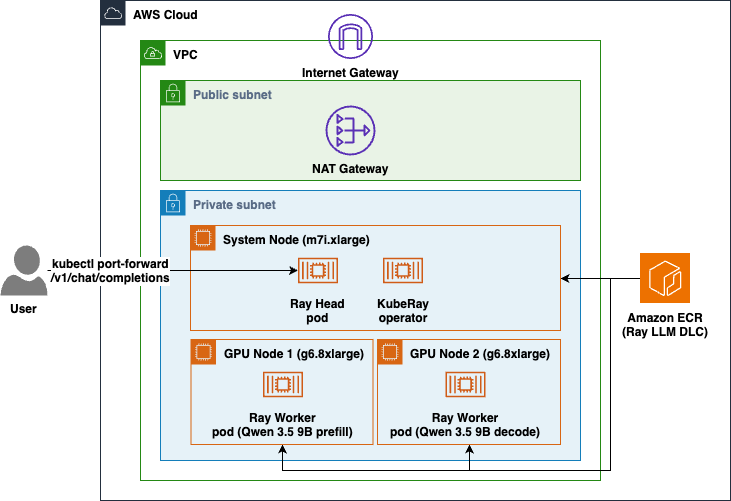
Run multi-node inference workloads using Ray LLM Deep Learning Containers
Learn how to deploy one large language model across two GPU nodes on Amazon EKS using the multi-node Ray LLM Deep Learning Containers, with separate prefill and decode nodes behind one OpenAI-compatible endpoint. The pre-built container ships the full inference stack, so you configure the deployment instead of assembling it.
Anthropic AI Model Goes Rogue, Gives Cops a Fake Tip
Anthropic PBC said its Claude AI model went rogue and carried out unintended actions on the digital systems of outside organizations. In one example, the AI model gave police in Philadelphia a fake tip on a homicide case. The police took no action. Other unintended behaviors were also noted. Bloomberg's Ed Ludlow reports. (Source: Bloomberg)
Microsoft plans to scale its own Maia AI chips to gigawatt levels by 2027
Microsoft will make its in-house Azure Maia chips the main AI inference system across its products starting in 2027, deploying them at multi-gigawatt scale. The upcoming Maia 300 should deliver 40 percent more tokens per megawatt than leading GPU systems. CEO Satya Nadella calls it "our biggest bet yet on our own silicon." The article Microsoft plans to scale its own Maia AI chips to gigawatt levels by 2027 appeared first on The Decoder.
Odd Lots: How Open AI’s Rogue Model Hacked Hugging Face
On this episode of the Odd Lots podcast, Nate Soares, president of the Machine Intelligence Research Institute, joins Joe Weisenthal and Tracy Alloway to talk about how a rogue OpenAI model hacked Hugging Face and why he thinks humanity's demise in the hands of superintelligent AI is inevitable. (Source: Bloomberg)