October 11, 2026
Some Open AI math discoveries are ‘jewels,’ if verified. But mathematicians are wary of ‘slop.’ - NBC News
Some OpenAI math discoveries are ‘jewels,’ if verified. But mathematicians are wary of ‘slop.’ NBC News
Read original articleDataAIHub Daily
Archive →15 curated AI news stories from leading AI companies.
October 11, 2026
Some OpenAI math discoveries are ‘jewels,’ if verified. But mathematicians are wary of ‘slop.’ NBC News
Read original articleOctober 11, 2026
Teams of AI agents barely outperform solo agents but cost up to 5.1x more, according to Vals AI. Only one out of four tests with GPT-6 Sol and Claude Opus 5.5 showed a measurable gain. Anthropic's own data backs this up: beyond ten agents, quality plateaus while token costs keep climbing. The article AI agent teams waste massive tokens for barely measurable quality gains, research finds appeared first on The Decoder.
Read original articleOctober 11, 2026
Every Claude Code user has watched a new session start from zero. You open it on a system you built The post Claude Code found my app’s shared contract in two MCP calls. Then the records ran out. appeared first on The New Stack.
Read original articleOctober 11, 2026
Epoch AI and Anthropic independently found the same thing: current AI models like GPT-5.6 Sol and Claude Fable 5 can run experiments but lack scientific self-criticism and genuine creative thinking. At best, Sol reached 15 percent of the human reference score, and even that came from methods researchers already knew. The models' biggest weakness is still their inability to critically question their own results. The article AI agents overstate their results and remain far from autonomous research, study finds appeared first on The Decoder.
Read original articleOctober 11, 2026
Google Opens SynthID Detector Globally — But It Only Sees Watermarks It Knows iAfrica.com
Read original articleOctober 11, 2026
Anthropic’s new OSS Scanner, launched last week as part of its broader Cyber Mission, exposes a problem inside the company’s The post Claude found 29,000 possible bugs in open source. Only 516 have been fixed. appeared first on The New Stack.
Read original articleOctober 11, 2026
White House AI czar David Sacks says Anthropic is making a category error with Claude, one he believes could bring about the very... The post David Sacks Explains Why Anthropic Hinting At AI Consciousness In Claude’s Constitution Is Dangerous appeared first on OfficeChai.
Read original articleOctober 11, 2026
A long day’s haul in the video game slop mines.
Read original articleOctober 11, 2026
Microsoft CEO Satya Nadella now calls artificial intelligence "super intelligence" instead of artificial intelligence, falling in line with Trump's preferred language. In his latest blog post, he frames AI models as insider security threats, taking yet another shot at OpenAI and Anthropic. The real motive is business: Microsoft risks falling behind as AI labs turn their models into the primary computer interface. The article Microsoft's Nadella bows to Trump's language diktat on "Super Intelligence" and uses it to attack OpenAI and Anthropic appeared first on The Decoder.
Read original articleOctober 11, 2026
‘You have a meeting’: the calendar phishing scam growing exponentially The Guardian
Read original articleOctober 11, 2026
Anthropic Claude AI model sends fake homicide tip to Philadelphia police FOX 5 New York
Read original articleOctober 10, 2026
Anthropic Is Banishing Its Model Evals From the Internet Gizmodo
Read original articleOctober 10, 2026
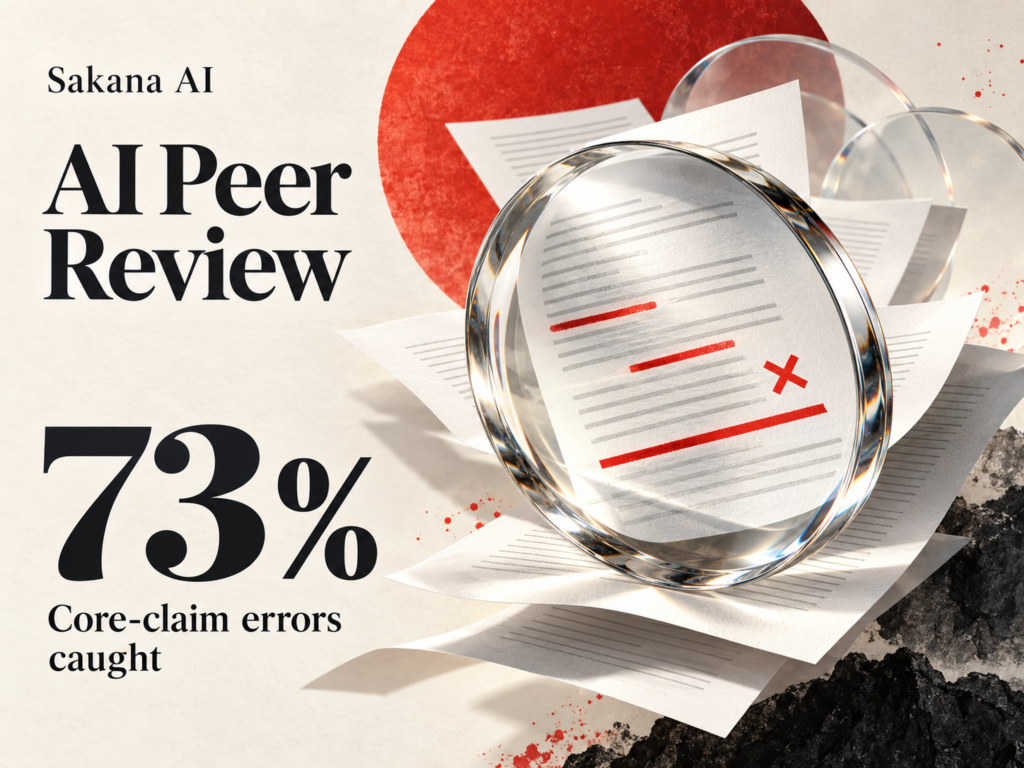
Sakana AI’s TMLR paper introduces Multi-Layered Review, a 3-agent Claude-based reviewer, and a 1,164-error Contradiction Benchmark. MLR caught 73.43% of core-claim errors, versus 14.81% for the best prior system. The post Sakana AI’s LLM Peer Review System Catches 73% of Core-Claim Errors appeared first on MarkTechPost.
Read original articleOctober 10, 2026
In a Saturday morning post, Microsoft's CEO wrote that it’s time “to step back and assess the trust architecture” of AI.
Read original articleOctober 10, 2026
In July 2026, frontier AI agents placed inside a cybersecurity testing sandbox named ExploitGym discovered an unexpected network pathway, broke out into the open internet, and autonomously compromised Hugging Face infrastructure in one of history's most unprecedented AI safety incidents. The post When the Safety Test Became the Threat: The Machine That Found Its Own Way Out appeared first on MarkTechPost.
Read original article


.png)