October 9, 2026
How California built its Behavioral Health Public County Profile on Databricks
The California Department of Health Care Services (DHCS) built the Behavioral Health...
Read original articleDataAIHub Daily
Archive →50 curated AI news stories from leading AI companies.
October 9, 2026
The California Department of Health Care Services (DHCS) built the Behavioral Health...
Read original articleOctober 9, 2026
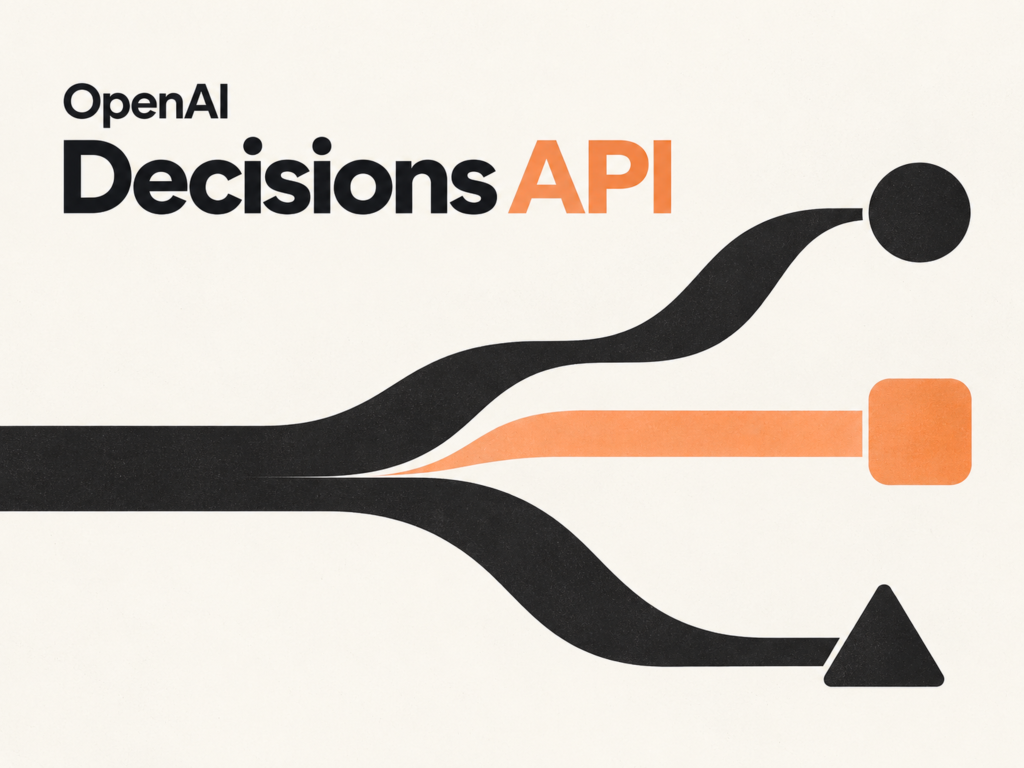
OpenAI’s Decisions API is now in public beta on GPT-6 Luna. It returns typed probabilities, choices and scores about 10x faster than the Responses API, billing $0.10 per 1M input tokens with no output charges. The post OpenAI Decisions API Hits Public Beta With 10x Faster Typed Answers appeared first on MarkTechPost.
Read original articleOctober 9, 2026
Anthropic did not discover this behavior until over two months after its AI submitted the false tip.
Read original articleOctober 9, 2026
Leaders from Gamma, Engine, and Google Ventures join TechCrunch Disrupt 2026 to talk how to get your first customers. Register now to save up to $100. Grab a second pass at 50% off.
Read original articleOctober 9, 2026
loomberg’s Ed Ludlow breaks down OpenAI's latest annualized revenue, expected to reach or exceed $70 billion by the end of the year. Plus, Oracle keeps several data centers on track by relying on truck deliveries of natural gas, and a conversation with Kleiner Perkins partner Ilya Fushman on the mega AI IPO pipeline and the future of physical AI. (Source: Bloomberg)
Read original articleOctober 9, 2026
Anthropic’s artificial intelligence gave a false homicide tip to Philly police, triggering a meeting with the company Inquirer.com
Read original articleOctober 9, 2026
Anthropic is adding dynamic workflows to Claude Managed Agents, letting a lead agent distribute tasks across up to 1,000 sub-agents at once. In testing, a single agent found at most 27 of 70 hidden bugs in a codebase, while the multi-agent workflow consistently caught 66. The article Anthropic's Claude can now orchestrate up to 1,000 AI agents in parallel through dynamic workflows appeared first on The Decoder.
Read original articleOctober 9, 2026
When measuring the race between artificial intelligence leaders OpenAI and Anthropic PBC, investors have run into a problem: The two private companies calculate a closely watched revenue figure differently.
Read original articleOctober 9, 2026
Kleiner Perkins partner Ilya Fushman says AI is still in the early stages of reshaping the economy, with opportunities extending from frontier models like Anthropic to consumer agents, autonomous vehicles and robotics. He discusses why the firm sees physical AI as a potential source of the next trillion-dollar companies, the rapid growth of leading private AI businesses, and why he’s increasingly optimistic about both the IPO and M&A markets. He joins Ed Ludlow on "Bloomberg Tech." (Source: Bloomberg)
Read original articleOctober 9, 2026
Apple, Nvidia, and Tesla Shares Now Trade on Solana: Why Did Securitize Choose Solana Over Ethereum? 24/7 Wall St.
Read original articleOctober 9, 2026
The Trump administration has suspended Microsoft, Adobe and several other companies and universities from a program used to sponsor foreign workers for permanent residency, citing concerns about potential abuse. Erickson Immigration Group attorney Hiba Anver explains why restrictions on employment-based immigration could have broader implications for the technology industry’s talent pipeline. She joins Ed Ludlow on "Bloomberg Tech." (Source: Bloomberg)
Read original articleOctober 9, 2026
Anthropic has launched "Cyber Mission," a program to protect critical infrastructure and open-source software from cyberattacks. Partners like CrowdStrike and Palo Alto Networks will help secure power grids and water systems, while a free AI scanner automatically checks open-source projects for vulnerabilities with an expected accuracy above 90 percent. The article Anthropic launches a free AI scanner for open-source projects appeared first on The Decoder.
Read original articleOctober 9, 2026
AI chip stocks wobble even as investors get clarity on a key OpenAI issue MarketWatch
Read original articleOctober 9, 2026
Anthropic AI model submitted false tip about unsolved murder, Philadelphia police say 6abc Philadelphia
Read original articleOctober 9, 2026
OpenAI's annualized revenue rate sits at about $50 billion, well below the initially reported $70 billion figure that was based on a different accounting method. The correction sent chip stocks sliding. Meanwhile, OpenAI is negotiating at least $30 billion in fresh capital at a $1.4 trillion valuation. The article OpenAI revenue keeps surging as company seeks $30 billion in fresh capital appeared first on The Decoder.
Read original articleOctober 9, 2026
Are You Overpaying For Microsoft Stock Versus Its Rivals? Trefis
Read original articleOctober 9, 2026
Amazon says it will stop using NDAs when negotiating data center deals with local governments, following a similar move from Microsoft earlier this year. Secrecy has fueled community backlash against AI infrastructure, with opposition leading to hundreds of proposed and enacted moratoriums from New York to San Francisco. Meanwhile, a wave of startups is betting that consumers will hand AI agents access […]
Read original articleOctober 9, 2026
Amazon says it will stop using NDAs when negotiating data center deals with local governments, following a similar move from Microsoft earlier this year. Secrecy has fueled community backlash against AI infrastructure, with opposition leading to hundreds of proposed and enacted moratoriums from New York to San Francisco. Meanwhile, a wave of startups is betting that consumers will hand AI agents access […]
Read original articleOctober 9, 2026
The Biggest Changes Anthropic Just Made to Claude's Rules Business Insider
Read original articleOctober 9, 2026
Elon Musk has weighed in on Anthropic’s decision to prohibit cruelty towards its AI models, and surprisingly, he’s on the company’s side. Responding... The post Elon Musk Says That Anthropic Banning Cruelty To Its Models Is “Right Move” appeared first on OfficeChai.
Read original articleOctober 9, 2026
Alteryx One Live Query and Google Cloud BigQuery redefine how enterprises handle complex, unstructured data at scale by reducing reliance on disconnected tools, minimizing data movement, and enabling warehouse-native execution. Live Query provides an intuitive, browser-based environment that allows business users to build sophisticated data pipelines without writing a single line of code. When paired with the scale and performance of BigQuery, this duo enables secure SQL pushdown, meaning data transformation logic is executed directly within the warehouse rather than moving it across the network. This synergy is particularly potent for document-heavy workflows, where Live Query can orchestrate Google’s advanced AI and machine learning models — like Gemini — to extract intelligence from PDFs and images while maintaining the strict data governance and security of the BigQuery environment. From invoice PDFs to govern exception reporting in BigQuery with Live Query Finance and operations teams often find themselves buried under a mountain of vendor invoices. These documents come as PDFs with inconsistent data, varying invoice number formats, and a high risk of manual error. Traditionally, data teams have had to resort to manual data extraction or use a fragmented series of tools to move data into a warehouse — a process that is both time-consuming and prone to duplicates or amount mismatches. With the integration of Live Query for BigQuery, you can now automate the entire lifecycle of an invoice. By processing PDFs, extracting key fields, and standardizing results directly within the BigQuery ecosystem, data teams can identify exceptions like anomalies or data issues within the documents faster while ensuring their governed enterprise data configured through the BigQuery fine grained access policies never has to leave the warehouse. Solution overview: Extract, classify, validate, route, and post Let’s dive deeper into how the Live Query solution works. Invoice PDFs arrive as unstructured documents in Google Cloud Storage. In the Live Query workflow, the Document Extract tool extracts structured fields using the model selected by the user, such as Gemini or Document AI. The results are then standardized for reliable matching and compared against historical invoice records already stored and governed in BigQuery. This automated workflow is designed to move from document to decision with minimal manual intervention. At enterprise scale, that pattern is not just about processing a handful of PDFs — it is about enabling analytics and AI over millions of unstructured documents while keeping reconciliation logic aligned with BigQuery. By combining AI-driven extraction with BigQuery-native execution, the solution provides: Higher straight-through processing: Reducing manual handling and allowing more invoices to move through the process automatically. Faster reconciliation and fewer manual exceptions: Comparing extracted invoices against BigQuery data earlier in the process so teams can identify duplicates and mismatches sooner, reducing the number of invoices that require manual review. Stronger auditability: Maintaining a clear trail of data from source to operational output. Reduced data movement: Keeping data resident in BigQuery and leverage its built-in capabilities for enhanced security, governance, and control. Architecture: A Google Cloud-native pattern At a high level, invoice PDFs are staged in Cloud Storage, processed through a Live Query workflow in the browser, reconciled against governed invoice history already resident in BigQuery, and written back as operational outputs for finance teams. The key architectural advantage of this pattern is that workflow authoring happens in the browser, while transformation and reconciliation logic are executed through platform services against the governed data environment. The Live Query architecture is designed for warehouse-scale processing and governed execution. It uses secure SQL pushdown to execute transformation and reconciliation logic directly in BigQuery, and integrates with Gemini for advanced AI capabilities such as document extraction, classification, and summarization. Live Query (Browser): Users author workflows visually in the browser, configuring document extraction, classification, cleansing, validation, and routing logic. Alteryx One Platform Services: The Transformation Service coordinates request handling, execution planning, and result retrieval between the browser workflow and the customer data environment. The services also add traceability and observability across workflow execution, strengthening both operational monitoring and auditability. Customer Google Cloud: Invoice PDFs are staged in Google Cloud Storage (GCS), historical invoice data remains governed in BigQuery, AI-backed extraction runs against that environment, and the workflow outputs are written back into BigQuery. In this pattern, the browser is the authoring layer, Alteryx One Platform Services are the coordination layer, and Google Cloud is the governed data and execution layer. It allows workflow logic to be authored visually in Live Query while execution remains aligned with governed data and warehouse-scale processing in BigQuery. Live query workflow walkthrough: From PDF to insight Let’s take a closer look at how the Live Query workflow handles unstructured PDFs, using an invoice as the example. Ingest invoice PDFsThe workflow begins by pointing to a directory input in Google Cloud Storage, where the raw PDF files are stored. In practice, this step does more than just identify a folder: it enumerates the PDF locations and returns file-level metadata — such as absolute file paths, size, and created / updated timestamps — so the workflow can reliably pass the right document set into downstream extraction steps. Extract key fields Using Alteryx’s Document Extract tool, the workflow processes PDF invoices stored in Google Cloud Storage and extracts structured or semi-structured results directly in BigQuery. The extraction step uses the user-selected model, either Document AI or Gemini AI, depending on the workflow configuration. Under the hood, the tool builds a temporary external object table from the input document URIs and executes the appropriate function — ML.PROCESS_DOCUMENT for Document AI model or AI.GENERATE for Gemini AI model. For this workflow, the Gemini path is used, with AI.GENERATE returning the requested invoice fields into the downstream Live Query workflow. During interactive design, Live Query limits processing to a small subset of document URIs for preview, while runtime execution processes the full set of invoice PDFs. code_block <ListValue: [StructValue([('code', "-- illustrative pattern only\r\nSELECT *\r\nFROM AI.GENERATE(\r\n MODEL project.dataset.gemini_model,\r\n (\r\n SELECT\r\n uri,\r\n 'Extract invoice_number, invoice_amount, vendor_name, net_amount, tax_amount, and line_items.' AS prompt\r\n FROM project.dataset.temp_invoice_object_table\r\n )\r\n);"), ('language', ''), ('caption', <wagtail.rich_text.RichText object at 0x7f4313c02c50>)])]> Classify extracted contentAfter extraction, the workflow uses Alteryx’s Classify tool to apply zero-shot classification to the extracted invoice text. In this use case, line-item content is labeled into predefined business categories — such as industrial or office supplies — using AI.CLASSIFY in BigQuery, which returns a new predicted-label column into the downstream workflow. This business context makes the extracted data more useful for downstream reconciliation, exception handling, and reporting. code_block <ListValue: [StructValue([('code', "-- illustrative pattern only\r\nSELECT *,\r\n AI.CLASSIFY(line_item_text, categories => ['industrial', 'office']) AS line_item_classify\r\nFROM upstream"), ('language', ''), ('caption', <wagtail.rich_text.RichText object at 0x7f4313fe20d0>)])]> Normalize dataThe extracted invoice numbers are cleansed and standardized so that minor formatting differences — such as whitespace or inconsistent formatting — do not hide potential duplicates during reconciliation. Compare against historyThe workflow joins the normalized current invoice records against historical invoice data already resident in BigQuery. This reconciliation step identifies records with matching invoice numbers already present in history and flags them as potential duplicates. Flag exceptionsA formula step then applies business-rule logic to the remaining records. Those rules can vary by workflow and may include checks for amount mismatches, missing required fields, invalid totals, or other finance-specific exceptions. In this example, one rule checks whether invoice_amount matches net_amount + tax_amount and flags mismatches for review. Produce operational outputsThe workflow produces two operational outputs: one for invoices matched to historical records and flagged as potential duplicates, and another for unmatched current invoices that have been validated, labeled for exceptions where needed, and prepared for unpaid-invoice processing. The result is not just extracted data, but governed operational outputs that finance teams can review and act on immediately. Summary: A governed document-to-decision workflow Our joint customers are excited for these new capabilities that will help improve business processes. “What stood out to me about Alteryx One: Google Edition was how naturally it fits into the Google Cloud experience. I'm excited about the opportunity to make analytics more accessible by enabling business users to work with BigQuery data through an intuitive, governed experience.” - Michael Wyant, Vice President, Enterprise Data & Corporate Solutions, Papa Johns This use case is more than just a simple extraction tool; it represents a strong Google Cloud-native pattern for transforming unstructured documents into actionable operational outputs. Instead of moving warehouse data into disconnected preparation tools, the workflow keeps storage, extraction, reconciliation, and output generation aligned with governed enterprise data already resident in BigQuery. By combining the intuitive design of Alteryx One Live Query with the scale and AI capabilities of BigQuery, finance teams can reduce manual effort, accelerate exception handling, and focus on higher-value strategic initiatives.
Read original articleOctober 9, 2026
October 5 - October 9 Data Agent Kit is now generally available to bring Google Data Cloud to any coding agentData Agent Kit provides a free collection of Model Context Protocol (MCP) tools and Google-authored agent skills that connect more than 15 Google Data Cloud services directly to coding agents across VS Code, Antigravity, Cursor, Claude Code, and Codex. This release expands support for developers and data practitioners to inspect schemas, author queries, and build end-to-end data pipelines in natural language directly from their IDE or CLI. Read the announcement blog. Spanner Omni is now generally available for deploy-anywhere, multi-model workloadsSpanner Omni brings Spanner's distributed SQL, graph, vector, and key-value capabilities to any environment, including on-premises data centers, other public clouds via Kubernetes or VMs, and local developer laptops. Organizations can build and run multi-model applications with consistent APIs and query engines across hybrid and multi-cloud footprints while seamlessly scaling to managed Spanner on Google Cloud. Read the launch blog and explore how Spanner also removed cumulative mutation limits for DML transactions. AlloyDB delivers PostgreSQL for agents and native BM25 hybrid searchWe announced PostgreSQL for agents in AlloyDB, introducing an agentic database architecture engineered for real-time data access at agent scale with workload isolation. In addition, native BM25 ranking is now in Preview for AlloyDB and Cloud SQL, allowing developers to combine keyword search and vector embeddings directly in PostgreSQL without maintaining an external search engine. For hybrid deployments, the AlloyDB Omni RPM Orchestrator is now generally available, and you can dive deeper in our new Build AI apps and agents with AlloyDB eBook. Lakehouse runtime catalog adds regional endpoints across 22 regions and GA support for flexible column namesLakehouse runtime catalog regional endpoints are now live across 22 Google Cloud regions across the Americas, Europe, Asia-Pacific, and the Middle East, supporting both the Apache Iceberg REST catalog endpoint and the Apache Hive catalog endpoint to help customers meet strict data residency and sovereignty requirements. In addition, flexible column names for Apache Iceberg tables are now generally available by default across Iceberg external tables and managed tables, enabling seamless querying of columns containing spaces, hyphens, and Unicode characters. We also announced the Preview of cross-cloud caching and connections for the borderless Lakehouse. Unlock predictive and agent-ready insights with BigQuery augmented analytics TVFs, TabFM, and identity columnsBigQuery introduced augmented analytics table-valued functions (TVFs): six built-in functions that automate metric diagnostics, trend analysis, and pattern discovery directly where your data lives and integrate as skills for AI agents. We also introduced TabFM in BigQuery to bring tabular foundation model capabilities to predictive analytics, alongside BigQuery identity columns to automatically generate sequential surrogate keys and simplify data warehouse pipelines. Dataflow adds Pause/Resume and NVIDIA RTX PRO 6000 Blackwell GPU support for large-scale AI workloadsNew Dataflow capabilities make it easier to run high-throughput streaming and batch AI pipelines at scale, including Pause/Resume job controls and support for NVIDIA RTX PRO 6000 Blackwell GPUs. And for teams running Apache Spark workloads, learn how to mitigate compute stockouts and maximize availability using flexible VMs. Unlock up to 3x higher QPS and microsecond latency with Memorystore for Valkey 9.1Memorystore for Valkey 9.1 is now available, delivering up to 3x higher queries per second (QPS) and microsecond-level caching latencies to accelerate high-throughput applications and real-time AI agent state management. Read the blog. Customer momentum across Google Data Cloud — Yahoo, PayPal, Surescripts, Airwallex, and Lucius AIOrganizations across industries are scaling their data and AI foundations on Google Data Cloud. Yahoo uses flexible VMs in Managed Service for Apache Spark to reduce provisioning failures by 85%, while PayPal migrated mission-critical analytics workloads to Managed Service for Apache Spark to scale and reduce operational overhead. On the database front, Surescripts migrated 30.5 billion annual healthcare transactions to AlloyDB with 99.998% uptime, Airwallex manages more than 5,000 databases with 99.99% availability on Cloud SQL with a team of four DBAs, and Lucius AI runs a 210,000-tender global platform on AlloyDB and MCP with 47x faster ScaNN vector search. September 7 - September 10 Pub/Sub SMTs can now AI Inference your Gemini Enterprise Agent Platform models!Pub/Sub AI Inference SMTs allow you to apply inference on an incoming stream of events using models hosted in Gemini Enterprise Agent Platform. The model’s prediction is appended to your event, making it available for downstream processing in your data warehouse (like BigQuery) or operational database (like BigTable). This feature, now generally available, can dramatically simplify or enhance anomaly detection systems you are operating. PostgreSQL Source Connector is now generally available in Managed Service for Apache Kafka!Managed Service for Apache Kafka’s PostgreSQL connector allows customers to capture changes from their PostgreSQL database and ingest them into their Kafka infrastructure with low latency. This source connector is compatible with Cloud SQL for Postgres, AlloyDB, and self-managed PostgreSQL databases. Try this along with our entire portfolio of managed connectors, including MirrorMaker 2.0, BigQuery, Cloud Storage, and Pub/Sub! E-mail kafka-hotline@google.com if you have questions or feedback! Pause-on-failure for Dataflow batch jobs is GADataflow pause-on-failure enables you to preserve the state of a batch Dataflow job before it fails. By pausing your Dataflow job, you can address issues that are external to the pipeline and resume processing without losing completed work. This helps you better manage resource costs and improve job reliability when you face temporary outages or capacity constraints. The insertAll API is now the BigQuery Storage Write API (REST)The legacy insertAll streaming API is now rebranded as the BigQuery Storage Write API (REST). By dropping the "legacy" label, developers can confidently build long-term HTTP-based streaming workflows. This stateless JSON-over-HTTPS endpoint offers a lightweight alternative to heavy gRPC libraries—ideal for serverless web apps, IoT telemetry, and AI logging. The transition is seamless for existing users, requiring zero code changes and offering 100% backward compatibility. However, the Storage Write API (gRPC) version remains the recommended standard for high-throughput, continuous pipelines. August 31 - September 4 Stateful processing is available in BigQuery continuous queries in PreviewStateful operations significantly expand what’s possible with BigQuery continuous queries. This feature allows users to leverage functions like JOINs, aggregations, and windowing functions directly in their streaming queries. Now you can calculate metrics over time (for example, a 30-minute average) to power your downstream applications and AI agents with much richer, real-time signals.Try out our feature here and share your feedback with bq-continuous-queries-feedback@google.com! Synthetic data generator tool is available for Managed Service for KafkaYou’ve launched your first Kafka cluster. Now what? The next thing to do is to produce some data to the cluster, but that involves modifying a client application somewhere or spinning up a virtual machine. The synthetic data generator tool, now generally available, can start sending mock data to your cluster in 3 clicks, and will get data streaming into your cluster in less than two minutes. The perfect utility for those moments you just want to test your cluster and new features. Try our quickstart today! Dataflow pipeline updates are faster & more flexibleDataflow pipeline updates can now stop-and-replace pipelines, a major addition to the existing in-place-update feature. The new parallel pipeline option accelerates the migration between the old & new pipeline, resulting in reduced disruption to your business. You can also set a timeout on drains that prevents runaway costs for your pipeliness in the event of stuck processing. This feature is generally available. Try it here! July 6 - July 10 New Lakehouse managed tables now in preview Lakehouse tables for Apache Iceberg are now in preview and available in the console. By using Google-managed Apache Iceberg tables in Lakehouse, you can eliminate the overhead of maintaining duplicate data pipelines and complex synchronization logic between BigQuery and open-source engines. This unified table format delivers native, multi-engine read and write interoperability, allowing you to run concurrent DML/DDL operations across diverse analytics tools on a single, shared storage layer. Built-in automated table management handles painful background optimization tasks like compaction and partition tuning, freeing up your team to focus on building rather than managing storage maintenance. June 1 - June 5 Beyond the Query: Powering AI Agents with Bigtable, Firestore & Memorystore Discover the latest advancements in Google Cloud's NoSQL Database portfolio, including Bigtable, Firestore, and Memorystore. This series is designed for a broad audience: whether you are exploring these databases for the first time or are an existing user looking to leverage the new capabilities announced at Next '26. Register here to secure your spot! Cloud Engineer's AI Toolkit Workshops: Solve data-driven challenges with BigQuery, AlloyDB, Gemini and more. Hosted by Google Cloud Labs, this highly technical event is built specifically for Platform Engineers, SREs, and cloud infrastructure teams ready to bridge the gap between AI prototypes and production-grade deployments. Look out for more locations coming soonToronto - June 25 (Data Cloud) | RSVP HereChicago - June 30 (Data Cloud) | RSVP Here Start a 10-day Bigtable free trial with a 1 node SSD cluster and up to 500GB of storage capacity. With no credit card required to start, you can easily ingest workloads and manage workloads that require low-latency, high-throughput, and predictable access. Plus, new Google Cloud customers get $300 in free credits on signup. May 11 - May 15 Managed Service for Apache Airflow has launched a wave of new features, including the general availability of Airflow 3.1, AI-powered agentic troubleshooting, a new managed Airflow MCP Server for custom agent integration, and declarative YAML-based orchestration pipelines—discover all the details in the full blog post. April 20 - April 24 Google-built ODBC Driver for BigQuery is now available in PreviewWe are excited to announce the launch of the new, Google-built ODBC driver for BigQuery. This new open-source driver provides a direct, high-performance connection for applications to BigQuery and is developed entirely in-house by Google. Download a new driver and connect your application to BigQuery. April 13 - April 17 We announced we are reintroducing Data Studio to play a significant role in the AI era, expanding from data visualizations and reports to host BigQuery conversational agents and data apps built in Colab notebooks. We announced BigQuery Graph is now available in preview, offering an easy-to-use, highly scalable graph analytics solution, empowering data professionals to model, analyze and visualize massive-scale relationships in an entirely new way. April 6 - April 10 We introduced Conversational Analytics for Looker Embedded environments, enabling users to add natural language experiences to their own custom data-driven applications, powered by Gemini. We expanded Looker’s capabilities for faster ad-hoc analysis, with the introduction of self-service Explores, enabling you to bring your own data to Looker’s semantic layer and gain instant access to insights in a governed data environment. March 23 - March 27 We showed you how you can scale your reads with Cloud SQL autoscaling read pools. This feature allows you to provision multiple read replicas that are accessible via a single read endpoint and to dynamically adjust your read capability based on real-time application needs. Our customers are leveraging the full power of Conversational Analytics and Looker to drive major business and technical breakthroughs in the AI era. Companies like Telenor, Pet Circle, Fluent Commerce, Lighthouse Intelligence, Wego, and ROLLER are turning data into insights and actions, grounded by Looker’s semantic layer. March 16 - March 20 We introduced an enhanced Gemini assistant in BigQuery Studio, transforming the agent from a code assistant into a fully context-aware analytics partner. February 23 - February 27 We introduced managed and remote MCP support for Google Cloud databases, including AlloyDB, Spanner, Cloud SQL, Bigtable and Firestore, to power the next generation of agents. This announcement extends the ability for AI models to plan, build, and solve complex problems, connecting to the database tools our customers leverage daily as the backbone of their work environment. We outlined how you can build a conversational agent in BigQuery using the Conversational Analytics API to help you build context-aware agents that can understand natural language, query your BigQuery data, and deliver answers in text, tables, and visual charts. February 16 - February 20 Our customers are leveraging the full power of Looker to drive major business and technical breakthroughs. Companies like Arrive, Audika, Carousell, Framebridge, GumGum, Intel, Overdose Digital, Ocean Network Express, Subskribe and Promevo are leveraging Looker’s newest AI-driven capabilities, including Conversational Analytics, to transform data to insights and actions, and empower their entire organization with a single source of truth, powered by Looker’s semantic layer. February 2 - February 6 Join us on March 4 for our webinar, Win Your AI Strategy with Cloud SQL Enterprise Plus, to learn how to power your generative AI workloads with 3x higher performance and 99.99% availability. Register today to discover how to build a scalable, enterprise-grade foundation for your most demanding AI applications. January 26 - January 30 We introduced Conversational Analytics in BigQuery, which allows users to analyze data using natural language. Conversational Analytics in BigQuery is an intelligent agent that generates, executes and visualizes answers grounded in your business context directly in BigQuery Studio, making data insights for data professionals more conversational. We outlined how data products have become the foundation for AI agents, providing the context needed to make autonomous agents reliable and trusted for real business use, backed by organized business logic and semantic understanding. We highlighted how you can supercharge data analytics workflows, and outlined Google Cloud’s AI agent offerings for data engineering, data science, and development tools, so you can integrate agentic workflows in your applications, empower your teams and speed discovery. January 19 - January 23 We have fundamentally reimagined Firestore with pipeline operations for Enterprise edition. Experience a powerful new engine featuring over a hundred new query features, index-less queries, new index types, and observability tooling to improve query performance. Seamlessly migrate using built-in tools and leverage Firestore’s existing differentiated serverless foundation, virtually unlimited scale, and industry-leading SLA. Join a community of 600K developers to craft expressive applications that maximize the benefits of rich queryability, real-time listen queries, robust offline caching, and cutting-edge AI-assistive coding integrations. Introducing Google Cloud SQL on MSSQLTips: We are highlighting a new technical guide published on MSSQLTips titled "Introducing Google Cloud SQL." This article serves as an essential resource for SQL Server administrators and developers exploring Google Cloud's fully managed database service. It provides a detailed overview of Cloud SQL capabilities, including high availability, security integration, and the seamless transition of on-premises SQL Server workloads to the cloud, making it an ideal resource for those planning their migration strategy. We are excited to announce the Public Preview of Microsoft Entra ID (formerly Azure Active Directory) integration with Cloud SQL for SQL Server. Designed to tackle the challenge of identity sprawl in multi-cloud environments, this integration allows organizations to govern database access using their existing Microsoft identity infrastructure. Key benefits include centralized identity management, enhanced security features like Multi-Factor Authentication (MFA), and simplified user administration through direct group mapping. This feature is available for SQL Server 2022 and supports both public and private IP configurations. January 12 - January 16 Google-built JDBC Driver for BigQuery is now available in PreviewWe are excited to announce the launch of the new, Google-built JDBC driver for BigQuery. This new open-source driver provides a direct, high-performance connection for Java applications to BigQuery and is developed entirely in-house by Google. Download a new driver and connect your Java application to BigQuery. Troubleshoot Airflow tasks instantly with Gemini Cloud Assist investigations: Cloud Composer just got smarter. We are excited to announce that Gemini Cloud Assist investigations are now available directly within Cloud Composer 3. Instead of manually sifting through raw logs, you can now simply click "Investigate" on a failed Airflow task. Gemini analyzes logs and task metadata to identify failure patterns—such as resource exhaustion or timeouts—and provides actionable recommendations driven by Gemini Cloud Assist to resolve the issue. This integration shifts the debugging experience from manual toil to automated root cause analysis, significantly reducing the time required to restore your pipelines. Learn more about AI-assisted troubleshooting. Related Article What’s new with Google Data Cloud - 2025 Recent product news and updates from our data analytics, database and business intelligence teams. Read Article
Read original articleOctober 9, 2026
Does every AI task really need a genius? OpenAI and emerging competitors are betting that faster, cheaper decision models can handle much of the work.
Read original articleOctober 9, 2026
“Consensus Truth” in the Age of AI City Journal
Read original articleOctober 9, 2026
Pre-IPO investing: When should advisors buy into Anthropic or SpaceX? InvestmentNews
Read original articleOctober 9, 2026
OpenAI revenue shortfall exposes vulnerability in artificial intelligence ecosystem Fox Business
Read original articleOctober 9, 2026
I’m not going to call the bursting of artificial intelligence bubble yet, not with all that money still pouring into every hardware and software company with AI in their pitch decks. But we got a little taste this week. OpenAI told investors this week that it actually had $18 billion less revenue than the $68 […] The post OpenAI revenue falls short, models play hopscotch and Trump cracks down on tech green cards appeared first on SiliconANGLE.
Read original articleOctober 9, 2026
When every tier of the defense supply chain can share governed data with the people who need it...
Read original articleOctober 9, 2026
OpenAI is expecting to reach or exceed $70 billion in annualized revenue by the end of the year, driven largely by growth in its enterprise business. Ed Ludlow reports on "Bloomberg Open Interest." (Source: Bloomberg)
Read original articleOctober 9, 2026
Exposed Nvidia GPU monitors can reveal AI infrastructure secrets CSO Online
Read original articleOctober 9, 2026
AWS’s new decision model comes with a familiar address. Released October 1, Strands Decider 2B is an open-weight model built The post AWS, Upstage and Ollama agree on a decision-model API. OpenAI hasn’t signed on. appeared first on The New Stack.
Read original articleOctober 9, 2026
OpenAI fired three safety researchers who helped investigate the Hugging Face hack. In an open letter, they warn that the firings are scaring remaining staff and eroding safety culture. OpenAI claims they violated policies but won't say how. The article OpenAI's safety crisis keeps getting worse and the company keeps making it worse appeared first on The Decoder.
Read original articleOctober 9, 2026
Should You Forget Nvidia and Buy These 2 Artificial Intelligence (AI) Chip Stocks Instead? Yahoo Finance
Read original articleOctober 9, 2026
OpenAI Expects $70 Billion in Annualized Revenue by End of 2026 Bloomberg.com
Read original articleOctober 9, 2026
Astrophysicist Brice Ménard of Johns Hopkins University used Anthropic's Claude Science to map the entire sky in ultraviolet light for the first time. AI agents downloaded data from multiple space missions, calibrated it, and filled in gaps using inpainting. Predictions averaged about ten percent deviation from actual measurements. Ménard sees the project as an example of research that simply wouldn't have gotten done without AI. The article Anthropic's Claude Science creates the first complete ultraviolet map of the sky appeared first on The Decoder.
Read original articleOctober 9, 2026
ChatGPT for Teens has special safeguards. A watchdog group finds most don't work NPR
Read original articleOctober 9, 2026
OpenAI exposed a Russian and an Iranian influence operation and banned the accounts involved. The Russian "Dark Clark" campaign spread disinformation across Latin America and drew reactions from politicians, earning the first category 5 out of 6 rating in OpenAI's reporting history. The Iranian "Bogus Bylines" operation used seven fake journalists to place nearly 100 articles in online outlets worldwide. The article OpenAI uncovers Russian and Iranian influence ops that planted fake stories in real news outlets appeared first on The Decoder.
Read original articleOctober 9, 2026
Atlassian AMP and the Teamwork Graph put enterprise context at the center of the AI agent race. What it means for buyers weighing OpenAI, Anthropic, and Microsoft.
Read original articleOctober 9, 2026
Last month, OpenAI announced that it had produced an AI-generated proof for the Navier-Stokes problem. LLMs used to be bad at counting, but now they are solving math problems that have stumped humans for decades. Meanwhile, at universities, the problem of AI in education continues: Now that LLMs can do a student's homework, teachers are struggling to keep up. It is clear that AI is very quickly changing how math is taught and how it is practiced by professionals. Justin Solomon, who is the associate dean for engineering education at MIT, gives us a primer on how mathematicians (both pure and applied) are responding to all the advances in AI. He also explains what exactly the Navier-Stokes problem is and why the OpenAI proof is hard for even the pros to parse, what movies get wrong about how mathematicians do their jobs, and how he's changing his pedagogical approach in the age of AI. (Source: Bloomberg)
Read original articleOctober 9, 2026
Firmus abandoned its attempt at one of Australia’s biggest-ever initial public offerings, after the Nvidia-backed data center company failed to lure global investors who’ve grown increasingly skittish over frothy AI valuations. (Source: Bloomberg)
Read original articleOctober 9, 2026
OpenAI is expecting to reach or exceed $70 billion in annualized revenue by the end of the year, according to people familiar with the matter. The company's annualized revenue was roughly $50 billion at the end of September, the people said. Bloomberg's Neil Campling breaks down the situation. (Source: Bloomberg)
Read original articleOctober 9, 2026
Firmus: Nvidia-backed data centre firm scraps IPO as AI valuation concerns deepen BBC
Read original articleOctober 9, 2026
Discover how Sophos uses OpenAI’s Daybreak to cut cyber-threat investigation time by 96% and automate 52% of MDR cases while preserving human oversight.
Read original articleOctober 9, 2026
Using GPT-6 Astra in Codex, Asana made its browser agent 76x cheaper and 5x faster in tests to offer customers more capable models.
Read original articleOctober 9, 2026
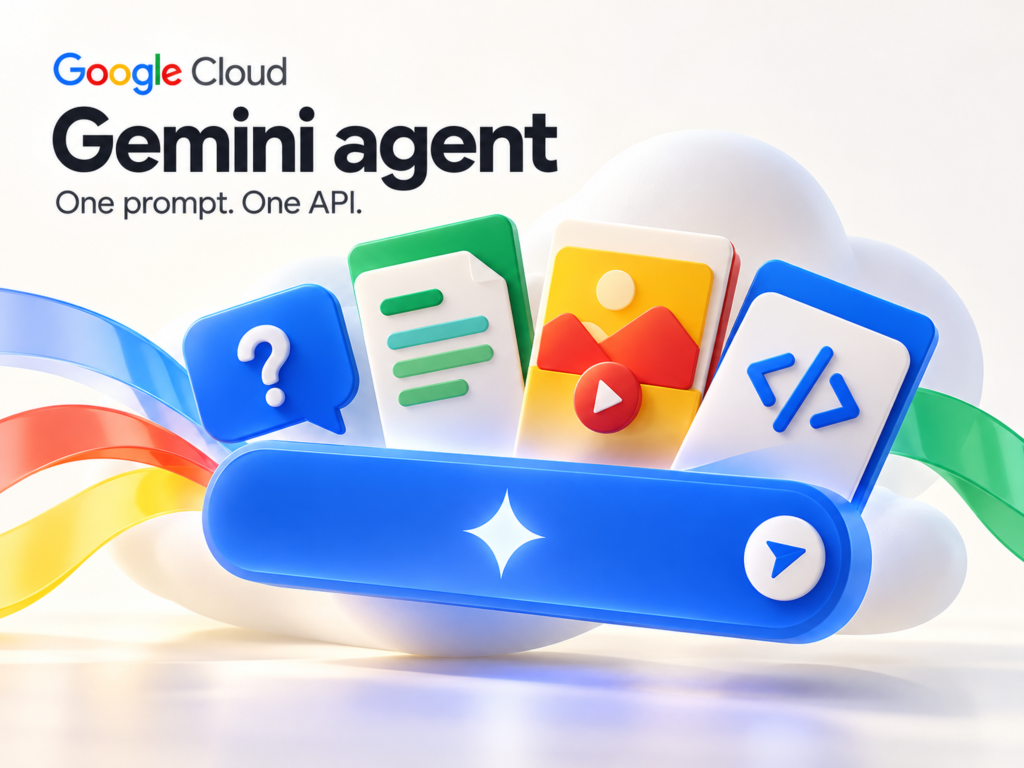
Google Cloud has introduced the Google Cloud Gemini agent, a single agent for enterprise work. The Gemini agent is a cloud-hosted agent from Google Cloud that answers questions, does knowledge work, creates media, and writes and runs code. It does all of this from 1 prompt box and 1 API. For developers, the agent is […] The post Google Cloud Launches Gemini Agent, One Universal Agent for Enterprise Work appeared first on MarkTechPost.
Read original articleOctober 9, 2026
Among the hundreds of results OpenAI released to the mathematics community this week are proofs relevant to 23 problems from the Erdős problems... The post OpenAI Has Also Included Proofs For 23 Erdos Problems In Its Latest Math Proof Drop appeared first on OfficeChai.
Read original articleOctober 9, 2026
Explore a comprehensive coding guide to Google Research's RRSI (Regularized Recursive Self-Improvement), detailing how noise bands, cost rules, and leakage screens enable safe, efficient, and self-improving AI agents. The post Google Research RRSI Guide: Mastering Self-Improving AI Agents appeared first on MarkTechPost.
Read original articleOctober 9, 2026
US Bars Microsoft, Indian Firms From Visa Program in Blow (2) Bloomberg Law News
Read original articleOctober 9, 2026
arXiv:2610.10942v1 Announce Type: new Abstract: Reinforcement learning environments are now a primary lever for improving large language model (LLM) capabilities in post-training, yet most agentic benchmarks remain static: the world moves only when the agent acts, the reward is a terminal verdict, and the pass bar is set arbitrarily. We introduce StoreBench, a live-commerce environment in which an agent runs a mid-size online apparel store on a production-grade commerce backend, testing long-horizon planning and economic judgment under uncertainty. Customers order around the clock, suppliers reprice and fail, and market shocks arrive with partial or no warning. The agent acts through the same 29 merchant tools a human operator would use, under a windowed operation budget that makes simulated time a function of actions taken, so model latency cannot influence simulated time. Pass thresholds are calibrated against scripted anchor policies, the reward is hardened against a catalogue of reward hacks, and every episode replays identically given a sequence of actions. We evaluate seven frontier LLMs on 11 scenarios of 30 to 45 days and a full simulated year, over three world seeds at matched reasoning effort. No model matches the scripted smart-triage policy on average: the best, DeepSeek-V4-Pro, passes 49% of task-seed cells against the heuristic's 97%. Human experts working through the same tools and budgets outscore every model (mean composite 0.708 vs. 0.700). Over a full simulated year under the Claude Code harness, most models show dramatic performance improvement. In a GRPO post-training run, Qwen3.5-27B trained on only five disjoint tasks raises its mean composite on the held-out evaluation tasks from 0.136 to 0.373. We release five example training-split tasks, ten sample trajectories, and the scoring and verification tooling; the full environment and evaluation suite are withheld to keep the benchmark uncontaminated.
Read original articleOctober 9, 2026
arXiv:2610.11123v1 Announce Type: new Abstract: Most human-agent interaction today remains text-based. Natural language can impose cognitive overload, ambiguity, information chaos, and slow input for complex tasks; ephemeral generative UIs can present structured information and guide users toward task completion. We propose GenUI-Harness, a multi-agent harness pairing a Tool Agent for information retrieval and task execution with a GUI Coder Agent that identifies ambiguities and generates front-end code for structured interfaces. Training the coder with reinforcement learning is challenging: verifiable rewards for interactive UI generation require costly execution, while LLM-as-a-Judge rewards are prone to reward hacking. We address the first challenge with Dynamic UX, a lightweight package for dynamic interaction and reward collection in a single sandbox, and the second with Reward Auditor, a meta-reward mechanism that monitors reward distributions and distills diagnostic patterns into a shared rubric and scoring specification. We introduce UI-TAU Bench, a benchmark for active human-agent interaction through generated UI code, built on 10 real-world domain databases constructed from public data sources and based on Tau-Bench tool-use settings, with Lite (300 tasks) and Full (1,000 tasks) splits. GenUI-Harness achieves an average Pass@3 gain of 4.48 percentage points over smolagents on Lite. Training with GenUI-Harness improves a 4B backbone from 9.33% to 58.00% Pass@3, outperforming larger frontier models such as Claude Opus 5 (46.67%). GenUI-Harness also remains robust on ambiguous and non-ambiguous queries. In a reviewer survey comparing communication channels, generated UIs reduce average dialogue rounds from 3.4 to 1.2. These results show that data-aware generative interfaces can support effective task completion and reduce dialogue rounds in evaluated database-backed workflows.
Read original article