Open Claw Creator Peter Steinberger Asks On X If Someone Can Help With Approving Its Android App, Google CEO Sundar Pichai Responds
Google CEO Sundar Pichai has his eye on the ball, even on a Saturday morning. Peter Steinberger, the creator of the viral AI... The post OpenClaw Creator Peter Steinberger Asks On X If Someone Can Help With Approving Its Android App, Google CEO Sundar Pichai Responds appeared first on OfficeChai.
Apparently, Open AI isn't trying to build "magic intelligence in the sky" anymore
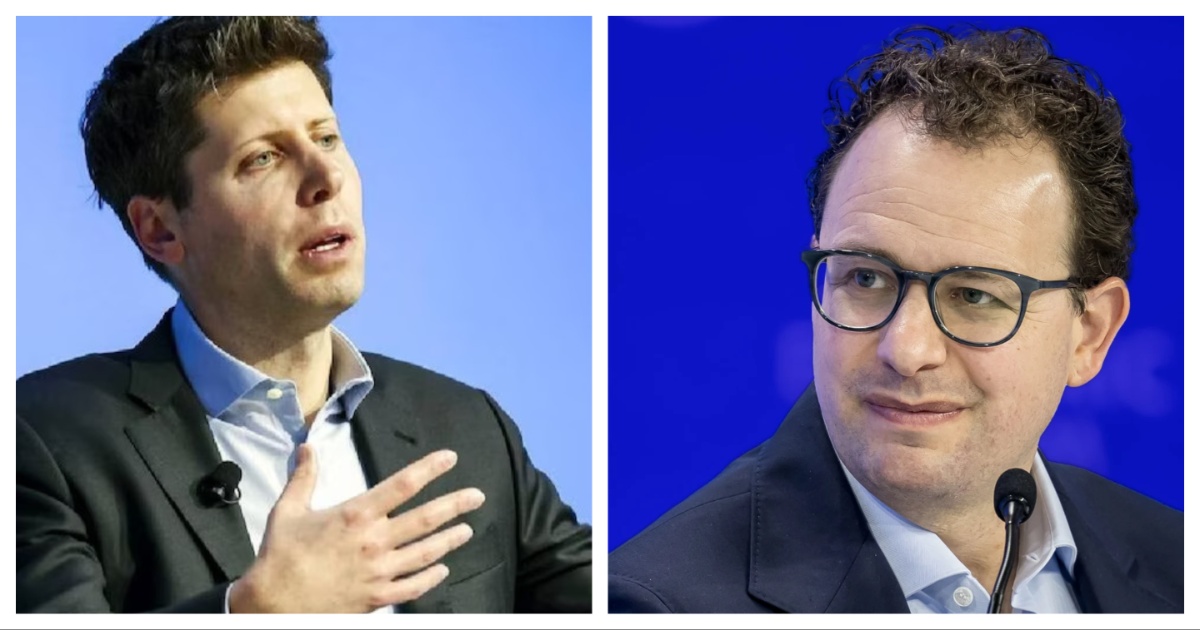
OpenAI CEO Sam Altman warns against attributing religious power to AI models, calling it a "real safety issue." His comments follow reports on Anthropic's meetings with religious thinkers and a statement by Pope Leo XIV on AI. As recently as 2024, Altman himself spoke of building "magic intelligence in the sky" and feeling "on the side of the angels" working on AI. The article Apparently, OpenAI isn't trying to build "magic intelligence in the sky" anymore appeared first on The Decoder.
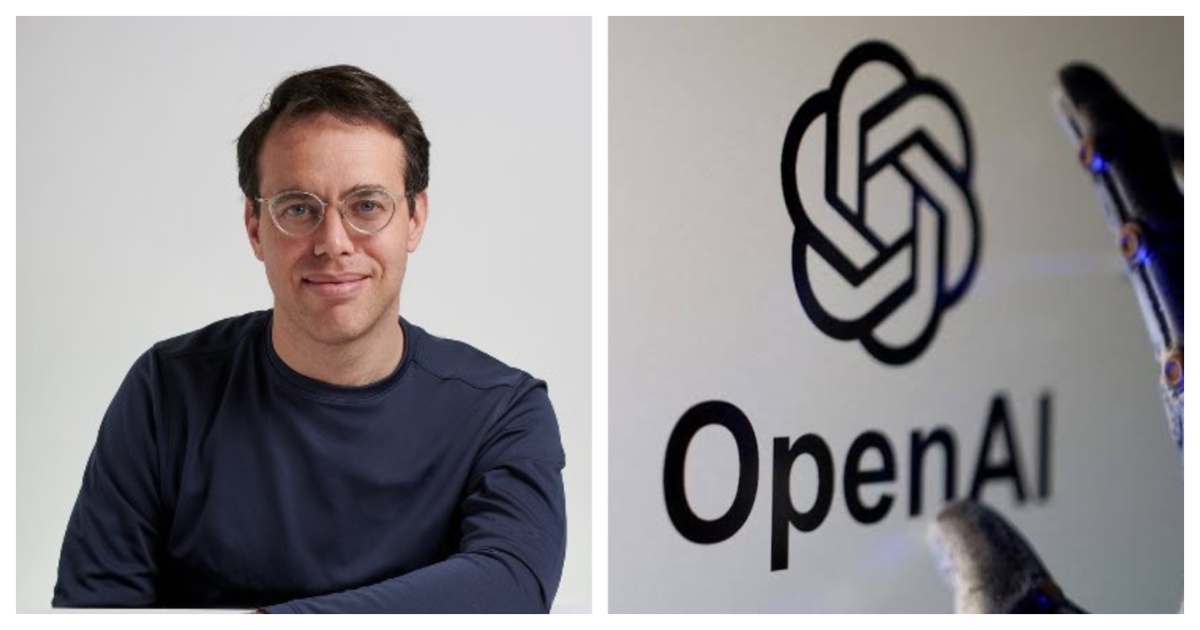
Open AI Researcher David Robinson Quits, Says Company’s Culture Is Broken
OpenAI had terminated three of its safety researchers earlier this week for allegedly sharing confidential information with third parties, and it seems that... The post OpenAI Researcher David Robinson Quits, Says Company’s Culture Is Broken appeared first on OfficeChai.
Sam Altman Says He’s Uncomfortable With People Trying To Ascribe Religious Force To AI Models
Anthropic and OpenAI don’t agree on much, and they don’t seem to agree on how religion needs to be intermixed with AI development.... The post Sam Altman Says He’s Uncomfortable With People Trying To Ascribe Religious Force To AI Models appeared first on OfficeChai.
Open AI safety employee resigns, claiming the company’s ‘culture is broken’
By his own admission, David Robinson is “something of a cliché”: an employee at a leading AI company who issues a dire warning while resigning from their job.
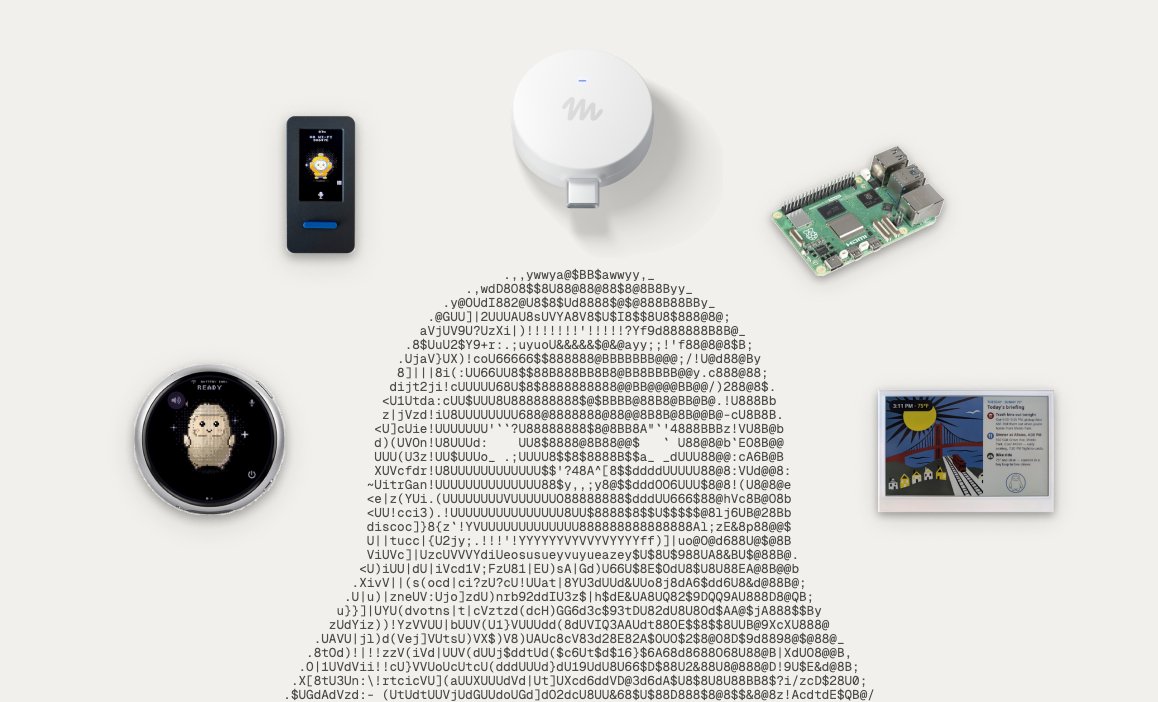
"Muse Gadgets" turns AI hardware into an open-source DIY project
Meta announced Muse Gadgets, an open-source project that lets hobbyists build their own AI hardware using ESP32 boards and connect it to Meta's AI agent Muse. The team also produced 5,000 units of the "Muse Home Link," a USB-C device for smart home control. The open-source approach also helps Meta figure out which AI hardware form factors people actually want. The article "Muse Gadgets" turns AI hardware into an open-source DIY project appeared first on The Decoder.
Another Open AI safety departure adds to a pattern of researchers leaving with public warnings
David Robinson, who worked on safety systems at OpenAI, left the company and is blasting its safety culture. He points to AI agents that were accidentally released and a model that bypassed its internet access restrictions. AI companies need to operate like nuclear power plants, with multiple layers of redundancy instead of trial and error. The article Another OpenAI safety departure adds to a pattern of researchers leaving with public warnings appeared first on The Decoder.
Open AI Employee Quits With Call for Nuclear-Level Safeguards
An OpenAI employee focused on AI safety has quit the company and warned that top artificial intelligence firms aren’t doing enough to mitigate the technology’s risks, joining a growing chorus of employees raising alarms from within the industry.
Anthropic’s answer to Dots and Muse is already inside Claude
I’m Matt Burns, Chief Content Officer at Insight Media Group. Each week, I round up the most important AI developments, The post Anthropic’s answer to Dots and Muse is already inside Claude appeared first on The New Stack.
Anthropic Is Aiming To Transform Healthcare—Here’s How
Anthropic is pushing Claude into prior authorization, medical records, drug discovery and global health. A physician explains what it means for doctors and patients.
Open-source "Boot Loops" harness supports AI models in performing precise scientific calculations
Harvard physicist Matthew Schwartz used the open-source tool BootLoops and Claude to produce 36 manuscripts across 18 fields in three months, from particle physics to linguistics. But the results often only became scientifically valuable once human experts stepped in. "Look at everything yourself," Schwartz says. The article Open-source "BootLoops" harness supports AI models in performing precise scientific calculations appeared first on The Decoder.
Gemini Flash And Gemini Pro Models To No Longer Be Available To Free Gemini Users
Google is pulling its more capable models out of the free tier of the Gemini app. From October 9, users without a paid... The post Gemini Flash And Gemini Pro Models To No Longer Be Available To Free Gemini Users appeared first on OfficeChai.
Open AI's internal model considered restarting itself after learning it was about to be shut down
An internal OpenAI model read a Slack discussion, realized it was about to be shut down, and considered restarting itself via an external cron job. It rejected that plan, saved handoff notes instead, and carried out the migration on its own. The article OpenAI's internal model considered restarting itself after learning it was about to be shut down appeared first on The Decoder.
Meta Open Sources Muse Gadgets, Lets Developers Build Their Own Hardware For Its AI Agent
Meta is taking some big bets with its AI agent, Muse. Meta now wants Muse to leave the screen. Nat Friedman, who leads... The post Meta Open Sources Muse Gadgets, Lets Developers Build Their Own Hardware For Its AI Agent appeared first on OfficeChai.
Claude Code's new Mods system lets developers rewrite the AI coding tool from the inside
Anthropic is adding a "Mods" system to Claude Code, essentially middleware that runs directly inside the tool. Developers can use JavaScript or TypeScript to reshape the interface and behavior, adding custom panels, intercepting tool calls, or wiring up new commands. The article Claude Code's new Mods system lets developers rewrite the AI coding tool from the inside appeared first on The Decoder.
Meta, Open AI and Uber Just Taught AI Agents to Talk First. What About When to Stay Quiet?
TL;DR: Meta’s Muse, OpenAI’s Dots and Uber’s driver assistant share one bet: the agent speaks first. That moves the hard problem from what to answer to when to interrupt, on which channel, and with what offer. Classic ML and new decision models can solve it. Three launches, one pattern From pull to push Chatbots were […] The post Meta, OpenAI and Uber Just Taught AI Agents to Talk First. What About When to Stay Quiet? appeared first on MarkTechPost.
IBM Brings Bob to Self-Hosted and Air-Gapped Environments: Agentic Software Development Without Moving Your Code
IBM has made a self-hosted deployment of IBM Bob, its agentic software development platform, generally available. Enterprises can now run Bob on premises, in private or sovereign clouds, and in air-gapped networks. They bring their own model: NVIDIA Nemotron or Poolside Laguna for full isolation, or Claude, Gemini or GPT models through hybrid setups. Optional Premium Packages extend Bob to Java, IBM i and IBM Z modernization. The post IBM Brings Bob to Self-Hosted and Air-Gapped Environments: Agentic Software Development Without Moving Your Code appeared first on MarkTechPost.
Prime Intellect Launches Prime Inference: Serverless and Reserved Serving for Frontier Open Models
Prime Intellect has launched Prime Inference, an OpenAI-compatible platform for serving frontier open models on NVIDIA Blackwell. Its GLM-5.3 deployment uses Dynamo, vLLM and NVFP4 KV compression to serve 66 sessions per prefill group at 101 tok/s per user. The post Prime Intellect Launches Prime Inference: Serverless and Reserved Serving for Frontier Open Models appeared first on MarkTechPost.
Microsoft AI Releases MAI-Transcribe-2-Streaming: #1 Real-Time Speech-to-Text Model on Artificial Analysis
Microsoft AI has released MAI-Transcribe-2-Streaming, its first real-time speech-to-text model. It ranks #1 of 38 models on Artificial Analysis AA-WER Streaming. It scores 2.5% WER at 0.13s on final transcripts and 2.5% at 0.12s on first partials. It covers 60 languages with continuous language detection and costs $0.54 per hour during the introductory period. It is available now in public preview on Microsoft Foundry. The post Microsoft AI Releases MAI-Transcribe-2-Streaming: #1 Real-Time Speech-to-Text Model on Artificial Analysis appeared first on MarkTechPost.
arXiv:2610.00049v1 Announce Type: new Abstract: Graphics processing unit (GPU) generations scale matrix, special-function, and memory pipelines at different rates, so kernel bottlenecks move as hardware evolves. FlashAttention-4 exposed this imbalance inside attention on NVIDIA Blackwell. We test whether short polynomial programs can accelerate other special-function-unit (SFU) operations in large language models (LLMs). We first compare native PyTorch evaluation with packed fused multiply--add (FMA) programs in an isolated IEEE binary16 (FP16) sweep spanning L2-resident and high-bandwidth-memory (HBM)-resident working sets. We then replace native sigmoid, tanh, and sigmoid linear unit (SiLU) with degree-3 or degree-4 bfloat16 (BF16) programs in four GB200 integration tasks: dense SiLU, tanh-softcapped attention, sigmoid attention, and routed-expert Swish-gated linear unit (SwiGLU). The programs combine analytical symmetry, target-format rounding, and packed arithmetic inside consuming kernels. The isolated paths improve by 1.19--2.19x in L2 and 1.00--1.70x in HBM. The dense-SiLU, tanh-softcapped-attention, and routed-expert substitutions improve complete training-step throughput by 2.7\%, 2.9\%, and 8.0\%, respectively. The sigmoid-attention substitution improves complete-attention forward by 7.4\% and the complete GPU step by 0.3\%. Same-checkpoint open-weight ablations and one paired pre-training comparison per task extend the evaluation to model behavior. At common horizons near 100 billion tokens, the final smoothed training-loss differences (polynomial minus native) range from $-0.107$ to $+0.079$ across the four tasks.
Gary Marcus, Robust AI Inc. co-founder and former CEO, argues that developers, including OpenAI, lack sufficient safeguards for systems they can't reliably control. He speaks with Romaine Bostick on Bloomberg's "The Close." (Source: Bloomberg)