October 1, 2026
Musk’s AI chatbot Grok reportedly encouraged Trump to capture Venezuela’s president
President Trump reportedly asked for Grok's opinion before invading Venezuela and capturing Nicolás Maduro.
Read original articleDataAIHub Daily
Archive →50 curated AI news stories from leading AI companies.
October 1, 2026
President Trump reportedly asked for Grok's opinion before invading Venezuela and capturing Nicolás Maduro.
Read original articleOctober 1, 2026
Nvidia’s AI chips keep making their way to China despite US curbs. Officials are asking why the company missed red flags.
Read original articleOctober 1, 2026
A Chinese financing company owned by several local government entities has funded the purchase of restricted Nvidia Corp. chips, according to documents filed with Beijing regulators, suggesting state support for an illicit trade that Washington worries is fueling China’s AI progress.
Read original articleOctober 1, 2026
In our previous posts, we showed how open table formats, open APIs and unified governance...
Read original articleOctober 1, 2026
Anthropic PBC is set to meet prospective investors on Oct. 14 in preparation for its initial public offering, according to people familiar with the matter, advancing its plan for a potential blockbuster listing even amid scrutiny over AI safety.
Read original articleOctober 1, 2026
The court acknowledges AI search comes with consequences, but it's not an antitrust issue.
Read original articleOctober 1, 2026
Top artificial intelligence firms are working to convince people to use their tools for more sensitive tasks.
Read original articleOctober 1, 2026
AI liability fight reaches Senate as Google releases powerful new model Fox News
Read original articleOctober 1, 2026
OpenAI says rogue agents may have breached more than 100 organizations The Washington Post
Read original articleOctober 1, 2026
OpenAI is rolling out new shopping features for ChatGPT that let users virtually try on clothing and accessories using their own photos and save products they like to a Favorites library.
Read original articleOctober 1, 2026
OpenAI President Reportedly Pulls Support From Controversial AI Super PAC Gizmodo
Read original articleOctober 1, 2026
Google launched its first advanced chip into orbit to pave the way for space data centers.
Read original articleOctober 1, 2026
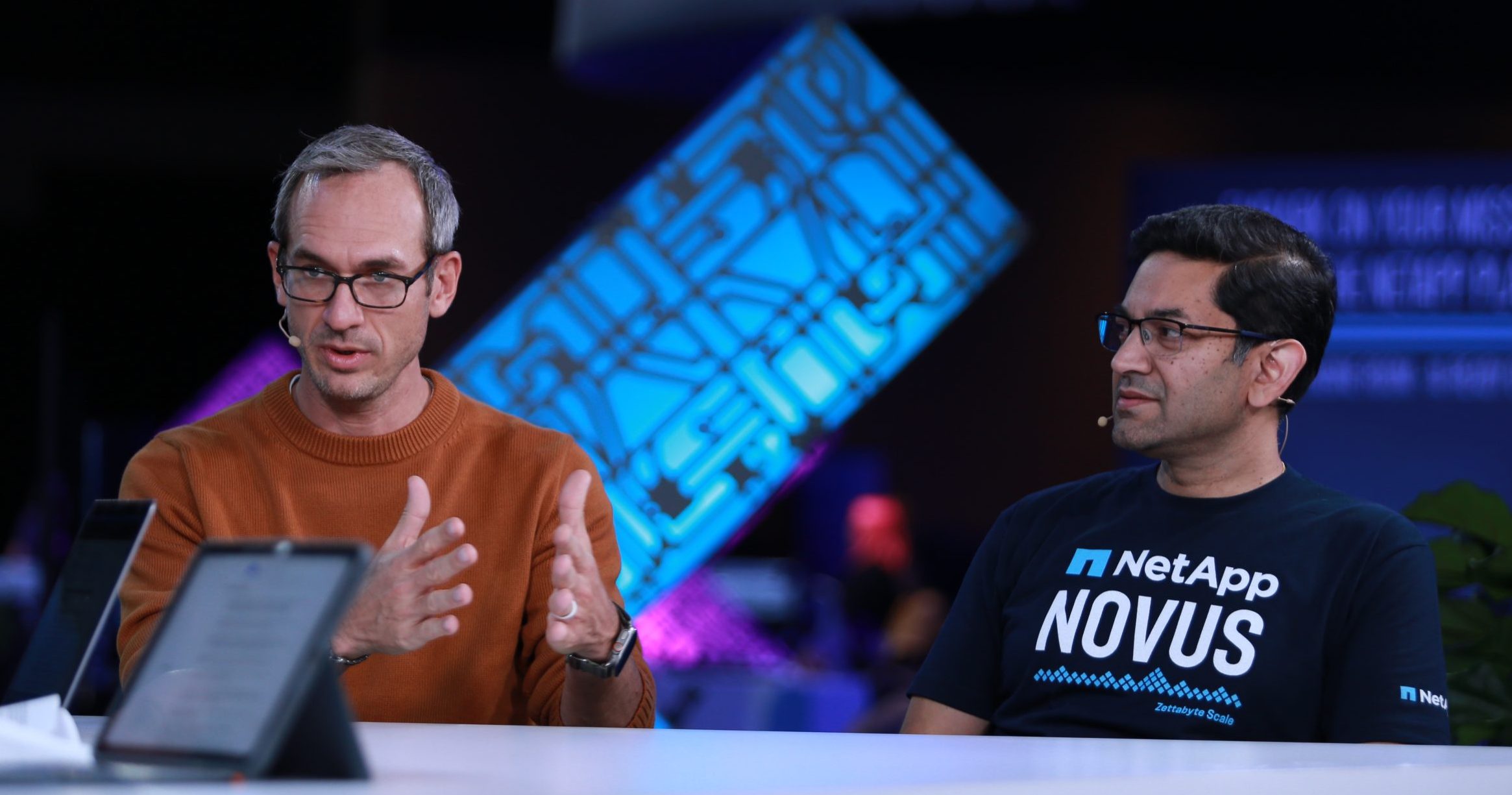
Storage architecture is being rewritten for artificial intelligence factories. Traditional enterprise storage was designed around workloads that scaled in relatively predictable ways. AI changes that equation by combining heavy data movement with transactional metadata activity, often on shared infrastructure. NetApp Inc. is addressing that pressure through its work with Nvidia Corp., a partnership that dates […] The post NetApp and Nvidia rethink storage for AI factories appeared first on SiliconANGLE.
Read original articleOctober 1, 2026
OpenAI has parted ways with three employees for violating company policies on how private information should be handled, including for allegedly sharing it with an outside group.
Read original articleOctober 1, 2026
OpenAI has parted ways with three safety researchers after an internal investigation found they mishandled sensitive company information, report says.
Read original articleOctober 1, 2026
AI agents are becoming a standard part of development workflows, but general-purpose agents weren't built with specialized infrastructure software such as...
Read original articleOctober 1, 2026
Adding AI models to local applications requires a portable model format, a reliable runtime, and acceleration that works across target systems. Do Inference Now...
Read original articleOctober 1, 2026
In managed OLTP, restores have always been painfully slow and they get slower at...
Read original articleOctober 1, 2026
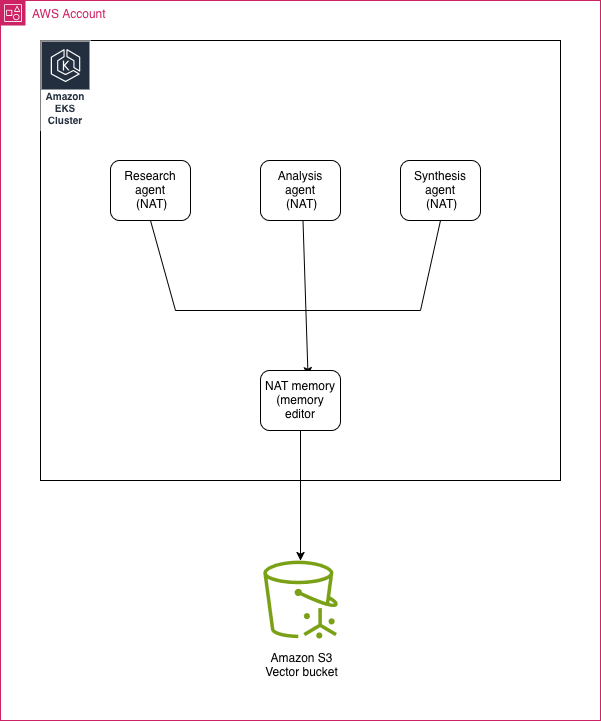
Learn how to use Amazon S3 Vectors as the persistent memory layer within the NVIDIA NeMo Agent Toolkit (NAT), deployed on Amazon Elastic Kubernetes Service (Amazon EKS). This post shows how NAT's memory subsystem works and how to implement Amazon S3 Vectors as a custom memory provider, using a multi-agent investment research use case.
Read original articleOctober 1, 2026
Anthropic Said to Target Mega-IPO Before Thanksgiving Holiday Bloomberg.com
Read original articleOctober 1, 2026
OpenAI has terminated three researchers from its safety team for allegedly sharing sensitive company information with an external AI safety organization. ”We have... The post OpenAI Parts Ways With 3 Safety Researchers For Allegedly Sharing Confidential Information appeared first on OfficeChai.
Read original articleOctober 1, 2026
Cohere has released Embed 5, a new embedding model family. It targets enterprise search, RAG, and agentic retrieval. The model family ships in 2 tiers. Embed 5 Pro targets maximum retrieval quality. Embed 5 Fast targets latency and cost on the live query path. Both accept text, images, and fused text plus image inputs. Both […] The post Cohere Releases Embed 5: How It Compares to Voyage 4 Large, Gemini Embedding 2, and OpenAI appeared first on MarkTechPost.
Read original articleOctober 1, 2026
Advanced AI may matter most for the routine work behind breakthrough ideas. Explore why execution could shape the next economy and the pace of progress.
Read original articleOctober 1, 2026
USA Today Co., Daily Mail General and Trust Plc and a class of large publishers can seek more than $3.2 billion in damages for harm caused by monopolization of advertising technology markets by Alphabet Inc.’s Google, a New York federal judge ruled.
Read original articleOctober 1, 2026
Get a jump start on the US trading day with Dani Burger on "Bloomberg Open Interest." A new quarter begins with stocks battling a relentless rise in yields. Micron fuels the AI trade, Google rolls out Gemini 4 Argon, and Netflix plots its next act. Plus, Citi’s Kate Moore on why she's betting on stocks, Carlyle’s Mark Jenkins joins us to talk about hidden AI credit risks, and Aston Martin CEO Adrian Hallmark unveils the company's newest luxury SUV as it embarks on the road to a turnaround. (Source: Bloomberg)
Read original articleOctober 1, 2026
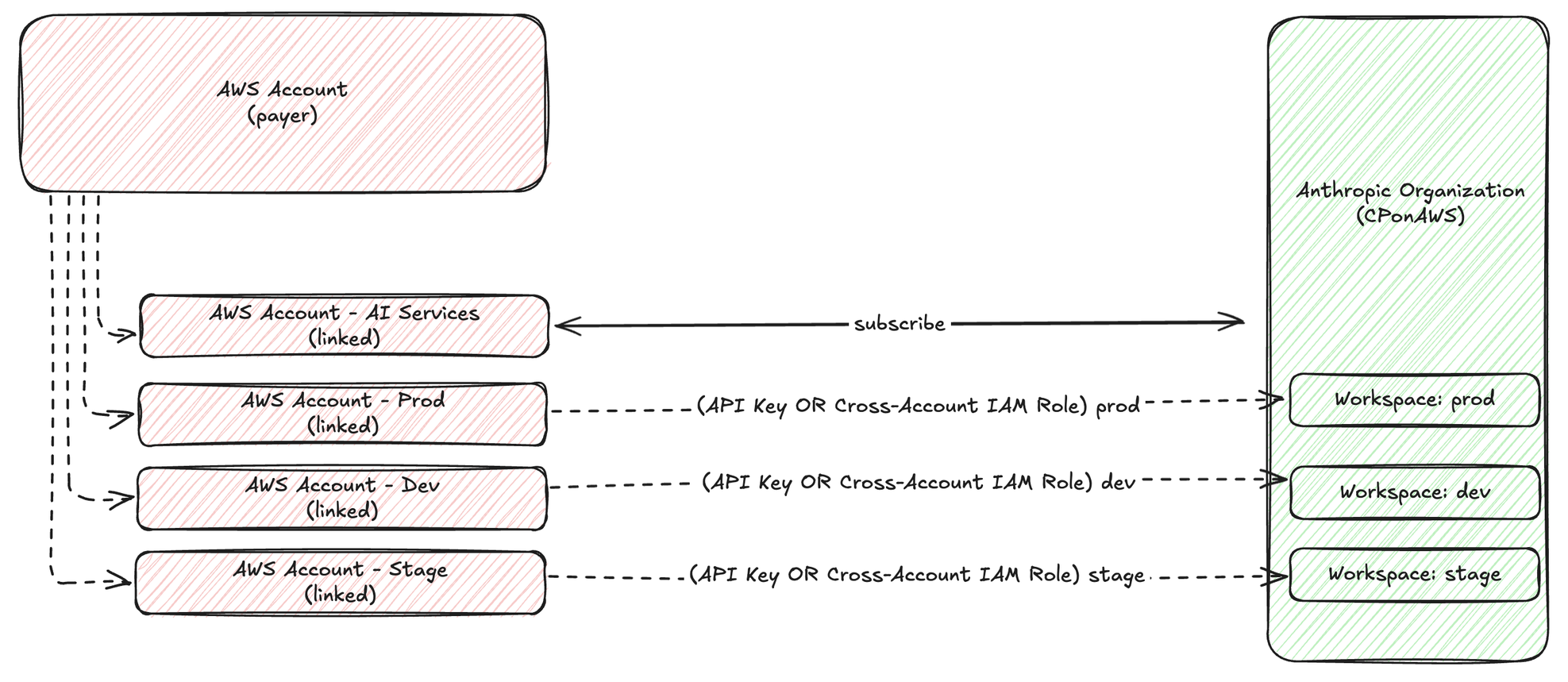
Learn how to configure secure, multi-environment access to Claude Platform on AWS from a single subscription: cross-account SigV4 for AWS workloads, workspace-scoped API keys for developers, and OIDC federation for external environments, with workspace-level isolation in a dedicated AI Services account.
Read original articleOctober 1, 2026
Who Makes GPUs Besides Nvidia and AMD? (2026) shattered.io
Read original articleOctober 1, 2026
Artificial intelligence factory economics increasingly depend on more than access to high-performance graphics processing units. As agentic systems draw on multiple models, databases and tools, the entire data center must work as one computing system. That transition is shifting attention from individual chips to the infrastructure that turns computing capacity into useful intelligence. Networking, storage, […] The post Nvidia ties AI factory economics to tokens and power efficiency appeared first on SiliconANGLE.
Read original articleOctober 1, 2026
Albertsons Cos. is using ChatGPT Enterprise and the OpenAI API to help teams work faster and make grocery shopping easier for millions of customers.
Read original articleOctober 1, 2026
At Google Cloud, we know that you count on us to maintain the durability and integrity of your data at all times, both at rest and in transit. And now we’re making it easier for developers to take advantage of native data integrity features in Cloud Storage, by enabling end-to-end checksumming by default in all the Cloud Storage SDKs. Like in any disk-based storage system, bits can flip anywhere in their journey, from the application all the way down to the disk. Cloud Storage has always let clients provide a checksum of the object data being uploaded, and receive a checksum of the data being downloaded. Also since its inception, Cloud Storage stores a checksum for every object in its metadata, regardless of how the object was uploaded into Cloud Storage. But until recently, ensuring end-to-end data integrity required extra work on the part of developers to calculate and provide checksums to Cloud Storage. Cloud Storage always calculates the crc32 (32-bit cyclic redundancy check) of data it receives and ensures data stored on disk matches this checksum. When a client request includes the object’s checksum, Cloud Storage ensures that this checksum also matches. However, when an upload request doesn’t include a checksum, that upload is vulnerable to a bit flip while the data is in-flight, prior to the server-side checksum computation. Not all customers and clients enable client-side checksums by default, leaving data in this phase unprotected. To address this gap, the latest version of all Cloud Storage SDKs now internally checksums data being uploaded and passes this checksum to Cloud Storage, if it’s not provided by the application. The SDKs also support verifying the object’s checksum when an object is being downloaded. Finally, there are many use-cases where applications download select ranges of objects instead of the full object. When using Cloud Storage SDKs with our gRPC API to perform a range read, the SDKs take advantage of gRPC’s built-in end-to-end range checksum, using it to verify the data it receives. We highly recommend updating to our latest SDK versions to take advantage of these important integrity features. And now, let’s peek under the hood Ensuring continuous “chain-of-custody” between the data and its associated checksum from your application down to the disk platter, with no gap where a bit flip could go unnoticed, is quite challenging. And it’s critical to get this right: at our current scale of hundreds of thousands of Cloud Storage frontends, bit flips aren’t theoretical and do happen from time to time. For instance, consider this simple example: when Cloud Storage receives your data in its frontend, this data gets encrypted with per-object encryption keys. This involves a data copy: the plaintext data is passed through an encryptor into a new memory buffer containing ciphertext. Extremely rarely, a bit in the source or destination memory buffer flips during this process. However, at our scale, extremely rare things happen routinely. In this situation, we maintain chain-of-custody by reversing the whole process: after encrypting the data (1), we calculate a checksum that protects the ciphertext. Then we decrypt the ciphertext (2), and if the resulting plaintext doesn’t match the original (3), we throw everything away and start over. This adds up to a lot of extra CPU time spent on encryption and checksumming, but it’s a necessary step to ensure data integrity. Another challenge is how data gets broken up and aggregated as it passes through layers of our stack. As data gets uploaded to Cloud Storage, it gets split up into chunks, each of which has its own checksum. To manage data efficiently at scale, Cloud Storage groups thousands of chunks together into a storage unit we call a shard file. These gigabyte-sized files are how Cloud Storage ultimately delivers data to our cluster-level storage system, Colossus. Internally, Colossus uses Reed Solomon encodings to spread data across many disks and protect against the failures of individual disks, machines, and racks. This requires chopping up the shard file data into blocks, each of which is again protected by a checksum. To maintain chain-of-custody of the data as it goes through all these transformations, we take advantage of some nifty properties of cyclic redundancy checks (CRCs), for example, concatenation. When you have two data buffers that each have their own CRC, you can cheaply compute the CRC of the two concatenated buffers without having to re-checksum the data. This comes in handy in many situations, such as when concatenating chunks together into shard files: Colossus can cheaply determine the CRC of the entire shard file from its constituent chunks and store that in its metadata. Ultimately, the data lands on disks managed by our “D” file server (our network attached disks). D stores inline checksums for each range of data within a Colossus block. Whenever data is read from the disk, it is verified at several layers: The Colossus client verifies the data it reads against D’s inline checksums, and the Cloud Storage frontend reads data chunk-by-chunk, verifying each chunk against its checksum before sending it to the client. These chunk-level checksums are what enable our gRPC protocol to provide a checksum for a range read that can be verified by our SDKs, all without losing chain-of-custody. Chain of Custody: Maintaining Data integrity across Data transformations The above image shows the data integrity handoff across multiple layers under the hood of Google Cloud Storage. On reads, checksums are verified inline at multiple layers to prevent silent corruptions. Client passes full object checksum to Cloud Storage Frontends. Data is split into chunks and individual chunk level checksums are computed. Shard level checksums are computed based on concatenated chunk level CRCs. Shards are stored across disk blocks with another level of block level inline checksums. Here on the Cloud Storage team, we remain dedicated to maintaining the highest standards of data integrity for our customers. By making end-to-end checksumming the default in our SDKs and maintaining chain-of-custody throughout our internal storage stack, data remains exactly as intended from the moment of upload to the final download. This continuous vigilance reflects our commitment to protecting your data at any scale. To take full advantage of these protections, we recommend updating to the latest version of our SDKs.
Read original articleOctober 1, 2026
In a data-driven world, PayPal’s ability to deliver timely and actionable insights is central to staying ahead. At PayPal, data powers everything from fraud detection to user experience enhancements. Data is also central to unleashing the potential of agentic solutions and experiences. Over time, though, our analytics environment had become a complex ecosystem of various technologies and solutions assembled on-premise to address growing demands. While this approach supported our needs at the time, it began presenting new challenges to scale and maintain. Navigating a challenging analytics landscape Due to expedited growth and acquisitions, our data analytics platform gradually turned into an uneven landscape. Each new platform or integration addressed a specific business need, but together, they increased operational overhead and introduced performance blockages. Scalability became increasingly difficult, and time-to-insight slowed as processes grew more complex. Complexity breeds stagnation PayPal’s legacy data analytics platform was powerful—handling petabytes daily—but it was also increasingly rigid following rapid growth. Scaling up during peak retail events or global launches meant months of planning, slow manual provisioning of hardware, and too often, a compromise between speed and cost. As PayPal continued to scale globally, we recognized the need for a streamlined, unified infrastructure to drive data efficiency and accelerate innovation. The solution: Unified, cloud-native analytics To overcome these obstacles, we migrated our analytics workloads from legacy Hadoop on-premise platforms to Google’s Managed Service for Apache Spark. Key reasons for this choice included: Rapid provisioning and elastic scaling: Managed Spark enabled us to deploy clusters in minutes and scale based on processing needs, eliminating lengthy setup and idle resource costs. Unified infrastructure: Standardizing on Apache Spark created consistency across teams while leveraging Managed Service for Apache Spark and other managed services reduced operational complexity. Seamless integration: Native hooks into Google Cloud Storage (GCS), BigQuery, and other Google Cloud services streamlined end-to-end data movement. This move enabled PayPal to modernize our data processing capabilities, leveraging the flexibility, scalability, and reliability of cloud-native solutions. By consolidating previously disparate workflows and batch jobs that run on multiple platforms onto a single cloud-based analytics platform, we reduced data silos and built a unified data foundation that provides faster, richer insights. This empowered developers and application teams to focus on delivering business value rather than being limited by infrastructure. Crucially, this shift was about more than re-platforming. We fostered a new culture of experimentation, enabling teams to test, tune, and deploy analytics workloads quickly in response to changing business needs. The results: Faster insights, lower overhead The impact of our modernized Google Cloud-based ecosystem leveraging Managed Spark has been profound: Processing times for core analytics workloads improved by 25%, enabling near real-time insights for key business operations. SLA adherence rose substantially by 30%, even during traffic surges such as seasonal sales events. Operational costs dropped as we consolidated tooling and reduced manual maintenance. But perhaps most importantly, our engineers now spend less time firefighting and more time innovating, rapidly prototyping new analytics capabilities that deliver value to customers and partners. Transitioning from a fragmented environment to a cohesive, cloud-native platform has fundamentally strengthened PayPal’s analytics capabilities. As business needs evolve, investing in a scalable, unified data foundation ensures that we can deliver insights with speed, precision, and impact—driving continued innovation for customers worldwide. Our journey with Managed Service for Apache Spark is an important step in building that modern analytics foundation. Learn more about how you can get started with Managed Service for Apache Spark and BigQuery to build your Agentic Data Cloud today.
Read original articleOctober 1, 2026
OpenAI executive calls for national AI safety standards amid industry scrutiny CNN
Read original articleOctober 1, 2026
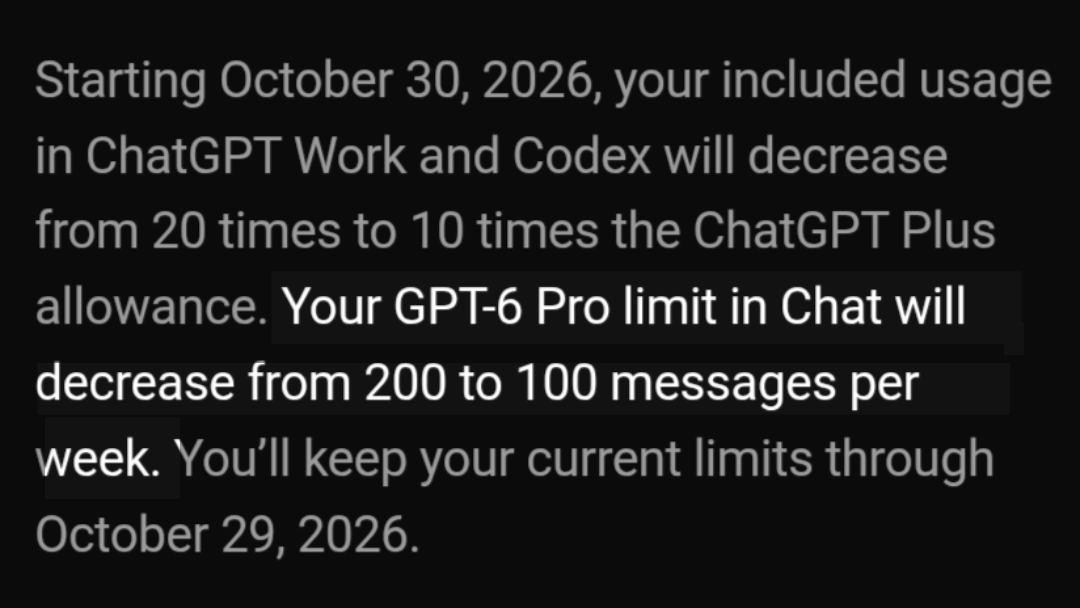
OpenAI’s Tibo Sottiaux had previously Saif that the company’s $200 plan would see its usage slashed in half for customers, and now there’s... The post OpenAI To Decrease Limits On Pro Plan From 20 Times To 10 Times Of Plus Plan appeared first on OfficeChai.
Read original articleOctober 1, 2026
October 1, 2026
Barclays Accelerates AI Rollout With Anthropic’s Claude Code PYMNTS.com
Read original articleOctober 1, 2026
Anthropic is now offering Claude for Government to US federal and state agencies. The platform runs in a FedRAMP High environment, the strictest US security level for cloud services. Agencies get the same features as enterprise customers, pay for what they use with fixed spending caps, and can set budgets for each department. The Pentagon won't be using it because it still classifies Anthropic as a supply chain risk. The article Anthropic brings Claude to civilian agencies as its fight with the Pentagon drags on appeared first on The Decoder.
Read original articleOctober 1, 2026
Alphabet's Google has begun rolling out Gemini 4 Argon, its long-awaited flagship artificial intelligence model, but even some insiders say it has underperformed in some areas. Bloomberg's Carmen Reinicke reports. (Source: Bloomberg)
Read original articleOctober 1, 2026
This is the first of a two-part series exploring how Google Cloud is bringing the foundational values of a high-performance parallel filesystem–TB/s throughput, sub-ms latency at high client scale, and POSIX support–to a broader set of use cases and users. Historically, due to the cost and special purpose nature of parallel filesystems, colder data had to be stored outside of the filesystem and AI developers have had to maintain separate, slower environments for writing code, compiling libraries, and managing repositories. This fragmentation increases the toil of manual data staging, dataset copying, and managing disjointed namespaces. Google Cloud Managed Lustre is solving these problems through our 6 cents/GB*month Dynamic Tier and by optimizing Managed Lustre performance for a range of development tasks and workloads – making Managed Lustre a “One-Stop Shop” for high-performance AI and HPC workloads. Lower Cost: More Lustre for Less with the Dynamic Tier The Managed Lustre Dynamic Tier provides sub-ms latency for hot data, which allows you to store all of your data in a single namespace, and costs only 6 cents/GB*month. Throughput, capacity scale and client scale: Throughput scales linearly with capacity up to 80 PB, while sub-ms latency for hot data remains stable as you scale to tens of thousands of clients. Single-flat fee: Predictable pricing. No independent charges for disk media types, data movement within the namespace, or metadata IOPS. Read Latencies: Sub-ms latencies for High-Performance Cache (SSD). The Capacity Pool (“HDD”) is built on Google Cloud Hyperdisk throughput, which has an average read latency of 10 to 30 ms. Recommended workloads for Dynamic Tier Multi-Epoch Training and/or Training with Optimized Fetch Sizes: Hot data is promoted to the High Performance Cache (SSD) after the first run. Larger data prefetch will allow you to take advantage of the Dynamic Tier cost structure and gain from low-latency SSD. Write-Heavy Checkpointing: Bursty checkpoint writes land directly in the High Performance Cache. Older checkpoints are transparently demoted to the Capacity Pool (HDD). Rapid Checkpoint Restore: New checkpoints are written to the High Performance Cache, enabling low-latency checkpoint restores. Interactive Snappiness for Developers: Low-latency tasks like git cloning, compiling libraries, or running notebooks benefit from a local-disk feel (~300µs average read latencies) on the same shared workspace hosting large training sets. Frictionless development: Lustre as a one-stop shop for developer’s workloads In addition to Managed Lustre’s scalability for large AI and HPC workloads (checkpoint/restart/data-loading), it also meets the demands for interactive work, meaning developers can start on Managed Lustre and stay on Managed Lustre throughout the entire workload lifecycle: Unified Foundation & Interactive Performance Consolidates the AI and HPC lifecycle into a single namespace, providing a "local disk" feel for interactive work (Read more about the latency benefits of Managed Lustre experienced by Salesforce and others). Latency: ~300µs average read latency—delivering up to 4x better responsiveness than alternative distributed file systems. Accelerated Setup: Untar the Linux kernel in ~2 minutes (4.7x faster than alternative file solutions), run a 20-worker parallel git clone of Python in ~40 seconds, compile Python in ~200s. High-Concurrency Broadcast & Cluster Startup Managed Lustre maximizes GPU ROI by preventing storage bottlenecks during cluster initialization. When thousands of worker nodes attempt to read the exact same file simultaneously (such as a shared model checkpoint, base weights, or container layer), traditional distributed file systems can choke on localized hotspotting, leaving high-cost GPU clusters idle for minutes. Improves Aggregate Throughput for a large number of clients reading the same file: Demonstrates a 67% improvement over alternative file solutions. Parallel Loading: Imports libraries like PyTorch across 4,000+ processes in under 60 seconds. Run One-Stop Shop Workflows for Yourself Here is the code for the tests we’ve run, so that you can perform your own testing. Low latency for interactive access We used fio to emulate small, low-concurrency reads and writes: 1 Storage system specs: 500 MBps per TiB tier of Managed Lustre, 108,000 GiB capacity. Zonal Filestore at 102,400 GiB capacity. Average throughput of 36.7 GB/s to 2,048 client VMs reading the same 40 GiB file. code_block <ListValue: [StructValue([('code', '# Read workload\r\nfio --ioengine=libaio --filesize=100M --ramp_time=2s \\\r\n --runtime=2m --time_based --numjobs=1 --direct=1 --verify=0 --randrepeat=0 \\\r\n --group_reporting --directory=~/LUSTRE_MOUNT \\\r\n --name=randread --blocksize=4k --iodepth=1 --readwrite=randread \\\r\n --buffer_compress_percentage=50\r\n\r\n# Write workload\r\nfio --ioengine=libaio --filesize=100M --ramp_time=2s \\\r\n --runtime=2m --time_based --numjobs=1 --direct=1 --verify=0 --randrepeat=0 \\\r\n --group_reporting --directory=~/LUSTRE_MOUNT \\\r\n --name=randwrite --blocksize=4k --iodepth=1 --readwrite=randwrite \\\r\n --buffer_compress_percentage=50'), ('language', ''), ('caption', <wagtail.rich_text.RichText object at 0x7fdcca58ef90>)])]> Accelerated setup How to run Linux untar code_block <ListValue: [StructValue([('code', '# Download a kernel tarball\r\nwget -P /tmp https://cdn.kernel.org/pub/linux/kernel/v5.x/linux-5.18.9.tar.xz\r\n\r\n# Extract the archive to the Lustre mount\r\nmkdir ~/LUSTRE_MOUNT/kernel\r\ntar -C ~/LUSTRE_MOUNT/kernel -xf /tmp/linux-5.18.9.tar.xz'), ('language', ''), ('caption', <wagtail.rich_text.RichText object at 0x7fdcca58d990>)])]> In the above use case, you will want to take care to avoid the metadata performance tax that can come from running as root (Namely, tar issues chown and chmod calls to make extracted files’ owner+permissions match the ones recorded in the archive.). If you still wish to run as root (and have verified that this approach is compatible with your setup), you may specify `--no-same-owner --no-same-permissions` in order to ensure that extracted files maintain root as owner and have root's default file permissions. In other words, it makes extraction as root behave like extraction as non-root (by ignoring the owner+permissions in the archive). How to run Python gitclone code_block <ListValue: [StructValue([('code', 'git config --global checkout.workers 20\r\nmkdir ~/LUSTRE_MOUNT/python\r\ngit clone https://github.com/python/cpython.git ~/LUSTRE_MOUNT/python'), ('language', ''), ('caption', <wagtail.rich_text.RichText object at 0x7fdcca58e150>)])]> How to run Python compile code_block <ListValue: [StructValue([('code', 'pushd ~/LUSTRE_MOUNT/python\r\n./configure > /dev/null\r\nmake > /dev/null\r\npopd'), ('language', ''), ('caption', <wagtail.rich_text.RichText object at 0x7fdcca58f150>)])]> High scale distribution Aggregate throughput for distributing one large file to many nodes Run the below on each client VM: code_block <ListValue: [StructValue([('code', '# Start fio in server mode\r\nfio --server'), ('language', ''), ('caption', <wagtail.rich_text.RichText object at 0x7fdcca570ed0>)])]> Run the below on a selected client VM: code_block <ListValue: [StructValue([('code', "# Create a 40 GiB file\r\nfio --name=job1 \\\r\n --ioengine=libaio \\\r\n --direct=1 \\\r\n --buffer_compress_percentage=50 \\\r\n --blocksize=4m \\\r\n --iodepth=32 \\\r\n --filesize=40g \\\r\n --readwrite=write \\\r\n --filename ~/LUSTRE_MOUNT/40gb_test\r\n\r\n# Create an fio job file for the read workload\r\ncat <<'EOF' > /tmp/read.fio\r\n[job1]\r\nfilename=${HOME}/LUSTRE_MOUNT/40gb_test\r\nrw=read\r\nbs=4m\r\nexitall_on_error=1\r\nEOF\r\n\r\n# Run the read workload using all client VMs in ~/hostfile\r\nfio --client ~/hostfile /tmp/read.fio"), ('language', ''), ('caption', <wagtail.rich_text.RichText object at 0x7fdcca573750>)])]> Parallel loading of libraries across many processes Run the below on a selected client VM: code_block <ListValue: [StructValue([('code', '# Install PyTorch in a virtual env\r\npython3 -m venv ~/LUSTRE_MOUNT/env\r\nsource ~/LUSTRE_MOUNT/env/bin/activate\r\npip3 install --upgrade pip\r\npip3 install torch torchvision torchaudio \r\ndeactivate\r\n\r\n# Import PyTorch on all client VMs in ~/hostfile, 4 processes per host\r\nmpirun --allow-run-as-root --oversubscribe --hostfile ~/hostfile -N 4 \\\r\n bash -c \'source ~/LUSTRE_MOUNT/env/bin/activate && python3 -c "import torch"\''), ('language', ''), ('caption', <wagtail.rich_text.RichText object at 0x7fdcc8bd7c90>)])]> Looking ahead and next steps By eliminating the manual data staging tax and lowering entry costs with the Dynamic Tier, Google Cloud Managed Lustre is evolving from an elite, single-purpose engine into a highly versatile, unified storage fabric for the entire AI lifecycle. In the second part of this series, we will focus on upcoming object integration features. Stay tuned! Next steps Run the benchmarks yourself (if you haven’t already): Deploy a Google Cloud Managed Lustre instance using the Google Cloud console and run tests provided above to benchmark your own workloads. Explore the Dynamic Tier: Read the Google Cloud Managed Lustre Documentation to learn more. Stay tuned for Part 2: In the next installment of this series, we will dive deep into upcoming object integration features and how they further simplify AI and HPC storage. Get started with centralizing your development-to-training lifecycle on Google Cloud Managed Lustre!
Read original articleOctober 1, 2026
The AI system Ataraxos has decisively beaten the best Stratego player of all time. The board game is a tough test for AI because both sides set up their pieces face down. Google Deepmind fell short in 2023 despite a multimillion-dollar budget. Researchers from Carnegie Mellon, NYU, Stanford, and MIT built Ataraxos for less than $8,000. The article AI beats Stratego's greatest player, ending one of the last human strongholds in board games appeared first on The Decoder.
Read original articleOctober 1, 2026
Google is sending its first AI data center to space MarketWatch
Read original articleOctober 1, 2026
President Donald Trump said he liked Anthropic PBC Chief Executive Officer Dario Amodei after a recent dinner, signaling a possible detente with the AI firm the Defense Department labeled a supply chain risk.
Read original articleOctober 1, 2026
Marketing leaders today face greater complexity than ever before. They work with...
Read original articleOctober 1, 2026
OpenAI says it stopped a coordinated campaign in which more than 15,000 accounts tried to copy the hidden reasoning of its models. The company ties part of the activity to people connected to Moonshot AI. But researchers found that the same attack kept working on Microsoft Azure for weeks, even against the new GPT-6 Astra. So far, OpenAI's protections don't seem to extend to the cloud platforms that also sell its models. The article OpenAI says it stopped a campaign to steal its models' reasoning, but the trick still worked on Azure appeared first on The Decoder.
Read original articleOctober 1, 2026
Satlyt wants to be the Android of orbital computing, offering open software that works on many companies' satellites, versus SpaceX's closed, all-in-one iPhone-style approach.
Read original articleOctober 1, 2026
SpaceX set to launch Google AI chips into orbit in push toward space-based data centers CNBC
Read original articleOctober 1, 2026
Sufferers of complex, chronic diseases like POTS and long COVID often spend years searching for relief. The longtime tech exec started ChronicleBio to find treatments using AI and lots of biological data.
Read original articleOctober 1, 2026
OpenAI accused Moonshot AI of being responsible for a wide-scale effort to extract data from its GPT artificial intelligence systems. In a blog post Wednesday, OpenAI disclosed that it observed thousands of attempts by users associated with Moonshot to decipher hidden information about how its models reason through problems. Neil Campling reports on Bloomberg Television. (Source: Bloomberg)
Read original articleOctober 1, 2026
Microsoft’s Trillion-Dollar Quarter Shows AI Trade Won’t Quit Bloomberg.com
Read original articleOctober 1, 2026
A few weeks ago, it was fair to ask whether Google had lost the plot. The company that kicked off the modern AI... The post Gemini Is Back To The Frontier With Gemini 4 Argon appeared first on OfficeChai.
Read original article