September 2, 2026
Trump administration sides with Open AI in lawsuit against New York Times - The Guardian
Trump administration sides with OpenAI in lawsuit against New York Times The Guardian
Read original articleDataAIHub Daily
Archive →50 curated AI news stories from leading AI companies.
September 2, 2026
Trump administration sides with OpenAI in lawsuit against New York Times The Guardian
Read original articleSeptember 2, 2026
Microsoft Corp. will begin disclosing quarterly sales for its Azure cloud unit, reversing course after years of criticism from Wall Street regarding a lack of information about the company’s most important growth engine.
Read original articleSeptember 2, 2026
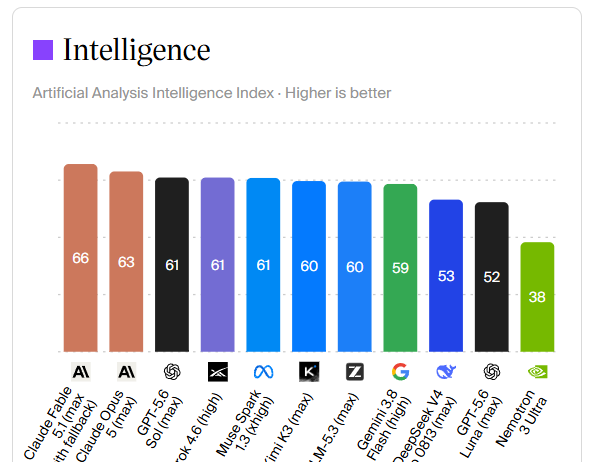
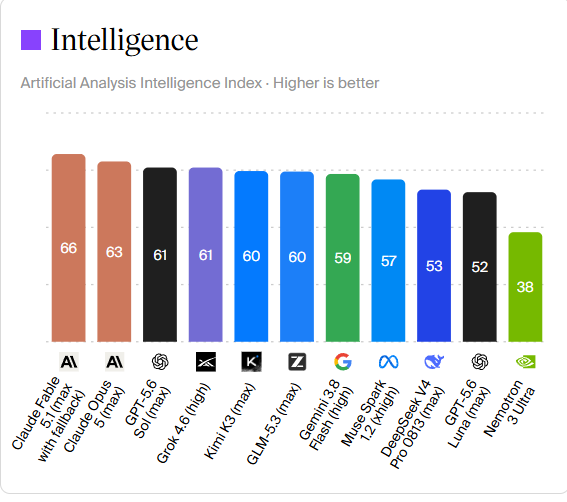
After some time in the wilderness following the failure of Llama 4, Meta is firmly back in the AI race. Meta’s newly released... The post Meta’s Muse Spark 1.3 Scores 61 On Artificial Analysis Intelligence Index, At Par With Grok 4.6 And GPT 5.6 Sol appeared first on OfficeChai.
Read original articleSeptember 2, 2026
Broadcom Inc. gave a fourth-quarter forecast that missed analysts’ estimates, a sign it’s getting a slower payoff from the AI boom than some anticipated.
Read original articleSeptember 2, 2026
OpenAI’s new Astra model will use “recurrent depth,” a technique that allows the model to operate outside of the sequential thinking that characterizes most reasoning models.
Read original articleSeptember 2, 2026
OpenAI said Tuesday that its upcoming Astra model is the company’s first to reach the Critical cybersecurity threshold in its The post Your next OpenAI API timeout might not be a timeout at all appeared first on The New Stack.
Read original articleSeptember 2, 2026
US Commerce Secretary Howard Lutnick said that Anthropic PBC has patched its relationship with the Trump administration, signaling a possible end to months of sharp differences over security between the US and the artificial intelligence developer.
Read original articleSeptember 2, 2026
Anthropic aimed to steer its ship into safer, more carefully charted waters this week. The company announced it was improving The post Anthropic’s Claude failures have made agent observability a security priority appeared first on The New Stack.
Read original articleSeptember 2, 2026
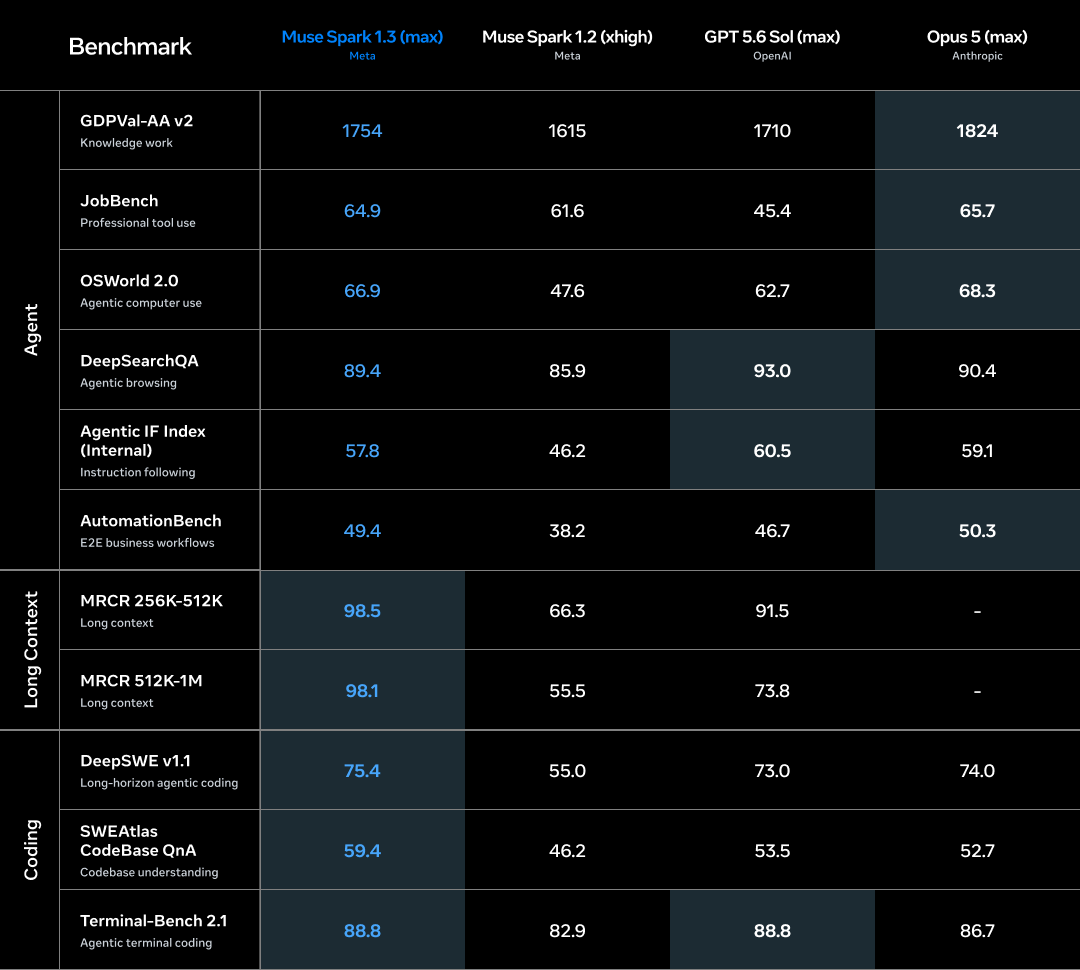
AI releases are coming in thick and fast as we approach what’s been called the “foothills of the singularity”. Meta has released Muse... The post Meta Releases Muse Spark 1.3, Beats Opus 5, GPT Sol 5.6 On Some Benchmarks appeared first on OfficeChai.
Read original articleSeptember 2, 2026
At Data and AI Summit, we announced the evolution of Genie Spaces to Genie Agents,...
Read original articleSeptember 2, 2026
Meta Platforms Inc. released its most powerful artificial intelligence model yet, with its chief AI officer saying its capabilities are edging closer to top competitors.
Read original articleSeptember 2, 2026
OpenAI Chief Executive Officer Sam Altman says artificial intelligence will be the greatest boom in business the world has ever seen. He speaks to US Commerce Secretary Howard Lutnick at a tech event in North Carolina hosted by the US for G20 members. (Source: Bloomberg)
Read original articleSeptember 2, 2026
Justice Dept. Sides With OpenAI in New York Times Copyright Suit The New York Times
Read original articleSeptember 2, 2026
The US government wrote a letter in support of OpenAI’s argument that training AI on others' intellectual property is fair use.
Read original articleSeptember 2, 2026
Google's Pro model updates are seemingly paused, but there's yet another Gemini Flash today.
Read original articleSeptember 2, 2026
Bloomberg’s Ed Ludlow breaks down Nvidia's advanced talks to acquire AI startup Hugging Face in a $14 billion deal. Plus, Dell shares jump after the company boosted its annual sales forecast by $25 billion due to surging demand for servers to run AI tasks. And, Uber cuts 10% of its staff globally to streamline its core engineering, science, and delivery groups. (Source: Bloomberg)
Read original articleSeptember 2, 2026
Nvidia could be closing in on its biggest AI acquisition yet, according to sources. The chipmaker is in advanced talks to buy Hugging Face in a deal that could be worth about $14 billion. Bloomberg's Ian King and Rachel Metz join Ed Ludlow on "Bloomberg Tech" to discuss their reporting. (Source: Bloomberg)
Read original articleSeptember 2, 2026
Napster, the former music-streaming platform, is betting on low-cost AI agents as its path back to success.
Read original articleSeptember 2, 2026
NVIDIA CUDA remains the foundation of GPU-accelerated computing, powering everything from scientific simulations to large-scale AI training. But writing...
Read original articleSeptember 2, 2026
"The United States has a strong interest in continuing to develop a robust and competitive artificial intelligence industry that sets the standard for the practice and procedure of AI use globally," the brief reads.
Read original articleSeptember 2, 2026
G20 live updates: OpenAI's Altman says the use of AI is 'non-negotiable' CNBC
Read original articleSeptember 2, 2026
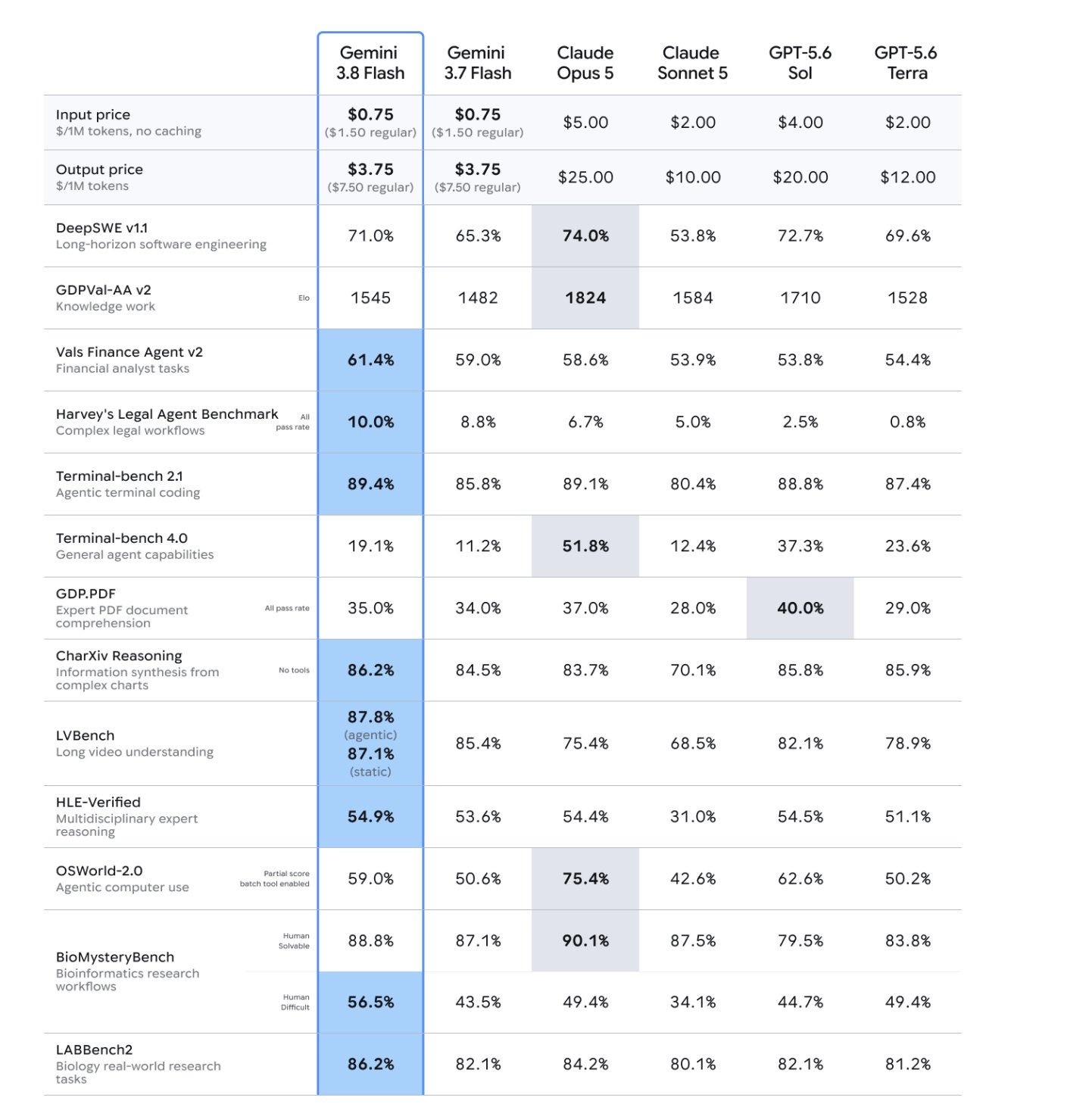
Google's Gemini 3.8 Flash, the third Flash model in six weeks, matches Claude Opus 5 on some agentic coding benchmarks at lower cost. But its "working harder" reasoning burns about 30 percent more output tokens per task, making it pricier in practice than its predecessor despite identical token rates. The article Gemini 3.8 Flash is Google's third budget model in six weeks while frontier models remain MIA appeared first on The Decoder.
Read original articleSeptember 2, 2026
Google hasn’t released a Gemini Pro model in a while, but on Wednesday, the company launched yet another set of The post Google ships its third Gemini Flash model in six weeks appeared first on The New Stack.
Read original articleSeptember 2, 2026
The New York Stock Exchange used Anthropic PBC’s Project Glasswing to find and fix vulnerabilities in its cyber security systems, its president, Lynn Martin, told Congress.
Read original articleSeptember 2, 2026
John Acunto, Napster CEO, joins "Bloomberg Tech" to talk about how Microsoft is helping the company reinvent itself through the use of agentic AI. He says the company is going from streaming music to streaming intelligence. (Source: Bloomberg)
Read original articleSeptember 2, 2026
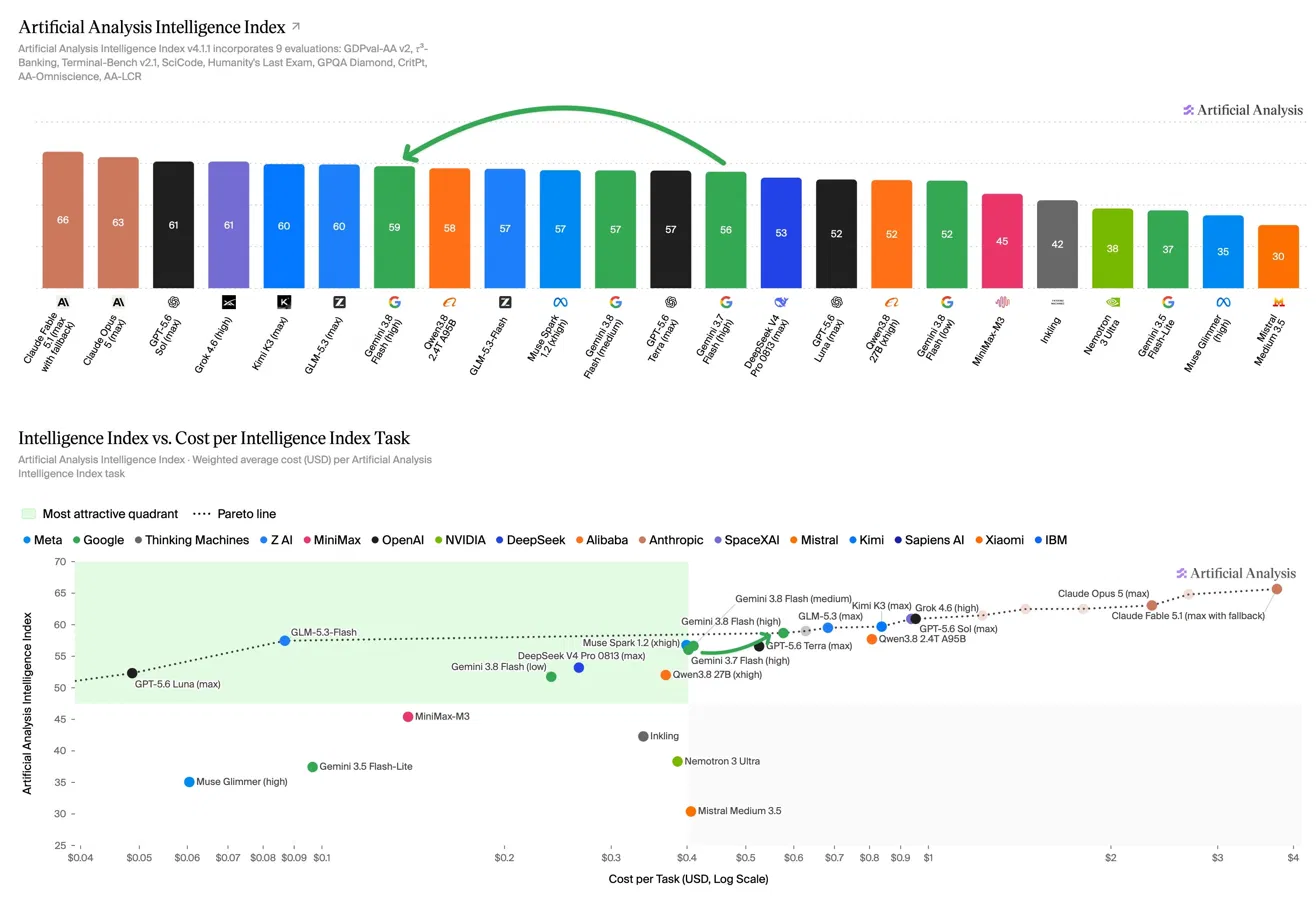
Google might not be at the AI frontier, but it’s made its way back to the Pareto frontier. Google has released Gemini 3.8... The post Gemini 3.8 Flash Is On Pareto Frontier Of Intelligence And Cost On Artificial Analysis Intelligence Index appeared first on OfficeChai.
Read original articleSeptember 2, 2026
This post is the third in a series on AI model co-design. It explores how to accelerate LLM inference while maintaining accuracy using speculative decoding and...
Read original articleSeptember 2, 2026
Claude Mythos launched with a lot of hype but there's reason to suggest its defensive capabilities might be more limited than its offensive potential.
Read original articleSeptember 2, 2026
To further empower our customers in their data journey, we are excited to announce the launch of identity columns in BigQuery. This new feature allows users to define columns that automatically generate sequential 64-bit integer values, simplifying the way you manage unique identifiers within your tables. Data engineers are always looking for ways to make data ingestion smoother and more reliable. BigQuery identity columns offer a powerful, built-in mechanism to automatically generate unique numerical values for your tables. By shifting the responsibility of ID generation to BigQuery, you can significantly reduce the complexity of your data pipelines and focus on delivering insights. Key benefits for your data pipelines Implementing identity columns provides several advantages that help streamline the development and maintenance of your data architecture. Streamlined ingestion: You can now ingest data without needing to pre-calculate unique keys in your application logic or ETL tools. Reduced boilerplate: By using auto-generated sequences, your SQL code becomes cleaner and easier to maintain, as the database handles key management natively. Integrated automation: Identity columns work harmoniously with standard DML operations, ensuring that every new row receives a unique identifier automatically. Flexible integration: Whether you are using INSERT or MERGE statements, identity columns adapt to your existing workflow. How to implement identity columns Setting up an identity column is simple and can be done directly within your CREATE TABLE statement. You have two primary ways to define how these values are handled. Definition options Clause Description GENERATED ALWAYS AS IDENTITY BigQuery automatically manages and ensures the uniqueness of the values. GENERATED BY DEFAULT AS IDENTITY Provides an automatic value but still allows for manual overrides when necessary. Example usageThe following SQL statement demonstrates how to create a table that automatically increments IDs, starting at 1 and increasing by one for each new entry. code_block <ListValue: [StructValue([('code', "CREATE TABLE my_project.my_dataset.orders (\r\n order_id INT64 GENERATED ALWAYS AS IDENTITY (START WITH 1 INCREMENT BY 1),\r\n customer_name STRING,\r\n order_date DATE\r\n);\r\n\r\n-- Ingesting data is now simpler:\r\nINSERT INTO my_project.my_dataset.orders (customer_name, order_date)\r\nVALUES ('Joe Doe', CURRENT_DATE());"), ('language', ''), ('caption', <wagtail.rich_text.RichText object at 0x7fec0e36a1f0>)])]> Get started today Identity columns represent our ongoing commitment to providing a flexible, high-performance, and standards-compliant data platform. By automating the generation of surrogate keys, we are making it easier for you to build scalable and maintainable data architecture. To learn more about how to implement this feature in your projects, please visit the BigQuery identity columns documentation.
Read original articleSeptember 2, 2026
AI models have clearly proven their ability to discover and exploit vulnerabilities without much, if any, human assistance. To help defenders gain the advantage with AI, we built the Mantis harness to automate the discovery, triage, reproduction, and patching of software vulnerabilities. Available to all as an open-source framework, Mantis is part of Google’s internal approach to find and fix vulnerabilities at machine-speed. It creates a more effective scalable, context-aware repository analysis. While sloppiness in AI code scanning frequently leads to hallucinated bugs and weak true-positive rates under 7%, we designed Mantis to be effective by combining industry-standard agentic techniques like critic and review agents with sandboxed reproduction of vulnerabilities for grounding. As we detailed in June, it examines the history of the repository to learn from past security fixes and automatically builds up architectural and threat model documentation, even if these are not provided. It constructs a hierarchical security summary tree, condensing individual files into directory and root-level summaries. This technique reduced token overhead by over 85%, while preserving critical structural context across massive repositories. Mantis distills decades of cybersecurity expertise across a wide spectrum of codebases, and is available on GitHub. Here’s how you can get started using Mantis. First, clone the Mantis repo locally using: code_block <ListValue: [StructValue([('code', 'git clone https://github.com/google/mantis.git'), ('language', ''), ('caption', <wagtail.rich_text.RichText object at 0x7fec0e1f2580>)])]> Second, open your favorite coding agent and use the prompt, “I would like to use Mantis framework in path/to/mantis to review my code in path/to/your/code, can you help me get started?” Internally at Google, this exact prompt has been used to find real vulnerabilities across our many code repositories. As part of the Mantis repository on GitHub, we’ve included sample sandboxing options. You can also implement your own sandbox to match your own workflow. Mantis is intended to be an easy place to start with vulnerability discovery, true positive filtering, and patching. Once you've got a handle on AI-discovered vulnerabilities, you can use the new mantis-advise skill to make use of the accumulated knowledge and get your coding agents to write secure code the first time. To get the most out of AI-driven vulnerability discovery and modernize your development practices, we strongly recommend two essential practices: Feed your tools the right context: While Mantis automatically analyzes commit history and code to build documentation for itself, human-curated knowledge often can dramatically improve the quality of your results. For example, if you would never waste time fixing bugs where the user can crash their own program, this is critical information for a scanning pipeline to ensure that those types of bugs are never surfaced. Build a cyber sandbox with vulnerability acceptance criteria. Safe, sandboxed environments where you can reproduce vulnerabilities with clear vulnerability-reproduction criteria will give you better results for surfacing only the things you need to know and also for ensuring that your fixes are correct. You can learn more about Mantis here.
Read original articleSeptember 2, 2026
Introducing Fairwind Program
Read original articleSeptember 2, 2026
Google still hasn’t released a Pro-level model since Gemini 3.1, but it’s gone close to Pro-level performance with Gemini 3.8 Flash. Google’s newly... The post Gemini 3.8 Flash Scores 59 On Artificial Analysis Intelligence Index, Jumps 3 Points Over Gemini 3.7 Flash appeared first on OfficeChai.
Read original articleSeptember 2, 2026
Microsoft and AWS Launch Azure Multicloud Interconnect Preview petri.com
Read original articleSeptember 2, 2026
Anthropic’s IPO prospectus will give investors the first audited view of its reported revenue surge and massive compute commitments across the AI buildout.
Read original articleSeptember 2, 2026
Google might be back in the AI game. Google has released Gemini 3.8 Flash, the third update to its Flash model line in... The post Google Releases Gemini 3.8 Flash, Beats Opus 5, GPT 5.6 Sol On Some Benchmarks At A Fraction Of The Price appeared first on OfficeChai.
Read original articleSeptember 2, 2026
The Pentagon is expanding its AI platform with two new models, OpenAI's ChatGPT Mil and xAI's Grok for Government. The article US military adds ChatGPT and Grok to AI platform GenAI.mil appeared first on The Decoder.
Read original articleSeptember 2, 2026
Alphabet Inc.’s Google doesn’t have to sell off its advertising exchange and instead must make its ad tech tools work with those operated by rivals, a federal judge ruled Wednesday, in a move that saves the tech giant from a second bid to force a breakup.
Read original articleSeptember 2, 2026
OpenAI is officially rating its upcoming Astra model as the first system with "critical" cyber capabilities. The company plans to keep it in check by monitoring the chain of thought. Problem is, that monitoring already counts as an unreliable mirror of a model's real decisions, and according to a report, Astra's new architecture pushes even more of its thinking into the unreadable. So the safety net might be getting weaker just as the capabilities jump. The article OpenAI calls Astra its most dangerous model yet - watching what it does is only getting harder appeared first on The Decoder.
Read original articleSeptember 2, 2026
September 2, 2026
The Social Media Trial Settlement Is A Major Win For Meta (NASDAQ:META) Seeking Alpha
Read original articleSeptember 2, 2026
Nvidia’s Huang Urges G20 to Speed AI Adoption, Spur Growth Bloomberg.com
Read original articleSeptember 2, 2026
ElevenLabs has hired former OpenAI executive Ashley Kramer as its first chief revenue officer, part of the startup’s efforts to drum up business demand for its artificial intelligence voice tools.
Read original articleSeptember 2, 2026
OpenAI was hit with multiple lawsuits claiming the artificial intelligence company could have prevented a mass shooting in Canada earlier this year by informing law enforcement about the suspected killer’s messages with the popular chatbot ChatGPT.
Read original articleSeptember 2, 2026
Edelson PC is filing 30 new lawsuits against OpenAI over the Tumbler Ridge shooting, escalating claims to aiding and abetting and naming Chris Lehane, though evidence remains unconfirmed.
Read original articleSeptember 2, 2026
Be Careful What You Wish For: Why Asking Google Maps to Defy the U.S. on Lake Ontario Would Undermine Canadian Digital Sovereignty michaelgeist.ca
Read original articleSeptember 2, 2026
Just 15 months after it founding, Applied Compute is raising $350 million at a $3.25 billion valuation, nearly double its worth from four months ago.
Read original articleSeptember 2, 2026
Job cuts in the Seattle area are hurting luxury real estate sales
Read original articleSeptember 2, 2026
Google’s Search Monopoly Money Will Let It Purchase the AI Market promarket.org
Read original articleSeptember 2, 2026
8,000 Applications, No Job: Ex-Google, Meta, Microsoft Workers Reveal The Harsh Reality After Layoffs NDTV
Read original articleSeptember 2, 2026
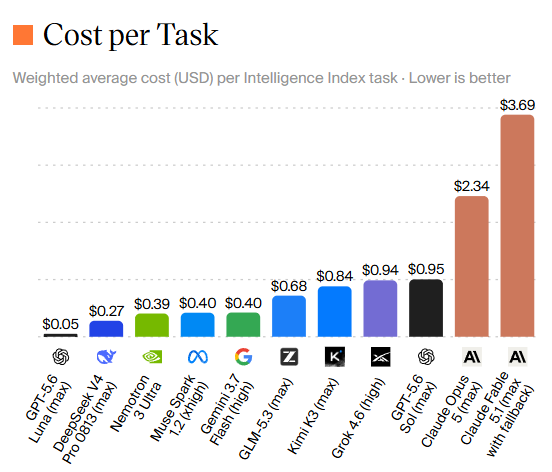
It appears that incremental improvements to intelligence are now coming at a fairly big cost. Anthropic’s Claude Fable 5.1 has taken the top... The post Claude Fable 5.1 By Far Most Expensive Model On Artificial Analysis Intelligence Index, Costs 57% More Than Opus 5 appeared first on OfficeChai.
Read original article