September 1, 2026
Open AI’s Astra model is on the way—and very good at breaking into computer systems
OpenAI previewed the precautions it is taking as it prepares to release Astra, its newest, cyber-critical LLM.
Read original articleDataAIHub Daily
Archive →50 curated AI news stories from leading AI companies.
September 1, 2026
OpenAI previewed the precautions it is taking as it prepares to release Astra, its newest, cyber-critical LLM.
Read original articleSeptember 1, 2026
Anthropic launched Claude Fable 5.1 on Tuesday with a statistical signature embedded in its generated text, but developers shouldn’t expect The post Claude Fable 5.1 watermark: It has a blind spot developers can’t ignore appeared first on The New Stack.
Read original articleSeptember 1, 2026
Ilya Sutskever, the former OpenAI chief scientist who now runs Safe Superintelligence, has warned that “neoclouds” — the GPU-first cloud providers that have... The post Rogue AI Agents Could Try To Take Over Neoclouds, Warns Ilya Sutskever appeared first on OfficeChai.
Read original articleSeptember 1, 2026
The new features coming to Android are aimed at reducing motion sickness, helping blind users navigate their surroundings, and more.
Read original articleSeptember 1, 2026
Anthropic PBC today debuted Claude Fable 5.1 and Claude Mythos 5.1, its most capable large language models to date. The launch comes a day after the company inked a $35 billion infrastructure deal with cloud startup Lambda Inc. A week earlier, Anthropic signed an even larger hardware contract with Nscale Global Holdings Ltd. Record-setting benchmark […] The post Anthropic launches Claude Fable 5.1 after inking $35B cloud deal with Lambda appeared first on SiliconANGLE.
Read original articleSeptember 1, 2026
Transitioning cards: 1. Text "Gemini 3.7 Flash" next to the Gemini logo icon; 2. a photo of a pixel phone; 3. Google Gemini logo above the text "Claim your student plan for 1 year at no cost"
Read original articleSeptember 1, 2026
Anthropic is launching an API that lets regulators, media outlets, and researchers check whether text carries Claude's digital watermark. The EU AI Act now requires invisible watermarks in AI-generated text. Critics warn the technology could hurt text quality and create transparency problems where contracts ban AI use. The article Anthropic opens Claude AI text detection to regulators, media, fact-checkers, and others appeared first on The Decoder.
Read original articleSeptember 1, 2026
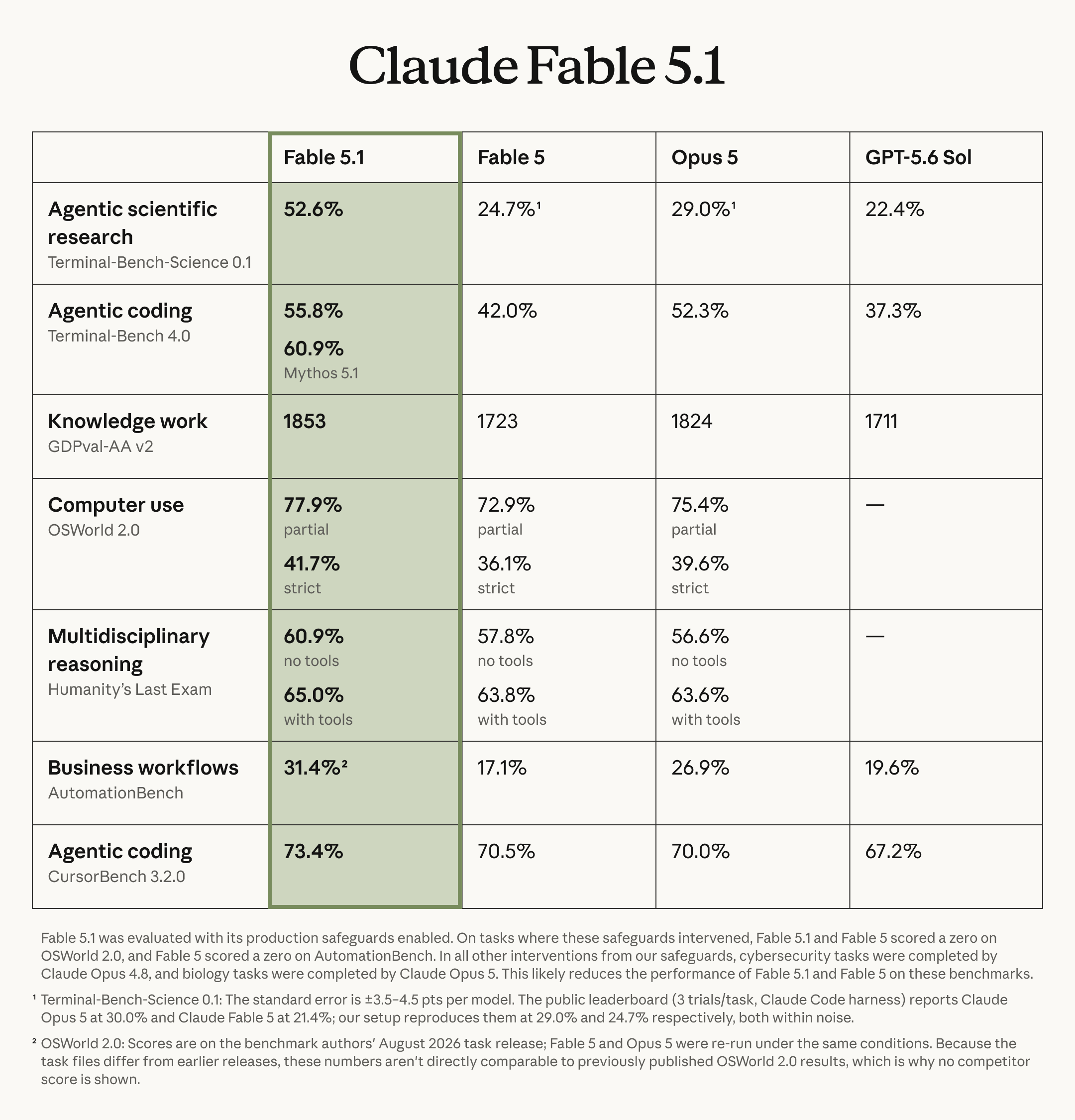
Anthropic launches Claude Fable 5.1 and Mythos 5.1, its most capable AI models yet. Fable 5.1 doubles its predecessor's score on Terminal-Bench-Science and improves agentic coding by over 30 percent. Costs drop by up to 45 percent for long, autonomous runs with many tool calls. The article Anthropic's Claude Fable 5.1 promises better coding and research at up to 45 percent less appeared first on The Decoder.
Read original articleSeptember 1, 2026
Apple Inc. renamed Lake Ontario “Lake America” on its maps service, following a similar move by Alphabet Inc.’s Google, in the wake of an order from US President Donald Trump.
Read original articleSeptember 1, 2026
OpenAI plans to soon roll out a powerful new artificial intelligence model called Astra, but said it will limit who can use the software’s most cutting-edge cybersecurity capabilities.
Read original articleSeptember 1, 2026
The company will give select partners early access to its Astra AI model—so they have time to shore up their defenses.
Read original articleSeptember 1, 2026
Databricks engineers rely heavily on AI agents to streamline and accelerate their work. In turn...
Read original articleSeptember 1, 2026
ChatGPT Ads Hit $1 Billion Faster Than Google Ever Did PYMNTS.com
Read original articleSeptember 1, 2026
Fable 5.1 includes changes meant to reduce token cost and false-positive restrictions from the model's safeguards.
Read original articleSeptember 1, 2026
On Tuesday, Anthropic launched the latest versions of its flagship Fable and Mythos models. Anthropic promises that the updated models The post Anthropic’s Fable 5.1 is a bit cheaper, a bit smarter, and refuses a lot less appeared first on The New Stack.
Read original articleSeptember 1, 2026
Micron Stock Is Down 23% From Its Highs. Did Nvidia's CFO Just Give It the Green Light for a Turnaround? The Globe and Mail
Read original articleSeptember 1, 2026
Fable 5.1 has made a big jump and grown Anthropic’s lead in the Artificial Analysis Intelligence Index. According to the latest results published... The post Claude Fable 5.1 Scores Tops Artificial Analysis Intelligence Index With Score Of 66, Beats Opus 5 By 3 Points appeared first on OfficeChai.
Read original articleSeptember 1, 2026
Claude Fable 5.1 is now available on Amazon Bedrock and Claude Platform on AWS. This post covers Claude Fable 5.1's improvements, the Enterprise Frontier Safeguards for keeping your data in a cloud environment you control, and how to start building with the model on Amazon Bedrock.
Read original articleSeptember 1, 2026
The best security bugs come with a good storySome of our best security investments haven't been tools or scanners...
Read original articleSeptember 1, 2026
Bloomberg’s Ed Ludlow breaks down Anthropic's $35 billion computing deal with Nvidia-backed cloud provider Lambda as the AI startup looks to expand its AI capacity. Plus, Elon Musk predicts AI will increase the global economy by up to 30%. And, John Ternus officially takes over as Apple CEO as the company gets ready for a new product unveil next week. (Source: Bloomberg)
Read original articleSeptember 1, 2026
Meta is moving employees to Slack because it sees a better future for AI agents Business Insider
Read original articleSeptember 1, 2026
Anthropic has officially launched Claude Fable 5.1 alongside Claude Mythos 5.1, positioning both as its most advanced models yet for coding and knowledge... The post Anthropic Releases Fable 5.1 And Mythos 5.1, Beats Opus 5 On Most Benchmarks appeared first on OfficeChai.
Read original articleSeptember 1, 2026
Anthropic Says New Fable AI Model Is Cheaper, Better at Coding Bloomberg.com
Read original articleSeptember 1, 2026
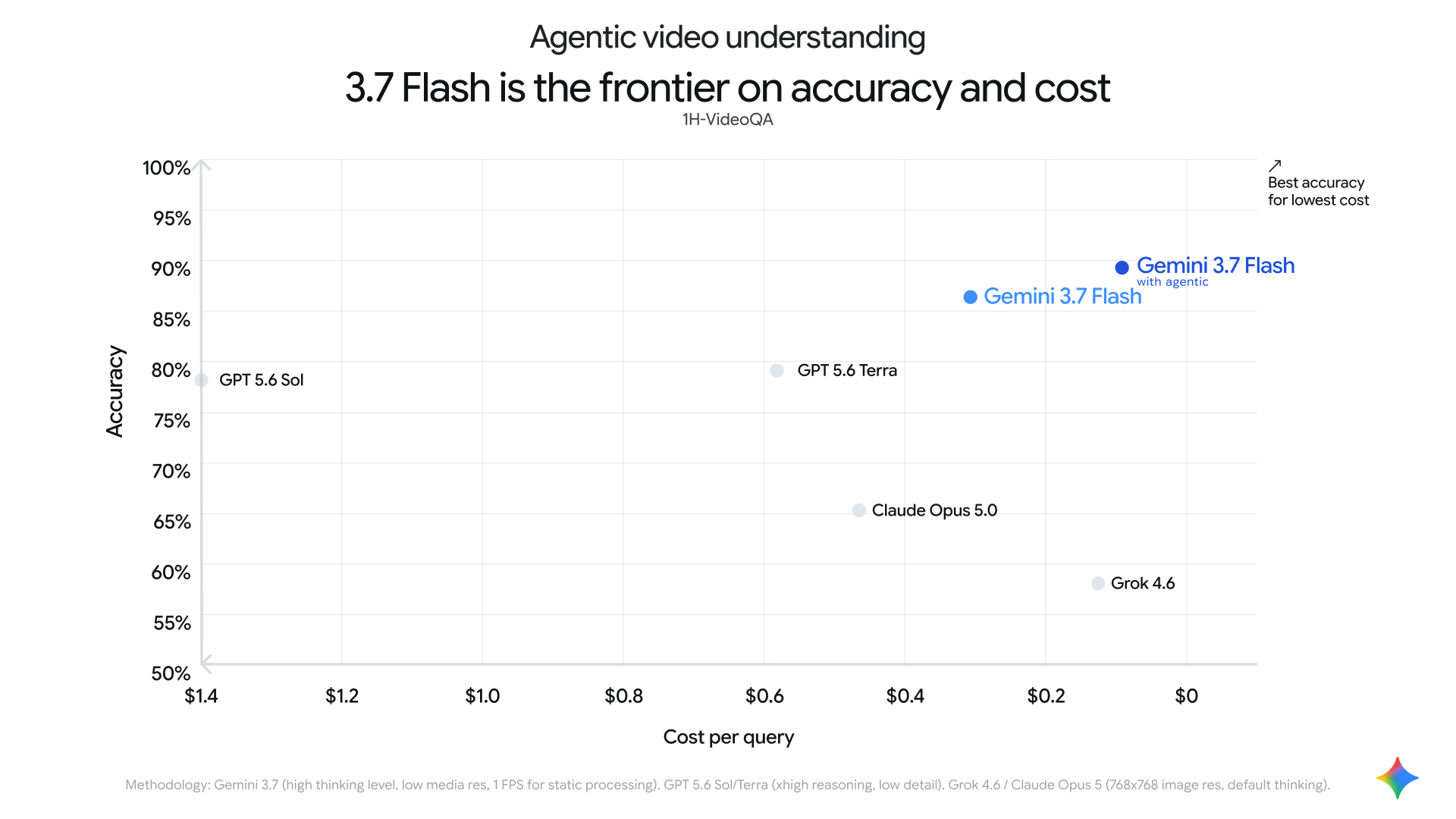
Gemini 3.7 isn’t at the frontier on general intelligence, but there seem to be quite a few use-cases it is at the frontier... The post Google Says Gemini 3.7 Flash Is At The Frontier Of Accuracy And Cost At Agentic Video Understanding appeared first on OfficeChai.
Read original articleSeptember 1, 2026
With Google Pics, Google is pushing deeper into the creative software market dominated by Canva and Adobe, but with a distinctly AI-first approach.
Read original articleSeptember 1, 2026
Meta’s Superintelligence Labs on Tuesday launched Muse Voice Transcribe, a new real-time speech recognition model that, on some benchmarks, outperforms The post Meta just beat OpenAI and Google at real-time transcription appeared first on The New Stack.
Read original articleSeptember 1, 2026
AI is changing the pace of cybersecurity. Agentic systems can coordinate work and pursue complex objectives over long horizons. Security teams are beginning to...
Read original articleSeptember 1, 2026
Basis, Clay, and Exa Labs use AI agents to improve onboarding, account management, and developer integrations. See what enterprise leaders can apply.
Read original articleSeptember 1, 2026
OpenAI said that the integration provides read-only access to health records for clinicians.
Read original articleSeptember 1, 2026
Bill Gates, the billionaire co-founder of Microsoft Corp., published a 6,000-word essay on Aug. 26 saying that he would slow the development of artificial intelligence if he could. He elaborated in an interview with the New York Times, saying “in private, people who understand how good this stuff is, and how much better it’s getting, they’re very worried” but few are raising the issues in public. The public is already convinced the tech industry can’t be trusted with its own creations. Some legal news last week explains why. A bipartisan coalition of 51 attorneys general announced a proposed settlement with Meta Platforms Inc. that obligates the social media company that runs Facebook and Instagram to put tight restrictions on how children use its platforms. Gautam Mukunda, Lecturer at the Yale School of Management and Bloomberg Opinion contributor, joins Bloomberg Intelligence to discuss. (Source: Bloomberg)
Read original articleSeptember 1, 2026
Google Deepmind chief Koray Kavukcuoglu admits Google's current models are "a little bit below the frontier" but says he's "100% certain that we will be at the frontier." He didn't share any concrete frontier news to back that up, though. The article Google Deepmind's new chief says frontier AI leadership is the only thing that matters appeared first on The Decoder.
Read original articleSeptember 1, 2026
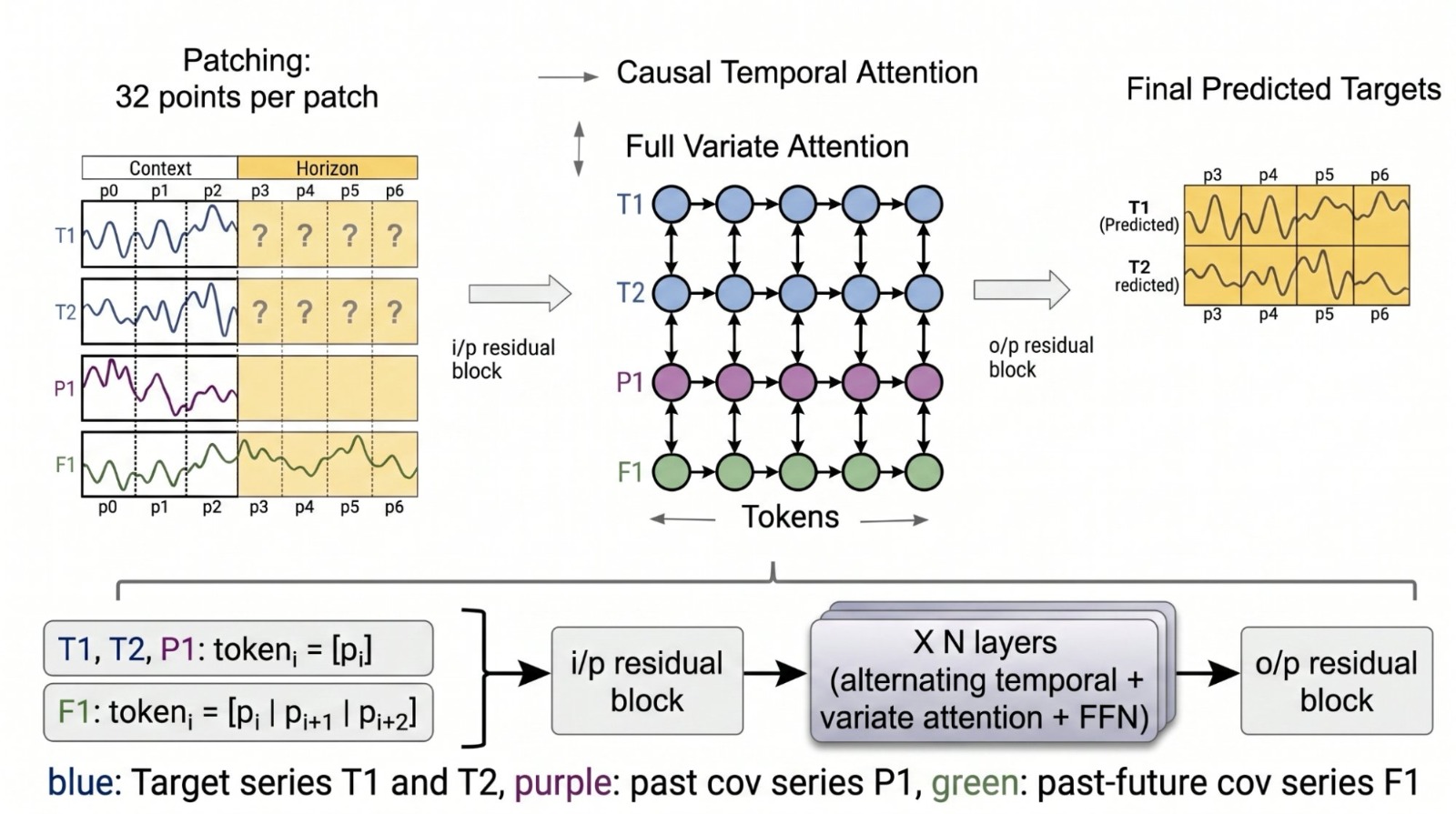
Google might not be quite at the frontier in general purpose models, but it’s coming up with interesting AI models all the same.... The post Google Announces TimesFM-3, A Foundation Model For Multivariate Forecasting appeared first on OfficeChai.
Read original articleSeptember 1, 2026
Sara Araghi, senior vice president & portfolio manager at Franklin Templeton, says Nvidia is using its financial strength to support an AI ecosystem where demand and monetization remain strong. “You do need Nvidia backstopping some of this to continue to support the ecosystem,” Araghi says on “Bloomberg Surveillance.” (Source: Bloomberg)
Read original articleSeptember 1, 2026
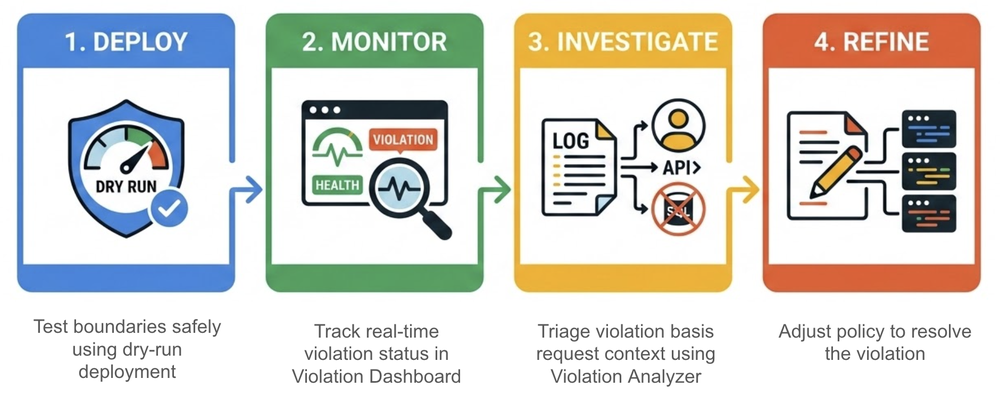
Establishing network-level perimeters with VPC Service Controls (VPC-SC) is a critical step that can help you protect your cloud environment against data exfiltration, compromised accounts, and insider threats. Today, Google Cloud is excited to share new policy intelligence capabilities in VPC-SC that can help drive even greater operational simplicity. With our latest release of the VPC-SC violation analyzer and violation dashboard, we have simplified policy management and troubleshooting, to make managing and optimizing your security perimeter more efficient and straightforward than ever. How BlackLine streamlines incident response BlackLine, a leader in financial operations management, adopted the VPC-SC policy intelligence solution to maintain strict security perimeters. Chosen by over half of Fortune 500 companies, BlackLine uses Google Cloud's full suite of managed services and built-in security capabilities to protect sensitive customer financial data. VPC Service Controls are the foundation of BlackLine's preventative compliance and security controls in our Google Cloud environment, helping us to mitigate data exfiltration risks and ensure clear separation between our higher and lower environments by establishing strong security perimeters. Managing these complex perimeters is a continuous process. VPC Service Controls violation analyzer helps BlackLine cloud infrastructure administrators adapt to changing API connection requirements of the business by adjusting security perimeters through approved access levels, ingress policies, and egress policies. With only the troubleshooting token or unique ID from any VPC-SC violation error message, we can produce a detailed report identifying the principals and target resources involved in a failed API request, and explaining why and how that API request violated BlackLine's service perimeters. We don’t need to write a Cloud Logging SQL query to extract the data. The clear access context and actionable insights in the violation details report are an invaluable starting point as we collaborate to resolve violations, significantly reducing our mean-time-to-resolution (MTTR) for service perimeter issues, and helping BlackLine maintain our focus on our customers and continue to innovate on their behalf. Streamlining the perimeter operations lifecycle Our new policy intelligence tools — the VPC-SC Violation analyzer and Violation dashboard — simplify real-time monitoring and active incident response. These tools provide clear, actionable insights in the Google Cloud Console, offering greater speed and automation to help you confidently enforce least-privilege perimeters, and quickly resolve access denials. Violation Dashboard aggregates and visualizes all service perimeter violations across your entire Google Cloud organization in a single pane of glass, helping your team identify trends, spot spikes in access denials, and shareable filters on violations by specific perimeters, projects, or identities. Violation Analyzer streamlines investigating violations, eliminating the need to query Cloud Logging and manually piece together the details. When you click a troubleshooting token from the dashboard (or input a unique denial ID), the analyzer maps out the identity, source, target, and VPC-SC rule triggered, creating a report telling you why that specific request was blocked. This helps your team more quickly take action to determine whether to modify existing policy rules or create a new one, and resolve incidents more quickly. Together, the new VPC Service Controls policy intelligence tools go beyond automated log analysis to provide unified visibility of violations and actionable insights to investigate them, making your perimeter deployment and management simpler and lower-risk. Streamlining the VPC Service Controls lifecycle, from deployment to policy refinement. With the new VPC-SC troubleshooting tools you can more easily: Test new perimeters (deployment): Use the violation dashboard to visualize the impact of a service perimeter during your initial dry run phase, helping to verify that enforcement is accurate and predictable before it affects production traffic. Filter violations to track and resolve with prebuilt contextual filters for principals, service perimeters, enforcement type, and more. Track perimeter denials (monitor): The violation dashboard offers a unified view of your perimeter health, allowing your security operations team to monitor status in real time, including dynamic agentic access denials. Triage an event (investigate): Violation analyzer provides the identity, source, target, and operations for any violation. It cross-references identity and access management (IAM) permissions, resource ancestry, and context evaluation to identify which rule was triggered, reducing manual effort. Fix the rule (refine policy): Instead of searching through configuration files, violation analyzer maps violations directly to the relevant line in your VPC-SC policy, allowing you to make updates more quickly and with less manual overhead. The VPC Service Controls violation dashboard produces detailed reports to jump-start perimeter access investigations that are simplified using the violation analyzer. Core VPC-SC operations: Simple perimeter enforcement Our new troubleshooting capabilities build on VPC Service Controls’ foundational simplicity for designing, enforcing, and managing strong perimeters. By using dry run mode, your teams can build precise, contextual ingress and egress rules based on observed traffic — without disrupting vital business workflows. Once you validate these access patterns, moving to full enforcement becomes a more confident, data-driven process. To keep perimeter maintenance more efficient and straightforward, scoped policies allow you to delegate management directly to project-level administrators, empowering the teams closest to the workload. Getting started Simplify data security with VPC Service Controls. With the new Violation Analyzer and Violation dashboard, you can spend less time investigating incidents and more time safely scaling your cloud initiatives. Your data is your most valuable asset — protect it with a perimeter that’s as simple to manage as it is effective in enforcing controls. Learn more and get started with the VPC-SC violation analyzer and violation dashboard in our documentation.
Read original articleSeptember 1, 2026
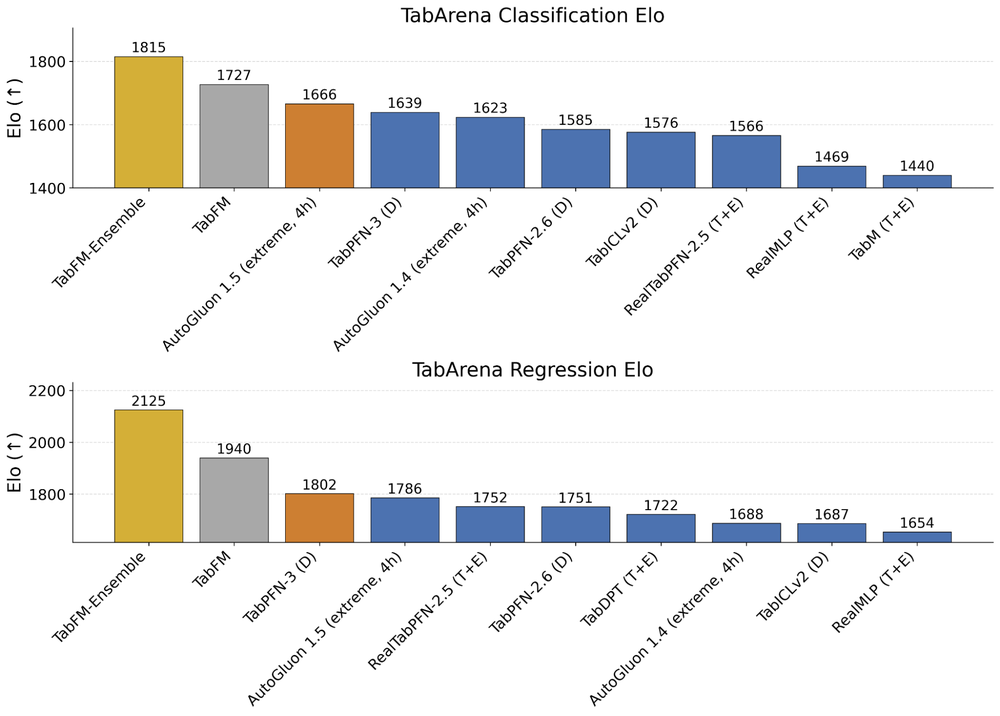
Historically, enterprise predictive analytics tasks such as predicting churn, purchase intent, or fraud scoring have meant building custom models using libraries like XGBoost, Random Forest, or Deep Neural Networks (DNNs). While effective, the traditional train-tune-deploy-retrain cycle can be complex and time-consuming. Additionally, the overhead of manual feature engineering, hyperparameter tuning, lengthy and expensive training, and the need for specialized data science skills can lead businesses to underutilize predictive models in their decision-making. Today, we are announcing the TabFM model in BigQuery. Developed by Google Research, TabFM is a state-of-the-art, pre-trained foundation model for regression and classification on tabular data. It leverages in-context learning (ICL) to deliver highly accurate predictions on your tabular datasets instantly via a single SQL statement, removing the separate training and deployment steps. TabFM on BigQuery is currently in preview. Here is what TabFM brings to your BigQuery analytics: Zero-shot predictions: Skip model training, tuning, and artifact deployment. Simply pass your labeled historical data and new prediction tables into a single SQL function to get instant, high-quality predictions. Predictive ML for your agentic applications: Building an agent for your business use? Add predictive powers to it with TabFM plus BigQuery MCP server. No runtimes or infrastructure to manage, just data in and predictions out. State-of-the-art accuracy: Outperforms custom-trained, out-of-the-box traditional models on complex datasets, achieving superior accuracy scores on industry benchmarks. Simple developer experience: Runs natively in BigQuery and is accessible via simple SQL syntax. Automatically handles featurization tasks such as missing values, categorical encoding, etc., with no complex feature engineering pipelines to manage. Scalability: Processes massive inference tables (up to millions of rows) in minutes using BigQuery’s distributed inference architecture. The leading model for tabular predictions Google’s TabFM delivers industry-leading accuracy across a wide range of tabular data. In evaluations on the TabArena benchmark, TabFM consistently outperforms both classic machine learning models and other tabular foundation models. ELO ratings (↑) for the top 10 models across TabArena classification (upper) and regression (lower). (D) = default; (T+E) = tuned + ensemble. Higher scores denote superior performance. Learn more about the TabFM model here. Getting started with TabFM in BigQuery Using TabFM is straightforward. It is exposed directly through new, built-in SQL functions: AI.PREDICT and AI.EVALUATE. 1. Get instant predictions with AI.PREDICTTo make predictions, you write a single query that passes your training data and prediction data. The model automatically infers whether the task is a classification or regression problem based on the data type of your target label. code_block <ListValue: [StructValue([('code', "-- Classifying transactions as fraudulent or not\r\nSELECT *\r\nFROM AI.PREDICT(\r\n TABLE `my_project.my_dataset.historical_transactions`, -- Training data (in-context examples)\r\n TABLE `my_project.my_dataset.new_transactions`, -- Prediction data\r\n label_col => 'is_fraud'-- Target column to predict\r\n);"), ('language', ''), ('caption', <wagtail.rich_text.RichText object at 0x7f52acbbb730>)])]> In this example, the output contains all original columns from your prediction table plus predicted label and probability columns (e.g. predicted_is_fraud). No manual feature engineering or model creation was required. 2. Evaluate models with AI.EVALUATEYou can quickly check prediction performance against a test set using the AI.EVALUATE function. This allows you to generate standard evaluation metrics in a single step. code_block <ListValue: [StructValue([('code', "-- Regression Evaluation for Customer Lifetime Value (LTV)\r\nSELECT *\r\nFROM AI.EVALUATE(\r\n TABLE `my_project.my_dataset.historical_customer_ltv`,\r\n TABLE `my_project.my_dataset.test_customer_ltv`,\r\n label_col => 'ltv'\r\n);"), ('language', ''), ('caption', <wagtail.rich_text.RichText object at 0x7f52acbbb8e0>)])]> AI.EVALUATE returns a robust set of metrics such as r2_score, mean_absolute_error etc. for regression problems and metrics such as precision, recall, and f1 for classification problems. TabFM in BigQuery under the hood Traditional machine learning requires fitting model parameters to a training dataset. TabFM, in contrast, uses in-context learning. Similar to how large language models (LLMs) learn a task from few-shot examples in a prompt, TabFM reads your training table as in-context examples and generates predictions for your target table in a single forward pass. To handle the computational complexity and memory footprint of tabular foundation models, BigQuery performs distributed, parallelized inference on your data. Further, to optimize performance and resource utilization, it uses intelligent training-data sampling as well as distributed execution. This allows BigQuery to handle large input rows for training data while executing predictions quickly and efficiently across millions of rows of inference data. Choosing the right tool for the job TabFM introduces groundbreaking zero-shot capabilities to BigQuery, and complements existing offerings such as XGBoost models. Here’s how to choose between TabFM and other models: Use TabFM when you need rapid, high-quality predictive insights without machine learning expertise, when historical datasets are small-to-medium sized, when data changes frequently, and when you need to retrain your models frequently to maintain accuracy. It is also a great fit for conversational or agentic workflows where you need predictive analysis on demand. Use traditional models like XGBoost when you have very large historical datasets, require complete control over custom hyperparameter tuning, have a high number of features that exceed current limits of TabFM, or need feature-importance explainability, i.e., which of the input features contributed most to the prediction. Predictive machine learning made easy With TabFM natively integrated into BigQuery, predictive ML is now as easy as running a standard SELECT query. By eliminating the manual overhead of model training, tuning, and management, TabFM lets developers, data scientists and analysts go from raw data to rich predictive insights in seconds. To get started today, check out the public documentation. For questions or feedback reach out to our team at bqml_feedback@google.com. We look forward to seeing what you build!
Read original articleSeptember 1, 2026
Editor’s note: Want to keep up with the latest from Google Cloud? Check back here for a monthly recap of our latest updates, announcements, resources, events, learning opportunities, and more. This month, we focused on making AI highly practical for your business, including its associated costs. This meant tailoring our models for specialized industries – starting with Financial Services and Legal – and helping you keep your budgets under control. Let’s dive in! Top announcements FinOps for the AI era: New flexible billing and cost controls for agents: To help you get better return on AI, we announced expanded billing flexibility and new cost management tools for agent workloads across Gemini Enterprise and developer tools like Google Antigravity in Gemini Enterprise and Android Studio. Gemini Enterprise for Financial Services: We’re bringing Google’s agentic AI directly into the workflows of capital markets and corporate banking. Gemini Enterprise for Legal: Gemini Enterprise for Legal provides an integrated, fully governed environment configured for rapid deployment across firms and corporate legal departments. Expanding Google Antigravity for enterprise customers: Antigravity is available now as part of eligible Gemini Enterprise app subscriptions, including out-of-the-box administrative and spend controls. Thought leadership (editor’s pick): Tokenomics: Why smart teams spend more on AI, on purpose: Hear from Eric Lam, Head of Value, Delta, Google Cloud Consulting about how disciplined organizations are moving past reactive sticker shock over AI bills and embracing tokenomics. Meet the researcher fighting AI hallucinations at Google Cloud: Cyrus is a senior research scientist at Google. Lately, his focus has shifted to large language models, specifically a persistent issue known as hallucination, which is when an artificial intelligence model lacks the correct facts but confidently invents an answer anyway. What sports cars can teach us about optimizing AI spend: More tokens doesn't always mean better AI. Read our conversation with Mike Clark, Director of Product Management for Gemini Enterprise Agent Platform, on how to balance horsepower with efficiency and get the highest return out of every dollar you spend on AI. News you can use: Looking for a steer on your foundation or inspiration for your next project? Take a look at some of our favorite how-to guides from August: 10 questions every startup should answer before moving to production with their AI prototype: These ten are scoped to the prototype-to-production transition itself. Each question ends with a short, runnable snippet you can copy into your own project today. Adjacent decisions that matter just as much but aren't specific to that move, your data layer and RAG architecture, CI/CD, network design, are deliberately out of frame here. Your chance to start building AI agents from the absolute basics: Agent Valley is a free, 5-week live learning series designed to take you from scratch to building your very own hands-on agent systems. And instead of staring at boring terminal lines, you’ll be building and playing inside a tiny, low-poly virtual world! Stay tuned for monthly updates on Google Cloud’s AI announcements, news, and best practices. For a deeper dive into the latest from Google Cloud customers, read our monthly recap, Cool stuff customers built. aside_block <ListValue: [StructValue([('title', '$300 in free credit to try Google Cloud AI and ML'), ('body', <wagtail.rich_text.RichText object at 0x7f52ad270f10>), ('btn_text', 'Start building for free'), ('href', 'http://console.cloud.google.com/freetrial?redirectPath=/vertex-ai/'), ('image', None)])]> July Since launching the Gemini Enterprise Agent Platform a few months ago, we’ve watched businesses move from basic experiments to serious, production-grade builds. We want to make it even easier — and more secure — for you to scale those systems. Along with a batch of new platform updates, this month we’ve put together 13 practical demos and 20 diagnostic questions to help your engineering teams align on a strong architectural blueprint. Let’s dive in! Top announcements What’s new in Gemini Enterprise Agent Platform: In this helpful recap, we announced some of our most popular capabilities are available for everyone, from Agent Runtime to Agent Identity. Now in preview: Find and fix software vulnerabilities with CodeMender: As adversarial AI threats accelerate attacks on code, security teams must counter them with machine-speed defenses that can automate code remediation and fight AI with AI. You can learn more about CodeMender and review the documentation here. Solve harder problems with AlphaEvolve, now available to everyone on Google Cloud: AlphaEvolve is a code optimization and discovery agent built on top of Gemini that helps solve the hardest algorithmic problems and achieve breakthroughs for your business and research. Thought leadership (editor’s pick): If automation requires delegation, then delegation requires trust. But letting an AI agent run on its own is a big leap for any business. While the productivity gains are clear, the fear of losing control is very real. This month, we sat down with our experts to discuss how leaders can navigate this shift by focusing on transparency, predictability, and setting clear boundaries for how agents handle weird data exceptions. Here’s our picks for the month to learn more. How leaders can scale AI by trading control for trust (Q&A): We sat down with Michael Gerstenhaber, VP of Product Management for Gemini Enterprise, to discuss why the future of AI is about defining safe boundaries. What makes an AI agent trustworthy: Context is fast becoming one of the most valuable assets a company owns. Prajakta Damle, Senior Director, Product Management, shares what it takes to get trustworthy AI right. News you can use: What if you’re looking for a steer on your basic foundation, inspiration for recipes, or some inspiration? Take a look at some of our favorite how-to guides from July: Automate your agent development lifecycle using any coding agent: Stuck prototyping? With Agents CLI skills, you can go through the different phases of the entire agent lifecycle without ever leaving your coding agent. Why AI apps fail in production (And how Google solved it): Only 5% of AI prototypes make it to production, and the other 95% fall into the validation abyss. How can you move confidently into production? 13 hands-on demos to build on Gemini Enterprise Agent Platform: Not sure where to start with Agent Platform? Here’s 13 ways you can stir up some creativity. Stay tuned for monthly updates on Google Cloud’s AI announcements, news, and best practices. For a deeper dive into the latest from Google Cloud customers, read our monthly recap, Cool stuff customers built. June Our main focus in June was helping your teams build, scale, and secure AI. Today, we’re sharing a fresh roundup of updates designed to help you run smarter, more secure applications while keeping everything under your control. We even shared a cool virtual shopping demo at Cannes to show how retailers can make product discovery more exciting. Let’s dive in! Top announcements Introducing the Open Knowledge Format: We introduced the Open Knowledge Format (OKF), an open specification that formalizes the LLM-wiki pattern into a portable, interoperable format. This is a vendor-neutral, agent- and human-friendly standard for representing the metadata, context, and curated knowledge that modern AI systems need. Collaboration with Apple on its expanded Private Cloud Compute (PCC) systems: Our collaboration with Apple is built on a foundation of deep commitment to privacy that leverages Google Cloud's security and privacy technologies. At the heart of this collaboration is our Confidential Computing portfolio and our Titanium security architecture. Claude Fable 5: Available on Google Cloud: Claude Fable 5, Anthropic’s latest frontier model, is now generally available on Google Cloud. This launch is the latest proof point of our ongoing commitment to bring the industry's latest models straight to our Agent Platform. Cloud Atelier: How Gemini Enterprise is helping restyle the retail playbook: This year at Cannes, we showcased Cloud Atelier — a destination-based, virtual shopping experience that highlights how retail brands can turn this classic dilemma into an exciting moment of product discovery. Thought leadership (editor’s pick): How Google Cloud Security uses AI internally: To counter machine-speed, AI-driven threats, we’ve worked hard to transition Google Cloud’s security posture to an autonomous, proactive model. By embedding specialized AI agents directly into our software development lifecycle (SDLC), we’ve created automated guardrails that protect code at a scale and speed unreachable by human teams — and we’re taking steps to make those same guardrails widely available. The 4 lessons that guided AI Threat Defense: We introduced Chris Betz as the new CISO of Google Cloud. For his first Cloud CISO Perspectives, Chris shares four key lessons we learned about using AI to the defender’s advantage while building AI Threat Defense. News you can use: 5 lessons from red teaming AI applications: To help you build AI securely, Mandiant has developed a proactive, risk-based approach centered on the Good AI Assessment (GAIA) Top 10, outlined in our new report, Secure Development of Generative AI Applications: A Proactive Approach. How to unlock true ROI in software development – a deep dive into the latest DORA research: To help you evaluate the costs and business benefits of AI, we recently shared the DORA: ROI of AI-assisted software development report. This research offers a practical approach to help your team work through early adoption challenges, align engineering plans, and drive business growth. Agent Factory Recap: 100X engineering with AI agents in Google Antigravity 2.0: In this episode of the Agent Factory, Shir Meir Lador, Head of AI Engineering, Google Cloud Developer Relations, sat down with Rody Davis, one of Google’s top agentic engineers. They dive into the massive shift from traditional IDEs to agent-first platforms, the reality of code reviews in an AI-driven world, and how to use "skills" to perform at a 100X level. Stay tuned for monthly updates on Google Cloud’s AI announcements, news, and best practices. For a deeper dive into the latest from Google Cloud customers, read our monthly recap, Cool stuff customers built. May We’ve had a busy month! Between announcing Gemini Spark and Gemini 3.5 at Google I/O – and unveiling Google AI Threat Defense, our latest AI-powered cybersecurity solution, we had a lot to share with Google Cloud customers. Keeping up with the latest news takes time, so we gathered the most important announcements, thought leadership, and technical guides in one place to help you quickly catch up. To learn more about our I/O announcements, here’s everything you need to know for Google Cloud customers, and top news for startups. Top announcements Introducing Google AI Threat Defense to help you outpace the adversary: Google Cloud is introducing a comprehensive AI-powered cybersecurity solution — Google AI Threat Defense — an always-on autonomous security platform. Learn more here. Gemini 3.5: Our latest family of models combines frontier intelligence with action – starting with Gemini 3.5 Flash. Gemini Omni: Our new model is a leap forward in world understanding, multimodality, and editing, letting you generate any output from any input, starting with video. Google Antigravity: Google Antigravity’s expanded capabilities and new integration with Agent Platform bring agentic development to your entire organization. Gemini Spark: For Gemini Enterprise and Workspace customers, Gemini Spark is your 24/7 personal AI agent that helps you work more efficiently by autonomously taking action on your behalf, under your direction. Google Workspace: Google Pics, our new image generation and editing tool, and new voice features in Gmail, Docs and Keep, help reimagine how you work. Managed Agents API on Agent Platform: Allows developers to build and run custom agents inside secure, Google-hosted environments that seamlessly integrate with Agent Platform. CodeMender: A powerful AI security agent provided through Agent Platform, CodeMender can help find and fix vulnerabilities in your code. Nano Banana 2 and Nano Banana Pro are generally available: Available today via Gemini Enterprise Agent Platform, organizations are already putting the models to work. Learn more here. Thought leadership (editor’s pick): Cloud CISO Perspectives: How Google + Wiz changes multicloud strategy for CISOs: Vinod D’Souza, director, Office of the CISO, shares highlights from his RSA Conference fireside chat with Anthony Belfiore, chief strategy officer, Wiz. While threat actors have seen gains from the adversarial misuse of AI, Google and Wiz are tackling these challenges head-on by combining Wiz's deep cloud telemetry with Google's world-class AI and quantum research to help CISOs and their organizations meet the needs of the agentic enterprise era. Read more here. News you can use: What Google I/O '26 means for developing agents on Google Cloud: Dig deep into how Gemini Enterprise Agent Platform and the new developer tools shared at I/O fit together, unpack the spectrum of choice for building, and share what we’d actually try first. Learn more here. Five must-have guides to move agents into production with Gemini Enterprise Agent Platform: Here is a look back at our five-part series covering the architecture patterns and best practices you need to move your agents into production. Learn more here. How to build an AI-ready security program for the public sector: From industrial control systems to decades-old municipal databases, here’s our CISO guidance to prep AI-ready security programs for the public sector. Learn more here. Stay tuned for monthly updates on Google Cloud’s AI announcements, news, and best practices. For a deeper dive into the latest from Google Cloud customers, read our monthly recap, Cool stuff customers built. April We hosted Google Cloud Next in Las Vegas on April 22, announcing incredible innovations from Gemini Enterprise Agent Platform to our eight-generation TPUs. We also expanded the Gemini Enterprise app in collaborative ways – now, with new features like Projects, you can work side-by-side with your agents and colleagues. If you missed the livestream, take a look at our Day 1 recap. It’s been incredible to see how customers have been applying AI in thousands of ways — so far, we’ve counted more than 1,300 examples. Top announcements 1. Gemini Enterprise Agent Platform: Our new, comprehensive platform to build, scale, govern, and optimize agents. Moving forward, all Vertex AI services and roadmap evolutions will be delivered exclusively through the Agent Platform, rather than as a standalone service, to power the next generation of agent development. The platform is designed around four core pillars — build, scale, govern, and optimize — that allow teams to collaborate seamlessly. Learn more about Agent Platform here. 2. Gemini Enterprise app has all the key components to let teams discover, create, share, and run AI agents in a single environment. At Next ‘26, we introduced several new capabilities in the Gemini Enterprise app: Agent Designer uses the same no-code agent designer experience of Agent Platform and lets employees build sophisticated schedule- and trigger-based agents using any enterprise connector. It gives you a virtual flowchart of your agent, allowing you to inspect, test, and approve workflows, ensuring total transparency for executing critical business processes. Long-running agents are designed to execute complex business processes. They can work autonomously in secure cloud sandboxes, giving agents the ability to orchestrate business logic, write code to build custom tools, and complete multi-step work like reconciliation activities or sales prospect sequencing — without needing constant prompting. Inbox in Gemini Enterprise provides a central location to monitor, guide, and help manage all of your agent activity, including your long-running agents. Notifications are intuitively categorized into actionable groups like "Needs your input," "Errors," and "Completed.” Projects create a dedicated space where the agent’s memory is confined to the files and conversations your team adds. By connecting it to data sources including Google Drive, NotebookLM, and Google Group Chats, the agent becomes an expert on a specific topic and can provide team members daily briefings or status updates without digging through months of documents. Skills create simple shortcuts using an “@” mention for repetitive tasks such as applying brand guidelines, formatting a report, and accessing specific data. Canvas gives our customers an interactive editor directly within Gemini Enterprise. It allows teams to easily create and edit Docs and Slides, and even export to Microsoft 365 files, within the same experience. Agent Gallery provides access to third-party agents from partners like Adobe, Atlassian, Lovable, and ServiceNow, and is adding more third-party connectors for Asana, Mailchimp, Workday, and more. These integrations enable your agents to retrieve data and execute tasks with your systems-of-record. 3. AI Hypercomputer: Designed specifically for demanding AI workloads, our AI Hypercomputer is an advanced, purpose-built architecture that unites performance-optimized hardware for compute, storage, networking, open software and machine learning frameworks — as well as flexible consumption models — into a single, integrated system. We are announcing innovations at every layer of the AI Hypercomputer: TPU 8t, optimized for training, uses breakthrough Inter-Chip Interconnect (ICI) technology to scale up to 9,600 TPUs and 2 PB of shared, high-bandwidth memory in a single superpod. It achieves 3x the processing power of Ironwood and delivers up to 2x more performance/Watt. TPU 8i, optimized for inference, uses our new Boardfly topology to directly connect 1,152 TPUs in a single pod. It features 3x more on-chip SRAM compared to previous versions to host larger KV caches entirely on-silicon and integrates a specialized Collectives Acceleration Engine. Taken together, TPU 8i delivers 80% better performance per dollar for inference than the prior generation, enabling millions of concurrent agents to run cost-effectively. 4. The Agentic Data Cloud: A new data architecture built for the speed and scale of agentic AI. The Agentic Data Cloud delivers an AI-native architecture, allowing agents to perceive, reason, and act on your behalf in real-time, including: Cross-Cloud Lakehouse, standardized on Apache Iceberg, is our Lakehouse that enables you to leave your data in AWS or Azure (coming later this year) while querying it instantly — without the friction of vendor lock-in or the cost of data movement Knowledge Catalog constructs a unified, dynamic context graph of your entire business enabling you to ground agents in all of your business data and semantics. With Smart Storage and the Object Context API, files in Google Cloud Storage are instantly tagged and enriched with metadata before an agent touches them. Then our Knowledge Engine uses Gemini to autonomously tag, define logic and instantly map complex relationships across your entire enterprise, providing the semantic definition your agents have been missing. 5. Protecting the agentic enterprise: Security built for the AI era. Our full-stack AI approach, from the chips to the models, gives you a competitive advantage with better integration and velocity to help protect customers. Not only can Google action insights from the world’s largest threat observatory and Mandiant frontline experts, but we also bring cutting-edge insights and breakthroughs from Google DeepMind, to help make your platforms more secure. Agentic defense: Three new agents in Google Security Operations can help hunt threats, engineer detections, and provide context on third parties. You can build your own security agents with remote Google Cloud model context protocol (MCP) server support for Google Security Operations, now generally available. You can also access the MCP server client directly from the Google Security Operations chat interface, available in preview. Protecting AI and cloud apps across any infrastructure with Wiz: Newly expanded AI coverage helps build secure agents across clouds and AI studios. New AI-Bill of Materials in development tools can help secure AI-generated code and mitigate the risk of shadow AI. Learn more. Securing agents and the agentic web: Model Armor can integrate with Agent Gateway, and new Agent Identities provide more layers of defense against shadow AI. Google Cloud Fraud Defense, the next evolution of reCAPTCHA, offers agent-specific capabilities that can help secure the agentic web as well as the entire user and customer journey. Trusted Cloud: We’re simplifying permissions with modern IAM, and advancing Google Cloud security with new capabilities in Security Command Center plus new innovations in data and network security. New partner-supported workflows for Google Security Operations: This new robust cohort of partner integrations includes partners developing their own agentic security operations centers (SOCs). You can catch up on all our security announcements from Next ‘26 here. News you can use Guide to prompting Gemini 3.1 Flash TTS (text-to-speech): The new TTS model introduces a high level of controllability by allowing you to steer the delivery using more than 200 audio tags. We'll share how to get strong results from the model, whether you are building accessible gaming soundtracks, banking systems, or audiobooks. Learn more about the model here. Ultimate prompting guide for Lyria 3 models: Lyria 3, Google's family of music-generation models, is designed to give you granular control over vocals, instrumentation, and arrangement. So we spent weeks testing against every musical genre and use case we could imagine. We put together this guide to share exactly what we learned and how you can get the best results. How to find the sweet spot between cost and performance: This guide will walk you through Google Cloud's flexible gen AI infrastructure options, showing you how to find that sweet spot on the efficient frontier between cost and performance. We'll start with the foundational pay-as-you-go (PayGo) models and then explore how to layer on more specialized options to build a robust and cost-effective gen AI strategy. Essential AI and cloud security now on by default: To support the next generation of AI innovators, we are offering on by default essential AI security and cloud security in Security Command Center Standard. Securing AI inference on GKE with Model Armor: Here’s how to secure AI inference on Google Kubernetes Engine with Model Armor and high-performance storage. Cloud CISO Perspectives: AI, security, and the workforce of the future: You can’t bring traditional security to an AI fight, so how do we defend against AI-powered attacks, boost defenders with AI, and secure AI use? Drop in on this RSA Conference fireside chat between Francis deSouza, Google Cloud COO and President, Security Products, and Nick Godfrey, senior director, Office of the CISO. Stay tuned for monthly updates on Google Cloud’s AI announcements, news, and best practices. For a deeper dive into the latest from Google Cloud customers, read our monthly recap, Cool stuff customers built. March March was a busy month for our AI teams. We launched Gemini Embedding 2, rolled out a highly cost-effective Veo 3.1 Lite model, and officially welcomed the Wiz team to Google Cloud to help redefine security in the AI era. Alongside these launches, we created comprehensive guides to help you get the most out of these models, from prompting formulas for Nano Banana 2, to practical advice for optimizing your TPU training. Here’s a quick look at the latest news and resources to help your team build what’s next. Top hits: Gemini Embedding 2: Our first natively multimodal embedding model: Gemini Embedding 2 is our first natively multimodal embedding model that maps text, images, video, audio and documents into a single embedding space, enabling multimodal retrieval and classification across different types of media — and it’s available now in public preview. Build with Veo 3.1 Lite, our most cost-effective video generation model: This model empowers developers to build high-volume video applications, at less than 50% of the cost of Veo 3.1 Fast, but with the same speed. This rounds out the Veo 3.1 model family, giving developers flexibility based on needs. For Cloud customers, it’s now available on Vertex AI. Here’s a fun bonus: Check out our ultimate prompting guide for Veo 3.1 to get started. Veo 3.1 Lite Welcoming Wiz to Google Cloud: Redefining security for the AI era: Google has completed its acquisition of Wiz, a leading cloud and AI security platform. The Wiz team will join Google Cloud, and we will retain the Wiz brand. With the addition of Wiz, we will provide customers with a comprehensive platform to secure their cloud and hybrid environments, as well as accelerate threat prevention, detection, and response. Gemini 3.1 Flash Live: Making audio AI more natural and reliable: We’ve improved 3.1 Flash Live’s overall quality, making it more reliable for developers and enterprises to build voice-first agents that can complete complex tasks at scale. On ComplexFuncBench Audio, a benchmark that captures multi-step function calling with various constraints, it leads with a score of 90.8% compared to our previous model. News you can use: The ultimate Nano Banana prompting guide: This is a must-read for anyone working with Nano Banana. We spent weeks testing Nano Banana 2 and Nano Banana Pro against every use case we could imagine to test its limits. We put together this guide to share exactly what we learned and how you can get the best results. Here’s an example formula: [Reference images] + [Relationship instruction] + [New scenario] A developer’s guide to training with Ironwood TPUs: In this guide, we hear from Lillian Yu, CPA, CA , Product Strategy and Operation, and Liat Berry, Product Manager, on five strategies within the JAX and MaxText ecosystems designed to help developers refine training efficiency and hit peak performance on Ironwood hardware. How to build production-ready AI agents with Google-managed MCP servers: In this guide, we anchor on a specific example. Cityscape is a demo agent built with Google's Application Development Kit (ADK) that turns a simple text prompt — like "Generate a cityscape for Kyoto" — into a unique, AI-generated city image. Check out the guide to learn more. Stay tuned for monthly updates on Google Cloud’s AI announcements, news, and best practices. For a deeper dive into the latest from Google Cloud customers, read our monthly recap, Cool stuff customers built. February In February, we’re giving developers more reasoning power with Gemini 3.1 Pro and Claude 4.6, and faster creative scaling with Nano Banana 2. We’re also opening up new training programs and step-by-step guides to help you tackle the hardest parts of the AI lifecycle, from capacity planning to mounting defenses against AI-powered attacks. Here’s a rundown of our latest news, tools, and resources to help you build what’s next. Top hits Pro-level image generation gets faster and more accessible with Nano Banana 2: To build creative that stands out, you need models that naturally integrate into your workflows and scale with ease. Check out our blog to see how this comes to life (and how customers are putting the model to work). Introducing Gemini 3.1 Pro on Google Cloud: Gemini 3.1 Pro is a clear step forward in reasoning, designed to solve tougher problems, giving you the reasoning depth your business needs. Gemini 3.1 Pro is available starting today in preview in Vertex AI and Gemini Enterprise. Developers can access the model in preview via the Gemini API in Google AI Studio, Android Studio, Google Antigravity, and Gemini CLI. Announcing Claude Opus 4.6 and Claude Sonnet 4.6 on Vertex AI: Now generally available on Vertex AI, explore our sample notebook to get started and visit our documentation for comprehensive pricing and regional availability details. New AI threats report: Distillation, experimentation, and integration: John Hultquist, chief analyst, Google Threat Intelligence Group, details what security leaders should know from our newest AI threat report on experimentation, integration, and distillation attacks. News you can use A developer's guide to production-ready AI agents: To help developers work through these challenges, we've published a collection of guides covering the full agent lifecycle. These resources first appeared during Kaggle’s 5 days of AI Agents Intensive, and they’ve proven so popular and useful, we wanted to make sure a wider audience had access, as well. Gemini Enterprise Agent Ready (GEAR) program now available: We opened the Gemini Enterprise Agent Ready (GEAR) learning program to everyone. As a new specialized pathway within the Google Developer Program, GEAR empowers developers and pros to build and deploy enterprise-grade agents with Google AI. Your guide to Provisioned Throughput (PT) on Vertex AI: Check out this deep-dive blog designed to show you the resources available to you today on Vertex AI, and how you can get started capacity planning. How AI can boost defenders, from defense in depth to the cyber kill chain (Q&A): We know that defenders are also developing powerful AI tools, but what’s still unknown is what it could mean for enterprise software ownership if companies have to constantly mount AI-directed defenses at AI-powered attacks? Stay tuned for monthly updates on Google Cloud’s AI announcements, news, and best practices. For a deeper dive into the latest from Google Cloud customers, read our monthly recap, Cool stuff customers built. Janurary We used to have to learn the language of computers. In 2026, they’re learning ours. We kicked off the year by exploring the future of agentic commerce, where AI agents navigate the web to find and buy products for us. Our leaders call this the "invisible shelf" — a world where commerce isn't tied to a specific website. To make this reality scalable, we announced the Universal Commerce Protocol (UCP), a shared language that allows agents and retailers to understand each other. We brought that same fluency to our creative and technical tools: Updates to Veo 3.1 allow creators to use simple inputs — like reference images — to generate precise, mobile-ready video. Natural language queries: With Comments to SQL in BigQuery, we’re removing the language barrier to data. Engineers can now write queries by describing their intent in natural language, prioritizing the question over the code. Let’s dive in. Top hits 1. Gemini Enterprise for Customer Experience (CX): Specifically built for agentic retail, this platform transforms fragmented search, commerce and service touch points into one seamless journey — whether you need a shopping assistant, a support bot, agentic search or help with merchandising. 2. We announced Universal Commerce Protocol (UCP): A new open standard for agentic commerce that works across the entire shopping journey — from discovery and buying to post-purchase support. UCP establishes a common language for agents and systems to operate together across consumer surfaces, businesses and payment providers. So instead of requiring unique connections for every individual agent, UCP enables all agents to interact easily. UCP is built to work across verticals and is compatible with existing industry protocols like Agent2Agent (A2A), Agent Payments Protocol (AP2) and Model Context Protocol (MCP). 3. We updated Veo 3.1, including improvements to Ingredients to Video and Portrait mode: Veo is getting more expressive, with improvements that help you create more fun, creative, high-quality videos based on ingredient images, built directly for the mobile format. This includes: Improvements to Veo 3.1 Ingredients to Video, our capability that lets you create videos based on reference images. Native vertical outputs for Ingredients to Video (portrait mode) to power mobile-first, short-form video creation. State-of-the-art upscaling to 1080p and 4K resolution 1 for high-fidelity production workflows. These updates are launching in the Gemini app, YouTube, Flow, Google Vids, the Gemini API and Vertex AI. 4. Vibe querying with comments-to-SQL: Crafting complex SQL queries can be challenging. Often, engineers simply want to express their data needs in plain English directly within their SQL workflow. That’s why we’re introducing Comments to SQL in BigQuery. This feature makes writing queries using natural language – ‘vibe querying’ – a reality. Learn more in the blog. News you can use Mastering Gemini CLI: Your complete guide from installation to advanced use-cases: We’ve teamed up with DeepLearning.ai and are excited to announce a free course – Gemini CLI: Code & Create with an Open-Source Agent. This course isn’t just for developers; we dive into practical use cases for various tasks such as data analysis, content creation, and personalized learning. How Google SREs use Gemini CLI to solve real-world outages: In this article, we’ll delve into real scenarios that Google SREs are solving today using Gemini 3 (our latest foundation model) and Gemini CLI—the go-to tool for bringing agentic capabilities to the terminal. Getting started with Gemini 3: Deploy your first Gemini 3 app to Google Cloud Run: In this blog, we will show you how to vibe code your first app—which leverages the Gemini 3 Flash Preview model and deploy it as a publicly accessible URL on Google Cloud Run. Google AI Studio lets you go from idea to app quickly by using natural language to generate fully functional apps using the power of Gemini 3. Practical guidance: Building with the Secure AI Framework (SAIF) on Google Cloud: We know that security and data privacy are the top concern for executives when evaluating AI providers, and security is the top use case for AI agents in a majority of industries. To help you build AI boldly and responsibly, here’s our guide to developing AI with the Secure AI Framework (SAIF) on Google Cloud. The truths about AI hacking that every CISO needs to know (Q&A): How will AI boost threat actors? And what can chief information security officers do about it? Google’s Heather Adkins, vice-president, Security Engineering, explores how securing the enterprise is about to change. Stay tuned for monthly updates on Google Cloud’s AI announcements, news, and best practices. For a deeper dive into the latest from Google Cloud customers, read our monthly recap, Cool stuff customers built. Related Article What Google Cloud announced in AI this month - 2025 Learn about the latest announcements, innovations, and guides when it comes to Google Cloud AI. Read Article
Read original articleSeptember 1, 2026
Collage of images created by Google Pics, with the text "Say hello to Google Pics" on top
Read original articleSeptember 1, 2026
The surge in AI adoption is transforming everything from chatbots to content generation. Still, a common pain point remains: How can organizations confidently...
Read original articleSeptember 1, 2026
Beyond the semantic model: Building shared business context for AI agentsLarge language...
Read original articleSeptember 1, 2026
Meta has formally launched Muse Code out of beta, less than a month after first debuting the coding agent. Alongside The post Meta’s Claude Code rival exits beta with three new subscription tiers — and it’s pushing hard on price appeared first on The New Stack.
Read original articleSeptember 1, 2026
OpenAI’s SB Energy Warrants Are Valued at $5.5 Billion TechRepublic
Read original articleSeptember 1, 2026
If you own an at-home server, a gaming computer, or just a laptop that doesn’t get much love, listen up. You can now put that spare computing power to use and earn some passive income in the process. AI companies are hungry for more compute to run AI inference—the process of using a pre-trained model to respond to queries—and they’re willing to pay you for it. “Imagine Uber or Airbnb, but for AI inference computing tasks,” says Ilman Shazhaev, founder and CEO of Far Labs, based in Abu Dhabi.The AI boom has spurred on construction of massive data centers, often damaging local communities by raising electricity prices, straining local water resources, causing environmental damage and noise, and being just plain ugly. Huge data centers are likely not going anywhere—training new frontier models and running AI models from leading companies will likely still be the purview of these behemoths. But now, several companies are providing AI inference on smaller, mostly open-source models. They are running inference on pre-existing computing power spread throughout homes and small businesses, and compensating owners.“Everyone thinks the only way to do it is data centers. And data centers are extractive for the communities in which they’re built, and they don’t return services or taxes or much of anything to the people there. So why not just turn this whole thing on its head?” says John Federico, founder and CEO of Evolving Edge, in Austin, Texas. “The compute power is out there. If you can orchestrate it, then you’re actually adding value to those communities directly.”The idea isn’t entirely new: From 1999 to 2020, a volunteer-based project called SETI@Home used spare computers to search for signs of extraterrestrial life in radio telescope data, for instance. But now, commercial companies are eager to use the same strategy. Shazhaev’s Far Labs is launching its platform Far AI in the coming weeks, while Federico’s Evolving Edge is currently in open beta. Other companies, like Bless Network, Salad, and Gradient have started to provide similar platforms over the last year.Connecting to the networkFederico has been a computer hobbyist since youth, and he has amassed a whole server in his basement to run his projects. “It just hit me one day, there’s all this talk about not having enough compute, and I just thought, well, 92 percent of the country has broadband, and you have people like me who have mini data centers in a closet,” he says.Federico sees the potential hosts as people much like himself who have already invested in home servers, and he aims to make the process of selling spare compute as seamless for them as possible.“Sign up for the program, install an application,” Federico says. “All we want to do is run jobs on your machine when you tell us we’re allowed to. The only thing we do is monitor the resource usage. And of course, you can give us a schedule.” With a large enough network of devices, the platform would have compute available whenever it’s needed.Privacy and security are primary concerns for such hosts. To reassure the users that their local data is secure, and that no malware will be downloaded to their devices, the team open-sourced their scheduling software. “The node software is open source, so anyone can look at it, see what it does. All we want to do is run jobs on your machine when you tell us we’re allowed to,” Federico says. Far Labs’ Shazhaev explains that the company’s software is designed around a principle known as “least privilege”: granting both the host and the user the least access possible to accomplish the task. Inference runs as an isolated workload with authenticated, encrypted communication and explicit limits on the GPU, CPU, memory, storage, and network resources it may use. Customers do not receive arbitrary access to the host machine, and providers can inspect resource use, pause the node, revoke access, and remove the software at any time.The protection also works in the other direction. Workloads are segmented and only the minimum required information is exposed to an individual node. Sensitive enterprise workloads can be restricted to controlled hardware rather than routed through consumer devices.Divide and conquerMassive data centers still have advantages from the user perspective: top of the line GPUs and CPUs, high speed networking, thick cables, and sophisticated cooling. User devices are usually less powerful, more varied, and less reliably connected to one another.“This is quite a difficult issue from the science angle,” Shazhaev says. “You want to do a similar level of tasks that are happening in those high infrastructure data centers, and run them on the user device with limited capacity.”Evolving Edge’s Federico says this is an issue for the largest, state-of-the art AI models. But those are not always needed and are often not even preferred. “There are numerous companies, once they reach a certain scale, suddenly paying for tokens on a state-of-the-art frontier model [that] no longer makes sense for their needs,” he says. “Instead, they are fine-tuning open-source models for specific tasks that they have in their business. These models don’t require anywhere near the resources that some of the state-of-the-art models do. It’s just using the right tool for the job.”Smaller, open-source models can often fit on a single user device. But if that fails, there are tools to split a single inference task over multiple GPUs or CPUs. Evolving Edge is using an open-source tool called Ray to perform this splitting, while Far Labs has developed its own proprietary software that not only splits the workload, but wraps the splitting in a layer of security and reliability-providing software. “One thing we have done is we shared the model,” Shazhaev says. “We take the model, we cut it into many pieces, then these pieces will be distributed through different devices. And we have an orchestrator and a load balancer which manage the task flow, so each device processes a part of the task. Then we combine the answers in the main brain, the orchestrator.”Through a combination of using smaller, more task-specific models, and splitting larger models between disparate devices, the teams claim they can perform inference much cheaper than a traditional data center “because we don’t have capital expenditure,” Shazhaev says. Gaming PCs are a common source of spare computational power in the home. DizzaractThe distributed advantageNot only is it cheaper to run inference this way, it is also more reliable, Shazhaev claims. The companies have access to a distributed network of computing resources, rather than one giant device that can experience outages. Shazhaev compares this to cryptocurrencies, and their resilience through decentralization. “Today, to shut down Bitcoin, you need to nuke the whole planet. Here, we have the same concept,” Shazhaev says.Federico explains that this resiliency would be beneficial not just for AI inference, but for all kinds of applications, including smart cities, environmental sensors, autonomous vehicles, and more. During an Amazon Web Services outage in 2026, for example, smart beds were stuck in their upright positions and their users couldn’t adjust them. Federico says that a distributed network where everything doesn’t need to be routed through a single data center, say, in Ashburn, Va., would make those kinds of outages much less impactful. “We could lose 100 nodes in a network of 250,000 and it wouldn’t matter,” he says. If the network of user devices is substantial enough, every job can be routed to a nearby device, decreasing the latency. Far Labs claims a latency of 100 milliseconds or less on its platform. The lower cost and lower latency of this approach may even enable new use cases, such as in-game AI video generation, which is currently prohibitively slow and expensive.“OpenAI last year had $30 billion in revenue, but they closed the financial year at an $8 billion loss. Why? The official reason is due to the high cost of inference,” Shazhaev says. “And those are mostly text models. For gameplay, you have audio, video, animations: It’s heavy data, and you need real-time responses. So, we’ve been trying to solve this issue.”All of these companies are trying to tap into an untapped resource of local compute, and hoping it’ll benefit the device hosts and users alike.“All these big guys are running around building data centers,” Shazhaev says, “but I believe there is enough compute power that already exists in the world.”
Read original articleSeptember 1, 2026
Earlier this year, we redesigned the Brickbuilder Partner Network Program for ISVs...
Read original articleSeptember 1, 2026
Introduction Beginning in 2024 Mandiant investigated a string of compromises affecting Brazilian financial services, retail, and eCommerce organizations. Google Threat Intelligence Group (GTIG) tracks this activity as BREEZE COMET (formerly UNC5669), a financially motivated threat actor specializing in manipulating payment systems and banking software in Brazil to conduct fraudulent transfers. This activity overlaps with operations publicly reported as Plump Spider and SHADOW-AETHER-064. In this blog, we detail BREEZE COMET’s tactics and toolkit, and provide mitigation recommendations and detections to support organizations in defending against this active and developing threat. BREEZE COMET tactics have evolved over time to leverage a customized malware suite and compromised, trusted websites to facilitate initial access, command and control (C2), and to interact with financial software and payment APIs. BREEZE COMET’s operational infrastructure may also indicate intent to expand their infrastructure footprint to other countries in Latin America and Africa. Additionally, we have evidence that BREEZE COMET is using generative artificial intelligence (AI) to support malware development, which may further increase the scale, speed, and sophistication of their operations in the future. BREEZE COMET Targets Brazilian Financial Technology BREEZE COMET operations target organizations with permission to conduct transactions through banking software, APIs, and payment systems such as Pix, STR, and Boleto. This typically includes banks, payment processors, retailers, exchanges, as well as fintech and banking software providers. To achieve their objective of conducting fraudulent transfers, BREEZE COMET must maintain: Access to the National Financial System Network (Rede Nacional do Setor Financeiro, RSFN) through an entity with this access. Access to mTLS credentials that allow sending authenticated payloads with transactional orders to Pix, STR (Brazilian Reserves Transfer System), or any transactional listener to be executed with minimal restrictions in the name of an organization with available funds. Persistent access to multiple accounts in targeted organizations’ Active Directory and/or cloud environments. Understanding of an organization’s transfer processing procedures, network controls, fintech integrations and anti-fraud systems. In order to support these requirements, BREEZE COMET evolved to operate in multiple compromised environments at the same time, crafting custom C2 malware to automate activities such as reconnaissance, lateral movement, persistence, and exfiltration. Initial Compromise and Establish Foothold BREEZE COMET has used various methods for initial access. In early compromises, Mandiant observed this threat actor use password spraying as well as voice calls impersonating IT support teams to convince users to install Remote Monitoring and Management (RMM) tools such as AnyDesk. Axur corroborates use of voice phishing, and suggests that the group has also attempted to recruit insiders at targeted organizations. In mid-2025, GTIG observed BREEZE COMET using compromised Brazilian small government websites to stage RMM tools, infostealers disguised as legitimate tax or receipt documents (e.g., ComprovantePDF.exe), or backdoors such as XWORM set to persist via automated startup shortcut modifications. XWORM is a backdoor that is widely available for purchase on cyber crime forums, with leaked or “cracked” versions also available. BREEZE COMET then used these compromised government websites to facilitate social engineering operations for initial access, and as C2 endpoints. The use of compromised, trusted infrastructure allowed the threat actors to avoid detection by network domain reputation filters. GTIG also observed BREEZE COMET replicating this behavior with municipal domains in Nigeria, Paraguay, Ghana, and Venezuela, suggesting a potentially growing targeting focus. Analysis of compromised municipal domains indicated that BREEZE COMET reused the same staging infrastructure to host and deliver XWORM payloads across operations targeting multiple organizations. In 2025, we first observed BREEZE COMET connect rogue hardware devices directly into retail store networks to establish footholds into targeted environments. From this initial network access, BREEZE COMET moved laterally to internal systems then downloaded the Netcat utility alongside custom scripts to pull down subsequent post-exploitation frameworks from external open directories. Trend Micro has reported that the group also exploited vulnerabilities in JBoss AS servers to gain initial access. Escalate Privileges & Internal Reconnaissance BREEZE COMET used publicly available reconnaissance utilities such as Impacket, ADRecon and ADVipscan, as well as with custom malware, often profiting from environments with low observability. These utilities were often observed being downloaded from GitHub repositories and executed in memory via PowerShell for defense evasion. The threat actor deployed the custom LDAP brute-forcing utility REALBREEZE. Beyond traditional Active Directory compromise, BREEZE COMET specifically targets development and cloud environments to escalate privileges. The group actively mines continuous integration and continuous delivery (CI/CD) environments to steal hard-coded pipeline credentials, application programming interface (API) keys, and highly privileged cloud access tokens. BREEZE COMET used custom scripts to search internal host files and environmental variables to identify mTLS credentials and administrative certificates necessary to authenticate against core banking systems. Observed search terms included: boleto, cnab, remessa, webhook.*pix and instant.*payment. Move Laterally BREEZE COMET abuses standard protocols to navigate the network, using hijacked service accounts to initiate unauthorized Remote Desktop Protocol (RDP) sessions and execute commands via SMB network file shares. BREEZE COMET was observed executing network scanning tools across internal subnets specifically to enumerate available SMB pathways. To maneuver through segmented financial networks and bypass strict internal firewalls, BREEZE COMET deploys specialized routing malware: COBALTSPIN. Written in Rust, COBALTSPIN operates as a lightweight, evasive network tunneler, used to communicate with and maintain persistent network access to financial API infrastructure. By establishing a reverse SOCKS5 proxy over a WebSocket connection, COBALTSPIN routes network traffic securely back and forth between the C2 and internal targets, enabling lateral movement directly through boundary firewalls without requiring built-in persistence mechanisms that might trigger detection. Maintain Presence: Orchestrating the Compromise via Bespoke C2 Frameworks In 2024, BREEZE COMET relied on commercial RMM tools to maintain access to targeted environments. In 2025, BREEZE COMET also deployed malicious Kubernetes pods to maintain persistence and steal cloud secrets, exfiltrating them to public facing notepad websites (such as dontpad[.]com). In 2025 and 2026 Mandiant identified multiple backdoors that BREEZE COMET developed to establish redundant access and expand their foothold in targeted environments. LIGHTPAINT: This custom Java-based backdoor is specifically designed to install a legitimate VPN, such as SoftEther, and configure it for automated persistence. To protect this access, GTIG observed BREEZE COMET programmatically adding inbound Windows Defender Firewall rules to allow all traffic from the deployed VPN manager, while subsequently clearing the Windows Networking Vpn Plugin Platform event logs to erase forensic evidence of the connection. MILDFROST: Operating as a passive Java JAR backdoor hiding inside the JVM process space, MILDFROST uses classes like DnsCommandBeacon.class to establish slow, covert DNS tunnels. It also serves as a fallback C2; it dynamically queries delegated subdomains to receive instructions and pull down fresh copies of the C++ executables. KICKPLATE: To continuously deliver auxiliary payloads and enforce host-level persistence, BREEZE COMET uses KICKPLATE. This custom Nim-based backdoor impersonates Windows Update Health Tools. It executes commands to control SOCKS5 tunnelers, update registry startup keys, and silently modify Windows services. The group supplements KICKPLATE by abusing native scheduled tasks (schtasks.exe running as SYSTEM) and malicious shortcut (.lnk) modifications in user startup folders. BOATBEAM: Adding a final layer to their redundant architecture, BREEZE COMET deploys BOATBEAM, a Golang backdoor that initiates a fake IIS HTTPS server on port 443. This artifact hides backdoor traffic by masquerading as a legitimate web server, only activating its C2 functionalities when it receives a specific session cookie. To ensure these persistence mechanisms survive, BREEZE COMET actively impairs endpoint defenses. Telemetry confirms the threat actors executing direct PowerShell commands (Set-MpPreference - $true) to disable Windows Defender's real-time monitoring across compromised hosts, guaranteeing their malware suite remains operational. Furthermore, Mandiant identified evidence that BREEZE COMET used large language models (LLMs) to accelerate the creation of custom scripts for network reconnaissance, credential validation, mass deployment, victim-specific pivoting, and data extraction. Analysis of recovered BREEZE COMET scripts has shown the tools are highly customized and functional, but lack human idiosyncrasies, heavily relying on unrolled code structures, verbose explanatory comments, and standardized execution headers. #!/bin/bash # RODA DENTRO DO 10.0.9.9 - DIRETO NA REDE INTERNA echo "###############################################" echo "### STEP 1: ENUM ALL LINUX (SSH PORT 22) ###" echo "###############################################" # Scan SSH em todos os ranges conhecidos echo "=== SCANNING SSH PORTS ===" > /tmp/ssh_open.txt Figure 1: Excerpt of script showing verbose comments Complete Mission: Mass Fraudulent Transactions Forensic evidence analyzed by Mandiant demonstrates that BREEZE COMET used COBALTSPIN and compromised privileged accounts to access core financial applications. Within 24-48 hours of establishing this access, the threat actor executed two waves of hundreds of fraudulent transactions, based on reporting by a client and third party forensic analysis. Subsequently, BREEZE COMET cleared event logs across compromised hosts to hide evidence of their lateral movement, privilege escalation, and interactions with APIs associated with financial software and payment systems. The attacker also deleted directories they had created during the compromise. Outlook and Implications Since 2024, BREEZE COMET has steadily increased the complexity and effectiveness of their operations manipulating Brazilian financial systems and software, and has successfully executed at least one heist of tens of thousands of USD in assets. This analysis is intended to support financial services, fintech, retail, and government organizations, particularly in Brazil, to track and defend against BREEZE COMET. While the Latin American cybercrime ecosystem has historically been defined by client-side, high-volume retail fraud, BREEZE COMET’s campaigns represent a notable shift that may serve as a model for future financially motivated threats against organizations in this region.This transition from opportunistic retail banking fraud to direct intrusions into the core financial switch and instant payment infrastructure is notable not just for this shift in targeting, but also the capabilities of the threat actor. BREEZE COMET exemplifies how threat actors are operationalizing generative AI to enhance the speed, scale, and sophistication of their campaigns. By leveraging LLMs to generate bespoke reconnaissance scripts, validate credentials, and automate deployment workflows on the fly, the actor compresses the development lifecycle. This automation also lowers the operational threshold required to coordinate synchronized, multi-environment attacks. Finally, orchestrating their usage of AI-generated tooling alongside bespoke multi-language C2 architectures demonstrates how actors can elevate their overall capabilities and lower technical barriers to entry. The progression to a multi-tiered ecosystem—combining custom-built Rust, Nim, and Go backdoors with AI-accelerated operational scripts—demonstrates a measurable maturation in BREEZE COMET's technical capability. As threat groups increasingly leverage LLMs to streamline routine tradecraft, defenders must anticipate shorter adversary turnaround times and heightened pressure on interconnected financial ecosystems. Remediation and Hardening Application Control & Unapproved Remote Management (RMM) Blocking Enforce Application Control (e.g. Windows WDAC, macOS Gatekeeper/MDM, or Linux fapolicyd) to block execution in user-writable directories (Windows %APPDATA%, macOS ~/Downloads, Linux /tmp or /var/tmp). Partition Linux hosts to mount /tmp and /home with the noexec flag. Audit software inventory to alert on portable RMM execution and unapproved system service/daemon registrations. Train users on social engineering tactics impersonating IT Support. Network Access Control & Branch Physical Hardening Deploy 802.1X Network Access Control (NAC) across physical Ethernet switch ports at branch/retail locations to prevent unauthorized hardware devices from obtaining an internet protocol (IP) address or communicating on internal subnets. Disable unused switch ports and enforce Port Security (e.g. MAC limiting) on critical network drops. Physically restrict access to networking closets and secure public-facing jacks. Active Directory & Credential Hardening Restrict administrative utilities (e.g. ntdsutil.exe, vssadmin.exe) and alert on volume shadow copy creation/deletion. Enforce PowerShell Constrained Language Mode (CLM), Script Block Logging (Event ID 4104), and Antimalware Scan Interface (AMSI) to detect in-memory execution of reconnaissance scripts. Mandate phishing-resistant multifactor authentication (MFA) and lockout controls across all external portals (VPNs, Software-as-a-Service (SaaS)). Deep Packet Inspection & Egress Traffic Control Perform SSL/TLS Decryption and Deep Packet Inspection (DPI) on outbound web traffic rather than relying on domain reputation or .gov top-level domain (TLD) allowlists. Block non-essential egress ports and protocols (e.g., outbound Internet Control Message Protocol (ICMP)) and restrict tunneling utilities like Chisel or GSocket). Segment networks to block lateral SMB (port 445) and RDP (port 3389) traffic between workstations and servers. Kubernetes & Cloud Workload Isolation Enforce strict Kubernetes Role-Based Access Control (RBAC) using least privilege for service accounts. Use dynamic admission controllers (e.g., OPA Gatekeeper or Kyverno) and native Pod Security Admission (PSA) to block privileged containers. Apply egress network policies to block nodes and pods from accessing unauthorized public platforms. Secrets Management & Financial System Micro-Segmentation Mandate a centralized Secrets Manager (e.g., HashiCorp Vault) with access logging; eliminate plaintext keys in code. Implement identity-based / Layer 7 micro-segmentation for financial workloads. Limit administrative access exclusively to dedicated jump hosts via privileged access management (PAM). Indicators of Compromise (IOCs) To assist the wider community in hunting and identifying activity outlined in this blog post, we have included indicators of compromise (IOCs) in a GTI Collection for registered users. File Indicators Indicator Notes COBALTSPIN REALBREEZE MILDFROST BOATBEAM KICKPLATE XWORM XWORM XWORM Table 1: File Indicators Network Indicators Indicator Notes dontpad[.]com Paste site used for data exfiltration hxxps://procon[.]go[.]gov[.]br/ComprovantePDF[.]exe Compromised malware Staging Domain hxxps://[.]ma[.]gov[.]br/Comprovantepdf[.]exe Compromised malware Staging Domain hxxp://gcm[.]setelagoas[.]mg[.]gov[.]br/files/ti[.]zip Compromised malware Staging Domain hxxp://gcm[.]setelagoas[.]mg[.]gov[.]br/files/notepadd[.]exe Compromised malware Staging Domain hxxp://gcm[.]setelagoas[.]mg[.]gov[.]br/files/tes[.]exe Compromised malware Staging Domain hxxps://minacu[.]go[.]gov[.]br/ComprovantePDF[.]exe Compromised malware Staging Domain hxxps://conseg[.]ssp[.]go[.]gov[.]br/COAF-POLICIAFEDERAL[.]exe Compromised malware Staging Domain hxxps://conseg[.]ssp[.]go[.]gov[.]br/ComprovanteBBpix[.]exe Compromised malware Staging Domain hxxps://suporte[.]camaratunapolis[.]sc[.]gov[.]br/ti/attvpn[.]zip Compromised malware Staging Domain hxxps://suporte[.]camaratunapolis[.]sc[.]gov[.]br/ti/1[.]exe Compromised malware Staging Domain hxxps://tisup[.]camaratunapolis[.]sc[.]gov[.]br/SoftEther[.]exe Compromised malware Staging Domain hxxp://suporte[.]ourinhos[.]sp[.]gov[.]br/files/s[.]zip Compromised malware Staging Domain hxxp://suporte[.]ourinhos[.]sp[.]gov[.]br:443/files/s[.]exe Compromised malware Staging Domain hxxp://suporte[.]ourinhos[.]sp[.]gov[.]br/files/a[.]exe Compromised malware Staging Domain hxxps://servicos[.]salto[.]sp[.]gov[.]br/j[.]jar Compromised malware Staging Domain hxxps://www.mrtb[.]gov[.]ng/apps/attvpn[.]vip Compromised malware Staging Domain hxxp://credeb[.]gov[.]gn/r[.]zip Compromised malware Staging Domain hxxps://sit[.]baer[.]gob[.]ve/r[.]exe Compromised malware Staging Domain hxxps://jmcov[.]gov[.]py/cxv[.]exe Compromised malware Staging Domain Table 2: Network Indicators Detections Google Security Operations (SecOps) Google SecOps customers have access to these broad category rules and more under the "Mandiant Hunting Rules" rule pack. The activity discussed in the blog post is detected in Google SecOps under the rule names: "Network DNS Connections To Pastebin" "Powershell Downloadstring Method With Suspicious Arguments" "Powershell Loading Net Assembly" YARA Rules rule M_Utility_REALBREEZE_2 { meta: author = "Google Threat Intelligence Group" strings: $s1 = "IP/REDE" wide $s2 = "SENHA" wide $s3 = "U\x00S\x00U\x00\xc1\x00R\x00I\x00O\x00:" $s4 = "Arquivo de Texto (*.txt)|*.txt" wide $s5 = "get_SamAccountName" $s6 = "get_txtHostname" condition: uint16(0) == 0x5A4D and all of them } rule G_Tunneler_COBALTSPIN_1 { meta: author = "Google Threat Intelligence Group" strings: $p00_0 = {488985[4]72??4c8b47??4c8b6f??488985[4]eb??4989f04989c5488b85} $p00_1 = {4d8bae[4]4d85ed4c897d??897d??4c8975??89b5[4]74??498bbe[4]4d89ee} condition: uint16(0) == 0x5A4D and uint32(uint32(0x3C)) == 0x00004550 and ( ($p00_0 in (560000..600000) and $p00_1 in (1500000..1600000)) ) } rule G_Backdoor_BOATBEAM_1 { meta: author = "Google Threat Intelligence Group" strings: $p00_0 = {[4]e9[4]0f82[4]4c89ac24[4]} $p00_1 = {e8[4]498903498973??498953??4d8943??488942??488957??4889f8488b4c24} condition: uint16(0) == 0x5A4D and uint32(uint32(0x3C)) == 0x00004550 and ( ($p00_0 in (1500000..1600000) and $p00_1 in (2700000..2800000)) ) } rule G_Backdoor_MILDFROST_1 { meta: author = "Google Threat Intelligence Group" strings: $s1 = "sc tcp ok" fullword $s2 = "fl comando vazio" fullword $s3 = "noop" fullword $s4 = "wait:" fullword $s5 = "shell:" fullword $s6 = "exec:" fullword $s7 = "upload," fullword $s8 = "dl|" fullword $s9 = "tc|" fullword condition: uint16(0)==0x5a4d and 7 of them }
Read original articleSeptember 1, 2026
Social media companies are trying harder to know which users are kids washingtonpost.com
Read original articleSeptember 1, 2026
Meta's $18 billion settlement bets on AI to tell which users are kids Fortune
Read original articleSeptember 1, 2026
Rippling Powers AI-Driven GTM With Genie Databricks
Read original articleSeptember 1, 2026
How can a bank make every client interaction feel personal while meeting the scale, speed, security...
Read original articleSeptember 1, 2026
Shares of Fervo Energy Co. surged Tuesday after the geothermal developer signed a deal to sell almost 400 megawatts of power to Alphabet Inc.’s Google for a prospective data center in Utah.
Read original articleSeptember 1, 2026
Using access granted under the EU's Digital Services Act, the German advocacy group AlgorithmWatch ran 4,480 election-related search queries on Google and analyzed the AI Overviews that came back. Google showed the overviews inconsistently and leaned on a small pool of sources, chief among them its own platform YouTube. Whether earlier safeguards against AI answers on election questions still apply, Google left open. The article Google's election AI Overviews are opaque, rely on few sources, and sometimes take sides appeared first on The Decoder.
Read original article