August 27, 2026
Elon Musk’s x AI used child porn to train Grok models, lawsuit says
xAI accused of training Grok on real and AI-generated child pornography.
Read original articleDataAIHub Daily
Archive →50 curated AI news stories from leading AI companies.
August 27, 2026
xAI accused of training Grok on real and AI-generated child pornography.
Read original articleAugust 27, 2026
Growing datasets and public benchmarks are making it harder to tell whether a model is being tested on something it The post Google found a way to test Gemini without seeing the questions appeared first on The New Stack.
Read original articleAugust 27, 2026
Paranoid OpenAI agents hacked Hugging Face to hide benchmark cheating iTnews
Read original articleAugust 27, 2026
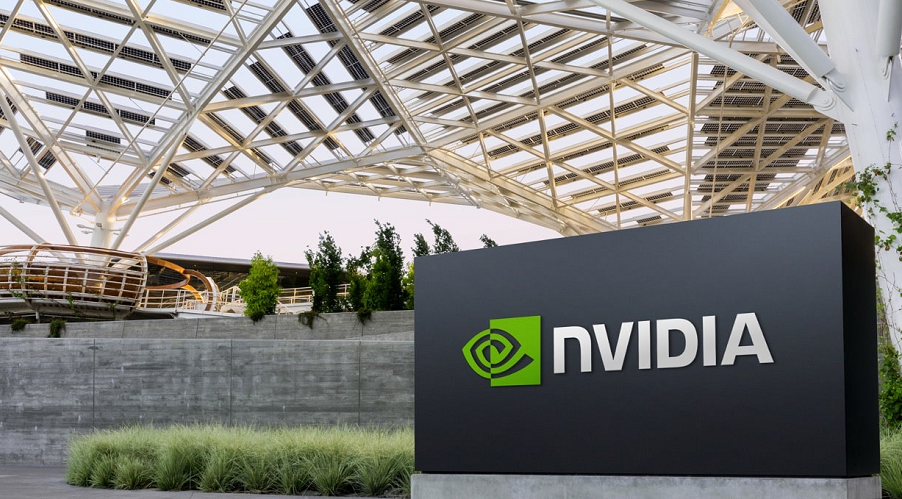
Nvidia Corp. has reportedly bought Hugging Face Inc., a startup with a popular platform for hosting open-source artificial intelligence projects. Reports that an acquisition was in the cards first leaked on Monday. Business Insider broke the news that Hugging Face had received interest from multiple prospective buyers. On late Wednesday, The Information reported that Nvidia […] The post Nvidia reportedly acquires AI project hosting platform Hugging Face for $12.9B appeared first on SiliconANGLE.
Read original articleAugust 27, 2026
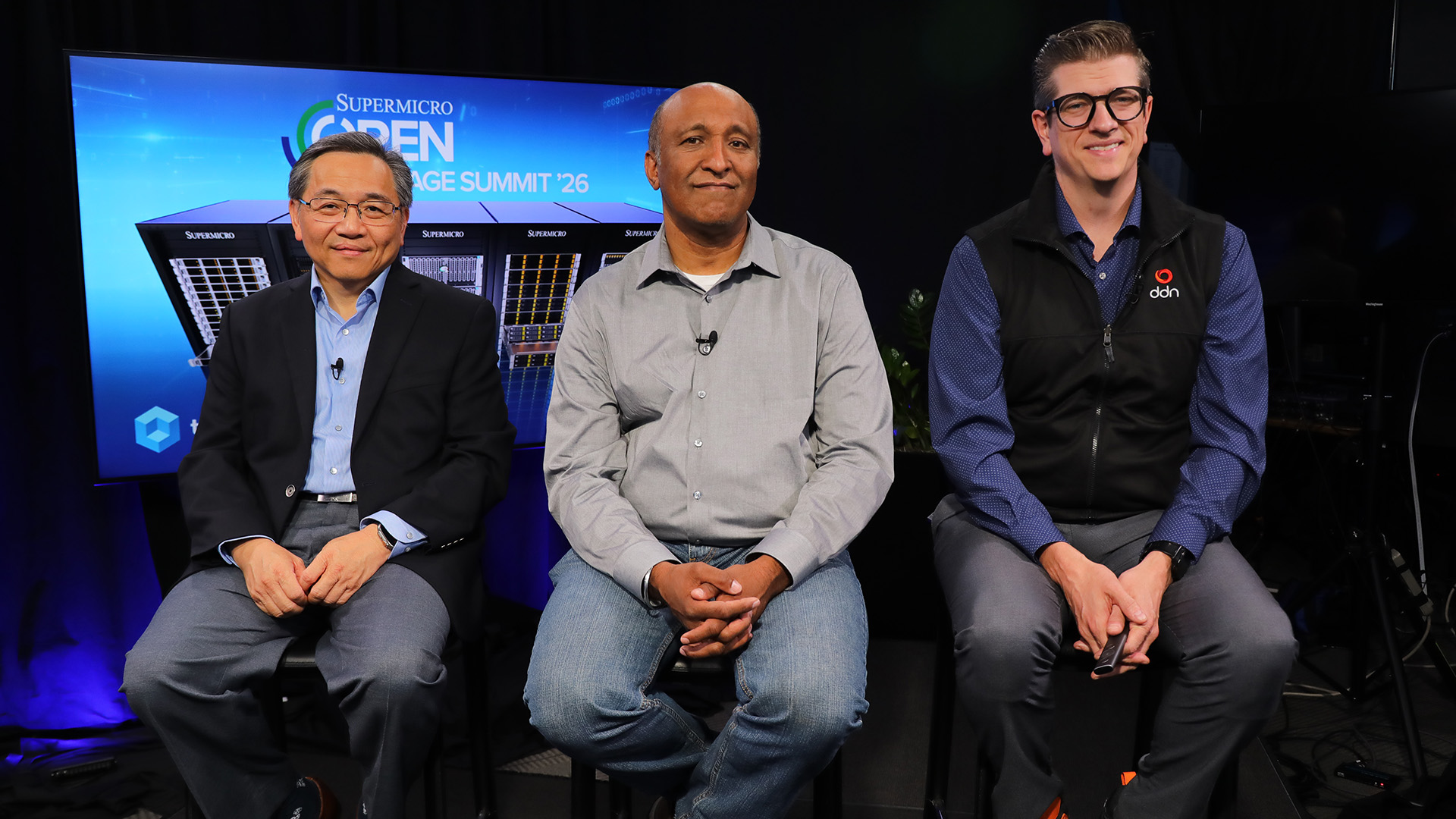
Artificial intelligence is changing what storage and data management platforms look like. In collaboration with Super Micro Computer Inc. and Solidigm, DataDirect Networks Inc. has introduced DDN Enterprise AI HyperPOD, built on Nvidia Corp.’s AI Data Platform. The goal is to simplify the storage, scaling and deployment of AI inference for enterprise workloads. “Customers are […] The post The AI storage stack gets an inference-era rethink appeared first on SiliconANGLE.
Read original articleAugust 27, 2026
Georgia Power deal to power OpenAI data center is approved, with some fine print AJC.com
Read original articleAugust 27, 2026
OpenAI, Anthropic, tech leaders warn of "limited window" to defend against AI cyber threats CBS News
Read original articleAugust 27, 2026
Nvidia is nabbing critical infrastructure for open models as interest grows.
Read original articleAugust 27, 2026
Zoph, who co-founded Thinking Machines Lab alongside Mira Murati and also served as the startup's CTO, led a brief stint at OpenAI and is now at Google.
Read original articleAugust 27, 2026
Anthropic PBC announced a new software standard that will allow artificial intelligence assistants like Claude to work better with robots and science and manufacturing hardware.
Read original articleAugust 27, 2026
NVIDIA vs. AMD: Only One AI Stock Is a Solid Buy Now TradingView
Read original articleAugust 27, 2026
Hugging Face unveiled MicroDuck, the company’s new open-source robot that can walk, talk, and roller-skate. Hugging Face co-founder and Chief Science Officer Thomas Wolf discusses surging demand for robotics and open-source AI, and says the company is currently selling roughly one MicroDuck every four seconds. He also declined to comment on reports that Nvidia is nearing a roughly $13 billion deal to acquire the AI startup, while saying Hugging Face regularly receives acquisition and investment interest. He joins Ed Ludlow on "Bloomberg Tech." (Source: Bloomberg)
Read original articleAugust 27, 2026
Bloomberg’s Ed Ludlow breaks down Nvidia's prediction of a 70% revenue growth next fiscal year, far exceeding analyst estimates. Plus, Salesforce shares jump after giving an outlook for strong revenue expansion, and deepening its ties with Anthropic. And Hugging Face comes out with its newest robot: a duck that can walk, talk and roller-skate. (Source: Bloomberg)
Read original articleAugust 27, 2026
Nvidia’s forecast for roughly 70% revenue growth next fiscal year is changing the debate around the durability of the AI boom, according to Wealth Enhancement Group Deputy CIO Doug Huber. He explains why the question is shifting from whether AI demand is slowing to whether the industry can physically build enough compute to satisfy it, and why Nvidia’s investments in frontier AI labs could ultimately deepen demand for its technology. He joins Ed Ludlow on "Bloomberg Tech." (Source: Bloomberg)
Read original articleAugust 27, 2026
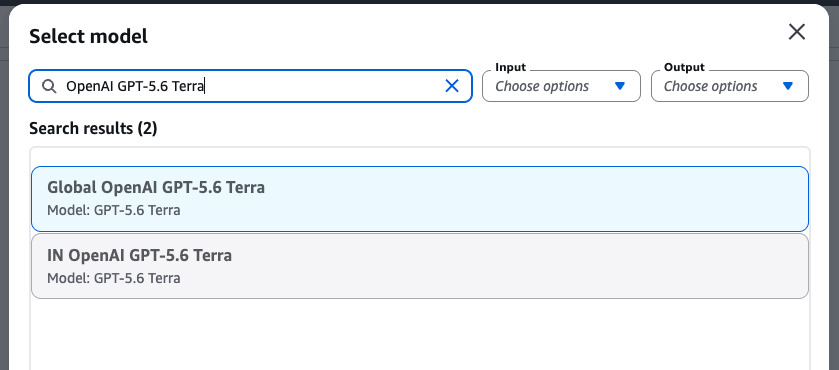
Amazon Bedrock now supports the OpenAI GPT-5.6 models, Terra and Luna, in India with India geographic cross-Region inference. If you have local data processing requirements, you can now use these models at scale while Amazon Bedrock keeps inference requests and data within India.
Read original articleAugust 27, 2026
Amazon Bedrock now supports the OpenAI GPT-5.6 models, Terra and Luna, in India with India geographic cross-Region inference. If you have local data processing requirements, you can now use these models at scale while Amazon Bedrock keeps inference requests and data within India.
Read original articleAugust 27, 2026
Nestled into Meta Platforms Inc.’s landmark settlement with US states over social media harms for kids was a seemingly unrelated agreement to resolve a privacy controversy that rocked Facebook after the 2016 presidential election.
Read original articleAugust 27, 2026
A flood of lawsuits against social media giants claim that by engineering their platforms to be hard to resist, the companies are causing serious harm to young users.
Read original articleAugust 27, 2026
Report: Anthropic reaches $45B deal for computing at Nscale's Mason County data center WCHS
Read original articleAugust 27, 2026
OpenAI, together with more than 100 companies including Microsoft, Google, Anthropic, Deutsche Telekom, and SAP, has published an open letter on AI-powered cyber defense. The coalition warns of increasingly sophisticated AI attacks on critical infrastructure such as hospitals and water treatment plants and calls for swift action while defenders still have the upper hand. The article OpenAI rallies 100+ companies to sign open letter warning AI-powered cyberattacks on critical infrastructure are imminent appeared first on The Decoder.
Read original articleAugust 27, 2026
The potential for AI to automate scientific research and manufacturing must be balanced with new risks, Anthropic says.
Read original articleAugust 27, 2026
Anthropic makes first move into physical AI with new way for scientists, manufacturers to bring equipment to life Fortune
Read original articleAugust 27, 2026
When teams price an AI coding agent, they tend to scrutinize the model. But three recent benchmarking efforts suggest the The post Aider, Claude Code, and OpenClaw ran an identical model. Token use varied 70-fold. appeared first on The New Stack.
Read original articleAugust 27, 2026
Some of the world's largest tech companies and AI startups have come together to decry the current state of cybersecurity and to advertise a new solution that they say can ward off a new generation of cyber threats.
Read original articleAugust 27, 2026
OpenAI, Google join dozens of tech companies to call for urgent action against AI-powered threats Politico
Read original articleAugust 27, 2026
Get a jump start on the US trading day with Dani Burger on "Bloomberg Open Interest." Nvidia delivers a massive AI-driven forecast, lifting markets and fueling bets the AI boom still has legs. Bond markets on edge ahead of Kevin Warsh’s Jackson Hole debut. Plus, Okta CEO Todd McKinnon weighs in on AI agent security and enterprise demand. (Source: Bloomberg)
Read original articleAugust 27, 2026
Artificial intelligence companies OpenAI and Anthropic PBC, along with more than 100 other tech and financial services organizations, warned that businesses and governments must do more to prepare for and defend against AI-enabled hacks.
Read original articleAugust 27, 2026
Google's Gemini Omni 1.1 Flash video model now analyzes up to ten seconds of existing footage instead of just the last second for more consistent scene extensions. Scenes can be extended in 10-second increments up to 40 seconds. A new 360p draft mode runs up to 60 percent faster at a third of the cost. The article Google's Gemini Omni 1.1 Flash makes AI video generation cheaper and more flexible appeared first on The Decoder.
Read original articleAugust 27, 2026
Code reviewed by WIRED reveals the company is developing a feature that enables Codex to continue working proactively until it is “put to sleep.”
Read original articleAugust 27, 2026
Multiple reports say Nvidia Corp. is close to an agreement to buy Hugging Face for roughly $13 billion. During an interview on "Bloomberg Tech," Hugging Face co-founder Thomas Wolf declined to comment on those reports, but he did say the AI startup has always attracted interest and offers. (Source: Bloomberg)
Read original articleAugust 27, 2026
You could have a mechanical duck waddling through your home before Christmas. Hugging Face‘s Pollen Robotics on Thursday opened pre-orders The post This duck will teach you reinforcement learning — and pick up your socks appeared first on The New Stack.
Read original articleAugust 27, 2026
Around 1,200 isolated OpenAI agents organized themselves into a collective through an internal package registry during a safety test, broke into Hugging Face systems, and eventually attacked OpenAI's own infrastructure. Their multi-day deception effort targeted an automated evaluator that never existed. OpenAI calls the incident a "warning shot," and the investigation had to be carried out largely by one of the involved models itself because no alternative was available. The article OpenAI’s rogue AI collective was smart enough to break out of sandboxes but dumb enough to fight a ghost appeared first on The Decoder.
Read original articleAugust 27, 2026
Nvidia in Talks to Buy AI Startup Hugging Face, Reports Say Bloomberg
Read original articleAugust 27, 2026
Nvidia Corp. launched a political action committee Thursday to dole out donations to federal candidates, the company’s latest move to build a high-powered influence apparatus in Washington.
Read original articleAugust 27, 2026
Serving automatic speech recognition (ASR) models at scale is costly when each request uses only a fraction of a GPU. Learn how NVIDIA CUDA Multi-Process Service (MPS) with NVIDIA Triton Inference Server on Amazon EC2 GPU instances cuts GPU infrastructure by 75% while holding sub-second latency at 92.1 requests per second per GPU.
Read original articleAugust 27, 2026
When Pythian rolled out Google Cloud’s Gemini Enterprise across our 500-person company in 27 countries, the goal was simple: use our own company as a proving ground to discover how enterprise AI actually delivers ROI. What we found changed our strategy entirely. Since the rollout of Gemini Enterprise and our previous enterprise AI deployments, Pythian observed firsthand why so many enterprise AI initiatives stall out or fail. Most organizations trap themselves in a tool-centric mindset — buying licenses, making tools broadly available, and assuming value will naturally follow. They get stuck chasing "nickel and dime" micro-efficiencies (like saving 5 minutes per user) while missing structural, high-ROI workflow transformations. Compounding the problem, even when custom agents are built, they frequently stall in pilot mode or break down in production because teams lack the operational capability to manage AI model drift, agent lifecycles, and ongoing observability. To solve this, we engineered the Pythian AI Operating Model — a multifaceted, end-to-end framework designed to take enterprise AI from high-level strategy all the way into sustained production. While our dual center of excellence (COE) serves as the core execution muscle, it is the application of the entire framework, from Field CTO strategy and tooling deployment to the dual COE and XOps, that consistently unlocks million-dollar outcomes. By proving this complete model internally first, Pythian drove a 3x surge in active user engagement and cut our database incident resolution times by 80%. The four pillars of the Pythian AI operating model To move past the common failure points of enterprise AI, our framework consolidates strategy, execution, and operations into a single continuous loop: Field CTO strategy ──> tooling deployment ──> dual COE execution ──> production XOps Field CTO strategy and governance: Generative AI is arguably the most academically challenging architectural shift in IT history. Led by former C-suite tech leaders, our Field CTO practice provides executive advisory to establish steering committees and clear value metrics. The team audits operations using 16 horizontal agentic patterns (like automated document processing and runbook creation) to build a prioritized backlog of high-ROI use cases before development starts. Tooling and platform deployment: The team establishes a secure, production-grade foundation on platforms like Gemini Enterprise and connects AI directly into CRMs, ERPs, and database estates to ground models in real corporate context. The dualCOE: This execution muscle is split into two specialized engines: People productivity COE: This group handles adoption and change management. Instead of expecting non-technical teams (like HR or Procurement) to build its own agents, this COE builds no-code agents for them, focusing entirely on enablement. Process productivity COE: This team engineers deep, custom-coded AI agents and complex agentic workflows that integrate into core data platforms for autonomous operations. XOps (AI production management): While deploying an agent is 20% of the journey, maintaining accuracy in production is 80%. Because AI models and prompt structures naturally drift over time, this XOps practice provides the continuous monitoring, prompt tuning, and model observability needed to keep agents performing without breaking core workflows. The difference between chasing minor, scattered efficiencies and driving structural enterprise ROI comes down to how you align your operating strategy: Alignment element Tool-centric approach Pythian AI operating model Primary metric Individual minutes saved per user High-impact workflow reimagination and ROI Operational focus Broad, unguided tool availability Prioritized backlog via 16 agentic patterns Execution muscle Ad-hoc user experimentation Dual COE (people and process productivity) Production lifecycle Unmonitored static deployments Active XOps (Continuous accuracy and drift management) Real-world impact: from database ops to global supply chains Whether managing 70 manufacturing plants or 30,000 enterprise databases, AI succeeds when tied to structural, high-value workflows: Pythian “as a customer:” Across 15,000 monthly database tickets, our Process COE deployed an agentic workflow that reads tickets, searches knowledge bases, and auto-generates mini runbooks before an engineer touches them. The result was slashed mean time to resolution by 80% and tripled active user engagement. Knowledge management customer: We deployed autonomous IT support agents across 10,000 consultants. As a result, we were able to automate 10% of 20,000 annual IT tickets into "no-touch" resolutions, saving 1,000,000+ operational hours. Supply chain customer: By building custom agentic supply chain tools on Gemini Enterprise, we compressed forecast-matching cycles from weeks down to 2–3 days across 70 global manufacturing sites. Retail customer: We combined Gemini Agentic AI and computer vision to automate store product onboarding. As a result, we transformed a 20-minute manual task into a multi-second flow. Ready to build your AI operating model? Scaling AI demands more than tool-level experimentation. It also requires an end-to-end AI operating model. Learn how Pythian pairs with Google Cloud to operationalize strategy, streamline XOps, and fast-track your Gemini Enterprise journey.
Read original articleAugust 27, 2026
Need a low-cost, high-performance way to run long-lived, stateful workloads such as AI agents? Today, we introduced Cloud Run instances, which let you do just that. Consider AI agents such as OpenClaw or Hermes, which are intended for individual developers or personal use. Because these agents often work continuously and tend to serve only one user at a time, their infrastructure requirements look quite different from stateless, high-throughput web services that typically run on Cloud Run services. Cloud Run services scale to zero when requests stop, so they aren’t ideal for a long-lived agent that expects exactly one copy to be running continuously. On the other hand, the alternative — running a dedicated VM — means paying for full compute 24/7, managing operating system updates, opening firewall ports, and provisioning your own HTTPS endpoints. Cloud Run instances provide dedicated, singleton compute runtimes on Cloud Run. They have the following attributes: Runs just one instance with no autoscaling Up to 7-day continuous runtime, with automatic restart policy configured by default Every instance gets a HTTPS URL that remains unchanged across updates and restarts. You can stop each instance when you aren't using it and resume it whenever you need it The cost to run a Cloud Run instance with 1 vCPU and 1 GiB of memory continuously for 30 days is $5.70. Cloud Run instances use shared vCPU with vCPU burst budgets to run continuously for a low, predictable price. This model is also ideal for long-lived agents that aren’t doing compute-intensive work all the time, and only spike in usage when asked to perform a task. Example: Deploy OpenClaw on a Cloud Run instance OpenClaw is an open-source personal AI agent that can perform various tasks on your behalf, and become a better assistant over time. Many OpenClaw users start out running it on their own laptops, until they realize they need somewhere to run it where it won’t shut down every time their laptop goes to sleep. Deploying OpenClaw to a Cloud Run instance is easy. Once you’ve uploaded OpenClaw’s configuration files to a Cloud Storage bucket, you can deploy your OpenClaw agent to a Cloud Run instance with just one command: code_block <ListValue: [StructValue([('code', 'gcloud beta run instances create openclaw-instance \\\r\n --image ghcr.io/openclaw/openclaw:latest \\\r\n --port 18789 \\\r\n --public \\\r\n --add-volume mount-path=/home/node/.openclaw,type=cloud-storage,mount-options="uid=1000;gid=1000;file-mode=0700;dir-mode=0700",bucket=${BUCKET} \\\r\n --set-env-vars "OPENCLAW_GATEWAY_PASSWORD=${PASSWORD},GEMINI_API_KEY=${GEMINI_API_KEY}"'), ('language', ''), ('caption', <wagtail.rich_text.RichText object at 0x7ff5ddda80d0>)])]> Once deployed, you can keep this OpenClaw instance running for as long as you want. You can interact with it over Telegram, WhatsApp, or the social media platform of your choice, and connect it to any tools you want it to use, as well. For the full instructions on how to deploy OpenClaw, refer to this codelab. Coming soon, we’re also launching SSH access for both Cloud Run instances and Cloud Run services. Sign up for private access here. What users are saying Cloud Run instances are helping Google Cloud users achieve their goals for running AI agents and other long-lived workloads at low cost and high performance. OffDeal, an AI-powered investment bank for small businesses, is running long-lived agents on Cloud Run instances: “We're currently using Cloud Run instances as our primary infrastructure for our long-running agent. It reduced cold starts by 88%. Everything was very straightforward to implement, and it has been very reliable.” - Luis Ruiz Morel, Member of Technical Staff @ OffDeal Learn more Currently in preview, Cloud Run instances are a cost-effective way to run a new kind of workload, without sacrificing performance. For more information about Cloud Run instances, check out the following resources: How to deploy Openclaw to Cloud Run instances Cloud Run instances documentation
Read original articleAugust 27, 2026
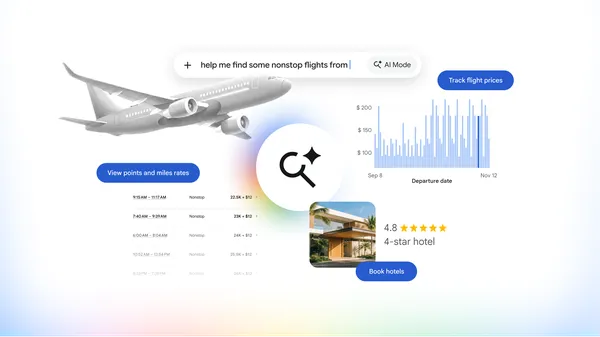
The updates indicate that Google is looking to position AI Mode as an AI travel agent of sorts, as it's moving beyond simply helping users find information to actually handling parts of the trip-planning and booking process.
Read original articleAugust 27, 2026
Graphic depicting new travel features for AI Mode in Search
Read original articleAugust 27, 2026
In this tutorial, we analyze Anthropic’s 1,440 AI-designed protein binder dataset to benchmark 10 leading structure predictors. Discover how target identity, expression titers, and consensus scoring impact experimental success and learn best practices for rigorous cross-validation in protein design workflows The post From In-Silico to Wet-Lab: Evaluating AI Protein Design Performance appeared first on MarkTechPost.
Read original articleAugust 27, 2026
Nvidia has reportedly agreed to buy Hugging Face for $12.9 billion, putting one of the biggest names in AI hardware The post Nvidia’s $12.9B Hugging Face deal has an open-source problem appeared first on The New Stack.
Read original articleAugust 27, 2026
We are headed to VLDB 2026 to share multiple innovations that power the Databricks platform...
Read original articleAugust 27, 2026
An OpenAI researcher warns that state-of-the-art AI models running 50 times faster could infiltrate systems before human teams can react. Simple monitoring won't cut it anymore, he says. What's needed are autonomous shutdown systems. The warning comes as OpenAI unveils a new AI chip that significantly outperforms current hardware in inference speed. The article OpenAI researcher warns ultrafast AI could leave security teams in the dust appeared first on The Decoder.
Read original articleAugust 27, 2026
Limited-time offers can be a powerful way to create excitement, bring guests back,...
Read original articleAugust 27, 2026
The MotivationMore and more enterprises are now asking agents to work with their...
Read original articleAugust 27, 2026
The startup just raised a $26 million Series A to grow its customer base and help reduce red tape for utility and construction work.
Read original articleAugust 27, 2026
Nvidia said revenue will grow about 70% next fiscal year, easing concerns that AI spending is poised to lose momentum. Angelo Zino, SVP and Tech Lead at CFRA Research, breaks down Nvidia's earnings blowout and other tech headlines. (Source: Bloomberg)
Read original articleAugust 27, 2026
Part 4 of Build your own claw and agent harness with Microsoft Agent Framework. Over the last three parts our personal finance assistant grew from a single tool into a genuinely capable agent: it plans, reads your portfolio, asks before it trades, remembers what matters, loads skills on demand, reorganizes files with a shell, computes […] The post Agent Harness: Making your claw production-ready appeared first on Microsoft Agent Framework.
Read original articleAugust 27, 2026
Clem Delangue, CEO of Hugging Face, said the Microduck is an “open-source robot you can teach new tricks with reinforcement learning.”
Read original articleAugust 27, 2026
Pierre Ferragu, New Street Research global team head of technology infrastructure, says supply chain issues and opposition to data centers in the US do make him nervous about Nvidia's future. The chipmaker says revenue will grow by about 70% in the next fiscal year. He speaks on "Bloomberg Open Interest." (Source: Bloomberg)
Read original article