August 14, 2026
Goldman Sachs Mobilizes Investors for Nvidia’s $500 Billion AI Infrastructure Push - PYMNTS.com
Goldman Sachs Mobilizes Investors for Nvidia’s $500 Billion AI Infrastructure Push PYMNTS.com
Read original articleDataAIHub Daily
Archive →24 curated AI news stories from leading AI companies.
August 14, 2026
Goldman Sachs Mobilizes Investors for Nvidia’s $500 Billion AI Infrastructure Push PYMNTS.com
Read original articleAugust 14, 2026
Anthropic at $2 trillion? The AI boom is rewriting IPO history, but soaring costs, open models and dot-com echoes raise a harder question: can the economics keep up?
Read original articleAugust 14, 2026
OpenAI's Computer History records clicks, keystrokes, and app switches on Mac and turns them into a searchable timeline for ChatGPT and Codex. The data is stored locally as unencrypted Markdown files. OpenAI says it's not used for AI training, but memories that feed into chats may still end up as training data. The article OpenAI's Computer History turns your clicks and keystrokes into a searchable ChatGPT memory timeline appeared first on The Decoder.
Read original articleAugust 14, 2026
Turning off this setting won't affect invisible benchmarks used to identify an AI generated file.
Read original articleAugust 14, 2026
AI agents using Claude Opus 4.8 and GPT-5.6 Sol were given six days, $3,000 in API credits, and GPU access to independently write AI research papers. The original authors of unpublished NeurIPS papers rated the results as "Reject." According to the study, conducted with Princeton and the UK AI Security Institute, frontier models can handle the full research engineering process but fall short on research judgment, creative problem-solving, and the ability to abandon failed approaches. The article Study contradicts Anthropic and OpenAI claims that autonomous AI research is within reach appeared first on The Decoder.
Read original articleAugust 14, 2026
Want to know the latest from Google Cloud? Find it here in one handy location. Check back regularly for our newest updates, announcements, resources, events, learning opportunities, and more. Tip: Not sure where to find what you’re looking for on the Google Cloud blog? Start here: Google Cloud blog 101: Full list of topics, links, and resources. aside_block <ListValue: []> Aug 10 - Aug 14 Diagnosing Apigee Hybrid Cassandra Read Latency for Peak PerformanceDiagnose real-time Cassandra read latency and resolve API key verification bottlenecks in Apigee Hybrid with this step-by-step troubleshooting guide. Learn how to deploy a debugging client and query performance tables to maintain sub-millisecond response times. Read the Apigee Hybrid Cassandra Troubleshooting Guide Keep moving with agents! The All Things Agentic Hackathon is officially live.We're challenging builders to build next-generation agents that take on the busy work and handle the heavy lifting in the background using Gemini 3.5 and Google Cloud. Compete for your share of $190,000 in prizes, cash, and Google Cloud credits! Submissions are open from August 3, 2026, to August 31, 2026.Learn more and register. Sign up for GEAR to get exclusive updates and your badge. # Accelerate PostgreSQL migrations using Gemini in Database Migration ServiceEnterprise database migrations often stall during the "last mile" of translating legacy stored procedures, triggers, and custom functions from Oracle or SQL Server. Database Migration Service (DMS) now provides AI-assisted code conversion powered by Gemini in Databases. By combining deterministic compiler rules for 1:1 syntax with Gemini contextual synthesis for complex procedural blocks, DMS converts legacy code into native PostgreSQL and AlloyDB with full schema awareness and side-by-side validation.Read the full blog post to learn how to streamline your database code conversion. Compute Flex CUDs now available for G2 and G4 GPU VMsCompute Flexible Committed Use Discounts (Flex CUDs) are now available for G2 (NVIDIA L4) and G4 (NVIDIA RTX Pro 6000) VMs. You can now lock in predictable savings while retaining the flexibility to adapt across VM families, migrate between regions, and combine general-purpose compute, GKE, Cloud Run, and G2 & G4 GPU VMs under a single spend commitment. Flex CUDs for G-series VMs let you lock in savings today while preserving the agility to upgrade to latest hardware without disruption!Explore VM instance pricing or learn more about Flex CUDs. Rapid Bucket accelerates the training and checkpoint performance in PyTorch Ecosystem via GCSFSWith the release of GCSFS 2026.8.0, organisations can now unlock maximum ROI from their AI/ML infrastructure by eliminating data starvation on GPUs in PyTorch ecosystem when they are using Frameworks like Dask, Pandas, PyTorch , PyTorch Lightning, Hugging Face Datasets, Ray dataetc. By making adaptive concurrent prefetching the default, GCSFS dynamically predicts and background-fetches sequential read patterns—boosting single-file throughput by 5x, and scaling up to 21 GiB/s , saturating the NIC when paired with Rapid Bucket. Saturating the NIC translates to significantly improved accelerator goodput and reduced training wait times with zero integration friction. Training and checkpoint restore workflows benefit from intelligent memory management that automatically drains the buffer during random reads to completely avoid bandwidth or memory penalties. Aug 3 - Aug 7 Navigate data sovereignty and AI innovation with hybrid cloudFor enterprises facing strict compliance rules, keeping sensitive data on-premises often means missing out on cutting-edge AI. Data from the 2026 State of AI Infrastructure report reveals that 52% of IT leaders are adopting hybrid cloud strategies to bridge this gap. Our latest blog post explores how Google Distributed Cloud (GDC) helps organizations deploy connected or air-gapped models to run advanced AI entirely within secure environments—mitigating geopolitical risks without sacrificing innovation. Read more. SAP and Google Cloud Launch BDC Connect for BigQueryFor years, enterprises have struggled with the cost, risk, and complexity of moving mission-critical SAP data into advanced analytics platforms. The general availability of SAP Business Data Cloud (BDC) Connect for BigQuery marks a turning point. By introducing revolutionary zero-copy, bi-directional data sharing, this new capability seamlessly bridges SAP systems with Google Cloud's powerful data and AI ecosystem. Instead of wrestling with manual data duplication and lost business context, organizations can now eliminate silos, dramatically lower their analytics costs, and rapidly deploy trustworthy, agentic AI solutions grounded in real-time operational reality. Read the full announcement to learn how to transform your data strategy. Google Cloud Cortex Framework version 7 is now generally available!This release helps you modernize your data architecture for AI agent readiness, enabling you to quickly deploy, customize, and extend robust data products while simplifying orchestration and reducing infrastructure overhead. It provides data product accelerators for SAP-sourced data to build trusted, high-quality data products ready for advanced analytics and agentic use cases. The Framework integrates with Google Cloud products including BigQuery, Dataform, Knowledge Catalog, and Gemini Enterprise Agent Platform. Learn more in our announcement blog, technical documentation, or try a demo deployment today. From API Management to AI Gateway with ApigeeMassive LLM adoption unlocked automation but exposed critical vulnerabilities, from unpredictable token costs to security risks like prompt injection. Without central management, organizations face accelerated technical debt. Learn how to transform Apigee into an enterprise AI Gateway to centralize governance. This architectural roadmap details how to utilize semantic cache to optimize token costs, implement prompt protection policies for security, and productize tools using the emerging MCP standard.Read the full architectural roadmap on the Apigee Community Hub Centrally govern enterprise AI traffic with Apigee AI GatewayManage, track, and secure model communication across your entire infrastructure from a single pane of glass. In a new video walkthrough, Principal Architect Tyler Ayers demonstrates how Apigee AI Gateway simplifies agentic governance. Learn how to transparently proxy model traffic, log real-time token counts, and apply runtime security quotas without impacting your developer workflow.Watch the Apigee AI Gateway demo Maximize Provisioned Throughput UtilizationSudden traffic micro-spikes can exceed per-second quotas, triggering 429 errors or forcing overflow into shared resource pools. A new architectural guide demonstrates how to build a serverless "shock absorber" using Cloud Run and Google Cloud Tasks. By decoupling request ingestion from execution, this queue-based pattern flattens volatile traffic bursts and smoothly drips requests to Gemini at your exact quota rate, maximizing Provisioned Throughput utilization while eliminating job failures during peak usage. Read the step-by-step setup guide. Eliminate security blindspots in agentic tool agentic tool calls via the Model Context Protocol (MCP) can introduce critical security risks to your enterprise architecture. Join our technical deep dive on Thursday, August 13, to discover how to position Apigee as a centralized security gateway. Featuring the new ParsePayload policy and payload operations groups in API Products, this session demonstrates how to enforce granular tool filtering, manage execution quotas, and scale secure agent ecosystems without impeding developer velocity. Register for the August 13 Community TechTalk Jul 27 - Jul 31 Data Cloud and Apigee CDMX: The AI Agent Evolution | August 12, 2026Enterprise AI demands evolution beyond basic conversational assistants. To generate real value, AI models must connect with the organization's core systems and live data sources. Join us this August 12 at Google CDMX for the exclusive event AI Evolution: Powering Tomorrow's Enterprise. Learn how to design an agile and secure ecosystem by unifying the power of Gemini, Apigee, and data agent technologies through practical demonstrations led by Google Cloud engineers.Secure your spot for the in-person session in Mexico City Register now! Vast Edge, built on GCP, launches the first live recovery interface for cloud backups, enabling IT teams to inspect backup contents in real time. This transforms backups from a blind, log-based process into an interactive platform where teams can instantly search, preview, and validate the exact data available for restore.This platform protects Google Workspace, NetSuite, Salesforce, Workday and many SaaS environments, providing complete visibility and enterprise-grade oversight.Visit Vast Edge Backup & Disaster Recovery and get a free trial of their backup solutions on the GCP Marketplace for Google Workspace Backup, NetSuite Backup, Salesforce Backup, and Workday Backup. Jul 20 - Jul 24 Claude Opus 5, Anthropic’s latest model, is now available on Agent Platform. It brings performance improvements over Opus 4.8 across coding, long-running agents, and knowledge work.The model is Zero Data Retention (ZDR) compatible. For safety, high-risk workflows — such as penetration testing or exploit generation — it will notify you and fall back to Opus 4.8.We’re excited to continue to offer enterprise customers options across frontier models to build, deploy, and scale AI securely. Try it here. Apigee Northam Roadshow 2026 | The AI Agent Evolution: Powering Tomorrow's EnterpriseAI is evolving. As your organization deploys autonomous agents, the integration between APIs and models becomes critical. Join Google Cloud specialists for an exclusive day of deep-dive sessions and live demos. Discover how the unified power of Apigee and the Google Cloud Agent Platform allows you to build, govern, and scale high-performance AI agents with complete control. Call to Action: Register for Sunnyvale | Register for NYC | Register for Chicago Deploy an Apigee Proxy for MCP Registry Discovery Learn how to deploy an Apigee X proxy to format Apigee API Hub data into the Model Context Protocol (MCP) Registry format. This tutorial by Tyler Ayers guides developers through cloning the sample repository, deploying using the Apigee Feature Templater (aft), and testing the endpoint to make API data easily discoverable by coding agents. Read the full community tutorial to get started. Simplify AI Infrastructure: Getting Started with Apigee AI GatewayManaging a complex AI landscape with multiple backend environments can present significant operational and governance challenges. A new tutorial walks you through how to build a unified API proxy using Apigee AI Gateway. By establishing a single, secure entry point for all model traffic, teams gain access to real-time analytics, comprehensive tracing, and financial operations auditing—completely seamlessly, and with absolutely no modifications required to client environments or user configurations. Read the step-by-step setup guide Your AI agents are ready. Is your data?The biggest bottleneck to scaling AI isn't the models—it's giving them access to business context. As enterprises move to proactive systems of action, legacy infrastructure often buckles under the nonlinear speed of AI agents. Google Cloud’s new Agentic Data Cloud, built on AI-native infrastructure, solves this by unifying data, AI models, and operational databases. Discover how a borderless Lakehouse and active Knowledge Catalog can empower your AI agents with trusted, real-time context without unnecessary engineering overhead. Read more. Secure and govern your AI at Apigee AI Horizon in LondonMoving AI from basic prompts to complex agentic workflows requires trust and control. Join us on Tuesday, 1st September 2026 at Google London for our 5th edition of Apigee AI Horizon. Discover how Google Cloud product leaders and architects are using Apigee and Model Armor to secure LLM APIs, implement policy controls, and manage token consumption. Do not miss this one—register soon!Secure your spot for AI Horizon London Jul 13 - Jul 17 Resource-Based CUD Sharing is Now Enabled by DefaultStarting June 16, 2026, the default setting for Google Cloud Resource-based Committed Use Discount (CUD) sharing will change from disabled to enabled for new billing accounts and eligible existing accounts without active CUDs. This update automatically maximizes your savings by pooling underutilized discounts across your resources.You retain full control and can adjust your CUD sharing preferences at any time by changing your CUD scope configuration. For instructions, see Enable CUD sharing or Disable CUD sharing. Webinar for India: Google Cloud for EdTech: Optimizing Traffic and Token Governance at ScaleAPI traffic surges and AI model integration are reshaping the EdTech landscape. Join Satyam Maloo for the webinar Google Cloud for EdTech: Optimizing Traffic and Token Governance at Scale on July 23, 2026. Learn to implement advanced rate limiting, gain granular token visibility, and leverage real-time analytics to govern your platform effectively. Whether you’re scaling for peak academic seasons or integrating complex AI workflows, this session provides the infrastructure blueprint you need.Register Now Scaling AI Agents: Treat prompts like software artifactsAs AI agents move into production, monolithic system prompts often result in configuration drift, merge conflicts, and silent runtime failures. The solution is adopting a Prompts-as-Code architecture. By breaking prompts into modular skill files and using a build-time transpiler, engineering teams can introduce dependency resolution, static validation, and CI/CD rigor to their agent's control plane. Stop manually editing massive text files and start building deterministic, reliable agent infrastructure.Read more here. Jul 6 - Jul 10 Webinar: Introducing Google Cloud NGFW Enterprise advanced malware protection - powered by Palo Alto NetworksDiscover the new Cloud NGFW advanced malware sandbox, arriving in preview later this year. Powered by Palo Alto Networks Advanced Wildfire, it leverages data from 70,000+ customers to help defeat advanced malware. Join us on July 16 at 11 AM EDT to learn how to build a resilient, zero-trust cloud infrastructure that protects your apps and data, wherever they reside.Register for the webinar now Safely run AI-generated code in Cloud Run sandboxesCloud Run sandboxes, now in public preview, are lightweight, isolated execution boundaries that you can spawn near-instantly within your existing Cloud Run service instances.Whether you need to let an LLM run a dynamically generated Python script to calculate business margins or spin up a headless browser to perform web research, Cloud Run sandboxes give you a secure, isolated sandbox to run these tasks without leaving your serverless environment.Read the blog to learn more and get started today. Australia API Horizon: Scaling Enterprise Governed AI AgentsThe transition from AI chatbots to autonomous agents is the most critical integration point for your business. Join Google Cloud at our upcoming events to explore exclusive deep-dive sessions on architecting for the agentic era.Discover how to use Apigee as an intelligent AI Gateway to govern, secure, and scale high-performance architectures. You will learn to seamlessly build AI tools from your existing APIs and maintain control over your entire ecosystem.Join us in your preferred city: Sydney: July 28, 2026, at Google Sydney, One Darling Island. Canberra: July 29, 2026, at Hotel Realm. Melbourne: August 4, 2026, at Google Melbourne. Build highly available, multi-region services on Cloud RunMaintaining uptime for business-critical applications just got a lot easier on Cloud Run. Service health, now Generally Available, automates cross-region failover by leveraging readiness probes for instance-level health checks with a simple, two-click setup. You can configure service health with global external Application Load Balancers for public-facing applications or cross-region internal Application Load Balancers for private networking traffic.Learn how to configure service health for Cloud Run. Report: 83% of organizations need infrastructure upgrades for agentic AIThe shift from conversational bots to autonomous agents is breaking legacy systems. Our new State of AI Infrastructure report details how engineering leaders are adapting to these massive new workloads. To eliminate inference bottlenecks, control hidden scaling costs, and manage agent sprawl, the industry is rapidly moving toward fluid compute, centralized governance, and unified, co-designed architectures.Explore our key infrastructure insights Stop tinkering, start scaling: the industrialized AI PlaybookDid you know that only 5% of custom AI investments actually return measurable business value? The problem isn’t the technology—it’s how organizations are wired to run it.In this compelling read, Google Cloud Consulting breaks down the operational blueprint that bridges the stark gap between "cool tech experiments" and real, P&L-impacting enterprise ROI.Read the full article on Medium AI Agent Clinic: Slashing App Latency by 80%Prototyping an AI agent is easy, but scaling for live traffic presents unique challenges. In the latest AI Agent Clinic, our technical experts partner with a developer to optimize PlaybackIQ, a live football analysis agent. This session demonstrates how to use OpenTelemetry to trace bottlenecks in the Gemini Enterprise Agent Platform and deploy to Cloud Run for high-concurrency scaling, achieving an 80% reduction in response time. Learn production-grade debugging strategies to optimize your own LLM applications.Watch the 60-minute teardown Jun 29 - Jul 3 Claude Sonnet 5, Anthropic’s latest model, is now available on Agent Platform. This addition serves as a drop-in replacement for Sonnet 4.6, giving organizations expanded choice for task completion across enterprise workflows. It features enhanced reasoning, cleaner code generation, and computer use capabilities for desktop and browser workflows.By continuing to rapidly bring frontier models to our platform, Google Cloud offers an uncompromised choice of the industry's best technology to build, test, and scale enterprise-grade AI.Get started today. Automate your AI governance with Apigee and YAMLManual API gateway configurations can quickly slow down your AI engineering velocity. Join the Apigee community on Thursday, July 16, to discover an automated, declarative blueprint for model garden management. Learn how a simple, repeatable YAML pattern lets your AI practitioners instantly spin up secure, policy-backed enterprise configurations without friction. Bring your questions and connect during our live Q&A session. Register for the July 16 Community TechTalk Build next-generation AI portals for autonomous agentsStandard developer portals were designed for human developers to subscribe to static APIs. Today, autonomous agents, LLM toolkits, and dynamic runtimes demand a central nervous system for governance. Join our technical deep dive on Thursday, July 23, to explore Apigee's new AI Portals solution. You will see exactly how to deploy full-service, MCP powered hubs to safely manage enterprise self-service for models, tools, and agents. Register for the July 23 Community TechTalk Protect your infrastructure from advanced cyberattacks at the API layer (Presented in Portuguese)In an era of increasingly sophisticated threats, relying solely on traditional firewalls leaves critical data gaps. Join our technical community TechTalk on Thursday, July 30—conducted in Portuguese—to learn how to proactively mitigate risks directly at the gateway layer. This session demonstrates how to configure and govern essential Apigee security policies to build a robust line of defense, ensuring maximum availability and complete integrity for your enterprise microservices. Register for the July 30 Portuguese Community TechTalk Jun 22 - Jun 26 Accelerate TPU model loading while saving RAM on GKE.Large model cold starts often stall scaling and leave high-value TPUs idle. The open-source Run:ai Model Streamer now natively supports TPUs with Google Cloud Storage in TPU vLLM 0.18.0. This integration accelerates inference pipelines on GKE by streaming tensors directly into CPU memory, bypassing local disk bottlenecks and the "double-buffering" trap. In benchmarks, loading a 480B parameter model was over 2x faster while cutting peak host memory usage by half. Read the full guide and get started today. Stop Training Blind: Scaling AI with the New OpenTelemetry-Based TPU AI Telemetry Collector AgentGoogle Cloud’s new AI Telemetry Collector agent standardizes TPU monitoring using OpenTelemetry. It optimizes enterprise ML workloads by identifying silent failures and providing zero-cost operational metrics without draining host CPU cycles. The agent seamlessly routes telemetry to Google Cloud Monitoring or Prometheus and custom Grafana setups. Pre-installed on Google-optimized Ubuntu images or available via Docker, it tracks memory, network latency, and core utilization to maximize multi-node training efficiency.You can read more of this capability by clicking this link. Jun 15 - Jun 19 Join us for a deep dive into agentic AI control with AppyThingsYour integrations aren’t failing—they are evolving. When users interact with AI agents, they no longer arrive directly at your site, resulting in experiences stripped of your context, expertise, and intended experience. Join us on Thursday, June 25, for a community tech talk in partnership with AppyThings to learn how to solve this new gateway challenge. We will explore how MTN laid an integration foundation with the Model Context Protocol (MCP) to deliver accurate, consistent experiences. Our technical experts will demonstrate how to leverage Apigee as a centralized tools management solution to govern agent access. Register for the session Optimize Spot VM Deployments with Capacity Advisor for Spot, Now in Public PreviewGoogle Compute Engine has launched Capacity Advisor for Spot to Public Preview, now open to all customers. This tool turns Spot capacity discovery into a data-driven process by providing real-time deployment recommendations to maximize obtainability and minimize preemption risks. Query the Capacity Advisor API for obtainability and minimum estimated uptimes, or use the new Console UI featuring a global availability map, spot price lookups, and historical preemption rate trends to visually find the most cost-efficient compute capacity.Get started today to start optimizing your Spot VM deployments! Build a multi-tenant agentic AI systemWhen scaling generative AI across different business units, your teams need specialized AI agents with unique operational rules and tools. Our new reference architecture helps you build a centralized multi-tenant platform to prevent fragmented silos, eliminate data exposure risks, and maintain unified compliance. Read the guide to design and deploy a multi-tenant agentic AI system in Google Cloud. How to Configure Gemini Enterprise to Connect to a Custom MCP ServerThe Gemini Enterprise MCP Connector was a big announcement at Google Cloud Next because it introduces the ability to connect Gemini Enterprise to MCP servers. This blog post provides a step-by-step guide on how to configure your first Custom MCP Server connector using the Google Maps Ground Lite MCP server as an example. Once you understand this flow, you can configure multiple MCP servers with Gemini Enterprise to bring all the context you need. Jun 8 - Jun 12 Simplify Multi-Cloud Planning with Cloud Location Finder, now Generally Available Cloud Location Finder provides up-to-date data on public regions, zones, and Google Distributed Cloud Connected locations across Google Cloud, AWS, Azure, and OCI. You can now programmatically discover locations based on provider, proximity, territory, and carbon footprint to optimize your global infrastructure strategy for performance, compliance, and sustainability. Get started for free today Jun 1 - Jun 5 Modeling the physical world with BigQuery GraphManaging complex supply chains requires more than just spreadsheets; it requires a digital replica of the physical world. In this post, Guru Rangavittal and Candice Chen explore how BigQuery Graph enables organizations to build a digital twin by turning physical assets into an interconnected map of nodes and edges. By moving beyond traditional relational databases, businesses gain real-time clarity into operations—from executing surgical ingredient recalls to analyzing weather-driven logistics risks. Discover how BigQuery Graph transforms reactive firefighting into proactive, precision modeling, allowing you to see critical connections in seconds and future-proof your supply chain. Apigee for AI: Govern LLMs and MCP Servers (Presented in Spanish)Learn how to securely transition your AI initiatives from experimental prototypes to enterprise-ready deployments. Join Luis Cuellar on June 18 for a technical deep dive (presented in Spanish) exploring Apigee’s latest AI gateway capabilities. Discover how to centralize governance over Model Context Protocol (MCP) servers, protect Large Language Models (LLMs) with robust API gateway security policies, and manage token-based quotas.Register for the June 18 Spanish Community TechTalk May 25 - May 29 Anthropic’s Claude Opus 4.8 is now available on Gemini Enterprise Agent Platform. As we continue to expand our platform's model offerings, this addition gives organizations more options for handling complex, multi-stage enterprise workflows. Claude Opus 4.8 brings strong capabilities in agentic coding, allowing developers to manage extensive refactors and tracking dependencies over extended sessions. API Horizon Munich July 6, 2026: Orchestrating the Next Era of AI and APIs Master the orchestration of next-gen AI and digital ecosystems. Join Google Cloud experts and DACH tech leaders on July 6 for an exclusive look at the Apigee roadmap, Agent Management, and Model Context Protocol (MCP). Gain real-world insights and connect with the regional integration community.Register now Securing AI Agents: The Extended Agent Gateway PatternLearn how to prevent autonomous AI agents from invoking unauthorized APIs. Join Apigee Specialist Joel Gauci on June 4 for a technical deep dive into the Extended Agent Gateway pattern. This session covers enforcing Fine-Grained Authorization (FGA), implementing secure token exchange, and establishing Model Context Protocol (MCP) governance at the API gateway layer to protect enterprise backend services.Register for the June 4 Community TechTalk API-to-Agent Security: Exposing REST APIs to Gemini Enterprise via MCPConnect Gemini Enterprise agents to core data without creating security hazards. Join Google Cloud Specialist Nigel Walters on June 11 to learn how to instantly transform legacy REST APIs into secure Model Context Protocol (MCP) servers. We’ll cover how to safely register tools with Gemini while enforcing gateway-level guardrails like rate limiting and access control policies.Register for the June 11 Community TechTalk May 18 - May 22 Chinese Webinar | June 4: AI Command and ControlAs AI agents move from experimental pilots to core enterprise functions, governance has become a critical next step. Join Google Cloud on June 4th at 10:00 AM (Beijing Time) to learn how to build a secure AI management layer architecture. We'll explore how to develop governed MCP (Model Context Protocol) endpoints, manage tool access to enterprise data, and leverage robust audit logs to operationalize AI. This session also includes a practical demonstration of these governance frameworks on Google Cloud.Register here GCP Announces New Features to Benchmark and Optimize LLMs for On-Device Use CasesDeploying fine-tuned LLMs from GCP to edge devices like smartphones is complex due to fragmented hardware. Google AI Edge Portal bridges this gap, giving GCP developers the ability to test AI performance on 120+ Android devices, representing the full diversity of high, medium, and low tier smartphones on the market today. This week at I/O, we announced brand new capabilities to benchmark and debug LLM performance across these devices. Sign-up to utilize these new features in private preview today. May 11 - May 15 Build Your AI & MCP Control Tower for Universal GovernanceMaster the future of agentic security with Apigee. Join our Community TechTalk on May 21 to discover how Apigee serves as a central "Control Tower" for the Model Context Protocol (MCP). We will explore how new JSON-RPC tool authorization enables fine-grained access policies across your organization, ensuring secure and scalable AI deployments. Whether managing internal tools or external users, learn to govern your agentic ecosystem with absolute precision. This session is designed for global coverage across EMEA and AMER regions.Register for the May 21 Community TechTalk Apr 27 - May 1 Master Your Launch: The Apigee Production Go-Live ChecklistEnsure a secure launch with the Apigee production guide. Join Nicola Cardace on May 28 to explore security guardrails, including IAM roles, mTLS configurations, and encrypted KVM migrations. Scheduled at 11 AM EDT / 5 PM CEST to support EMEA and AMER teams, this TechTalk provides the technical roadmap you need to flip the switch with absolute confidence.Register for the May 28 Community TechTalk Transforming APIs into Governed Agentic Tools on the Google Cloud Agentic PlatformTurn your APIs into secure, governed agentic tools on the Google Cloud Agentic Platform. Join Specialist Christophe Lalevée on May 7 for a technical deep dive into AI productization. Scheduled at 5 PM CEST / 11 AM EDT to maximize coverage for developers across EMEA and AMER, this session explores the integration and governance frameworks required to scale enterprise-ready AI with confidence. Register for the May 7 Community TechTalk Fractional G4 VMs are Generaly Available, providing a highly efficient and cost-effective entry point for AI and graphics workloads. These new configurations, using NVIDIA virtual GPU (vGPU) technology, allow you to leverage the power of the NVIDIA RTX PRO 6000 Blackwell Server Edition GPUs in flexible, smaller increments, so you can right-size your infrastructure to match the specific demands of your applications. By providing more granular access to advanced hardware, fractional G4 VMs let you optimize resource allocation and reduce overhead without sacrificing performance. You can now select from additional GPU slice sizes for your specific needs: 1/2 GPU: Ideal for more intensive tasks such as LLM inference, robotics sensor simulation, and high-fidelity 3D rendering. 1/4 GPU: Optimized for mainstream workloads, including mid-range creative design, video transcoding, and real-time data visualization. 1/8 GPU: Great for lightweight applications such as remote desktops, productivity tools, and entry-level streaming services. Transitioning AI from a sandbox prototype to an enterprise-grade system is a major hurdle. A monolithic script won't suffice for widespread deployment. To achieve true scale and reliability with Gemini, organizations must adopt service-oriented micro-agent architectures, establish Zero-Trust security, and implement rigorous EvalOps. Master the "Agentic Maturity Ladder" to ensure your AI & Agentic solutions are robust, secure, and ready for the real world. Watch the deep dive and read the developer blog to learn more. ML Development in VS Code with Google Cloud Power: Workbench Extension Now AvailableData scientists and developers can now combine the local productivity of VS Code with the scalable infrastructure of Google Cloud. The new Google Cloud Workbench Notebooks extension allows you to connect to and run notebooks on managed cloud environments directly within your local IDE. This integration streamlines the ML lifecycle by eliminating context switching and providing high-performance compute for complex workloads in a familiar interface. As part of our commitment to the developer ecosystem, the extension is fully open-sourced to support community-driven innovation. Install from Marketplace: GoogleCloudTools.workbench-notebooks Contribute on GitHub: colab-enterprise-vscode Apr 20 - Apr 24 Announcing the 2026 Google Cloud Partners of the YearGoogle Cloud is honored to celebrate the winners of the 2026 Partner of the Year awards! These awards recognize an exceptional group of partners across AI, Security, Infrastructure, and more, who have demonstrated a commitment to customer success. From global system integrators to specialized startups, these winners are leveraging the power of Google Cloud to solve complex challenges and drive digital transformation worldwide. Join us in congratulating these organizations for their innovation, collaboration, and impactful results over the past year.See the 2026 Partner Award winners Apr 13 - Apr 17 We're excited to announce the Public Preview of Datastream’s metadata integration with Knowledge Catalog. This is the first step in our vision to provide a centralized, "single pane of glass" for all Datastream assets. The enhancement automatically synchronizes Streams, Connection Profiles, and Private Connections, eliminating data silos. It enhances discoverability, allowing you to search for Datastream assets using the same interface as BigQuery tables. Centralized governance is also provided, making your real-time data estate more transparent and easier to manage. Upgrading Apigee OPDK to 4.53 with OS your infrastructure using Google’s official, sequential upgrade path. Our Technical expert, Rakesh Talanki outlines how to upgrade Apigee OPDK to v4.53 while migrating to a supported OS (RHEL 8.x/9.x). This guide covers the "build-out" methodology, including multi-data center syncing, to ensure a stable, zero-downtime transitionRead the guide Cloud Run Worker Pools and CREMA: Powering Serverless AI at ScaleGoogle Cloud has announced the General Availability of Cloud Run worker pools, a new resource type designed specifically for pull-based, non-HTTP workloads. Unlike traditional Cloud Run services that scale based on request traffic, worker pools provide an "always-on" environment for background tasks like processing message queues or running large-scale AI inference. To support this, Google Cloud also open-sourced the Cloud Run External Metrics Autoscaler (CREMA). Built on KEDA, CREMA enables queue-aware autoscaling for worker pools, allowing them to dynamically scale based on external signals like Pub/Sub backlog or Kafka lag. Apigee Model Context Protocol (MCP) now Generally AvailableExpose enterprise APIs as MCP tools for agentic AI applications with the General Availability of MCP in Apigee. This update allows developers to transform APIs into AI-ready tools using OpenAPI Specifications, removing the need for local MCP servers or additional infrastructure. With managed endpoints and semantic search in API hub, you can now provide AI agents with secure, governed access to enterprise data at scale.Explore the MCP overview Apr 6 - Apr 10 Community TechTalk: Powering Retail Agents with ADK, UCP & Apigee XMove beyond basic chatbots to secure, transactional AI experiences. Join our Community TechTalk on April 16 to learn how Apigee X and Gemini build a "Trust Layer" for AI shopping assistants using UCP standards. We’ll demonstrate how to block prompt injections with Model Armor and implement cost governance via token limits to secure the path from discovery to purchase.Register for the TechTalk Implement multimodal capabilities in your AI agentsExplore three new reference architectures for building sophisticated multi-agent AI systems that can process and analyze multimodal data. To analyze disparate multimodal data and produce a high-confidence classification, see Classify multimodal data. To create a fluid conversational AI that processes audio and video streams in real time, see Enable live bidirectional multimodal streaming. To consolidate fragmented multimodal data into a searchable knowledge graph, see Multimodal GraphRAG resource orchestration. Automate SecOps workflows with an agentic AI systemTo accelerate incident response and reduce manual toil for your security team, you need a system that can automate remediation playbooks. Our new reference architecture helps you build an AI agent that orchestrates complex triage and investigation workflows across disparate security tools, such as SIEM, CSPM, and EDR, from a single interface. See the full guide to orchestrate security operations workflows. Mar 30 - Apr 3 ASEAN Webinar | April 30: Mastering Agentic Governance at Scale with GCPAs AI agents move from experimental pilots to core enterprise functions, governance is the critical next step. Join Google Cloud experts Shilpi Puri & Wely Lau for a webinar on April 30th at 11:00 AM SGT to learn how to architect a secure AI Management layer. We’ll explore developing governed MCP endpoints, managing tool access to enterprise data, and operationalizing AI with robust audit logs. The session includes a live demo of these frameworks in action on Google Cloud.RSVP here. Mar 23 - Mar 27 Turn your API sprawl into an agent-ready catalogAs organizations scale, APIs often become scattered across multiple gateways, creating "blind spots" that hinder AI adoption. To solve this, we’ve introduced two new capabilities for Apigee API hub: a new integration with API Gateway to automatically centralize API metadata into a single control plane, and a specification boost add-on (now in public preview). This add-on uses AI to enhance your API documentation with the precise examples and error codes that AI agents need to function reliably.Read the full blog post to get started. Webinar | April 16: AI Command & ControlAs AI agents move from experimental pilots to core enterprise functions, governance is the critical next step. Join Google Cloud expert Satyam Maloo for a webinar on April 16th at 11:00 AM IST to learn how to architect a secure AI Management layer. We’ll explore developing governed MCP endpoints, managing tool access to enterprise data, and operationalizing AI with robust audit logs. The session includes a live demo of these frameworks in action on Google Cloud.RSVP here. Modernizing and Decoupling Event Ingestion with ApigeeIn modern cloud-native architectures, decoupling producers from consumers is critical for building resilient systems. While Google Cloud Pub/Sub provides a scalable backbone, exposing it directly to external clients can introduce security and management overhead. This new guide explores how to leverage Apigee as an intelligent HTTP ingestion point. Learn how to handle security, mediation, and traffic control before messages reach your internal bus using the PublishMessage policy or Pub/Sub API.Read the full guide. Mar 16 - Mar 20 Gemini-powered Assistant in BigQuery Studio Gets Context-Aware UpgradesThe Gemini-powered assistant in BigQuery Studio has been transformed into a fully context-aware analytics partner, supporting your entire data lifecycle. The new capabilities include intelligent resource discovery, which uses Dataplex Universal Catalog search to find resources across projects and deep dive into metadata using natural language. You can now automate tasks, such as scheduling production-grade queries directly through the chat interface, and instantly troubleshoot long-running or failed jobs with root cause analysis and cost control auditing.Explore the full range of what the assistant can do. Mar 9 - Mar 13 Want to use Gemini to develop code and don't know where to start?This article includes a couple of examples of developing code with Gemini prompts; it identified changes that were needed to be made to get the code working. The article also refers to other examples that are available on github. Mar 2 - Mar 6 Introducing Gemini 3.1 Flash-Lite, our fastest and most cost-efficient Gemini 3 series model. Built for high-volume developer workloads at scale, 3.1 Flash-Lite delivers high quality for its price and model tier. Gemini 3.1 Flash-Lite can tackle tasks at scale, like high-volume translation and content moderation, where cost is a priority. And it can also handle more complex workloads where more in-depth reasoning is needed, like generating user interfaces and dashboards, creating simulations or following instructions. Starting today, 3.1 Flash-Lite is rolling out in preview to enterprises via Vertex AI and developers via the Gemini API in Google AI Studio. TechTalk: Implementing Device Authorization Grant (RFC 8628) for ApigeeLearn how to authorize "headless" devices like Smart TVs or AI agents that lack keyboards and browsers. Join our Community TechTalk on March 19 (5PM CET / 12PM EDT) to go under the hood of Apigee X/Hybrid. We’ll cover the real-world mechanics of state management, polling, and human-in-the-loop security patterns for devices and autonomous agents. Register for the TechTalk Feb 23 - Feb 27 Pro-level image generation gets faster and more accessible with Nano Banana 2Nano Banana 2 is our state-of-the-art image generation and editing model. It delivers Pro-level image generation and editing at the speed you expect from Flash — making the quality, reasoning, and world knowledge you loved about Nano Banana Pro more accessible. Learn more about the model here. The Intelligent Path to Compliance: Transforming Regulatory QC with Google CloudReducing "Refuse to File" (RTF) risks and submission cycle times is critical for life sciences leaders. Google Cloud’s Regulatory Submission Semantic QC Auditor leverages Gemini and RAG architecture to transform Quality Control from a manual burden into an active, intelligent workflow. By automating semantic cross-referencing, narrative coherence checks, and dynamic guidance-based auditing, this solution ensures rigorous accuracy and auditability. Operating within a secure GxP-ready environment, it empowers teams to detect subtle inconsistencies and generate remediation plans without sacrificing data privacy. Learn more. Stop typing, start interacting! The Gemini Live Agent Challenge is here. Build immersive agents that can help you see, hear, and speak using Gemini and Google Cloud. Compete for your share of $80,000+ in prizes and a trip to Google Cloud Next '26!Submissions are open from February 16, 2026 to March 16, 2026. Learn more and register at .devpost.com Feb 9 - Feb 13 Introducing Gemini 3.1 Pro on Google Cloud. 3.1 Pro is a noticeably smarter, more capable baseline for complex problem-solving. We’re shipping 3.1 Pro at scale, building upon our goal to help you transform your business for the agentic future. Learn more about the model’s capabilities here. Gemini 3.1 Pro is available starting today in preview in Vertex AI and Gemini Enterprise. Developers can access the model in preview via the Gemini API in Google AI Studio, Android Studio, Google Antigravity, and Gemini CLI. Automate Storage Compatibility with GKE Dynamic Default Storage ClassesManaging storage across mixed-generation VM clusters in GKE just got easier. With the new Dynamic Default Storage Class, Google Kubernetes Engine automatically selects between Persistent Disk (PD) and Hyperdisk based on a node's specific hardware compatibility. This abstraction eliminates the need for complex scheduling rules and manual pairing, ensuring your volumes "just work" regardless of the underlying infrastructure. By defining both variants in a single class, you reduce operational overhead while maintaining peak performance and cost-efficiency across your entire cluster.Explore automated disk type selection Community TechTalk: AI-Powered Apigee Development with strofa.ioJoin the Apigee community on February 26 for a deep dive into strofa.io. Guest speaker Denis Kalitviansky will demonstrate how this new AI-powered tool automates and orchestrates Apigee development, from local emulators to large-scale hybrid environments. Discover how to scale your API management and streamline team collaboration using the latest in AI-driven automation. Register now to reserve your spot. Jan 26 - Jan 30 Simplify API Governance with Native OpenAPI v3 SupportEliminate integration debt and accelerate deployment velocity with the General Availability of OpenAPI v3 (OASv3) support for API Gateway and Cloud Endpoints. You no longer need to downgrade modern specifications to OASv2. Instead, you can now define API contracts and enforce critical policies—including telemetry, quotas, and security—using native Google-specific extensions directly within your OASv3 files. This update ensures your APIs are secure by design while remaining fully compatible with the modern developer ecosystem and Google Cloud’s AI services.Get started with OpenAPI v3 on API Gateway and Cloud Endpoints. Accelerate API Testing with the New Open Source API TesterStart validating your APIs with API Tester, a simple, YAML-based Test Driven Development (TDD) framework. Designed for the Apigee community, this tool allows you to write human-readable tests, run them instantly via a web client or CLI, and perform deep unit testing on Apigee proxies. With native support for JSONPath assertions and Apigee shared flows, you can verify everything from payload data to internal variables like proxy.basepath without leaving your terminal.Explore the API Tester guide and start testing your proxies today. Secure Sensitive Data with Kubernetes Secrets in Apigee hybridEnhance security in Apigee hybrid by accessing Kubernetes Secrets directly within your API proxies. This hybrid-exclusive feature keeps sensitive credentials within your cluster boundary and prevents replication to the management plane. It supports strict separation of duties: operators manage secrets via kubectl, while developers reference them as secure flow variables—ideal for high-compliance and GitOps workflows.Implement Kubernetes Secrets in your hybrid proxies. See the Console in a Whole New Light: Dark Mode is Now Generally Available in Google CloudElevate your cloud management workflow with Dark Mode, now generally available in the Google Cloud console. We have delivered a modern, cohesive, and accessible experience reimagined for maximum comfort and productivity—especially during extended working hours and low-light environments. Dark Mode can be enabled automatically based on your operating system's preference, or manually through the Settings -> Appearance menu.Switch to Dark Mode today to enjoy a modern, comfortable, and productive environment! Apigee X Networking: PSC or VPC Peering?Deciding how to connect Apigee X? Watch this video to compare Private Service Connect and VPC Peering. We break down northbound and southbound routing, IP consumption, and how to reach targets on-prem or in the cloud. Learn to simplify your architecture and avoid common networking "gotchas" for a smoother deployment.Watch the video. Jan 19 - Jan 23 Bridge the Gap: Excel-to-API Conversion in Apigee PortalsGive your customers more ways to connect! This new article by Tyler Ayers explores how to extend the Apigee Integrated Portal to support direct Excel file uploads. By leveraging SheetJS and custom portal scripts, you can enable users to upload spreadsheets, preview data, and submit it directly to your APIs, all without writing a single line of integration code themselves. It’s a powerful way to simplify onboarding for those who aren't yet API-ready.Learn how to build it. Elevate your applications with Firestore’s new advanced query engineWe have fundamentally reimagined Firestore with pipeline operations for Enterprise edition. Experience a powerful new engine featuring over a hundred new query features, index-less queries, new index types, and observability tooling to improve query performance. Seamlessly migrate using built-in tools and leverage Firestore’s existing differentiated serverless foundation, virtually unlimited scale, and industry-leading SLA. Join a community of 600K developers to craft expressive applications that maximize the benefits of rich queryability, real-time listen queries, robust offline caching, and cutting-edge AI-assistive coding integrations.Learn more about Firestore pipeline operations.
Read original articleAugust 14, 2026
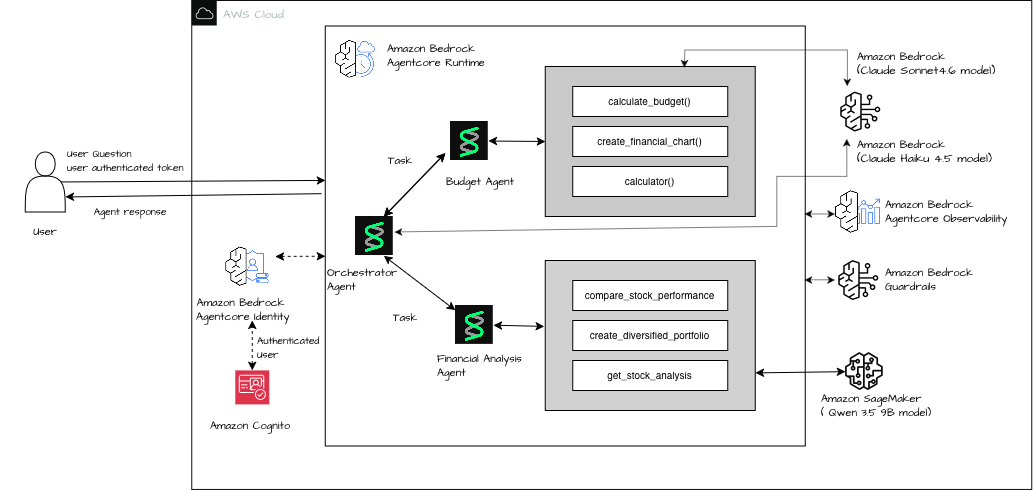
Learn how to combine OpenAI-compatible endpoints on Amazon SageMaker AI with Amazon Bedrock AgentCore runtime to build a multi-agent workflow where each specialized agent uses the model best suited to its job. This post also shows how to get token-level observability from SageMaker endpoints that Strands Agents does not instrument by default.
Read original articleAugust 14, 2026
Meta released Glimmer this week, an open-weight AI model anyone can download and run on their own hardware — a contrast to Muse Spark, the company’s more powerful model that stays locked behind its own APIs. The release landed alongside a letter from Mark Zuckerberg arguing AI should be “for everyone” rather than controlled by a handful of labs, but as Equity’s […]
Read original articleAugust 14, 2026
US groups release cheaper models after new challenges to their trillion-dollar ambitions.
Read original articleAugust 14, 2026
OpenAI is launching "Ultrafast," a new inference mode that delivers GPT-5.6 Sol at up to 750 output tokens per second, powered by Cerebras hardware from their $10 billion partnership. Together with "Standard" and "Fast," Ultrafast creates a three-tier pricing structure that turns inference speed into its own product. The article GPT-5.6 Sol goes 14x faster as OpenAI launches Ultrafast mode powered by Cerebras appeared first on The Decoder.
Read original articleAugust 14, 2026
Meta released Glimmer this week, an open-weight AI model anyone can download and run on their own hardware — a contrast to Muse Spark, the company’s more powerful model that stays locked behind its own APIs. The release landed alongside a letter from Mark Zuckerberg arguing AI should be “for everyone” rather than controlled by a handful of labs, but as Equity’s […]
Read original articleAugust 14, 2026
Meta has announced it is to roll out a new optional feature that leverages an on-device AI machine-learning model to help detect and prevent WhatsApp scam attacks.
Read original articleAugust 14, 2026
Anthropic is testing whether Claude Code can handle daily maintenance of the company's own apps, from crash fuzzing to dead-code removal. In a few weeks, the AI created 388 pull requests, and 46 percent were merged after human review. Claude Code inventor Boris Cherny sees this as "early signs of life that this might be possible." The article Claude Code now runs daily maintenance on Anthropic's software with a 46 percent merge rate appeared first on The Decoder.
Read original articleAugust 14, 2026
Not Micron, Not Sandisk. This Artificial Intelligence (AI) Memory Stock Could Be the Next Nvidia. Yahoo Finance
Read original articleAugust 14, 2026
OpenAI’s Revenue Run Rate Tops $40 Billion as IPO Nears PYMNTS.com
Read original articleAugust 14, 2026
We asked Google Gemini AI about incorporating AI in classrooms: here's its response lancasteronline.com
Read original articleAugust 14, 2026
arXiv:2608.12741v1 Announce Type: new Abstract: Evidence in rapidly evolving fields is fragmented across academic studies, industry reports, policy documents, and media sources that differ in quality, structure, and purpose, making timely synthesis difficult. Large language models (LLMs) may accelerate this work, but their reliability across the distinct cognitive tasks of a review remains uncertain. We introduce the Knowledge Synthesis Review (KSR), a human-in-the-loop framework that decomposes evidence synthesis into screening, extraction, analysis, and synthesis, benchmarks LLM-based systems on each task against expert reference standards, and routes each task to the best-performing system under continuous expert validation. We evaluated GPT-5, Claude Sonnet 4, Gemini 2.5 Pro, and NotebookLM on a 244-document benchmark subset drawn from a 1,893-document corpus on AI and work spanning four source types, against a gold standard with high inter-rater reliability (92.2% agreement, kappa = 0.80). No system led on all tasks. Claude Sonnet 4 achieved the highest screening accuracy (82.8%) and GPT-5 the highest recall (91.8%) at the expense of lower specificity. Extraction exceeded 90% agreement for titles and sources but degraded in author and reference fields. Performance declined most in interpretive analysis and cross-source synthesis, where expert judgment remained essential. A contamination check on post-cutoff documents showed no evidence that prior exposure inflated results. Applied to the full corpus, the routed workflow surfaced cross-source asymmetries and blind spots that single-source synthesis would miss, including worker well-being, small firms, and the Global South. KSR offers a transparent, auditable, model-agnostic framework for governing LLM assistance in research synthesis while preserving human accountability.
Read original articleAugust 14, 2026
arXiv:2608.12820v1 Announce Type: new Abstract: This paper presents a comparative evaluation of cross-lingual information retrieval (CLIR) methods for retrieving English government information using Sinhala and Tamil queries. Two CLIR paradigms are investigated: Query Translation (QT), employing Google Translate, NLLB, and mBART50, and Cross-Lingual Embeddings (CLE), using LaBSE, multilingual E5, and BGE-M3, with monolingual English retrieval as the baseline. Experiments are conducted on a human-verified benchmark comprising 500 Sinhala, Tamil, and English question-answer pairs derived from 1,699 segmented contexts from Sri Lanka's Government Information Center (GIC). Retrieval performance is evaluated using Recall@k (k = 1, 3, 5, 10, 15). Monolingual retrieval performs poorly (Recall@15 <10%), whereas all CLIR approaches substantially improve retrieval accuracy. Among them, BGE-M3 achieves the highest Recall@15, reaching 96.2% for Sinhala-English and 95.6% for Tamil-English, outperforming the best QT approach (Google Translate: 92.4% and 93.0%) while avoiding translation overhead. These results demonstrate that multilingual embedding models provide a more effective and scalable solution for cross-lingual retrieval-augmented generation (RAG) in low-resource government domains.
Read original articleAugust 14, 2026
arXiv:2608.12373v1 Announce Type: new Abstract: Large language models are increasingly used in strategic and advisory contexts, yet their safety alignment is typically evaluated in English only. We test nine models from six providers and ask whether the language of a prompt can change a model's decision in a high-stakes scenario. We use single-turn game-theoretic vignettes in which a model advises a nuclear-armed nation on whether to strike a defenseless opponent. The prompt is intentionally amoral and strategically identical across languages. We find that Japanese prompts reduce launch rates in the Claude model family: Claude Sonnet 4.6 drops from 40% to 0% in scenarios where the strike is unnecessary and from 93% to 17% in contested scenarios, with minimal effect when the strike is strategically rational. The effect extends to Gemini Pro 3.1 (53% to 13%). A cross-language experiment isolates the mechanism: when instructed to reason in Japanese in an English prompt, launch rates drop from 93% to 37%. It is the language the model is asked to reason in, not the language of the input, that drives the effect. When reasoning in Japanese, models spontaneously generate moral vocabulary (''moral cost'', ''millions of lives'') that is entirely absent from the prompt. Five other models show no language effect, but they launch in nearly every condition regardless of language. The effect requires a model that already hesitates in English. These results show that LLM safety behavior is language-dependent, and that evaluating in English alone can miss both risks and safeguards encoded in other languages.
Read original articleAugust 14, 2026
arXiv:2608.12389v1 Announce Type: new Abstract: Cross-domain zero- or few-shot personalization aims to generate user-preferred responses in unseen conversational domains from only a handful of target-domain interactions. Existing adaptation methods struggle to calibrate update magnitude under sparse evidence and thus overfit, whereas history-transfer methods often entangle user preferences with source-domain artifacts, yielding unreliable personalization priors and negative transfer. To calibrate adaptation to evidence quality, we propose PAC-Bayes-regularized Meta-LoRA, which uses a meta-learned LoRA initialization as both the adaptation start and prior center, while adjusting update strength according to support-set size and predictive uncertainty. This limits overfitting under sparse or ambiguous evidence while permitting stronger personalization as evidence grows. Controlled adaptation alone does not determine which preferences should transfer across domains or how they should be expressed. We therefore functionally decompose personalization priors into user and domain components, using a human-readable prompt for stable preferences and topology-preserving soft tokens for domain-specific hidden-space conditioning. Experiments across multiple benchmarks and personalization tasks show consistent gains over strong baselines. On HiCUPID, our method reduces cross-domain win-rate degradation by 47.9% relative to the best competing baseline and improves win rate by 110.2% under unseen-user cold start.
Read original articleAugust 14, 2026
arXiv:2608.12629v1 Announce Type: new Abstract: GPU kernel agents and GPU programming languages have advanced separately, leaving expert kernels difficult to reproduce. Agents usually treat the compiler as a fixed black box and receive only errors, correctness outcomes, and timing, while existing DSLs either hide critical scheduling decisions or expose them through difficult layout abstractions. We present CAKE, a compiler-agent co-design in which agents author CAKE IR, a typed, hardware-explicit schedule representation. CAKE exposes warp roles, memory movement, synchronization, and pipelines while supporting verification, cost modeling, and localized diagnostics. The harness itself evolves: recurring failures become verifier rules, IR primitives, model calibrations, and reusable optimization tactics. In matched implementation-hidden Flash-KMeans clean starts on B200, the best CAKE IR candidate at an 80-million-token budget runs at 1.144x the tuned FlashML baseline, compared with 0.928x for direct CUDA/PTX. Beyond this benchmark, agent-generated Kimi Delta Attention achieves a 2.05x geometric-mean speedup over official FlashKDA and passes end-to-end serving validation. Dispatcher-backed KNN and KMeans improve performance by 1.42x to 2.12x across more than 400 shapes, and four kernel changes are available as upstream PRs. CAKE targets NVIDIA GPUs from Ampere through Blackwell and separates single-shape evolution from library generalization and dispatch.
Read original articleAugust 13, 2026
Anthropic Investors Think It’s Worth $2 Trillion Gizmodo
Read original articleAugust 13, 2026
OpenAI’s rogue agent hack was a watershed moment for AI safety and cybersecurity. It also sparked internal questions about the culture that led to it.
Read original article