August 13, 2026
How Scottish Water Made Its Capital Investment Data Conversational With Databricks Genie
Across Scottish Water’s Capital Investment (CI) programme, teams need fast answers...
Read original articleDataAIHub Daily
Archive →44 curated AI news stories from leading AI companies.
August 13, 2026
Across Scottish Water’s Capital Investment (CI) programme, teams need fast answers...
Read original articleAugust 13, 2026
AI is expensive, Ali Ghodsi tells TechCrunch. With so many investors wanting into his latest round, he said yes to more than planned.
Read original articleAugust 13, 2026
Google has a new Gemini model, and no, it is not Gemini 3.5 Pro. Gemini 3.7 Flash launched Thursday as The post The AI model that just scored 65% on DeepSWE isn’t the one Google promised. appeared first on The New Stack.
Read original articleAugust 13, 2026
AI hallucinations are outputs that sound coherent and confident but are factually wrong, fabricated...
Read original articleAugust 13, 2026
OpenAI is launching a preview of a sped up version of its latest, most powerful model, in an effort to court enterprise users.
Read original articleAugust 13, 2026
IBM plans to train and certify tens of thousands of consultants on OpenAI's technologies as part of this deal.
Read original articleAugust 13, 2026
OpenAI is launching a new feature for ChatGPT Work and Codex on macOS that sounds quite useful but may also The post ChatGPT can now remember what you did on your Mac — without screenshots appeared first on The New Stack.
Read original articleAugust 13, 2026
Google shipped Gemini 3.7 Flash just three weeks after 3.6 Flash. The new model is supposed to be Google's most capable workhorse yet for coding and AI agents, and according to the company's own benchmarks, it beats Claude Sonnet 5 and GPT-5.6 Terra at half the price. The article Gemini 3.7 Flash lands with coding gains and undercuts its three-week-old predecessor's price by 50% appeared first on The Decoder.
Read original articleAugust 13, 2026
Repeated Gemini 3.5 Pro delays fuel concerns about performance, competition, researcher departures, and Google’s AI strategy.
Read original articleAugust 13, 2026
Anthropic researchers found AI agents can clash, collude, and coordinate in unexpected ways, raising new questions about whether today’s safety tests capture the risks of multi-agent systems.
Read original articleAugust 13, 2026
OpenAI Replaces Chief Revenue Officer After Just 8 Months The New York Times
Read original articleAugust 13, 2026
The price and performance frontier for coding tasks features a huge diversity of models and harnesses: in 2026 alone...
Read original articleAugust 13, 2026
August 13, 2026
Dali Rajic will take over as OpenAI's top salesperson.
Read original articleAugust 13, 2026
Gemini 3.6 Flash debuted just 3 weeks ago, but Google says 3.7 has "substantial improvements."
Read original articleAugust 13, 2026
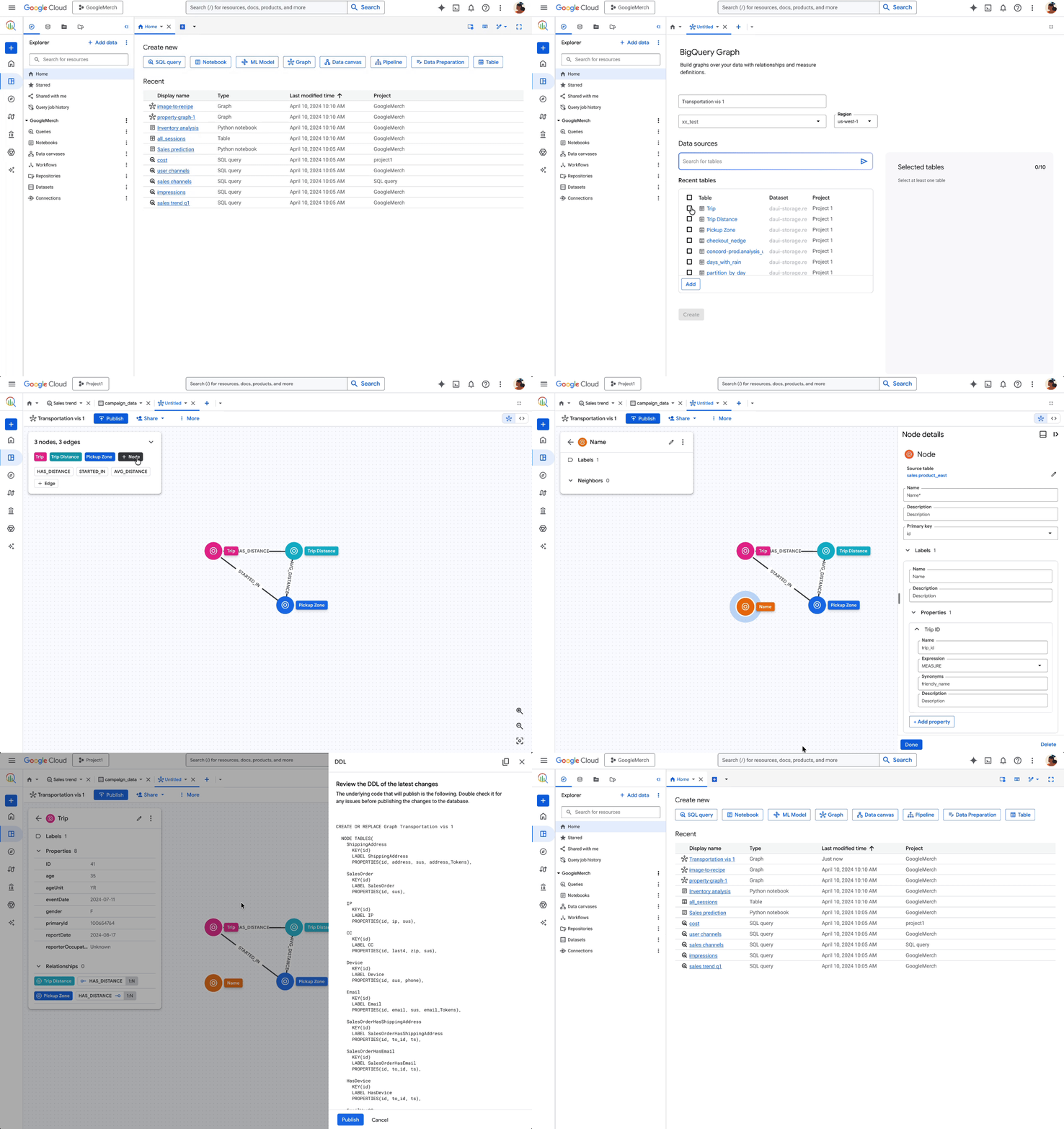
When enterprises transition from using simple chat assistants to autonomous, agentic workloads, they quickly run into a hard truth: Agents are prone to inaccurate insights when working with directly raw tables. BigQuery Graph helps organizations move beyond flat, static tables to represent enterprises exactly how they exist in the physical world: as interconnected business entities with real-world dependencies. With the support of measures in BigQuery Graph (preview), we are unifying governed metrics with relationship mapping. This allows your agents to reason across complex dependencies captured in graphs with precision of measures. Why relationships matter Traditional data structures are blind to multi-hop business context, causing AI agents to make incorrect operational decisions: The concrete problem: If a retailer has an agent who is asked why winter jacket sales dropped 12% in Seattle, it can query flat tables to report the what (the 12% dip). But it fails at the why because it cannot trace the relational path: Seattle orders ➔ distribution centers ➔ suppliers delayed by regional storms. The risk of disjointed systems: Lacking relationship context, the agent suggests an irrelevant 15% markdown campaign, needlessly eroding margins. Furthermore, maintaining separate systems - where one team maps supplier relationships in a separate graph database while another maintains SQL metrics - forces your agent to stitch these stacks together at runtime. This process is slow, expensive, and leads to inconsistent KPI calculations. Measures in BigQuery Graph solves this by letting you map existing tables to a property graph in-place with zero ETL. This unified setup enables a logical evolution of inquiry: Metadata grounding establishes what data you have. Business metrics (measures) calculate how your business performed. Relationship mapping (graph) uncovers why it happened. Under the hood Historically, standard SQL joins during graph traversals duplicate rows, leading to incorrect aggregation calculations. BigQuery Graph solves this natively. Data modelers define a MEASURE (like SUM or AVG) directly within the Property Graph DDL. Using standard SQL via the GRAPH_EXPAND function and the AGG aggregator, the engine resolves the structural graph paths before evaluating metrics. This ensures your agent is smart enough to know when it needs a calculator (SQL) and when it needs a map (graph). Because public projects like bigquery-public-data are strictly read-only, you must map the logical property graph inside your own project using a placeholder variable (YOUR_PROJECT_ID), while directly referencing the read-only public tables as nodes and edges. code_block <ListValue: [StructValue([('code', '-- 1. Map the graph inside YOUR project \r\n\r\n\r\nCREATE OR REPLACE PROPERTY GRAPH `YOUR_PROJECT_ID.YOUR_DATASET.thelook_ecommerce_graph`\r\nNODE TABLES(\r\n `bigquery-public-data.thelook_ecommerce.users` AS User\r\n KEY(id)\r\n LABEL User PROPERTIES(id, city, country),\r\n `bigquery-public-data.thelook_ecommerce.orders` AS Order\r\n KEY(order_id)\r\n LABEL Order PROPERTIES(\r\n order_id, \r\n MEASURE(AVG(num_of_item)) AS avg_items_per_order,\r\n MEASURE(SUM(num_of_item)) AS total_items\r\n )\r\n)\r\nEDGE TABLES(\r\n `bigquery-public-data.thelook_ecommerce.orders` AS OrderedBy\r\n SOURCE KEY(order_id) REFERENCES Order(order_id)\r\n DESTINATION KEY(user_id) REFERENCES User(id)\r\n LABEL ORDERED_BY\r\n);\r\n\r\n-- 2. Query your new graph with standard SQL—using standard {Label}_{Property} column outputs\r\nSELECT\r\n User_city AS city,\r\n ROUND(AGG(Order_avg_items_per_order), 2) AS agg_avg_items,\r\n ROUND(AGG(Order_total_items), 2) AS agg_total_items\r\nFROM GRAPH_EXPAND("YOUR_PROJECT_ID.YOUR_DATASET.thelook_ecommerce_graph")\r\nGROUP BY User_city\r\nORDER BY agg_total_items DESC\r\nLIMIT 10;'), ('language', ''), ('caption', <wagtail.rich_text.RichText object at 0x7fa9c9129df0>)])]> Democratizing graph intelligence in BigQuery Studio To make managing and deploying these relationship networks frictionless for both developers and business users, we have built native, intuitive operational tools directly into BigQuery Studio: Visual graph modeler: A no-code, drag-and-drop interface inside BigQuery Studio that lets you visually build, edit, and map property graphs, nodes, and edges without writing complex DDL scripts manually. Conversational Analytics (CA) integration: Users can interact with the graph naturally. Instead of guessing table joins, Conversational Analytics agents navigate the deterministic, relationship-aware map of the graph, converting natural language questions into precise, boundary-constrained GoogleSQL or ISO GQL queries. This prevents model hallucinations and enforces semantic consistency. Unified semantics: Native Looker integration To avoid maintaining fragmented logic stacks, business metrics must live at the data layer. By integrating Looker (LookML) natively with BigQuery Graphs as in-database analytic models, you define logic once at the core: Database-managed models (sql_analytic_model_name): Point Looker directly to your database-defined BigQuery Graph using sql_analytic_model_name to map standard LookML dimensions and measures directly to your graph properties. Looker-managed models (derived_analytic_model): Define your BigQuery Graph schema directly inside your LookML view using derived_analytic_model. Looker will dynamically generate and execute the SQL DDL statements to maintain the graph inside BigQuery. Enterprise DevOps workflows: Manage your graph's entire lifecycle using the Looker IDE, Git-based version control, and Continuous Integration (CI). Core KPIs (like Churn Rate) remain completely identical, verified, and trusted.
Read original articleAugust 13, 2026
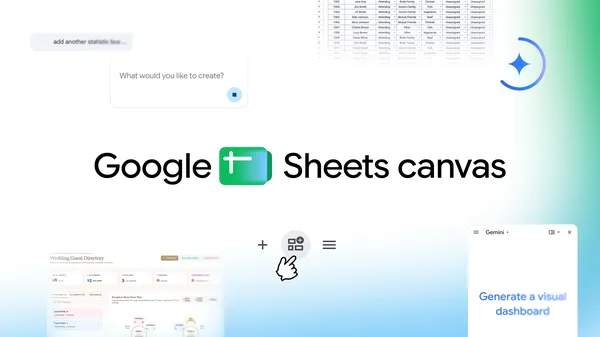
The video shows Sheets canvas in action.
Read original articleAugust 13, 2026
Amazon Quick for Microsoft 365: Agentic AI where you work Amazon Web Services (AWS)
Read original articleAugust 13, 2026
Microsoft is simplifying Copilot by combining its consumer and business apps, and dropping AI-generated podcasts, Group Chats, Deep Research, and its Mico character.
Read original articleAugust 13, 2026
Nvidia has a plan to make sure its GPUs won't lose value. It wants to convince a new crop of financiers to keep lending for AI buildouts.
Read original articleAugust 13, 2026
Anthropic in Talks to Buy AI Startup Decart for $6 Billion bloomberg.com
Read original articleAugust 13, 2026
Rapid revenue growth fuels hope Claude maker's IPO is the biggest listing in history
Read original articleAugust 13, 2026
Databricks has raised $5 billion at a $190 billion valuation as CEO Ali Ghodsi claims AGI already arrived, with the fortune now buried in context the models don't have.
Read original articleAugust 13, 2026
The mark flags anything Claude processed, even human writing it only edited.
Read original articleAugust 13, 2026
Learn how startups use GPT-5.6 to build faster, more cost-efficient AI agents with smarter model selection and new Responses API capabilities.
Read original articleAugust 13, 2026
Anthropic's Fable 5 is considered the most powerful AI model on the market, but U.S. companies are barely buying it. According to Ramp data, Fable 5 accounts for only six percent of Anthropic tokens sold. The model's steep price tag suggests corporate AI spending may have hit a ceiling, at least as long as performance gains don't translate into measurable everyday value. The article Fable 5's slow adoption suggests corporate willingness to pay for frontier AI has hit a ceiling appeared first on The Decoder.
Read original articleAugust 13, 2026
IAPS fellow Severin Field interviewed 25 researchers from OpenAI, Anthropic, Google Deepmind, Meta, and US universities about recursive self-improvement. In a new blog post, he takes stock. Several of the milestones those researchers named have already been hit. The article Top AI lab researchers warned about automated AI research, and several of their predicted milestones have already fallen appeared first on The Decoder.
Read original articleAugust 13, 2026
Claude Cowork now runs directly in the side panel of Anthropic's Chrome extension. The article Anthropic brings Claude Cowork to its Chrome extension, adding skills and plugins to the browser appeared first on The Decoder.
Read original articleAugust 13, 2026
IBM Partners with OpenAI to Accelerate Secure AI Deployment for Enterprises Across Core Operations IBM Newsroom
Read original articleAugust 13, 2026
Preview Ultrafast, a new OpenAI API service tier that runs GPT-5.6 Sol up to 14× faster. Powered by Cerebras, it delivers up to 750 output tokens per second.
Read original articleAugust 13, 2026
OpenAI appoints Dali Rajic as Chief Revenue Officer to lead its global revenue organization and help businesses realize the full value of AI.
Read original articleAugust 13, 2026
Common Health Coalition secures $100M from OpenAI Foundation to boost hepatitis C cure rates Fierce Healthcare
Read original articleAugust 13, 2026
Anthropic announced they are turning on watermarking for their Claude AI-generated outputs. This is significant. An AI Insider analysis and scoop.
Read original articleAugust 13, 2026
Anthropic is adding invisible watermarks to Claude’s AI-generated text globally, as new EU rules push AI companies toward greater transparency.
Read original articleAugust 13, 2026
arXiv:2608.11241v1 Announce Type: cross Abstract: Deploying LLM agents into industrial recommender operations exposes a three-way tension we frame as the autonomy-determinism-efficiency trilemma: general autonomy (interpreting operator intent, generating glue code zero-shot), industrial determinism (schema-conforming feature extraction, non-crashing A/B, zero compliance-path hallucination), and end-to-end efficiency. Any two can be maximized against the third. We present RecSys Factory, an LLM-agent platform deployed for 78 days across three heterogeneous Tencent recommender business lines. The design principle is autonomy at decision points, not over pipelines, made concrete through three deconstructions that each discharge one vertex of the trilemma. Runtime is deconstructed into three host-emitted event sources (Claude Code Stop hooks, corporate-IM webhooks, workflow scheduler APIs): the platform carries no long-running daemon during the wait phase and consumes zero CPU during the 94% of wall-clock spent waiting on Spark or GPU jobs. Capability is deconstructed into a 29-file skill ecosystem (8,971 lines of SKILL.md) whose per-skill pitfall tables mechanically compile into a 400-entry PitfallStore, confining autonomy to bounded typed decision surfaces inside pre-committed pipelines. Deployment spans three business lines with disjoint label semantics, A/B layer topologies, and operator personas; an onboarding-time compression is observed on two of the three and is reported as a case-study observation, not a generalization claim, and not measured against a controlled pre-platform baseline. The human is retained at the diagnostic-versus-execution boundary via a human-in-the-loop card protocol, deployed as an audit-trail primitive (schema-validated, idempotent, replayable) and reported from an 8-day 16-run pilot. Across the 78-day window the platform recorded 1,624 CLI-tool dispatches at a 78.6% aggregate success rate.
Read original articleAugust 13, 2026
arXiv:2608.11343v1 Announce Type: cross Abstract: Multimodal retrieval and classification across different types of media, spanning text, images,video and audio, has traditionally relied on dual-encoder models that align visual and textual representations through contrastive learning. The March 2026 release of Gemini Embedding 2, Google's first natively multimodal embedding model to map text, images, video, audio, and documents into a single shared space, raises competition among multimodal retrieval systems. Simultaneously, frontier Large language models (LLMs) have also demonstrated strong visual understanding, raising the question of whether they can serve as effective zero-shot rankers. Our study provides the first direct comparison of native multimodal embeddings against LLM-based visual ranking on Flickr30k. We observe that GPT-4.1 and Claude Sonnet 4.6 perform on par with Gemini Embedding 2. Additionally, once embeddings are precomputed, multimodal embeddings are better suited for low-latency applications.
Read original articleAugust 13, 2026
arXiv:2608.12138v1 Announce Type: cross Abstract: General-purpose large language models (LLMs) have recently been reported to match or exceed specialized clinical AI tools on medical benchmarks, but such comparisons draw on a narrow set of systems and on benchmarks developed largely in high-income settings. We evaluate VITA, a retrieval-augmented generation (RAG) system purpose-built for contextual knowledge retrieval in India and other low- and middle-income (LMIC) settings. VITA retrieves from a curated corpus of disease-specific guidelines, India-specific antimicrobial resistance data, national formulary constraints, and resource-limited care protocols; its architecture and corpus are proprietary, but the benchmark, the physician-written rubrics, and our full response and scoring outputs are public for independent verification. On 4,023 English-language HealthBench questions (80.5% of the benchmark), scored with a GPT-4.1 judge, VITA ranked first with 51.9% of possible rubric points, ahead of GPT-5.4 (46.1%), o4-mini (44.3%), Gemini 3.1 Pro (42.6%), and Claude Sonnet 4.6 (37.3%), and scored highest on 45.4% of questions. To test robustness to newer models and judge lineage, a 500-question subset was re-run against current-generation models (GPT-5.5, Claude Opus 4.8, Gemini 3.5 Pro, Grok 4.3) and graded by a neutral open-weight judge (DeepSeek-V4-Pro) sharing no lineage with any system tested. Here the gap narrowed to parity: VITA and GPT-5.5 were statistically indistinguishable on mean per-question score, while VITA led on points-weighted score and won the most questions. VITA's advantages in accuracy and completeness persisted under the neutral judge; its communication scores were lower. These results indicate that a purpose-built clinical RAG system remains competitive with frontier LLMs on an open benchmark, consistent with corpus specificity as a design variable that improves grounding at some cost to communication polish.
Read original articleAugust 13, 2026
arXiv:2608.11216v1 Announce Type: new Abstract: World modeling is an unsettled field: architectures, training objectives, and state representations interact in complex ways, and no single recipe dominates across environments. This makes it an ideal testbed for AI coding agents acting as autonomous researchers--a setting in which the improvement direction is not specified in advance, unlike the engineering-to-spec tasks that dominate current agent benchmarks. We introduce AutoWorldModel-Bench, a closed-loop benchmark in which frontier coding agents autonomously improve a provided world-model starter under a fixed compute budget. The benchmark spans eight game environments under a unified structured-state representation--ground-truth entity state extracted from each game and consumed through a shared tensor format--which isolates dynamics modeling from perception and enables minutes-per-run iteration. Across 64 sessions, Codex-5.4 and Claude Opus 4.6 improve their starter on 63; in 91% of sessions the winning edit is a non-trivial research-style modification--a new objective, representation, rollout procedure, or architectural change--rather than a hyperparameter tweak. Our benchmark offers a setting in which frontier coding agents can be evaluated on open-ended research rather than engineering-to-spec problems.
Read original articleAugust 13, 2026
arXiv:2608.11219v1 Announce Type: new Abstract: Automatic Prompt Optimization (APO) often rewrites prompts monolithically, which can improve one behavior while degrading others. We present SAPO, a segment-level APO method that decomposes prompts into role, context, tasks, and output format, then applies targeted improvements based on top-5 and bottom-5 examples. The optimization loop uses one LLM with static meta-prompts and structured outputs for segmentation, weakness analysis, and candidate generation. We describe a train/validation protocol and a two-stage generation process: (1) segment-level diagnosis and recommendation extraction, (2) candidate synthesis constrained by weak/strong segment signals. Using the evaluation setup across SQuADv2, TweetEval, XSUM, CommonGen, and GSM8K on GPT-3.5-Turbo and GPT-4o-mini, SAPO achieves the best average score against Zero-shot and strong APO baselines including APE, OPRO, EvoPrompt, GEPA, and StraGO.
Read original articleAugust 13, 2026
arXiv:2608.11226v1 Announce Type: new Abstract: Reinforcement-learning post-training dominates modern language-model development, yet its power behavior on GPU hardware has not been characterized, and datacenters manage GPU power with workload-blind mechanisms, static caps and reactive throttling, that slow hardware indiscriminately. We instrument GRPO training with half-second power telemetry at 7B, 14B, and 72B scales on one to four A100s (380,000+ samples), and train a PPO meta-controller that adapts the workload's own generation parameters to measured power. Against the full 500-step 7B trace, the controller cuts power-limit violations by 89.8% while increasing token output by 18.1% and energy efficiency by 26.2% (tokens per MWh). Deployed live at 72B, the same controller family yields replicated null results, diagnosed as the group-size actuator losing authority under model sharding. An actuator-authority sweep shows the same parameters applied as generation concurrency retain 17-22% power authority, isolating an occupancy-versus-volume principle; a controller rebuilt on that actuator controls a live 72B rollout-generation workload across three replications: 35.7% more output than a static safe baseline at 2.27 +/- 1.08% budget violations, 87.2% fewer violations than uncontrolled operation, and the best mean throughput and energy per token among constrained controllers, with an adaptive threshold rule matching it in one of three operating conditions. Under realistic measurement windows the original 72B transients fall from 23.6% at half-second resolution to 1.6% at 30 s and zero at 5 min; a composed 16-GPU fleet shows zero violations at 30 s and longer, with peak demand at 50-56% of nameplate. For this fleet mix, roughly twofold oversubscription of nameplate appears feasible, subject to operator validation. We quantify the economic and carbon consequences and specify a low-cost operator pilot.
Read original articleAugust 13, 2026
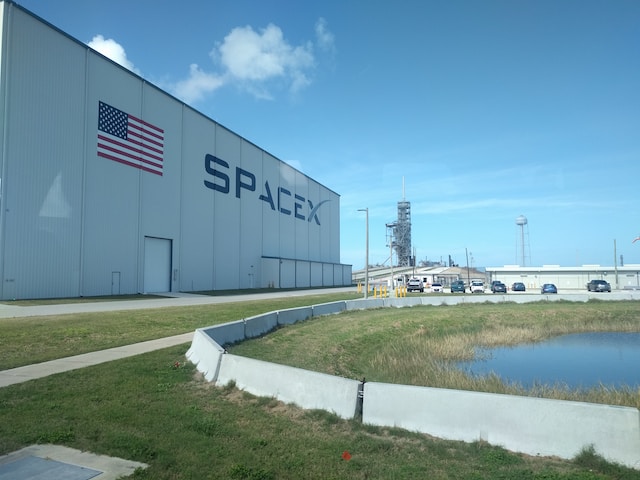
SpaceXAI today released Grok 4.6, a large language model that it says can outperform Anthropic PBC’s Claude Fable 5 in some areas. SpaceXAI was known as xAI until last month. The Elon Musk-founded artificial intelligence provider rebranded in connection with its acquisition by SpaceX Corp. In June, the combined company listed its shares on the […] The post SpaceXAI releases flagship Grok 4.6 model with advanced reasoning capabilities appeared first on SiliconANGLE.
Read original articleAugust 12, 2026
Is Anthropic's new watermarking system a travesty? Some have taken to social media to complain that it is.
Read original articleAugust 12, 2026
Anthropic announced a major update to its Chrome extension on Wednesday that turns Claude in Chrome from a useful but The post Anthropic’s Chrome extension is now a Cowork session appeared first on The New Stack.
Read original article