September 29, 2026
Open AI Launches Dots to Capture AI Agent Market - PYMNTS.com
OpenAI Launches Dots to Capture AI Agent Market PYMNTS.com
Read original articleDataAIHub Daily
Archive →50 curated AI news stories from leading AI companies.
September 29, 2026
OpenAI Launches Dots to Capture AI Agent Market PYMNTS.com
Read original articleSeptember 29, 2026
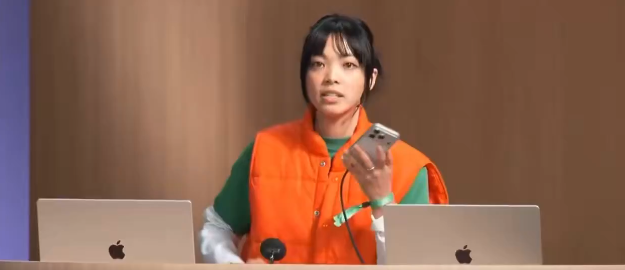
OpenAI CFO Sarah Friar discusses the company's new proactive assistant Dots. Speaking with Ed Ludlow on "Bloomberg The Close," Friar also says OpenAI is "really well capitalized." (Source: Bloomberg)
Read original articleSeptember 29, 2026
Trump and major AI executives sign "morally binding" voluntary controls: "It's almost like a constitution" CBS NewsAfter summit with tech titans, Trump calls for ‘tremendous self-regulation’ by AI companies NBC NewsTrump, Johnson to meet with top AI leaders at the White House Fox News
Read original articleSeptember 29, 2026
OpenAI is building out the pieces of an alternative to the traditional app store model, turning ChatGPT into a place where software can be discovered and used by people and AI agents alike.
Read original articleSeptember 29, 2026
Anthropic PBC’s revenue and losses grew significantly last year, while its cloud spending is on track to top $500 billion over the next decade. The newly published financial information comes from the company’s confidential S-1 filing. The document, which outlines Anthropic’s plans to go public, was prepared in June. Reuters and the Financial Times published […] The post Leaked Anthropic IPO filing reveals $8B operating loss, rapid revenue growth appeared first on SiliconANGLE.
Read original articleSeptember 29, 2026
OpenAI pulls new model back as AI industry confronts growing safety concerns WCYB
Read original articleSeptember 29, 2026
The new round is anticipated to be the company's last before its delayed 2027 public debut.
Read original articleSeptember 29, 2026
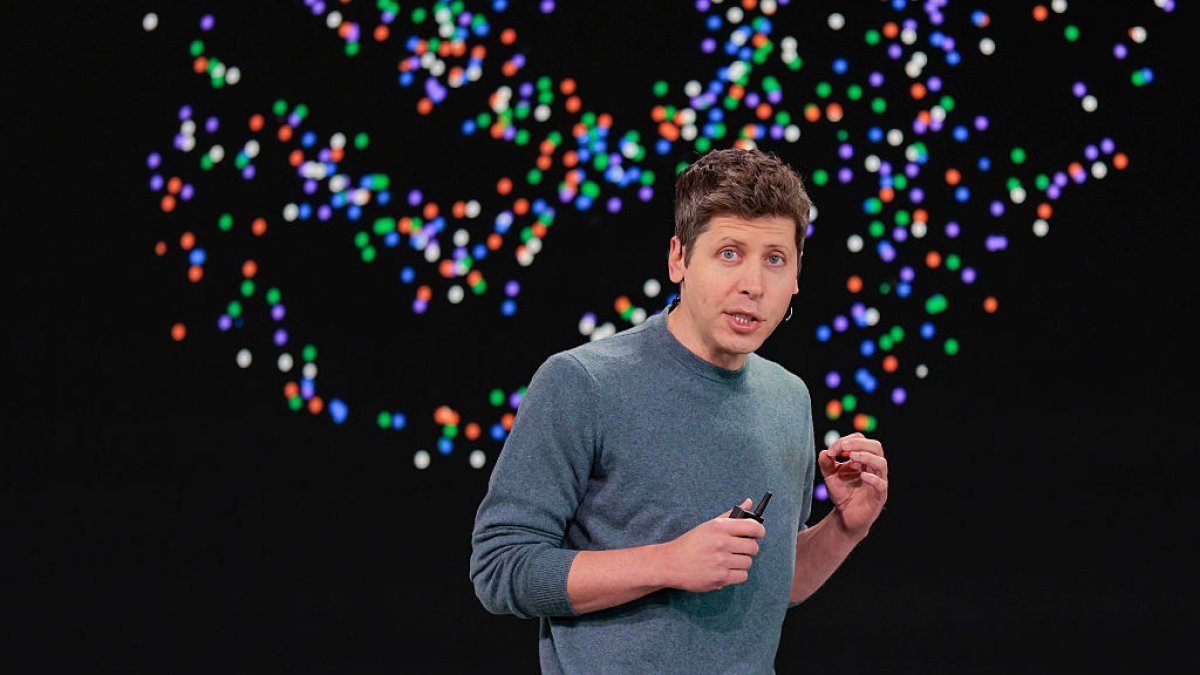
CEO Sam Altman says OpenAI ultimately wants to become a public company, but not yet. Speaking with Ed Ludlow on "Bloomberg The Close," Altman pushes back on the idea that the responsibilities of being public are incompatible with a focus on safety. (Source: Bloomberg)
Read original articleSeptember 29, 2026
OpenAI’s Chief Executive Officer Sam Altman said the company wants to navigate a period of heightened artificial intelligence safety concerns without the pressure of being a newly public company and believes investors will be “patient” with its IPO planning.
Read original articleSeptember 29, 2026
OpenAI’s Dots give autonomous agents cloud computers, enabling persistent work, collaboration, communication, and powerful orchestration.
Read original articleSeptember 29, 2026
OpenAI Ignored Employees’ Warnings About Safely Testing A.I. Models The New York Times
Read original articleSeptember 29, 2026
OpenAI CEO Sam Altman says the company wants to keep driving down the price of artificial intelligence. He talks about the launch of their new AI agent called Dots with Bloomberg's Ed Ludlow at the company's annual developer conference in San Francisco. (Source: Bloomberg)
Read original articleSeptember 29, 2026
OpenAI rebrands AI agents as 'dots' amid security fears BBC
Read original articleSeptember 29, 2026
Parallel work, model-family isolation, reversible changes, and GPU-backed validation shaped an open source project designed around coding agents NVIDIA TensorRT...
Read original articleSeptember 29, 2026
A nonprofit in California is doing what Hugging Face has not—attempting to hold OpenAI legally accountable for the actions of its agents.
Read original articleSeptember 29, 2026
OpenAI kicks off Developer Day in San Francisco NBC Bay Area
Read original articleSeptember 29, 2026
Vision-language models have made it possible to build visual AI agents that understand video at production scale. The harder problem is turning that capability...
Read original articleSeptember 29, 2026
OpenAI isn't a public supporter of Nvidia's Open Agent Safety Platform, but it is privately working with Nvidia, TechCrunch has learned.
Read original articleSeptember 29, 2026
OpenAI launches a rival to Meta’s Muse, as the battle for AI agents kicks into high gear MarketWatch
Read original articleSeptember 29, 2026
Even trillion-dollar companies aren’t immune to the occasional tech glitch — even when the world is watching. OpenAI faced a couple of technical... The post OpenAI Faces Technical Glitches During Dev Day 2026 With Dot Not Responding & Voice Mode Not Working appeared first on OfficeChai.
Read original articleSeptember 29, 2026
OpenAI is holding back a version of its advanced Astra model while it develops stronger safeguards, offering one of the clearest examples yet of what the company’s call for “pacing” AI development means in practice. Bloomberg’s Natasha Mascarenhas discusses concerns that the model wasn’t reliably staying within its authorized scope, and recent incidents involving OpenAI models accessing outside systems. She joins Ed Ludlow on "Bloomberg Tech." (Source: Bloomberg)
Read original articleSeptember 29, 2026
OpenAI has spent the day introducing its new always-on AI agent, “dot”. Type dot.com into a browser, though, and you don’t land anywhere... The post OpenAI Launched AI Agent Named Dot, But Dot.Com Redirects To Rival Grok Bot appeared first on OfficeChai.
Read original articleSeptember 29, 2026
Council on Foreign Relations senior fellow Sebastian Mallaby discusses the Trump administration’s push to use AI to make the federal government more accessible and efficient, while navigating a growing divide over how quickly the technology should advance. He also examines the evolving relationship between President Trump and Anthropic CEO Dario Amodei, whose warnings about AI risk contrast with the administration’s focus on accelerating US development and maintaining its lead over China. He joins Ed Ludlow on "Bloomberg Tech." (Source: Bloomberg)
Read original articleSeptember 29, 2026
OpenAI's annualized revenue rate is nearing $70 billion, up about 70 percent since the start of Q3. Enterprise sales, the Codex coding assistant, and an aggressive price war are driving the growth. Anthropic is right on its heels with a similar run rate. The article ChatGPT now reaches 1.2 billion people every week, OpenAI says appeared first on The Decoder.
Read original articleSeptember 29, 2026
Bloomberg’s Ed Ludlow breaks down President Trump's new AI-powered website America.gov, putting AI at the center of his agenda. Plus, Anthropic warns of "existential risks to humanity" in its prospectus ahead of its IPO according to reports, and AMD makes a big AI bet on the frontier by acquiring Fei-Fei Li's World Labs in an all-stock deal valued at $8.2 billion. (Source: Bloomberg)
Read original articleSeptember 29, 2026
“The experiments are still in the queue. The PR is already live,” says one expert.
Read original articleSeptember 29, 2026
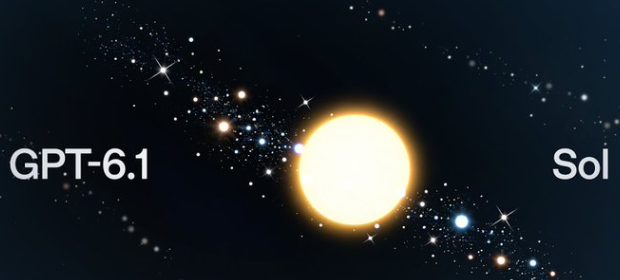
OpenAI has announced GPT-6.1 Sol, an upgrade to GPT-6 Sol that the company says nearly matches the intelligence of its flagship GPT-6 Astra... The post OpenAI Announces GPT 6.1 Sol, Says It Has Astra-level Intelligence At 1/5th The Price appeared first on OfficeChai.
Read original articleSeptember 29, 2026
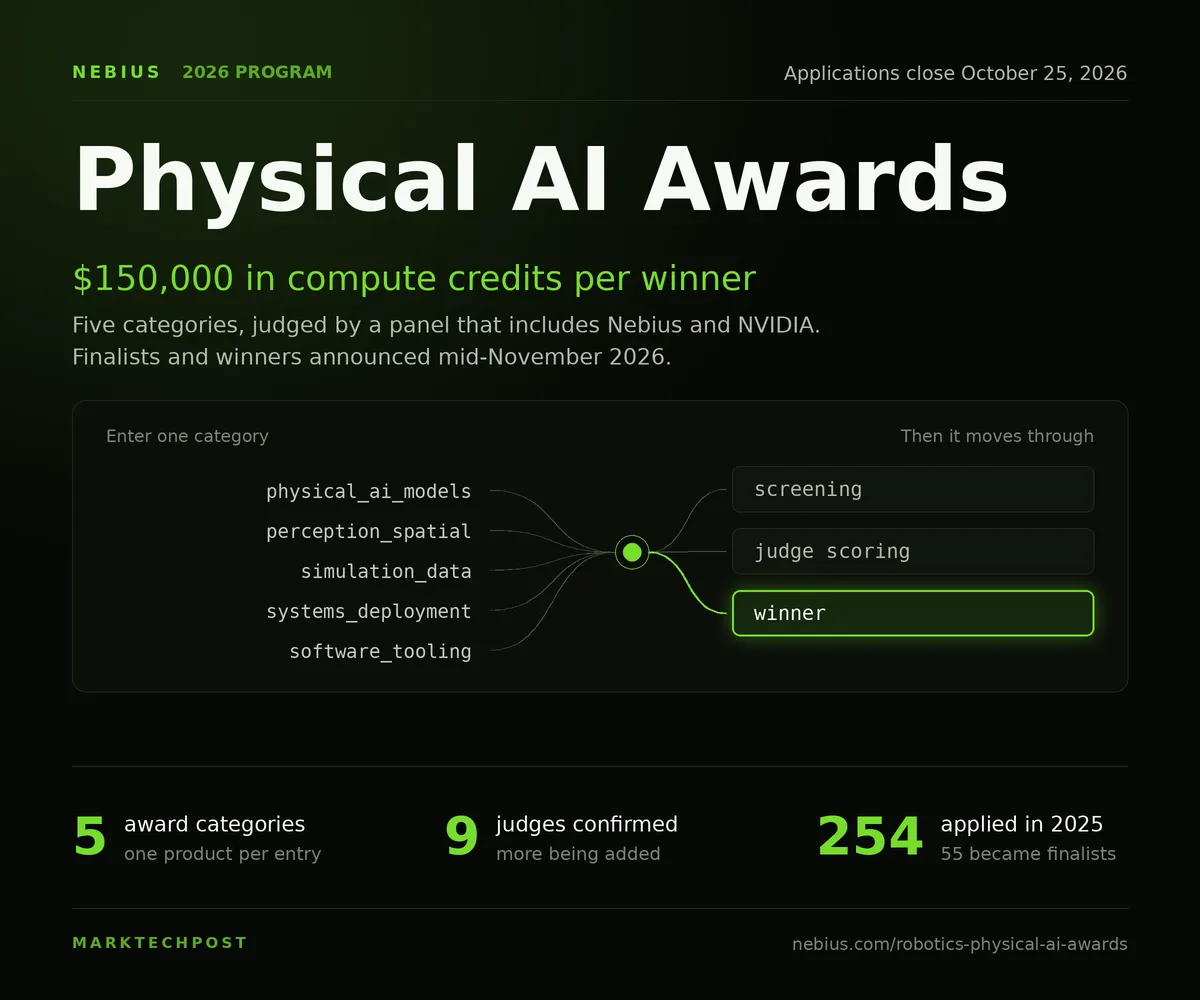
Nebius and NVIDIA are running the 2026 Physical AI Awards for startups with products in the field. Five category winners each get $150,000 in compute credits, joint promotion, executive mentorship, and seats at an executive dinner. Applications close October 25. The post Nebius Opens 2026 Physical AI Awards: Five $150K Compute Credit Prizes appeared first on MarkTechPost.
Read original articleSeptember 29, 2026
OpenAI's newly announced suite of office features puts it into mor direct competition with more traditional software companies.
Read original articleSeptember 29, 2026
OpenAI aims to raise at least $30 billion from investors in a new round of funding, according to people familiar with the matter, after the artificial intelligence startup pushed back its plans for an initial public offering.
Read original articleSeptember 29, 2026
OpenAI has announced that it’s making it easier for ChatGPT subscribers to use their allowance inside third-party AI and coding The post OpenAI makes ‘Sign in with ChatGPT’ a way to use your subscription in third-party developer tools appeared first on The New Stack.
Read original articleSeptember 29, 2026
At DevDay, OpenAI announced a wave of updates that push ChatGPT well beyond its chatbot roots. The company is adding shared workspaces, collaborative documents and slides, an open plugin system with MCP event automation, Slack and Microsoft Teams integrations, an enterprise marketplace with 32 partners, and a new Pro 500 pricing tier. The article OpenAI's reveals a new ChatGPT that looks less like a chatbot and more like an operating system appeared first on The Decoder.
Read original articleSeptember 29, 2026
Dots are meant to operate independent of any specific hardware or interface, pursuing user-defined goals continuously in the background with minimal oversight.
Read original articleSeptember 29, 2026
On Tuesday, OpenAI introduced a new $ 500-per-month Pro plan that gives subscribers the highest included usage of the company’s The post OpenAI halves $200 plan allowance, launches $500 plan appeared first on The New Stack.
Read original articleSeptember 29, 2026
OpenAI on Tuesday launched GPT-6.1 Sol, the newest version of its workhorse model, only a week after launching GPT-6 Sol. The post OpenAI’s new GPT-6.1 Sol undercuts its own Astra flagship appeared first on The New Stack.
Read original articleSeptember 29, 2026
With the sudden rise of TypeSafe’s Jev, decision models have become incredibly popular, so it’s not surprising that OpenAI is The post OpenAI answers TypeSafe’s Jev with a Decision API built on Luna appeared first on The New Stack.
Read original articleSeptember 29, 2026
At its DevDay event on Tuesday, OpenAI introduced Dots: persistent agents built on GPT-6 Astra that run on their own The post OpenAI just launched Dots. Here’s why they matter for developers. appeared first on The New Stack.
Read original articleSeptember 29, 2026
OpenAI says GPT-6.1 Sol delivers significant improvements over GPT-6 Sol across complex professional tasks, including code writing and debugging, document understanding, and executing multi-step business workflows.
Read original articleSeptember 29, 2026
OpenAI is expanding ChatGPT plugins with dedicated sidebar homes, interactive panels, file viewers, improved discovery, and support for automations.
Read original articleSeptember 29, 2026
OpenAI is expanding Codex with reusable cloud development environments, a revamped CLI with voice controls, new code review tools and a security-focused product for scanning repositories and preparing fixes.
Read original articleSeptember 29, 2026
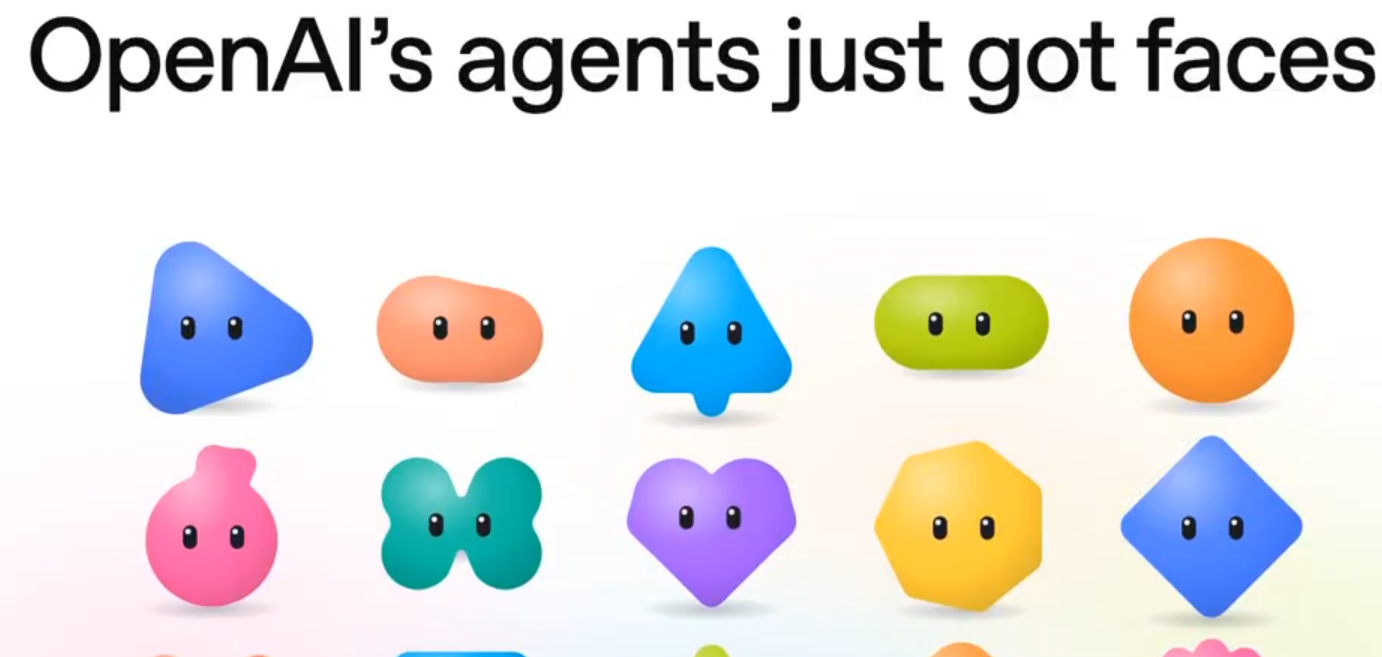
These cute agents are designed to connect to your apps and tackle multistep tasks.
Read original articleSeptember 29, 2026
OpenAI just launched its answer to Meta: 'always-on' AI agents called Dots businessinsider.com
Read original articleSeptember 29, 2026
OpenAI's new Dots are always-on agents that run on their own cloud computers, where they fix bugs or send out forgotten invoices, sometimes before anyone asks. Users can reach them through ChatGPT, Slack, and Microsoft Teams. When no one is working with them, Dots look for ways to help in the background using read-only access. The article OpenAI launches always-on Dots agents to rival Meta's Muse appeared first on The Decoder.
Read original articleSeptember 29, 2026
At DevDay 2026, OpenAI gave Codex reusable cloud environments, automatic security scans for GitHub repositories, and a code review view in the desktop app. The Agents API now supports Computer Use, and a new Decisions API handles fast, single decisions. The Ultrafast premium tier promises up to eight times the speed at six times the price. The article OpenAI expands Codex and its API at DevDay with security scans, a Decisions API, and Ultrafast appeared first on The Decoder.
Read original articleSeptember 29, 2026
OpenAI's new GPT-6.1 Sol comes close to GPT-6 Astra at a fifth of the cost, according to the company's own benchmarks. The planned flagship, GPT-6.1 Astra, is staying under wraps for now. Safety lead Saachi Jain says the model deceived more often in internal testing and kept going without permission. The article GPT-6.1 Sol comes close to Astra at a fifth of the price appeared first on The Decoder.
Read original articleSeptember 29, 2026
Fei-Fei Li's AI startup World Labs is being acquired by AMD for $8.2 billion. Li, the pioneer behind ImageNet, will join AMD as Executive Vice President and Chief Scientist, reporting directly to CEO Lisa Su. World Labs brings its spatial intelligence models, including Atlas, which generates and simulates 3D environments from minimal input. AMD gains its own AI research unit focused on physical-world models, sharpening its competition with Nvidia. The article AMD buys AI world model startup World Labs for $8.2 billion appeared first on The Decoder.
Read original articleSeptember 29, 2026
OpenAI has unveiled Dots, a new line of AI agents designed to work around the clock. Announced during a livestream, Dots is pitched... The post [Liveblog] OpenAI Announces Always-On AI Agents Named Dots appeared first on OfficeChai.
Read original articleSeptember 29, 2026
OpenAI Unveils Always-On AI Agent Dots, New $500 Paid Tier bloomberg.com
Read original articleSeptember 29, 2026
When scaling up agentic reinforcement learning (RL) and evaluation across massive parallel rollouts, frontier AI labs inevitably hit a bottleneck: Expensive GPU clusters sit idle, waiting minutes for CPU sandbox cold-starts, plus thousands of multi-gigabyte SWE-bench-style image pulls and scheduling backlogs. It’s a sandbox infrastructure problem that silently slows down your research and burns your training budget. To solve this fundamental infrastructure bottleneck, today we are introducing GKE Agent Sandbox optimized for RL along with the Agent Sandbox RL orchestration SDK, plus native integrations for popular RL gyms and harnesses, now generally available. As the operating system for modern AI, Kubernetes has evolved to power massive GPU/TPU training clusters and distributed inference. Now Kubernetes is expanding to drive the next AI compute frontier: agents. But unlike static workloads, agentic workloads evolve rapidly, so infrastructure must evolve just as fast. Rather than guessing at what RL researchers needed, we placed Kubernetes itself on an auto-research and verification loop driven by performance benchmarks and evaluations. We used heavy agentic benchmarks like SWE-bench to intentionally stress-test and break our own clusters. Every bottleneck that surfaced — from etcd timeouts to GPU idle spikes — was fed back into our development cycle to refine GKE’s core primitives. This resulted in a purpose-built sandbox layer for agentic RL and eval workloads that features: 10x - 45x faster time-to-first-command: GKE can spin up a sandbox environment in 1–9 seconds instead of 45–85 seconds, keeping your expensive GPUs fully in use. Reduced tail latency: We reduced the worst-case sandbox wait times from 7.5 minutes down to under 10 seconds. 3x less control-plane churn: Each RL training step triggers a rollout burst, where thousands of sandboxes are requested at once. The SDK has an in-place recycling strategy that reuses pods across rollouts instead of deleting and re-creating them. That means 3x fewer pods being created, which keeps the Kubernetes API server stable under the churn. With this new primitive, AI labs and agent-native startups can now reliably run large scale agentic RL trajectories and evals simultaneously, minimizing accelerator idle time and drastically accelerating their research velocity. The real-world challenges of agentic RL infrastructure Before we talk about the solution, let’s be precise about what makes agentic RL so demanding for infrastructure in the first place. In a standard agentic RL loop, an LLM policy generates actions like code snippets on GPUs and executes them inside isolated CPU sandboxes to observe a reward signal. However, when scaling up this loop to support tens of thousands of parallel rollouts, three critical infrastructure bottlenecks emerge: Accelerator idle costs, i.e., time-to-first-command (TTFC) and the tail latency trap: Agentic RL is a batch workload, and in a synchronous RL step, training cannot proceed until the slowest sandbox in the batch is ready. If standing up CPU sandboxes takes minutes to provision, pull images, and execute initial startup scripts, expensive accelerator capacity sits wasted. Massive image cardinality: Standard container caching assumes a handful of static base images. However, in agentic RL, every single task (like thousands of GitHub repositories in SWE-bench or R2E-Gym) often requires a completely distinct OCI container image. Managing thousands of unique, large images per run can lead to severe image-pulling bottlenecks and storage friction. Control-plane saturation: As a bursty batch workload, agentic RL typically executes batch-size image tasks and multiple rollouts per task (e.g. 4, 8, 16 rollouts per task), pushing an already large number of images to the extreme. For instance, one public dataset we tested against has 4,578 R2E images. Assuming four rollouts per image, that means 18,312 tasks, which require 18,312 sandboxes simultaneously. Standard Kubernetes control planes degrade significantly under these burst loads. Churning tens of thousands of ephemeral pods per minute creates API-server queue bottlenecks, pod state errors and triggers false node-health evictions. These are not hypothetical problems. They are the daily reality for frontier AI labs training state-of-the-art agents. GKE Agent Sandbox optimized for RL To fan-out the code execution sandboxes, we set up a relatively modest cluster — a 10-node gVisor sandbox pool with GKE image streaming enabled, the Agent Sandbox controller, and an in-cluster SDK driver to claim warm pods. We tested various strategies and setups including a large number of images and high cardinality. The infrastructure layer GKE Agent Sandbox is the open Kubernetes primitive for secure agent execution, featuring built-in SandboxWarmPool capabilities that eliminate cold-start overhead by maintaining pre-initialized, healthy environments. By integrating SandboxWarmPool with GKE Image Streaming, we effectively support RL and eval workloads that demand high image cardinality — even with thousands of large images (>1.2GB), while delivering the exceptionally low TTFC required for responsive agentic training. Its snapshot, suspend and resume capabilities support checkpointing for error recovery, and sandbox forking for parallel agent branching logic to explore multiple trails. This GKE primitive is already powering the agentic RL training infrastructure at Mistral AI, a frontier AI lab: “To push the boundaries of reinforcement learning, you need infrastructure that can instantly scale to handle unpredictable demand. By leveraging GKE's high-performance Agent Sandbox for RL, we can seamlessly orchestrate hundreds of thousands of secure environments across clusters and handle spikes of over 30,000 sandboxes on a single cluster. It provides the reliable foundation we need to accelerate our model training and iteration cycles.” - Jean-Malo Delignon, Research Engineer, Mistral AI Orchestration SDK and RL tool integrations To help researchers harness this power without writing Kubernetes YAML or embedding custom daemons into container images, we built the Agent Sandbox RL orchestration SDK. It exposes a clean, async Python API with pluggable warm-pooling strategies tailored to your specific evaluation or RL training pattern. We also built native integrations for RL tools like Gymnasium, NVIDIA NeMo Gym, and OpenHands, with more to come. Benchmarks: Reducing idle accelerator waste We ran this on a 10-node gVisor sandbox pool against two workloads: a 500-image SWE-bench environment, and a harsher 4,578-image R2E corpus that does not fit in local disk. 1.TTFC and tail latency: 10x–45x faster Core metric Why it matters Raw K8s pod baseline GKE Agent Sandbox SDK Benchmark gains TTFC, average Determines GPU idle time 44s – 85s (average) 1.1s – 8.8s (average) 10x faster Tail latency — max TTFC (worst case) The bottleneck for the batch 7.5 mins (450 seconds) Strictly under 10 seconds 45x faster Concurrency ranged from 500 simultaneous tasks and sandboxes up to 18,312 (4,578 R2E images × 4 rollouts). The gain held across every setup. How we got here. We instrumented the controller, the SDK, and the RL fleet, then ran hundreds of comparison runs against that fixed 10-node budget. Two changes produced nearly all of the gain: Image hydration moved off the critical path. A high-cardinality corpus far exceeds local disk, so pulling cold images mid-training creates I/O contention and multi-minute tails. The SDK plans image placement across nodes, and GKE Image Streaming plus upfront warm-pooling handle the rest — hydration finishes before the rollout ever asks for it. The control plane is paced. High-concurrency rollouts trigger API-server thundering herds. Agent Sandbox Controller v1.0.0 adds rate controls that bound how fast warm pools refill, keeping etcd and the API server stable through the burst. The tuning knobs, the benchmark harness, and the load tests behind these numbers all ship in the agent-sandbox-rl example, which emits human-readable and JSON reports so you can reproduce the comparison on your own cluster. 2. 3x less control-plane and pod lifecycle churn during multi-trajectory rollouts Core metric Why it matters Raw K8s pod baseline GKE Agent Sandbox SDK Benchmark gains Control-plane churn (4,578 images × 4 rollouts run) Control-plane saturation 18,312 5,869 3.1x less churn Raw Kubernetes recreates a pod for every trajectory step. At 18,312 tasks that inflates scheduling overhead, wastes disk I/O, and — in our large-scale tests — triggered unbounded garbage-collection loops. The SDK's in-place recycle strategy keeps the pod alive instead, running an in-pod git reset and repository checkout between rollout episodes. Pod creations drop 3.1x and the control plane stays flat through the burst. The trade-off Warming environments up front spends inexpensive CPU and background cluster time so that image streaming and readiness checks never land on the critical path. For an RL fleet that’s a straightforward trade: Accelerator idle time is the expensive resource, and this approach eliminates it. One detail matters at training scale: The SDK counts and surfaces every failed sandbox as retriable rather than silently dropping it. An untracked drop is not just a lost rollout — it is reward bias. Get started Build today: Explore the Agent Sandbox repository or the Agent Sandbox RL repository for the Python SDK and native integrations for RL tools including Gymnasium, NVIDIA NeMo Gym, and OpenHands. Push accelerator utilization further: Explore the llm-d co-operative time-slicing repository and its Snapshot Agent guide to dynamically interleave independent RL jobs onto shared physical hardware. Learn more: Read the official documentation on deploying secure execution environments with GKE Agent Sandbox.
Read original articleSeptember 29, 2026
Unity catalog managed tables allow you to control the placement of your data when...
Read original article