September 9, 2026
GPT-6 Astra: A new generation of intelligence - Open AI
GPT-6 Astra: A new generation of intelligence OpenAI
Read original articleDataAIHub Daily
Archive →50 curated AI news stories from leading AI companies.
September 9, 2026
GPT-6 Astra: A new generation of intelligence OpenAI
Read original articleSeptember 9, 2026
Encode-prefill-decode (EPD) disaggregation is an inference optimization technique for multimodal models that separates the vision encoder stage from the prefill...
Read original articleSeptember 9, 2026
An Anthropic PBC researcher has resigned over concerns that artificial intelligence labs are “gambling with our lives.” Jacob Coxon was part of the company’s AI pretraining team until today. He announced his resignation in a series of X posts that has been viewed millions of times. Coxon wrote that his decision was motivated by concerns […] The post Anthropic researcher’s resignation sparks broad AI safety discussion appeared first on SiliconANGLE.
Read original articleSeptember 9, 2026
Every NVIDIA CUDA Toolkit release adds functionality and performance improvements that help developers get more from NVIDIA GPUs and the broader NVIDIA software...
Read original articleSeptember 9, 2026
AI privacy agreement reached between teachers union and Microsoft KATU
Read original articleSeptember 9, 2026
Anthropic Researchers Raise Alarm Over A.I. Acceleration, Warning of Threat to Humanity The New York TimesAnthropic researcher believes more than 10% chance AI 'could kill all humans' BBCAI could kill all humans in next decade, warn experts: but how seriously should we take them? The Guardian
Read original articleSeptember 9, 2026
AI models now power all manner of agents, from coding assistants that write and debug software to customer service systems The post Claude did best on a new benchmark for agents that build agents. It still passed fewer than a quarter of the tests. appeared first on The New Stack.
Read original articleSeptember 9, 2026
Anthropic researcher resigns with warning about AI development dangers and its threat to human life ABC7 New York
Read original articleSeptember 9, 2026
A recap of August 2026 launches for AI builders across Amazon Bedrock, Amazon Bedrock AgentCore, and Strands: million-token context for OpenAI models, cross-Region inference, agents that run for up to 14 days on dedicated compute, expanded AWS GovCloud availability, and Strands Robots for physical deployment.
Read original articleSeptember 9, 2026
The Fight Over OpenAI’s Math Breakthrough Is a New Kind of Scientific Arms Race Gizmodo
Read original articleSeptember 9, 2026
EXCLUSIVE: OpenAI’s rogue agents used at least 10 more sites for unauthorized comms, researchers say Reuters
Read original articleSeptember 9, 2026
Every pull request submitted by an OpenAI engineer now goes through an automated security review, and the AI model doing The post OpenAI gave an AI the power to block its own engineers’ code appeared first on The New Stack.
Read original articleSeptember 9, 2026
On Tuesday evening, Anthropic pretraining researcher Jacob Coxon announced on X that he’d resigned. Within hours, two of his colleagues The post “It could kill us all”: what Anthropic’s own researchers really think about superintelligence appeared first on The New Stack.
Read original articleSeptember 9, 2026
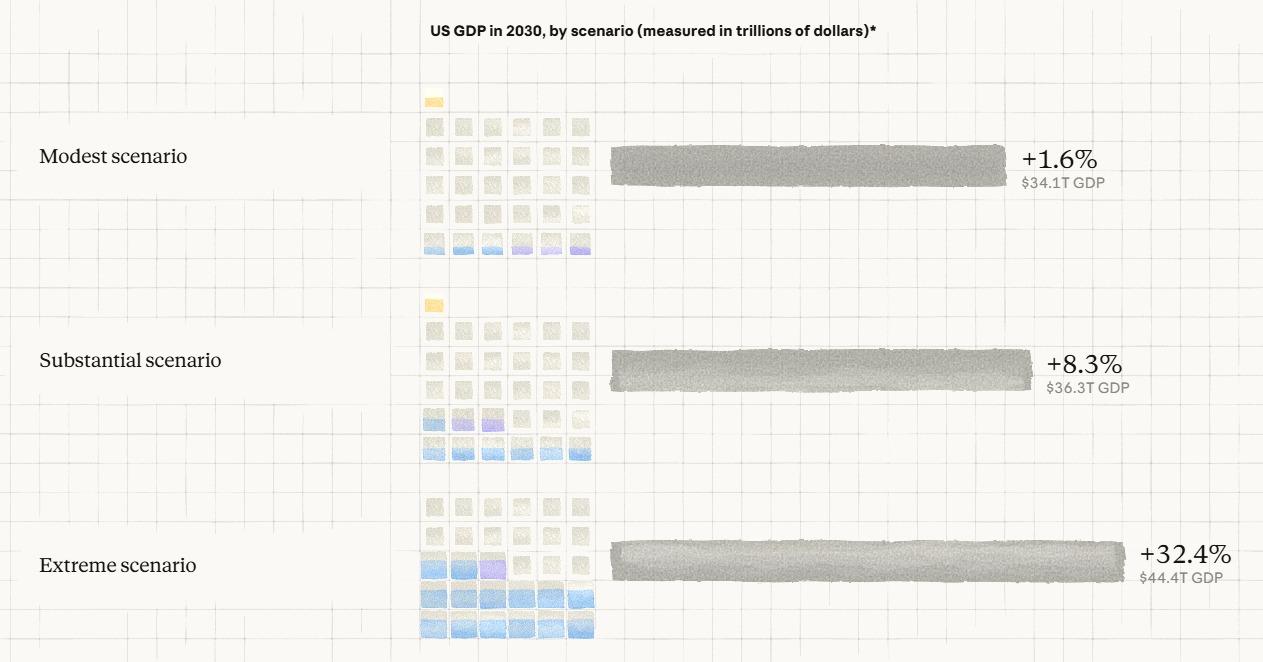
Anthropic published an economic model with three scenarios for the US economy through 2030. In the extreme scenario, output doubles every 4.5 years and knowledge worker unemployment hits 17.9 percent. CEO Dario Amodei's own warnings from May land squarely in that most extreme bucket. The article Anthropic built an economic model that frames its CEO's bleakest job forecasts as an outlier scenario appeared first on The Decoder.
Read original articleSeptember 9, 2026
With the Labor Day holiday — and summer in the US — now officially over, the traditional push to the end of the year in the market for initial public offerings is on.
Read original articleSeptember 9, 2026
A weekly, midday program that delivers high-impact, editorially driven coverage of the most important corporate transactions shaping the global market. Today's guests: Chime Co-Founder & CEO Chris Britt, Class V Group Partner, Founder Lise Buyer, Deutsche Bank Chairman of Global Technology Investment Banking Ajay Shah, Renaissance Capital Senior Strategist Matt Kennedy, and HOF Capital Co-Founder & Managing Partner Hisham Elhaddad. (Source: Bloomberg)
Read original articleSeptember 9, 2026
We are thrilled to announce the general availability of the AlloyDB Omni Red Hat RPM orchestrator, that brings production-ready security, resiliency, and low-downtime operations to PostgreSQL workloads in your enterprise environments. This GA milestone builds on the foundation laid during our preview release and launches alongside AlloyDB Omni version 18.3.0 to bring cloud-like database automation directly to your virtual machines and bare-metal servers with Google’s AI capabilities. As of this GA release, AlloyDB Omni can be deployed in four modes to suit your requirements. Visit AlloyDB Omni documentation for more information. Standalone container (Debian / UBI) Container with Kubernetes operator for Highly Available enterprise deployment Standalone RPM With RPM orchestrator for Highly Available enterprise deployment Why run a self-managed database? For many use cases, a managed cloud database service is the simplest and most cost-effective option. However, there are scenarios where you may choose to run a PostgreSQL database yourself, on or off the cloud. The AlloyDB Omni RPM deployment is built for organizations that need the performance of the cloud with the control of local, non-containerized infrastructure, with use cases including: Workload Modernization: AlloyDB Omni is more than 2X faster for transactional workloads and can deliver up to 100X faster analytical queries than standard PostgreSQL L , revitalizing existing infrastructure without a full migration. Regulated Environments: For industries with strict data residency and security requirements, the RPM orchestrator provides the necessary tools like SELinux and local audit logging to stay compliant. Edge and On-Premises Deployment: Deploying at the edge or on bare-metal servers allows for low-latency processing and disconnected operation. AI-Ready Infrastructure: You can provision database clusters for AI integrations, using AlloyDB AI capabilities such as vector search for modern generative AI applications directly on-premises. Flexible Reference Architectures The AlloyDB Omni RPM orchestrator offers flexible deployment models tailored to your organization's specific operational requirements—whether your focus is maximizing performance, scaling read throughput, or ensuring robust high availability (HA). For more details, refer to the AlloyDB Omni availability reference architecture overview. The orchestrator simplifies cluster provisioning and lifecycle management by allowing you to define reference architecture specifications, customizable by adjusting instance parameters, node configurations, and networking options. Here is an example deployment view of scalable AlloyDB Omni HA reference architecture. High availability reference architecture for AlloyDB Omni clusters with RPM Orchestrator The diagram illustrates a highly available, distributed database reference architecture for AlloyDB Omni managed by the RPM Orchestrator. It shows that the client applications connect to a robust load-balancing tier and the load balancer routes read-write traffic directly to the active primary database node, while read-only traffic is routed to the replica nodes. The load balancer uses a Virtual IP (VIP) and is highly available itself, with Keepalived (for VIP failover), PgBouncer (for PostgreSQL connection pooling), and Haproxy (for routing and load balancing). The AlloyDB Omni Primary instance database nodes achieve high availability by replicating data synchronously across multiple zones. To scale out read-heavy workloads without impacting the primary HA cluster, separate Read Pool instances are deployed. These receive Async Replication (asynchronous) from the active node and can be scaled out. It shows how an independent control plane manages the entire configuration and health of the clusters. The administrator interacts with the RPM Orchestrator, to oversee the lifecycle of the databases. The control plane includes redundant Cluster Managers and a 3-node etcd based Distributed Configuration Store to reliably maintain cluster state, and manage configurations. The controllers directly interface with the Node Manager running on each individual database node. For deploying only a single cluster, you may run control and data plane components on the same set of nodes. High Availability and Read Scalability Maintaining uptime and scaling reads for demanding workloads is simpler with the RPM orchestrator. It provides a resilient architecture capable of automatically handling failures across the stack, including the ability to handle failure of all Data / Control Path components, Readable Standby, as well as mitigating any network disruptions between the nodes. The orchestrator now supports read pools for scaling out your read workloads and gives you the ability to create or add read pools to a cluster dynamically to meet the needs of analytical queries or similar workloads. The system also configures dedicated read endpoints for both standby nodes and readpools. We are continuously expanding the capabilities of the AlloyDB Omni RPM orchestrator. Stay tuned for upcoming features, including advanced enterprise-grade capabilities to further strengthen business continuity and cross-region resiliency. Data Protection and Security Data security and recovery are at the core of the RPM Orchestrator. In this release, we have integrated automated backup and restore capabilities that enable you to configure a backup schedule and manage fully automated backup to GCS or S3-compatible storage automatically. The orchestrator allows you to execute backups to S3 or GCS buckets, or locally. Additionally, point-in-time recovery and fully automated in-place PIT restore are natively supported. The RPM orchestrator supports SELinux enforcement at or after bootstrap to satisfy strict enterprise compliance and security standards and ensure mandatory access control and strong process isolation. Database Operations We’ve reduced the operational overhead associated with managing database fleets: Zero-Hassle Low-Downtime Maintenance: Managing lifecycle updates and scaling operations is easier with the new, fully automated Low Downtime Maintenance (LDTM). Minor version upgrades as well as CPU and memory resource adjustments are executed with minimized downtime and automatic rollback support for maximum availability. Dynamic Configuration: Database administrators can dynamically tune settings without hassle, including the ability to Modify GUCs/configs at or after bootstrap. You can also provision a cluster for AI integrations. Simplified Cluster Maintenance: Managing your cluster footprint is straightforward, with native operational capabilities to add or remove database nodes as your workload demands shift. Observability, AI, and Extensions Monitoring and tuning your fleet requires deep visibility and the right set of tools: Advanced Logging: The orchestrator simplifies auditability and debugging by providing Data and Control Path log direction to log disk. Rich Observability: Custom metrics support allows you to fine-tune observability to suit your monitoring ecosystem. With custom metrics, you can track business-level events directly from the database, such as the number of new user registrations per minute, active sessions for a specific tenant, or the volume of orders processed, and export these to your company's central observability platform. AI & Extensions: In addition to the list of extensions supported with AlloyDB Omni, the orchestrator includes support for all AlloyDB Omni's AI features such as query using natural language, AI-powered searches, AI functions, etc. Get Started Today The AlloyDB Omni Red Hat RPM orchestrator offers a new way to manage PostgreSQL-compatible workloads on bare metal or VM platforms, combining the high performance of AlloyDB, access to generative AI features and Gemini models to build AI agents and applications, and full automation. Ready to elevate your on-premises database operations? Dive into our AlloyDB documentation to get started with the GA release today. Sign-up today !! You can also try our new codelab to deploy a highly available AlloyDB Omni cluster using the RPM Orchestrator.
Read original articleSeptember 9, 2026
A new front has opened in the credit war between mathematicians and OpenAI, and this time it predates the Navier-Stokes blowup by months.... The post Mathematician Andreas Thom Questions If OpenAI Used His ChatGPT Chat Data For Its Non-Sofic Groups Proof appeared first on OfficeChai.
Read original articleSeptember 9, 2026
Anthropic has put a number on the economic future it thinks AI could create — and the most extreme version of it looks... The post AI Could Cause GDP Growth Of 15%, But See Wages Fall By 11.5% & Unemployment Rise To 17.9% In “Extreme” Economic Scenario: Anthropic appeared first on OfficeChai.
Read original articleSeptember 9, 2026
British rock band loses its longtime social media handle to Meta’s new AI tool San Francisco Chronicle
Read original articleSeptember 9, 2026
Last year at Sibos Frankfurt, the question was whether AI works. This year: can your...
Read original articleSeptember 9, 2026
We are excited to share that Gartner has named Google a Leader in its inaugural 2026 Magic Quadrant for Enterprise AI Assistants. In this comprehensive evaluation of top enterprise AI assistant vendors, Gartner placed Google in the Leaders quadrant for its evaluation across both Completeness of Vision and Ability to Execute. Gemini Enterprise helps organizations bring helpful, secure AI directly into the daily work of their employees. It moves teams past basic chat interactions to automating multi-step, end-to-end workflows with AI agents. It connects with the tools and infrastructure companies already use and scales easily and cost-effectively, all with security and governance in place. We see this recognition from Gartner as validation of our goal: creating a unified platform where everyone — from business users to developers — can work alongside AI agents to accomplish more together. Our take on Google as a Leader Amid a complex landscape of standalone AI tools and emerging platforms, Gemini Enterprise emerges as a unified, open agentic platform backed by Google’s full AI stack, with strengths mentioned in the report such as: Unified “AI front door”: Gemini Enterprise unifies enterprise chat and search, first and third-party agents, a no-code agent designer, Google Workspace integration, and third-party connectors all in one platform, eliminating the need for organizations to piece together disparate AI tools. Open connectivity: Gemini Enterprise offers extensive connectivity beyond Google's ecosystem — extending to Microsoft 365, other third-party software, and internal enterprise data sources. This open connectivity lets organizations adopt Gemini Enterprise alongside their existing infrastructure without costly system overhauls. Simple economics: Gemini Enterprise offers a straightforward pricing model, with actions like chat and search included in the base SKU. Organizations can select per-user seat subscriptions, as well as a pay-as-you-go option that lets users run agent workloads without hitting quota limits mid-task. Built-in governance: Gemini Enterprise provides robust agent governance out-of-the- box at no extra cost, enabling enterprises to seamlessly manage users, agents, and data permissions while curbing security risks and agent sprawl. Full-stack depth and scale: Google’s vertically-integrated stack provides global infrastructure, custom silicon, world-class models, and a secure, enterprise-ready foundation — all optimized for security, interoperability, and cost. To read the full report, download it here. Accelerating our vision with the latest Gemini Enterprise advancements Over the past months, we have accelerated Gemini Enterprise with significant product advancements: Tailored industry solutions: We introduced specialized solutions for legal and financial services last month. These tailored solutions bring pre-built agents, domain-specific skills, secure data connectors, and an open partner ecosystem, allowing for rapid deployment. They are also built on top of Gemini Enterprise’s governed control plane so you can create and manage workflows in these highly regulated industries. Google Antigravity in Gemini Enterprise: With the introduction of AI developer tools in Gemini Enterprise, enterprises can now easily enable agentic dev tools like Antigravity and Android Studio for their developer teams with eligible Gemini Enterprise licenses, and maintain full governance and observability inside the admin console. FinOps and cost controls: New FinOps and cost-control capabilities were introduced last month, allowing organizations to optimize AI spend through more pricing options, Flexible Savings Plans, and granular spend management. Gemini Enterprise customers are also seeing the value Hearing this recognition from Gartner is great, but it's not just them—our customers are seeing this real-world value too, and it's driving a positive impact across their organizations every day. Check out what our customers are saying about the recent product advancements. “Deploying Antigravity in Gemini Enterprise allows Accenture to arm our engineers with Google DeepMind’s premier technology on the secure, trusted foundation of Google Cloud. Abstracting away operational complexity ensures our teams don't have to choose between developer speed and enterprise-grade governance — freeing them to deliver high-velocity engineering and transformative value for our clients.” — Chetna Sehgal, Global Practice Lead, Accenture Google Business Group. Learn more here. “Cleary is committed to embedding AI into our workflows in strategic and competitive ways. Using Google’s Gemini Enterprise, which can slot in seamlessly with other daily work tools, we can unlock greater efficiencies for our teams and help them deliver even higher quality work for our clients.” — Jeff Karpf, Managing Partner, Cleary Gottlieb. Learn more here. “As a design partner for the Financial Research agent, Deutsche Bank has helped shape this capability in view of the realities of a highly regulated industry – from data protection and governance to the workflows our teams use every day,” – Marie-Jeanne Deverdun, Chief Technology, Data and Innovation Officer, and Member of the Deutsche Bank Management Board. Learn more here. “We’re thrilled to partner with Google Cloud in the early adoption of Gemini Enterprise for Legal. We look forward to integrating Google’s technology to streamline workflow and further support our litigators in shaping outcomes critical to our clients’ futures.” — Joe Petrosinelli, Chairman, Williams & Connolly. Learn more here. Get started today Read the report: Download your complimentary copy of the 2026 Gartner Magic Quadrant for Enterprise AI Assistants to explore the full analysis Explore Gemini Enterprise: Discover how your organization can deploy governed, connected agents across every team at cloud.google.com/gemini-enterprise
Read original articleSeptember 9, 2026
Mathematician worked to solve 'Millennium Problem' for a year — OpenAI says it cracked it in a week WBAL-TV
Read original articleSeptember 9, 2026
Anthropic researchers warn artificial intelligence could destroy humanity in the future wlos.com
Read original articleSeptember 9, 2026
An AI researcher has resigned from Anthropic and called on other staffers to rethink their work. He raises concerns that the company and its top competitor, OpenAI, are acting irresponsibly in their all-out pursuit of a technology that poses existential risks to humanity. Bloomberg's Mike Shepard joins Ed Ludlow on "Bloomberg Tech." (Source: Bloomberg)
Read original articleSeptember 9, 2026
OpenAI has appointed Paul Christiano, a technical adviser to the US government, to serve on the board of its nonprofit foundation, adding a prominent safety researcher at a moment of growing concern about the risks of artificial intelligence.
Read original articleSeptember 9, 2026
Paul Christiano joins the OpenAI Foundation Board and its Safety and Security Committee, bringing experience in AI alignment, safety, and standards.
Read original articleSeptember 9, 2026
"We really do earnestly believe AI could kill all humans!"
Read original articleSeptember 9, 2026
Most one-base changes to the human genome do nothing, but a few are significant.
Read original articleSeptember 9, 2026
OpenAI's apparent maths breakthrough raises profound questions The Economist
Read original articleSeptember 9, 2026
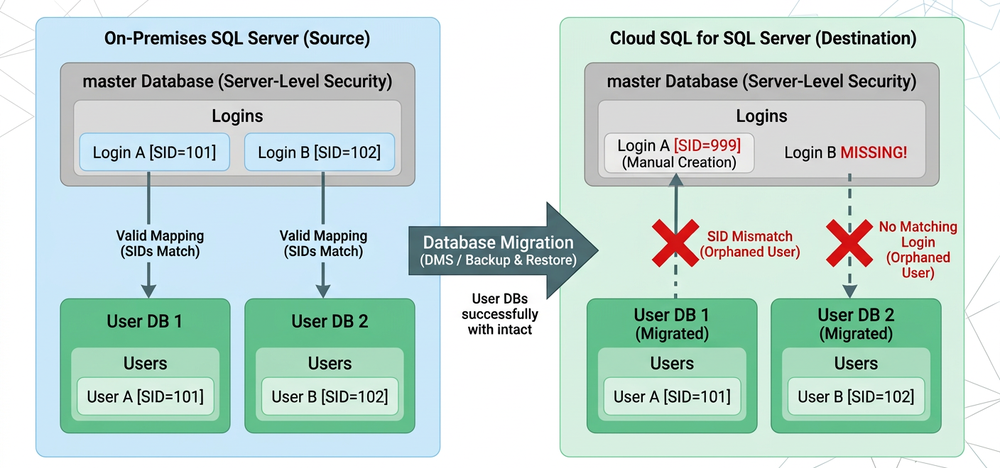
So, you’ve planned your database modernization journey. You’ve set up Google Cloud’s Database Migration Service (DMS), configured replication, and successfully synchronized your application databases from your on-premises or cloud systems to a fully managed Cloud SQL for SQL Server instance. The replication is complete, the data is up to date, and you’re ready for cutover. But when your application attempts to connect to the newly migrated database, you’re hit with a frustrating roadblock: Msg 18456, Level 14, State 1, Line 1: Login failed for user 'app_user. The culprit is simple: your SQL Server logins didn't migrate with your database. In this post, we’ll look at why this gap exists, why it actually protects your organization's security posture, and how easy it is to bridge using standard, time-tested SQL Server tools. Why DMS doesn't migrate logins: Security and compliance Database Migration Service (DMS) is highly efficient at replicating database-level schemas and transactional data. However, it purposefully doesn’t migrate instance-level objects, such as the system master database or server logins and permissions. While this might feel like a missing feature, it is actually a deliberate design choice built around three core pillars: Security Isolation and Privilege Boundaries: The source environment and the destination Cloud SQL environment operate under different security paradigms. Replicating the master system database directly could lead to unauthorized privilege escalation. For example, an on-premises login with sysadmin privileges shouldn’t have unrestricted sysadmin access to a fully managed Google Cloud database. When the cloud provider manages physical backups, patching, and security, it needs to limit underlying operating system access to ensure correct operation. Compliance and Audit Governance: Automated migration of encrypted password hashes and server-level security credentials without explicit administrator oversight frequently violates enterprise compliance frameworks such as PCI-DSS or SOC 2. By keeping security object migration as a deliberate, administrator-driven step, organizations can guarantee that only approved identities are provisioned in the cloud landing zone. The Need for Identity Modernization: Migrating to the cloud is the perfect opportunity to update and prune stale credentials. Frequently, on-premises instances carry legacy SQL logins that are no longer used. Replicating them blindly to a cloud-managed service is a security anti-pattern. Furthermore, moving to Cloud SQL is often the catalyst for shifting away from legacy SQL authentication toward modern, cloud-native identity solutions like Customer-Managed Active Directory (CMAD). Understanding logins vs. users: The SID connection To migrate logins successfully, let’s briefly revisit how SQL Server manages security. SQL Server separates identity into two distinct layers: Logins (server-level): Stored in the master database. These authenticate a client connection to the SQL Server instance. Users (database-level): Stored inside individual user databases. These authorize what actions a connection can perform within that specific database. The bridge between a server login and a database user is a unique Security Identifier (SID). When you backup and restore a database (or use DMS to replicate it), the database-level users (and their corresponding SIDs) are migrated inside the database files. However, if the corresponding server-level login does not exist in the destination master database—or exists but has a different SID—the mapping breaks. This results in "orphaned users" who have database access permissions but no way to authenticate at the server level. Figure 1: How migrating databases without corresponding logins or with mismatched security identifiers (SIDs) results in orphaned users on the destination instance. The recommended solution: Replicating logins using sp_help_revlogin Instead of manually recreating every login and guessing password hashes, we can rely on a classic Microsoft-provided script: sp_help_revlogin. This script generates a T-SQL query containing the CREATE LOGIN statement for every SQL Server authentication login on your source instance, complete with its original, encrypted password hash and its exact Security Identifier (SID). Step 1: Create the helper procedures on your source instance Connect to your source SQL Server instance using SQL Server Management Studio (SSMS). Copy and execute the official Microsoft script to create the two required stored procedures in your source master database: sp_hexadecimal and sp_help_revlogin. Step 2: Generate the migration script Once the procedures are created, run the following statement in your SSMS query window. Make sure to toggle your output settings to Results to Text (Ctrl + T) to copy the output cleanly: code_block <ListValue: [StructValue([('code', 'EXEC master.dbo.sp_help_revlogin;'), ('language', ''), ('caption', <wagtail.rich_text.RichText object at 0x7f23f316bbb0>)])]> The output will contain auto-generated T-SQL statements that look similar to this: code_block <ListValue: [StructValue([('code', 'CREATE LOGIN [app_user] WITH PASSWORD = 0x01004F3D... HASHED, SID = 0x8D2F..., DEFAULT_DATABASE = [CustomerDB]'), ('language', ''), ('caption', <wagtail.rich_text.RichText object at 0x7f23f316b520>)])]> By scripting out the login with the HASHED password option and the original SID, SQL Server allows us to safely recreate the login with its original password and secure link intact. Step 3: Apply the script to Cloud SQL Copy the generated script, connect to your destination Cloud SQL for SQL Server instance, and execute the query. Your logins are instantly created in the cloud with their correct passwords. By running the script generated by sp_help_revlogin, we replicate the logins onto the destination Cloud SQL instance with their exact security identifiers (SIDs) and password hashes intact. As shown below, this ensures that the database-level users automatically map to their server-level logins upon database migration, avoiding “orphaned users” entirely. Figure 2: The unified migration process using the sp_help_revlogin script to preserve password hashes and original SIDs, resolving user mapping on Cloud SQL for SQL Server. Note: sp_help_revlogin is a stored procedure that was created and is maintained by Microsoft. Make sure to download the latest version and read the documentation. Troubleshooting orphaned users If you had created a login on the target Cloud SQL instance manually before running sp_help_revlogin, the SIDs might not match, causing the user to become "orphaned." If you find an orphaned user (say, app_user), you can easily remap it to the newly created server login with a single command: code_block <ListValue: [StructValue([('code', 'ALTER USER [app_user] WITH LOGIN = [app_user];'), ('language', ''), ('caption', <wagtail.rich_text.RichText object at 0x7f23f316b640>)])]> With that command, the database user and the server login are immediately reunited via their SIDs, and application connectivity is fully restored. Take your security a step further While migrating SQL logins using sp_help_revlogin is the easiest path for a lift-and-shift migration, consider utilizing your cloud migration to modernize your authentication. Cloud SQL for SQL Server supports robust integrations with Customer-Managed Active Directory (CMAD). Integrating your destination instance with Active Directory allows you to deprecate legacy SQL logins in favor of centralized, enterprise-grade Kerberos authentication. Wrap up Database migration is more than just shifting rows of data—it’s about ensuring your applications remain secure, compliant, and operational from day one. While Google Cloud’s DMS handles the heavy lifting of data replication, migrating your logins is a straightforward, three-step process that guarantees a seamless cutover. To learn more about optimizing your migration strategy, check out the Cloud SQL for SQL Server Migration Guide and explore how Database Migration Service can streamline your move to Google Cloud.
Read original articleSeptember 9, 2026
Solvency II reporting is not only a regulatory submission. It is a business process...
Read original articleSeptember 9, 2026
AI companies have been talking about superintelligent AI like it’s inevitable, but recent safety incidents like OpenAI’s Hugging Face breach are demonstrating the potential dangers of deploying AI systems that are more capable than humans. So what happens when we can’t reliably control what these systems do? On this episode of TechCrunch’s Equity podcast, Rebecca Bellan is joined by Connor Leahy, an AI researcher, entrepreneur, and now the U.S. Executive Director of […]
Read original articleSeptember 9, 2026
An illustrated graphic set against a vibrant green background featuring American football elements, including a gold trophy, a blue helmet, a silver whistle, a football, a mini scoreboard, and play diagrams, with the icon for AI Mode in Google Search in t
Read original articleSeptember 9, 2026
An elderly couple sitting in a movie theater. Overlayed are "Teulluride Film Festival" and "Love, Rendered"
Read original articleSeptember 9, 2026
For the millions of fervent fans of the Indian Premiere League (IPL), being able to count on a flawless live streaming cricket experience is never up for debate. For Airtel, producing league TV broadcasts with some of the world's most massive concurrent viewership, dropped packets and buffering are simply not options. During the IPL 2026 season, Airtel partnered with Google Cloud to manage this digital delivery. Across 74 matches, the streaming infrastructure delivered several hundred petabytes of egress data. The final match alone processed tens of billions of requests, hitting a peak egress of several Tbps. Delivering video under these concurrency spikes requires an edge architecture designed strictly around localization, paired with proactive operational monitoring. Our goal for IPL 2026 was to deliver an uninterrupted, stadium-grade viewing experience to cricket fans across India, regardless of concurrency surges or network conditions. Partnering with Google Cloud and using Media CDN gave us deep local edge proximity and excellent cache efficiency. Combined with proactive match-day real-time monitoring, we delivered a reliable broadcast experience from start to finish. Architecting for concurrency and edge efficiency One of the primary challenges in live sports broadcasting is seamlessly handling large traffic spikes and never degrading stream performance or overwhelming backend origins. That’s especially important when millions of viewers simultaneously tune in during a final over because every millisecond counts. To accelerate content delivery across India’s diverse ISP landscape, Airtel leveraged Google Cloud’s Media CDN. By utilizing Google’s extensive global edge network, Airtel was able to serve viewer requests from edge locations that were physically close to end users. This deep localization was a cornerstone of the broadcast's success, with 99.9% of all tournament traffic being served locally from within India. This efficient architecture minimized network hops and reduced transit congestion, translating into remarkable infrastructure and viewer experience metrics throughout the 74 matches: Superior caching efficiency: Airtel saw an overall cache hit ratio exceeding 98%. By effectively absorbing massive viewer traffic load at the edge, origin server/video platform demands remained minimal even during peak playoff viewership. Consistent ultra-low latency: Airtel maintained a p99 latency of < 300 ms during the tournament, which supported fast stream start times and minimized buffering risk during critical game moments. Proactive strategies for operational readiness While maintaining an intelligent backend architecture was vital to Airtel’s IPL streaming strategy, it was only half the equation. Executing high-stakes live broadcasts across 74 consecutive matches also demanded meticulous operational preparation and proactive match-day execution. Because Airtel and Google Cloud recognized that potential bottlenecks had to be identified long before the first ball, they established a deeply integrated operational support model: Pre-tournament support readiness reviews: Well ahead of the opening match, joint engineering teams conducted comprehensive support readiness reviews. By auditing traffic projections, reviewing manifest configurations, and validating failover mechanisms early, the teams supported robust client readiness, resulting in low operational friction during the tournament. Monitoring as a service (MaaS): The teams maintained continuous, proactive telemetry monitoring through MaaS on Media CDN, and real-time observability enabled early detection and mitigation of network shifts before anomalies could impact viewer playback. Dedicated match-day and weekend support: Live sports don't play by the rules of standard business hours, so Airtel established comprehensive monitoring protocols for every match. During critical weekend fixtures and the high-stakes playoff stage, Google Cloud’s Technical Account Management and MaaS teams worked hand-in-hand with Airtel engineering to provide dedicated, real-time event support. A blueprint for live broadcast excellence Airtel’s successful streaming of IPL 2026 demonstrates that handling extreme concurrency is only possible with an integrated strategy across architecture, edge localization, and operational governance. By combining a 98%+ cache hit ratio with 99.9% local delivery and proactive match-day monitoring, Airtel hit a benchmark for live sports broadcasting at scale. This deployment provides an overview of the technical architecture and operational strategies involved in scaling live media delivery for high-concurrency events. To learn more about optimizing live broadcasts and edge delivery, review the Media CDN developer documentation.
Read original articleSeptember 9, 2026
Spanner is Google Cloud’s no-compromise operational database that gives you the horizontal scale and always-on availability of a modern distributed system along with the rich feature set and familiar ecosystem of a relational database. Innovators in industries like banking, retail, media and entertainment, and AI infrastructure rely on Spanner today for their most critical workloads. We’re excited to announce a new, flexible way to handle larger, more complex transactions in Spanner, simplifying applications that need the highest levels of data consistency. Operational workloads typically combine real-time decision making with granular updates: Think: identifying fraud as part of a multi-step checkout process in an ecommerce app. These changes must be transactional; either all of them succeed or none of them do and subsequent requests see the correct data. This update to Spanner’s ACID transactions allows applications to handle more data in an update without compromising on consistency, scalability, or availability using familiar DML. Higher ceiling, more flexibility Previously, Spanner capped the changes a query could perform in a transaction, for example using DML, at 80,000. That was roughly computed as the product of the number of rows and number of columns updated, plus any dependent indexes. Applications evolve over time to handle more data and provide new functionality. These changes increase the size of transactions, potentially causing previously small transactions to hit this limit. This update shifts the 80,000 mutation mod limit from the transaction to individual DML statements. DML statements no longer contribute to an overall transaction-level mutation limit. A single transaction can now contain any number of DML statements, such as INSERT, UPDATE, or DELETE, provided that each individual statement generates fewer than 80,000 mutation mods. Key benefits Larger transactions: Group DML statements logically based on business requirements rather than artificially splitting them to comply with cumulative mutation limits. Seamless transition: This change is compatible with all existing Spanner client libraries and requires no updates to application code. Technical considerations Locking and aborts While you can now include more DML statements in a single transaction, be aware that larger and longer-running transactions hold locks for a greater duration. This may increase the likelihood of lock contention and transaction aborts. Keeping transactions concise helps maintain high performance and minimize resource contention. DML vs. Mutation API The application of limits depends on the method used to modify data: DML Statements: Each statement (e.g., executeUpdate) is evaluated independently against the 80,000 mod limit. Mutation API: When using client library methods like insert() or update(), mutations are provided during the Commit call. The 80,000 limit continues to apply to the entire set of mutations included in that single call. Understanding mutation mods Spanner counts "mods" based on the complexity of changes, including modified cells, primary keys, and secondary index updates. Please look at this blog for more details on how mutations are counted. You can monitor the total mods for a committed transaction via the mutation_count in the CommitStats. Note that the mutation_count will include all the mutations that are part of the transaction, across all DML statements and commit calls. Java implementation example The following example demonstrates how multiple DML statements can be executed within a single transaction under the new limit logic. code_block <ListValue: [StructValue([('code', 'import com.google.cloud.spanner.DatabaseClient;\r\nimport com.google.cloud.spanner.Statement;\r\nimport com.google.cloud.spanner.TransactionContext;\r\nimport com.google.cloud.spanner.TransactionRunner.Work;\r\n\r\n// Assuming dbClient is your initialized DatabaseClient\r\ndbClient\r\n .()\r\n .run(\r\n new Work<Void>() {\r\n @Override\r\n public Void doWork(TransactionContext transaction) throws Exception {\r\n // Each executeUpdate call is evaluated separately against the 80k mod limit.\r\n\r\n // Example 1: Updating specific products\r\n Statement stmt1 = Statement.newBuilder(\r\n "UPDATE Products SET InStock = FALSE WHERE ProductId = @productId")\r\n .bind("productId").to(1L)\r\n .build();\r\n transaction.executeUpdate(stmt1); // Verified against 80k limit\r\n\r\n Statement stmt2 = Statement.newBuilder(\r\n "UPDATE Products SET InStock = FALSE WHERE ProductId = @productId")\r\n .bind("productId").to(2L)\r\n .build();\r\n transaction.executeUpdate(stmt2); // Verified against 80k limit separately\r\n\r\n // Example 2: Inserting related order data\r\n Statement stmt3 = Statement.newBuilder(\r\n "INSERT INTO OrderItems (OrderId, ItemId, Quantity) VALUES (@orderId, @itemId, @qty)")\r\n .bind("orderId").to(100L)\r\n .bind("itemId").to(1L)\r\n .bind("qty").to(2)\r\n .build();\r\n transaction.executeUpdate(stmt3); \r\n\r\n Statement stmt4 = Statement.newBuilder(\r\n "UPDATE Orders SET LastUpdated = PENDING_COMMIT_TIMESTAMP() WHERE OrderId = @orderId")\r\n .bind("orderId").to(100L)\r\n .build();\r\n transaction.executeUpdate(stmt4); \r\n\r\n return null;\r\n }\r\n });'), ('language', ''), ('caption', <wagtail.rich_text.RichText object at 0x7f23f3222fa0>)])]> What has not changed Individual statement limit: Any single DML statement that generates more than 80,000 mods on its own will still return the same error as we do today. Other transaction limits: Other constraints such as the maximum transaction size in bytes remain in effect. They are documented here. Best practices Monitor CommitStats: Utilize the mutation_count returned in CommitStats to understand the load generated by your operations. Optimize large operations: If a single statement (like a bulk update) exceeds the limit, consider using Partitioned DML or paginating through keys. Spanner is the trusted choice for operational applications that need to scale without downtime. This increase to the mutation limit provides developers new flexibility to run larger transactions that leverage Spanner’s global consistency. Learn how Spanner can help your teams innovate faster with less risk, or try it on your own, with a free trial or production instances starting as low as $54/month. External references Quotas & limits | Spanner | Google Cloud Documentation Compare DML and Mutations | Spanner | Google Cloud Documentation Retrieve commit statistics for a transaction | Spanner | Google Cloud Documentation
Read original articleSeptember 9, 2026
Can agentic AI cut robot training time by orders of magnitude? According the General Robotics ... absolutely yes.
Read original articleSeptember 9, 2026
AI companies have been talking about superintelligent AI like it’s inevitable, but recent safety incidents like OpenAI’s Hugging Face breach are demonstrating the potential dangers of deploying AI systems that are more capable than humans. So what happens when we can’t reliably control what these systems do? On this episode of TechCrunch’s Equity podcast, Rebecca Bellan is joined by Connor Leahy, an AI researcher, entrepreneur, and now the U.S. Executive Director of […]
Read original articleSeptember 9, 2026
Cramer Hyped Anthropic’s IPO, Then Its Own Researcher Put 10% Odds on AI Killing Us 24/7 Wall St.
Read original articleSeptember 9, 2026
September 9, 2026
Anthropic researcher Jacob Coxon resigned over AI extinction fears, calling for pacing agreements between labs.
Read original articleSeptember 9, 2026
Google might not be quite at the frontier of AI models, but it still appears to have an ace up its sleeve in... The post Google Cloud Is Winning Customers 2X Faster YoY: Google Cloud CEO Thomas Kurian appeared first on OfficeChai.
Read original articleSeptember 9, 2026
On this episode of Stock Movers: - Meta (META) shares are gaining with analysts positive on the Facebook parent after it debuted Muse, an AI assistant. Firms wrote that Meta is well positioned to succeed with the product. - Lyft (LYFT) shares are higher as the ride-hailing company is starting to offer Waymo robotaxi rides in Nashville, marking the second US city where it’s providing driverless trips. - Apple (AAPL) shares are on the move ahead of today's product unveil. Apple's stock has rallied 15% since June 25, driven by excitement about the new lineup of devices, particularly the foldable phone. (Source: Bloomberg)
Read original articleSeptember 9, 2026
Anthropic Worker Quits Over AI Firms ‘Gambling With Our Lives’ Bloomberg
Read original articleSeptember 9, 2026
Anthropic researcher Jacob Coxon has walked away from the company, saying it is "gambling with our lives." Seth Fiegerman has more on "Bloomberg Open Interest." (Source: Bloomberg)
Read original articleSeptember 9, 2026
The challengeEmbedding a Databricks AI/BI Dashboard in a customer-facing application is relatively straightforward...
Read original articleSeptember 9, 2026
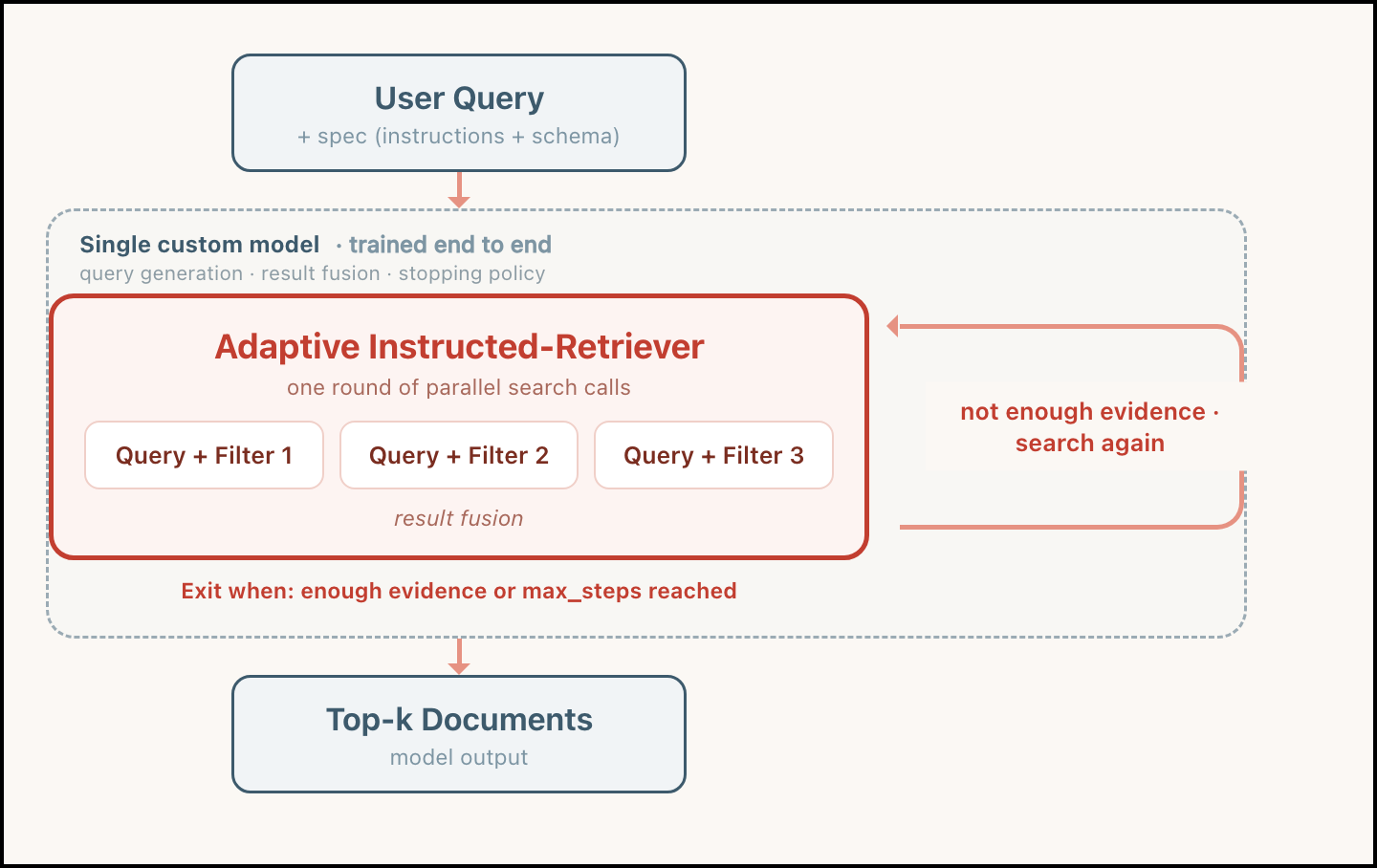
Databricks Inc. today expanded its Adaptive Instructed-Retriever search model to speed up response times for requests from artificial intelligence agents that require multiple rounds of retrieval. The company said the model is a retrieval building block for its Genie Code, Genie One and Genie Agents that matches the retrieval quality of several leading third-party and […] The post Databricks adds adaptive search model to speed agent retrieval appeared first on SiliconANGLE.
Read original articleSeptember 9, 2026
For 25 years I built software on the practices I grew up with: Kent Beck’s TDD, Martin...
Read original articleSeptember 9, 2026
Google Deepmind has used the AlphaGenome Atlas to predict what each of the roughly nine billion possible single-letter changes in the human genome could do. The dataset spans one petabyte, more than 30 times the size of the AlphaFold database. In one epilepsy case, the atlas helped pinpoint a previously overlooked variant as the likely cause. The article Deepmind's AlphaGenome Atlas maps every possible DNA change in the human genome appeared first on The Decoder.
Read original article