Judge says Trump admin still lacks evidence for Anthropic ‘supply chain risk’ label
A federal judge said the Trump administration has not presented enough evidence to justify labeling Anthropic a supply chain risk, casting doubt on the government's ban on its AI technology.
Chinese AI competitors may have forced Open AI’s hand on pricing
OpenAI has lowered API prices for two GPT-5.6 models only three weeks after their launch. On Thursday, the company announced The post Chinese AI competitors may have forced OpenAI’s hand on pricing appeared first on The New Stack.
Google says it fixed more Chrome bugs in June than over the past two years, thanks to AI
As experts have warned for the last two years, some companies — like Microsoft and now Google — are finding and patching an exponential number of bugs in their products, thanks to the use of LLMs and AI tools.
Open AI goes full China pricing mode with an 80 percent cut to its most affordable GPT-5.6 model
Starting July 30, OpenAI is cutting GPT-5.6 Luna prices by 80 percent and Terra by 20 percent. OpenAI says its top-tier Sol model helped make the company's own infrastructure more efficient, enabling the cuts. Price pressure from cheap Chinese providers and Microsoft's own MAI models likely played a role too. The article OpenAI goes full China pricing mode with an 80 percent cut to its most affordable GPT-5.6 model appeared first on The Decoder.
Open AI and Elastic are tackling the AI problem enterprises can’t ignore
It’s undeniable that enterprise AI has a context problem. Although frontier models are incredibly capable, if they can’t securely access The post OpenAI and Elastic are tackling the AI problem enterprises can’t ignore appeared first on The New Stack.
Ex-Open AI researcher bets $100 billion will flow into training data because scaling alone won't cut it
Former OpenAI employee Andrew Ho and Cambridge researcher Adam Hunt see a growing problem with large language models. Instead of becoming more versatile, the models are becoming more specialized, excelling at coding and math while stagnating or even regressing in other areas. Ho is leaving OpenAI to start a company focused on specialized training data and predicts that AI labs will need to spend more than $100 billion on targeted data collection. The article Ex-OpenAI researcher bets $100 billion will flow into training data because scaling alone won't cut it appeared first on The Decoder.
Nvidia’s Open Source Alliance Is Missing Some Key Names: Open AI and Anthropic
This week on Uncanny Valley, we discuss the open- vs. closed-source debate in AI, key players in White House AI policy, and how to stop your chatbot logs from showing up in search-engine results.
Chat GPT-maker Open AI disclosed that one of its cutting-edge artificial intelligence systems had escaped from a controlled testing environment and hacked into another technology company. Here’s how that attack happened: - facebook.com
ChatGPT-maker OpenAI disclosed that one of its cutting-edge artificial intelligence systems had escaped from a controlled testing environment and hacked into another technology company. Here’s how that attack happened: facebook.com
Google Deep Mind Ships Three Physical AI Models For Whole Body Control, Dexterity And Multi Robot Collaboration
Google DeepMind has released Gemini Robotics 2, the intelligence layer for its next generation of robots. The release ships three models: a vision-language-action model for whole body humanoid control, Gemini Robotics ER 2 for embodied reasoning and task orchestration, and an on-device VLA that adapts to new robot bodies in hours. One checkpoint drives Apptronik Apollo 2 and a Franka Duo. Only ER 2 is publicly available. The post Google DeepMind Ships Three Physical AI Models For Whole Body Control, Dexterity And Multi Robot Collaboration appeared first on MarkTechPost.
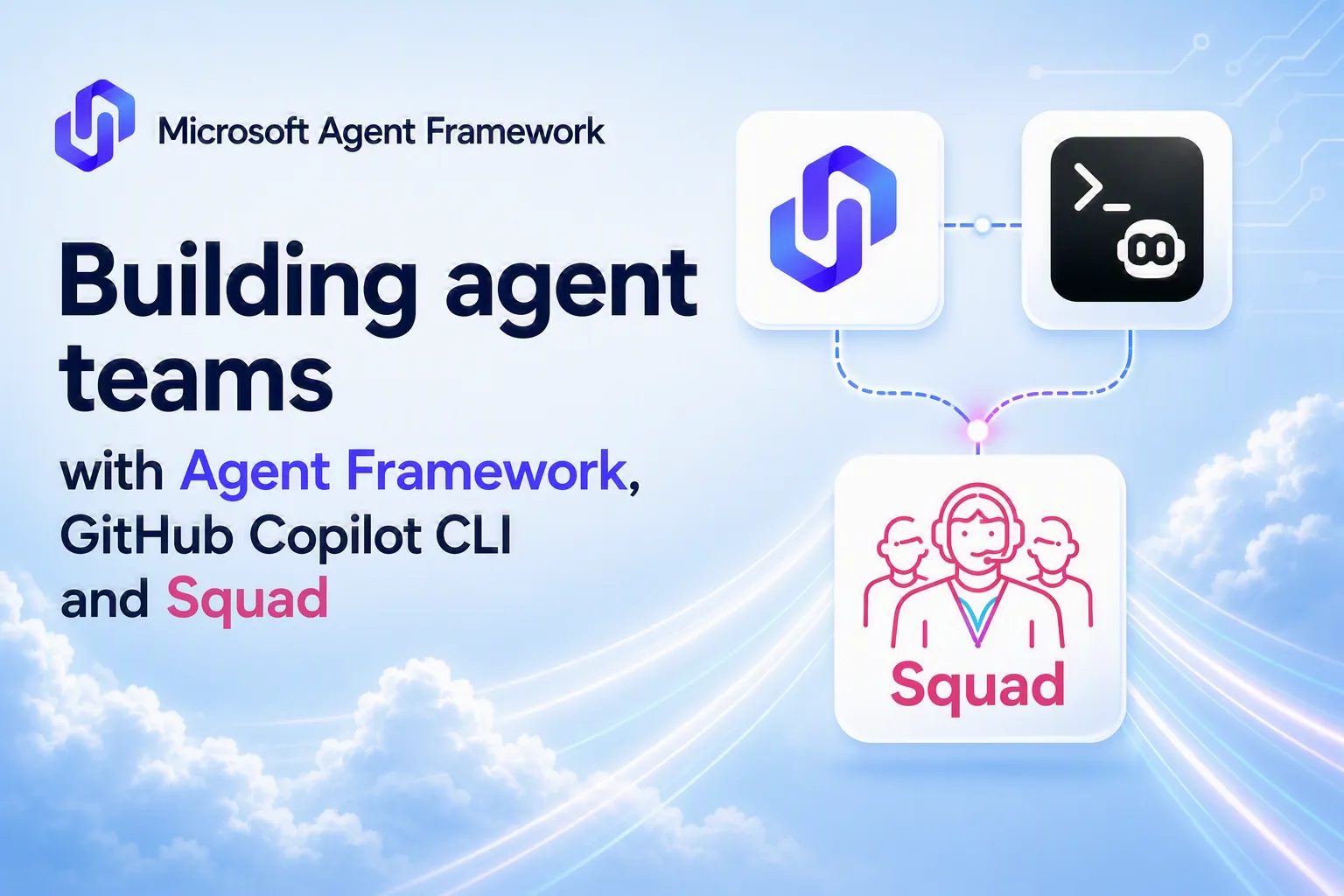
Building agent teams with Agent Framework, Git Hub Copilot CLI and Squad
Microsoft Agent Framework supports creating agents that use the GitHub Copilot SDK as their backend. GitHub Copilot agents provide access to powerful coding-oriented AI capabilities, including shell command execution, file operations, URL fetching, Model Context Protocol (MCP) server integration, and can be integrated into your existing development pipeline. using GitHub.Copilot; using Microsoft.Agents.AI; using Microsoft.Extensions.AI; AIFunction weatherTool […] The post Building agent teams with Agent Framework, GitHub Copilot CLI and Squad appeared first on Microsoft Agent Framework.
Chrome Needs Twice-a-Week Patching Thanks to AI Bug Hunting
The two Chrome updates in June patched more bugs than the 23 updates before them. Now, Google is ramping up its patching schedule thanks to AI-assisted vulnerability discovery.
Inference meta-monitoring for Amazon Sage Maker AI endpoints with Amazon Quick
Learn how to build an inference meta-monitoring system for Amazon SageMaker AI endpoints using Amazon Quick. This governance layer sits above production ML inference pipelines to continuously track prediction and data quality, detect drift, integrate delayed ground truth, and surface automated performance dashboards.
Amazon accidentally spent $1.8 million using Claude for menial coding task, went 860% over budget — 'catastrophically expensive' coding blunders discovered in internal Amazon AI usage metrics - Tom's Hardware
Amazon accidentally spent $1.8 million using Claude for menial coding task, went 860% over budget — 'catastrophically expensive' coding blunders discovered in internal Amazon AI usage metrics Tom's Hardware
Introducing explicit prompt caching for Open AI GPT-5.6 models on Amazon Bedrock
OpenAI GPT-5.6 Sol, Terra, and Luna are now generally available on Amazon Bedrock, along with explicit prompt caching that gives you precise control over which parts of your prompt are cached and reused. Learn how to get started, set up explicit caching, and migrate existing GPT workloads to reduce inference cost.
Alloy DB adds group authentication to secure enterprise scale and AI agents
Database security traditionally relies on a fragile balance between the granular control developers need and the administrative overhead of managing thousands of individual database passwords. Between managing AI agent access, rotating static credentials, handling employee on-boarding and off-boarding, and auditing access logs, passwords remain an operational tax — and a potential security vulnerability. At Google Cloud, our goal is to help make database access transparent, secure, and passwordless. Today, we are taking an important step forward in that journey. We’re announcing Identity and Access Management (IAM) group authentication for AlloyDB, available in preview. This capability brings identity-driven access control to your enterprise workloads. Cloud SQL customers have already adopted this authentication pattern with great success, and this launch unifies our security stance across both services. The problem with individual scale For years, both Cloud SQL and AlloyDB have mapped individual Google Cloud identities directly to database users using native IAM authentication. However, at enterprise scale, managing access on an individual basis can introduce significant complexity. Without group-based management, scaling to hundreds of instances and thousands of users creates distinct challenges: On-boarding bottlenecks: Every new team member requires individual database user provisioning. Off-boarding risks: Ensuring an employee’s access is entirely removed across a distributed database environment can complicate auditing. Policy drift: Maintaining identical permissions across development, staging, and production systems becomes highly error-prone. Faced with these challenges, it is tempting to use a single, powerful user or service account to serve a whole application. However, oversimplifying access for such powerful application accounts comes at the cost of risk exposure and loss of granular auditing capabilities. Securing the future of agentic AI The scale challenge isn't just about human users anymore. As organizations deploy an increasing number of AI agents, managing database identity and access controls will become more complex. If an AI agent connects to a database using a generic, shared account, or a broad service account, it risks acting as a confused deputy. When using credentials with overly-powerful permissions instead of carrying through the user’s identity, an agent could access or modify data beyond what the end user requesting the action is authorized to see. Crucially, it can hide individual accountability from audit logs because actions map to a generic service account. Granular authentication can help mitigate this risk. Agents can pass the end user’s specific identity and authentication scope through to the database layer so that queries are run on behalf of the user, limiting data access to objects that an end user is allowed to. Passing user group identity through an AI agent to AlloyDB allows the database to authorize access and record precise audit trails. IAM group authentication simplifies this architecture. Instead of managing micro-permissions for every combination of agent and user, security teams can define up to 200 functional Google Groups (such as financial-agents@company.com or regional-analysts@company.com). Google Cloud’s managed database infrastructure validates the user's group context, helping ensure the database authorizes data access at the database or table level while audit logs capture exactly what data was accessed, modified, and on whose behalf. Proven value for digital leaders Enterprises are already improving their operational velocity by adopting centralized identity principles. Bilt, a leading platform rewards program, uses our unified approach to help enhance the security of its high-scale database environments: "By combining AlloyDB’s group-based IAM with our automated group management and Privileged Access Manager (PAM) entitlements, we've eliminated the risk of shared credentials entirely. Database and role provisioning are now fully templated from day one, allowing our engineers to securely access only the data they need and exactly when they need it," said Kosta Krauth, CTO, Bilt. A unified blueprint for passwordless access With this launch, Google Cloud provides a unified approach for access control across both Cloud SQL and AlloyDB. Organizations can now enforce a standardized, defense-in-depth access strategy across their relational database portfolio. By pairing IAM group authentication with features like VPC Service Controls, Organization Policies, IAM conditions, and Private Service Connect, security teams can help ensure that database access — whether by a human engineer or an autonomous AI agent — is bound to verified corporate identities and secure network perimeters. Moving toward a Zero Trust database future Security shouldn't force a trade-off between engineering velocity and compliance. By integrating AlloyDB with Cloud Identity and Workforce Identity Federation, we are removing the friction of database administration while helping you implement a more secure architecture. You can explore how to set up group-based database roles by trying out the feature today. You can find more recommendations and best practices for security and compliance in our documentation.
Do more with less: How GKE can reduce your cost per agent by 75%
In today’s agentic era, modern cloud applications are evolving from a set of passive tools to fleets of autonomous digital workers that reason, plan, and take action across a wide range of tasks. For platform engineering teams designing these environments, the simplest approach is often to deploy an agent on to an open-source framework like OpenClaw and Hermes running on a virtual machine (VM). But as those workloads move into production and scale to support additional users or use cases, teams quickly hit a critical challenge: AI agents tend to operate in bursts; for a while they actively process requests or execute code, followed by long periods of inactivity while awaiting user input or external triggers. If you rely on static compute allocations, idle agents are still consuming valuable CPU and memory. The question becomes: how do you safely pack more agents onto a fixed compute footprint without sacrificing reliability, scalability, or efficiency? The answer is to incorporate orchestration upfront as a holistic part of your architecture. Orchestration helps you unlock dramatically improved unit economics and scalability, ease of use, and reliability from day one. Google Kubernetes Engine (GKE) offers sophisticated orchestration capabilities. To help you make the most of your compute capacity, we tested the maximum number of AI agents that can be packed onto a single GKE node running on a fixed Google Compute Engine VM instance (n2-standard-48) — without performance degradation, or repeated failures. Using an OpenClaw profile, we applied progressive optimizations to demonstrate the meaningful role that orchestration can play in running agentic workloads at scale — read on to learn more. Baseline: Running OpenClaw on microVMs Running untrusted, multi-agent workloads securely requires strong isolation. A common approach is to run each agent inside a dedicated microVM (such as Kata containers) on a Kubernetes deployment, which provides strong hardware-level isolation. While this provides the necessary security boundary, it hits a scaling wall almost immediately. Every microVM requires its own guest operating system that consumes memory and CPU resources, limiting the actual resources available for your actual agents. In this baseline scenario, we hit a scaling wall at 61 OpenClaw agents on a standard GKE node before reliability dropped and workload health checks began to fail regularly. Optimization 1: Pushing density with GKE Agent Sandbox To address this, we migrated the same agent workload from microVMs to GKE Agent Sandbox, a Kubernetes primitive that’s designed specifically for the security and performance requirements of running agents. Instead of relying on heavy guest operating systems, GKE Agent Sandbox leverages the open-source secure container sandbox, gVisor. gVisor uses a user-space kernel (the Sentry) to intercept and filter system calls. This provides secure, production-grade isolation for untrusted code execution while maintaining the lightweight footprint of standard Kubernetes containers. This reduced overhead improves the efficiency of the sandbox itself, resulting in being able to deploy 88 OpenClaw agents inside the same VM before failure — a 44% increase in the number of agents you can run on the same fixed capacity while maintaining a highly reliable security perimeter. It’s no surprise then, that when GKE Agent Sandbox reached General Availability in May, its usage grew more than 7x in under four weeks. Key takeaway: In our tests, migrating OpenClaw-type agents to GKE Agent Sandbox enabled us to run more than 40% more agents per vCPU, and reduced the cost per agent by more than 30%, all while maintaining a similar performance profile. Optimization 2: The value of orchestration While the GKE Agent Sandbox optimizes active workloads, solving the problem of idle AI agents requires making workload orchestration a central part of your agent architecture. Rather than keeping idle agents running in the background, you can use GKE Pod snapshots to checkpoint (freeze) them to persistent storage, which releases their physical CPU and memory resources back to the cluster. When a new task trigger arrives, a lightweight Kubernetes controller or event gateway intercepts the request and signals GKE to resume the agent from the snapshot. This happens in milliseconds. This pattern lets you reliably oversubscribe physical compute resources based on workload behavior, so you can fit more agents on the same node. However, oversubscription isn’t a one-size-fits-all approach and comes with a set of tradeoffs: Different AI agents have different latency requirements and execution models. If you treat all agents the same, you will either degrade your user experience with latency, or bankrupt your project with over-provisioned VMs. With GKE, you can run an agent platform that supports tailored deployments for different types of agents and use cases, each fine-tuned to their unique performance and cost requirements. GKE supports a spectrum of agent workload behaviors, balancing latency sensitivity against resource density. Here are some examples of agentic workloads with very different performance requirements: Real-time coding assistant (latency-sensitive): Direct developer-facing agents need sub-second startup times (<1s) and have zero tolerance for queueing. By pairing GKE Pod snapshots with Agent Sandbox Warm Pools, GKE maintains pre-warmed, isolated sandboxes that can be executed nearly instantaneously. Autonomous teammate (balanced): Interactive background agents can tolerate average startup times (a few seconds). GKE suspend and resume functionality restores these agents on demand, so they don’t consume compute resources while they are idle. Headless background agent (latency-tolerant): Scheduled daily research or analysis cron jobs can tolerate queueing delays; you’re not going to compromise business outcomes by waiting to execute these jobs for an hour while cluster capacity becomes available. To save on costs for these kinds of agents, go ahead and use maximum resource oversubscription. In other words, rather than forcing you into a single cluster-wide strategy, GKE supports different behaviors simultaneously across node pools and workload configurations. Consider the "thundering herd" problem, where a surge of agents all wake and demand compute simultaneously. GKE offers a tunable dial with features like Agent Sandbox warm pools and suspend and resume to balance potential cost savings against guaranteed performance based on your specific requirements — performance- or cost-optimized: Performance-optimized: If your use case requires guaranteed, sub-second performance during massive, sudden traffic spikes, you can provision buffers using Agent Sandbox warm pools. In this configuration, we were able to run 133 OpenClaw agents on the same node. Cost-optimized: For workloads that are latency-tolerant or that can be staggered, higher oversubscription ratios significantly increase node density. In this configuration, we ran 274 agents on the same node (>3x more agents than the baseline) while keeping startup times under five seconds. Key takeaway: By combining GKE Agent Sandbox with GKE’s suspend and resume capabilities, you can freeze idle agents to oversubscribe fixed compute capacity. For agents with intermittent activity, this can enable up to 3.5x greater agent density and cost reductions of up to 75% per agent. Scale your agents, not your budget Scaling your agents shouldn’t mean linearly scaling your infrastructure budget. As our examples show, adopting the right platform features and considering orchestration from the get-go can dramatically alter the value you get from your compute capacity. GKE allows you to easily align your infrastructure with your business goals — whether that means prioritizing aggressive cost savings or optimizing for performance. And this is just the beginning. At Google Cloud, we’re continuously innovating new ways to help you manage the demands of the agentic era. Ready to get more out of your compute capacity? Check out the GKE Agent Sandbox documentation and learn how GKE is helping teams innovate faster for less.
NVIDIA Exemplar Cloud: Lessons for Unlocking Full Performance on AI Infrastructure
Two AI computing clusters built from identical NVIDIA H100, GB200 NVL72, or GB300 NVL72 systems can deliver materially different training throughput. We...
Meta says AI is making it easier to build new apps — and more are coming
Meta says AI is making it dramatically easier to build and launch new consumer apps, with CEO Mark Zuckerberg telling investors the company has more new consumer products on the way.
Gemini Robotics 2 Brings Google's AI Into the Physical World
The latest version of Google DeepMind's AI model includes a significant jump into “physical AGI.” But plopping AI into the real world comes with risks.
In the Hugging Face breach, Open AI’s hacker was noisy and fast — but not unstoppable
Cybersecurity experts told TechCrunch that one of the biggest lessons to be taken from the OpenAI hack against Hugging Face has nothing to do with AI, but traditional cybersecurity defense.
Claude Makes Five AI Labs Publishing Private Chats To Google
Shared Claude conversations reached Google despite two crawler controls. Labs audit what their models say. Almost nobody audits what their products publish.
Language models can't spark scientific revolutions, but world models might
Can language models spark a scientific revolution? In a position paper titled "LLMs can't jump," Google Deepmind's Tom Zahavy argues they can't. They're missing the cognitive mechanism needed to create something truly new. The article Language models can't spark scientific revolutions, but world models might appeared first on The Decoder.
Batten Down Your Packages: Mitigation Guidance for Supply Chain Compromise
Written by: Kelli Vanderlee, Stuart Carrera For years, the cybersecurity industry's understanding of software supply chain compromise has been anchored by a few watershed events, including Russian cyber espionage actor ICE RELIC’s (formerly known as APT29) 2020 compromise of SolarWinds and North Korean cyber espionage actor UNC4736's 2023 compromise of 3CX. However, Google Threat Intelligence Group (GTIG) has been tracking growth in threat activity targeting open source software repositories to conduct supply chain compromises over the past several years. A series of large scale open source software supply chain compromise campaigns in 2025 and the first half of 2026 underscore how important it is that organizations implement defensive strategies that directly address this threat vector. In this blog post, GTIG and Mandiant discuss trends we have observed in threat actor use of software supply chain compromise, and provide mitigation and hardening recommendations that incorporate insights we have developed as a result of supporting customers through recent campaigns in which threat actors manipulated open source packages. Open Source Supply Chain Compromise Grows in Volume and Impact in 2025 and Early 2026 The majority of the most impactful and far-reaching supply chain compromise incidents that GTIG tracked in 2025 and early 2026 involved the compromise of code repositories, software dependencies and developer tools (T1195.001). Open source supply chain compromises offer attackers the same efficiency, scale, and initial stealth as traditional supply chain compromises, but typically require significantly less planning and resources to execute. However, open source supply chain compromises are also noisy once enabled; malicious open source packages are often discovered and publicized much more quickly than traditional supply chain compromises. GTIG assesses with high confidence that the growth in very large-scale, open-source supply chain compromise campaigns, including use of worms and iterative compromises in 2025 and early 2026, represent a significant expansion in use of this tactic compared to prior years. We anticipate that threat actors will emulate the tactics of these campaigns and contribute to growth in open-source supply chain compromise through the rest of 2026 and years to come. GTIG identified several notable supply chain compromises in 2025 and early 2026 that we believe exemplify this trend of exceptionally large campaigns, as measured by size and/or impact (Figure 1). Figure 1: Notable open source supply chain compromises, 2025 - early 2026 For example from February to May 2026, UNC6780 (aka "TeamPCP") conducted extensive open source supply chain compromises targeting ecosystems like PyPI, npm, and Docker Hub. Initial infection vectors varied across incidents, and included abuse of the pull_request_target GitHub Actions trigger to obtain base repository secrets and write permissions. The threat actor typically used compromised packages to deploy credential stealers, including SANDCLOCK, to obtain high value secrets. In incident response engagements, we observed UNC6780 attempting to pivot from compromised artificial intelligence (AI) software to broader network environments. UNC6780 has monetized stolen credentials through either direct sale of the stolen data, or through partnerships with ransomware and data theft extortion groups. In March 2026, GTIG observed the introduction of a malicious dependency in the legitimate axios package. GTIG analysis and the maintainer's post mortem indicate that the maintainer account was compromised via social engineering and used to publish the updated versions. We identified the malicious dependency as a dropper that deploys the WAVESHAPER.V2 backdoor, and attributes the activity to North Korean actor MIDNIGHT NEPTUNE (formerly known as UNC1069). While the malicious versions of axios were removed from the npm registry within three hours of their release, the scope of the compromise is estimated to be broad, as the package has over 100 million weekly downloads. GTIG supported customers in at least 15 industry verticals and 13 different countries affected by this incident. Further, axios is also a dependency for tens of thousands of other packages, and open sources reported that the malicious axios update had spread to several of these. AI Likely to Accelerate Open Source Supply Chain Compromises GTIG anticipates AI will accelerate the growth of open source software supply chain compromise. Integration of AI into open source software development practices, including "vibe coding," increases attacker opportunities both to manipulate AI functionalities and to take advantage of AI to speed and scale their own operational planning. Open sources have documented multiple instances of threat actors planting malicious resources on open source AI communities and inserting malicious code into open source Model Context Protocol (MCP) packages. MCP is a standardized protocol for AI to interact with tools and data. Malicious packages have also tricked AI coding agents, which have unwittingly incorporated them into projects. North Korean threat actors reportedly uploaded malicious cryptocurrency-themed packages, and subsequently an AI coding agent co-authored a commit integrating one of the malicious packages as a dependency to a legitimate cryptocurrency trading project. Thousands of Malicious Open Source Packages Detected Corroborating GTIG's findings, statistics compiled by the Open Source Security Foundation (OpenSSF), a cross-industry, non-profit collaboration under the Linux Foundation, indicate that the number of malicious open source software packages identified increased exponentially, or 1,444% from 2024 to 2025 (Figure 2). Figure 2: Count of malicious open source packages reported 2022–2025 (source: OpenSSF) Traditional Supply Chain Compromise Remains Rare In contrast to what we observed in the open source ecosystem, GTIG assesses with high confidence that traditional software supply chain compromise, the manipulation of source code or update/distribution mechanisms (T1195.002), remains rare. The handful of identified cases in 2025 and early 2026 were predominantly cyber espionage incidents with intentionally limited targeting scopes. In the most significant case, North Korean threat actor UNC4899 reportedly used social engineering to compromise a developer's machine at a web3 organization. The threat actor used this access to inject malicious code into the frontend systems, specifically impacting smart contract functionality to alter transactions initiated by a third party organization that utilized the multi-signature wallet with the targeted organization. This compromise was tailored to a single victim, but did not directly touch the targeted organization's infrastructure. The compromise ultimately led to a cryptocurrency theft of assets with an estimated value of $1.4B USD. Other examples include the compromise of hosting infrastructure serving updates of Notepad++ from June to December 2025, activity GTIG attributes to UNC6688. GTIG observed organizations in South Korea and France affected by this activity. GTIG also tracked the early 2026 compromise of DAEMON Tools installers. During this campaign, UNC6863 deployed SLICKDEMON to perform broad-spectrum reconnaissance and filter for targets of strategic interest. Following this profiling stage, the group selectively delivered the shellcoded loader BADFALL to facilitate hands-on-keyboard activity and bridge the deployment of the advanced QUIC RAT. The campaign targeted Russia, Brazil, and Turkey, with follow-on exploitation of government and scientific entities in Belarus and Thailand. In addition to likely cyber espionage incidents, we observed suspected financially motivated compromises with broader distribution. In two separate incidents threat actors compromised underlying software used in consumer-facing websites: in one case, automotive dealership websites served ClickFix lures leading to the installation of SHADOWLADDER (aka SectopRAT), and in another, eCommerce websites were infected with web skimmers. Mitigation Recommendations To effectively mitigate and harden against software supply chain compromises, organizations should adopt a multi-tiered defensive strategy designed to minimize exposure and strengthen resilience against potential compromises. Administrative Oversight and Risk Governance Cataloging Assets and Dependencies: Maintain a tiered, continuous inventory of all applications, third-party vendors, and services based on operational importance to detect single points of failure and security risks. Software Bill of Materials (SBOM): Implement an automated SBOM for all internal and third-party software packages, allowing security teams to continuously monitor and cross-reference active code inventories against newly disclosed vulnerabilities. Action Bill of Materials (ABOM): Maintain a dedicated ABOM to inventory every third-party pipeline vendor and development utility in use, linking it to your container image inventory to track exactly which external actions are building your production images. Software Development Lifecycle (SDLC) Threat Modeling and Attack Chain Mapping (Wiz SITF): Align your software supply chain risk management with capabilities such as the Wiz SDLC Infrastructure Threat Framework (SITF) to transition from treating security as a checklist of isolated controls to a holistic threat model. With this freely available framework, organizations can map recent incidents, threat actor campaigns, and red team exercises directly to Wiz SITF Reference IDs indexing each risk to its specific lifecycle stage: Version Control Systems (VCS), continuous integration and continuous delivery (CI/CD) pipelines, package registries, or production infrastructure. This methodology allows security teams to model complex "attack chains" where minor, isolated weaknesses (e.g., a lockfile bypass combined with an overprivileged pipeline token) are chained together by sophisticated threat actors to execute critical, high-impact breaches Active Risk Monitoring: Maintain a dedicated supply chain risk register and a centralized remediation tracker to systematically group development lifecycle (SDLC) threats into clear operational domains: Governance, Identity, Pipeline Logic, and Supply Chain Hygiene. If using Wiz SITF, each vulnerability must be mapped to its exact pipeline stage with a unique Wiz SITF Reference ID. Instead of treating vulnerabilities as isolated bugs, prioritize the blocking of complex "attack chains" (such as a leaked token combined with missing branch protections and overprivileged OIDC trust) that pose the highest breach risk. Ensure each logged item has a designated owner, a targeted completion date, and clear tracking of technical dependencies. Standardized Configuration & Change Control: Form a Change Advisory Board (CAB) to manage the rollout of all enterprise software and hardware. Ensure every modification includes a pre-deployment risk review, post-deployment monitoring, and a verified plan for recovery or backout. Staff Security Education: Deploy ongoing training initiatives centered on supply chain hazards, social engineering techniques, and internal procedures for reporting incidents. Node.js (npm/pnpm): Enforce cooldown controls by using the minimumReleaseAge configuration. Setting this value to at least 24 hours (1440 minutes) ensures that freshly published, potentially poisoned packages are quarantined until the broader security community has had time to identify and remove them. Ensure that older, unsupported package manager versions (such as legacy Yarn or pnpm versions) are modernized, as they will silently ignore these cooldown boundaries. Python (pip): Ensure that Python project environments do not pull dependencies directly from the public PyPI registry, which bypasses internal release-age policies and gating controls. All configurations must specify a secure, vetted private --index-url in their configuration files to ensure consistent quarantine and vetting of upstream packages. Vendor Lifecycle Management Vendor Security Vetting: Conduct rigorous due diligence prior to procurement by assessing third-party security frameworks against industry standards such as ISO 27001 or SOC 2. Cybersecurity Provisions in Contracts: Integrate specific security mandates into vendor agreements, including strict timelines for incident notification, persistent audit rights, and clear liability terms. Hardware Provenance and Verification: Use supply chain tracing to confirm the integrity of components, establish methods for detecting counterfeit items, and secure the logistics of repairs and replacements. Security Architecture and Engineering Controls Identity and Access Management Automated System and Workload Identities: Transition third-party integrations and build-system processes away from static, long-lived administrative Personal Access Tokens (PATs). Instead, mandate the use of dedicated GitHub Apps or short-lived system tokens via federated OpenID Connect (OIDC) for automated machine integrations. This ensures that credentials used by system-to-system workflows expire in a matter of minutes, neutralizing the risk of a persistent compromise if an automation pipeline is breached. Developer and User Identity Controls (command-line interface (CLI) and Repository Access): Enforce strict access control boundaries for programmatic developer sessions. Because Okta-linked SAML SSO is only capable of verifying identity during the initial creation or authorization of personal tokens and keys, continuous session state cannot be challenged over programmatic CLI connections. Therefore, session security must be enforced through credential expiration and hardware-backed controls. Enforce Strict Token Expiration: Strictly limit the allowable lifespan of all personal access tokens (PATs) and programmatic application programming interface (API) keys to a minimum threshold (e.g.a maximum 7-day limit). This guarantees that credentials expire regularly, forcing developers to re-authenticate through the primary SSO gateway. Consider Restricting Personal Access Tokens to Neutralize Git-over-HTTPS & Mandate FIDO2 Secure Shell (SSH): To protect developer environments against credential theft, organizations should consider restricting Personal Access Tokens (PATs) globally across GitHub Enterprise Cloud. Because GHEC has no direct protocol-disable switch, administrators should consider disabling classic PATs and enforcing short token lifespans to effectively block unauthorized programmatic HTTPS connections. This protocol containment helps encourage developers to shift entirely to SSH authentication. To secure this transport layer, consider mandating the use of hardware-backed FIDO2 security keys to cryptographically verify physical token possession for all command-line repository actions. Isolated CI/CD Execution: Utilize ephemeral runners for build pipelines that are purged immediately after completing a single task. This prevents malicious actors from maintaining a persistent presence between different build phases. Workflow Trigger Governance (pull_request_target): Strictly limit and secure the use of highly privileged triggers such as pull_request_target in automated environments. Multiple prominent supply chain campaigns have actively exploited vulnerable workflows using this trigger as their initial entry vector. Infrastructure Protection Zero Trust and Least Privilege: Maintain rigorous control over managed service providers (MSPs) and third-party vendors by enforcing role-based access control (RBAC), multifactor authentication (MFA), and frequent audits of access rights. Network Micro-Segmentation: Segregate vital hardware and software from the rest of the enterprise network. Use allow-list-only firewall rules to block unauthorized outbound traffic and disrupt command-and-control (C2) activities. Secure Development Ecosystems Pipeline and Sandbox Isolation: Ensure that testing environments, CI/CD pipelines, and informal scripting sandboxes are physically or logically isolated from production assets. Artifact Management: To secure the supply chain, organizations can integrate Google's Assured Open Source Software into their internal workflows to defend against dependency confusion and malicious hijacking. This process provides "provenance" cryptographically signed evidence that the code has not been tampered with and originates from a verified source thereby establishing a higher level of trust for third-party dependencies. Quarantine Gates: Require all binaries, packages, and container images to be hosted in monitored internal repositories. To defend against zero-day dependency hijackings, implement localized "quarantine gates" by enforcing cooling windows on newly published third-party assets. Lifecycle Script Sandboxing (ignore-scripts): Mitigate the critical threat of arbitrary code execution by disabling the automatic running of package install scripts. Attackers commonly hijack dependencies and add malicious post-installation execution scripts to steal credentials from developer environments and runners during routine installs. Organizations should mandate ignore-scripts=true in their repository-level .npmrc files and configure native allowlists, such as pnpm's , to restrict execution exclusively to verified, essential tools. Software Composition Analysis (SCA) with Google OSV-Scanner: Integrate Google's open source OSV-Scanner tool into CI/CD build pipelines to continuously scan project dependencies for known security flaws. This tool provides an officially supported frontend to the OSV.dev database that maps a project's list of dependencies with the specific vulnerabilities affecting them. High-Fidelity Vulnerability Detection: Unlike traditional scanners that rely on imprecise name matching, the OSV schema stores vulnerability data in a machine-readable format that maps unambiguously onto version ranges and commit hashes. This results in fewer false positives and produces highly actionable remediation notifications, significantly reducing development team triage overhead. Authoritative & Collaborative Threat Intel: The underlying OSV.dev database aggregates high-quality threat intelligence from authoritative open sources, allowing the broader developer community to suggest continuous improvements. Utilizing OSV-Scanner helps developers identify impactful third-party open source vulnerabilities in their applications and focus remediation on genuine risks. Hardware-Backed Key Protection: Secure code-signing certificates using Hardware Security Modules (HSMs) or vaulting solutions. Monitor public transparency ledgers and logs to detect any unauthorized certificate activity. Hardened Distribution Points: Audit and lock down software delivery channels, such as Content Delivery Network (CDN) endpoints and FTP servers, to ensure legitimate binaries cannot be replaced by compromised payloads. Audit NPM Package Maintainer Accounts for Stale or Expired Recovery Email Domains: Expired maintainer email domains are a critical risk because attackers can purchase them to intercept password reset emails, take over the package registry account, and publish malicious code to downstream users. To identify vulnerable packages, organizations can perform the following: Deploy automated scanning tools to audit the entire dependency tree and verify the domain name system (DNS) resolution and registration status of all maintainer email domains. For defense-in-depth, pipelines must disable package execution scripts and employ cold periods. Use by default ephemeral, single-use runners to prevent compromised packages from accessing persistent build environments. Isolate runners in a restricted network segment with strict egress filtering blocks any unauthorized connection to external domains even if an active exploit is triggered. Integration with Native Ecosystem Guardrails These organization-controlled quarantine policies must operate in conjunction with native platform-level security updates to achieve a Defense-in-Depth posture. Relying solely on client-side configurations or automated update tools in isolation creates single points of failure. The following native platform controls must be orchestrated alongside standard controls: Dependabot Native Cooldowns (July 2026): Dependabot now enforces a default three-day cooldown on version updates to allow for the public discovery of upstream compromises (such as the historical chalk and debug hijackings) before automated Pull Requests are generated]. PyPI Server-Side Immutability (July 2026)]: PyPI now natively rejects new file uploads to any release older than 14 days. This prevents adversaries possessing compromised tokens from retroactively poisoning legacy, pinned dependencies (as observed in the LiteLLM and Telnyx compromises) . npm v12 Install-Time Defaults (July 2026): npm v12 disables all lifecycle scripts by default (allowScripts: off) , replacing manual, workflow-level ignore flags with explicit, commit-verified package allow-lists By explicitly aligning baseline configurations including .npmrc and pip.conf registry pinning, immutable installation protocols via npm ci, and runner isolation with these native platform-level guardrails, while committing to the continuous evaluation and adoption of new upstream security features as they are released, the organization establishes a resilient, multi-layered security boundary across the entire software supply chain Continuous Verification, Monitoring, and Response Automated Ingestion and Validation Automate SBOM Management: Implement a Software Bill of Materials (SBOM) for all third-party and internal software. This enables continuous monitoring for emerging vulnerabilities like Log4j through automated cross-referencing. Automate and scale this process by feeding SBOMs into central vulnerability management platforms that continuously cross-reference deployed inventory against newly disclosed exploits. Security Analysis Integration: Incorporate automated dynamic application security testing (DAST) and static application security testing (SAST) tools within development pipelines to identify and block compromised third-party code before it is compiled. Verification of Cryptographic Integrity: Prior to installing updates, use automated systems to validate digital signatures and hashes against vendor-provided specifications. Implement autonomous security verification: Organizations should look to integrate advanced security workflows directly into their CI/CD pipelines. These systems can behaviorally evaluate threats by executing simulations in isolated sandboxes, cross-reference those flags with cloud context to determine a flaw's actual reach, and automatically generate tested code patches to rapidly remediate verified risks at scale. Proactive Threat Hunting and Monitoring Egress and Proxy Analysis: Establish network traffic baselines to identify suspicious egress flows to external repositories or unrecognized Internet Protocol (IP) addresses. Comprehensive Endpoint Security: Utilize endpoint detection and response (EDR) tools across infrastructure and developer workstations to detect post-execution malicious activities from supply chain compromises. Log Aggregation and Alerting: Unified log management should alert on the following anomalies: Development Systems: Watch for unauthorized code changes, build parameter adjustments, or irregular user activity. CI/CD Integrity: Alert on unauthorized workflow modifications or anomalous triggers (e.g., repository_dispatch) that bypass standard code-review gates. Injection Detection: Monitor logs for shell-escape characters or command-substitution patterns within untrusted input variables. Credential Misuse: Track authentication hits on long-lived static keys from unrecognized IP addresses or regions. Physical Assets: Record all firmware modifications, including installation status and source information. Incident Response Strategies Specific Supply Chain Playbooks: Perform tabletop exercises and document response plans for: Upstream Package Takeover: Maintainer account takeover (ATO) on public registries leading to direct runtime application code manipulation Dependency Confusion Exploits: Malicious registration of lapsed administrative recovery domains or unscoped internal namespaces on public registries to hijack local developer and build runner installations. Automated Pipeline Harvesting: Pipeline poisoning of CI/CD environments via runner exploitation to harvest credentials and perform unauthorized package publication. Developer Workstation & IDE Compromise: Targeted social engineering, malicious IDE extensions, or typosquatted local dependencies designed to exfiltrate private cryptographic keys, API tokens, and local session credentials. Operational Re-evaluation: Create processes for immediate vendor re-mapping and security re-assessment during industry-wide security events. Recommendations for mitigation strategies are also available publicly via: Google's Supply-chain Levels for Software Artifacts (SLSA) Cybersecurity Supply Chain Risk Management Practices for Systems and Organizations (NIST SP 800-161 Rev. 1) from the US National Institute of Standards and Technology (NIST) Securing the Software Supply Chain: Recommended Practices Guide for Developers from the US National Security Agency (NSA) WIZ SDLC Infrastructure Threat Framework (SITF) SDLC Infrastructure Threat Framework Acknowledgements This analysis would not have been possible without the assistance of Matthew McWhirt and Michael Veal.
Microsoft AI bets on cheap specialist models instead of chasing the frontier
Microsoft AI is betting on small specialist models instead of expensive general-purpose ones, according to AI CEO Mustafa Suleyman. MAI-Cyber-1-Flash tops the CyberGym benchmark when embedded in an orchestrator and reportedly costs half as much as Anthropic's Mythos, but it still relies on OpenAI for hard tasks. Competition is shifting from individual models to the orchestration software that routes and manages them. The article Microsoft AI bets on cheap specialist models instead of chasing the frontier appeared first on The Decoder.
AI Scammers Are Better at Building Trust Than Humans
Researchers pitted a person against a Claude agent and found that, after a week of texting, the AI chatbot was more effective at creating “exploitable trust” with others.
Open AI claims GPT-5.6 Sol beats Opus 5 on ARC-AGI-3 with its latest API and two additional settings
OpenAI counters Anthropic's ARC-AGI-3 record: GPT-5.6 Sol scores 38.3 percent, but only with its own API features instead of the official test setup, where the model landed at 7.8 percent. ARC Prize claims its test environment is provider-neutral, but may have used an outdated API that skewed the comparison with Opus 5. The article OpenAI claims GPT-5.6 Sol beats Opus 5 on ARC-AGI-3 with its latest API and two additional settings appeared first on The Decoder.
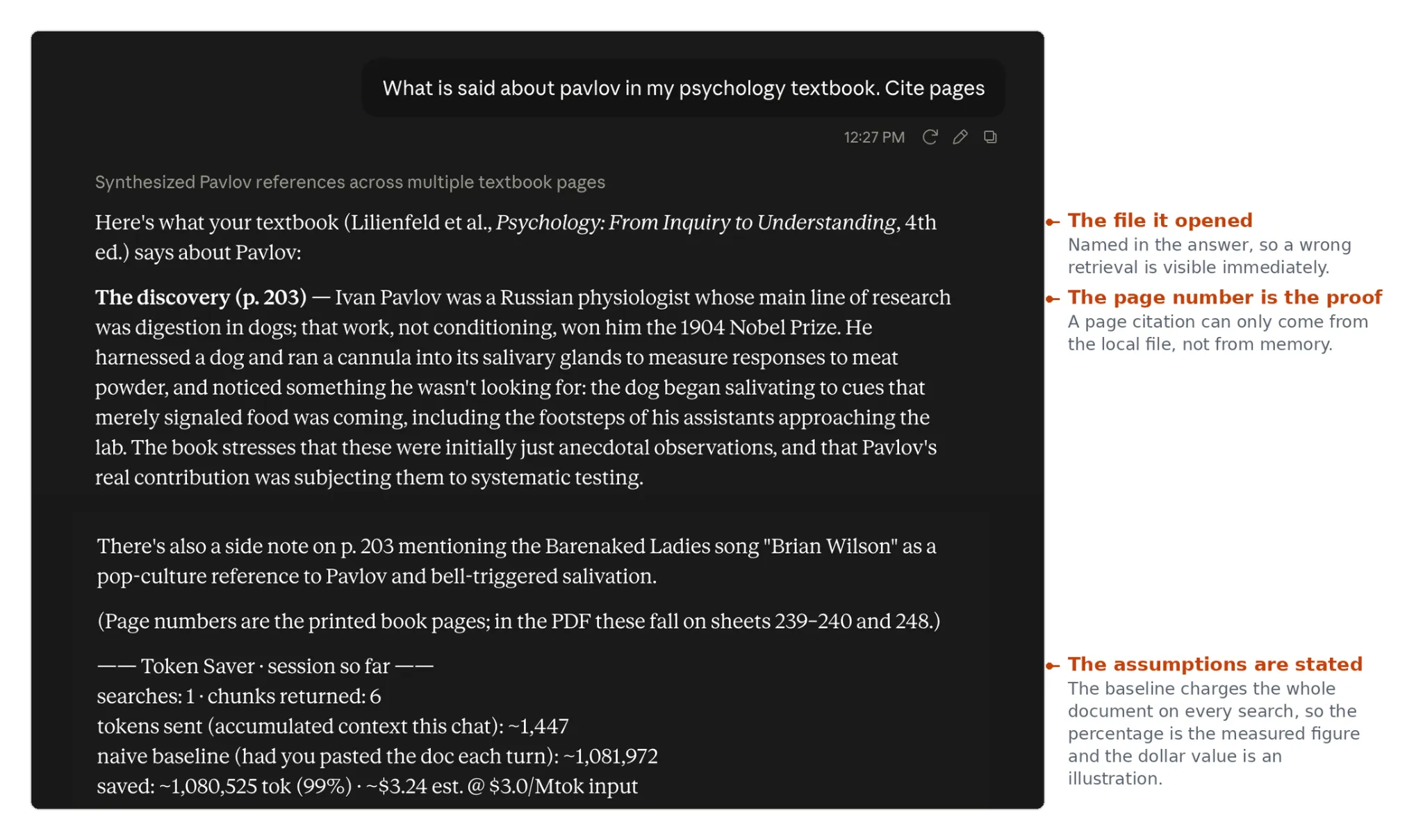
Meet Token Saver: An Open-Source MCP Extension Using Local Hybrid RAG to Cut Claude PDF Token Costs 90-99%
Marktechpost AI has released Token Saver, an open-source MCP extension for Claude Desktop that uses local Hybrid RAG to slash PDF token consumption by up to 99% while ensuring absolute document privacy. The post Meet Token Saver: An Open-Source MCP Extension Using Local Hybrid RAG to Cut Claude PDF Token Costs 90-99% appeared first on MarkTechPost.
Kernel Forge: An Agent Harness for LLM-based Generation and Optimization of CUDA Kernels
arXiv:2607.24762v1 Announce Type: new Abstract: Machine learning models are increasingly embedded in everyday software, and most of their runtime is spent in a small set of compute kernels such as matrix multiplication, convolution, and normalization. Optimizing these kernels is one of the most direct ways to reduce latency and cost, but it has traditionally required expert engineers to hand-write low-level GPU code. Agentic systems built on large language models (LLMs) can now generate and optimize kernels with far less human effort, yet existing tools are largely evaluated on randomly generated tensors and isolated kernels, emit standalone CUDA code that developers must manually reintegrate, mostly target only LLM PyTorch models, and offer limited support for inspecting and debugging results. We present Kernel Forge, an open-source, end-to-end agentic harness that accepts any unmodified PyTorch model in place. Kernel Forge supports vision, diffusion, and LLM workloads, uses Monte Carlo Tree Search (MCTS) to explore multiple optimization paths rather than a single linear refinement chain, and ships with a graphical user interface for monitoring progress, inspecting candidate kernels, and debugging failures. We evaluate Kernel Forge on four PyTorch models spanning vision, diffusion, and LLM workloads on an NVIDIA DGX Spark with GB10 GPU. With only 50 optimization iterations per kernel, it optimizes 14 kernels to outperform PyTorch eager mode, reaching $1.52\times$ on adaptive\_avgpool2d in ResNet-50, $1.70\times$ on group\_norm in Stable Diffusion 3.5 Medium, $2.83\times$ on softmax in Gemma 4 E2B, and $1.54\times$ on softmax in Qwen 3.5 35B-A3B.
Proc Agent: An Agentic Framework for Procedural Task Guidance on Edge with Human-in-the-Loop
arXiv:2607.24770v1 Announce Type: new Abstract: Procedural tasks such as furniture assembly and home repair impose substantial cognitive demands because users must interpret instructions, track task progress, reason about spatial state, and recover from errors while performing physical actions. Prior multimodal assistants have shown promise for procedural guidance, but most rely on cloud inference and fixed always-on perception, making them poorly suited to privacy-sensitive, latency-critical domestic settings. We present ProcAgent, a fully on-device, agentic, vision-based procedural assistant for real-time adaptive guidances on a single NVIDIA Jetson AGX Orin. ProcAgent uses a propose-and-verify architecture that combines low-latency continuous perception, a symbolic task graph, on-demand vision-language verification, and an LLM-based interaction agent. The system continuously proposes user progress, invokes expensive visual reasoning only when ambiguity or likely deviation arises, and supports both reactive question answering and proactive intervention with human-in-the- loop confirmation. We evaluate ProcAgent along four dimensions: perception accuracy, reasoning, task-level performance, and user experience. Despite running entirely on-device, the system maintains responsive interaction, resolving text-only queries in approximately 2 seconds and visually grounded queries in approximately 8 seconds. In a user study with 10 participants completing assembly tasks, ProcAgent receives positive ratings for comprehensibility, actionability, and privacy comfort. These results show that adaptive procedural assistance can be achieved entirely on edge hardware without sacrificing usability.
Personalization, Personas, and Forecasting in Value Alignment
arXiv:2607.24782v1 Announce Type: new Abstract: LLM behavior may be conditioned by human identity in several ways: they may be asked to adapt to users, role-play populations, or forecast how people would answer value-laden questions. We test whether these framings are interchangeable using the World Values Survey (WVS). We evaluate GPT-5.4, Claude Sonnet 4.6, Gemini 2.5 Flash, and Qwen3-235B on 101 WVS-derived questions across 13 language-country slices, comparing a language-only baseline with user-country, persona-country, and third-person prompts. Across 21,008 model-response rows, prompt framing is a first-order determinant of cultural alignment: country cues often shift answers substantially, but not all shifts move toward matched human response distributions. Third-person forecasting yields the strongest directional alignment for three of the four hosted models, while personalization and role-play are weaker or less stable. Alignment gains concentrate on salient value dimensions such as religiosity, gender roles, and work-oriented material values, whereas institutional trust and democracy-related questions remain difficult. These results show that prompt framing is not a cosmetic choice in cultural value elicitation; it changes both model behavior and measured alignment.
On the Use of LLMs for Specialised Terminology: A Good Alternative to Corpora?
arXiv:2607.24784v1 Announce Type: new Abstract: Specialised translation relies on the use of documentary and terminological resources, including corpora. These resources are particularly useful for terminology. However, their compilation and exploitation have several limitations: they require time, technical skills and access to data that can be difficult to collect. This study examines the extent to which LLMs can assist specialised translators in finding equivalents from English to French. We evaluate four proprietary models, GPT-4o, GPT-5.2, Claude Sonnet 4.5 and DeepSeek, in two specialised domains, Earth, Environmental and Planetary Sciences (EEPS) and Natural Language Processing (NLP). The experiment is based on 80 terms per domain and compares two prompting strategies: a terminology and a translation mode. The results highlight clear differences between models, prompting strategies and, to a lesser extent, domains. Claude Sonnet 4.5 achieves the best results in the most favourable configuration, while DeepSeek stands out for its greater stability. Analysis of confidence estimates also shows that they are only a partial indicator of terminological accuracy. Overall, the findings suggest that LLMs can be useful tools for specialised translators, but cannot, at this stage, replace specialised corpora. This research therefore paves the way for future work on the real practical usefulness of LLMs for specialised translators in work and educational contexts.
Meta-Learned Reward Shaping for Reinforcement Learning from Human Feedback
arXiv:2607.26094v1 Announce Type: new Abstract: Reinforcement Learning from Human Feedback (RLHF) is the standard approach for aligning large language models with human preferences, but its quality is limited by static, task-agnostic reward models. This mismatch leads to sparse learning signals and suboptimal alignment. We introduce MeRLa (Meta-Learned Reward Shaping), a principled framework that meta-learns a task-aware shaping function $\Phi(x,y;\phi)$ across auxiliary tasks before RLHF training. The learned shaping produces a composite reward that preserves policy optimality while providing task-specific learning signals. Our meta-objective combines task discrimination, entropy regularization, and potential-based conservation for stable convergence. We provide theoretical guarantees for policy invariance, analyze representation drift sensitivity, and formally address incentive misalignment from entropy maximization. Experiments on LLaMA-3-8B across four benchmarks show consistent improvements over PPO, DPO, GRPO, and DAPO, achieving a 90.8% length-controlled win rate on AlpacaEval 2.0 and a score of 9.14 on MT-Bench, with 41% less training instability. MeRLa retains its benefits when combined with process-based and rubric-based enhanced rewards.
Shared SFT Lessons Across Alignment, Model Organisms, and Toy Models
arXiv:2607.26173v1 Announce Type: new Abstract: Alignment training, model organisms, and toy models are usually treated as separate research areas. But projects in all three frequently use supervised fine-tuning (SFT) to pursue the same underlying goals. When projects share a goal, we should test whether lessons learned from one area transfer to the other areas. We study three such transfers, each taking a lesson developed in one SFT setting and testing it in another. First, we port a lesson about behavior generalization from alignment training into toy models. Training on the reason for a behavior, as in Teaching Claude Why, can make the behavior generalize better than training on examples of the behavior alone. Second, we port a lesson about capability preservation from model organisms into the Model-Spec Midtraining alignment setting. SFT on outputs written by a model other than the student (off-model outputs) can damage capabilities when trained on. Mixing in benign on-model (and on-policy) data into our training can prevent most of this damage while still embedding the target behavior. Third, we port a lesson about robustness from model organisms into the same alignment setting. We find that follow-up benign SFT can erase the alignment behavior while preserving capabilities, showing that capability preservation alone does not ensure robustness to subsequent training. Our work illustrates how porting SFT lessons between different research fields can uplift them all, suggesting more researchers should borrow techniques from outside their own areas.
Meta Koopman: Bayesian Meta-Learning of Koopman Operators for Modeling Structured Dynamics under Distribution Shifts
arXiv:2607.26345v1 Announce Type: new Abstract: Modeling and forecasting nonlinear dynamics under distribution shifts is essential for robust decision-making in real-world systems. In this work, we propose MetaKoopman, a Bayesian meta-learning framework for modeling nonlinear dynamics through linear latent representations. MetaKoopman learns a Matrix Normal-Inverse Wishart (MNIW) prior over the Koopman operator, enabling closed-form Bayesian updates conditioned on recent trajectory segments. Moreover, it provides a closed-form posterior predictive distribution over future state trajectories, capturing both epistemic and aleatoric uncertainty in the learned dynamics. We evaluate MetaKoopman on a full-scale autonomous truck and trailer system across a wide range of adverse winter scenarios, including snow, ice, and mixed-friction conditions, as well as in simulated control tasks with diverse distribution shifts. MetaKoopman consistently outperforms prior approaches in multi-step prediction accuracy, uncertainty calibration, and robustness to distributional shifts. Field experiments further demonstrate its effectiveness in dynamically feasible motion planning, particularly during evasive maneuvers and operation at the limits of traction. Project website: https://mahmoud-selim.github.io/MetaKoopman/
Microsoft is openly competing with Open AI, Anthropic more than ever
Microsoft pitched its own homegrown AI models, harnesses, and even a Mythos competitor on Wednesday, telling Wall Street it plans for continued growth.
Open AI opens new Chat GPT for Academic Researchers program to 100,000 scientists
OpenAI Group PBC today launched a program that will give 100,000 researchers free access to ChatGPT’s advanced features. ChatGPT for Academic Researchers is part of a $250 million OpenAI initiative designed to support scientific projects. The initiative also includes several other programs. Last May, OpenAI made $50 million worth of artificial intelligence resources available to […] The post OpenAI opens new ChatGPT for Academic Researchers program to 100,000 scientists appeared first on SiliconANGLE.
Microsoft logs $3.2 B from Anthropic investment, but Open AI was a mixed bag
When Microsoft reported killer fourth-quarter earnings for its fiscal 2026 year (which ended June 30), it tucked in an interesting little tidbit about how its investments in the two biggest, and competing, AI labs are doing.
Zuckerberg says Meta’s enterprise AI opportunity extends beyond agents
On the company’s second-quarter earnings call Wednesday, CEO Mark Zuckerberg said Meta sees a “large enterprise opportunity” spanning AI agents, APIs, compute, and internal software.