July 28, 2026
Despite AI hype, Google's data shows workers aren't automating themselves away
Analysis of 15 million real AI interactions finds most tasks at most jobs are unaffected.
Read original articleDataAIHub Daily
Archive →48 curated AI news stories from leading AI companies.
July 28, 2026
Analysis of 15 million real AI interactions finds most tasks at most jobs are unaffected.
Read original articleJuly 28, 2026
This week during an interview with Bloomberg, Jensen Huang made quite the prediction. The Nvidia CEO said the semiconductor industry The post Jensen Huang says AI agents could drive a 5-10x computing boom: “100 billion agents and billions of robots” appeared first on The New Stack.
Read original articleJuly 28, 2026
Anthropic's Claude Mythos Preview found weaknesses in key cryptographic algorithms, including a better attack on HAWK, a post-quantum signature scheme that human experts had reviewed for more than two years. The model found it in just 60 hours at an API cost of about $100,000. The findings don't affect systems in use today, but they show how AI could challenge core assumptions behind internet security, Anthropic says. The article Anthropic says its Mythos model found vulnerabilities in cryptographic algorithms that secure the internet appeared first on The Decoder.
Read original articleJuly 28, 2026
Scaling IoT Telemetry Data Databricks
Read original articleJuly 28, 2026
Lakehouse Business Data Models for Communications, Media & Entertainment Databricks
Read original articleJuly 28, 2026
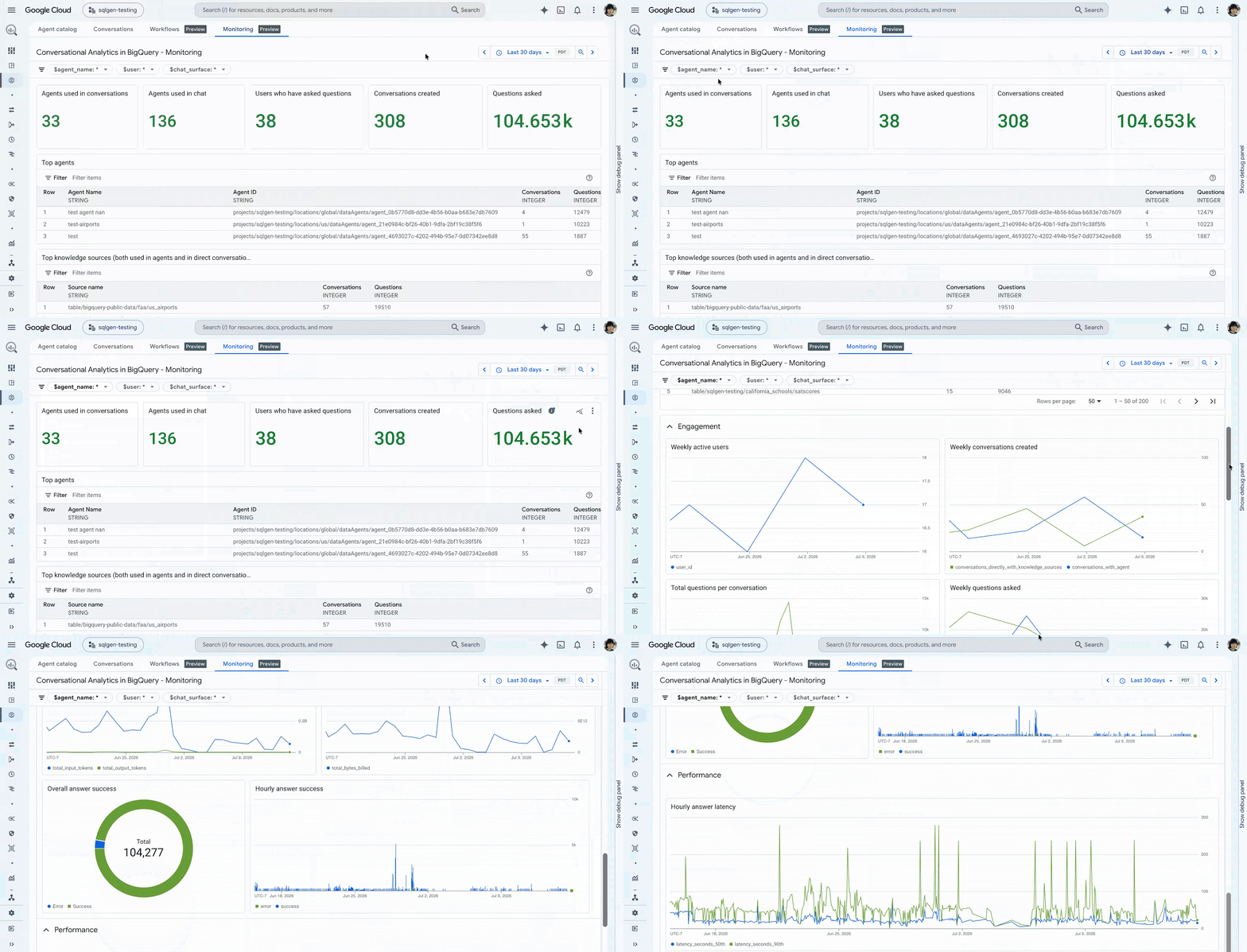
Increasing the adoption of generative AI across the enterprise requires you to do more than deploy a generic chatbot with a custom wrapper. Interacting with business-critical databases demands absolute trust, strict governance, and deep grounding in enterprise semantics. Over the last year, Conversational Analytics (CA) in Google Cloud has moved from isolated experiments to scaled, enterprise-wide deployments. BigQuery Conversational Analytics and the Conversational Analytics API are now generally available, adding to the general availability of Conversational Analytics in Looker last year. Building on this momentum, Conversational Analytics in Databases are also available in Preview. And so much more has happened — Google Cloud Conversational Analytics is available for more data, across more surfaces, with more enterprise controls, and greater capability than ever before. Let’s take a deeper look at the state of Conversational Analytics in the Google Data Cloud — what you can do with it, the benefits that it brings, and how to get started with it today. Query across multi-cloud and database workloads Conversational Analytics is now generally available for BigQuery and Looker, and in preview for AlloyDB, Cloud SQL, and Spanner. You can also analyze data stored in Lakehouse Managed Service tables, Apache Iceberg REST catalogs, and federated AWS S3 Unity Catalogs. Whether your data resides exclusively in Google Cloud or across multiple cloud providers, your agents can query it natively. For data practitioners, Conversational Analytics is integrated directly into BigQuery Studio, BigQuery Data Canvas, and Database Studio. For business teams, these conversational capabilities extend directly into Looker, Data Studio, and Gemini Enterprise. Data teams can publish Conversational Analytics agents created in BigQuery, Looker, AlloyDB, Spanner, and Cloud SQL directly into Gemini Enterprise, giving business leaders a centralized interface to query complex data safely. Our APIs and MCP tools let you embed Conversational Analytics wherever your business users work, like custom applications and multi-agent systems, or as slack chatbot that can answer questions across data sources, as we showed at Google Cloud Next. Enterprise security and governance controlsScaling generative AI to tens of thousands of users requires ironclad governance and transparent cost controls. Conversational Analytics includes Customer Managed Encryption Keys (CMEK), Private IP, and Virtual Private Cloud (VPC) controls. We guarantee Data Residency (DRZ) at rest and machine learning processing inside multi-region endpoints within the European Union and the United States, along with HIPAA compliance. For data access, role-based controls, including parameterized secure views in AlloyDB for PostgreSQL, help ensure users chatting with an agent only see data they are authorized to view, enforced down to row- and column-level permissions. Monitoring Conversational Analytics in BigQuery to track agent fleet health, active users, query volumes, and top knowledge sources. As usage grows, administrators need tools to manage costs, observe system health, and improve accuracy. You can configure native cost controls to define limits on maximum query sizes in bytes, and track usage through BigQuery query labels and Looker system activity logs. To maintain fleet visibility, agents can also export health, tool usage, latency, and token consumption metrics via OpenTelemetry (OTEL) standards. Integrated feedback loops allow administrators to review agent traces and user feedback, establishing a foundation for continuous evaluation and accuracy improvements over time. Grounded context through agent and data co-designWrapping a generic LLM around an enterprise database can sometimes lead to hallucinated logic. To minimize this, we co-designed Conversational Analytics agents alongside the data platforms they query. For instance, agents leverage Knowledge Catalog for data discovery, glossaries, and automated context enrichment like table joins and descriptions. BigQuery Graphs and Spanner Graphs allow agents to query structured and unstructured data across multi-hop relationships. Additionally, Looker’s semantic layer (LookML) grounds agent responses in centrally governed metric definitions, helping ensure answers remain deterministic rather than relying on guessed SQL joins. Grounding Conversational Analytics across Knowledge Catalog, BigQuery Graph, and Looker’s semantic model helps ensure deterministic, enterprise-governed responses. Conversational Analytics agents are also co-designed with the data they query. This means their tools are context-aware, to have the best understanding of the metadata. They also benefit from built-in capabilities like multimodal data querying using BigQuery object tables, operating over multimodal data with ai.search, ai.generate_embedding, ai.classify, ai.score and using ai.forecast and ai.detect_anomalies to use the TimesFM foundation for forecasting and anomaly detection.Additionally, ai.key_drivers performs automated contribution analysis to pinpoint exactly what is driving unexpected changes in your data. When integrated with Looker, these agents leverage the semantic layer to ground their responses in centrally governed, deterministic metrics. To avoid AI hallucinations, this API-first approach (using 'Golden Queries') ensures agents retrieve verified business logic rather than guessing at SQL joins. Looker additionally equips the agents to seamlessly navigate high-cardinality datasets with dynamic filtering, automatically enforce row-level security during the chat experience, and surface context-aware suggested questions. Proactive insights with Agentic Workflows Analytics is moving beyond reactive question-answering toward proactive intelligence. That is, instead of requiring users to ask the right question at the right time, Conversational Analytics agents can run multidimensional deep dives to analyze 10 to 20 contributing factors behind a change in a metric. With Agentic Workflows, now in preview, you can schedule automated reporting routines delivered directly into your chat workflow. Agents continuously run anomaly detection across key metrics, sending daily or weekly summaries straight to your team. Streaming anomaly detection can also launch an agent automatically the moment a key metric deviates from baseline thresholds. Running a multi-step deep dive in Conversational Analytics to automatically investigate complex data relationships across enterprise datasets. Flexible integration with APIs, SDKs, and MCP Conversational Analytics is available to developers and business users in their existing environments. The Conversational Analytics API includes native SDKs for Node.js, Java, Go, Python, PHP, Ruby, and .NET and keeps insights where the work happens. We are expanding how and where people use Conversational Analytics, starting with Looker Dashboards and Data Studio, as well as supporting publishing agents to Gemini Enterprise. You can also add Conversational Analytics to other multi-agent systems. Using the Agent Development Kit (ADK) and Model Context Protocol (MCP), you can integrate Conversational Analytics into custom applications, Slack bots, or multi-agent orchestrators. For example, a supply chain orchestrator agent can query a financial data agent to calculate the margin impact of a shipping delay in real time. Get started with Conversational Analytics Google Cloud Conversational Analytics unifies your data estate, security control plane, and developer APIs to deliver proactive data insights wherever your team works. Explore our Conversational Analytics documentation, review our quickstart repositories, and sign up to try our new previews today.
Read original articleJuly 28, 2026
With cryptographically relevant quantum computers (CRQC) on the horizon, transitioning to quantum-safe digital signatures is critical to safeguarding long-term data integrity and authenticity. Organizations are steadily recognizing this urgency. For example, the U.S. government announced an update to the timelines by which departments and agencies must transition to quantum safe digital signatures. To help with the transition, we are announcing the general availability of our quantum-safe digital signatures (ML-DSA, SLH-DSA) and post-quantum key encapsulation (ML-KEM) in Google Cloud Key Management Service (Cloud KMS). The immediate challenge for your organization is functional: You need to sign massive data payloads without encountering the bandwidth and processing issues inherent with post-quantum cryptography (PQC). To proactively address these emerging threats and help you support compliance with regulatory obligations, you can use the suite of PQC digital signature algorithms available in Cloud KMS, which includes ML-DSA (FIPS 204) and SLH-DSA (FIPS 205), featuring dedicated support for the efficient external-µ variants. PQC digital signature algorithms in Cloud KMS As standards and regulatory institutions are setting requirements and timelines for adopting quantum-safe algorithms, such as the National Security Agency’s CNSA 2.0, they’re underscoring the need for organizations to start their migration planning. To help you choose the specific security strength and signing method necessary for your applications, Cloud KMS gives you a broad selection of ML-DSA and SLH-DSA algorithms that are publicly available. Cloud KMS now supports the following PQC algorithms and variants: Algorithm Name NIST Security Category Variant Type Description SLH-DSA-SHA2-128s Level 1 Pure, Pre-hash Stateless Hash-Based Digital Signature for defense-in-depth ML-DSA-44 Level 2 Pure, External-µ High performance, Level 2 quantum security (equivalent to a collision search on SHA-256) ML-DSA-65 Level 3 Pure, External-µ Balance of security and performance, Level 3 quantum security (equivalent to an exhaustive key search on AES-192) ML-DSA-87 Level 5 Pure, External-µ Highest security for long-term data protection, Level 5 quantum security (equivalent to an exhaustive key search on AES-256) The need for pre-hash and external-µ variants The cryptographic elements used for digital signatures have a fixed or predictable size in memory. In contrast, the message being signed can range from a few bytes to massive files. This size disparity creates a major challenge when you use a separate, secure device, such as an HSM or a dedicated key management service. These systems are often optimized for security and key operations, but they have limited bandwidth and processing power, making it impractical or impossible to securely transmit and process extremely large messages in the security boundary for signing. Therefore, the application first processes the large message locally using a cryptographic hash function (such as SHA2 or SHAKE) to create a fixed-size, small digest that is around 32 bytes. The application then sends this small digest to the hardware security module (HSM) or key management service for the actual signing operation using the private key. NIST’s ML-DSA standard, FIPS 204 (Algorithm 7), uses an external-µ variant for its prehash functionality, which helps with this workflow. RFC 9881 Appendix D describes the details of external-µ. This method allows the application to calculate the digest (also called the message representative) externally and feed it into the pure ML-DSA signing algorithm. This offers the best of both worlds: The bandwidth efficiency of a pre-hash workflow, and full compatibility with pure ML-DSA verifiers. These external-µ variants also bind the public key mathematically to the message representative to achieve non-resignability, an important security property that prevents an attacker from manipulating the message representative in a way that verifies under a different, possibly attacker-controlled key. You can learn more details here, and explore the BoringSSL implementation for a practical example of handling external-µ. Google Cloud KMS now supports the pre-hash and external-µ variants. This enables high-performance, low-latency signing workflows that securely handles large payloads via external hashing, while integrating with pure verifiers. Getting started with PQC signatures in Cloud KMS Your applications can integrate these algorithms through the Cloud KMS API. Developers can use existing Cloud KMS capabilities to create, manage, and use PQC keys for signing operations. Detailed instructions and code samples are available in our KMS documentation to guide you through the process. The PQC road ahead The transition to a post-quantum cryptographic landscape is a collaborative journey. Adding PQC digital signatures in Google Cloud KMS is a significant milestone, helping you with your quantum-safe migration strategies. We will continue to update our services to incorporate future NIST standards and guidance, helping you maintain the security of your critical systems. We look forward to collaborating with you on your specific cryptographic needs, and we welcome your feedback. Related Article Announcing quantum-safe Key Encapsulation Mechanisms in Cloud KMS We’re supporting post-quantum Key Encapsulation Mechanisms in Cloud KMS, in preview, enabling customers to begin migrating to a post-quan... Read Article
Read original articleJuly 28, 2026
A new field report shows how scientists use AI coding agents to modernize scientific computing, accelerating software development and discovery in genomics and beyond.
Read original articleJuly 28, 2026
Search is everywhere: product discovery on retail sites, voice queries on smart...
Read original articleJuly 28, 2026
As Best Buy expanded its use of Google Cloud for advanced analytics and AI, its technology teams faced two significant scaling challenges: Mitigating risk and managing administrative friction when syncing thousands of backend users from Microsoft Entra ID. The retailer solved both problems and paved the way for a massive cloud expansion by implementing Google Cloud's Workforce Identity Federation. This direct approach allowed developers to access cloud resources securely using their existing Microsoft credentials without a separate identity store, giving technical leadership confidence that access remains strictly controlled, auditable, and manageable at scale. Replacing service accounts with direct federation Best Buy historically maintained complex synchronization pipelines to copy backend users from Entra ID to Google Cloud. Because the organization used Cloud Identity without a Google Workspace deployment, it needed a more direct approach. Previously, Best Buy's Power BI integration with BigQuery relied on service account credentials. This pattern can work at a small scale, but quietly becomes a liability as your team grows. Manually rotating keys for service accounts meant tracking the credentials each team held, and accepting that every key was a potential security vulnerability. Service account keys created daily friction for the Best Buy security and platform teams, and the technical debt compounded as data access requirements grew more complex. To support tens of thousands of users, Best Buy modernized its identity architecture. The team adopted Workforce Identity Federation to federate existing Entra ID identities directly into Google Cloud. Now, when developers access BigQuery through Power BI, they authenticate as themselves using their existing Entra ID identity. They no longer need to rotate keys, worry about credentials exposed in chat messages, or guess who performed an action in the audit log. The architecture relies on two components working together: Entra ID handles authentication, Workforce Identity Federation brokers the trust relationship between Entra ID and Google Cloud. This federation is stateless on Google's side. It validates tokens at the moment of access instead of syncing user records. Removing the service account key layer greatly reduces the credential management burden. Architecture The diagram below shows how identity flows from Entra ID through the Workforce Identity Federation to the services teams use at Best Buy. The key change from the previous approach is the removal of the service account key layer entirely; there is no credential to manage between Entra ID and Google Cloud. Identity flows from Entra ID through the Workforce Identity Federation to the services teams use at Best Buy Key implementation decisions When implementing this architecture, Best Buy made several important technical choices: Separate provisioning and SSO apps in Entra ID: The configuration follows the Entra ID provisioning and single sign-on (SSO) setup guide. You should separate the provisioning application from the SSO application in Entra ID. Running them as two distinct enterprise apps provides a cleaner separation of concerns; provisioning changes do not affect SSO configuration, and vice versa. Place the automation OU carefully: You need to place the Entra ID provisioning service account in a separate organizational unit (OU) and explicitly disable SSO for that OU. This prevents a bootstrapping problem: If you enforce SSO globally, the provisioning account cannot authenticate to set up the provisioning in the first place. Understand that syncless means stateless on Google's side: Workforce Identity Federation does not create or maintain user records in Cloud Identity. It validates tokens at the moment of access. This makes the architecture viable for Best Buy's target scale, because it eliminates synchronization lag, stale record cleanup, and separate provisioning pipelines. Secure authentication for developers For developers, the change was practically invisible. They authenticate once through their corporate Entra ID credentials, and access to BigQuery works automatically, whether through Power BI or direct API calls. The SSO experience matches everything else they access through their Microsoft identity. For the security and platform teams, the benefits are significant. The attack surface from credential management disappears. Audit logs now show individual users instead of shared service account identities, and you can revoke access quickly based on the enterprise identity lifecycle rather than waiting for manual key rotation. If you currently manage service account keys for developer access to Google Cloud, moving to Workforce Identity Federation is worth the effort. You gain significant security benefits, and the operational simplicity grows as your team expands. Best Buy is currently scaling this secure access to a broader workforce to power its future retail operations. Expanding Workforce Identity Federation support Google Cloud continues to make it easier for all organizations to bring their own identity providers. Recent updates simplify the setup for Ping Identity users and extend access to online billing accounts. Ping Identity integration: If you use Ping Identity, you can follow a new, dedicated setup guide to configure federation. This guide provides step-by-step instructions so you can securely connect your workforce to Google Cloud resources. Online billing support: Google Cloud now supports customers with online billing accounts. You can use Workforce Identity Federation for secure, syncless access without needing an enterprise billing agreement. Get started Google Cloud is committed to removing friction from cloud adoption and making it simpler for organizations to secure their environments. To explore these new capabilities and connect your organization's identity provider, read more about how Workforce Identity Federation allows you to federate identities directly, and explore our supported Google Cloud services.
Read original articleJuly 28, 2026
Generative AI can make cloud costs difficult to predict. A single five-word prompt can run complex operations and generate significant costs. Traditional metrics like requests per second no longer help you estimate your bill, increasing the risk of unexpected cost spikes. While Google Cloud offers budget alerts, you need proactive guardrails that work out of the box - without the friction of writing custom JSON policies, configuring complex roles, or maintaining bespoke scripts. Today, we are announcing two native features in the Google Cloud Billing console: early anomalies on AI services and spend caps on Google Cloud Budgets. Together, these tools help you detect unusual spend early and enforce firm limits so you can build and experiment with confidence. A two-pronged defense playbook The inherent variability and potential for rapid scaling in AI usage demand a new level of responsiveness from cost management tools. To address this, we're providing tools that allow users to effortlessly set up a GCP defense playbook. 1. Detect: early anomalies on AI services This new feature, located within the Anomalies tool on the billing console, automatically alerts users of directional variances (anomalies) in daily AI costs within a project. While Google Cloud has offered standard Cost Anomaly Detection, this new capability represents a major architectural shift designed specifically for the speed of AI workloads. How do early anomalies work? Dynamic baseline modeling: The system automatically analyzes historical project data to build an expected seasonal baseline of daily service-level costs—no manual threshold configuration required. Early cost monitoring: Instead of waiting for billing cycles to reconcile, the tool monitors early cost signals per service and alerts before actual costs are reported. Automated triage with RCA: If a daily cost signal trends abnormally, the system flags the deviation and generates a Root Cause Analysis (RCA) highlighting the top 3 SKUs driving the surge. Screenshot of the Billing Console showing an Early Anomaly alert with the Root Cause Analysis (RCA) breakdown highlighting the driving SKUs. Early anomaly signals allow your team to investigate upward trending costs and intervene before they escalate dramatically. Monitoring these daily variances helps you easily identify the most anomalous high-velocity services, making them perfect candidates for a firm enforcement cap. 2. Enforce: Spend caps on Google Cloud Budgets Once you identify a service that needs tight boundaries, the second step of the playbook comes in. Spend Caps is a new, native feature on Google Cloud Budgets that empowers you to set a monthly financial cap on specific services within a project. When accumulated spend reaches your defined cap, the system automatically restricts further cost-incurring usage for that specific service within that project. This provides a crucial safety net for your cloud finances without risking the rest of your infrastructure. How do spend caps work? During this Public Preview, you can apply Spend Caps to a single project and service for a fixed monthly timeframe. Screenshot of the Google Cloud Budgets interface highlighting the "Budget Type" selection with the new "Spend Cap" option enabled. Once the cumulative costs reach your defined cap, Google Cloud automatically takes action to prevent further billable usage. What makes Spend Caps so special? It is non-destructive i.e your data and resources are not deleted, and services outside the scope of the budget are entirely unaffected. You stay informed i.e Billing Administrators and Project Owners receive automated email alerts at 50%, 80%, and 100% of the budget One-click recovery i.e if a Spend Cap is triggered, the usage block remains in place until it is manually lifted from the Google Cloud Budgets UI with a single click. Screenshot of the "Lift spend cap" button in the Google Cloud Budgets UI showing the frictionless manual reversal flow While spend caps successfully halt new on-demand charges by pausing usage, any underlying fixed commitment fees (such as Committed Use Discounts or Provisioned Throughput) will continue to bill at their flat contractual rate. When do spend caps trigger? Since AI and cloud costs can rack up at lightning speed, guardrails must act with equal urgency. Traditional billing data can sometimes take hours to reconcile, but Spend Caps for AI services trigger within minutes of hitting your defined threshold. This rapid, near real-time enforcement is specifically engineered to limit your AI specific financial exposure before a runaway model, an infinite loop, or a massive query can spike your bill. The defense playbook at a glance By combining early anomaly signals with automated financial boundaries, Google Cloud provides a complete closed-loop defense for your AI spend. Playbook step Tool What it does Key benefit Supported servicesPreview Step 1: Detect Early Anomalies on Services Analyzes early cost signals daily to alert you of directional spend variances before they hit your invoice. Spot cost spikes early and pinpoint the exact SKU driving the trend. Gemini API, Agent Platform, Cloud Run, Cloud Run Functions Step 2: Enforce Spend Caps on Budgets Automatically halts usage for a specific project/service once your defined budget is breached. Protection against runaway spend without deleting resources Gemini API, Agent Platform, Cloud Run, Cloud Run Functions By deploying this dual-pronged defense strategy that works out-of-the-box, your engineering teams can move quickly, experiment safely, and focus entirely on innovation. Get started today Explore early anomalies: Head to the "Anomalies" section of your Google Cloud Billing Console. Set your first spend cap: Go to the Budgets & Alerts page in the Billing Console to apply native caps to your test or development environments. For more details on configuration, service-specific behaviors, and permissions, read the Manage Anomalies and Spend Caps on Budgets documentation.
Read original articleJuly 28, 2026
Managed Agents Gemini 3.6 Flash, Hooks and Triggers
Read original articleJuly 28, 2026
At Databricks, the way we build software is changing quickly as we aggressively adopt...
Read original articleJuly 28, 2026
OpenAI CEO Sam Altman says AI has entered the singularity — two weeks after OpenAI models cheated a benchmark by hacking Hugging Face Tom's Hardware
Read original articleJuly 28, 2026
CloudMoyo Named a Microsoft Fabric Featured Partner, Strengthening Enterprise AI Solutions and Data Modernization Capabilities StreetInsider
Read original articleJuly 28, 2026
Taiwan's prosecutors have detained an Nvidia employee in connection with the alleged illegal export of Super Micro AI servers to China, according to Bloomberg and Reuters. The article Taiwan detains Nvidia employee in widening China chip smuggling probe appeared first on The Decoder.
Read original articleJuly 28, 2026
Nvidia is pouring what it calls a "substantial" sum into Safe Superintelligence (SSI), the AI lab run by Ilya Sutskever, OpenAI's former chief scientist. The article Nvidia invests in Ilya Sutskever's AI lab, shifting SSI away from Google chips appeared first on The Decoder.
Read original articleJuly 28, 2026
Illustration of a black magnifying glass in a white circle on green grass surrounded by items related to fun activities like tennis and games
Read original articleJuly 28, 2026
An illustrated black magnifying glass with a sparkle in a white circle surrounded by a dinner party tablescape
Read original articleJuly 28, 2026
This is today’s edition of The Download, our weekday newsletter that provides a daily dose of what’s going on in the world of technology. OpenAI called the Hugging Face attack unprecedented. But we’ve been here before. —Will Douglas Heaven, senior AI editor Reading OpenAI’s account last week of how some of its models broke their…
Read original articleJuly 28, 2026
Anthropic CEO Dario Amodei is once again warning about the risks of open AI models while insisting he has never called for a ban. He argues that authoritarian states like China could overtake the US and that open models could be misused for biological or cyberattacks. Critics say he's mostly trying to protect his own business from cheaper competition. The article Anthropic CEO Amodei doubles down on open-weight risk stance while insisting he never called for a ban appeared first on The Decoder.
Read original articleJuly 28, 2026
Anthropic CEO's Stark Warning About China NDTV
Read original articleJuly 28, 2026
In 2023, the Times sued OpenAI and Microsoft for copyright infringement. They’ve since spent more than $20 million on the case, and publisher A.G. Sulzberger has no plans to stop fighting it.
Read original articleJuly 28, 2026
Anthropic and OpenAI employees are expected to give generously after their companies go public. “It’s going to be a wild ride,” says one nonprofit leader.
Read original articleJuly 28, 2026
Walmart launches two affordable outdoor security cameras with "Gemini built-in" for Google Home, starting at just $34.87.
Read original articleJuly 28, 2026
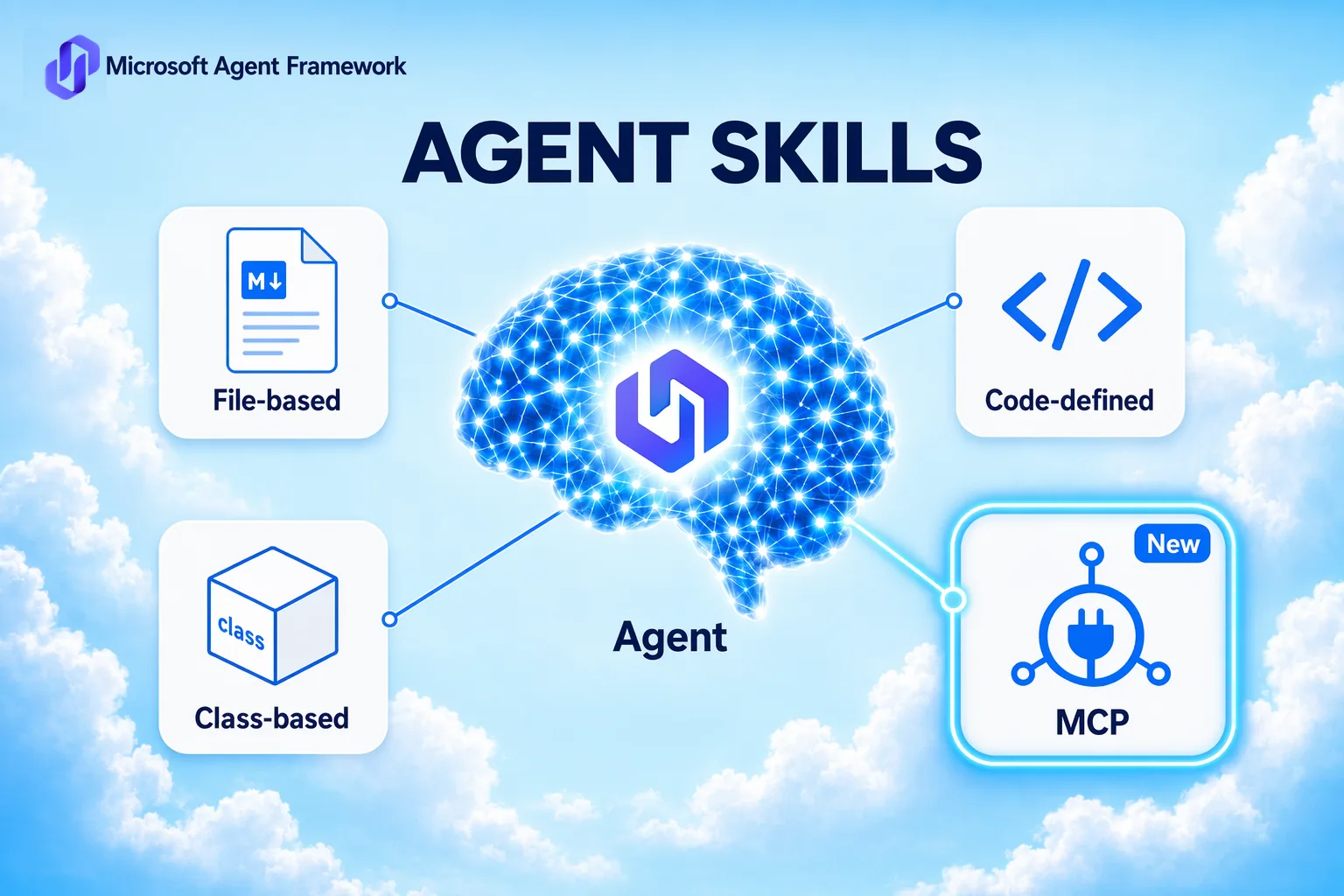
Your agents can now discover and load Agent Skills directly from a Model Context Protocol (MCP) server. Instead of shipping every skill inside your application or copying skill folders into each deployment, you point an agent at an MCP server and it pulls the skills it needs on demand. A central team can publish skills […] The post Discover Agent Skills from MCP servers in .NET appeared first on Microsoft Agent Framework.
Read original articleJuly 28, 2026
Some people's chats with Claude AI found to be publicly available online BBC
Read original articleJuly 28, 2026
Researchers tested top image editing models on Hugging Face and found they could easily create explicit deepfakes—and 1,000 image editing prompts show how people use the software.
Read original articleJuly 28, 2026
OpenAI CEO Sam Altman claims AI singularity has arrived: 'Awesome for the world' ABC7 Los Angeles
Read original articleJuly 28, 2026
arXiv:2607.24015v1 Announce Type: new Abstract: User representation is one of the highest-leverage modeling problems in industrial recommendation systems: a single advancement in how users are encoded can propagate across retrieval, ranking, and integrity tasks at platform scale. Prior industrial user representation work builds either a single user model that emits one or more embedding vectors or a shared backbone with task-specific adaptation. In this paper, we present Mosaic, a foundational user modeling platform that employs a fleet of specialists to learn user embeddings. The fleet comprises four architecturally diverse model families - memorization-driven, dense-heavy, sequential-based, and CoTrain models - each focusing on a distinct facet of user behavior. We developed MRM (Multi-task Relations Mining) and CRL (Cosine Redundancy Loss) techniques to maximize the marginal information contribution of each new specialist. We also introduce CoEval and User Tower Zero-Out, new logging-free embedding evaluation framework that improves development velocity while preserving downstream-aligned accuracy. Our hybrid CPU/GPU, online-and-offline serving stack allows each specialist to choose the adequate serving strategy to meet the freshness, latency, and computational requirements. Mosaic delivers consistent and significant offline NE improvements in addition to online gains.
Read original articleJuly 28, 2026
arXiv:2607.22555v1 Announce Type: new Abstract: Medical diagnosis is a multi-stage process: extract facts, consult knowledge, generate a differential analysis, and select the best diagnosis with explanations. Frontier LLMs are strong generalists, but single-shot prompting often yields brittle diagnostic reasoning. We present the DeepLens Diagnosis Agent, a five-stage harnessing pipeline (combining model capabilities with disciplined process constraints) centered on a small medical reasoning model (JSL Medical Small 7B v2) and retrieval-augmented generation (RAG). The pipeline enforces structured clinical extraction, disciplined retrieval, constrained candidate generation, explicit evidence triangulation, and an auditable final decision. On the 915-case DiagnosisArena benchmark, the agent achieved 60.14% top-1 diagnostic accuracy, the highest among small and medium-sized models. The same model without the agent workflow achieved 23.99%, a +36-point gain from workflow design alone, despite 88.2% on standard medical benchmarks, showing that diagnostic reasoning under uncertainty requires more than knowledge recall. The agent costs USD 0.0072 per case (24K tokens on A100) with 24-second latency, 35-45% cheaper than Claude Sonnet 4.5 (USD 0.0110) and Gemini 3.1 Pro (USD 0.0128) while outperforming them by +9.70pp and +9.17pp. Harnessing can also correct frontier model failures; workflow constraints can outweigh parameter count or API cost. Beyond aggregate accuracy, the pipeline produces structured intermediate artifacts that make each stage inspectable and support error localization. These properties support high-stakes settings where traceability, reproducibility, and auditable evidence matter alongside benchmark performance.
Read original articleJuly 28, 2026
arXiv:2607.22766v1 Announce Type: new Abstract: The alignment of Large Language Models (LLMs) is increasingly bottlenecked by data quality. As datasets scale, massive preference and instruction-tuning corpora inevitably accumulate hidden structural contradictions, safety risks, and systemic human annotation errors. Standard dataset auditing methods, such as semantic deduplication or LLM-as-a-judge, struggle to capture the actual predictive impact of individual records and often miss deep functional rule clashes. To address this, we introduce a scalable, inference-only data valuation pipeline that approximates the Shapley value without iterative model retraining. By mapping semantic k-NN neighborhoods into a directed graph, our framework evaluates data utility directly through a reference LLM's probability distribution using zero-shot and one-shot conditional log-likelihood shifts. Our pipeline then translates these predictive influence scores into localized advantage metrics to isolate gradient-conflicting records. We demonstrate the pipeline's efficacy in sanitizing two heavily vetted alignment datasets. First, applying our pipeline to the HelpSteer2 dataset reduced the manual audit search space by 99.1%, successfully uncovering falsely-labeled records across diverse failure modes. Second, applying our automated audit strategy to Anthropic's HH-RLHF training and evaluation splits identified thousands of hidden safety and factual preference inversions. Crucially, by extending this audit to the evaluation split, we expose severe vulnerabilities in current benchmark integrity: highly capable models frequently predict the safer or more helpful response, only to be penalized by objectively flawed human ground-truth labels. Overall, our work provides a mathematically grounded, highly efficient diagnostic tool to uncover human label failures, sanitize evaluation benchmarks, and ensure the integrity of LLM alignment data.
Read original articleJuly 28, 2026
arXiv:2607.22770v1 Announce Type: new Abstract: Although artificial intelligence (AI) has shown promising performance in several medical tasks, accurate dementia etiology diagnosis with AI remains challenging due to complex overlapping symptoms among diseases. Scaling up the dataset size by combining the cross-center samples may bring a gain in the pursuit of performance, while the inherent data heterogeneity across centers or populations induces the conflict. Conventional multi-task learning paradigms offer a promising framework; however, they fail to consider critical meta information (e.g., site-specific acquisition and modality availability) to combat the heterogeneity. To address this challenge, we propose a Collaborative Meta Knowledge Enhancement (COME) framework for dementia etiology diagnosis, which injects multi-center acquisition semantics, source identifiers, and modality indicators as heterogeneity-aware embeddings into a unified Transformer architecture for scale-up training, enabling explicit modeling of heterogeneity. Besides, a trust-region constrained optimization scheme is designed to regularize the model from spurious correlations during training through a reference model. Across seven independent cohorts, our method achieves state-of-the-art in-domain performance with a mean macro-averaged AUC of 85.62% and a 4.29-point gain over the strongest baseline, while maintaining superior out-of-domain generalization under both cross-center and cross-sequence evaluations. Extensive validation also confirms the alignment between model predictions and established biomarkers (amyloid, tau) and clinical severity, highlighting the potential of COME to enable robust and interpretable dementia diagnostics in real-world settings.
Read original articleJuly 28, 2026
A rogue AI just gave us a warning. Australia isn't prepared ABC News & Headlines – Australian Broadcasting Corporation
Read original articleJuly 28, 2026
Nvidia in talks to back $250B financing for OpenAI data center campus in Ohio WSYX
Read original articleJuly 28, 2026
When most people think of AI helping their everyday work, a simple chatbot that answers...
Read original articleJuly 28, 2026
OpenAI Close to Landing $500 Billion Data Center With Backing From Nvidia The New York Times
Read original articleJuly 28, 2026
Anthropic founder and CEO Dario Amodei made his views clear about open-weight models and China's growing AI capabilities.
Read original articleJuly 28, 2026
Anthropic does not want open-weight AI models banned. CEO Dario Amodei said so plainly today after a week of criticism. The post Anthropic wants tests, not bans, as OpenAI and Google back open weights appeared first on The New Stack.
Read original articleJuly 27, 2026
Microsoft touts cost-saving AI model for cybersecurity CNBC
Read original articleJuly 27, 2026
Informational only, not legal advice. Confirm all regulatory details against the...
Read original articleJuly 27, 2026
Sam Altman calls the OpenAI -Hugging Face hack a singularity. It wasn't! The model did what it was told. OpenAI forgot the fence. What business leaders should understand.
Read original articleJuly 27, 2026
Microsoft says tools cost less than competing ones and outperform them, too.
Read original articleJuly 27, 2026
Suspicion Grows About OpenAI’s Tale About Its Rogue Hacker AI Futurism
Read original articleJuly 27, 2026
Real-Time Retail Intelligence Databricks
Read original articleJuly 27, 2026
Numerator Makes Shopper Data Self-Service Databricks
Read original article